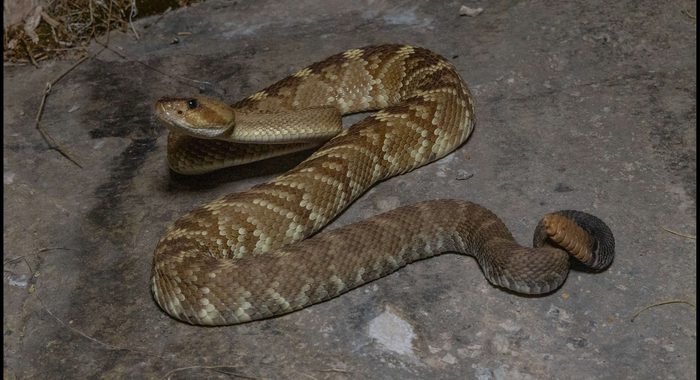
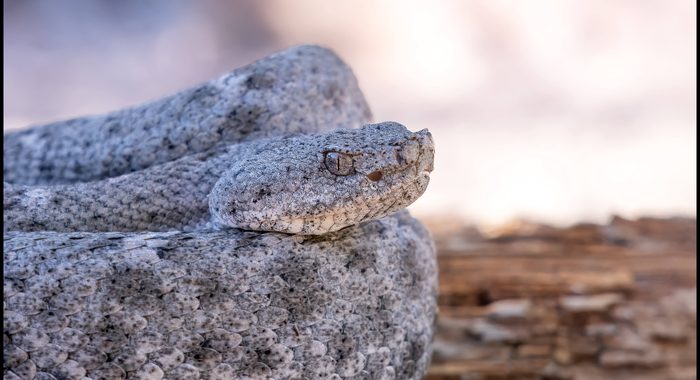
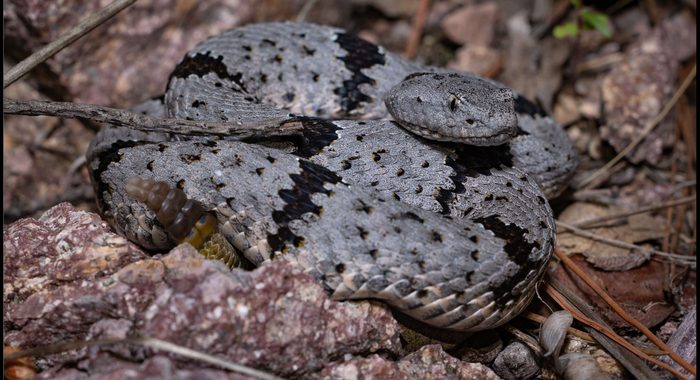
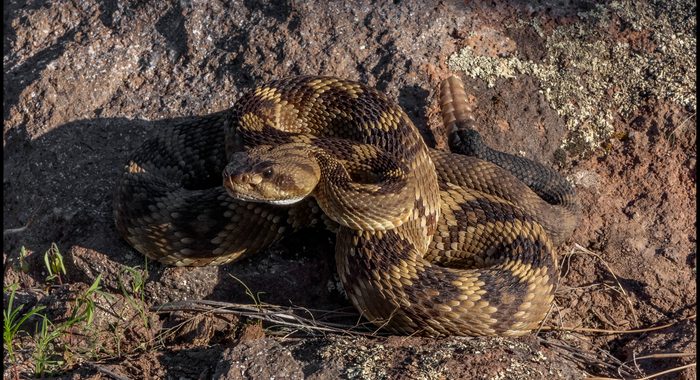
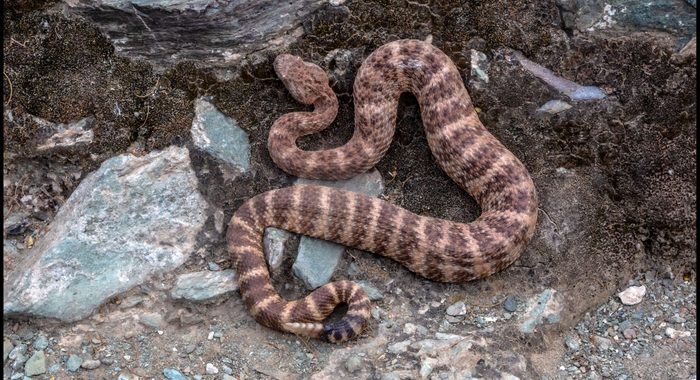
This Blacktailed Rattlesnake is typical of those you’ll see in the Phoenix area. They’re often a yellow/gold or greenish color, with quite a bit of variation in how much pattern is visible. The black tail may also show some faint grey bands, leading to some confusion as people look for a completely black tail to […]
Continue reading..Blacktailed Rattlesnake with Faint Grey Bands
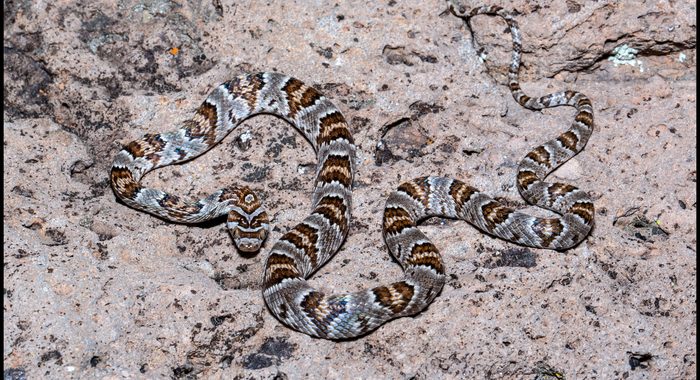
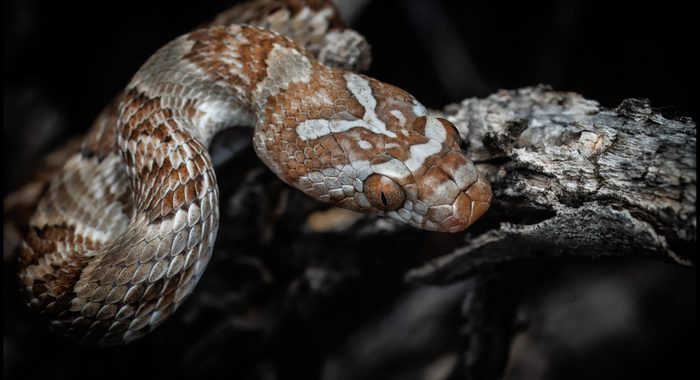
We found this Sonoran Lyresnake on the move on a night hike in Yavapai County sevearl years back. This one is typical of the species for the area, with chaotic brown and tan blotches over a beige body, with a relatively disoganized look compared to some of the more cleanly banded version found elsewhere. They’re […]
Continue reading..Sonoran Lyresnake in Yavapai County, Arizona
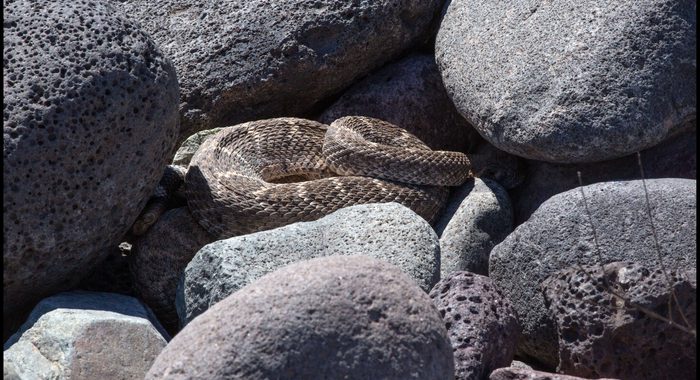
A Western Diamondback Rattlesnake resting on the surface of the rock pile that serves as its winter den. This was not a particularly warm day, but it and several others were found in close proximity to one another to get ready for another year.
Continue reading..Western Diamondback Rattlesnake at a Den near Phoenix
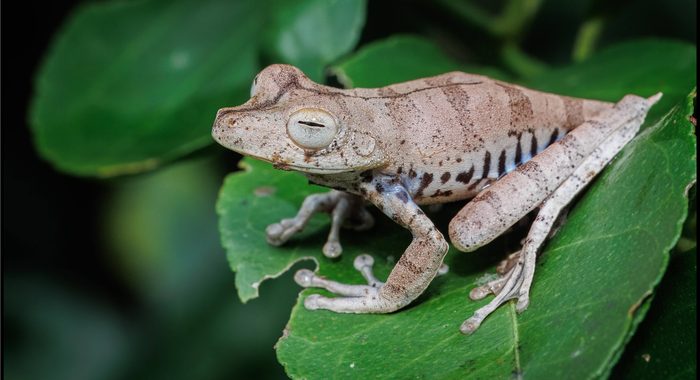
A Convict Treefrog (Boana calcarata) we found in Peru a few years back, near Iquitos. This one is showing the black and white bars on its sides that give it its name.
Continue reading..Convict Treefrog in Peru
A New Mexico Ridge-nosed Rattlesnake (Crotalus willardi obscurus) from one of the remaining populations within the United States. These are small rattlesnakes adapted for high-elevation, higher-humidity environments than are typical in the surrounding Chihuahuan Desert. This is one of only two rattlesnake species in the country that are listed as Threatened under the Endangered Species […]
Continue reading..New Mexico Ridge-nosed Rattlesnake
A female Banded Rock Rattlesnake from the Huachuca Mountains in Arizona. These small rattlesnakes are sexually dimorphic, with males often showing metallic green coloration along the back. Females are usually more subdued in comparison, like this typical grey and black banded look. These are one of a handful of protected rattlesnake species in the state.
Continue reading..Female Banded Rock Rattlesnake From Santa Cruz County, Arizona
Up close with a Sonoran Lyresnake (Trimorphodon lambda) from Maricopa County, Arizona. These shy snakes are almost entirely nocturnal, which you’d likely be able to figure out from just those big bug-eyes. They’re mildly venomous, rear-fanged snakes, but generally harmless to humans and pets.
Continue reading..Sonoran Lyresnake from Arizona Up Close
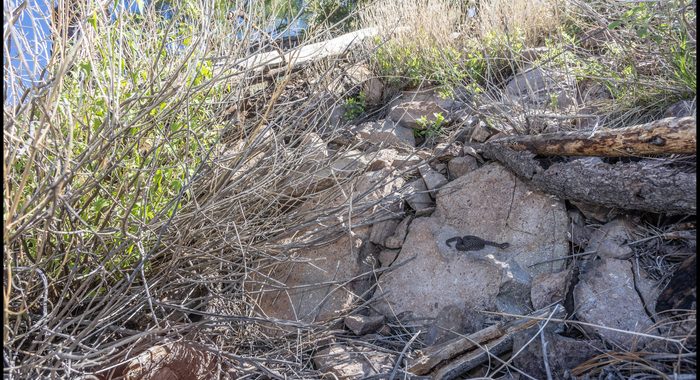
A Twin Spotted Rattlesnake in habitat at the top of a mountain in southern Arizona. These are rattlesnakes that are often mistaken as a non-venomous species due to their small size and head that is not as strongly differentiated from the neck as people expect. They are rarely seen by hikers, but a “what is […]
Continue reading..Twin Spotted Rattlesnake in an Example of Habitat
A large Blacktailed Rattlesnake that we found in the mountains of central Greenlee County. This is a huge, wild area with few roads and much of the high elevation habitat inaccessible without a lot of effort. For that reason, it’s of special interest to me, with relatively few examples of snakes compared to other regions […]
Continue reading..Blacktailed Rattlesnake from Greenlee County, Arizona
A Southwestern Speckled Rattlesnake from the Phoenix area. These snakes can be amazingly adaptable, often perfectly matching the rocky areas where they live in color, and even more difficult to see with the jagged, chaotic pattern. This one carries a PIT Tag, implanted by our team to identify it in the future as part of […]
Continue reading..Southwestern Speckled Rattlesnake in Red Rocks