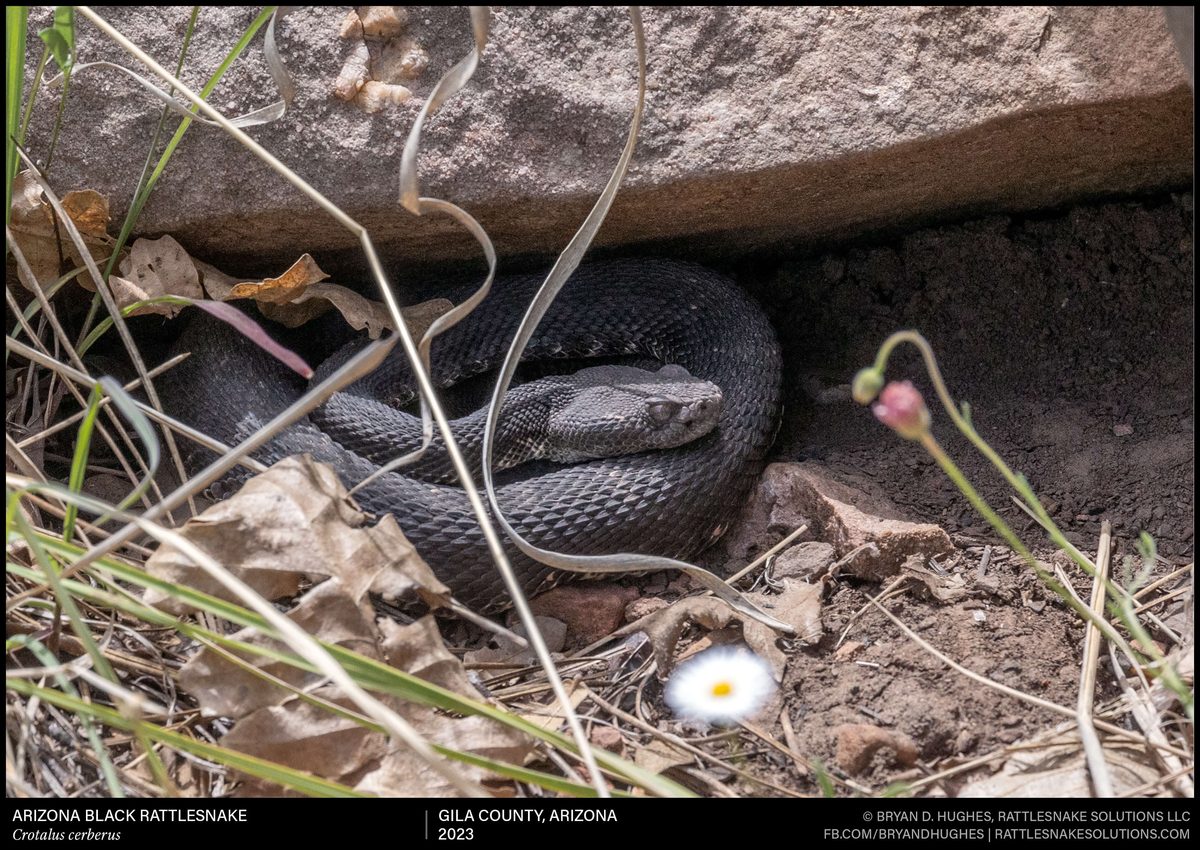
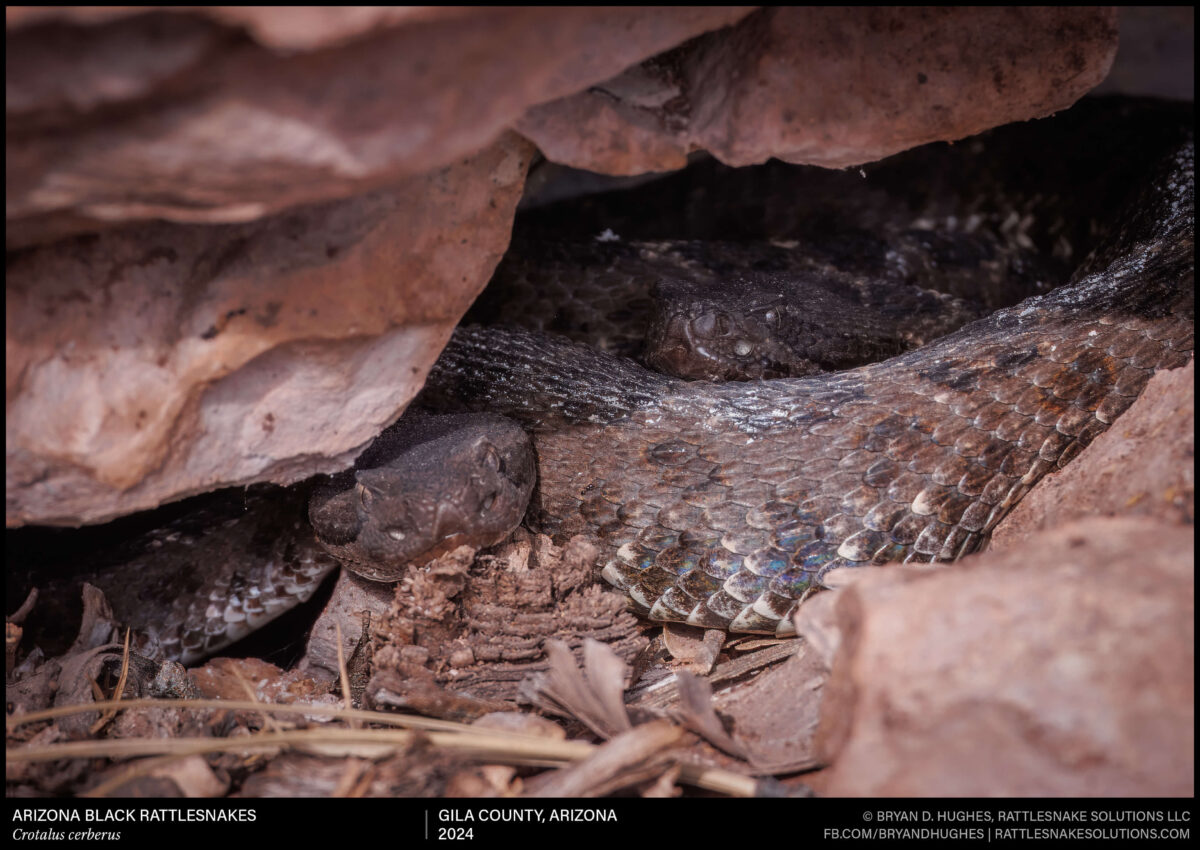
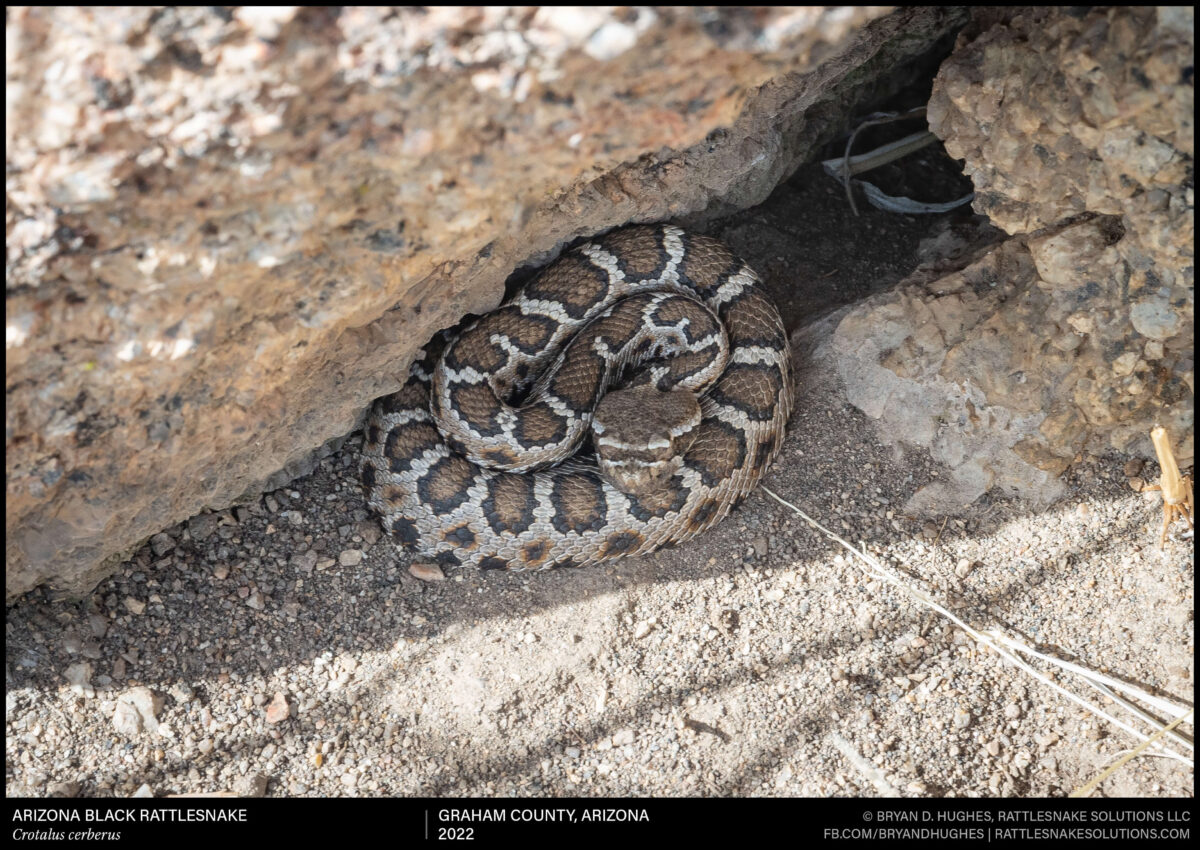
An Arizona Black Rattlesnake hanging out at the entrance of her den. She, and several other pregnant (gravid) females, remain here all summer. When it’s time for the babies to be born, they will be right where they need to be several weeks later when temperatures cool and it’s time for their first hibernation.
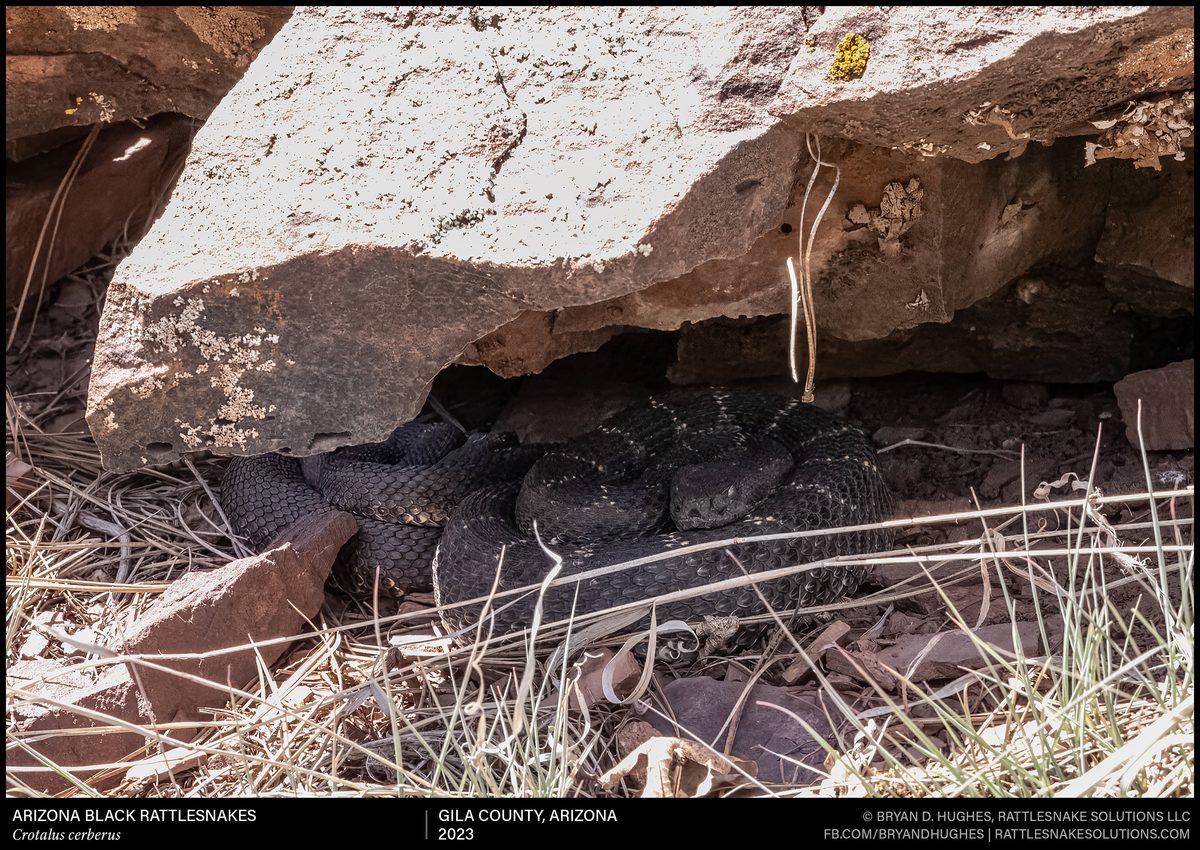
This couple of female Arizona Black Rattlesnakes was hanging out at the entrance of a den a few summers ago. While these sites are more densely populated during the winter, they’ll also be used by gravid (pregnant) females during the summer, where they can be seen basking in preparation of the little ones during the monsoon season. Elsewhere on the hillside, other females were doing the same.
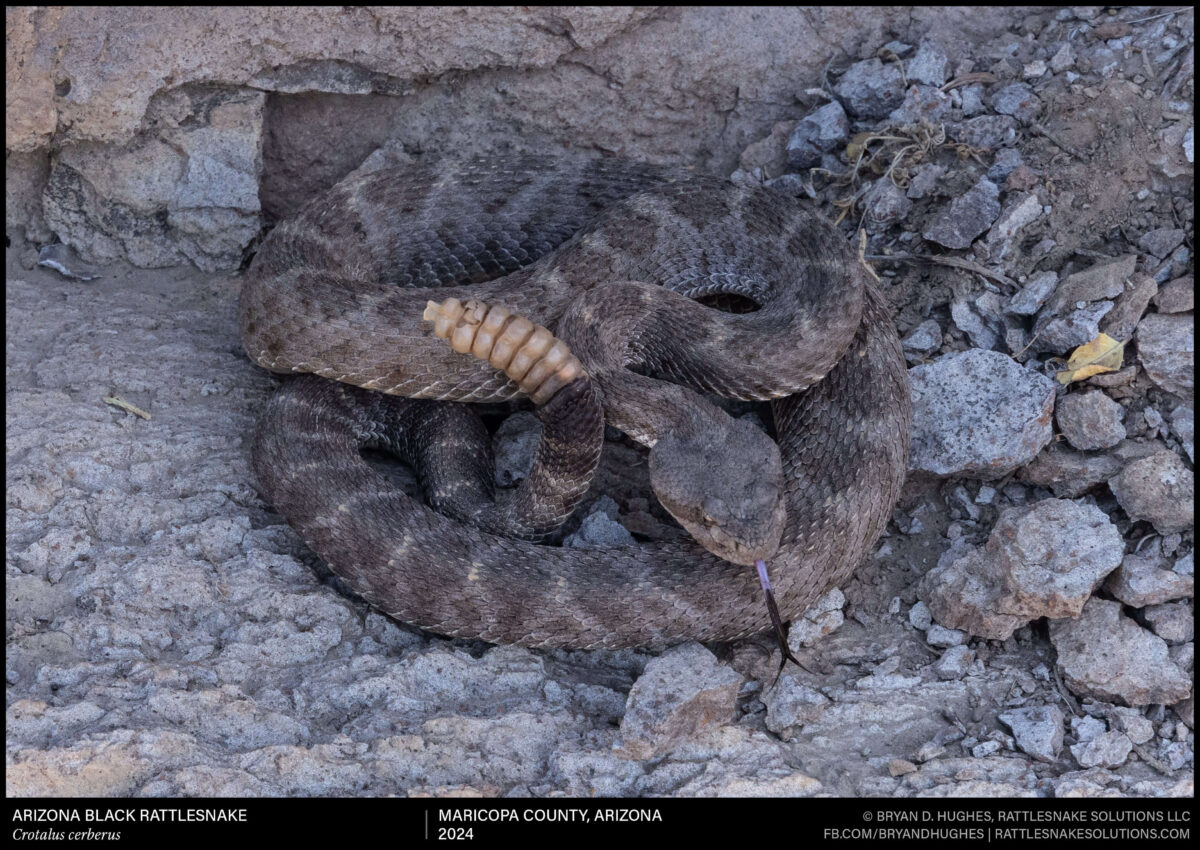
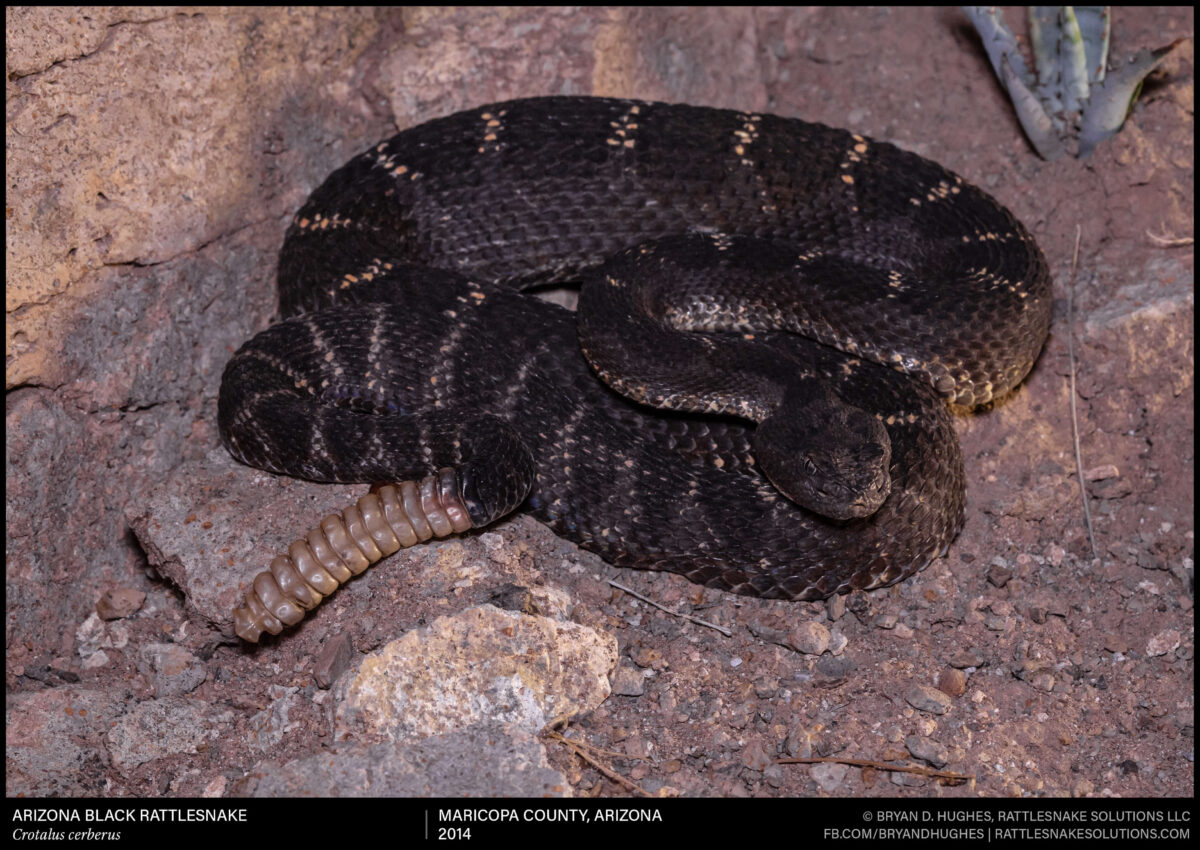
An Arizona Black Rattlesnake from relatively open desert in Maricopa County, Arizona. This species is diverse in appearance and habitat preferences, with this particular population inhabiting generally lower, hotter, and exposed areas.
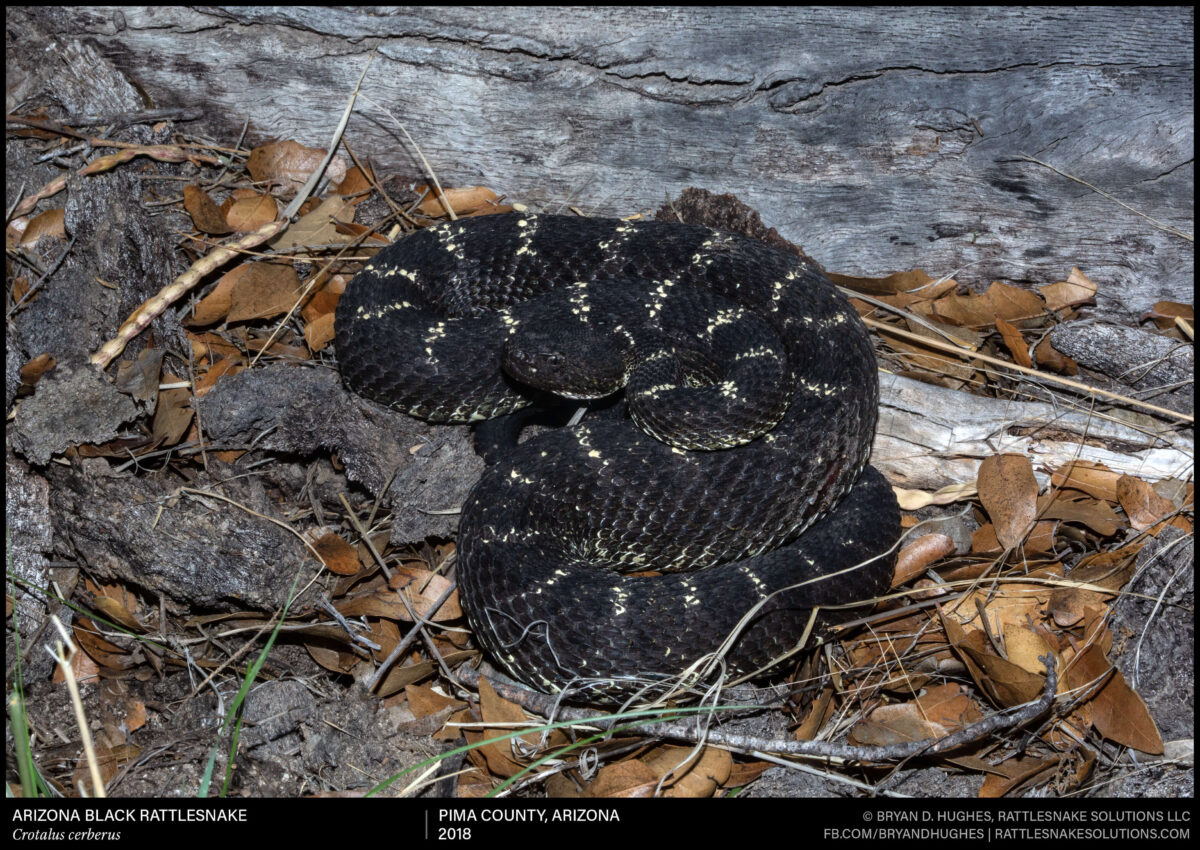
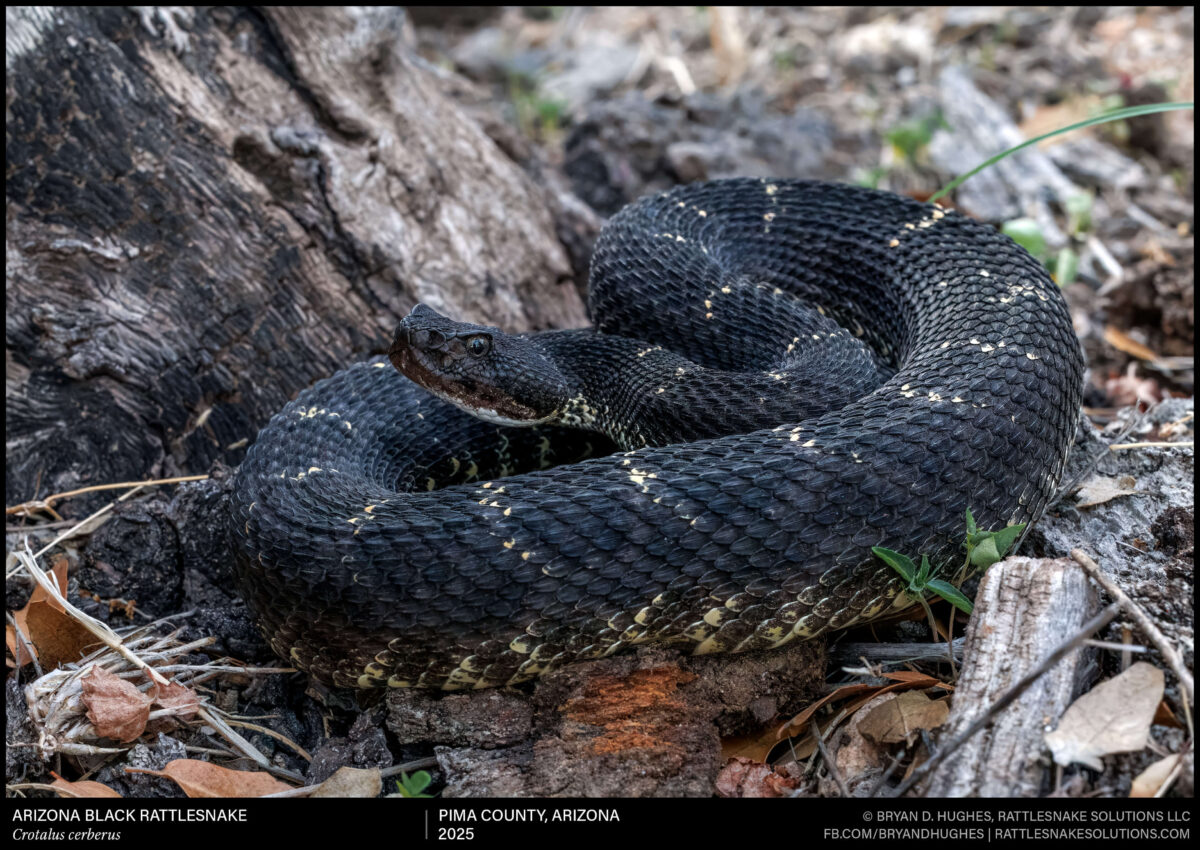
An Arizona Black Rattlesnake from southern Arizona. Even though I’m only in this location once or twice each year, I have seen this one several times over the last decade. There’s a small rock pile next to a log that it spends much of the summer making small movements around, and it was good to see it again as a little bit older, larger version of the last sighting a few years prior.
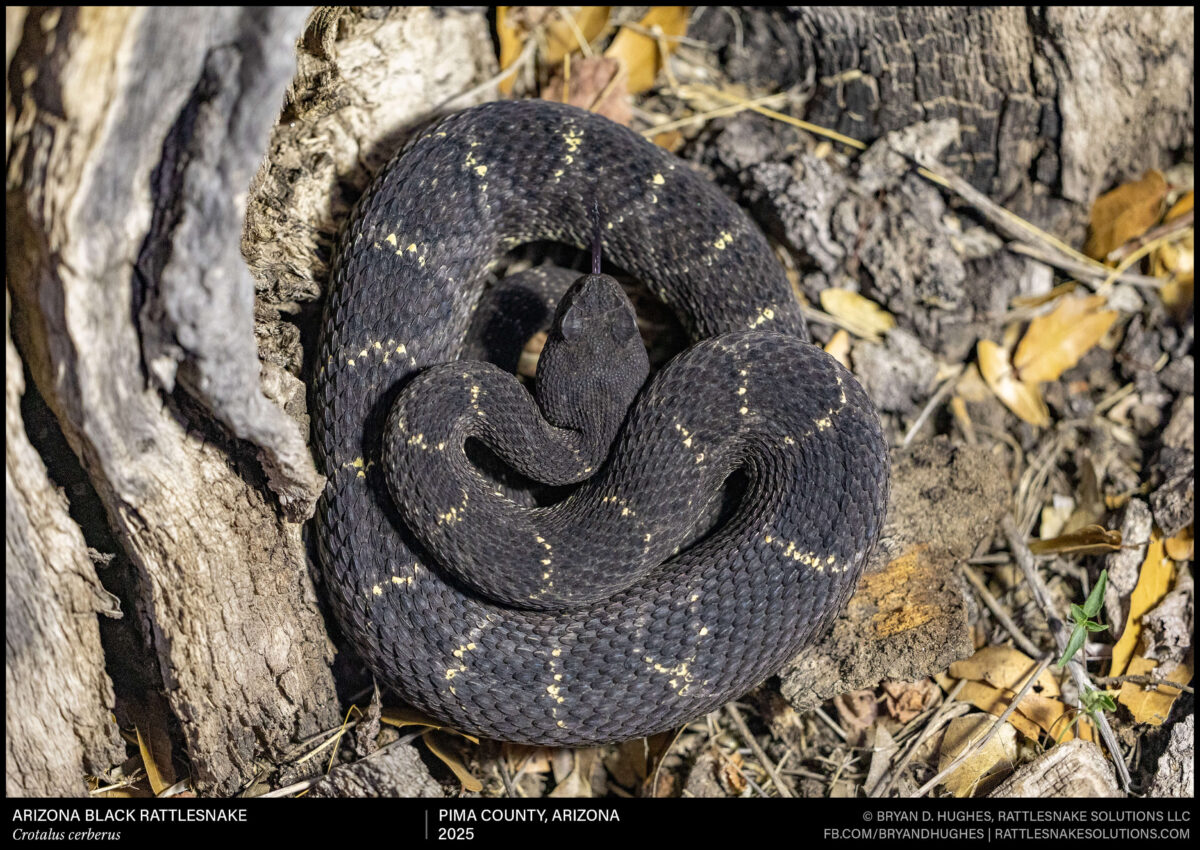
An Arizona Black Rattlesnake found in mid-elevation oak woodland near Tucson. This species of rattlesnake can change color in a relatively short amount of time, often appearing much lighter and heavily patterned at night, and transitioning to this inky black in the light. Other factors, such as social interactions and mood may also affect this shift.
These snakes are highly prized by collectors and quite a few leave this particular area in bags each year, often headed for illegal breeding and sale elsewhere in the US.
An Arizona Black Rattlesnake we spotted on a late-night search near Phoenix. These higher-elevation snakes are common in the central Arizona, where they are often misidentified as “Timber Rattlesnake”, though no timber rattlesnakes live anywhere in the Western US.
A young Arizona Black Rattlesnake resting outside its den, where several larger adults have yet to emerge for the day. In time, it will darken and its pattern will fade to be the familiar dark black with yellow bands common in the region.
This same little snake, a year prior and a lot smaller, was what first gave this spot away as a rattlesnake den. Females stay at or near winter dens all year to give birth there, so a chance sighting of a neonate in August was an indication there was more to be found. Since then, I have found dozens more Arizona Black Rattlesnakes, as well as Western Diamondback Rattlesnakes and Blacktailed Rattlesnakes sharing the same den.
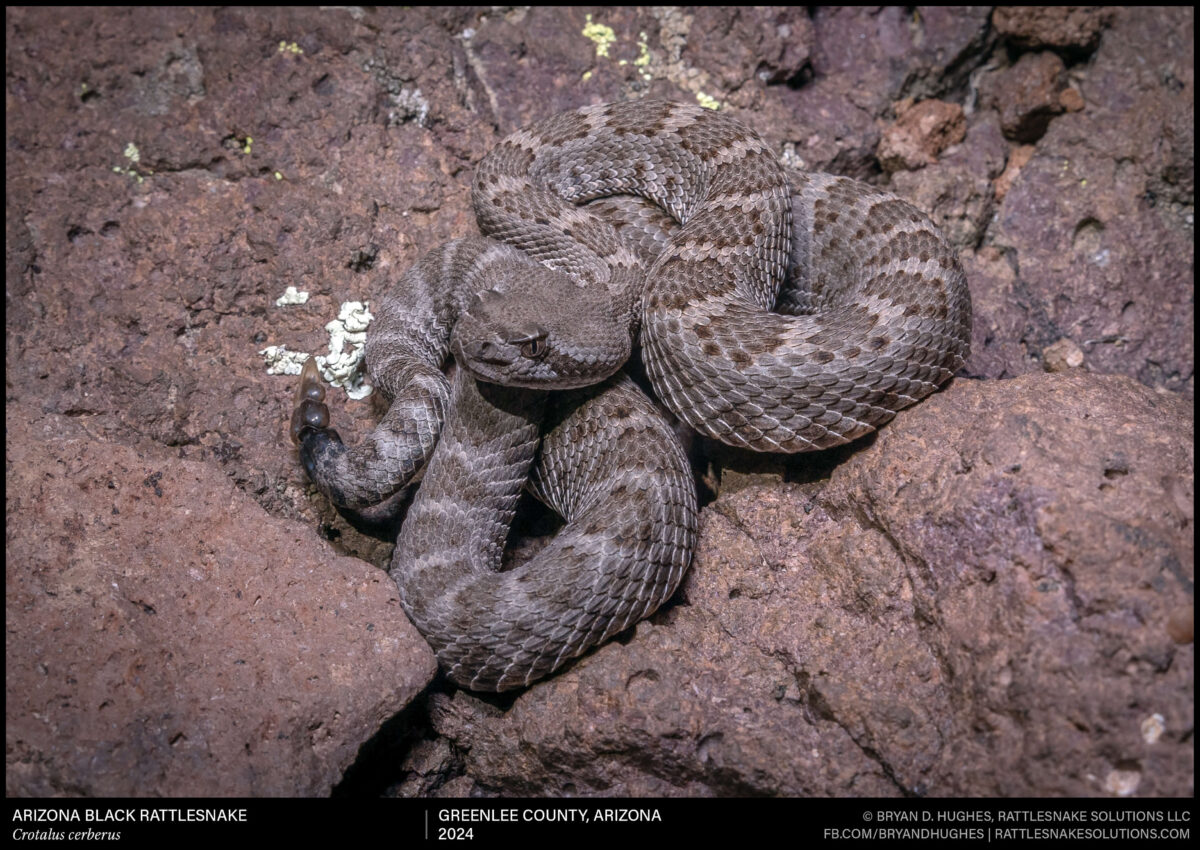
A young Arizona Black Rattlesnake from the eastern end of their range, in Greenlee County, Arizona. With most of the light cross bars already having disappeared into the background color, this one may be an interesting looking adult.