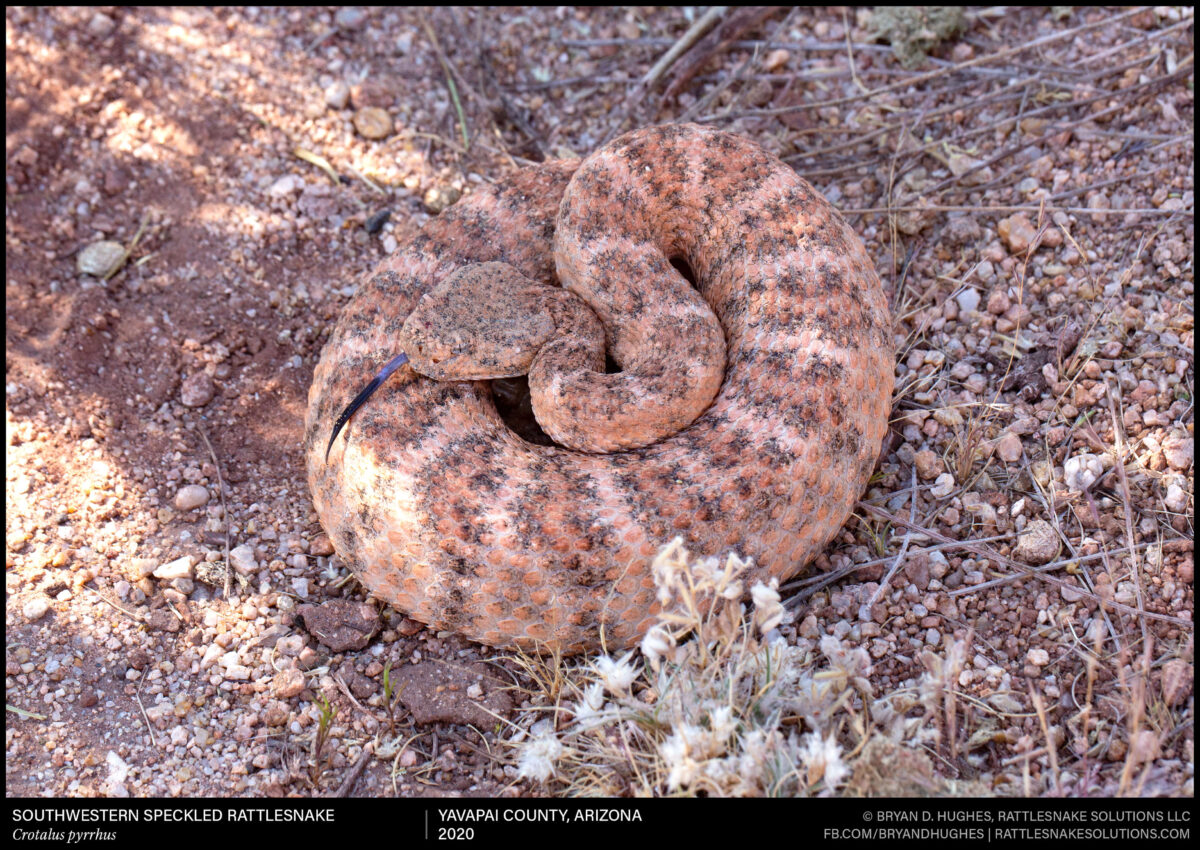
A Southwestern Speckled Rattlesnake from central Arizona. In this region, the rocks are often brightly colored with oxidized metals and tinted crystals. This makes for some really amazing snakes.

A Southwestern Speckled Rattlesnake from central Arizona. In this region, the rocks are often brightly colored with oxidized metals and tinted crystals. This makes for some really amazing snakes.

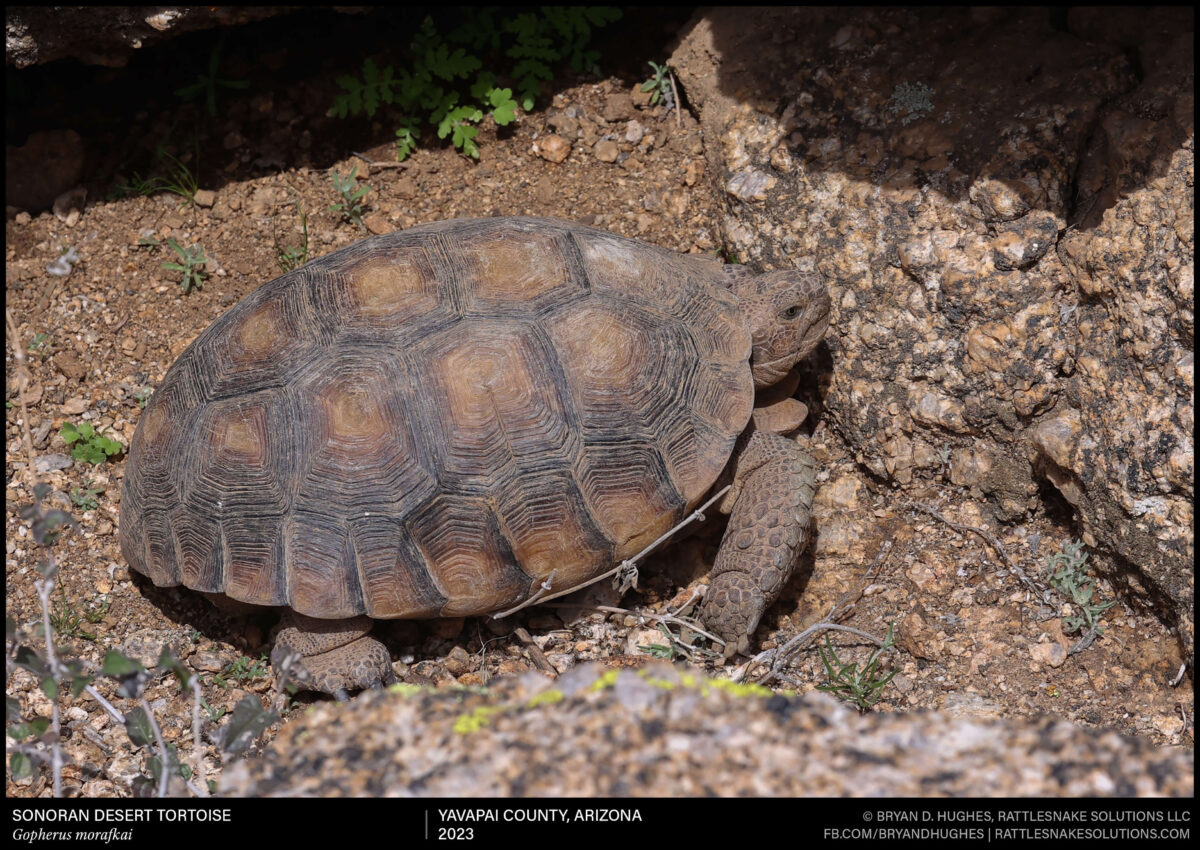
A Sonoran Desert Tortoise cruising around the rocky outcrop it calls home each Winter. It shares the space with a few Western Diamondback Rattlesnakes and at least one Gila Monster … and a beehive.

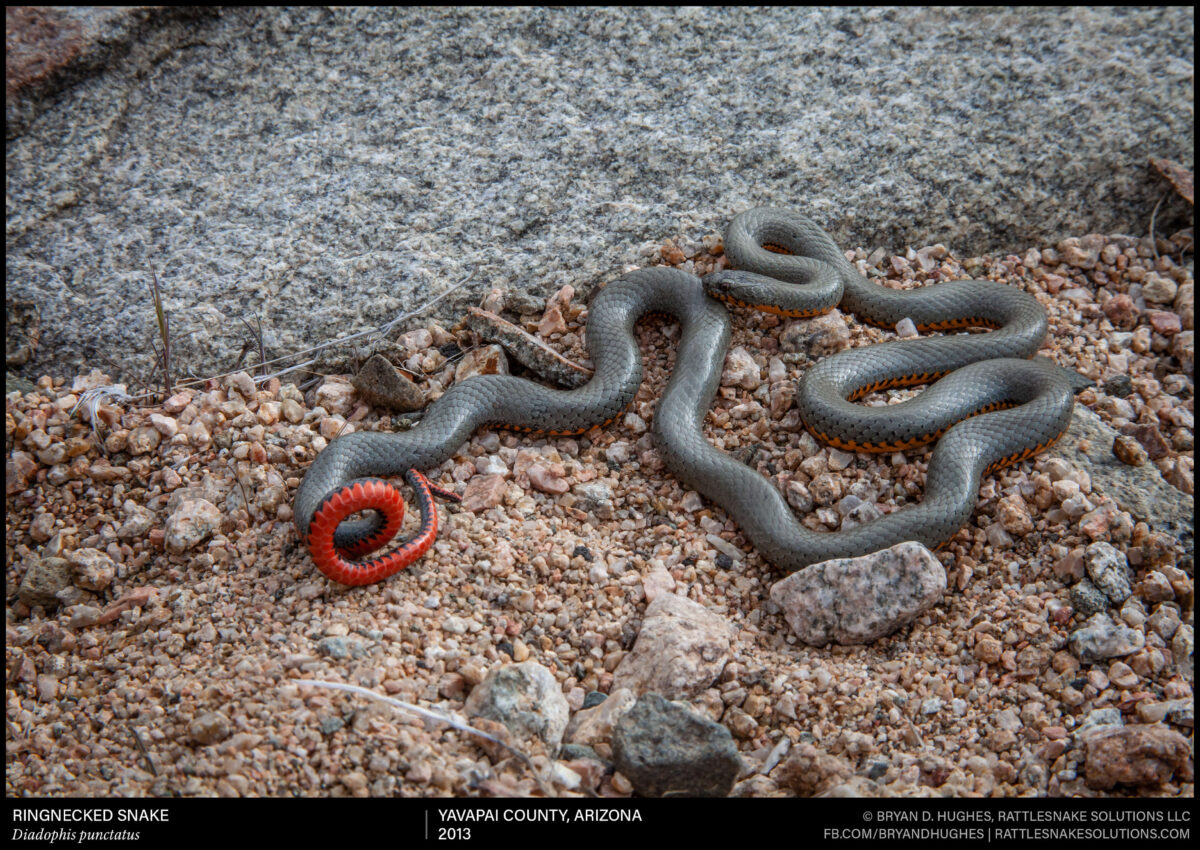
A Regal Ringnecked Snake we found in central Arizona many years ago. These are venomous, but harmless, eating a wide variety of prey from invertebrates to other snakes. The red color under the tail, which is shown here in defensive display, is just a hint at the bright colors that run the length of the belly.

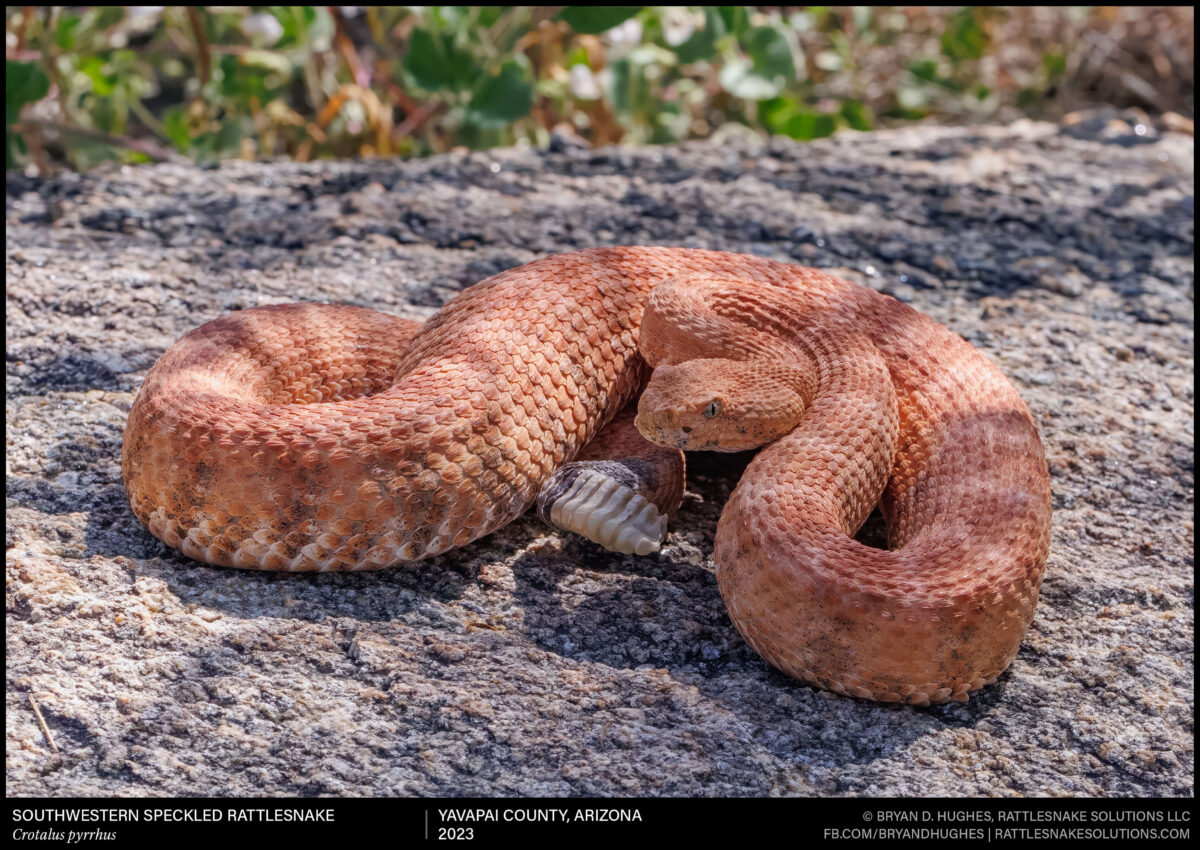
A bright orange and pink Southwestern Speckled Rattlesnake we found in Yavapai County, Arizona several years ago, photographed in the last light of the day. These snakes look just like the rock they’re found near, so the iron-rich boulders where this one is from make for a very pretty animal.

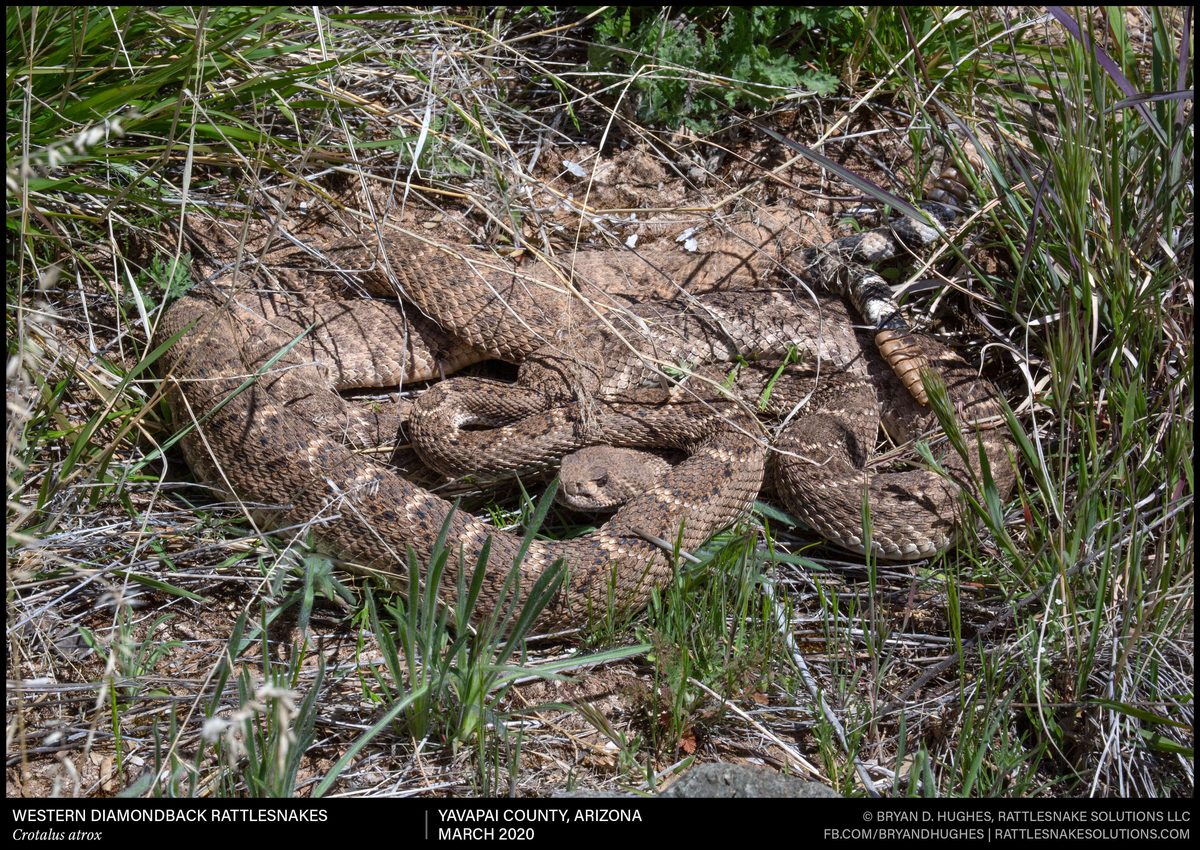
A large male Western Diamondback Rattlesnake cruising through dense vegetation, on the lookout for others that may be near. At this higher elevation den in the late fall, the females are already tucked into rock crevices and caves. All that remain on the surface are the largest males, patrolling for rivals, and getting into the occasional fight. This one finished its loop and settled back into the sunny spot it prefers for awhile, before doing it all again about an hour later. Why wait until spring to fight for the good spot, when you can do it in the fall?

This Arizona Black Rattlesnake noticed me at the same time that I saw it as I climbed up a steep, rocky hillside. I stopped and got a few photos, and saw another one right next to it deeper in the crevice of the rocks. I was able to then back down the hill for another route up without further disturbance, and it resumed its move out to the open to get some sun.

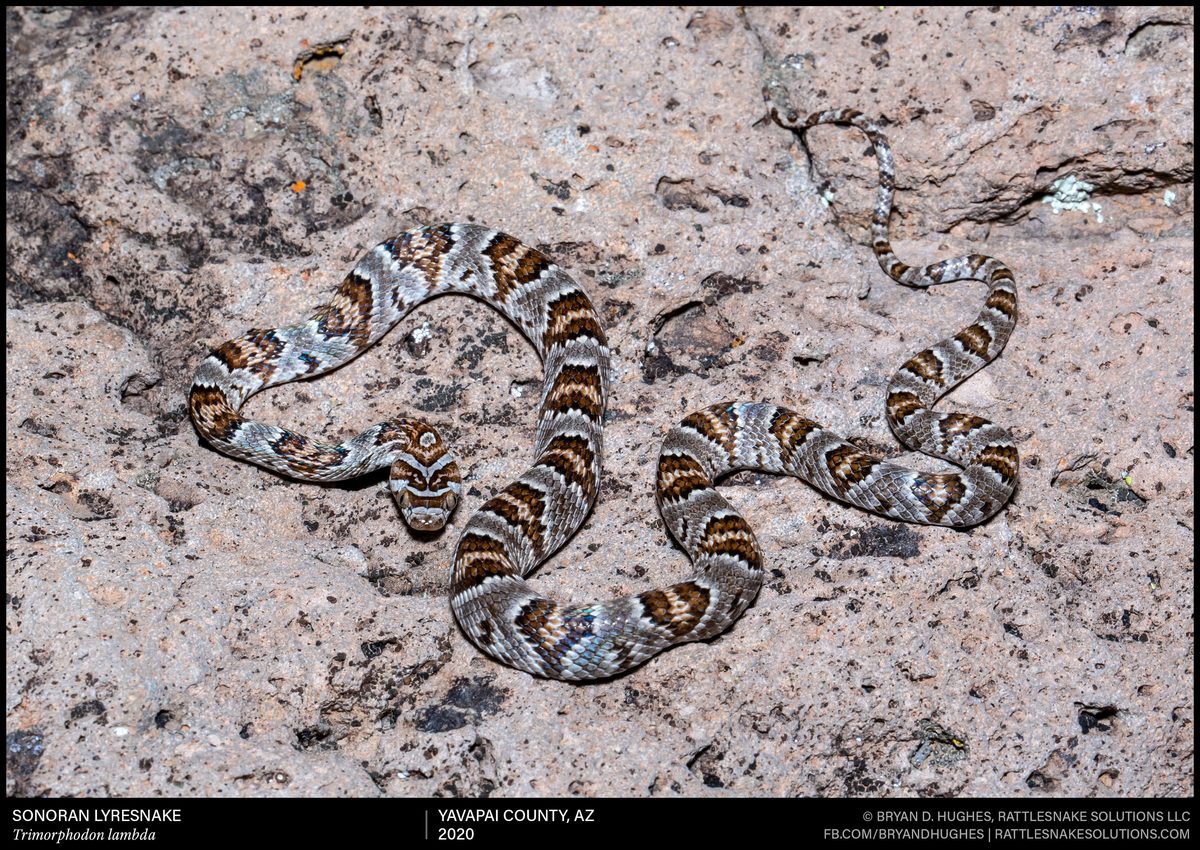
A Sonoran Lyresnake found in central Arizona on a night hike.

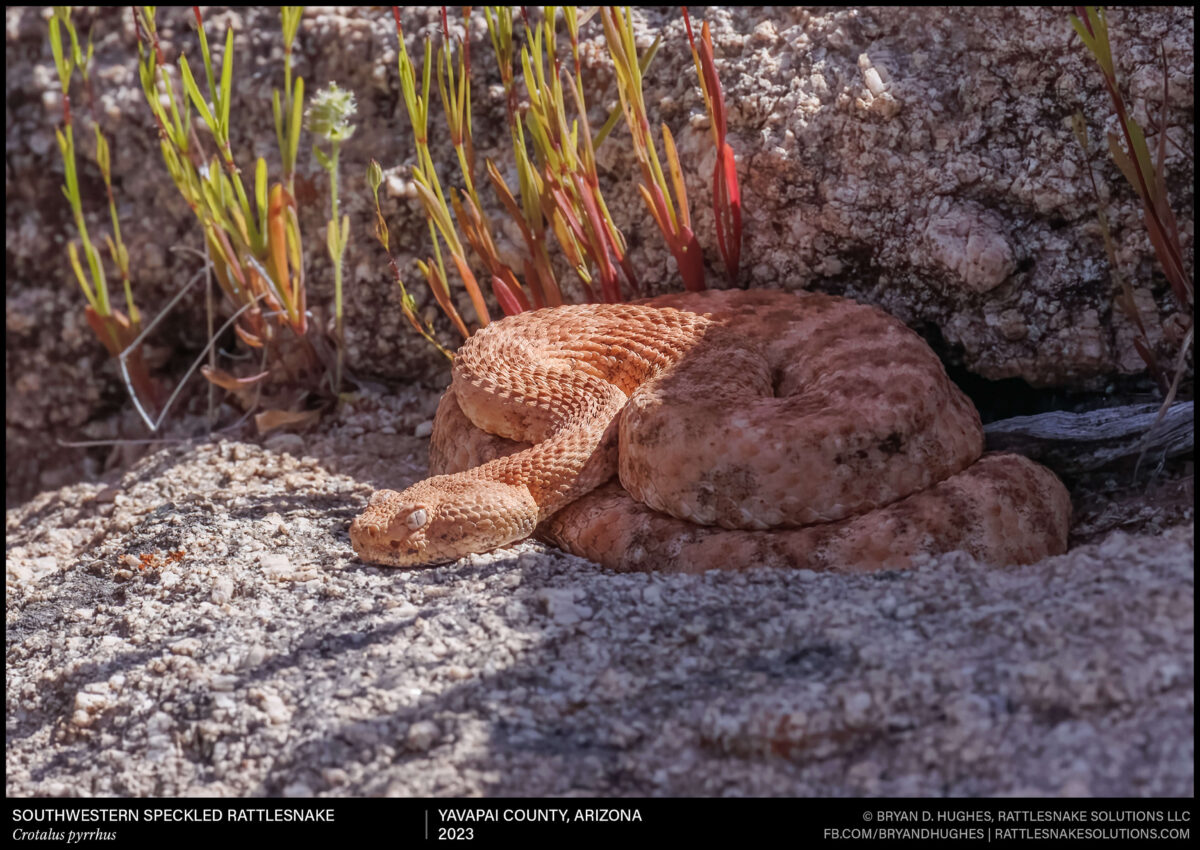
A rattlesnake that looks like a rock. This Southwestern Speckled Rattlesnake was found in central Arizona in an area of rusty granite and quartz. The resulting cryptic pattern is just as colorful, including speckled grey blue eyes. Though it is brightly colored, these snakes can be very difficult to see in context.

Cochran, C. (2019). Variation in morphology, diet, and venom composition in Crotalus pyrrhus (Cope 1867) [Doctoral dissertation, Loma Linda University]. Loma Linda University Electronic Theses, Dissertations & Projects. https://scholarsrepository.llu.edu/cgi/viewcontent.cgi?article=3590&context=etd
Crowell, H. L., Whelan, J. M., & Harmel, M. V. (2020). Rattlesnake colouration affects detection by predators. Journal of Zoology, 310(1), 1–11. https://doi.org/10.1111/jzo.12786
Hanscom, R. J., & Higham, T. E. (2023). Ambush hunting in snakes: Behaviour, function, and diversity. In Snakes: Ecology, behavior, and conservation (pp. 1–32). ResearchGate. https://www.researchgate.net/publication/373257803_Ambush_Hunting_in_Snakes_Behavior_Function_and_Diversity
Hanscom, R. J. (2025). From ambush to activity: Using accelerometry to reveal cryptic behaviors of rattlesnakes and kangaroo rats [Doctoral dissertation, University of California, Riverside]. eScholarship. https://escholarship.org/content/qt4ft2985w/qt4ft2985w.pdf
Teshera, M. S. (2021). Strike-induced chemosensory searching, kleptoparasitism, and the possibility of chemical crypsis in rattlesnakes [Doctoral dissertation, University of Texas at El Paso]. UTEP Digital Commons. https://scholarworks.utep.edu/cgi/viewcontent.cgi?article=4357&context=open_etd
One of the native turtles of Arizona, a Sonoran Mud Turtle we saw cruising around a water hole in Yavapai County. These stinky little guys can live in many waterways below the rim, and can be seen any time of day and year in the right conditions.

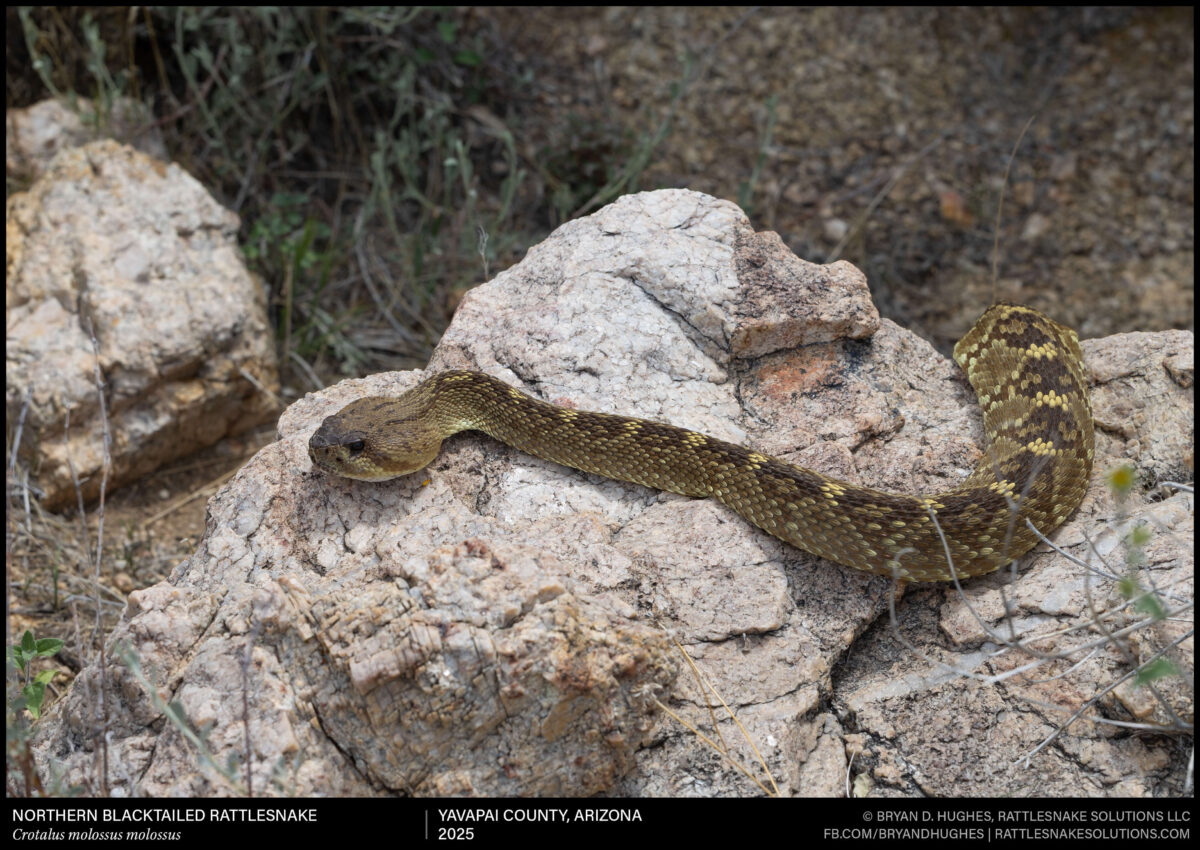
A Blacktailed Rattlesnake from central Arizona. These snakes are often a green shade, leading to misidentification as a Mojave Rattlesnake (which, ironically, are seldom green in many areas). These are large rattlesnakes that live in mountainous terrain, commonly seen by hikers but rarely by homeowners.