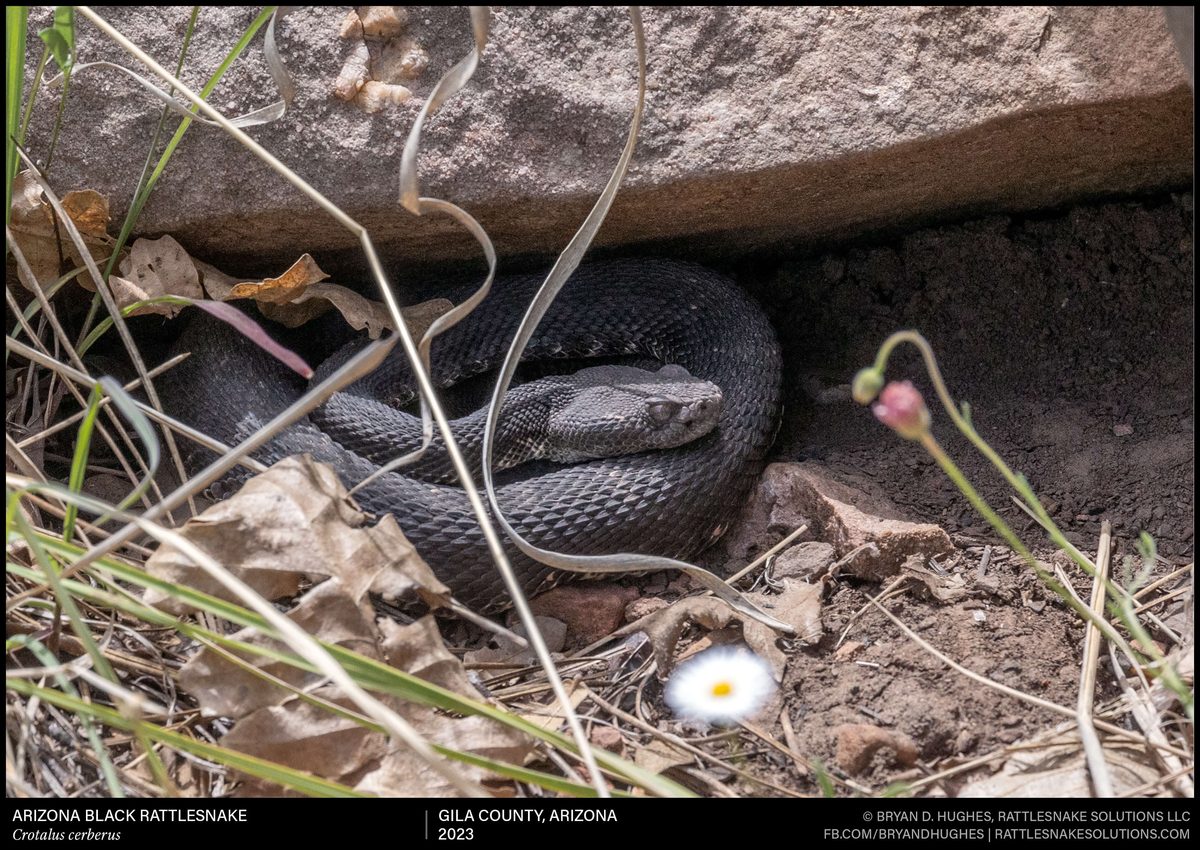
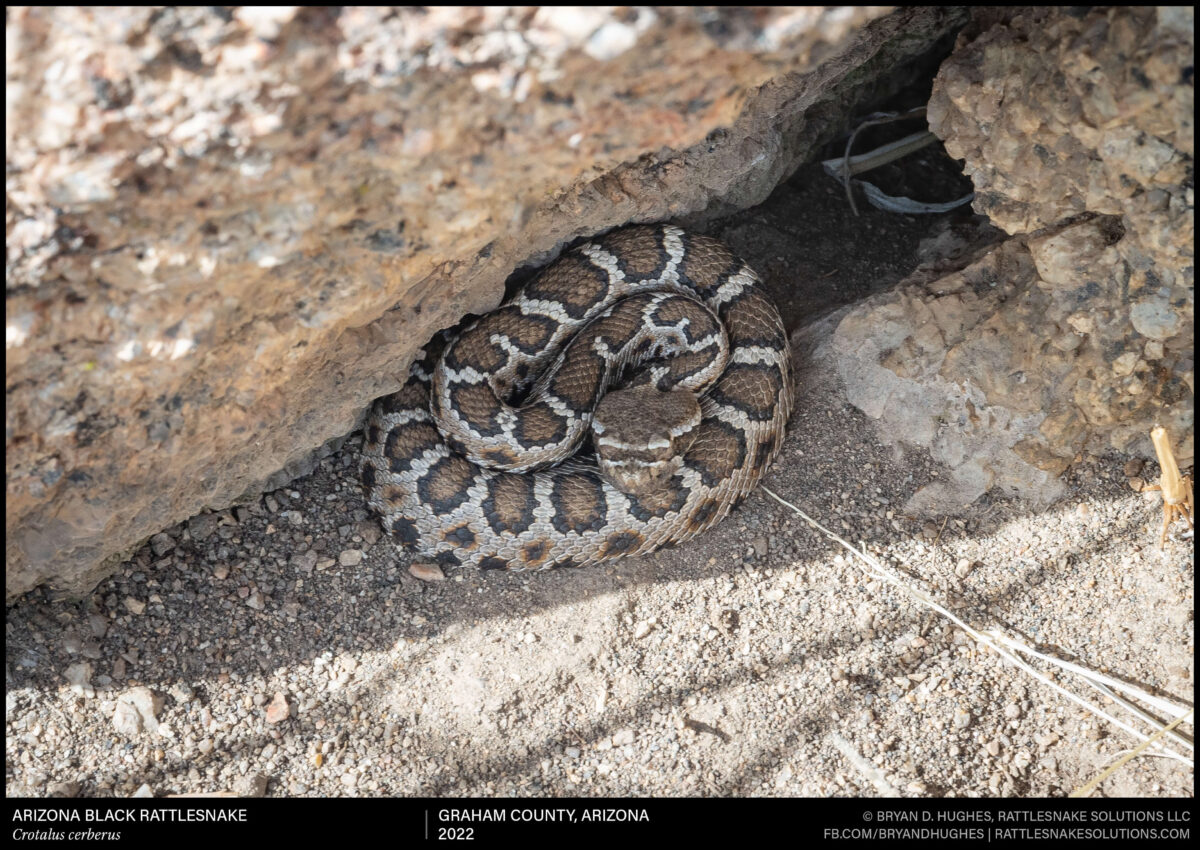
An Arizona Black Rattlesnake hanging out at the entrance of her den. She, and several other pregnant (gravid) females, remain here all summer. When it’s time for the babies to be born, they will be right where they need to be several weeks later when temperatures cool and it’s time for their first hibernation.
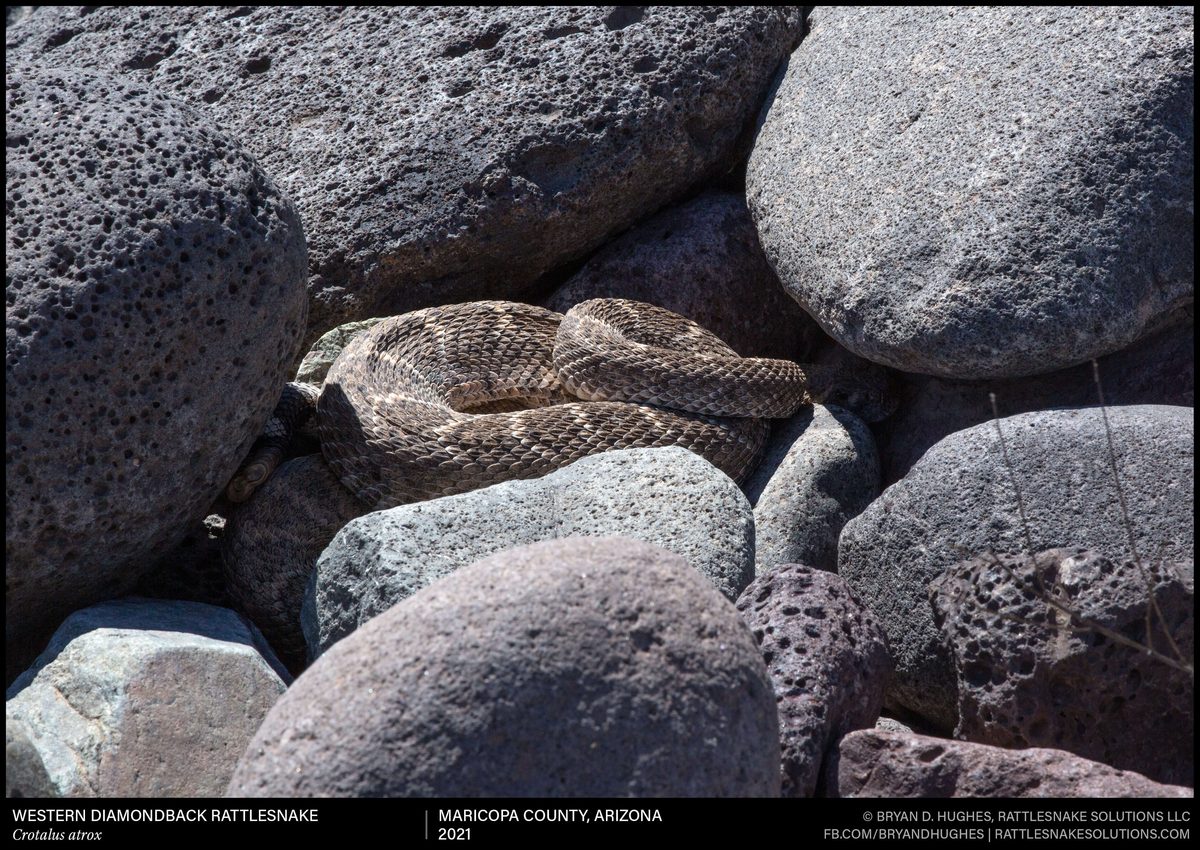
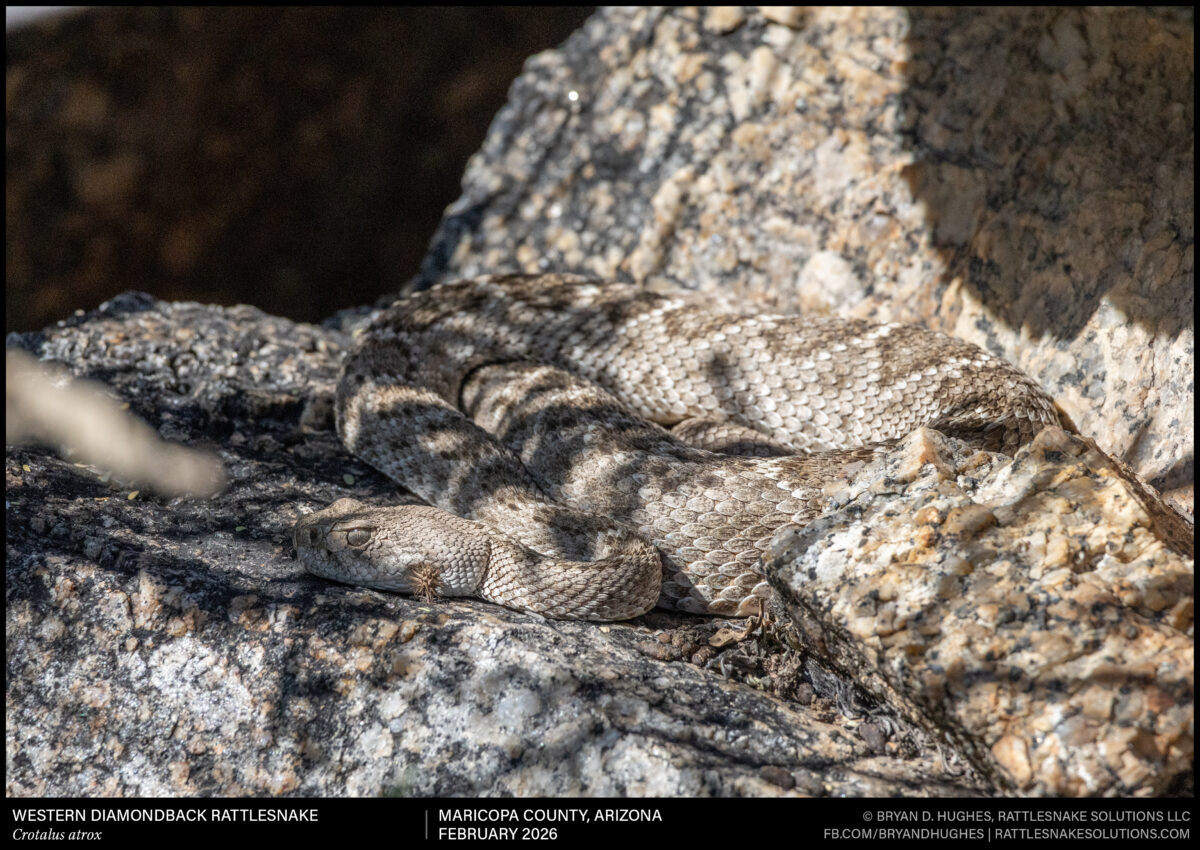
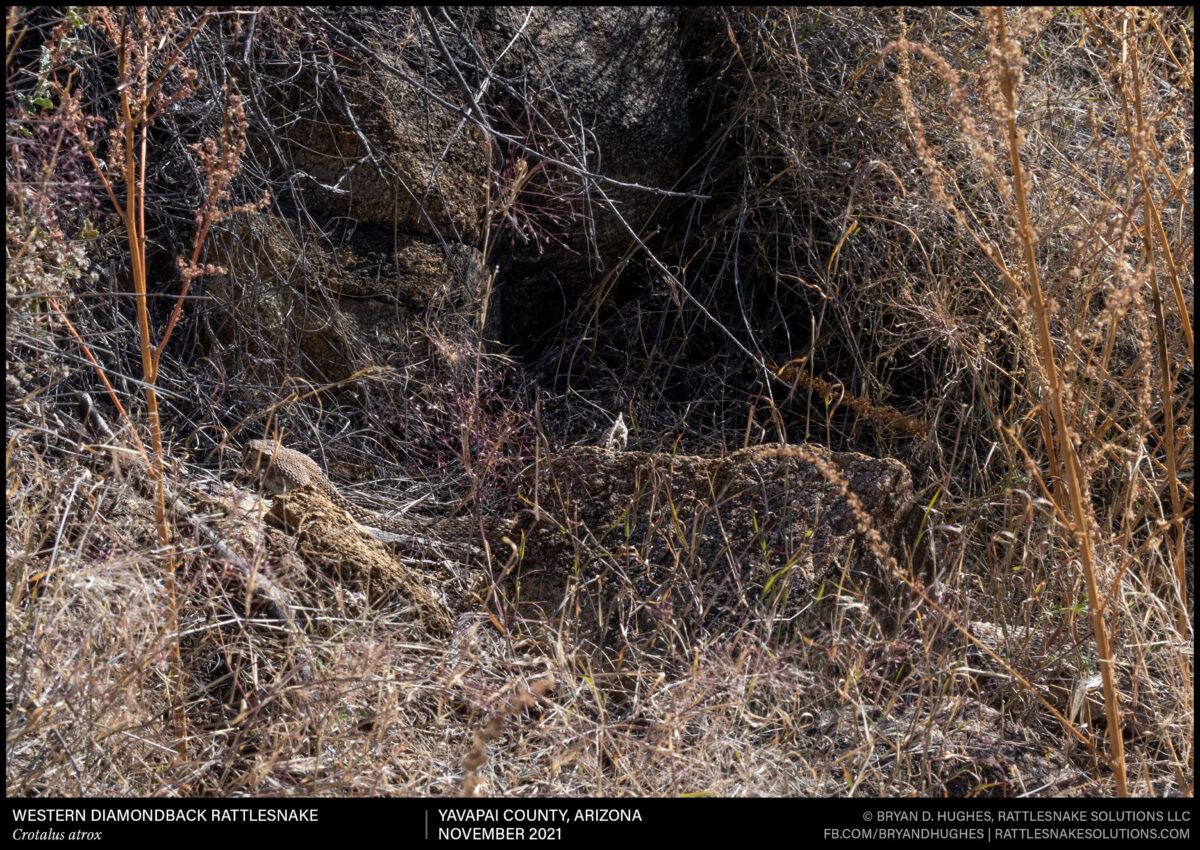
A Western Diamondback Rattlesnake resting on the surface of the rock pile that serves as its winter den. This was not a particularly warm day, but it and several others were found in close proximity to one another to get ready for another year.
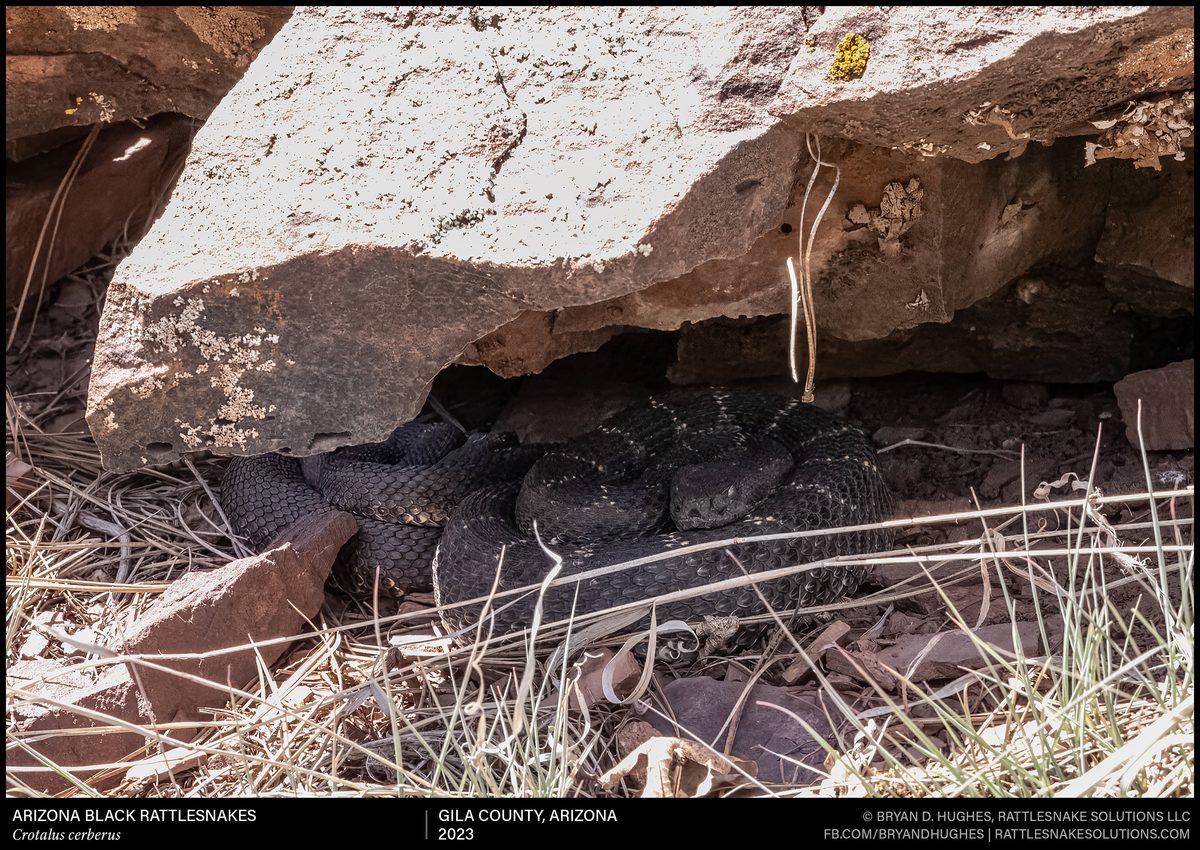
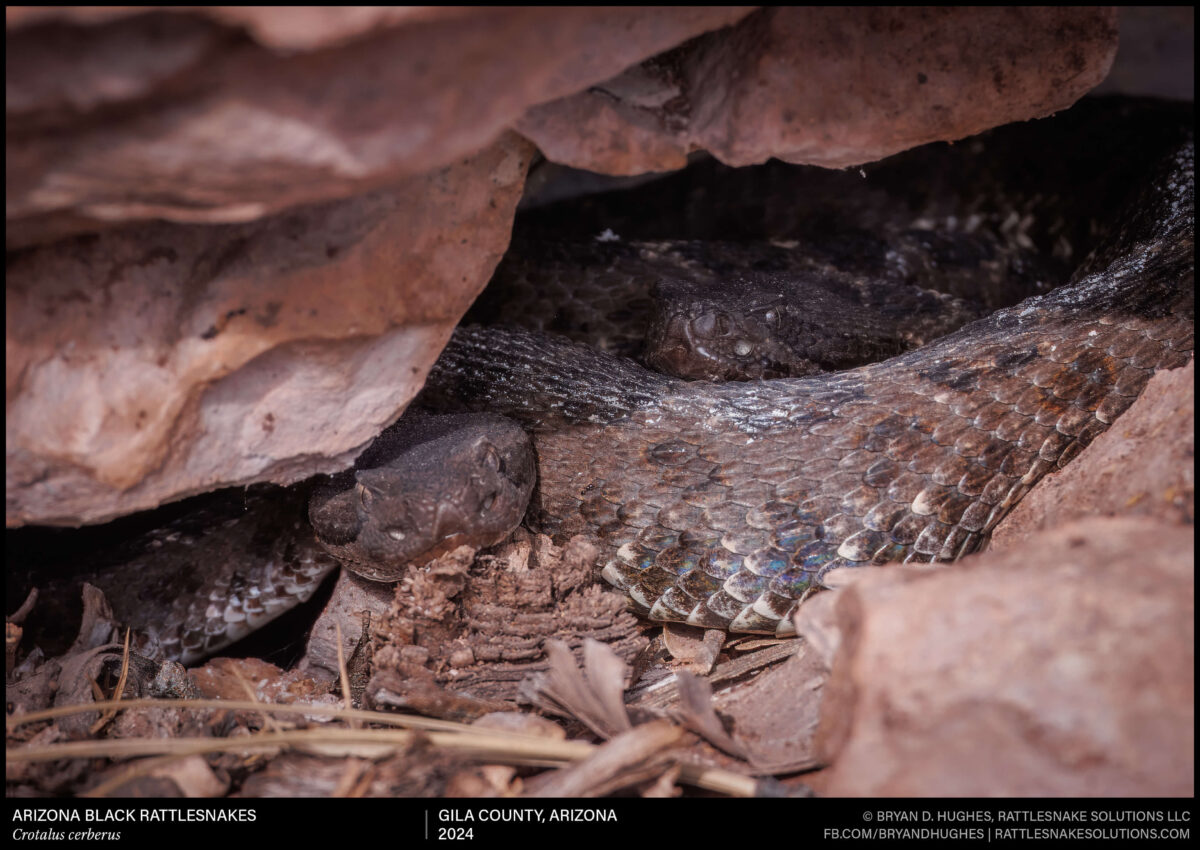
This couple of female Arizona Black Rattlesnakes was hanging out at the entrance of a den a few summers ago. While these sites are more densely populated during the winter, they’ll also be used by gravid (pregnant) females during the summer, where they can be seen basking in preparation of the little ones during the monsoon season. Elsewhere on the hillside, other females were doing the same.
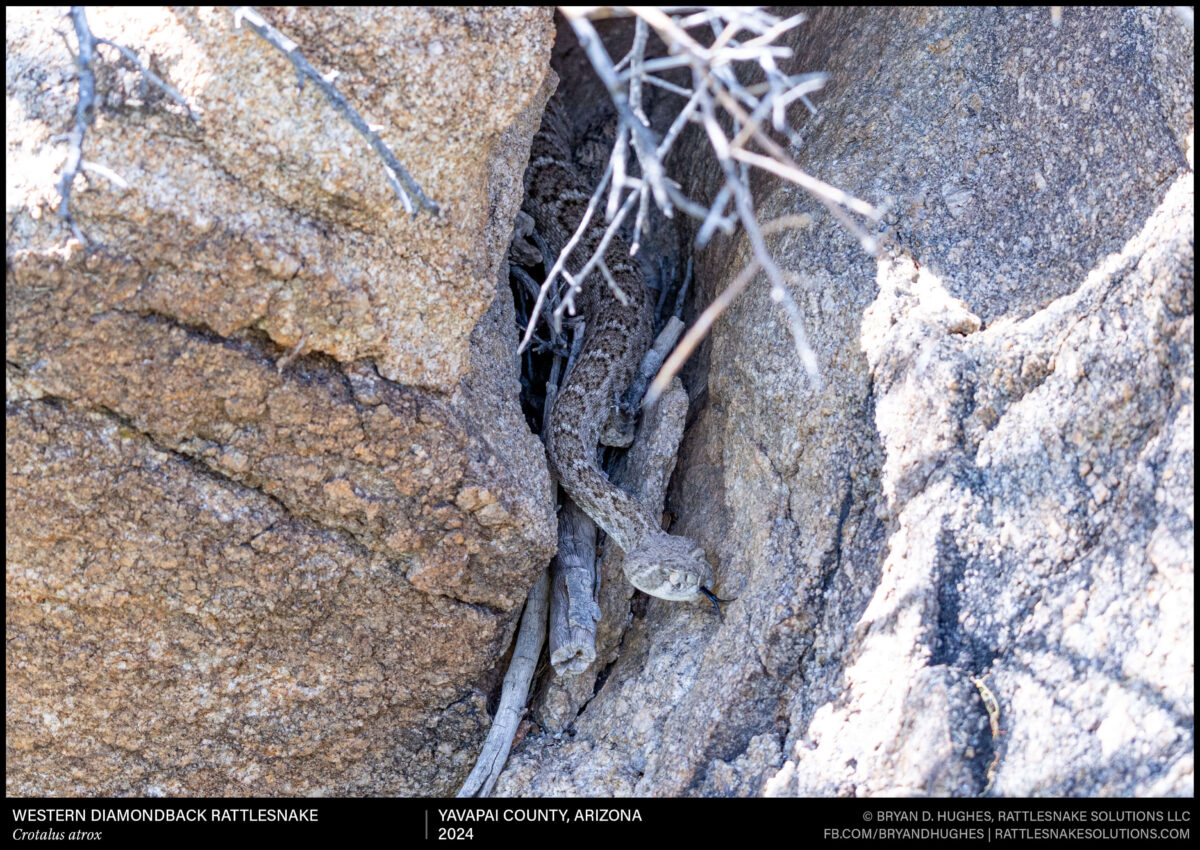
We were out checking dens on a spring day and stopped at one last spot. It was a rocky outcrop relatively isolated from the rest of the mountain, and looked great from at distance. Upon getting to it, we were immediately greeted with this large Western Diamondback Rattlesnake on the move a short distance from what we’d later recognize as the entrance.
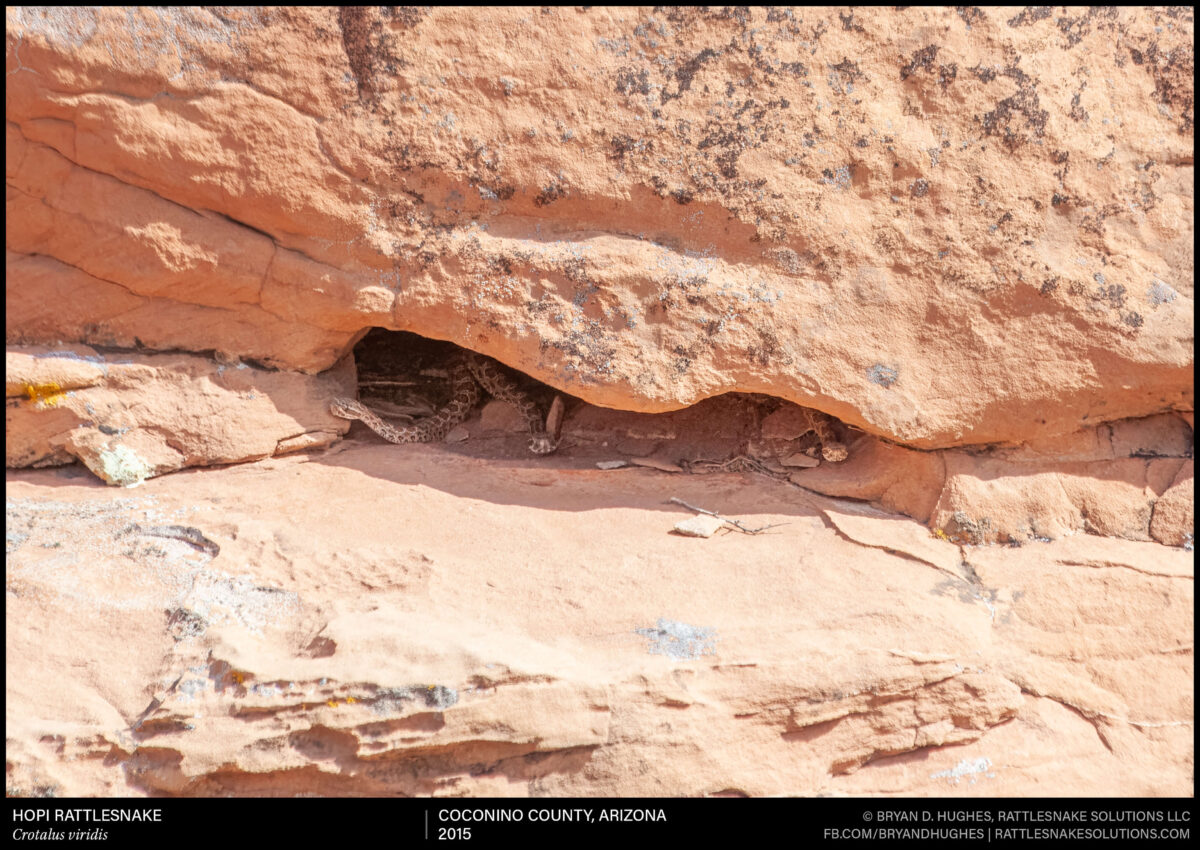
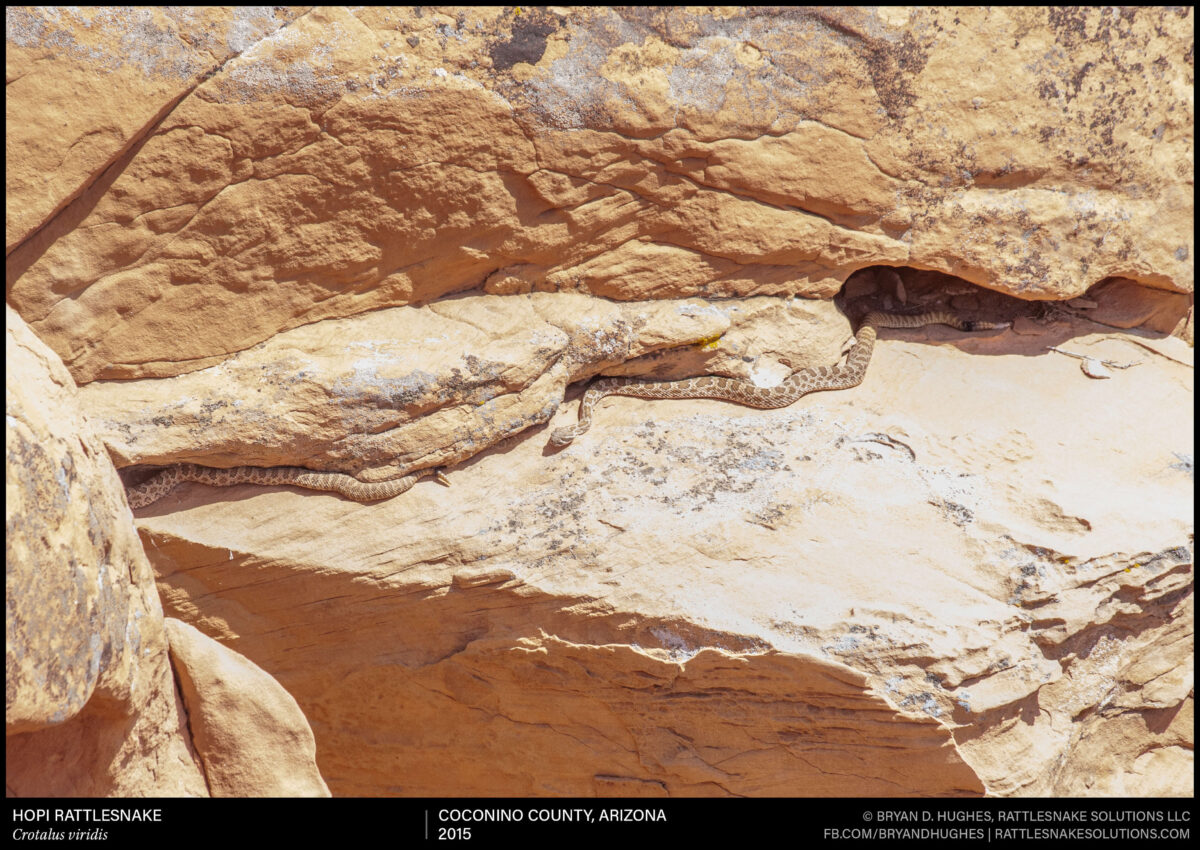
It takes a lot of patience to sneak up on this den of Prairie Rattlesnakes in northern Arizona. Unlike most rattlesnake dens I visit, these spook incredibly easily, retreating at the sight of me from well over 100′ away. Even when moving slowly, they seem to recognize the threat and disappear … for the rest of the day. It’s only by arriving before it’s warm enough to emerge and hiding behind boulders that it was possible for me to get these photos, and watch their actions for the morning.
These small variants of the species were once considered a separate subspecies (Hopi Rattlesnake), more than twenty years ago, but may be again, based on discussion of new research from reliable sources. These are all only around 1 to 1.5′ long, and will never get bigger. This is quite different than the much larger, greener (~3′) versions of the same species found in the Juniper-dominated hills, a relatively short drive away.
This topic will almost certainly mean the comments here will be dominated by snake people, similarly emerging from the crevices of the internet to shake fists in various directions. Taxonomy is a bit like music – whichever bands were popular at the time a young herpetologist is most active seem to become the prime lexicon, all future versions to be summarily dismissed as noise of youth.
A young Arizona Black Rattlesnake resting outside its den, where several larger adults have yet to emerge for the day. In time, it will darken and its pattern will fade to be the familiar dark black with yellow bands common in the region.
This same little snake, a year prior and a lot smaller, was what first gave this spot away as a rattlesnake den. Females stay at or near winter dens all year to give birth there, so a chance sighting of a neonate in August was an indication there was more to be found. Since then, I have found dozens more Arizona Black Rattlesnakes, as well as Western Diamondback Rattlesnakes and Blacktailed Rattlesnakes sharing the same den.
A large male Western Diamondback Rattlesnake cruising through dense vegetation, on the lookout for others that may be near. At this higher elevation den in the late fall, the females are already tucked into rock crevices and caves. All that remain on the surface are the largest males, patrolling for rivals, and getting into the occasional fight. This one finished its loop and settled back into the sunny spot it prefers for awhile, before doing it all again about an hour later. Why wait until spring to fight for the good spot, when you can do it in the fall?
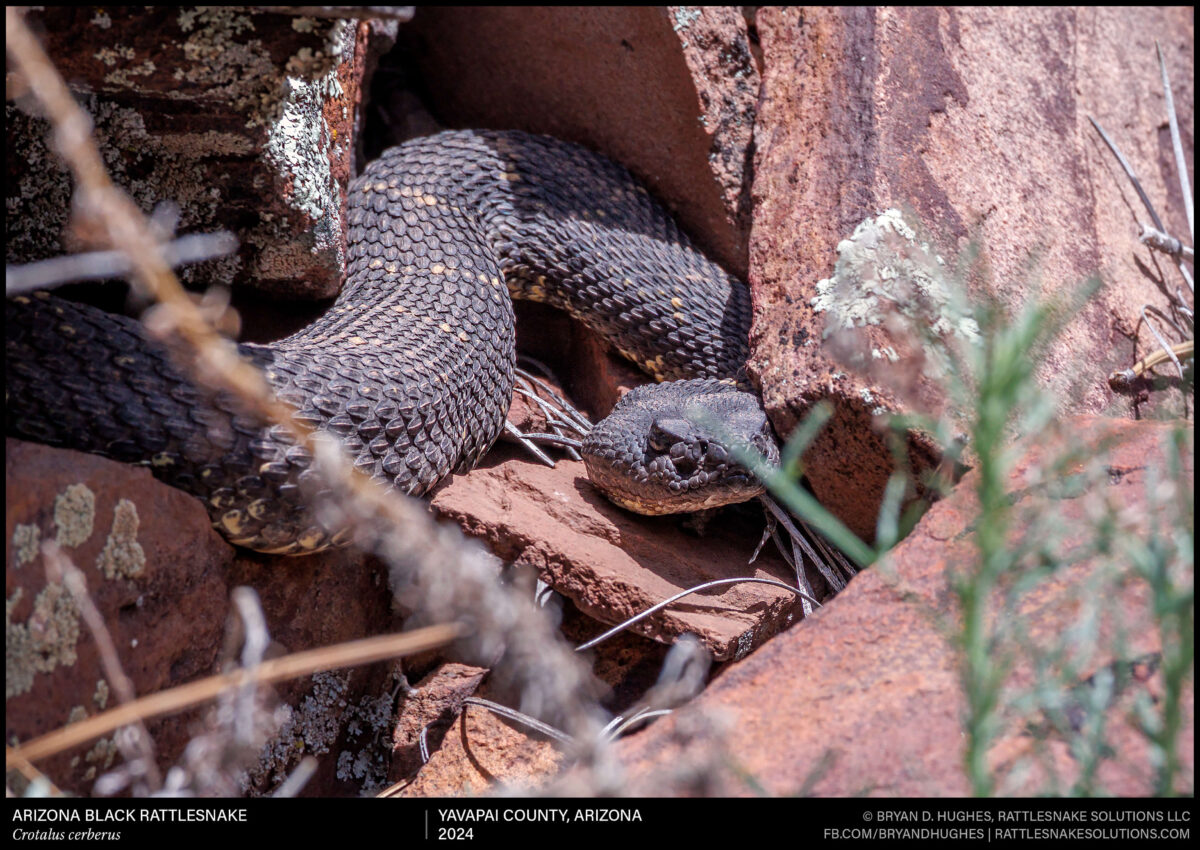
This Arizona Black Rattlesnake noticed me at the same time that I saw it as I climbed up a steep, rocky hillside. I stopped and got a few photos, and saw another one right next to it deeper in the crevice of the rocks. I was able to then back down the hill for another route up without further disturbance, and it resumed its move out to the open to get some sun.