Gila Monsters Are More Active Than You Probably Think

An old myth out there about Gila Monsters is that they are underground hiding away almost all of their lives. I remember repeating this myth decades ago myself, before having spent a lot of time with them, watching their habits, and reading all there is about them. While it’s true that most people in Arizona won’t see many, or any, in their lives … they are neither rare, or as hidden as believed.

During much of the winter and early Spring, Gila Monsters are on the surface for most of the day, basking the day away in small groups in carefully selected locations. During that time, they may make some adjustments and journeys to other nearby sites. After that, they are out and about daily, looking for quail eggs and other young animals on the ground. Then when it gets hot, they are again active … but at night. There are lizard and tortoise eggs to find, and that means a lot of walking and searching. And finally during the fall, they’re again on the surface, getting any last meals and moving back to those sites they visit each year during the winter. There are some periods of time throughout the year where they may be more likely to be tucked away out of sight, bu the old quotes of “active only three weeks a year” or “hiding underground 90% of their lives” are simply false.

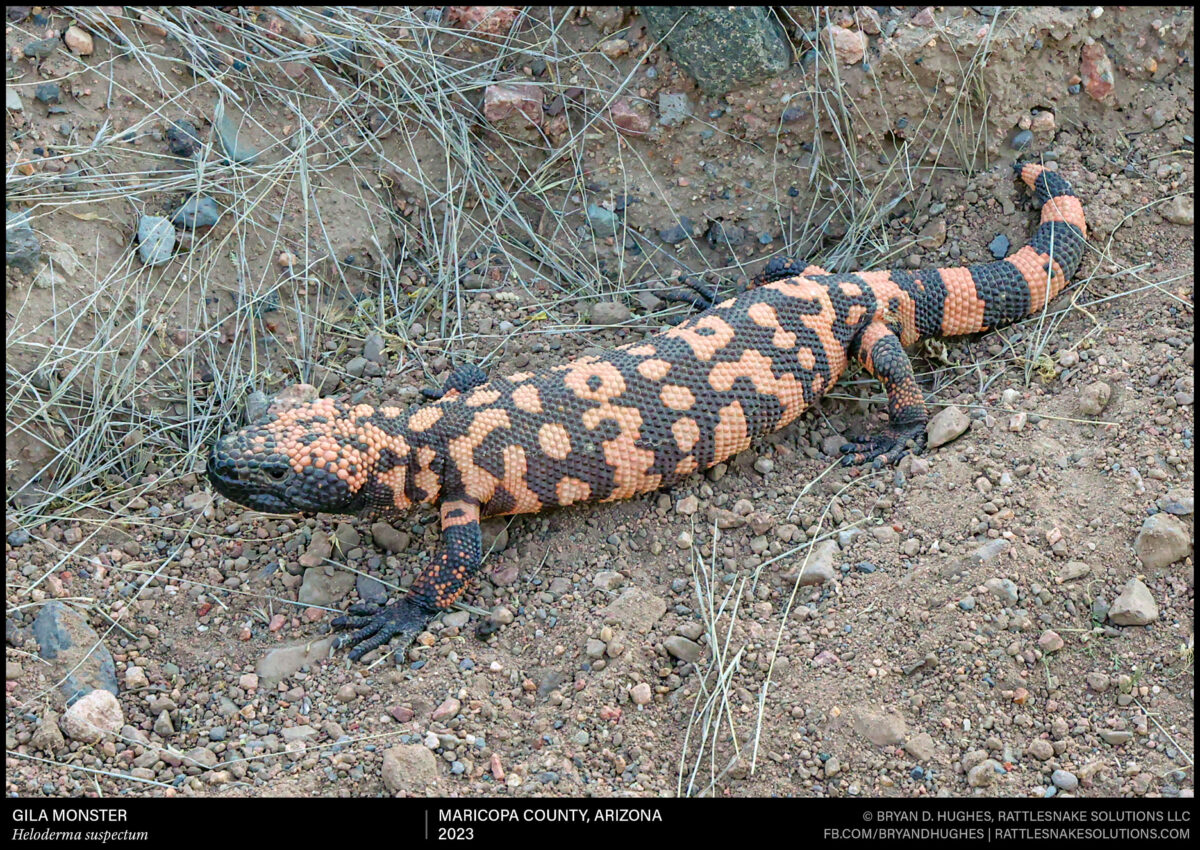
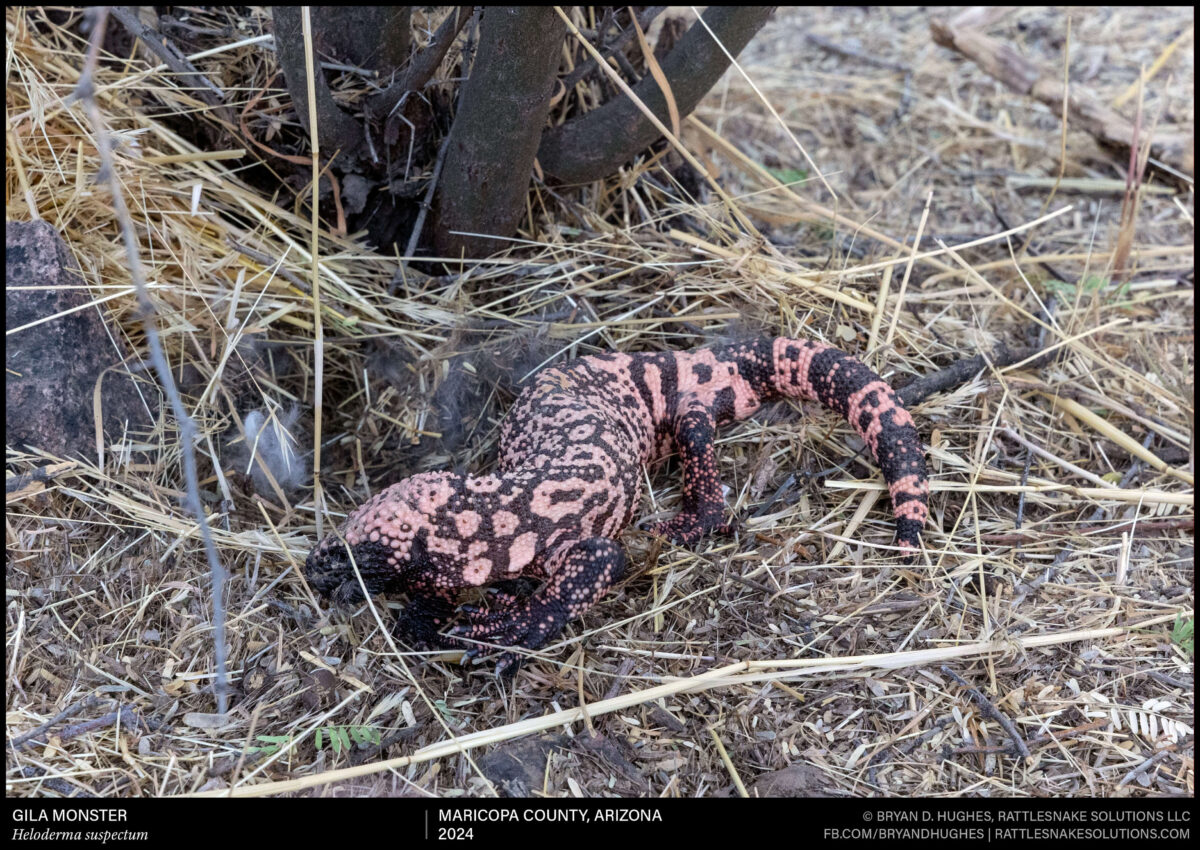
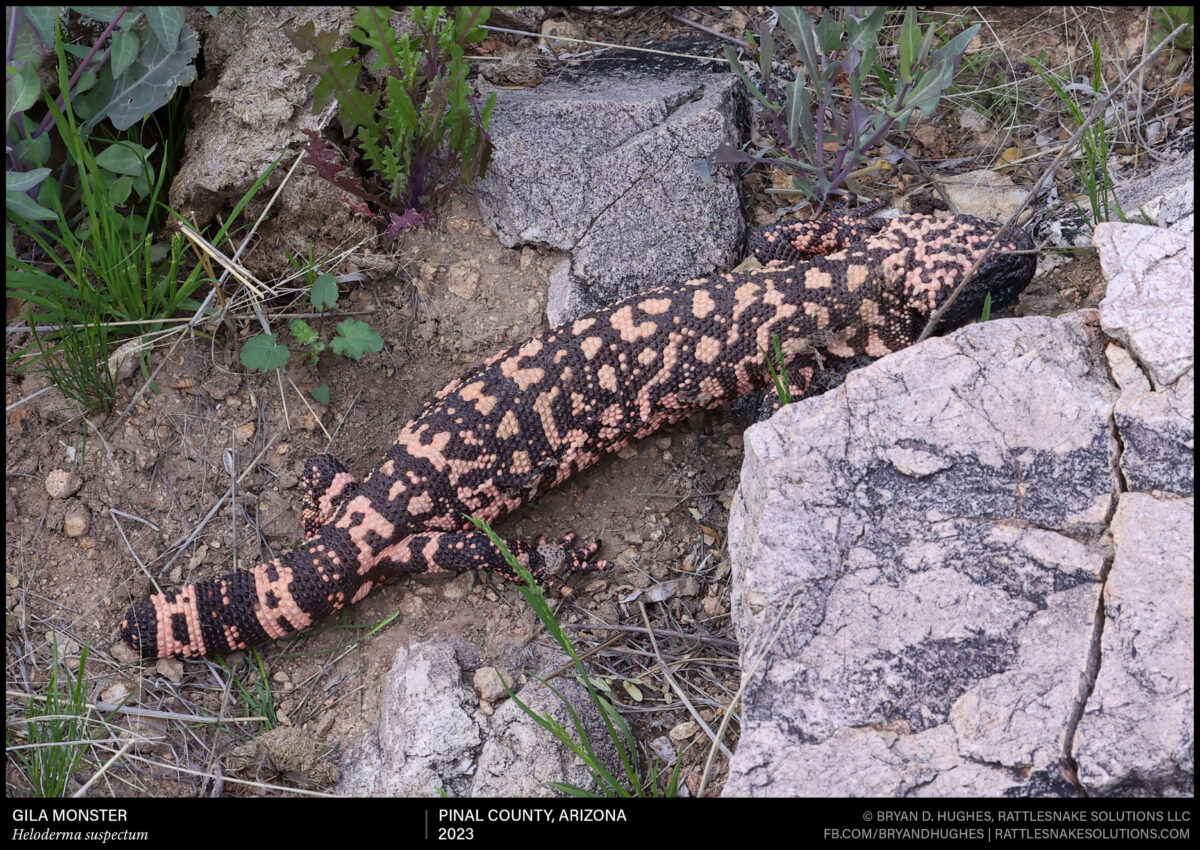
This one was out and about, busy as they tend to be, likely on the search for eggs or whatever else they’re doing.
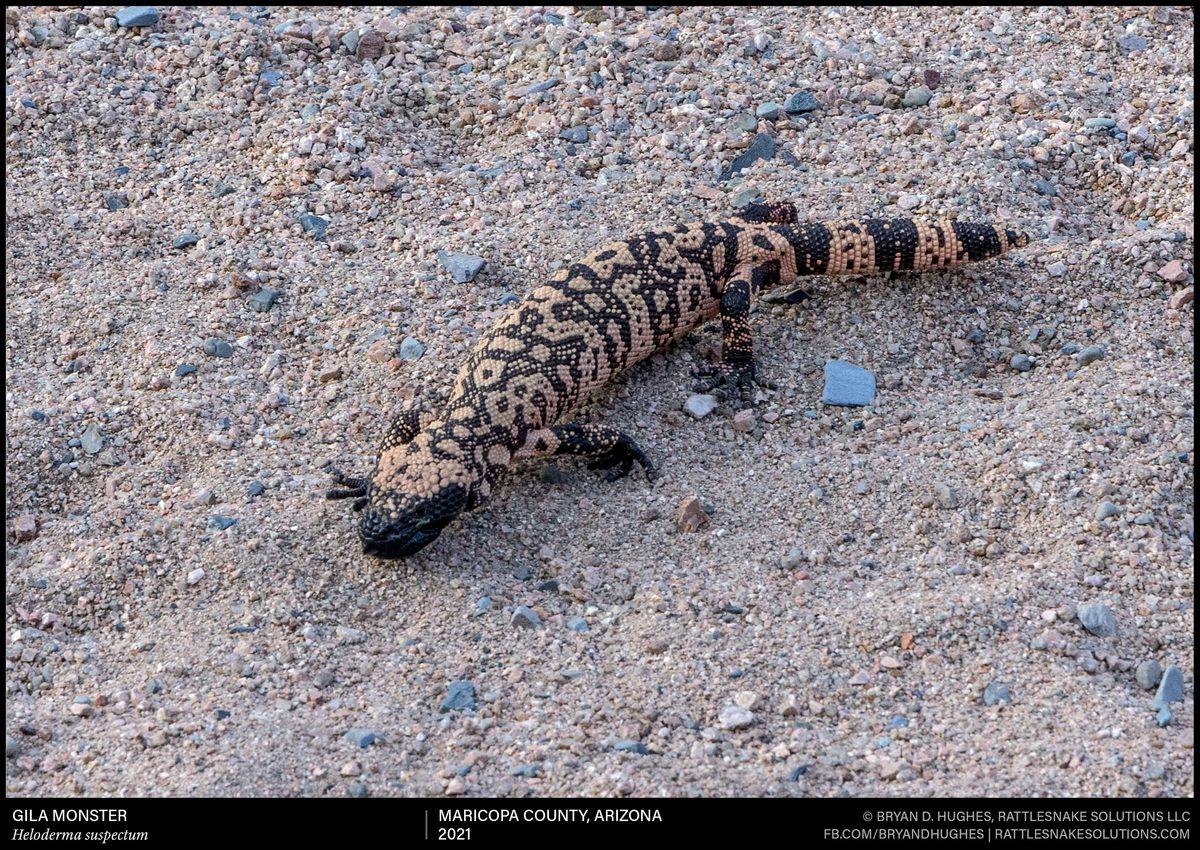
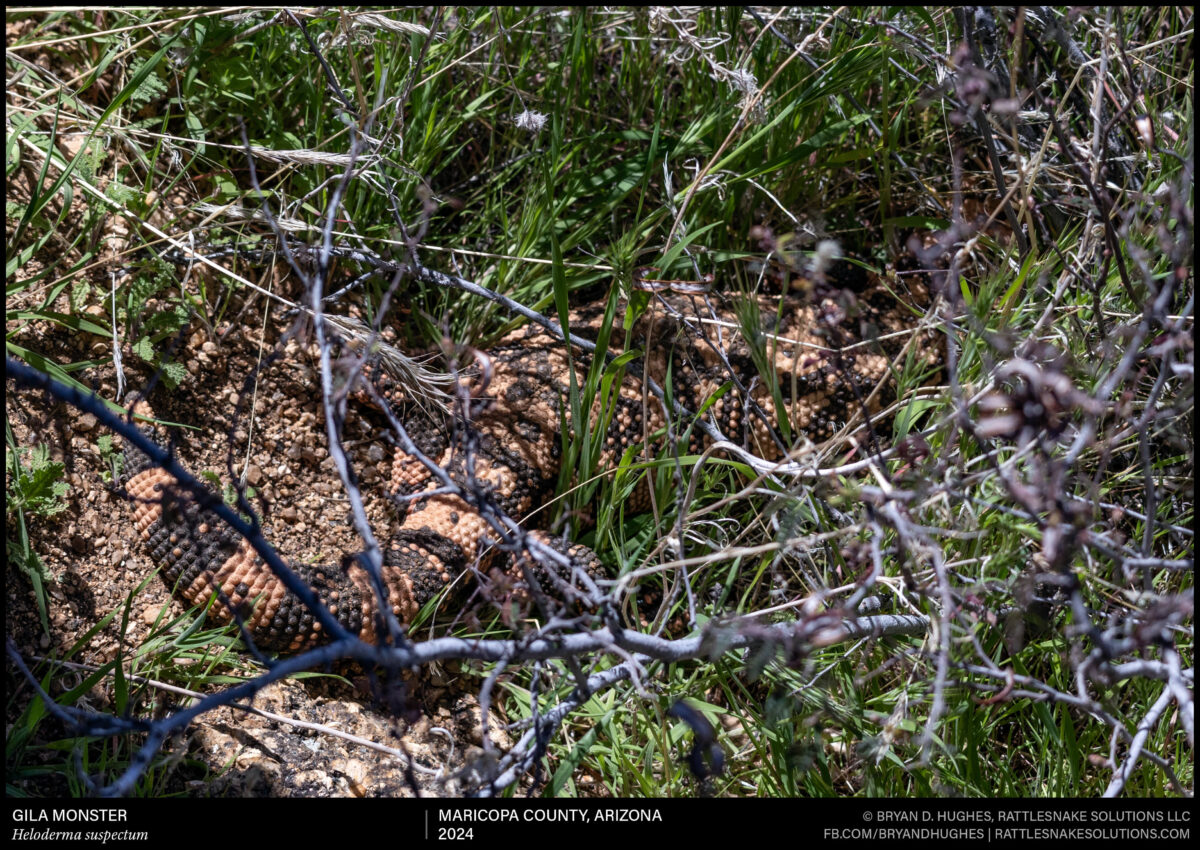
Gila Monster Hiding In Plain Sight

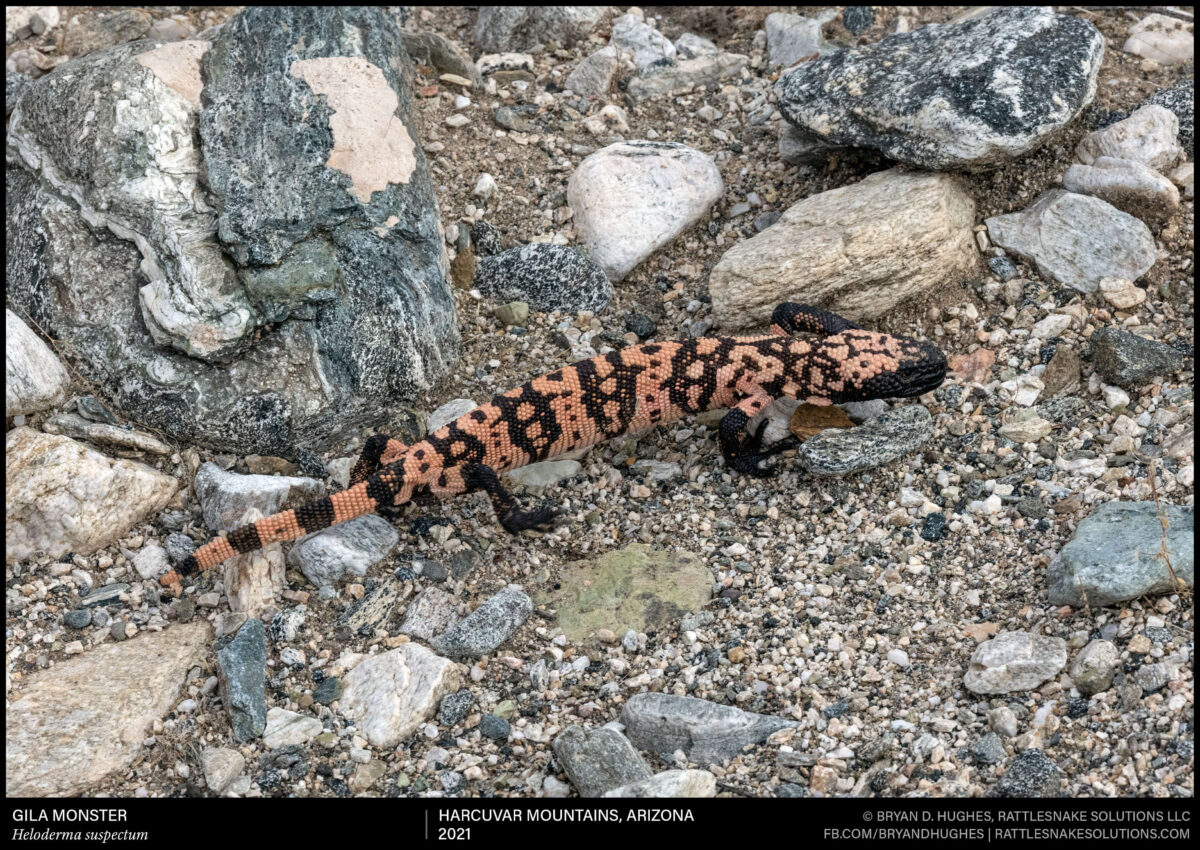
A Gila Monster (Heloderma suspectum) basking on a cool Spring day. Usually, it may seem that the bright yellow and black pattern of these animals makes them hard to see … but this shows where it works. The high-contrast, chaotic pattern makes the shape of a lizard disappear in dappled light. It’s common for even life-long residents of Arizona to see only one, or zero, Gila Monsters in their time in the outdoors, having walked right past many instances just like this.

Davis, J. R., & DeNardo, D. F. (2010). “Seasonal Patterns of Body Condition, Hydration State, and Activity of Gila Monsters (Heloderma suspectum) at a Sonoran Desert Site.” Journal of Herpetology, 44(1), 83–93. https://doi.org/10.1670/08-263.1

Gila Monster Out and About

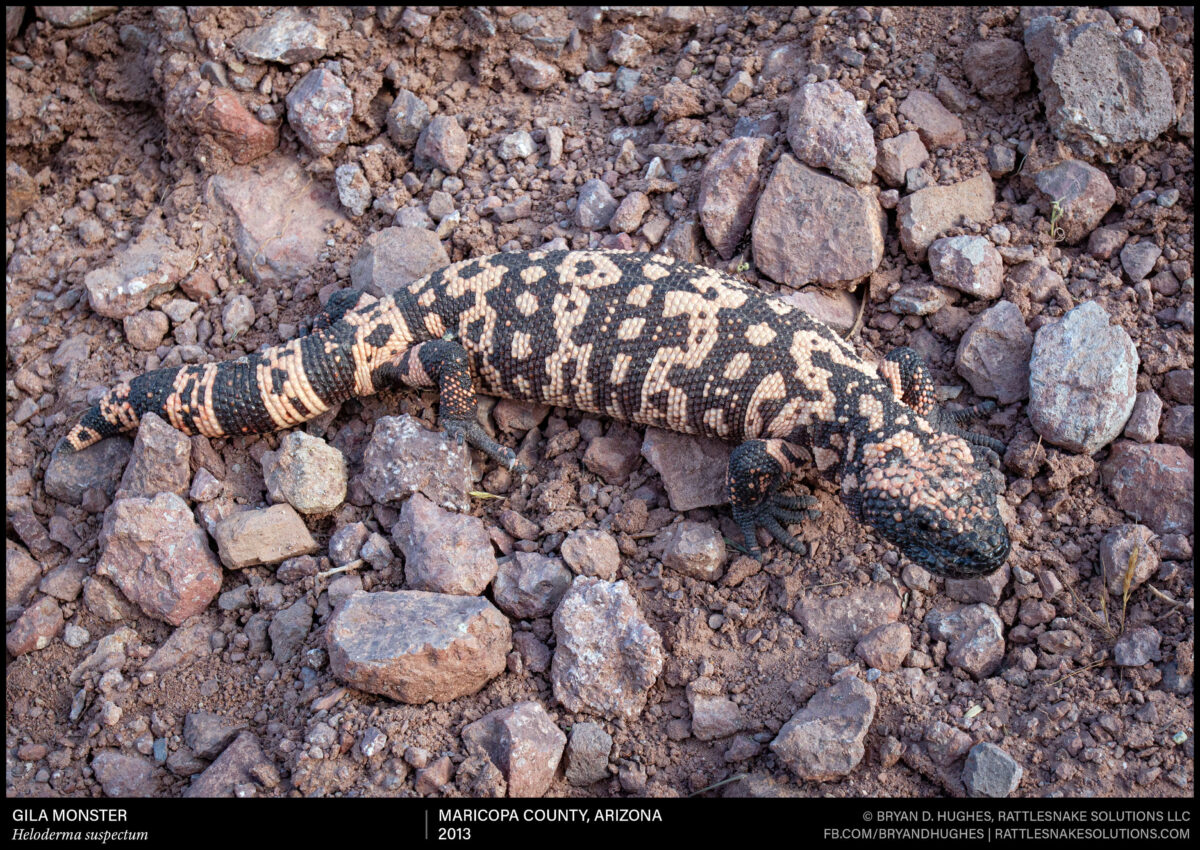
A Gila Monster out and about on a warm Spring day that I found a while back.

At that time, more than a decade ago, I knew relatively little about the day-to-day habits of these animals. Finding one was more a matter of luck than anything else. But, I’ve since learned a lot, and these are now often a higher observation count in a day than I’d had seen in an entire year.

Recommended reading, if you can find it:

Biology of Gila Monsters and Beaded Lizards — Daniel D. Beck (UC Press)

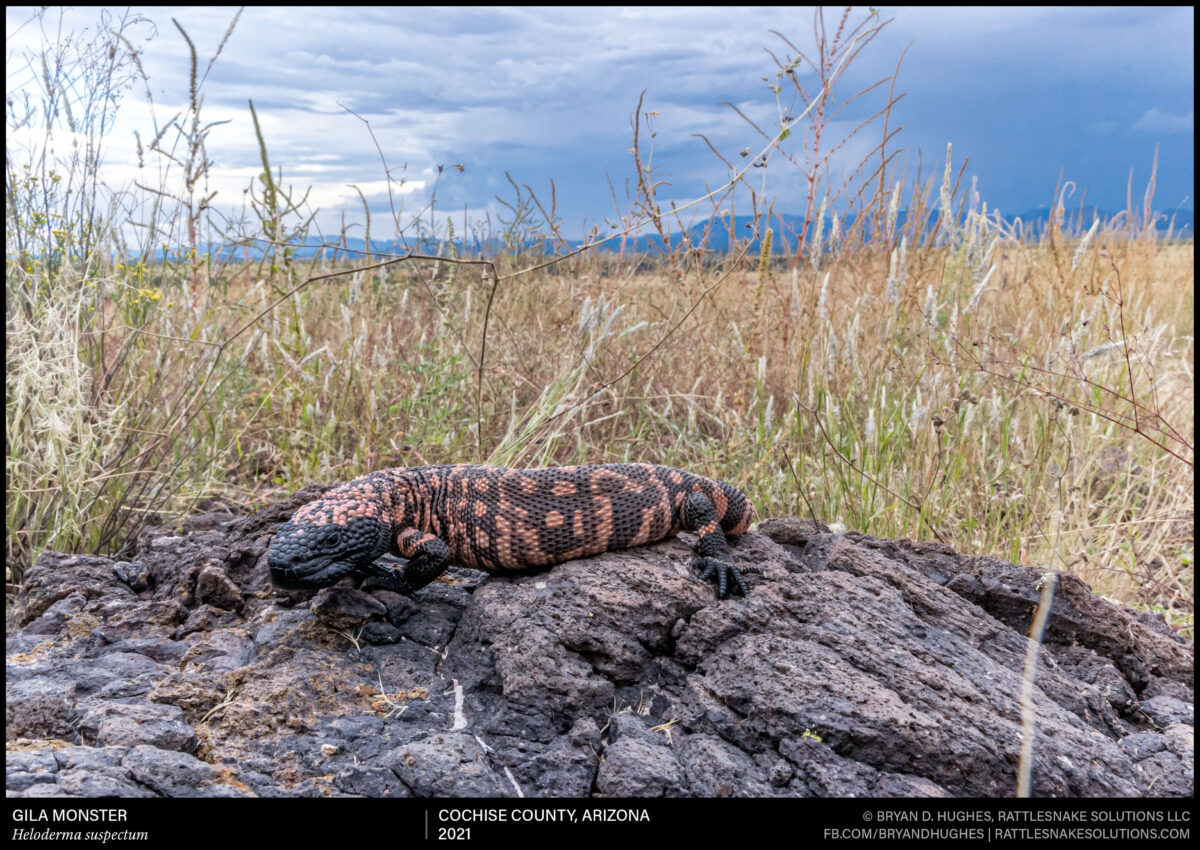
Gila Monster At Its Den

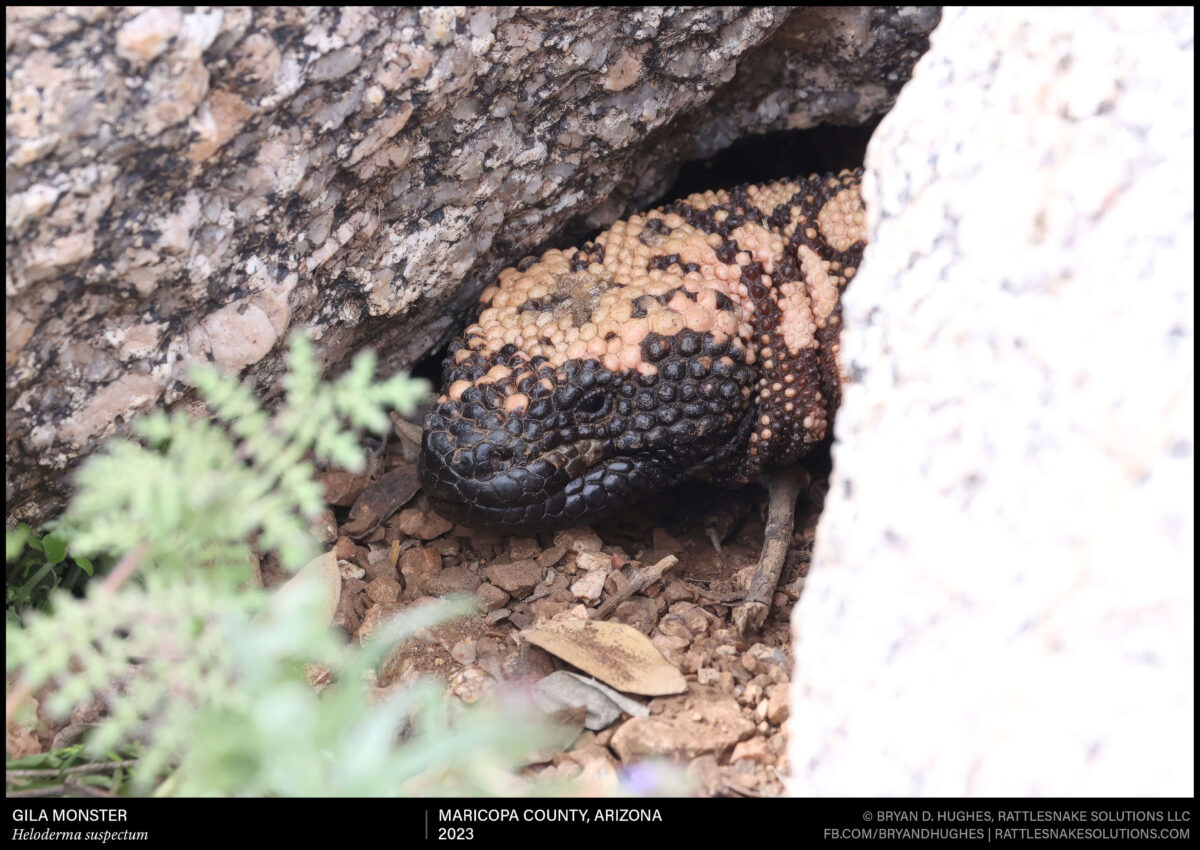
A Gila Monster peeking out of its spring staging spot, just down the hill from where it spent the winter. It shares this spot with several other Gila Monsters, a handful of Western Diamondback Rattlesnakes, and the occasional tortoise. It will spend the majority of each day during the early spring doing, basically, this. Resting in partial sun, disappearing if predators approach, and waiting to head out in nest-hunting mode as soon as the time is right.

Gila Monster Eating Baby Cottontails

A Gila Monster I followed to a nest of cottontails. It took a while, but it ate all three of them that were in there. Amazingly, they all fit, and the lizard ambled off to rest under an overhanging root in the drainage. It was a good example of how the venom of Gila Monsters is not necessary for predation, as the venom played no apparent role in the capture or consumption of its prey.

Gila Monster Spring Movement

A Gila Monster out and about on a spring day a couple of years ago. On mild days, these animals start to move away from often communal dens to springtime staging areas. They may take daily patrols, searching for nesting mammals and quail eggs. It’s common for hikers to report them on social media frequently within a few days’ time, usually in late February or early March, which is a reliable signal that the process has begun each year.

Gila Monster In A Burn Scar

A Gila Monster moving through a burn scar in central Arizona. Last year, fire from an illegal campfire swept through the area, fueled by invasive grasses. This one managed to survive, but shows signs of how close it came to death – the top of its head and patches on its tail are black scars.

Wildfires like this are now common, as fires, OHV use, and target shooting spark them constantly. With hotter, drier years, and increased human activity in the area, another fire is likely as soon as there’s enough regrowth to burn. The landscape in another decade will be unrecognizable, without saguaro, native trees, and erosion erasing the rocky arroyos where the only surface water was available.

If your first reaction is to deny human involvement in all of this, a better use of time would be to stop watching political messaging and start looking out your own window.

Barra, C., Fule, M., Beers, R., McGuire, L., & Youberg, A. (2025). Soil biogeochemical and hydraulic property response to wildfire across forested ecosystems of the Santa Catalina Mountains, Arizona, USA. CATENA. Elsevier.

https://www.sciencedirect.com/science/article/pii/S0341816225001043

Boyle, J. M. (2025). Spatial and temporal trends of reburns in western US forests (Undergraduate thesis, Gettysburg College). Cupola: Scholarship at Gettysburg College.

https://cupola.gettysburg.edu/student_scholarship/1153

Jiménez Morillo, N. T., Rosa Arranz, J. M., & Miller, A. Z. (2024). Soil degradation: Local solutions for a global problem. CSIC Digital Repository.

https://digital.csic.es/handle/10261/383118