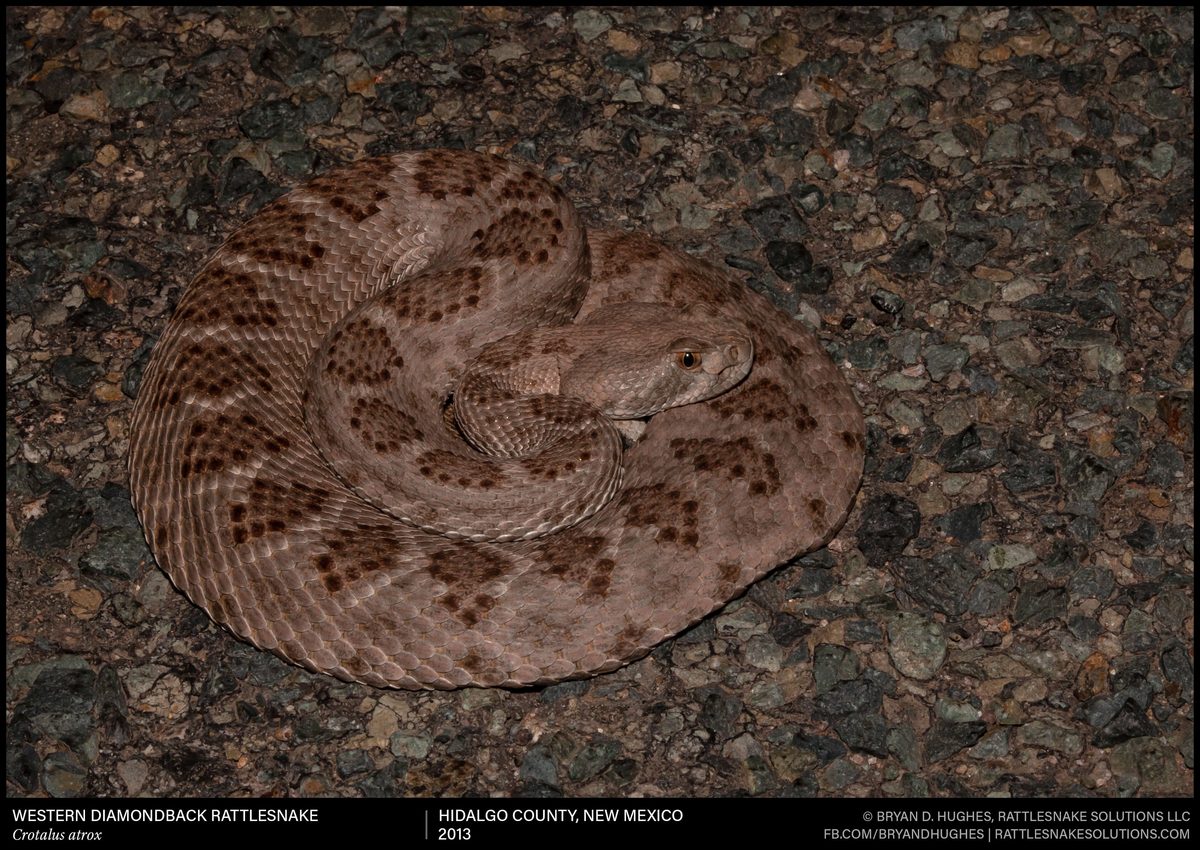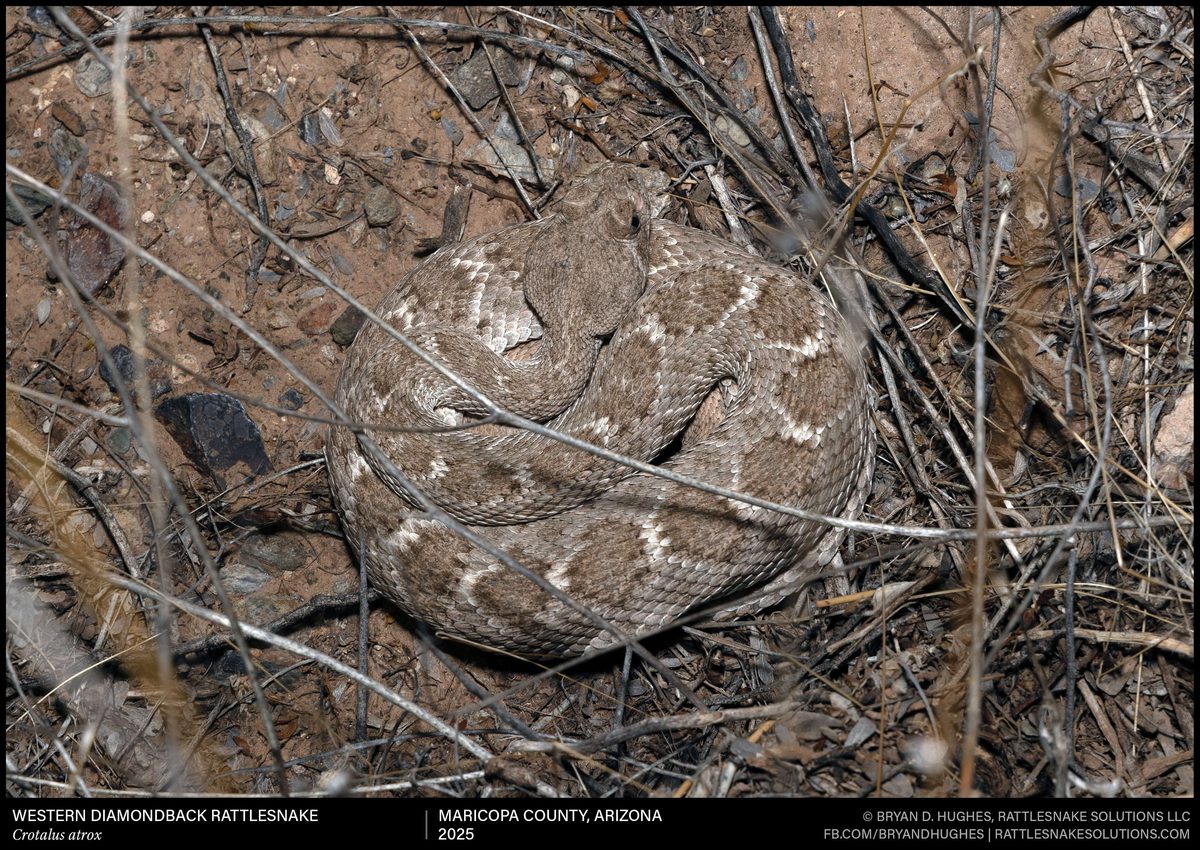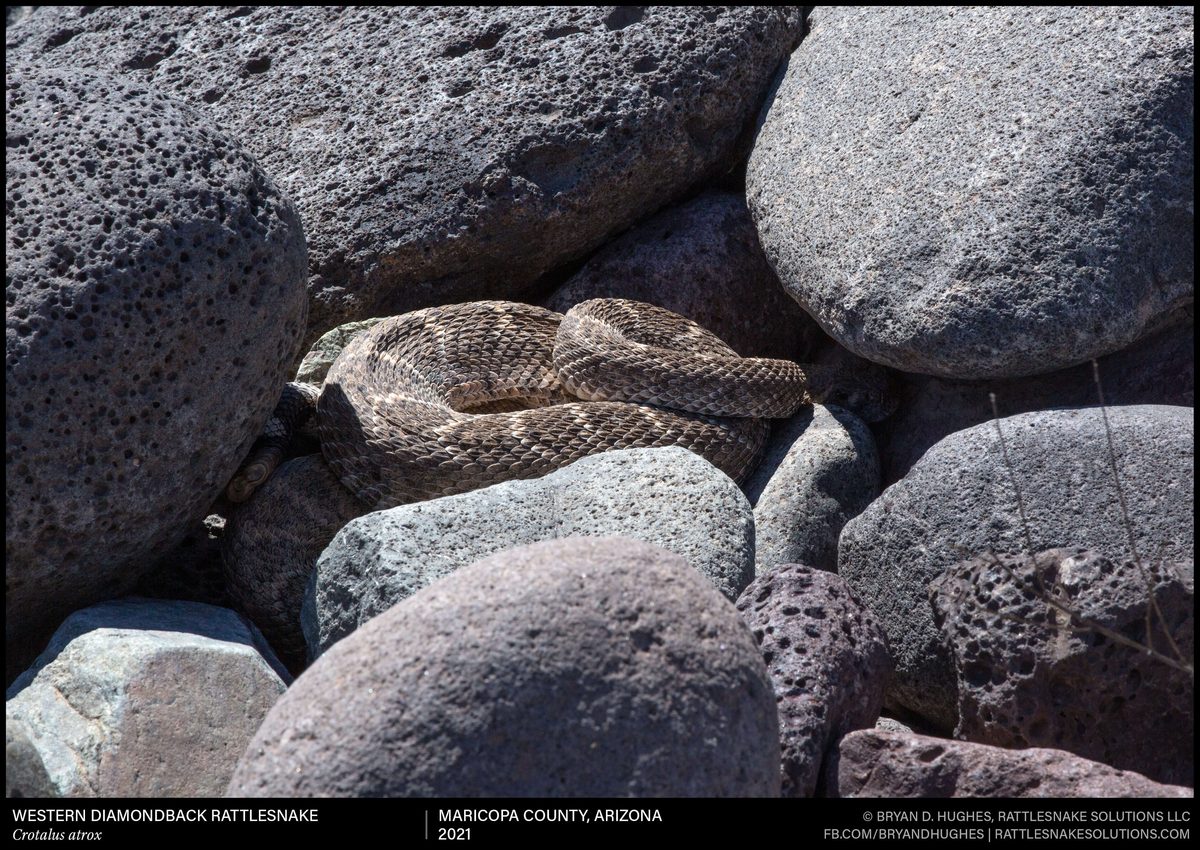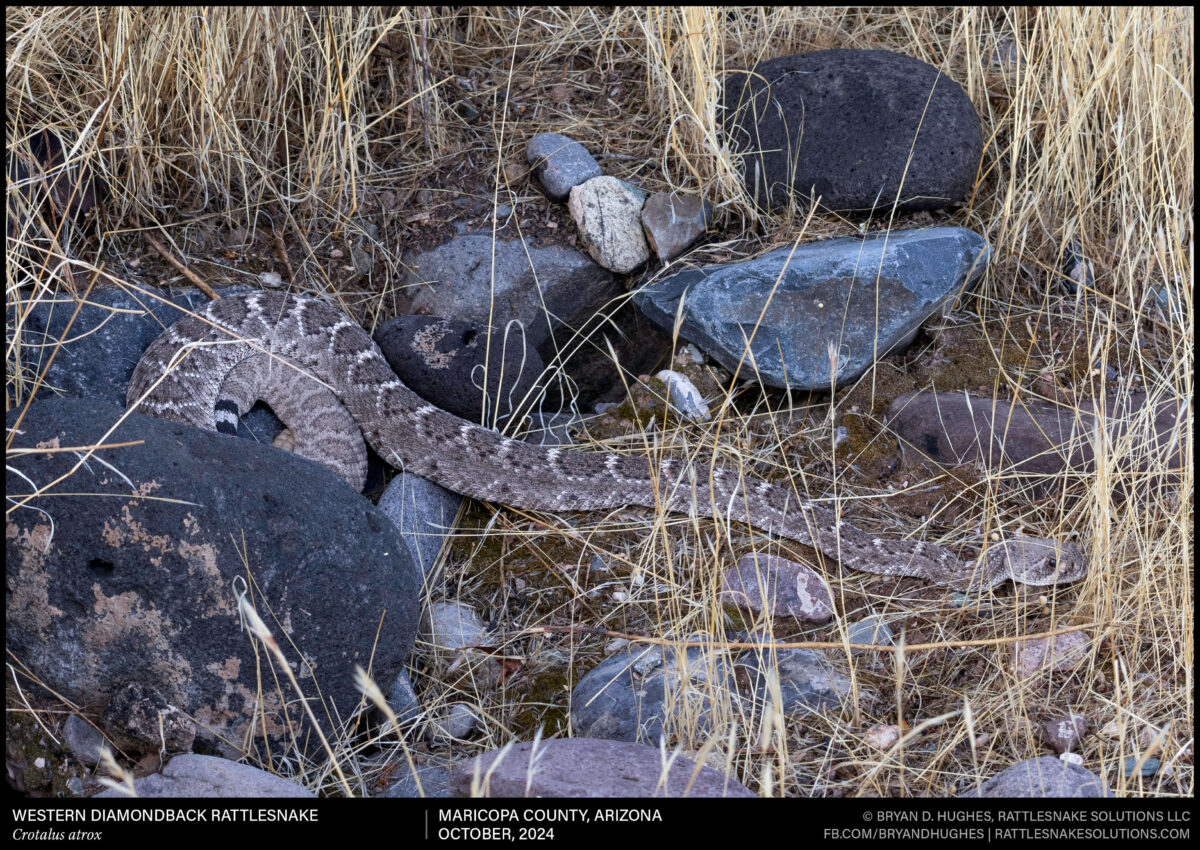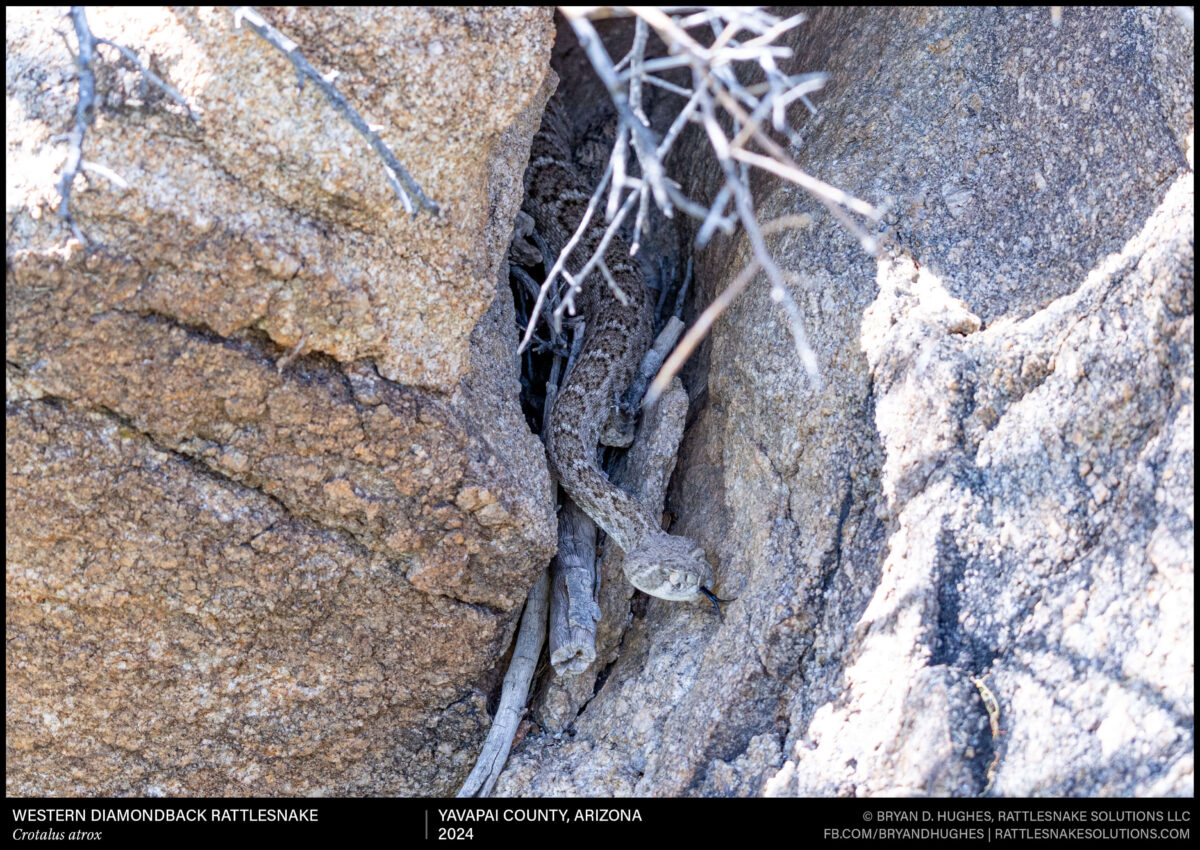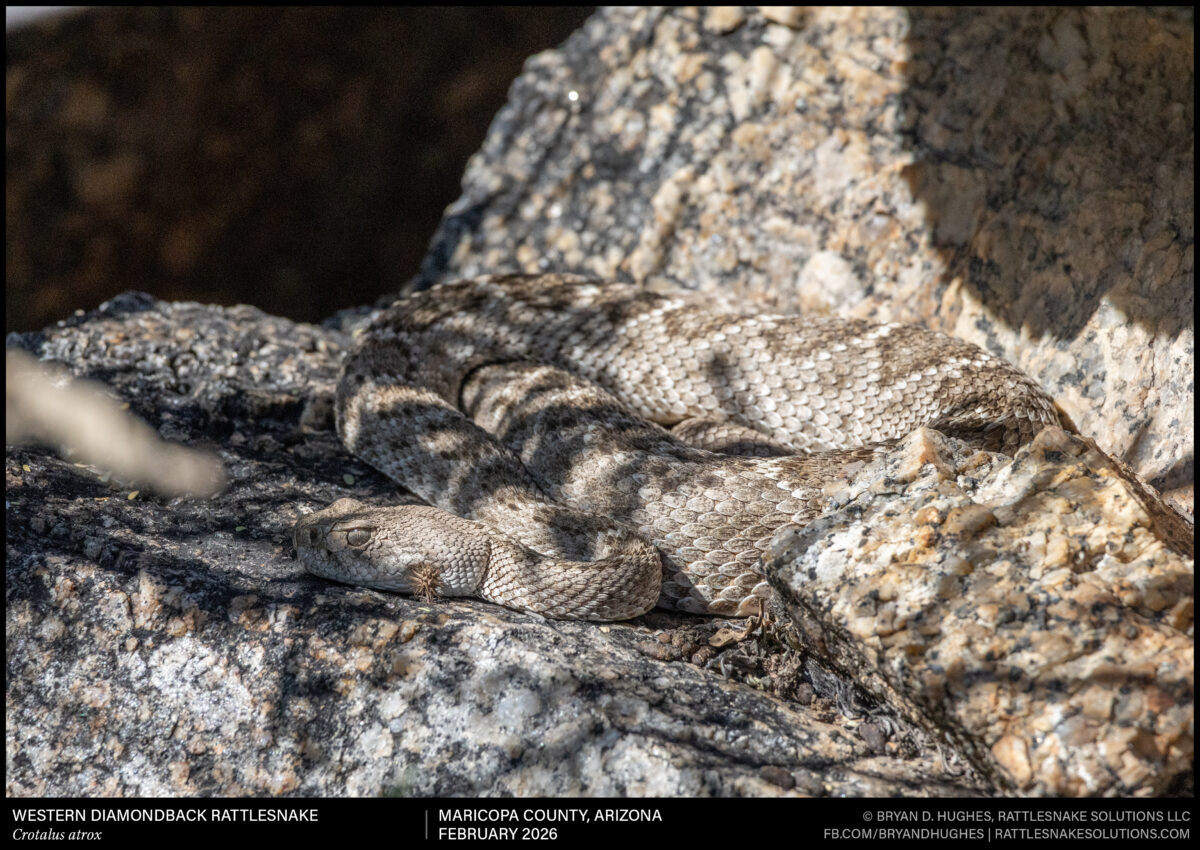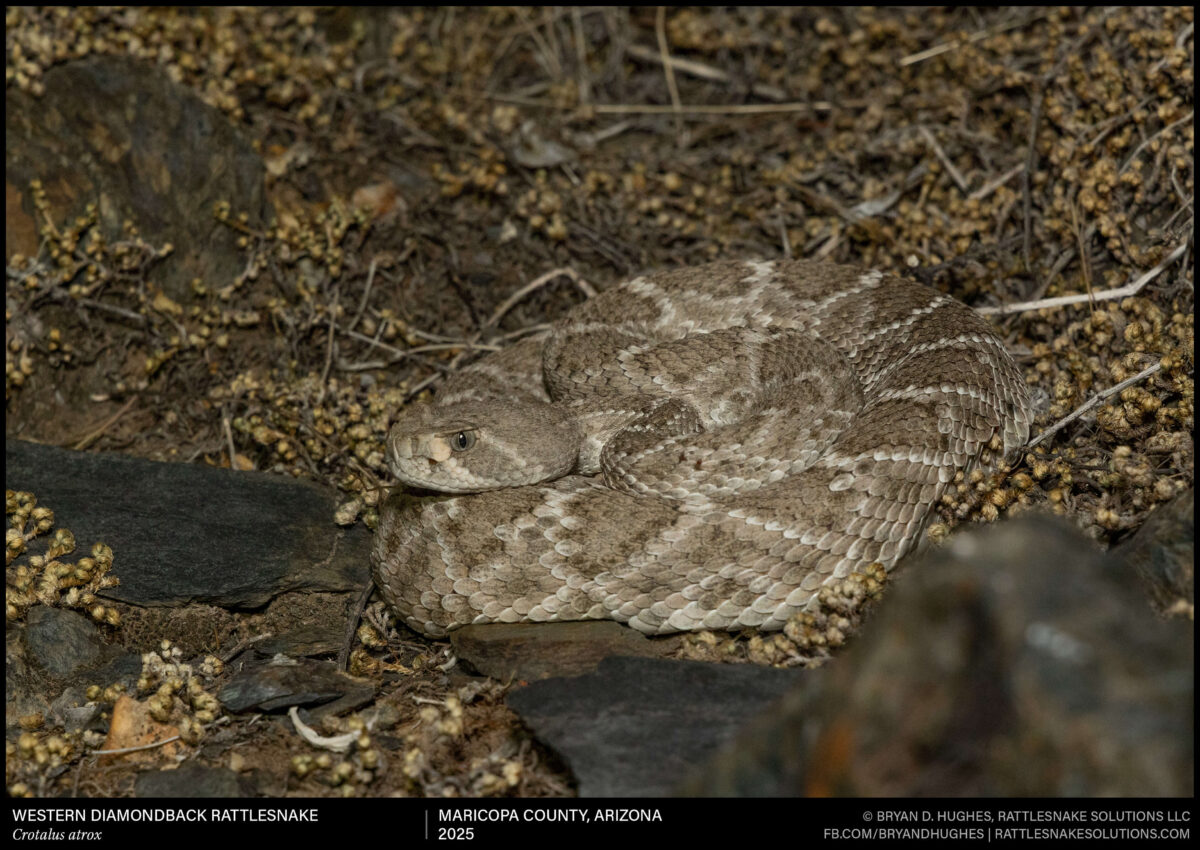
We saw this Western Diamondback Rattlesnake resting high on a ledge, just below a crevice where at least one other was resting.

We saw this Western Diamondback Rattlesnake resting high on a ledge, just below a crevice where at least one other was resting.

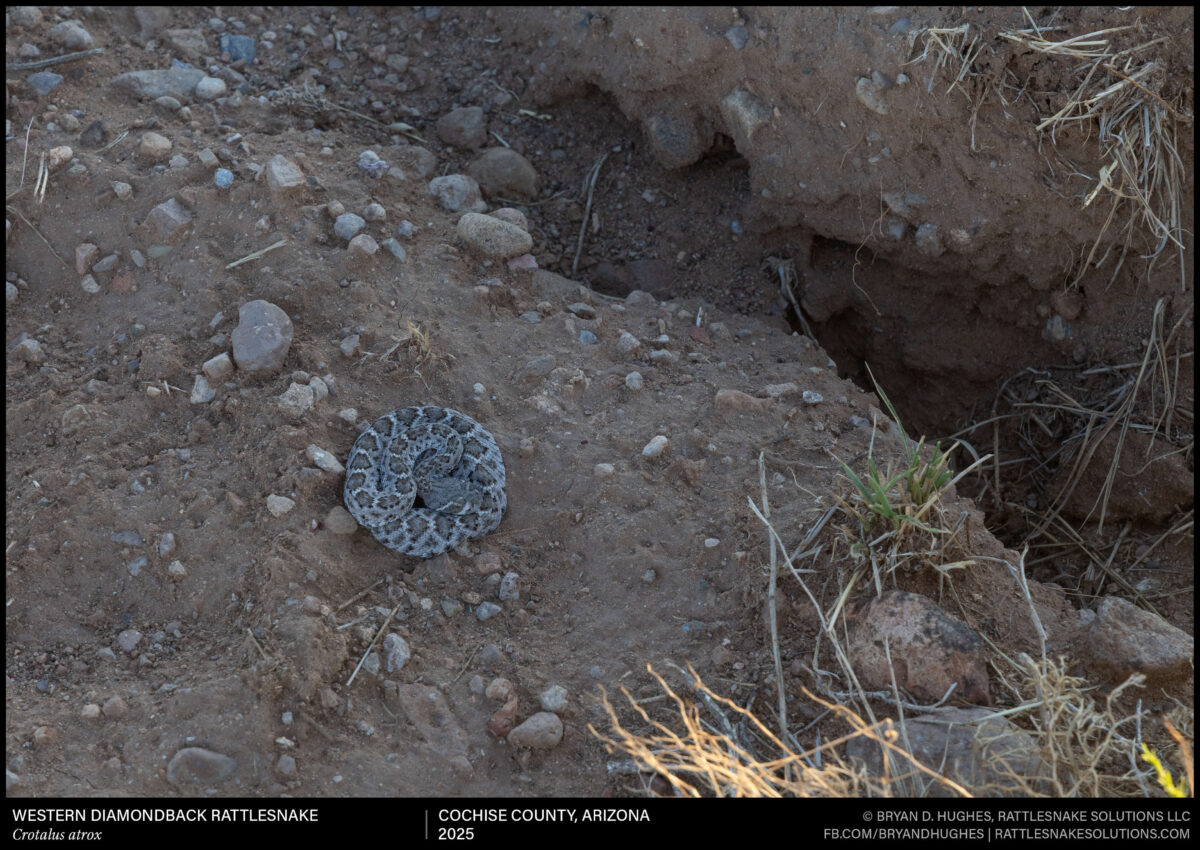
A neonate Western Diamondback Rattlesnake was spotted coiled near the rodent burrow it has been hiding out in during its first weeks of life. This was in July of last year, so it had to have been born pretty early in the season, relatively, to be by itself at that point.

A Western Diamondback Rattlesnake I found in ambush on a late-night hike in a desert canyon. When it’s hot, these snakes are mostly nocturnal, only seeing daylight shortly after sunup for much of the summer.

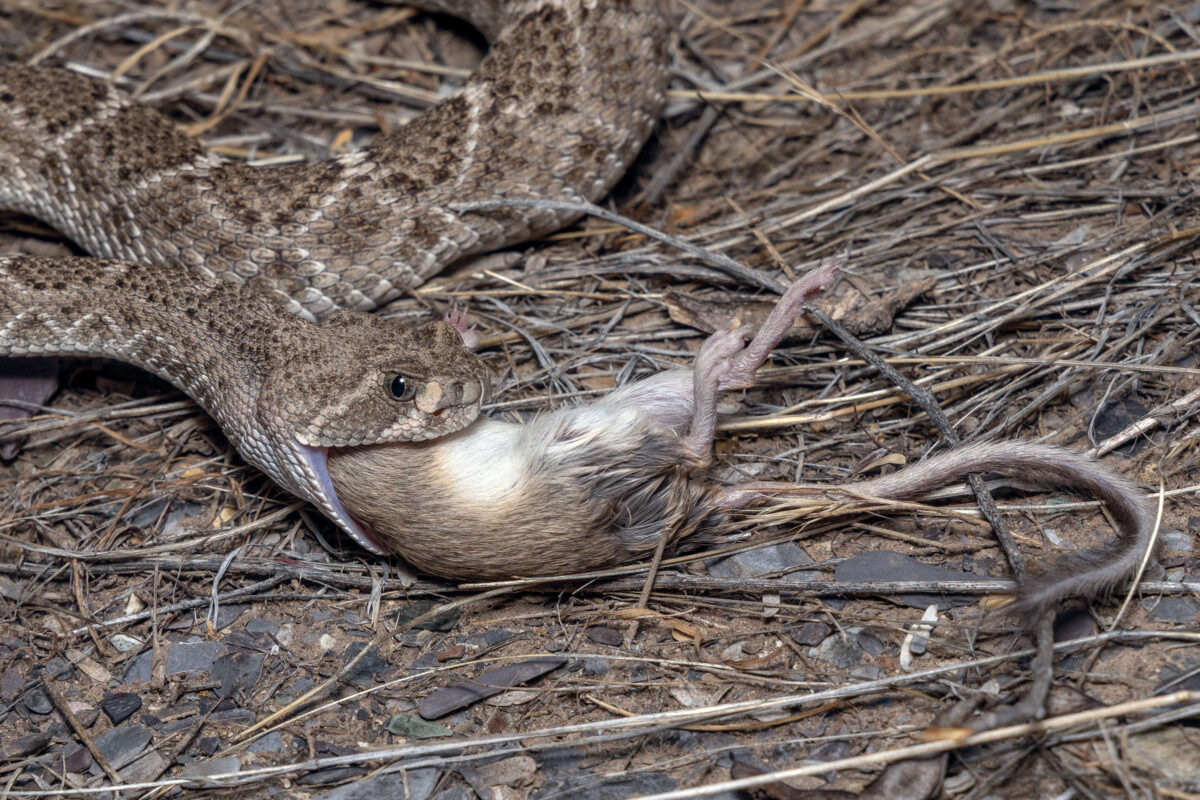
A Western Diamondback Rattlesnake I found eating a rodent. Which order of these animals do you think kills more people in any given year in the US?

One of many Western Diamondback Rattlesnake out in the rain on a cold December night. Being warm is great and all, but water drives activity in the desert.
You may see us issue a statement from time to time to give a heads up before going to firewood piles, etc. These events are largely predictable, where rattlesnakes behave in ways that are surprising to most people, and we may assume it’s not possible to see a rattlesnake. When you see something like that from us, know that it’s from a lot of data and getting out of bed in the middle of the night in December to stand around in the rain waiting to see if snakes come out 🙂

A Western Diamondback Rattlesnake in ambush in a sandy wash on a very hot night.
This sand is much cooler than the surrounding rock, with smaller particles that lose energy more quickly. While it’s easy to think of reptiles as ectotherms always looking for sources of heat, they’re just as often looking for ways to lose it. Thermoregulating is more like a behavioral thermostat, and areas like this help.

A large male Western Diamondback Rattlesnake cruising through dense vegetation, on the lookout for others that may be near. At this higher elevation den in the late fall, the females are already tucked into rock crevices and caves. All that remain on the surface are the largest males, patrolling for rivals, and getting into the occasional fight. This one finished its loop and settled back into the sunny spot it prefers for awhile, before doing it all again about an hour later. Why wait until spring to fight for the good spot, when you can do it in the fall?

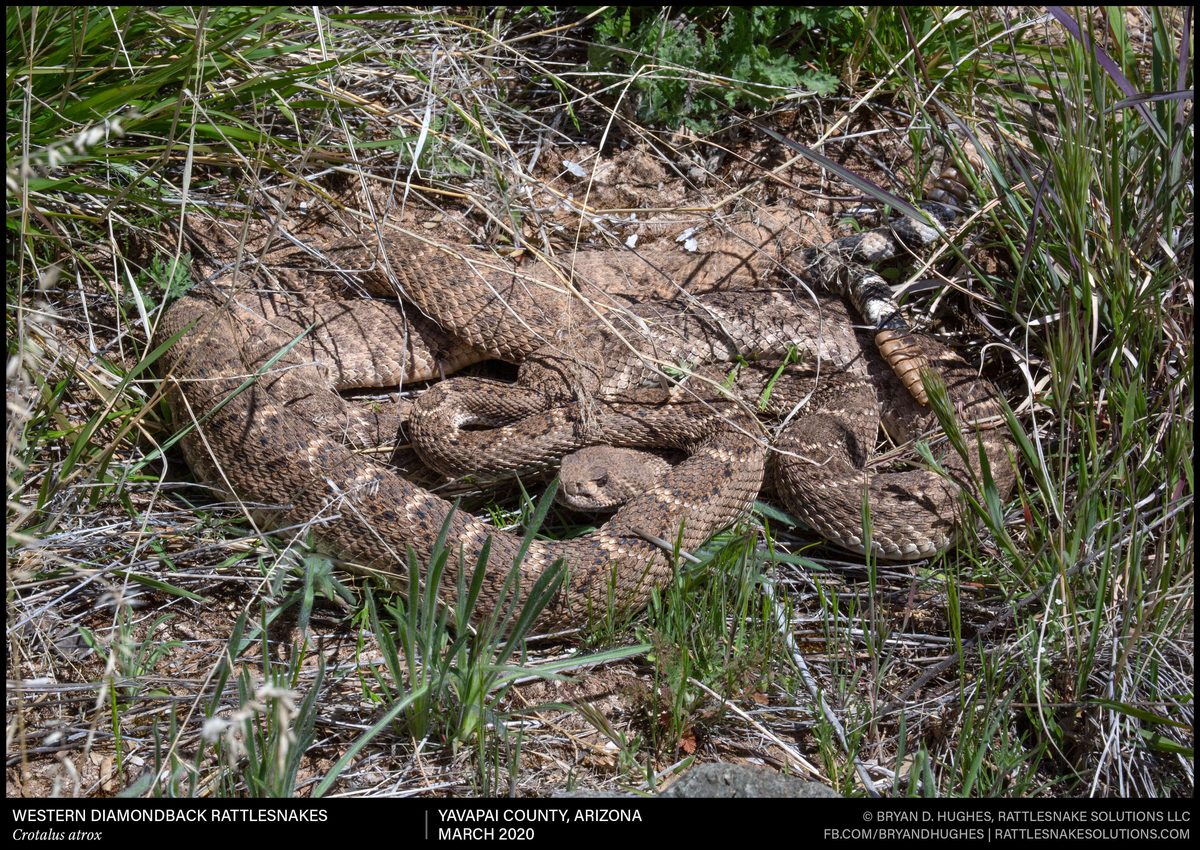
Three of the half dozen or so Western Diamondback Rattlesnakes that occupy this den each winter. These snakes spend a lot of time during the early spring basking and making short movements to thermoregulate and for social reasons, where they are vulnerable to predators and other threats.

A male Western Diamondback Rattlesnake raises up to challenge another to a fight. The only problem: rocks getting in the way. Both males discovered one another in a narrow gap, which caused a lot of awkward shuffling before they managed to get some room to wrestle. Eventually, the other came out as well, and after a brief wrestling match, both went tumbling down the hill with no clear victor.

A Western Diamondback Rattlesnake communicating with me in the same way it does with any of the many predators that it fears. He stands up as tall as he can, hissing, rattling, and making the idea of coming any closer a decidedly bad idea.
What it isn’t doing: showing aggression. This behavior, even though it may seem scary (as it is intended to), is not a sign of “attack”, but a small animal’s best attempt at preserving its own life. For some reason, humans have a very hard time understanding this, and the incredibly simple way for everyone to leave safely: walk away. After a few photos, that’s what I did. Thanks for the heads up, snake.