Western Diamondback Rattlesnake Staying Cool

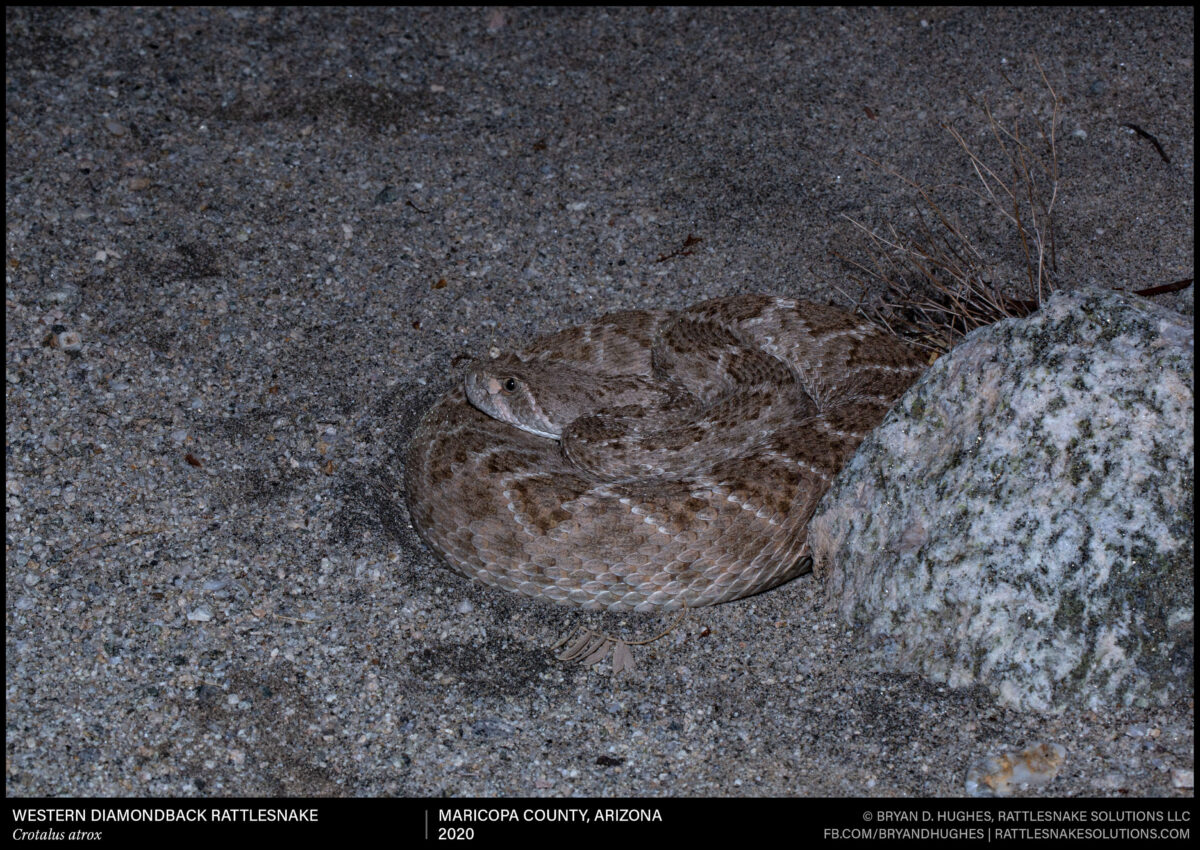
A Western Diamondback Rattlesnake in ambush in a sandy wash on a very hot night.

This sand is much cooler than the surrounding rock, with smaller particles that lose energy more quickly. While it’s easy to think of reptiles as ectotherms always looking for sources of heat, they’re just as often looking for ways to lose it. Thermoregulating is more like a behavioral thermostat, and areas like this help.

Western Diamondback Rattlesnake Basking Under Cover

A Western Diamondback Rattlesnake basking in partial cover. This is how rattlesnakes and other reptiles typically thermoregulate. Filtered light and conduction from nearby surfaces and substrate can help them tune in on the right temperatures to a fine degree, all while avoiding detection by predators and prey. This is also a reminder of why it’s best to stay on established trails and keep dogs on leash when hiking in the spring.