A Sonoran Lyresnake (Trimorphodon lambda) from border area of Arizona/Mexico earlier in the year. These are among the least often seen species of snakes in the Phoenix and Tucson areas, despite being quite common in the right habitat.
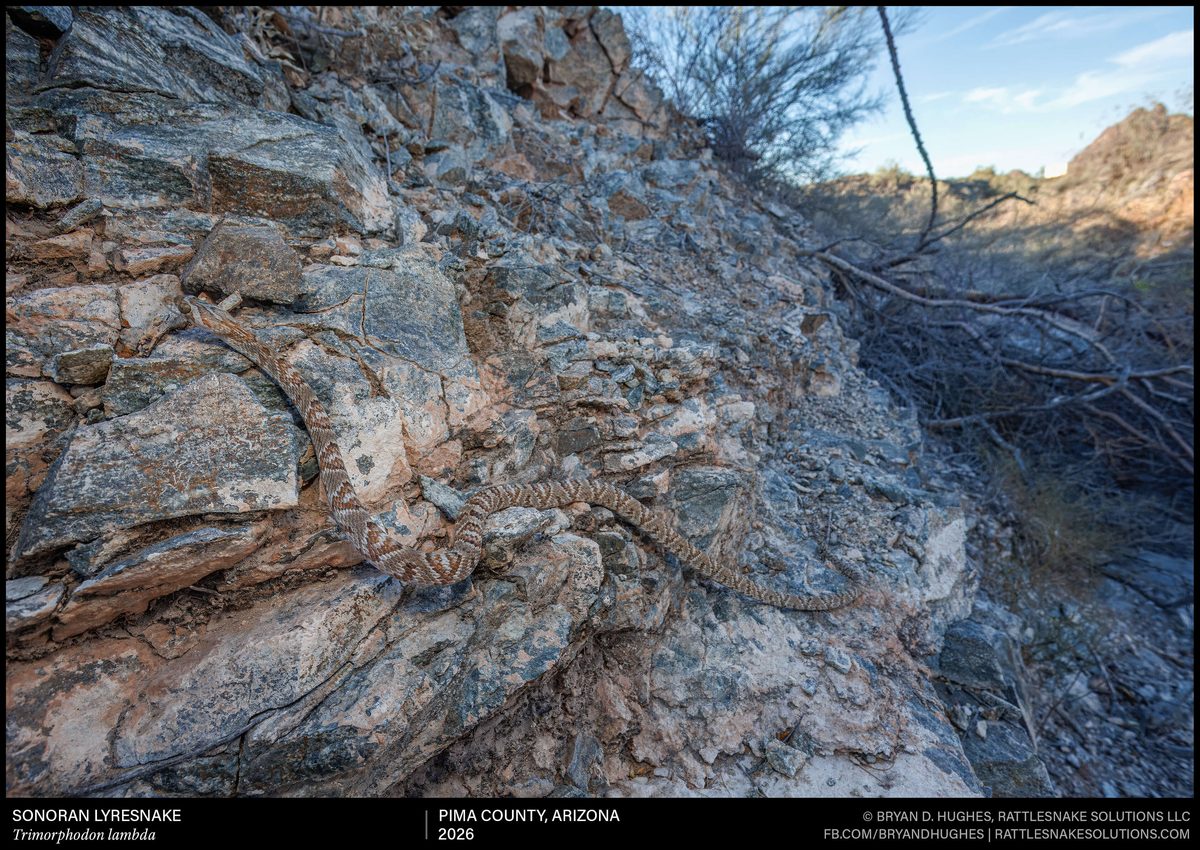

A Sonoran Lyresnake (Trimorphodon lambda) from border area of Arizona/Mexico earlier in the year. These are among the least often seen species of snakes in the Phoenix and Tucson areas, despite being quite common in the right habitat.
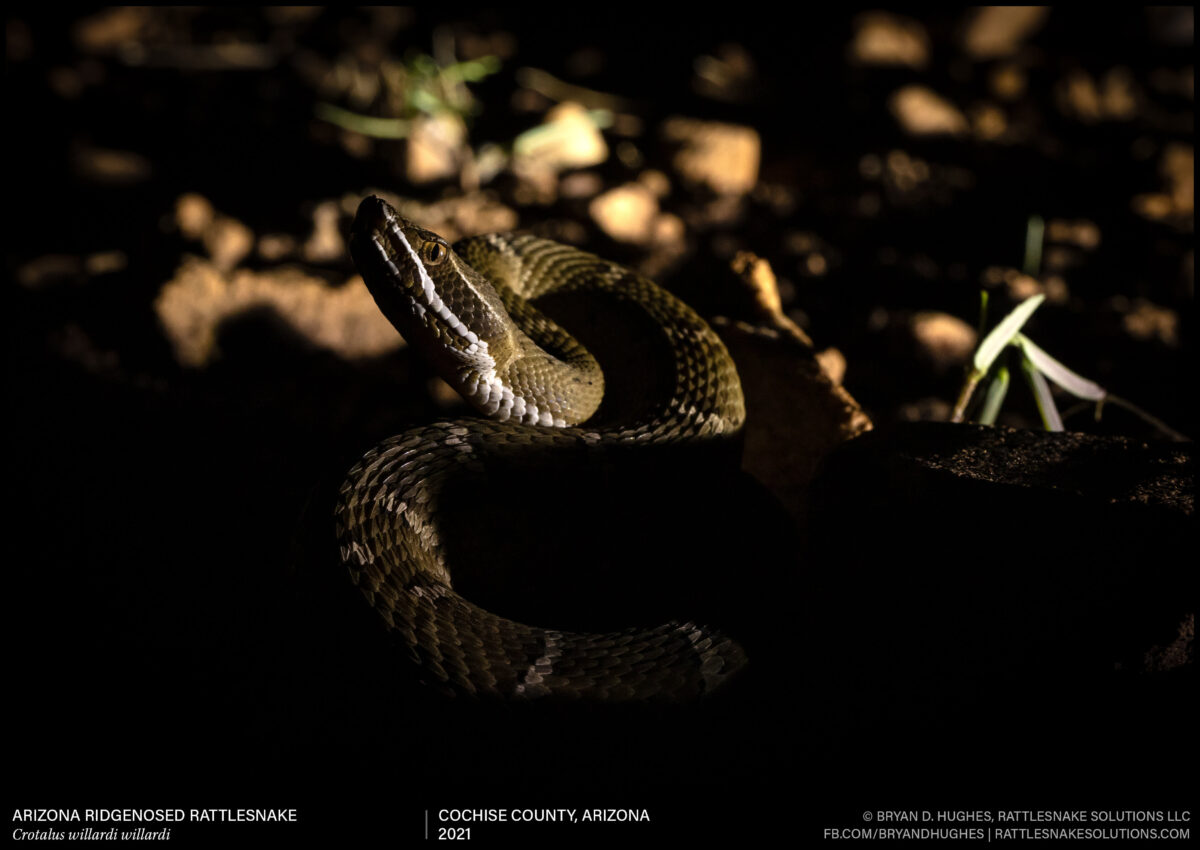
Arizona Ridgnosed Rattlesnakes are common in a few mountain ranges in southeastern Arizona, but not found in the desert environments where most people live. They are usually seen by hikers and wildlife observers in the daytime, but often found moving at night as well.
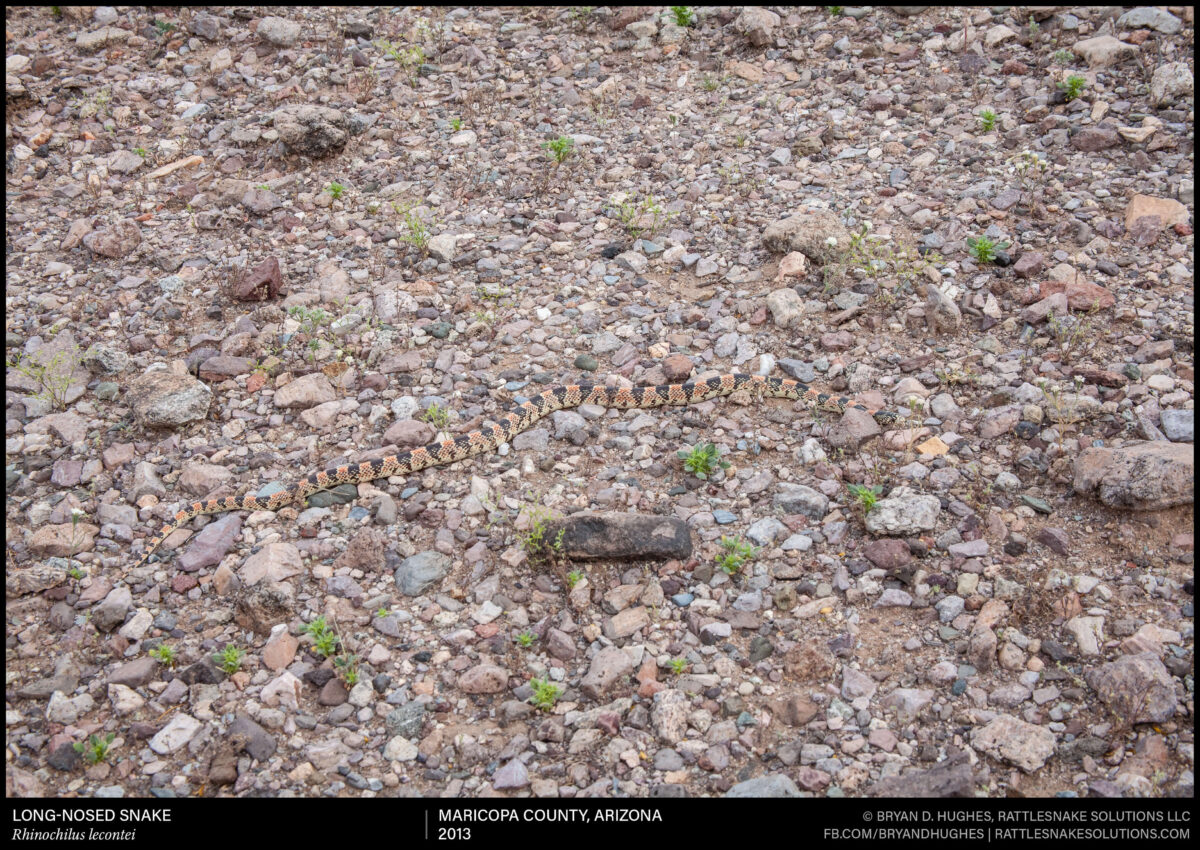
A Longnosed Snake cruising around in the low light at the end of the day. These snakes are most often nocturnal, but may be found in the early morning or late afternoon, especially in the Spring. Against the chaotic, rocky backdrop of desert pavement between sandy plains, its shape breaks up, and spotting it can be difficult.
These snakes are commonly found in backyards, even a decent distance into the city, where they are usually misidentified as kingsnakes.
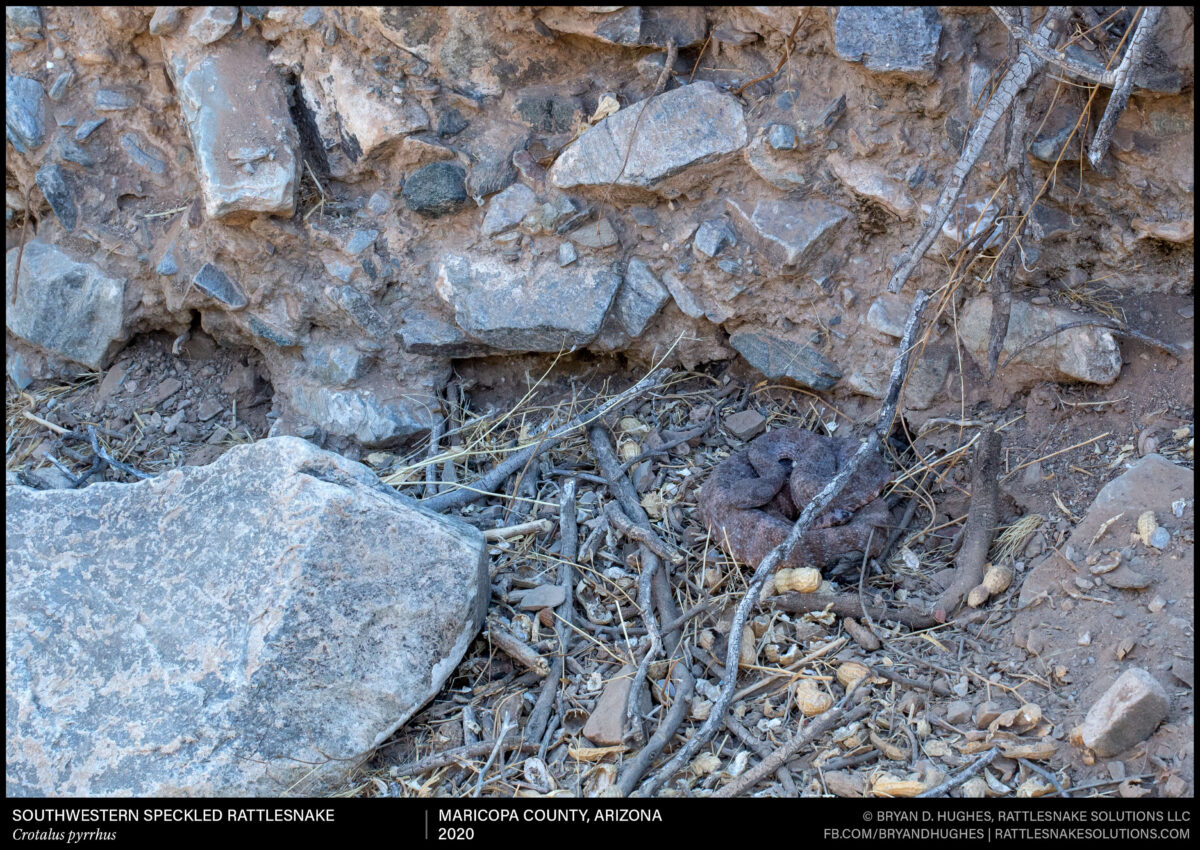
A Southwestern Speckled Rattlesnake hanging out in a drainage, as it does about every morning, during the lethally hot period of Arizona summer. For much of the year, rattlesnakes are largely nocturnal, encountered by hikers and homeowners only just after sunup and again after dark.
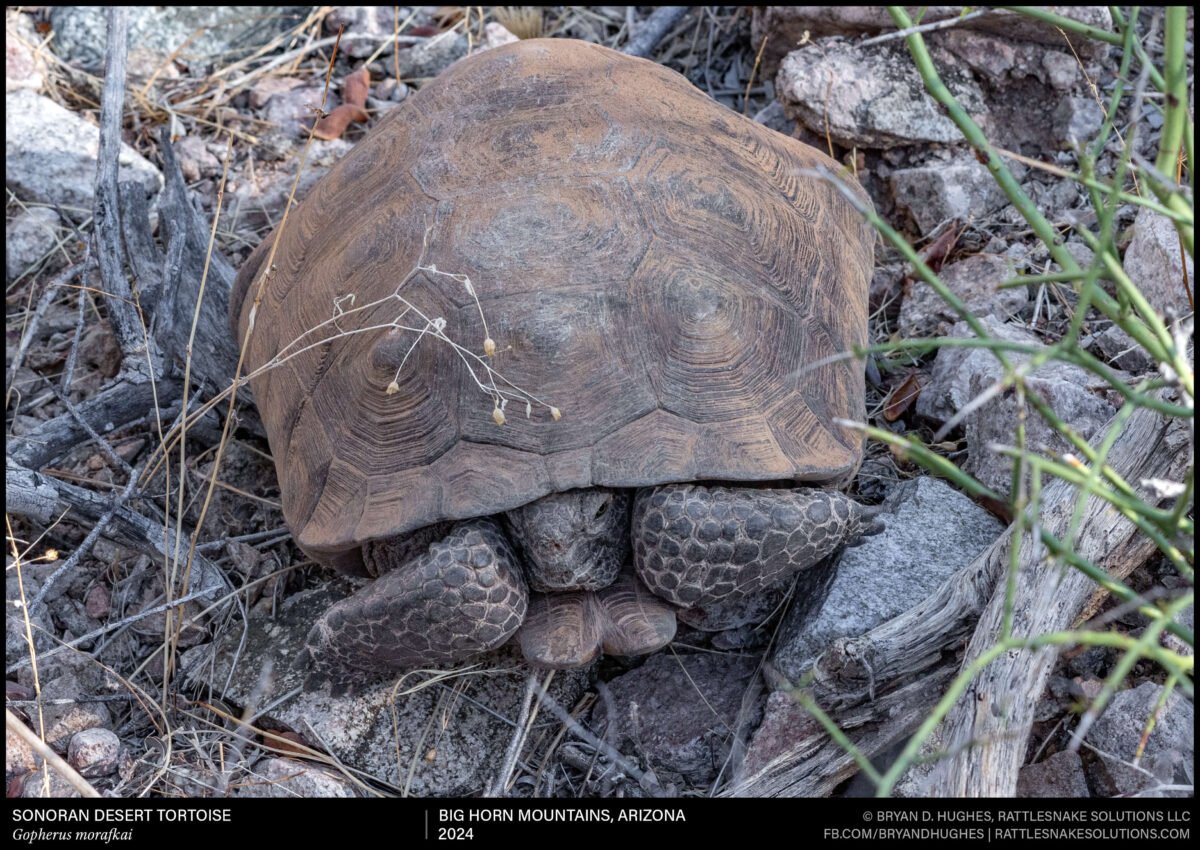
A Sonoran Desert Tortoise resting in the shade in on a hot morning in the Big Horn Mountains of western Arizona. These tortoises become nocturnal during the hottest parts of summer, moving and eating after dark and returning to their deep caves by the time the sun hits the area again.
A Blacktailed Rattlesnake we found on a late night hike of a canyon near Phoenix, Arizona. These are common snakes in mountainous regions, often seen by hikers. During the summer in desert areas, they are often most often nocturnal, usually encountered around sunup and just after dark. This one, fortunately, lives far from where people may come across it on accident.

Sonoran Lyresnake from the southwestern corner of Arizona. These snakes are common in the right habitat, but most lifelong Arizona residents will never see one. The large eyes indicate one of the reasons: they’re primarily nocturnal, often moving late at night long after temperatures have cooled enough to have stopped most other snake activity.

I found this Sonoran Desert Tortoise hanging out at the entrance of one of its burrows. Each year, it returns to the same hole that it’s excavated from a smaller natural gap caused by erosion in the upper edge of a wash. During this time, it is mostly nocturnal, never going too far from its aestivation home. Once the monsoon brought moisture to the area, it went on its way to another spot.
