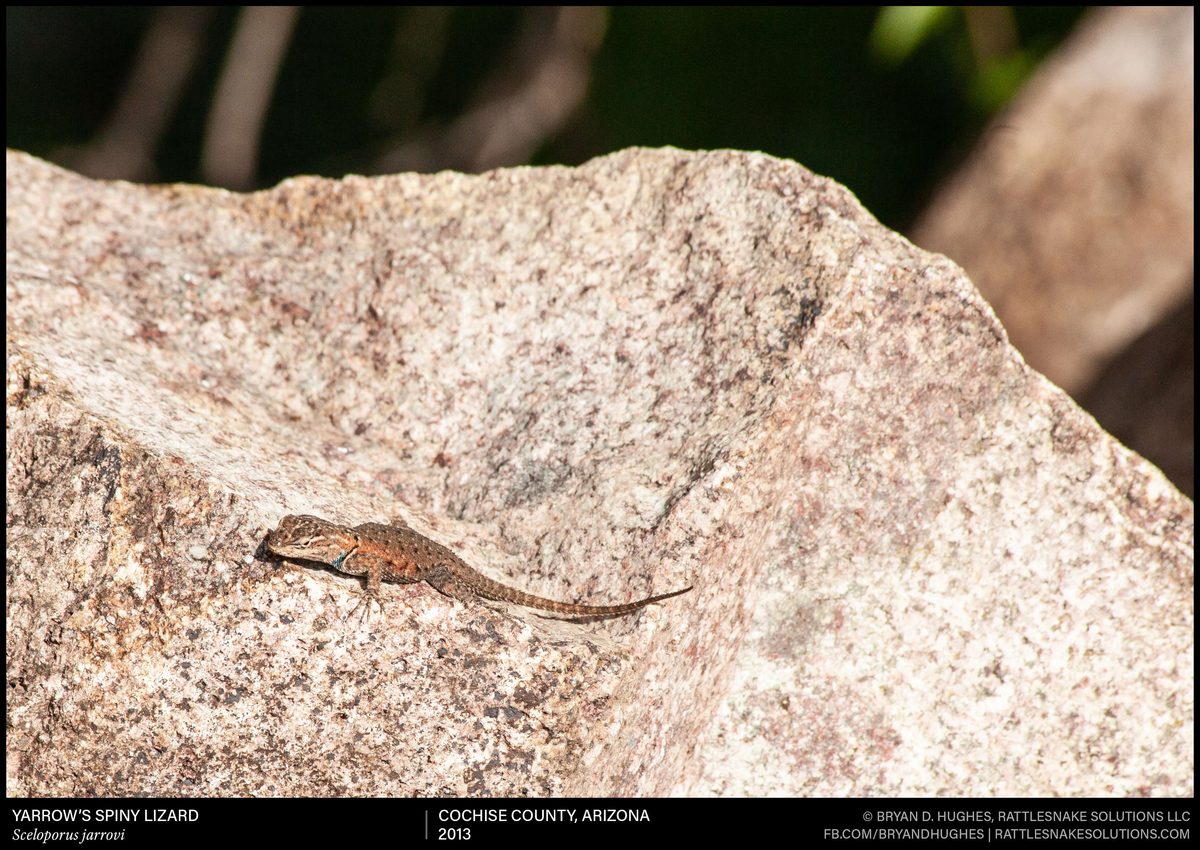
A young Yarrow’s Spiny Lizard watches an odd primate operate some metal and glass device from a short distance, waiting to get back to work on the serious business of finding bugs. These charismatic lizards are common in the higher elevations of southeastern Arizona.
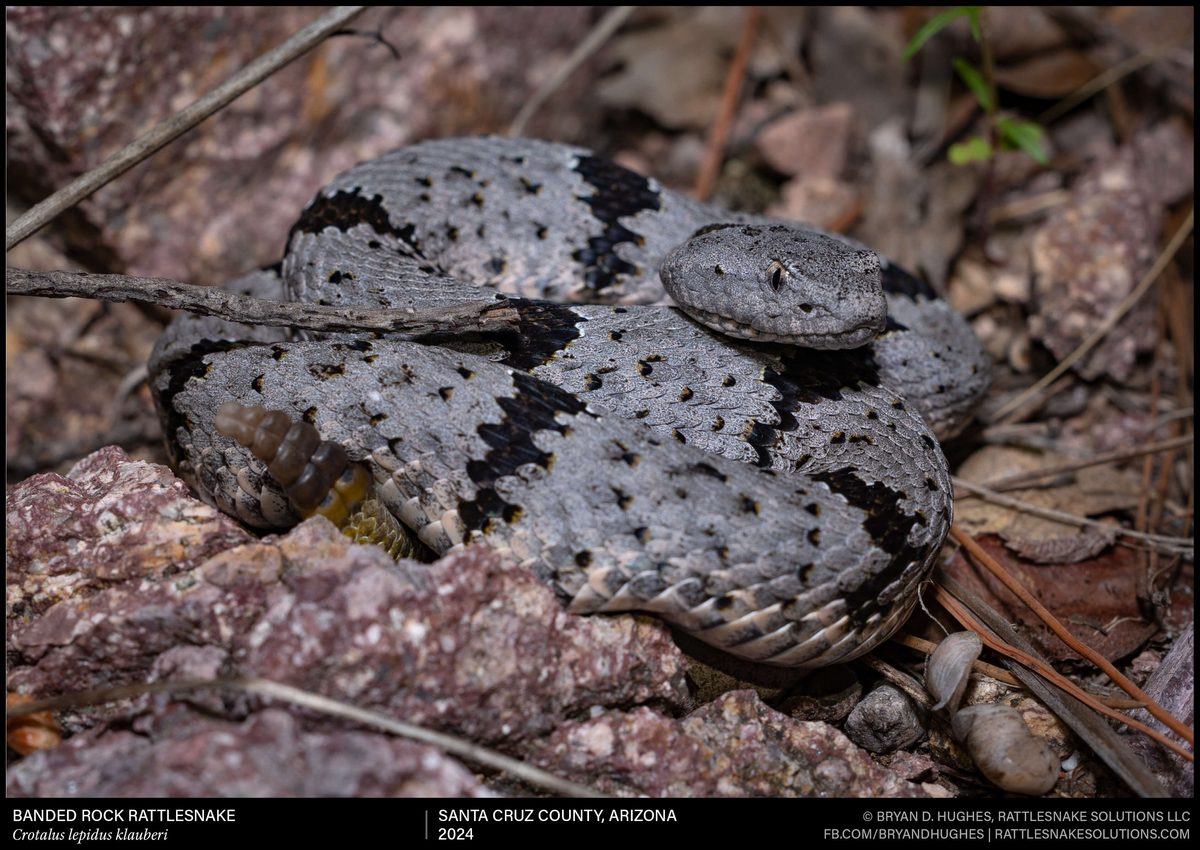
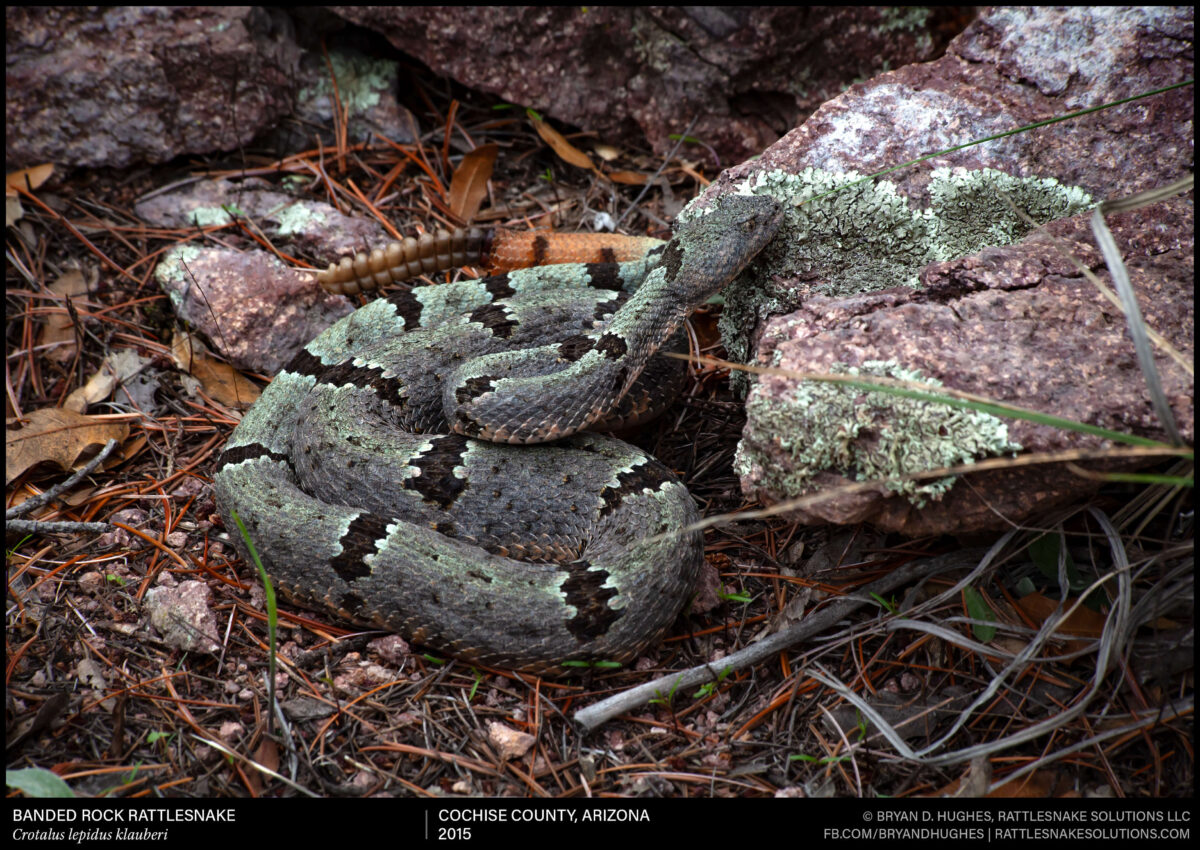
A female Banded Rock Rattlesnake from the Huachuca Mountains in Arizona. These small rattlesnakes are sexually dimorphic, with males often showing metallic green coloration along the back. Females are usually more subdued in comparison, like this typical grey and black banded look. These are one of a handful of protected rattlesnake species in the state.
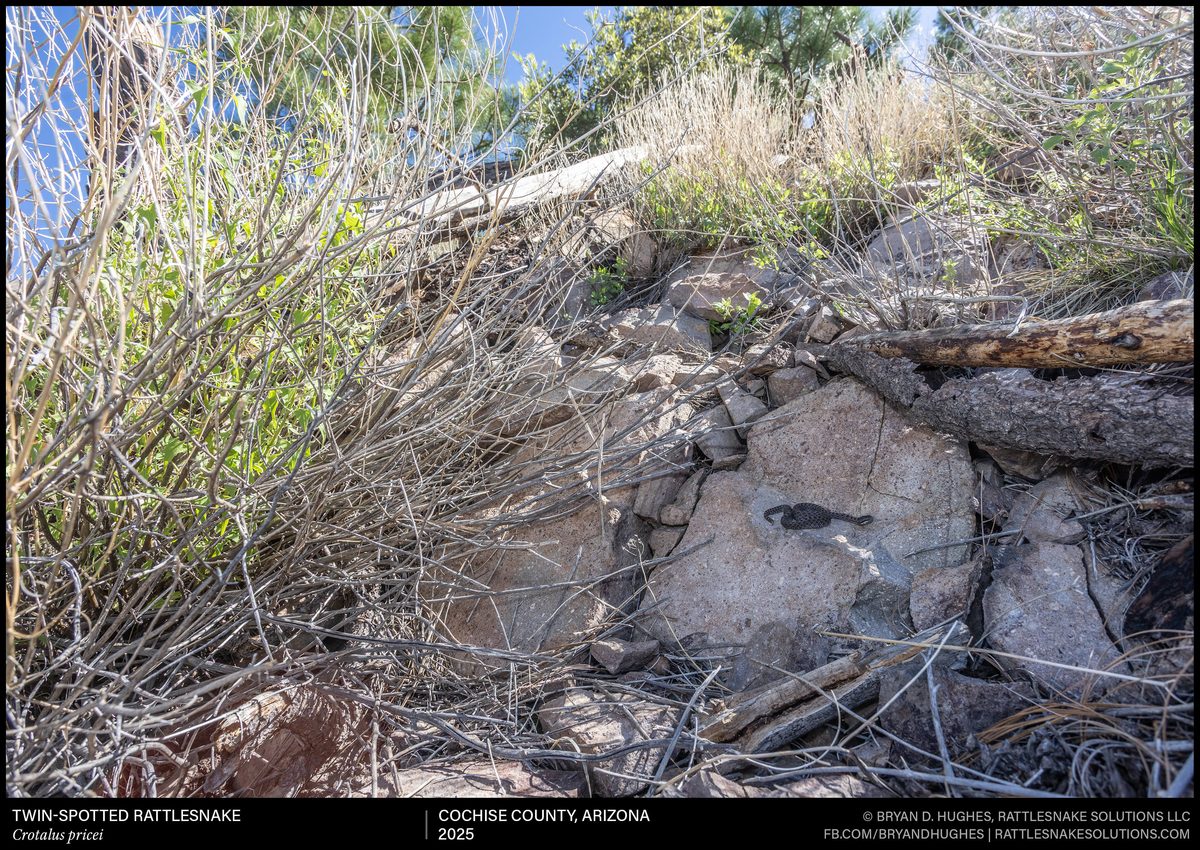
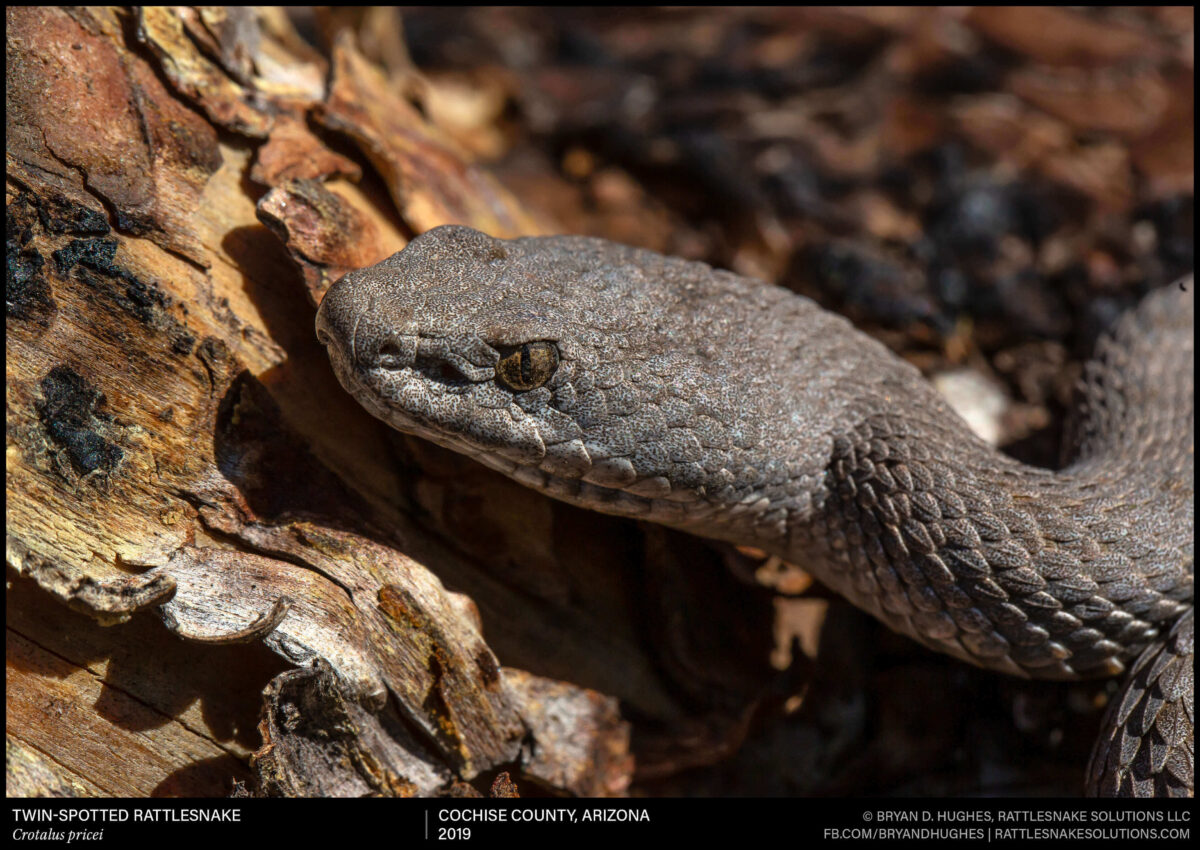
A Twin Spotted Rattlesnake in habitat at the top of a mountain in southern Arizona. These are rattlesnakes that are often mistaken as a non-venomous species due to their small size and head that is not as strongly differentiated from the neck as people expect. They are rarely seen by hikers, but a “what is this snake?” photo of one tends to pop up a few times a year from the Santa Rita mountains south of Tucson.
This is a young individual that I spotted as I climbed up to the ridgeline from a fruitless search below. It never made a sound, but slipped silently into the rocks to escape, as they do. I surely walked past a dozen more, who performed this disappearing act with better timing.
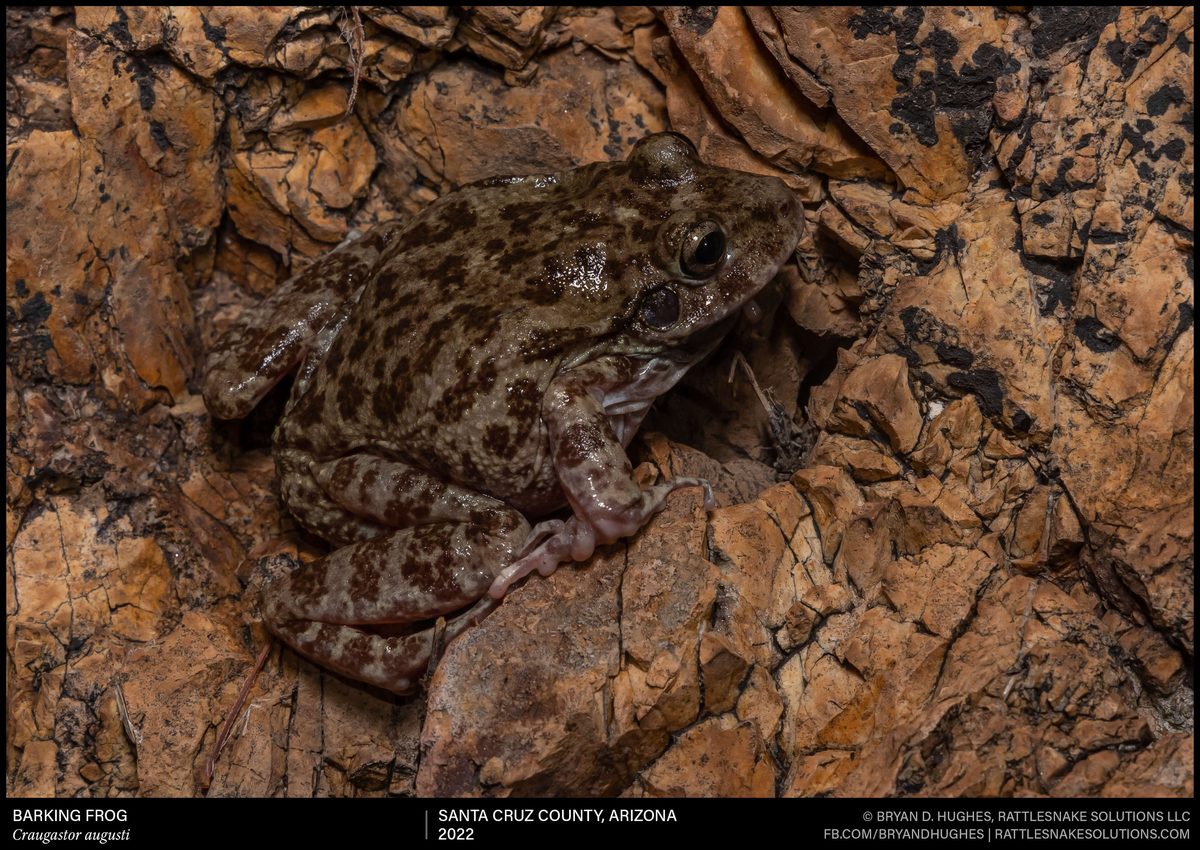
I got a chance to photograph this Barking Frog (Craugastor augusti) on a soaking wet night in the mountains of southeastern Arizona. These relatively large frogs spend nearly their entire lives stuffed into deep fissures and caves on steep, rocky cliffs. On the right nights during the monsoon, they’ll emerge for a short time, where they can be detected on the surface. Their “bark” is more of a loud squawk that can be heard from a great distance and sounds like “wwaalk wwalk”.
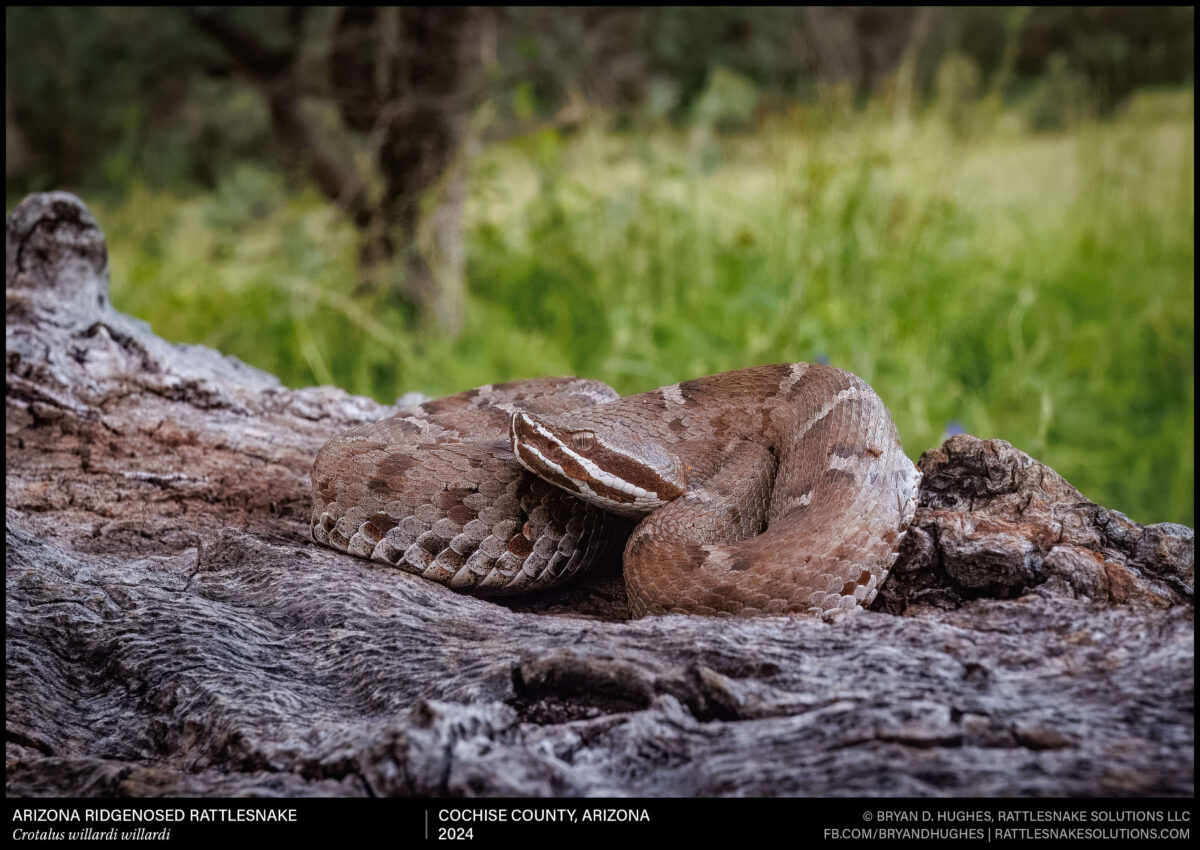
An Arizona Ridgnosed Rattlesnake from Cochise County, Arizona. This is a small rattlesnake that is found in a handful of mountainous areas in the southeastern corner of the state. A hiker may encounter one if they are in the Santa Rita, Patagonia, Huachuca, Canelo, or Whetstone ranges.
Interestingly, every rancher and long-term resident of those areas that I’ve personally spoken to about this species has no idea what I’m talking about. This mirrors many other instances that have taught me one thing: living in an area for a long time, even being born and raised there, does not grant any particular expertise of the animals that live there.
This snake has relatively weak venom for a rattlesnake, but it is still an emergency situation where antivenom should be sought after. It would be hard to find a situation where one would envenomate a person without actually picking it up.
Holzman, S. D., Massey, D. J., Clements, A., Boesen, K. J., & Shirazi, F. M. (2018). Arizona Ridge-nosed rattlesnake envenomation: Case report of a personal encounter with the official state reptile of Arizona, Crotalus willardi willardi. Toxicon, 151, 84–88. https://doi.org/10.1016/j.toxicon.2018.07.001
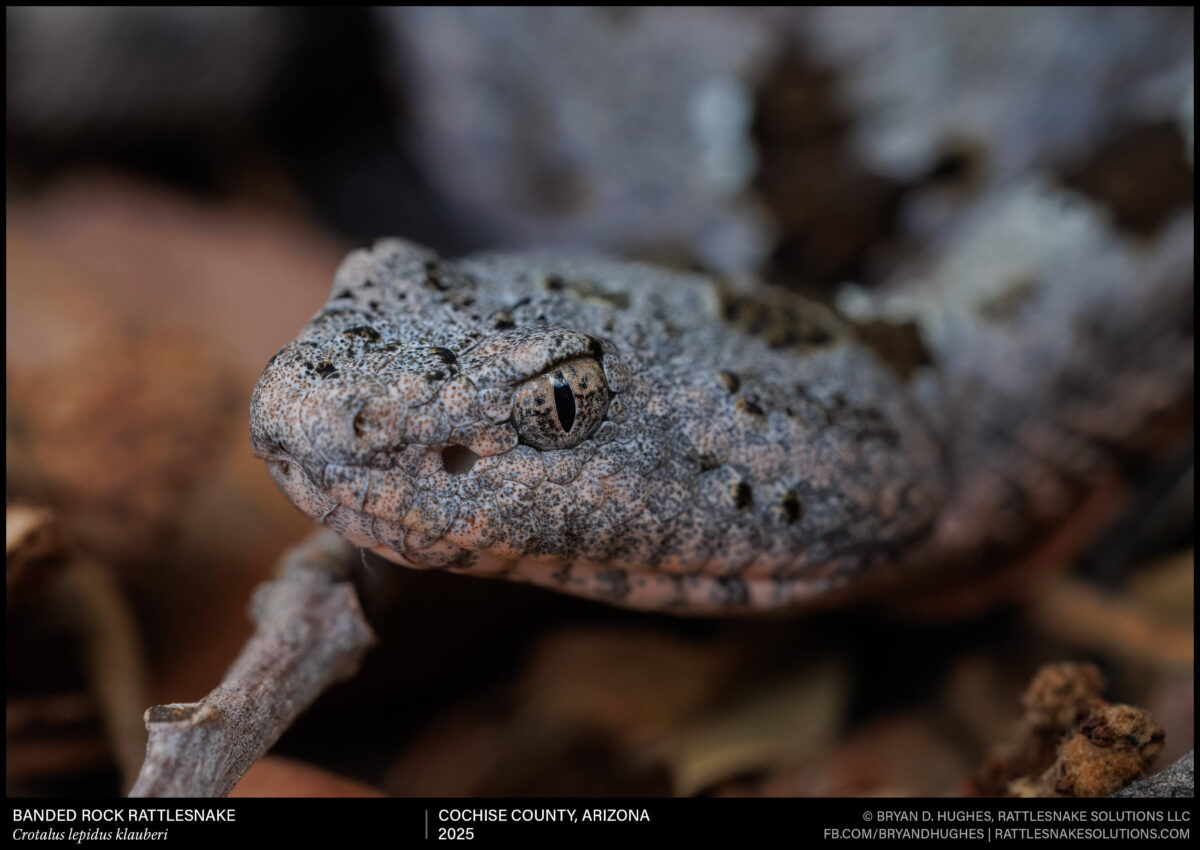
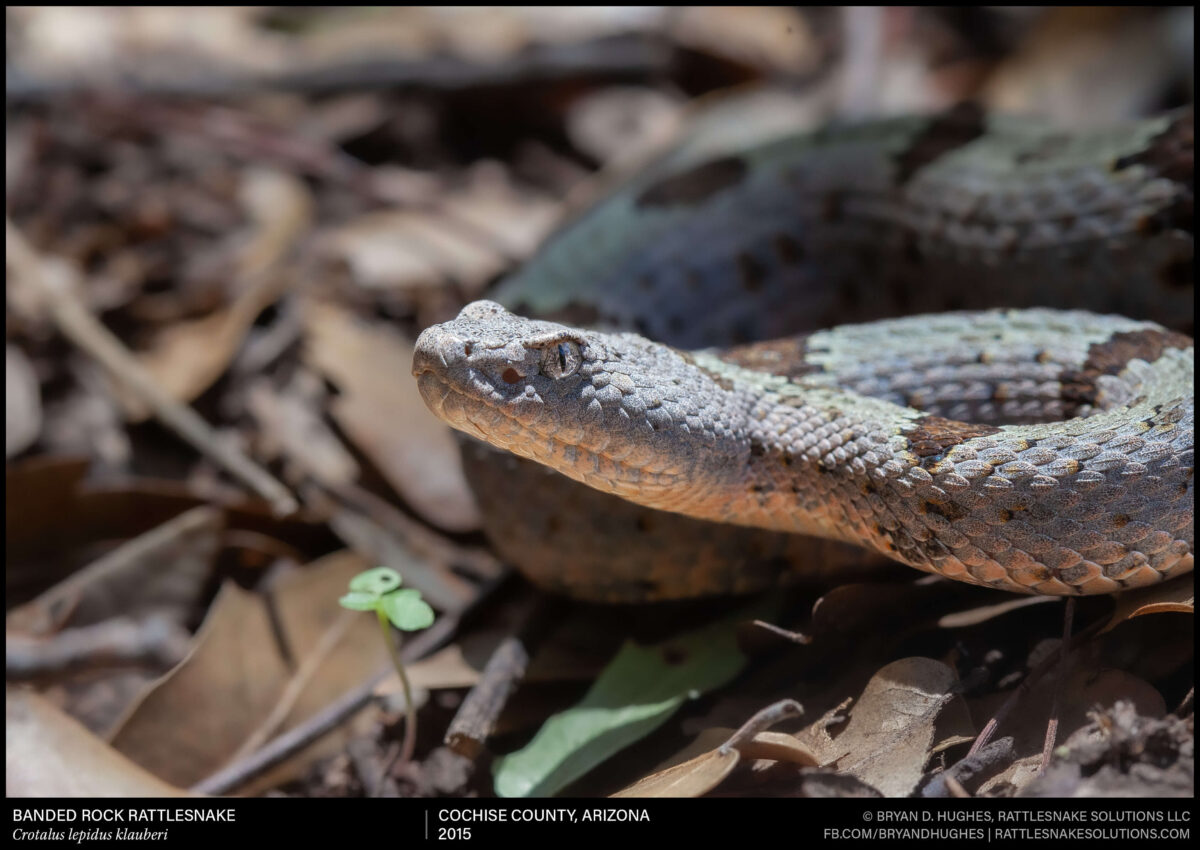
Up close with a Banded Rock Rattlesnake from the sky islands of southeastern Arizona. These small, mountain-dwelling rattlesnakes are quick to flee when found. A typical encounter for a hiker is a short buzz and a glimpse of the last half of its body sliding under a rock.
The tiny black flecks you see in the scales aren’t really visible in real life, or even visible at all. They show up on camera sensors, though, for some reason. Similarly, it’s often difficult to capture the colors of the species on camera … a snake with a bright green stripe down its back may appear to be without it on camera.
Twin Spotted Rattlesnakes (Crotalus pricei) are small, high-elevation rattlesnakes that are found in a handful of mountain ranges in the Sky Islands region of Arizona and northern Mexico. They are occasionally seen by hikers on high saddles and trails, where they are quick to flee with a departing buzz. A person would really have to pick one up or be hiking barefoot to get bitten by one, if they’re even lucky enough to see one or have it stick around long enough for that to happen.
Banded Rock Rattlesnakes are common in the hills and mountains of southeastern Arizona. They come in a variety of colors, often a combination of grey, blue, green, and pink, like this one. They’re quick to flee, and it would be hard to see a situation where a hiker or the relatively few people who live where they do could consider them something to fear. We found this one more than a decade ago, and it very well may be still cruising around in that same spot each year.
Banded Rock Rattlesnakes are common in several of the sky islands of southeastern Arizona. They’re smaller than most expect a rattlesnake to be, with most that I’ve encountered being less than two feet long. They’re also strongly sexually dimorphic, which is not common in rattlesnakes. Males, like this one, often develop bright, metallic greens on their bodies, which matches the common lichen found on rocks where they live. This one that we found was exceptional.