One of several Malabar Pitvipers (Craspedocephalus malabaricus) we found on a very wet night in Karnataka, India. These vipers are numerous in the Western Ghats, where they are endemic.
Continue reading..Malabar Pitviper in Karnataka, India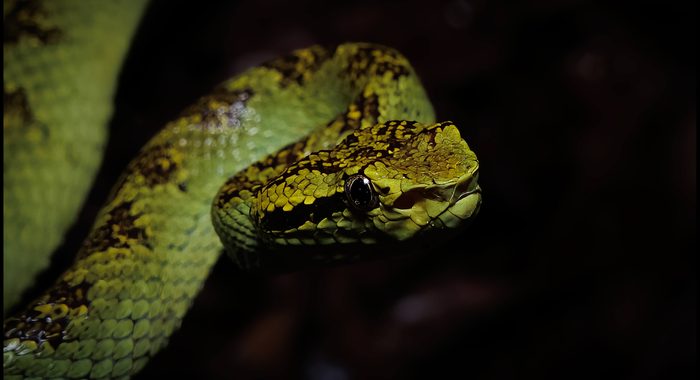

One of several Malabar Pitvipers (Craspedocephalus malabaricus) we found on a very wet night in Karnataka, India. These vipers are numerous in the Western Ghats, where they are endemic.
Continue reading..Malabar Pitviper in Karnataka, India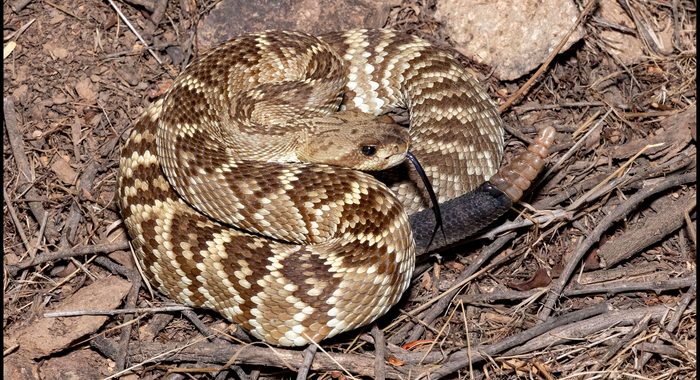
Black-tailed rattlesnakes often have faint light bands on their tails, which can be confusing to observers who believe that they can only be solid black. On this one, it’s just barely visible, appearing as black and dark grey bands in a ratio similar to a Western Diamondback Rattlesnake. These are not hybrids, as is often […]
Continue reading..Blacktailed Rattlesnake with a Banded Tail and Young Rattle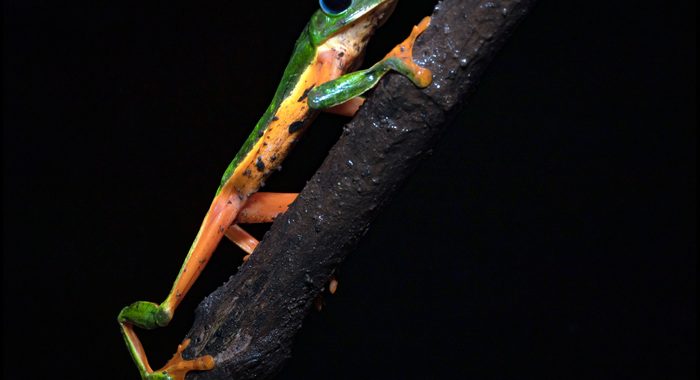
A Black-eyed Treefrog (Agalychnis morelettii) from southern Mexico several years ago. They’re related to the more famous red-eyed tree frog that’s on about every package and poster for tourists visiting the rainforests of Central America. They have sticky toe pads and in addition to jumping, walk along branches and vines to get where they’re going.
Continue reading..Black Eyed Treefrog From Veracruz, Mexico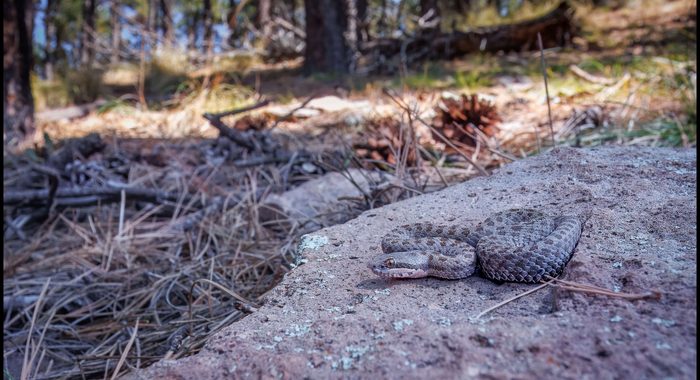
A new rattlesnake for the National Park system. The newly minted Chiricahua National Park includes habitat for one of our state’s lesser-known venomous snakes. Twin Spotted Rattlesnakes are small, high-elevation rattlesnakes that live in a handful of mountain ranges in the Sky Islands region of Arizona. Hikers may see them rarely, visiting the peaks and […]
Continue reading..A New Rattlesnake for the National Park System: Twin-Spotted Rattlesnakes at Chiricahua National Park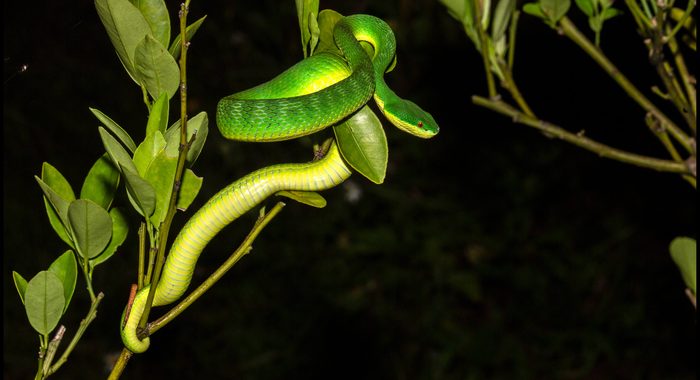
One of several White-Lipped Pit Vipers (Trimeresurus albolabris) we saw on a hike in the hills above Hong Kong several years back.
Continue reading..White-Lipped Pit Viper in Hong Kong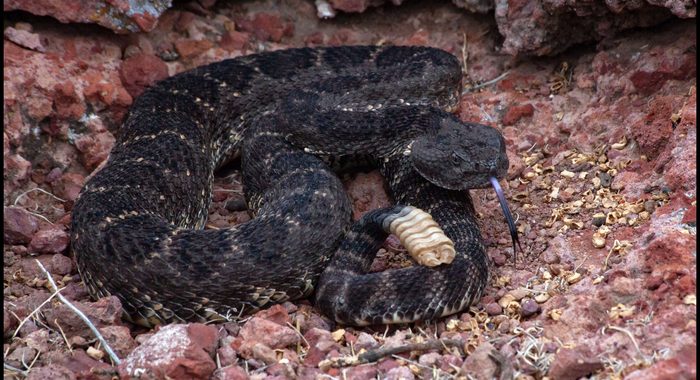
This is one of a couple of Arizona Black Rattlesnakes (Crotalus cerberus) we found in the Hualapai Mountains near the western extent of their range. These snakes in this area can be highly variable, ranging in appearance from the typical black rattlesnake look to lighter, blotchy patterns that hint at possible influence by others in […]
Continue reading..Arizona Black Rattlesnake From Western Arizona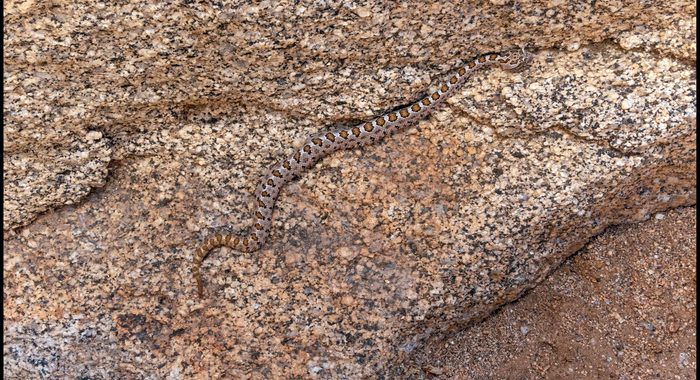
A young Baja California Rattlesnake in Baja California Norte, Mexico several years ago. These small rattlesnakes are common throughout most of the peninsula. They inhabit about every type of habitat imaginable, from sandy beaches to nearly sheer cliffs, and everything in between. Diet of Crotalus enyo (Serpentes: Viperidae) from the Baja California Cape Region, MexicoCarbajal-Márquez, […]
Continue reading..Young Baja California Rattlesnake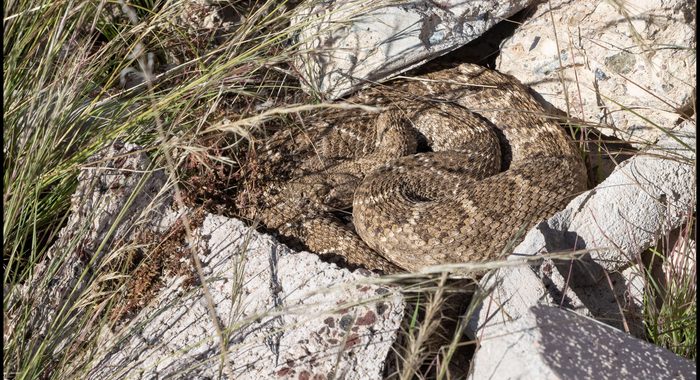
A Western Diamondback Rattlesnake sitting outside of its den in late November. Days later, it disappeared into the rock pile to hibernate. In Maricopa County, ingress to their selected overwintering sites typically concludes by about the second week of November, unlike Spring emergence, which is a longer process of basking and social behavior that puts […]
Continue reading..Western Diamondback Rattlesnake Ingress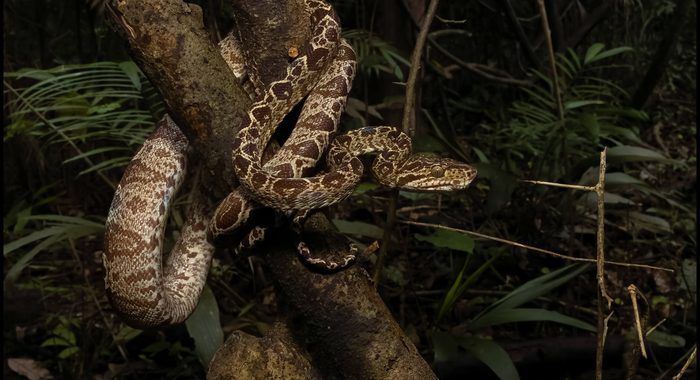
One of a handful of Amazon Tree Boas found by night boat along tributaries of the Amazon in Peru several years back. These snakes can be difficult to photograph without bleeding.
Continue reading..Amazon Tree Boa in Peru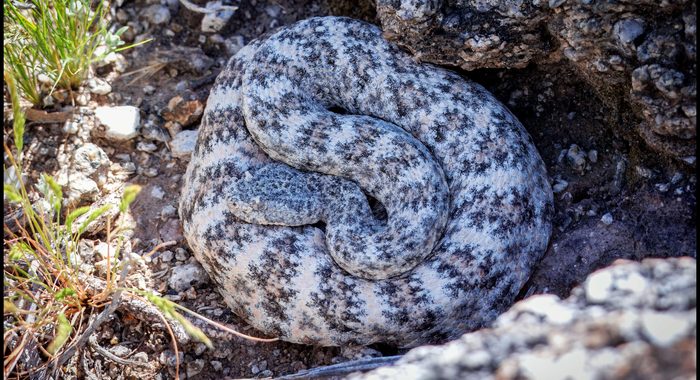
I spotted this Southwestern Speckled Rattlesnake standing out amongst dark basalt on a crumbly hillside in the Maricopa Mountains a couple of years back. It’s only the second I’d seen in the range, with the first not resulting in a photograph worth saving.
Continue reading..Speckled Rattlesnake from the Maricopa Mountains