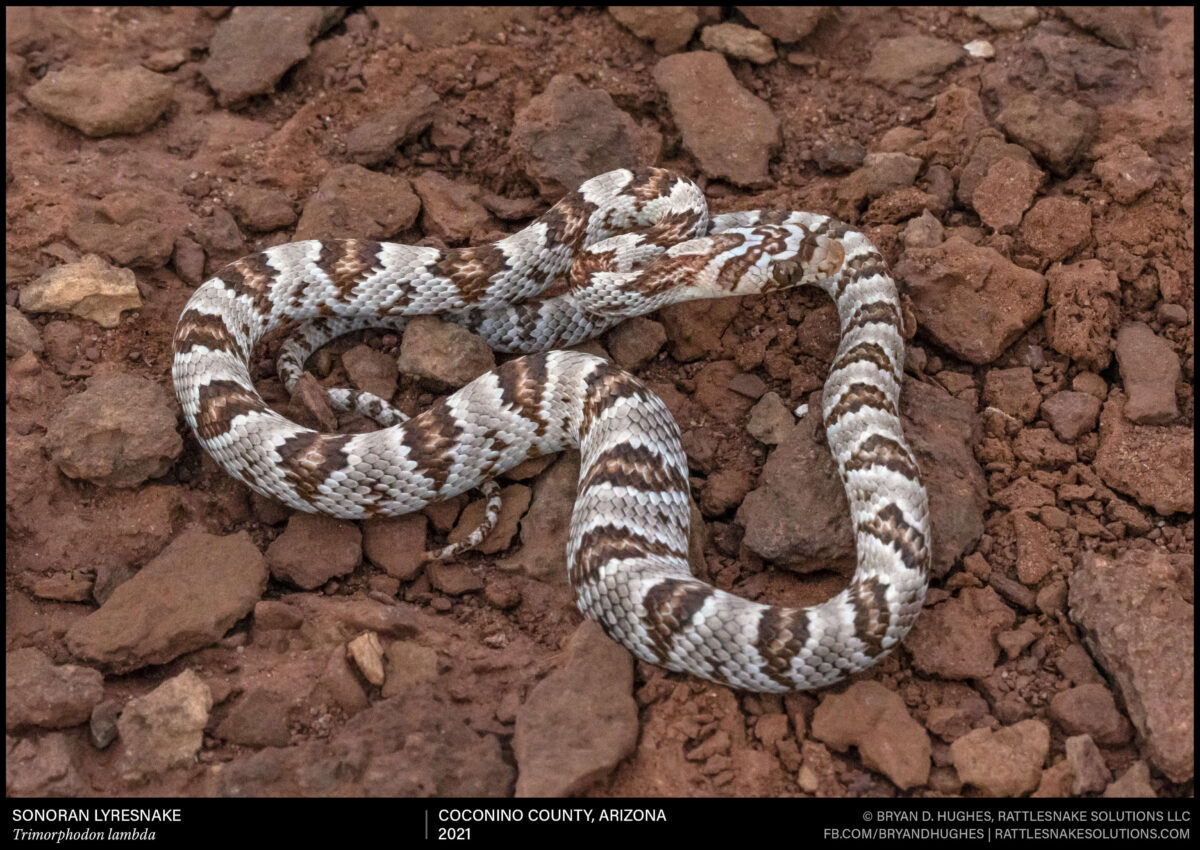
A Sonoran Lyresnake from just south of the Utah border in northern Arizona. I like their appearance in this area along the Colorado River. They’ll often have this high-contrast pattern, sometimes flecked with golds and maroon scales. This one is relatively young, and may take on some of these other colors as it matures.
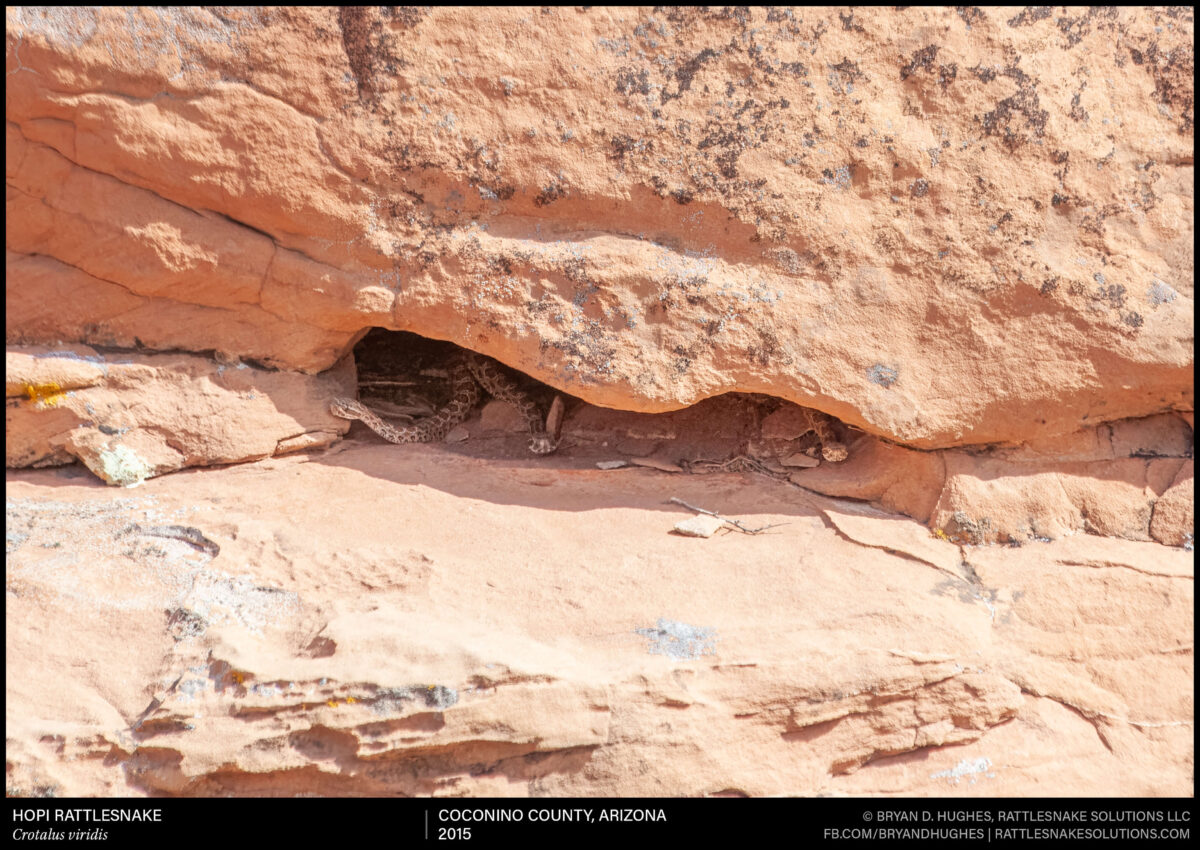
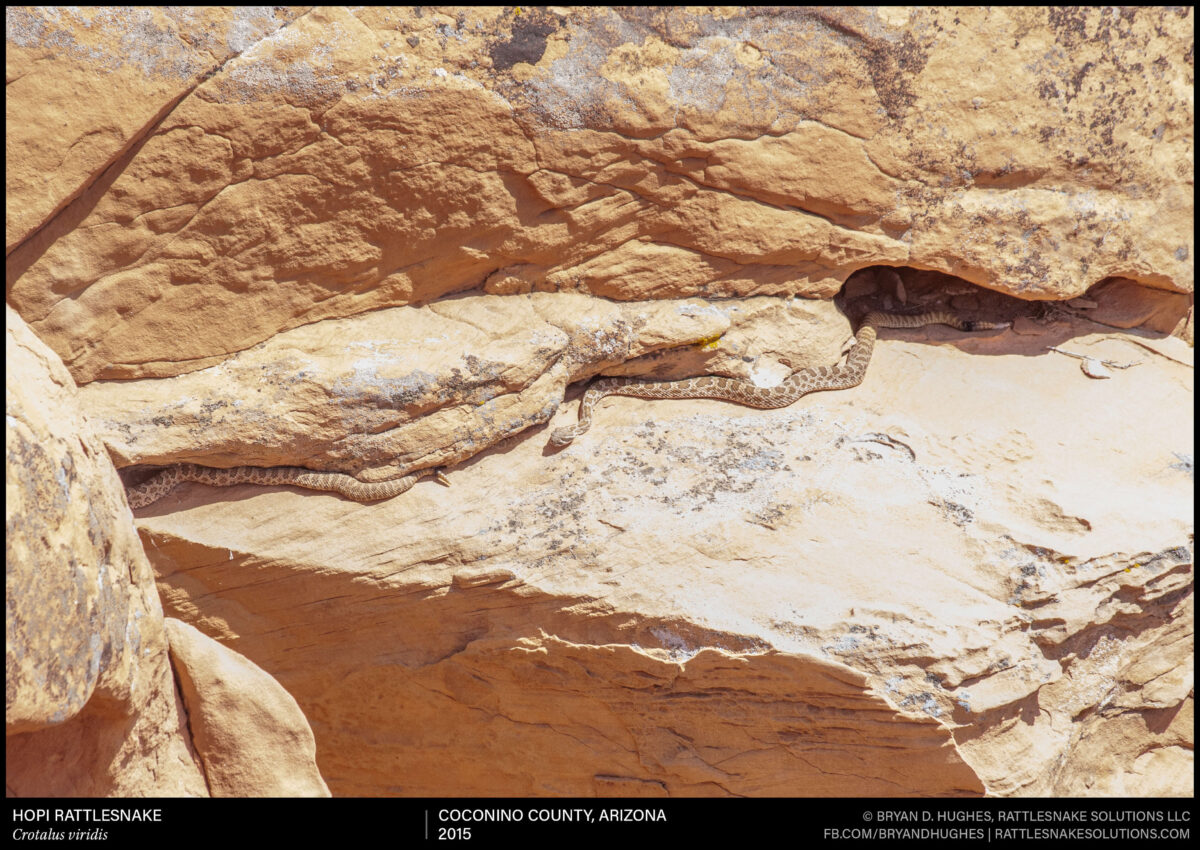
It takes a lot of patience to sneak up on this den of Prairie Rattlesnakes in northern Arizona. Unlike most rattlesnake dens I visit, these spook incredibly easily, retreating at the sight of me from well over 100′ away. Even when moving slowly, they seem to recognize the threat and disappear … for the rest of the day. It’s only by arriving before it’s warm enough to emerge and hiding behind boulders that it was possible for me to get these photos, and watch their actions for the morning.
These small variants of the species were once considered a separate subspecies (Hopi Rattlesnake), more than twenty years ago, but may be again, based on discussion of new research from reliable sources. These are all only around 1 to 1.5′ long, and will never get bigger. This is quite different than the much larger, greener (~3′) versions of the same species found in the Juniper-dominated hills, a relatively short drive away.
This topic will almost certainly mean the comments here will be dominated by snake people, similarly emerging from the crevices of the internet to shake fists in various directions. Taxonomy is a bit like music – whichever bands were popular at the time a young herpetologist is most active seem to become the prime lexicon, all future versions to be summarily dismissed as noise of youth.
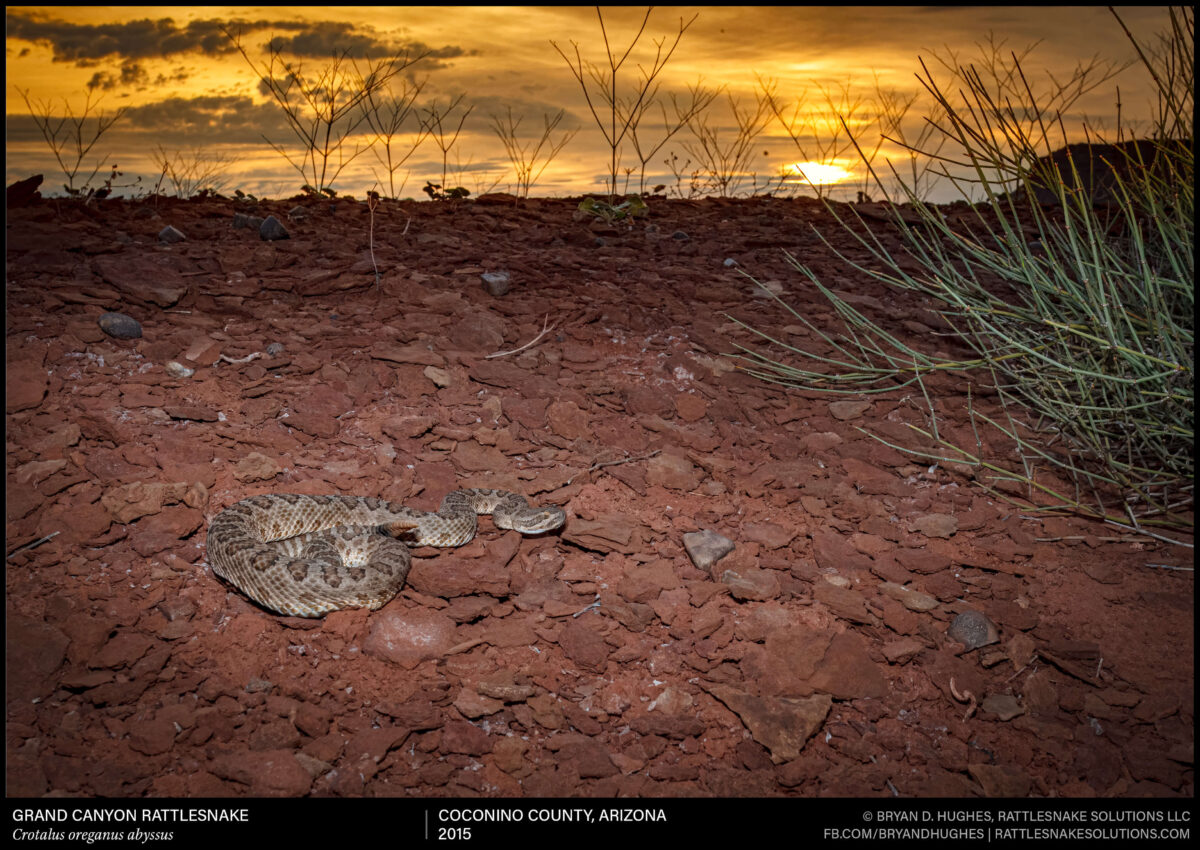
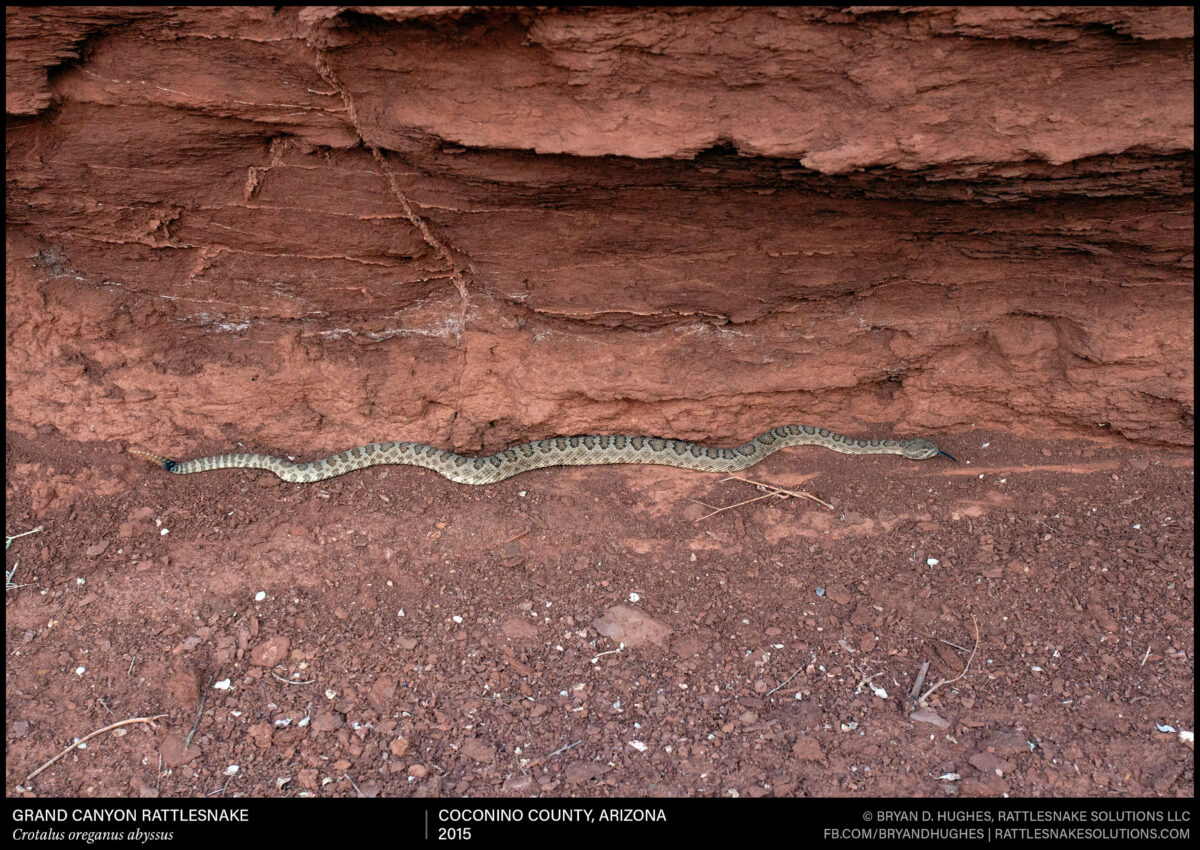
A Grand Canyon Rattlesnake we found near its namesake a while back. This is what many refer to as the “Grand Canyon Pink”, though they are often, or usually, not pink, but this straw color or similar. The pattern here is strong, as is often typical in males and younger snakes, but may fade with time. In parts of the canyon, too, there are Speckled Rattlesnakes which may also be pink, so the “pink rattler” of the canyon can be a misleading concept.
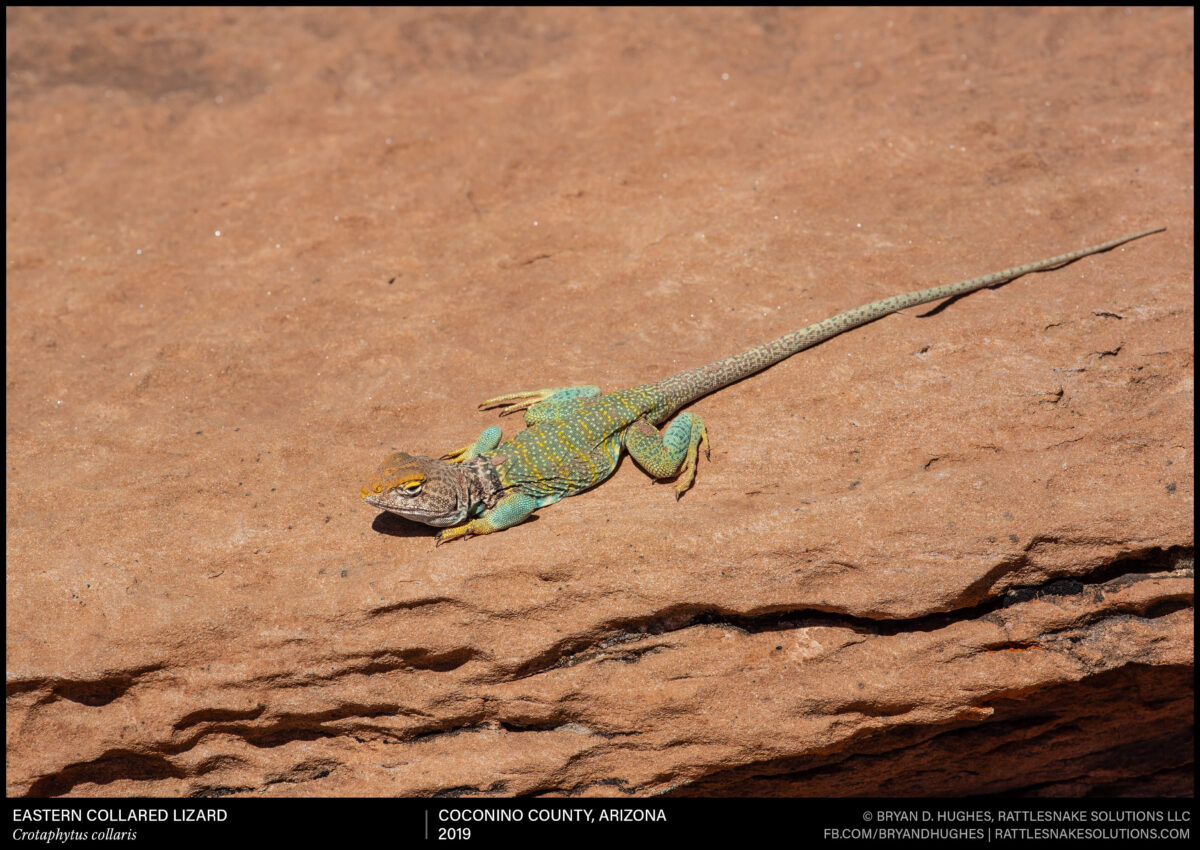
Arizona has some amazing, large lizards. This brightly colored one is an Eastern Collared Lizard. Based on a number of factors, they may be any variation of bright greens, blues, yellows, and oranges. This one was seen at a Prairie Rattlesnake den, carefully considering if we were something it needed to run away from.
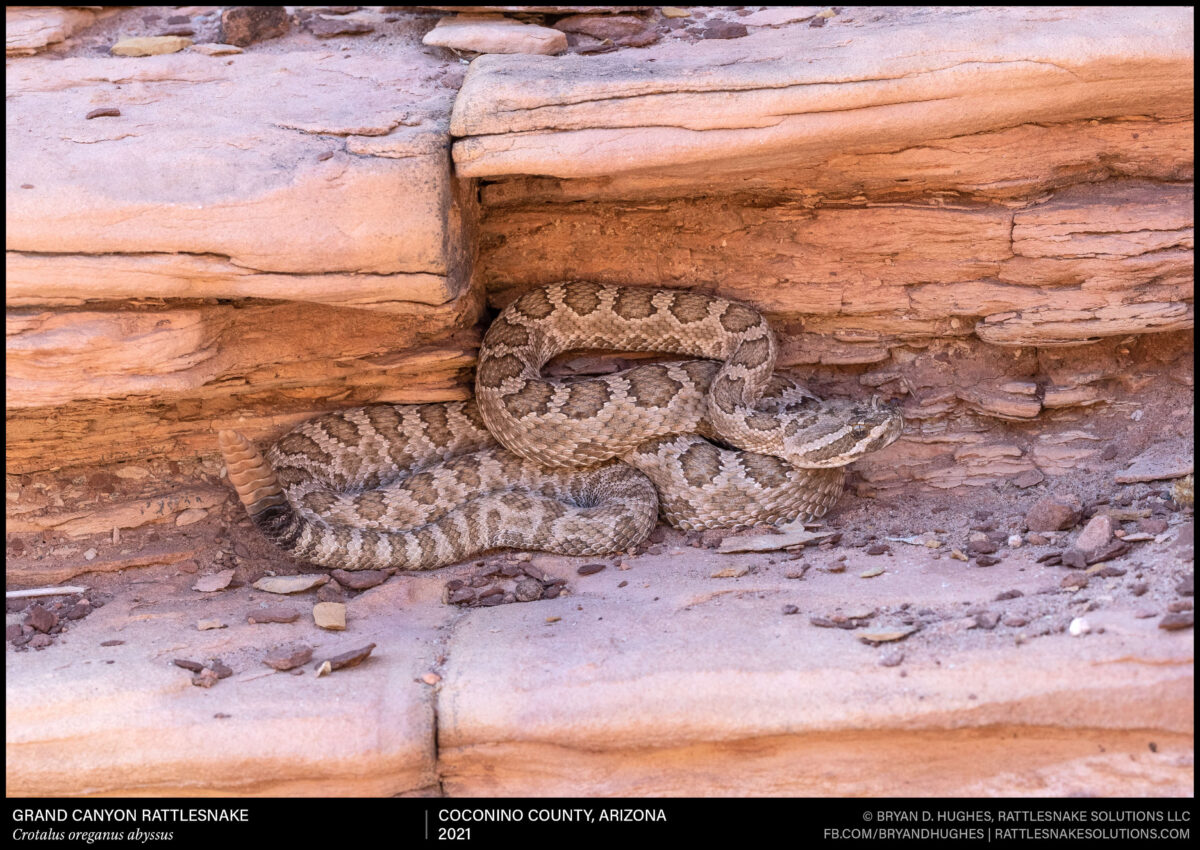
A Grand Canyon Rattlesnake from northern Arizona. In time, the pattern on this snake may continue to degrade and fade, but not to the same degree as is common for females of the species.
Just before sunset, we found a Great Basin Rattlesnake crossing a road in northeastern Arizona. It was bothered for a few minutes while we took some photos.
A young Great Basin Rattlesnake found in the Arizona strip – an expansive, relatively isolated region between the Grand Canyon and Utah. In the transition to Great Basin desert grassland, this species is the only rattlesnake all the way north into Idaho, and West into Oregon and northern California. This young snake will fade with age into the two-tone broken blotches of tan and brown … or one of the many other color combinations of the species.
A little dinosaur warming in the morning sun. The Eastern Collared Lizard is one of the most colorful lizards in Arizona and typically presents itself dramatically against open rock and high perches, making it also one of the most photogenic. This one watched us searching for Prairie Rattlesnakes and darted under cover when it decided we weren’t leaving.