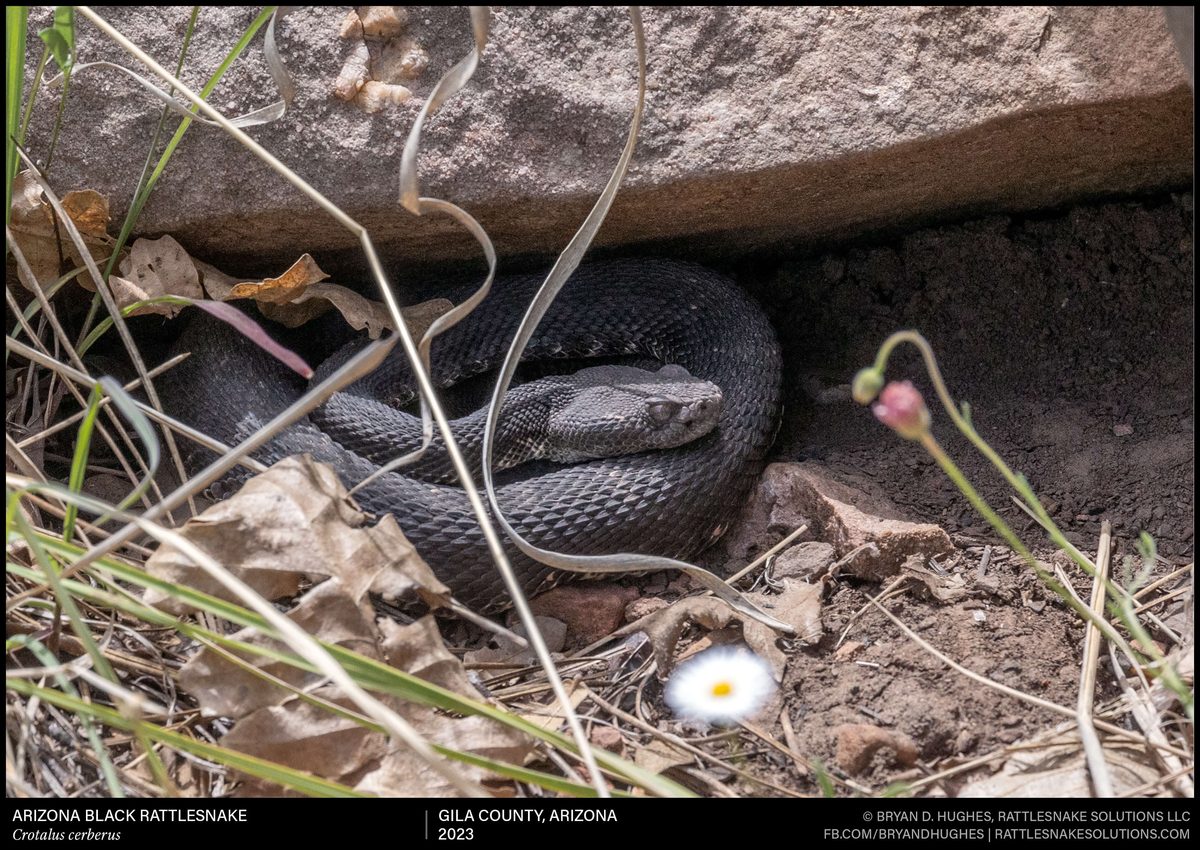
An Arizona Black Rattlesnake hanging out at the entrance of her den. She, and several other pregnant (gravid) females, remain here all summer. When it’s time for the babies to be born, they will be right where they need to be several weeks later when temperatures cool and it’s time for their first hibernation.
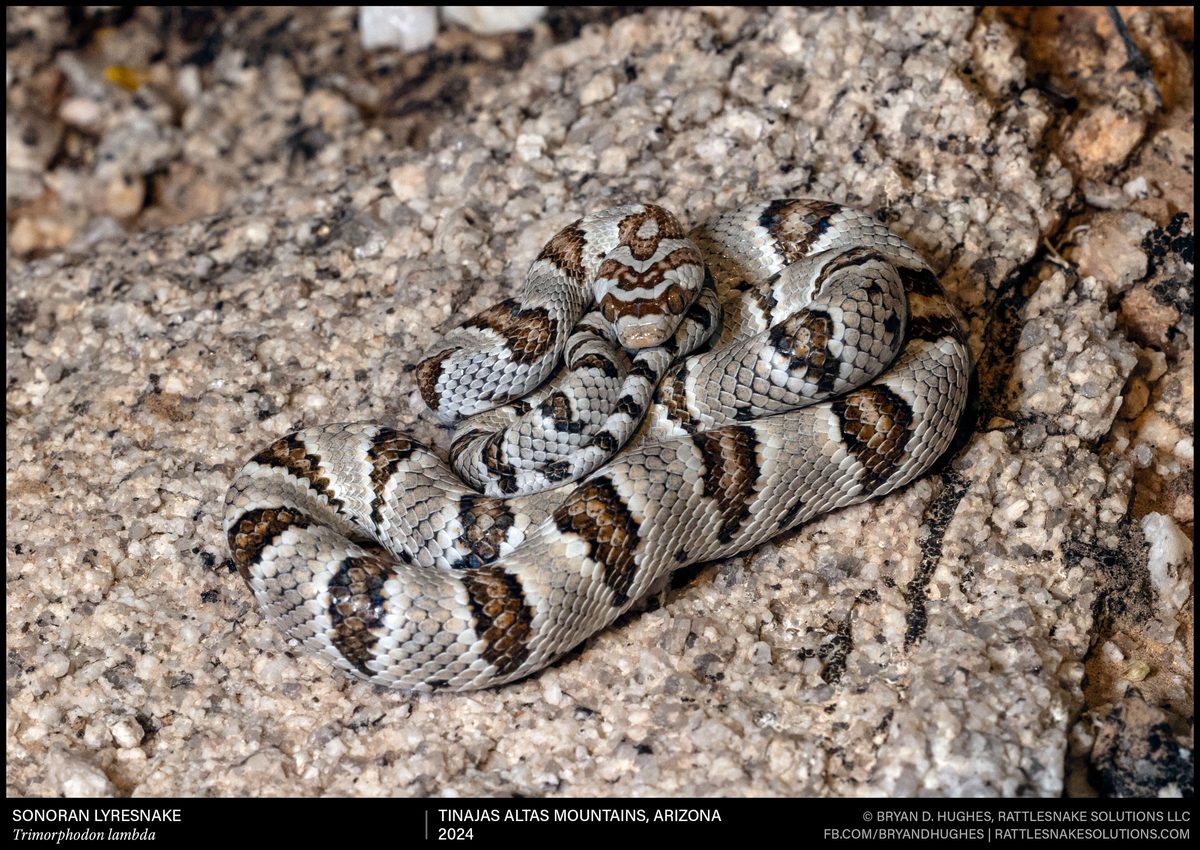
A small Sonoran Lyresnake from the extremely hot, dry desert of Yuma County, Arizona. This is one of a couple that showed up right in camp, and we got some photographs before letting it continue on its way. These cryptic snakes are almost entirely nocturnal, and rarely seen by Arizona residents.
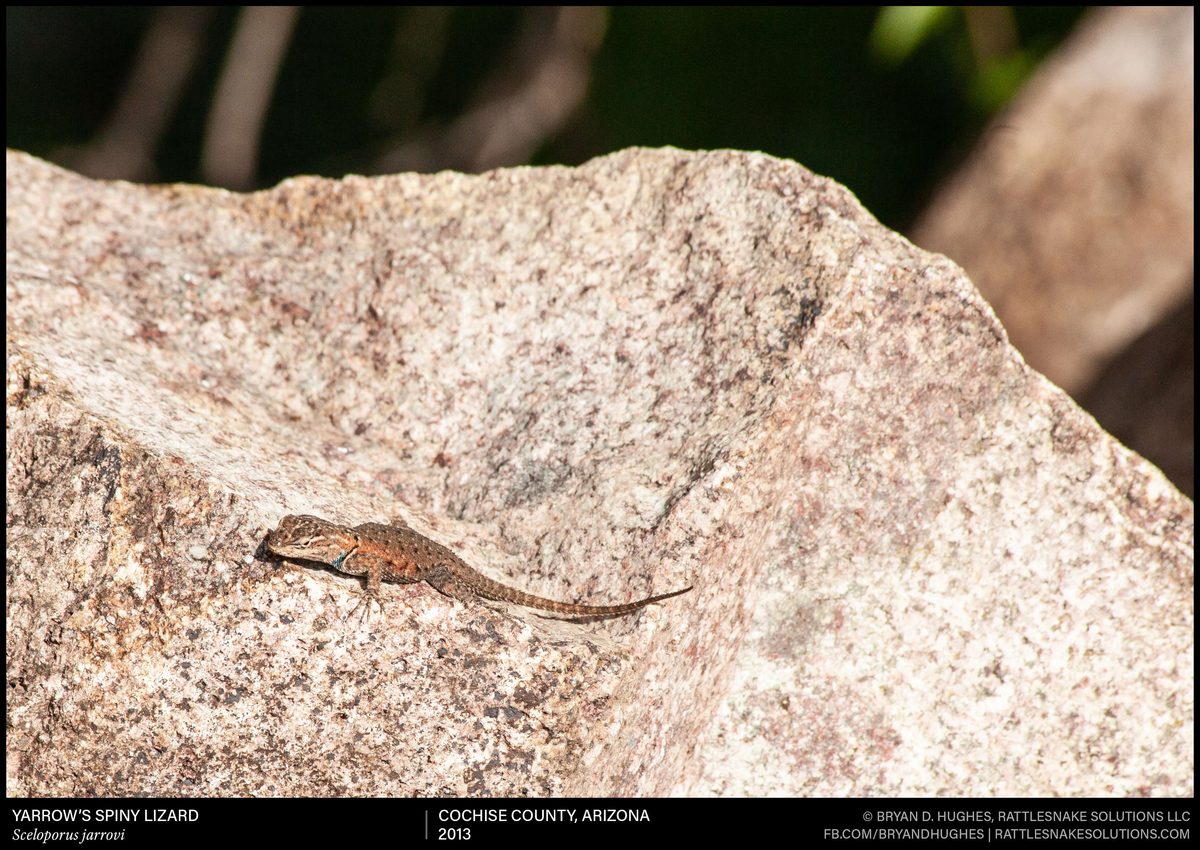
A young Yarrow’s Spiny Lizard watches an odd primate operate some metal and glass device from a short distance, waiting to get back to work on the serious business of finding bugs. These charismatic lizards are common in the higher elevations of southeastern Arizona.
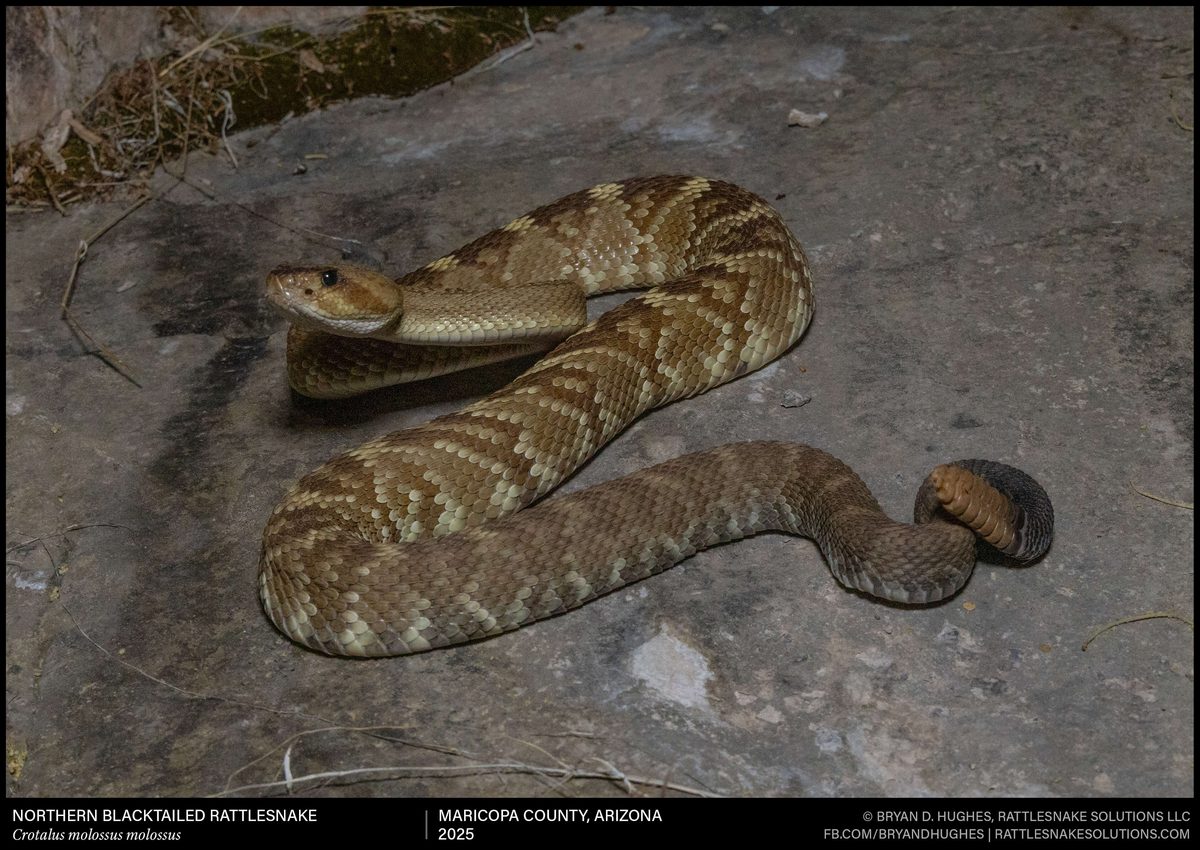
This Blacktailed Rattlesnake is typical of those you’ll see in the Phoenix area. They’re often a yellow/gold or greenish color, with quite a bit of variation in how much pattern is visible. The black tail may also show some faint grey bands, leading to some confusion as people look for a completely black tail to identify them. They are typically misidentified as a Mojave rattlesnake, due to the color and faint tail bands. This one was found on a night hike in a remote canyon, where it was one of several rattlesnakes active that particular evening.
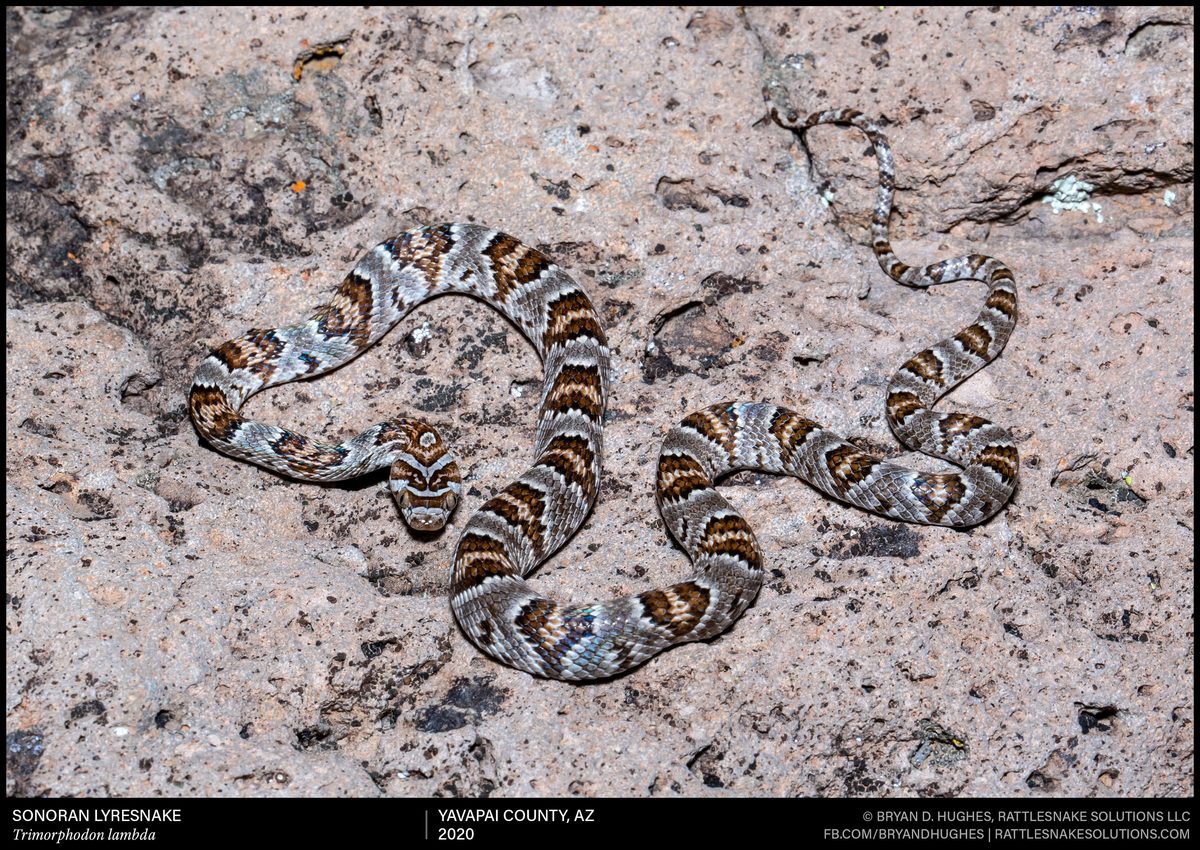
We found this Sonoran Lyresnake on the move on a night hike in Yavapai County sevearl years back. This one is typical of the species for the area, with chaotic brown and tan blotches over a beige body, with a relatively disoganized look compared to some of the more cleanly banded version found elsewhere. They’re slightly venomous, feeding on lizards, rodents, and bats. It’s not harmful to humans, but I still avoid a bite like I would from any snake.
Devitt, T. J. (2006). Phylogeography of the Western Lyresnake (Trimorphodon biscutatus): Testing aridland biogeographical hypotheses across the Nearctic–Neotropical transition. Molecular Ecology, 15, 4387–4407. https://doi.org/10.1111/j.1365-294X.2006.03015.x
Mackessy, S. P., & Saviola, A. J. (2016). Understanding biological roles of venoms among the Caenophidia: The importance of rear-fanged snakes. Integrative and Comparative Biology, 56(5), 1004–1012. https://academic.oup.com/icb/article/56/5/1004/2420638
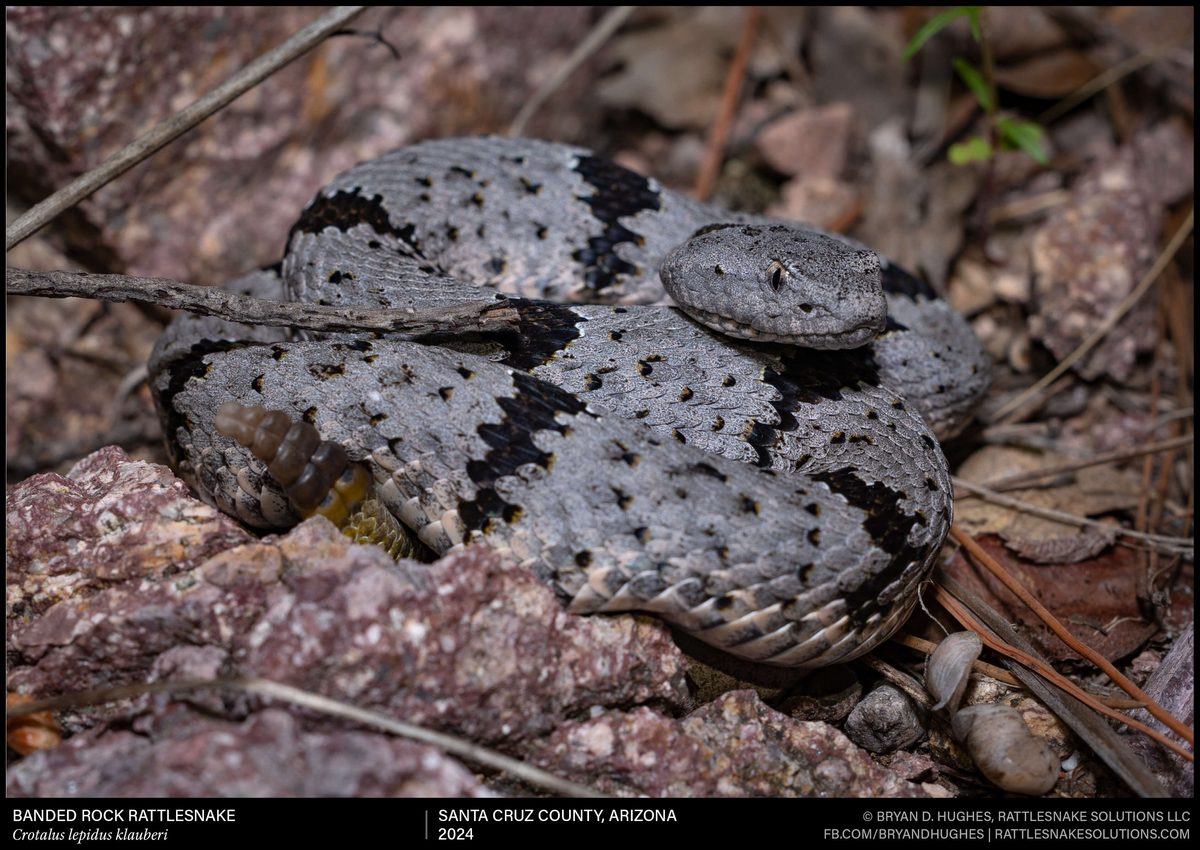
A female Banded Rock Rattlesnake from the Huachuca Mountains in Arizona. These small rattlesnakes are sexually dimorphic, with males often showing metallic green coloration along the back. Females are usually more subdued in comparison, like this typical grey and black banded look. These are one of a handful of protected rattlesnake species in the state.
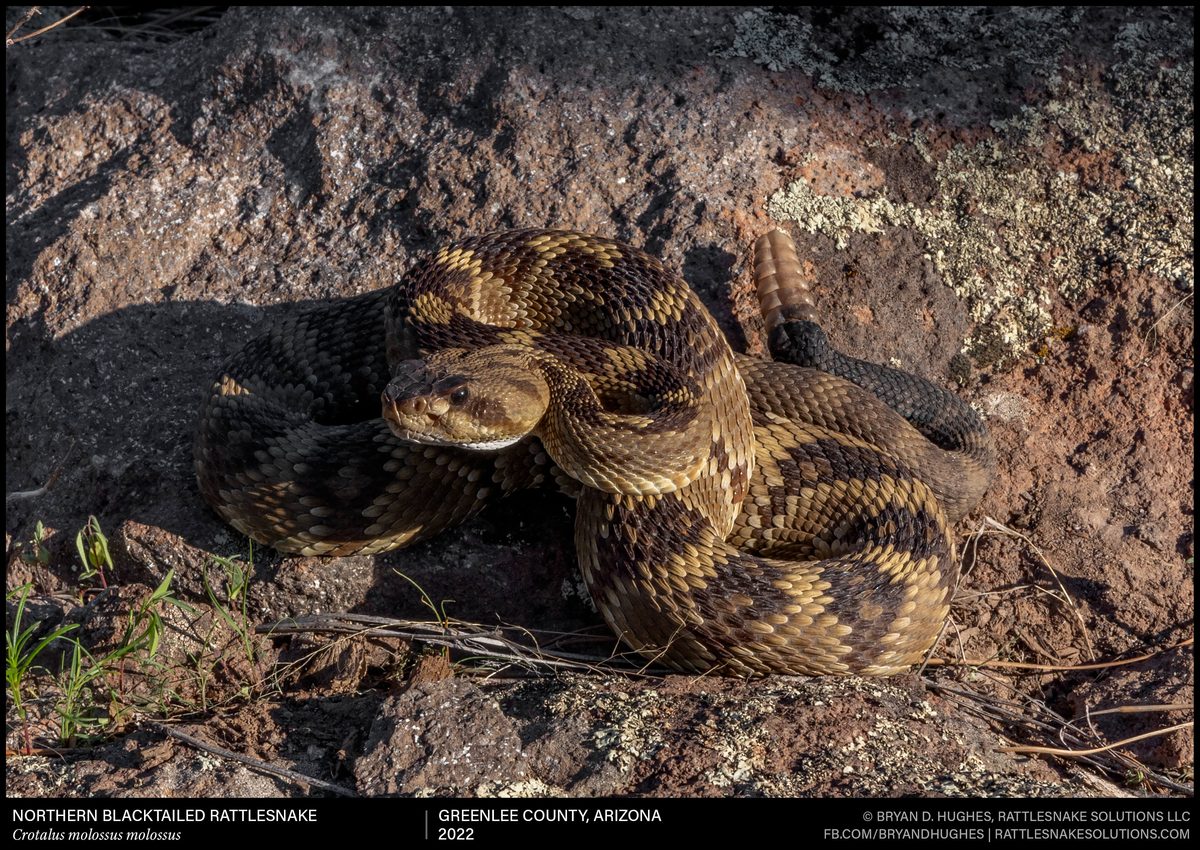
A large Blacktailed Rattlesnake that we found in the mountains of central Greenlee County. This is a huge, wild area with few roads and much of the high elevation habitat inaccessible without a lot of effort. For that reason, it’s of special interest to me, with relatively few examples of snakes compared to other regions in the state.
These are on the larger end of rattlesnakes in Arizona, reaching lengths of around four feet. Their defensive behavior is all over the board. Most of the large ones will quietly just continue to leave, making them even more difficult to photograph, as they seem to remain unbothered by the camera-holding primates.
Beck, D. D. (1995). Ecology and energetics of three sympatric rattlesnake species in the Sonoran Desert. Journal of Herpetology, 29(2), 211–223. DOI: https://doi.org/10.2307/1564558
Pough, F. H. (1966). Ecological relationships of rattlesnakes in southeastern Arizona with notes on other species. Copeia. DOI: https://doi.org/10.2307/1441401
Anderson, C. G., & Greenbaum, E. (2012). Phylogeography of northern populations of the Black-Tailed Rattlesnake (Crotalus molossus Baird and Girard, 1853), with the revalidation of C. ornatus Hallowell, 1854. Herpetological Monographs, 26(1), 19–57. DOI: https://doi.org/10.1655/HERPMONOGRAPHS-D-11-00012.1
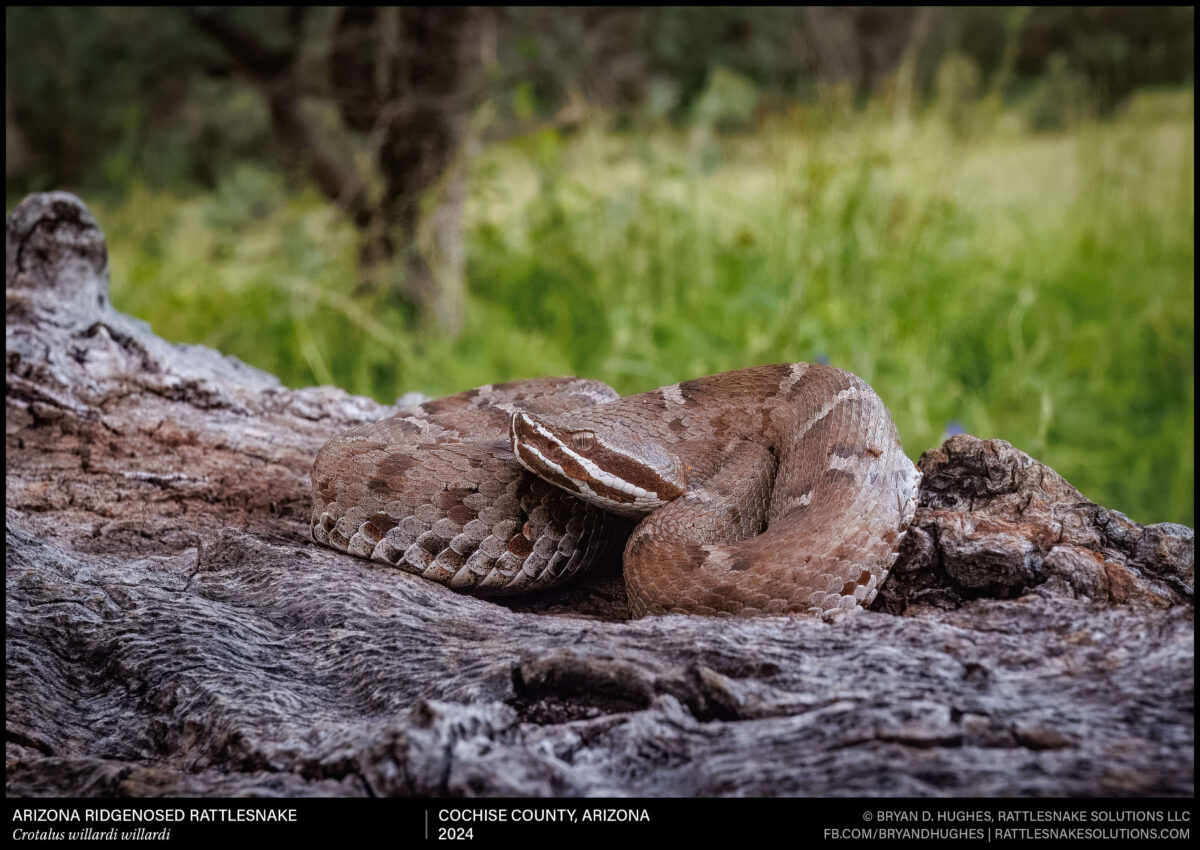
An Arizona Ridgnosed Rattlesnake from Cochise County, Arizona. This is a small rattlesnake that is found in a handful of mountainous areas in the southeastern corner of the state. A hiker may encounter one if they are in the Santa Rita, Patagonia, Huachuca, Canelo, or Whetstone ranges.
Interestingly, every rancher and long-term resident of those areas that I’ve personally spoken to about this species has no idea what I’m talking about. This mirrors many other instances that have taught me one thing: living in an area for a long time, even being born and raised there, does not grant any particular expertise of the animals that live there.
This snake has relatively weak venom for a rattlesnake, but it is still an emergency situation where antivenom should be sought after. It would be hard to find a situation where one would envenomate a person without actually picking it up.
Holzman, S. D., Massey, D. J., Clements, A., Boesen, K. J., & Shirazi, F. M. (2018). Arizona Ridge-nosed rattlesnake envenomation: Case report of a personal encounter with the official state reptile of Arizona, Crotalus willardi willardi. Toxicon, 151, 84–88. https://doi.org/10.1016/j.toxicon.2018.07.001
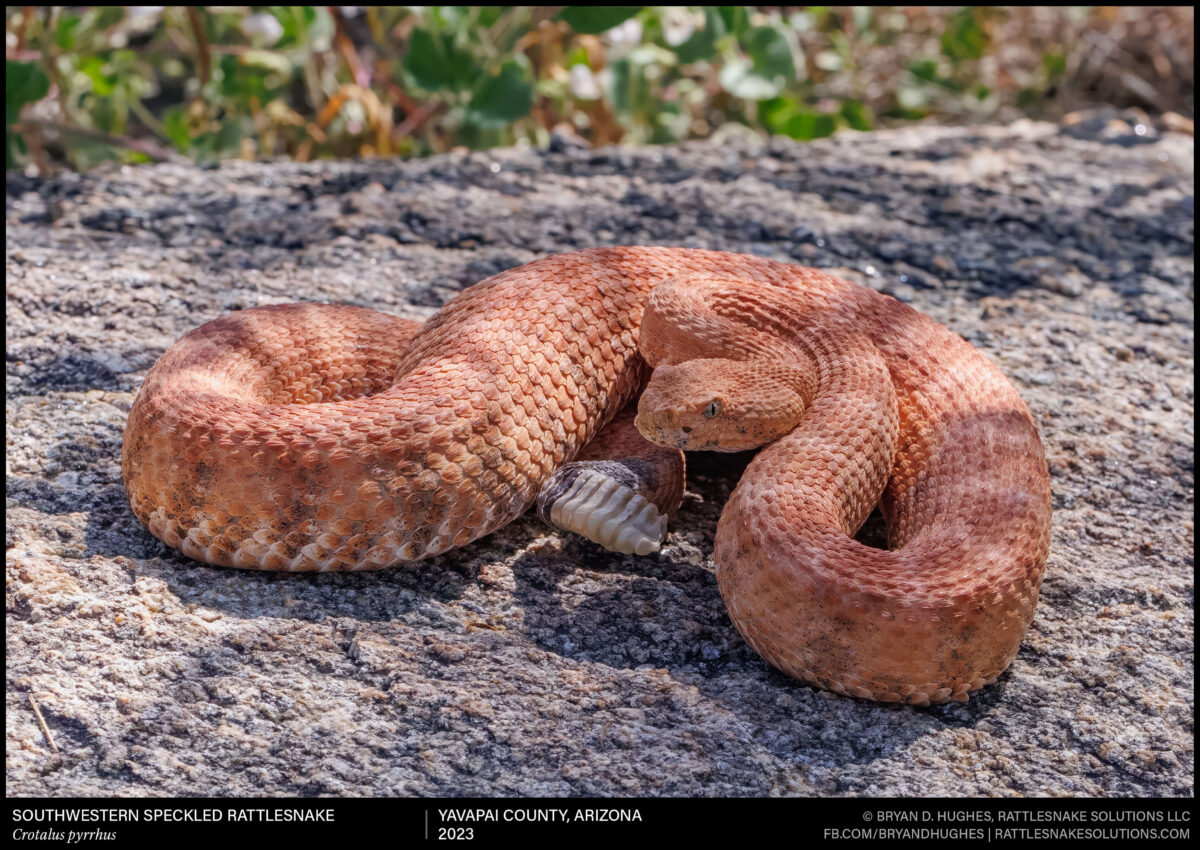
A brilliantly colored Speckled Rattlesnake from central Arizona. The rock in this particular spot doesn’t look very much like the snakes, but the occasional oxidized rock breaks off from higher and tumbles to the ground. When that orange rock sits under a bush or random location against the other grey and browns, it’s just part of the landscape. This snake, though, was hard to miss.
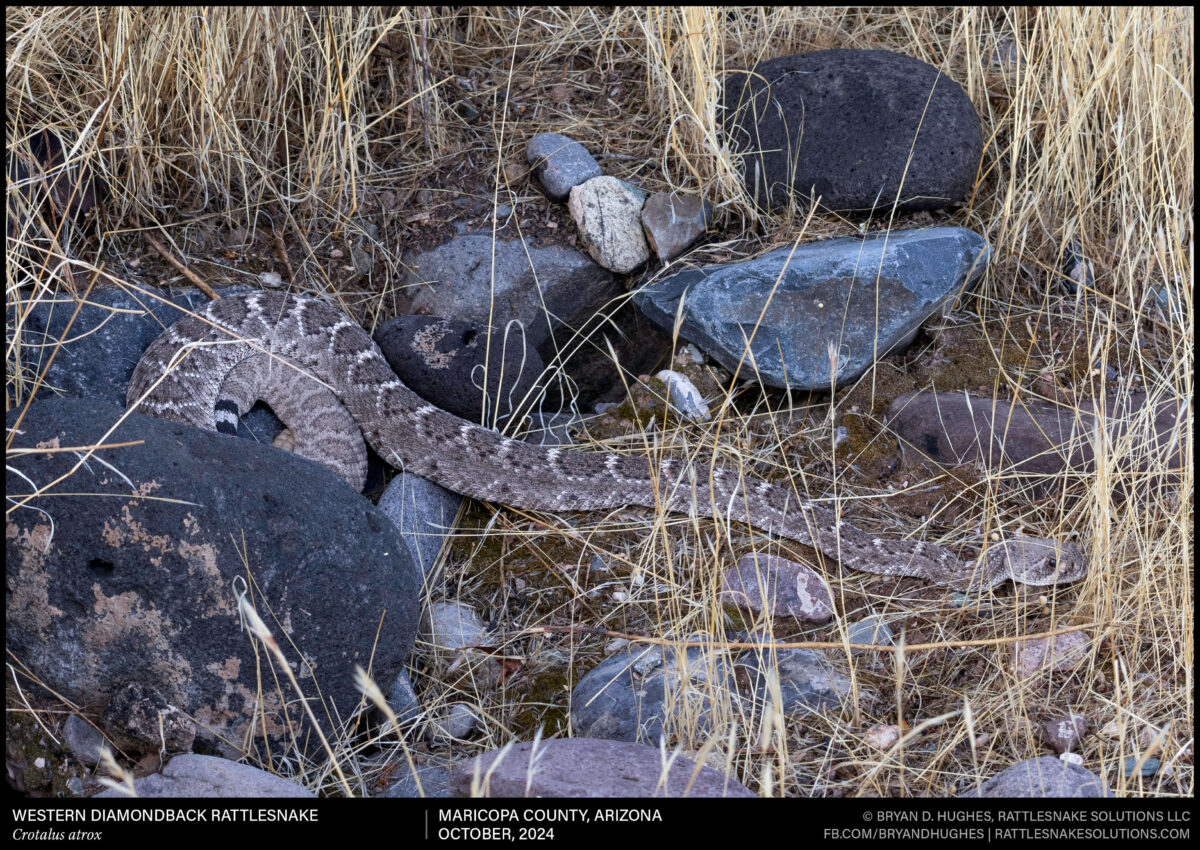
A Western Diamondback Rattlesnake caught after breaking coil in a hurry. Sometimes, a situation like this is the result of a strike at passing prey. Afterward, if they succeeded in connecting, they’ll wait a few moments and then go off in search of the prey as it succumbs to the venom elsewhere. Or, if it missed … back to the coil to try again.