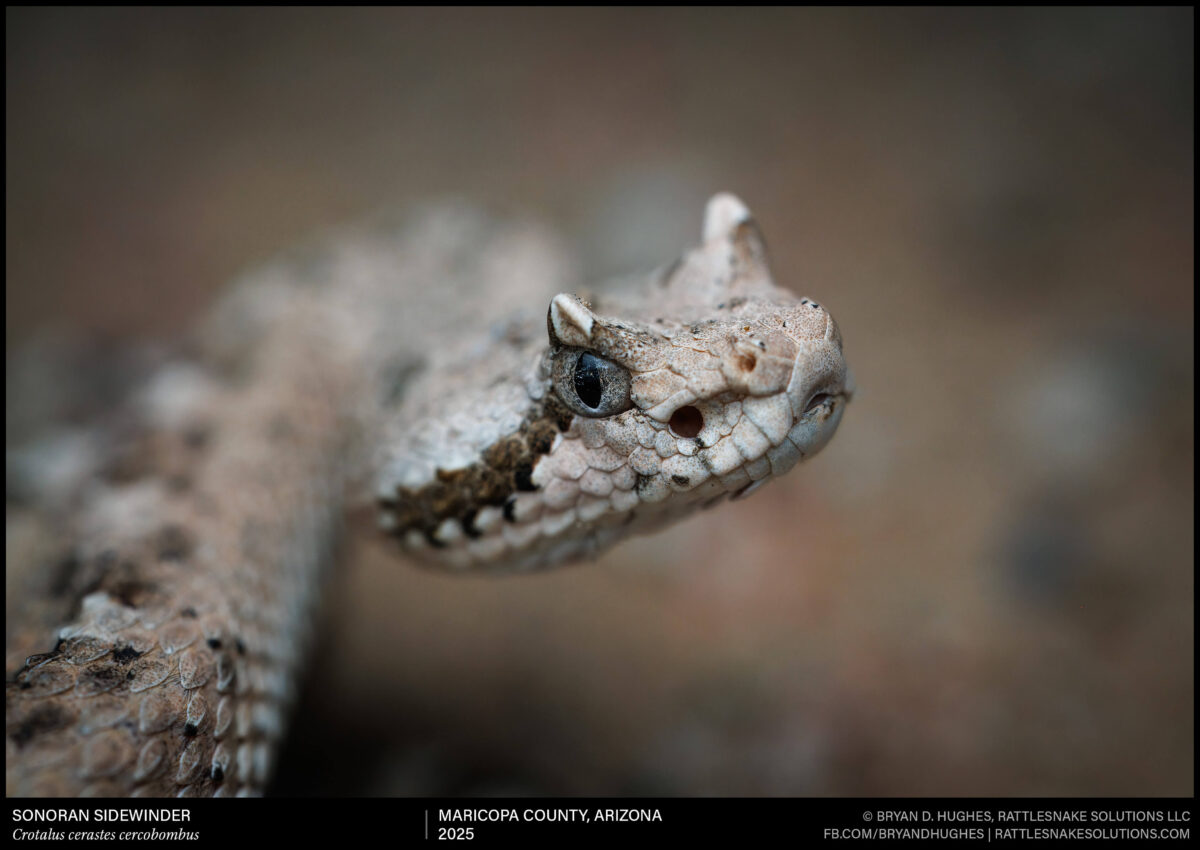
Close up with a Sonoran Sidewinder, showing off its “horns”. They are actually soft scales that rise above the eye, a feature they share convergently with unrelated vipers in deserts on the other side of the world. This is one of several seen on a warm evening last year near Phoenix.
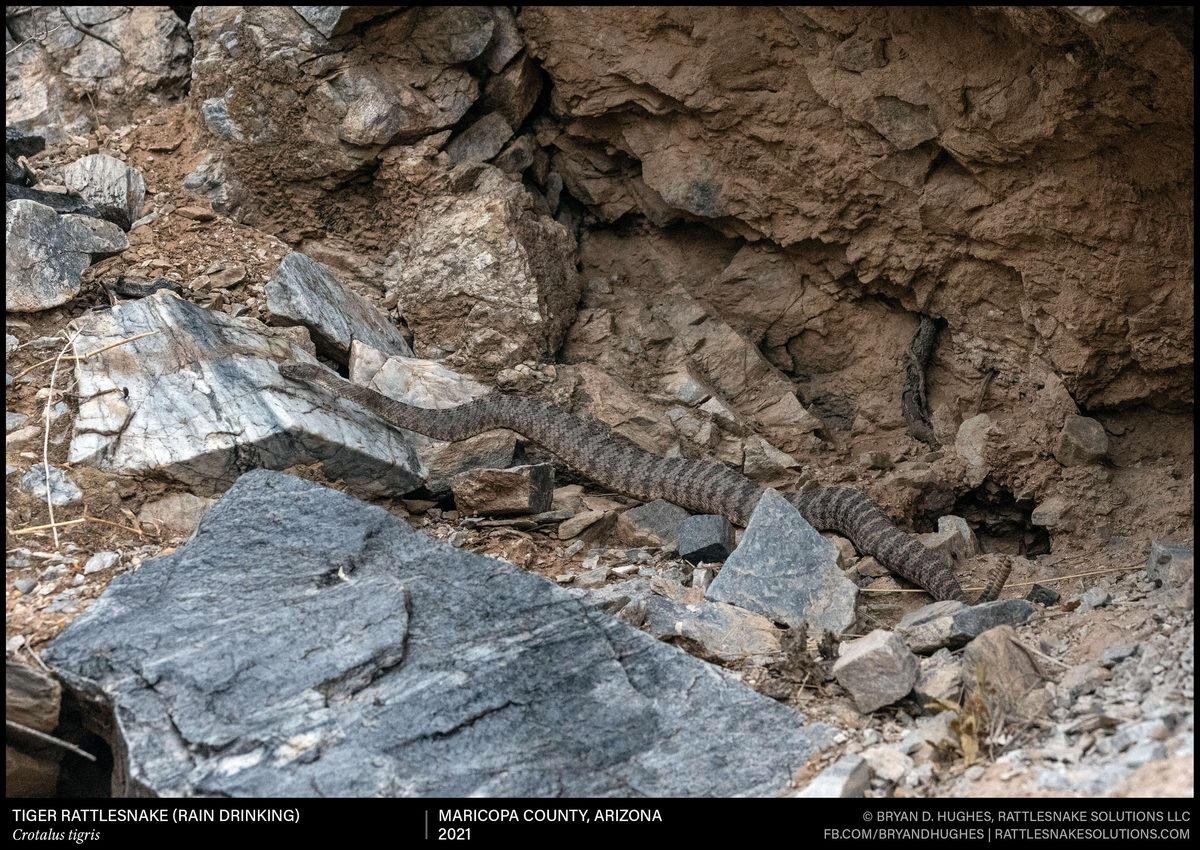
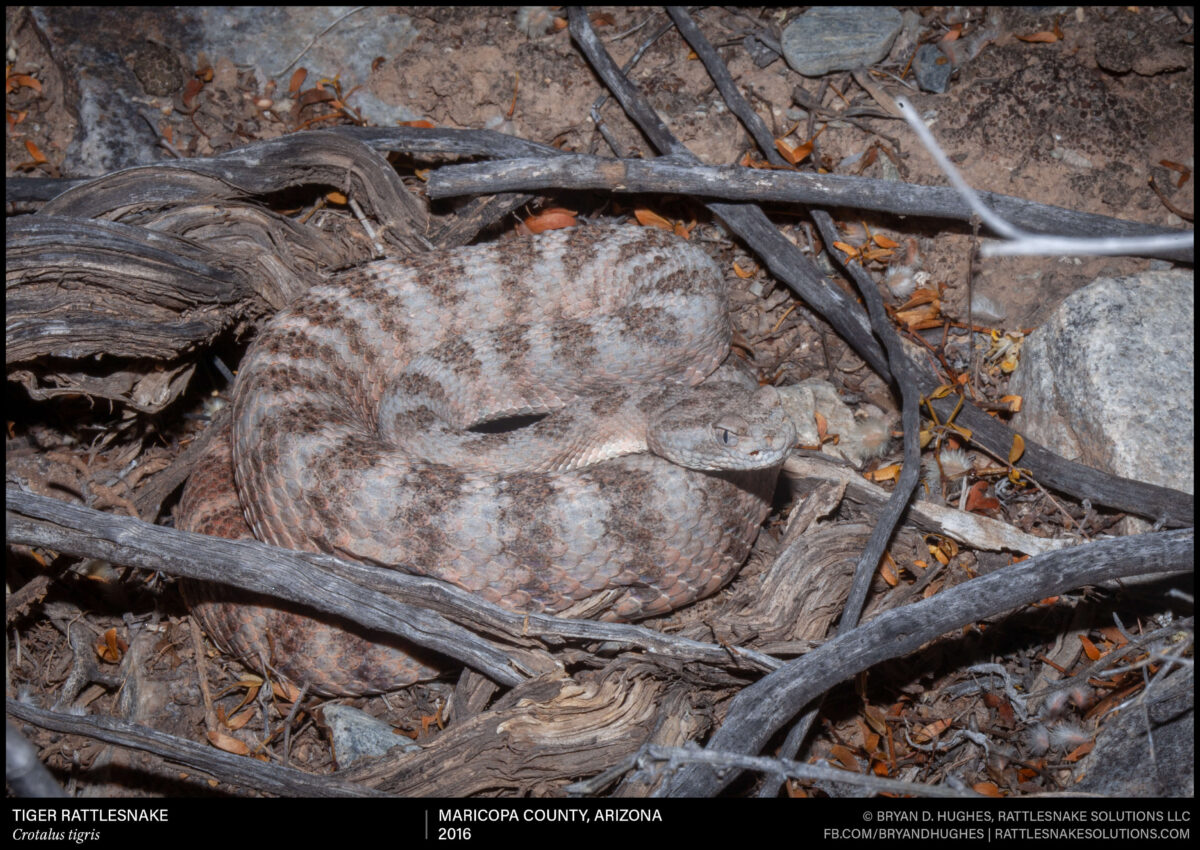
A Tiger Rattlesnake found in a very heavily visited park. This old snake is one of just a handful of Tiger Rattlesnakes that are known to remain in the park, and likely is very good at evading detection by hikers. This deconstructed, purple-ish tone look is typical for the species in the area. It now carries a PIT tag that will confirm its identity on future sightings.
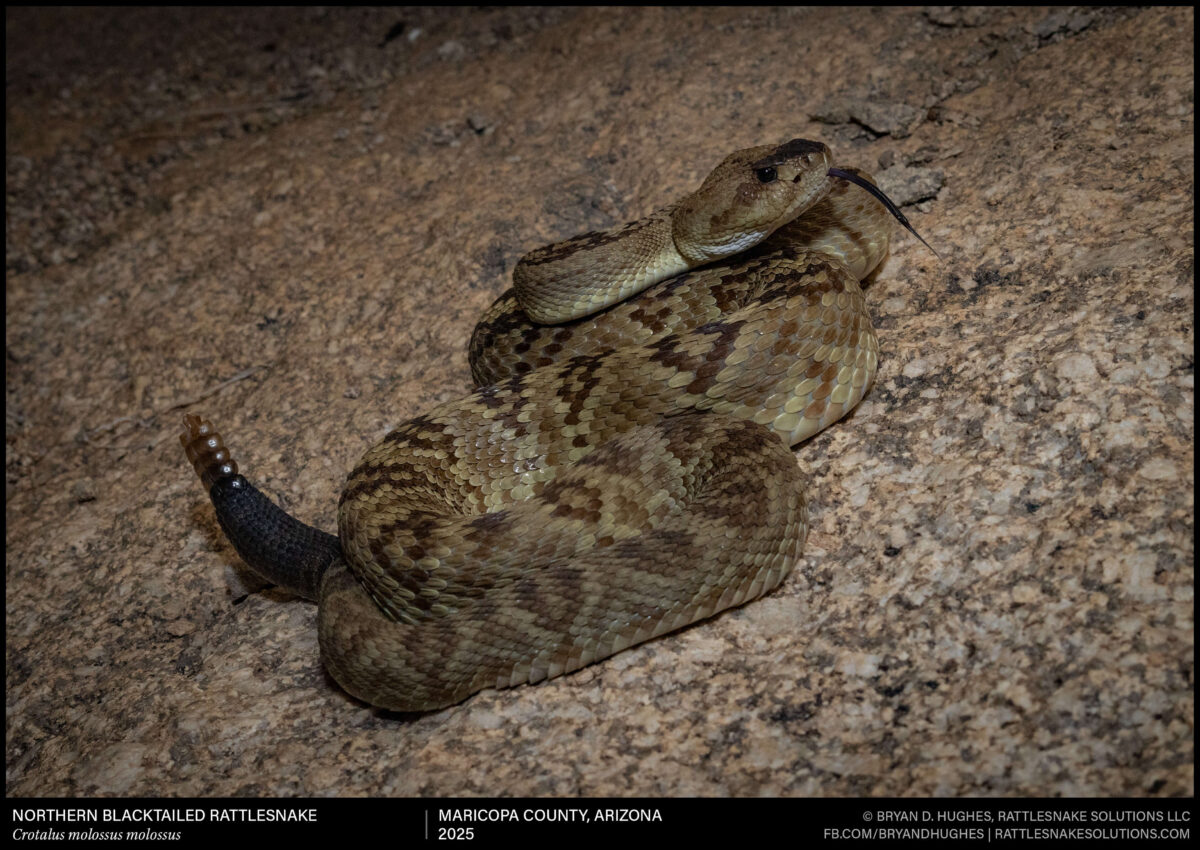
A Mojave Rattlesnake from the Phoenix area. This brown and tan color is typical of this species in the area, though some of the more famously greenish ones do pop up as well. This one follows all the rules, with a clearly visible tail with bands of a roughly 2:1 white to black ratio, half yellow proximal rattle segment, and eye stripe extending beyond the corner of the mouth.
But what people who are very experienced use to identify a snake like this is not any of those features in particular. It’s the overall appearance, or gestalt. The “cleaner”, less speckled and chaotic pattern, slighter and more angular head shape, and outward appearance as a whole just hit as “mojave” in the mind upon sight. This isn’t to say, of course, that the features listed aren’t important, but all can be variable and fail an observer from time to time. It’s worthwhile, once a person has learned to identify these animals reliably based on details, to “zoom out” and look at the whole animal. Eventually, a Mojave Rattlesnake would stand out from similar-looking species in the same way you can likely tell the difference between a yellow lab and a retriever.
Sonoran Sidewinders are common snakes found in flat, sandy areas of southern Arizona. They used to inhabit nearly the entirety of the Phoenix metro valley, with records below Camelback Mountain and throughout Scottsdale. Of the rattlesnake species in the region, however, they are the first to die out as soon as an area is closed in by roads. This one was found near Phoenix in an area where they are still common, but future development will change that dramatically, soon.
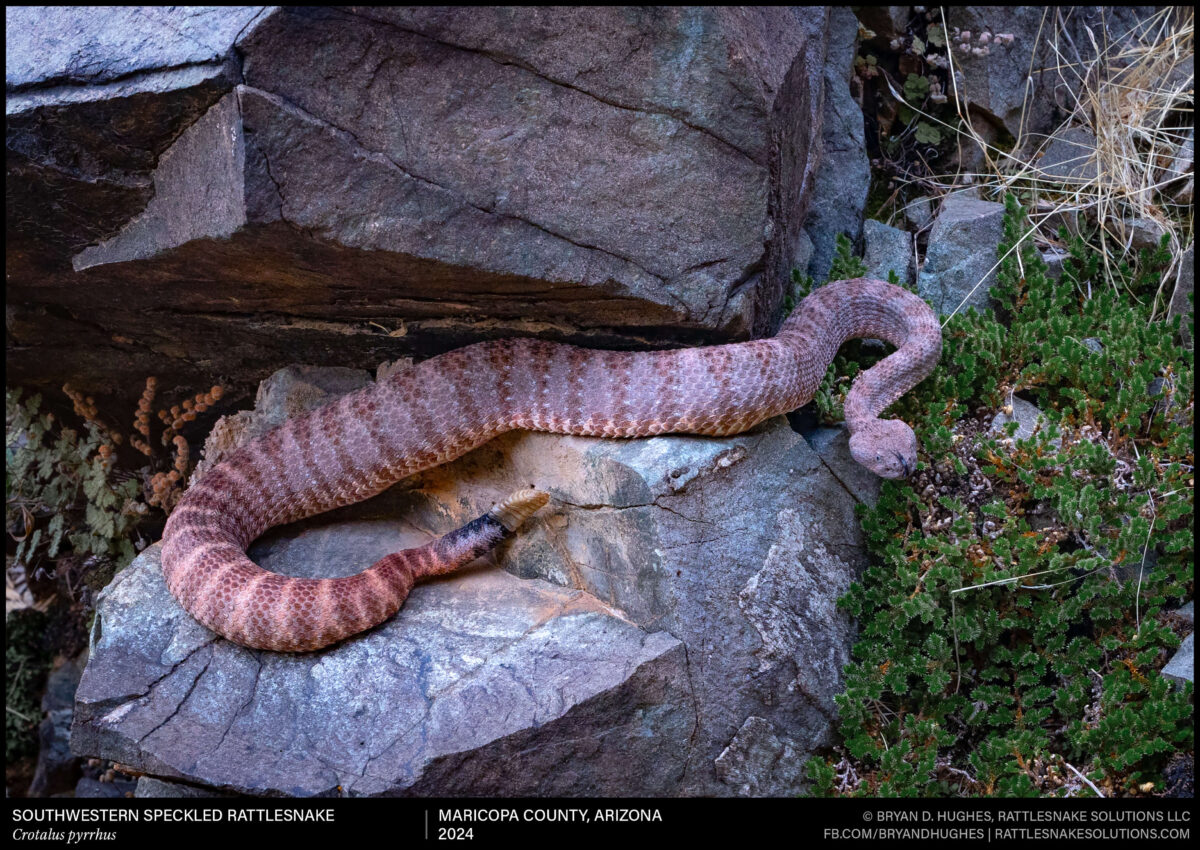
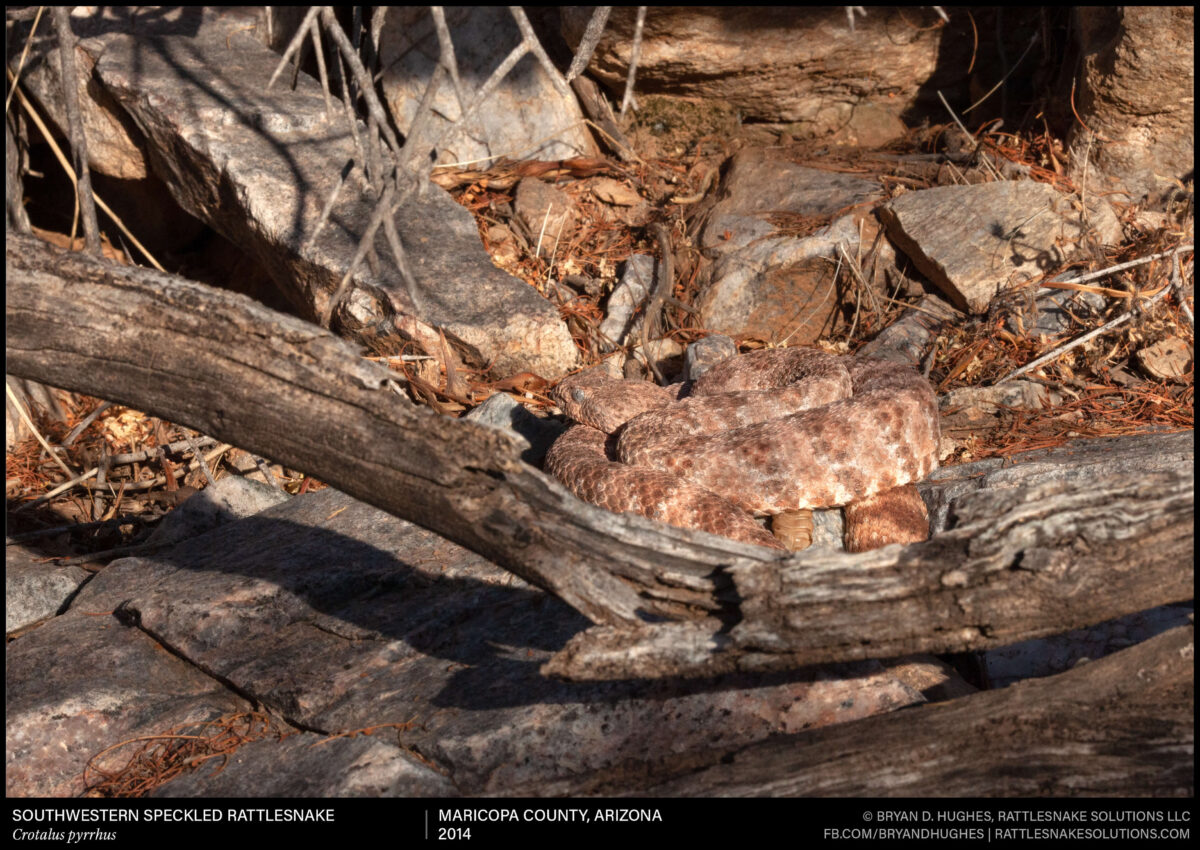
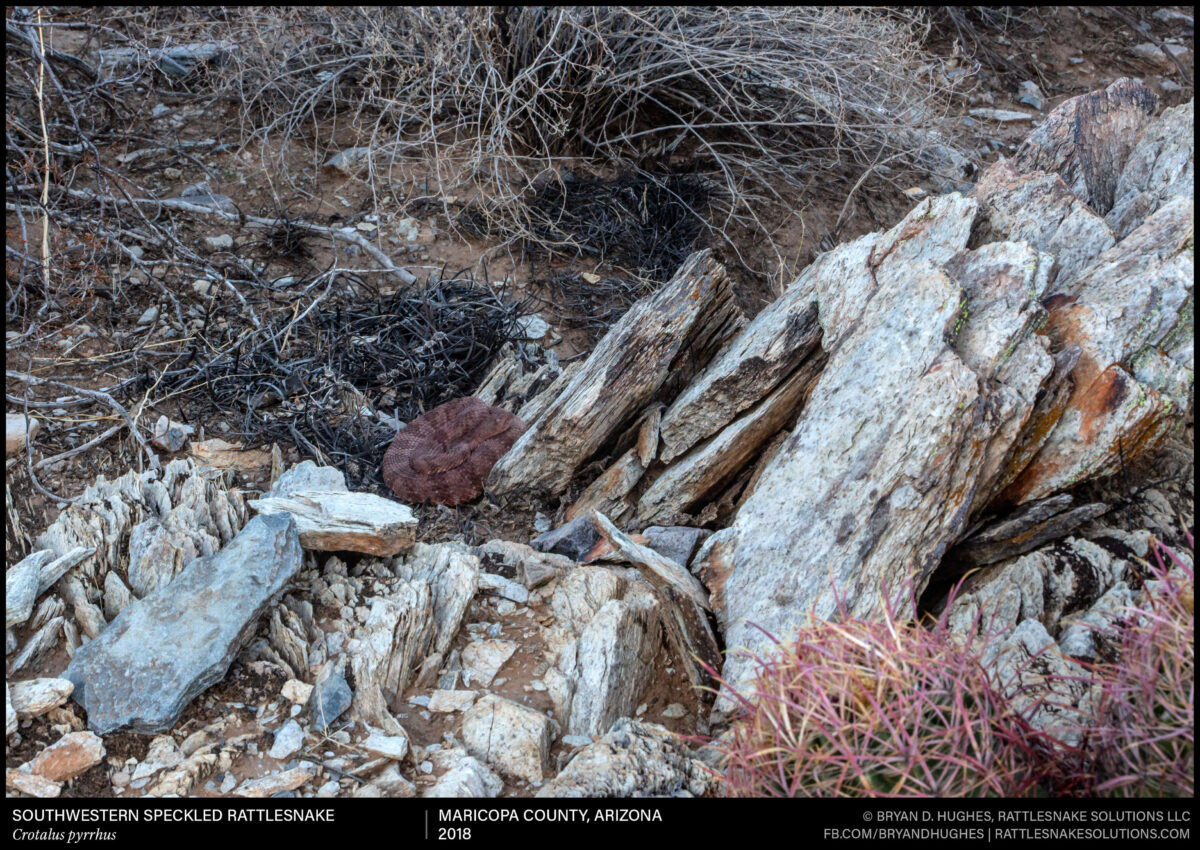
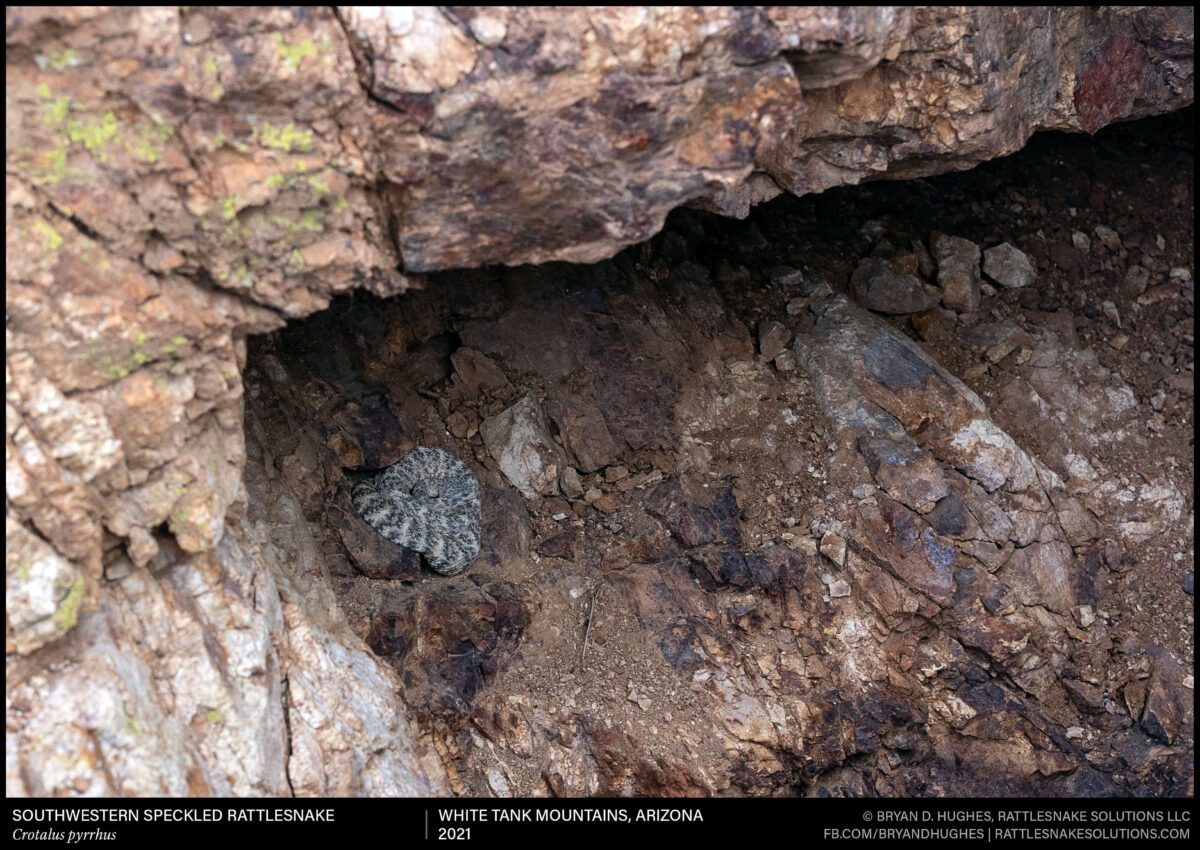
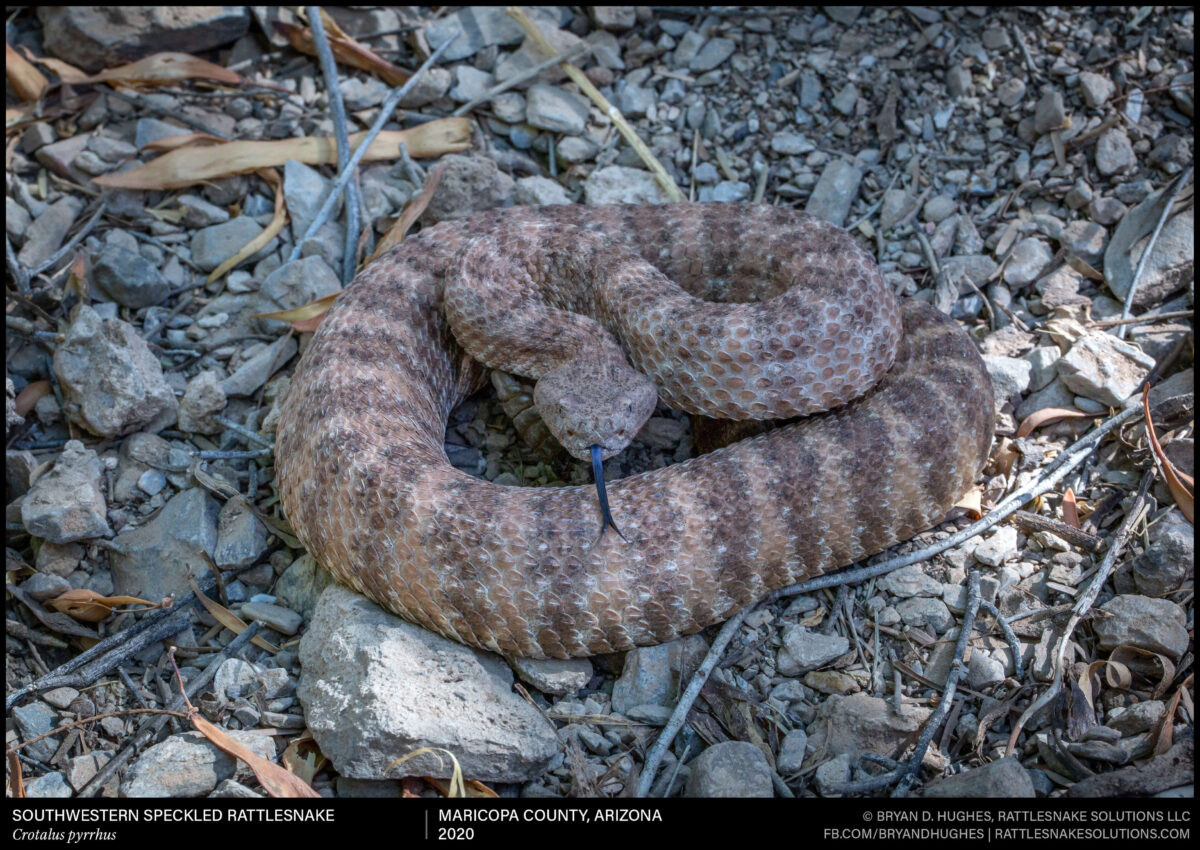
A Southwestern Speckled Rattlesnake from the Phoenix area. This species of snake has a huge gamut of colors and patterns possible throughout its range. Even within relatively nearby locales, it can be extreme. Just about ten miles from where this snake lives, they are red or orange.
A Southwestern Speckled Rattlesnake from the Phoenix area. In some locations, they can be a pretty brick red like this one. These are the second most commonly encountered rattlesnake by hikers in the central Phoenix parks.
Speckled Rattlesnakes are often seen by hikers in Phoenix, who can be surprised that wildlife can be found even on hiking trails in the middle of the city. If you’ve ever hiked Camelback, you’ve likely walked right past at least one of these beautiful pink animals. They’re very cryptic though, so not many people will ever know.
Mojave Rattlesnake of a fairly typical color and pattern for the Phoenix area. These snakes are common in the flat, sandy creosote areas surrounding the city. They were once common in what is now downtown, being found in the flats around Camelback Mountain and Piestewa Peak (though not on the mountains themselves). They’ve long been extirpated from those areas, but can still be found in small, isolated pockets of habitat around Scottsdale.
cerastesA Sonoran Sidewinder that had just crossed a road west of Phoenix. These small specialist rattlesnakes are abundant in the right conditions. This is the reason that hikers will almost never come across one … the flat sandy habitat they need is nobody’s hiking destination.
Leavitt, D. J., & Grimsley, A. A. (2019). Density, recapture probability, biomass, productivity, and population structure of Sidewinders (Crotalus cerastes) in the Sonoran Desert of Arizona. Herpetology Notes, 12, 427–435. https://www.researchgate.net/publication/332802062
This Desert Spiny Lizard watched me from a rock, ready to dart to cover if I came any closer. These colorful, relatively large lizards are a common sight in desert parks and stucco jungle around Phoenix.