Blacktailed Rattlesnake with a Banded Tail and Young Rattle

Black-tailed rattlesnakes often have faint light bands on their tails, which can be confusing to observers who believe that they can only be solid black. On this one, it’s just barely visible, appearing as black and dark grey bands in a ratio similar to a Western Diamondback Rattlesnake. These are not hybrids, as is often suggested by people online. A more accurate way of viewing an all-black tail from this species: a banded tail with variable lighter bands, which often darken to be indistinguishable from the darker ones.

The rattle on this snake is also complete, which includes the full button that the snake was born with. The small, last segment, shows the rounded tip (prebutton), and notch that it gained with that first shed skin. This creates a full button, which it may rattle without making any sound. The subsequent sections (not “buttons,” as they are often mistakenly called) are left with each shed skin, which a young snake may do several times in a year. The shape of the rattle, too, indicates its age here. The strong taper, with each segment being larger than the previous, says that this snake is growing quickly. Once growth slows and nearly stops, each segment will be similar or identical in size to the previous, indicating an older snake.

This one was found near Phoenix a few years back.
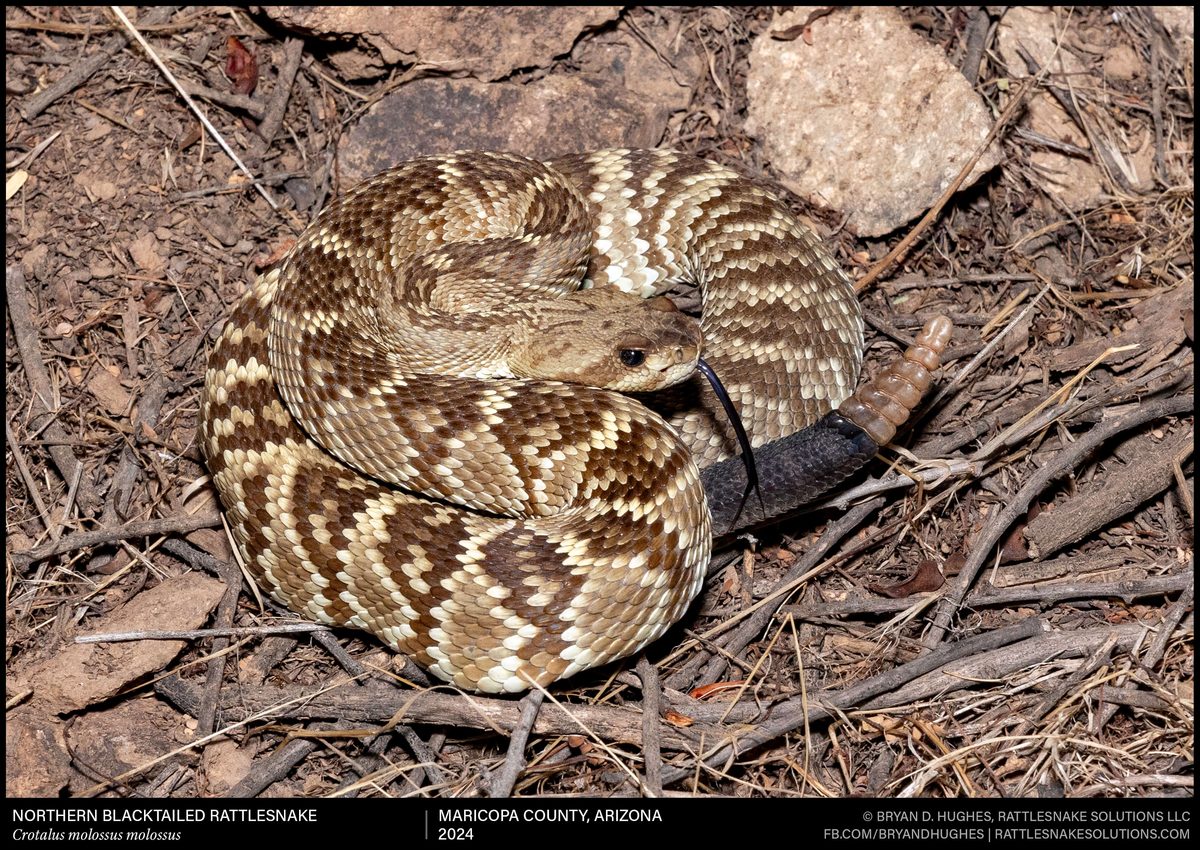
Coiled northern black‑tailed rattlesnake (Crotalus molossus molossus) camouflaged among rocks and dry twigs, tongue flicking and rattle visible.

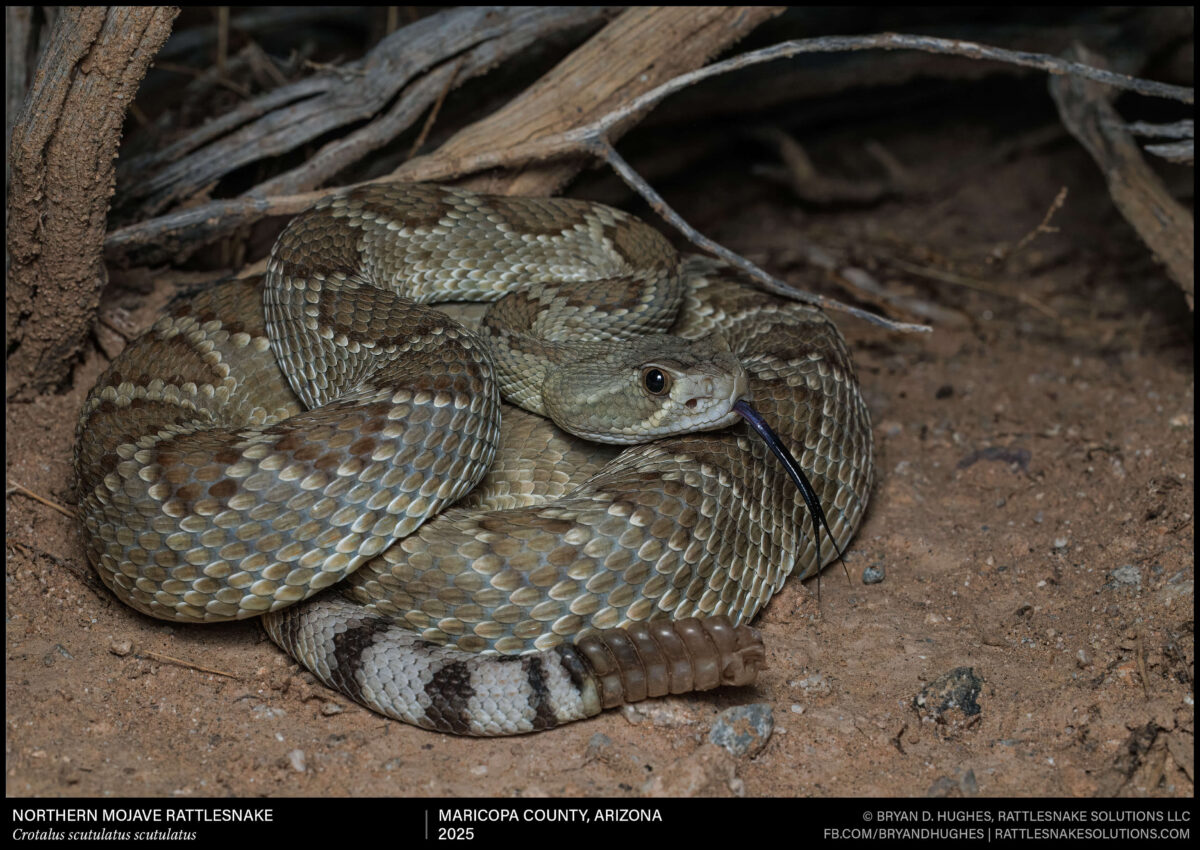
Mojave Rattlesnake in Classic Form

A Mojave Rattlesnake from the Phoenix area. This brown and tan color is typical of this species in the area, though some of the more famously greenish ones do pop up as well. This one follows all the rules, with a clearly visible tail with bands of a roughly 2:1 white to black ratio, half yellow proximal rattle segment, and eye stripe extending beyond the corner of the mouth.

But what people who are very experienced use to identify a snake like this is not any of those features in particular. It’s the overall appearance, or gestalt. The “cleaner”, less speckled and chaotic pattern, slighter and more angular head shape, and outward appearance as a whole just hit as “mojave” in the mind upon sight. This isn’t to say, of course, that the features listed aren’t important, but all can be variable and fail an observer from time to time. It’s worthwhile, once a person has learned to identify these animals reliably based on details, to “zoom out” and look at the whole animal. Eventually, a Mojave Rattlesnake would stand out from similar-looking species in the same way you can likely tell the difference between a yellow lab and a retriever.