Sidewinder, The Horned Rattlesnake

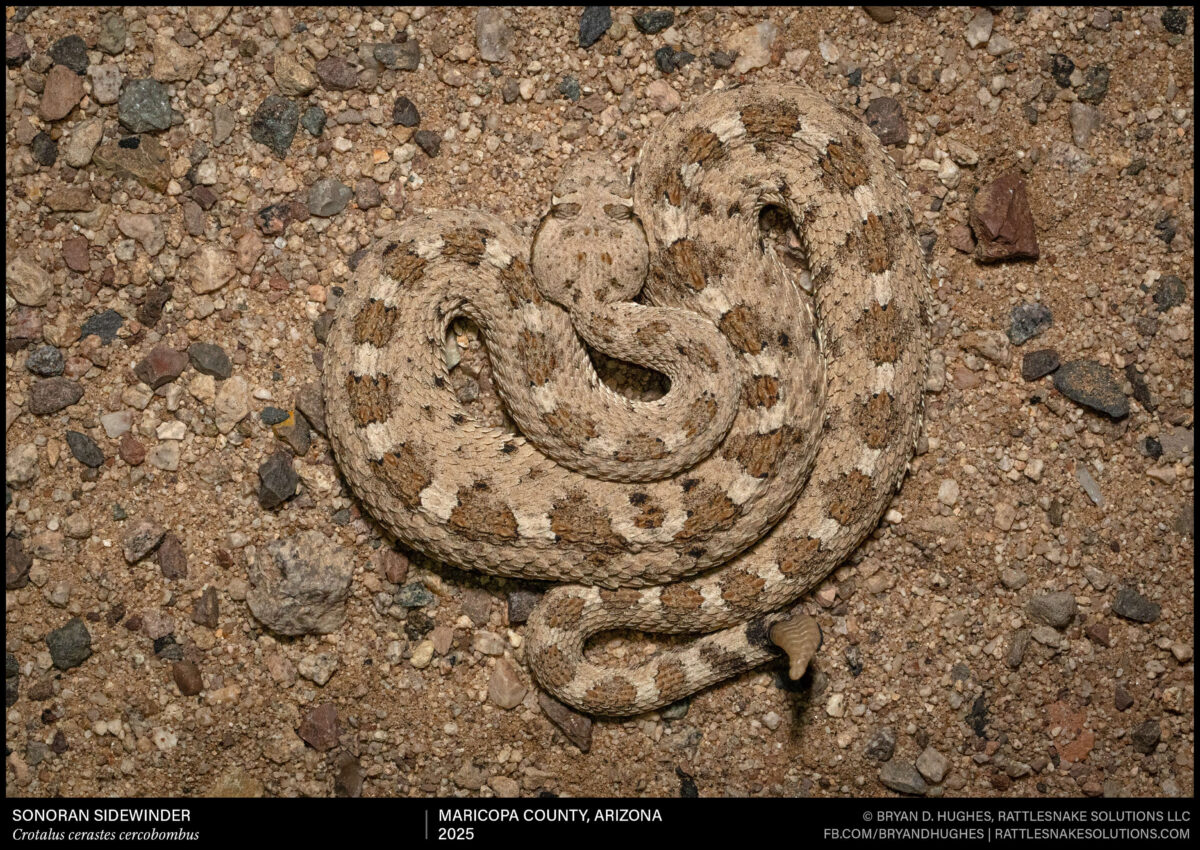
cerastesA Sonoran Sidewinder that had just crossed a road west of Phoenix. These small specialist rattlesnakes are abundant in the right conditions. This is the reason that hikers will almost never come across one … the flat sandy habitat they need is nobody’s hiking destination.

Leavitt, D. J., & Grimsley, A. A. (2019). Density, recapture probability, biomass, productivity, and population structure of Sidewinders (Crotalus cerastes) in the Sonoran Desert of Arizona. Herpetology Notes, 12, 427–435. https://www.researchgate.net/publication/332802062

Gila Monster Out and About

A Gila Monster out and about on a warm Spring day that I found a while back.

At that time, more than a decade ago, I knew relatively little about the day-to-day habits of these animals. Finding one was more a matter of luck than anything else. But, I’ve since learned a lot, and these are now often a higher observation count in a day than I’d had seen in an entire year.

Recommended reading, if you can find it:

Biology of Gila Monsters and Beaded Lizards — Daniel D. Beck (UC Press)

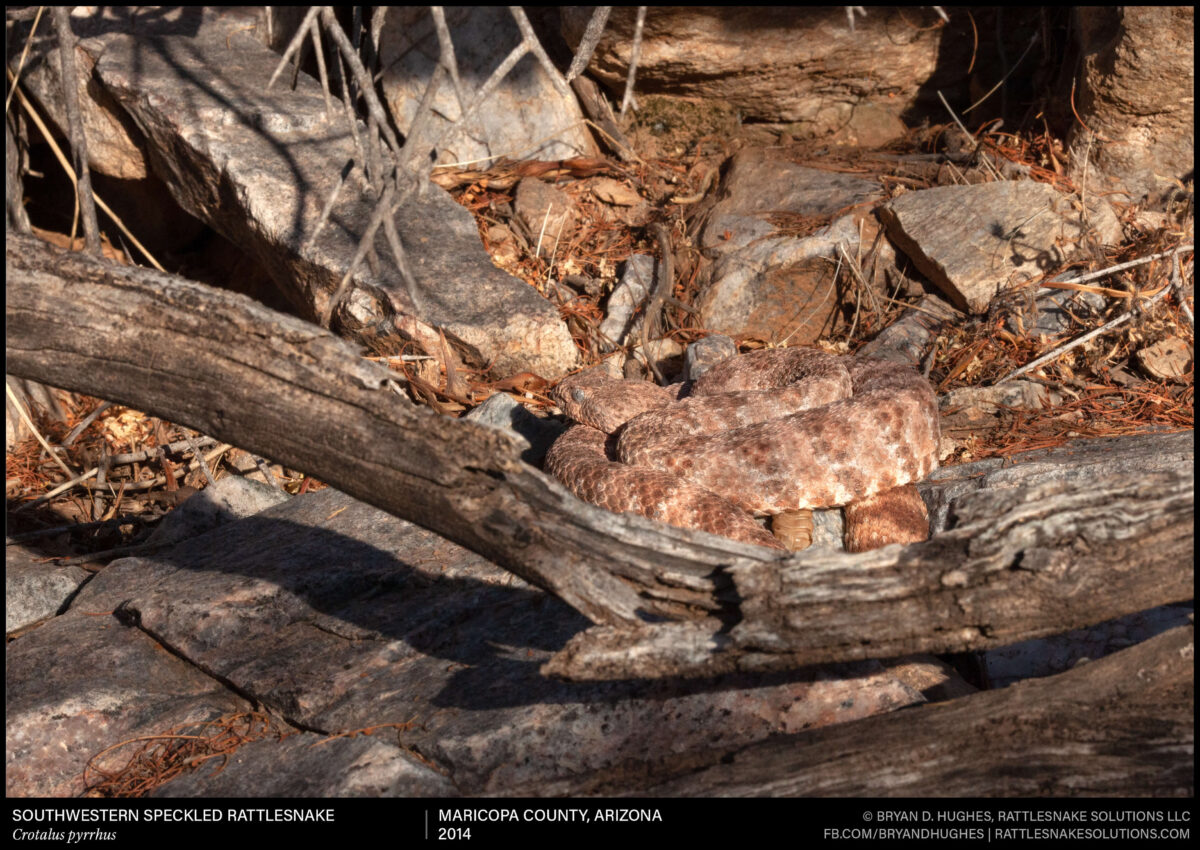
Speckled Rattlesnake from the Estrellas

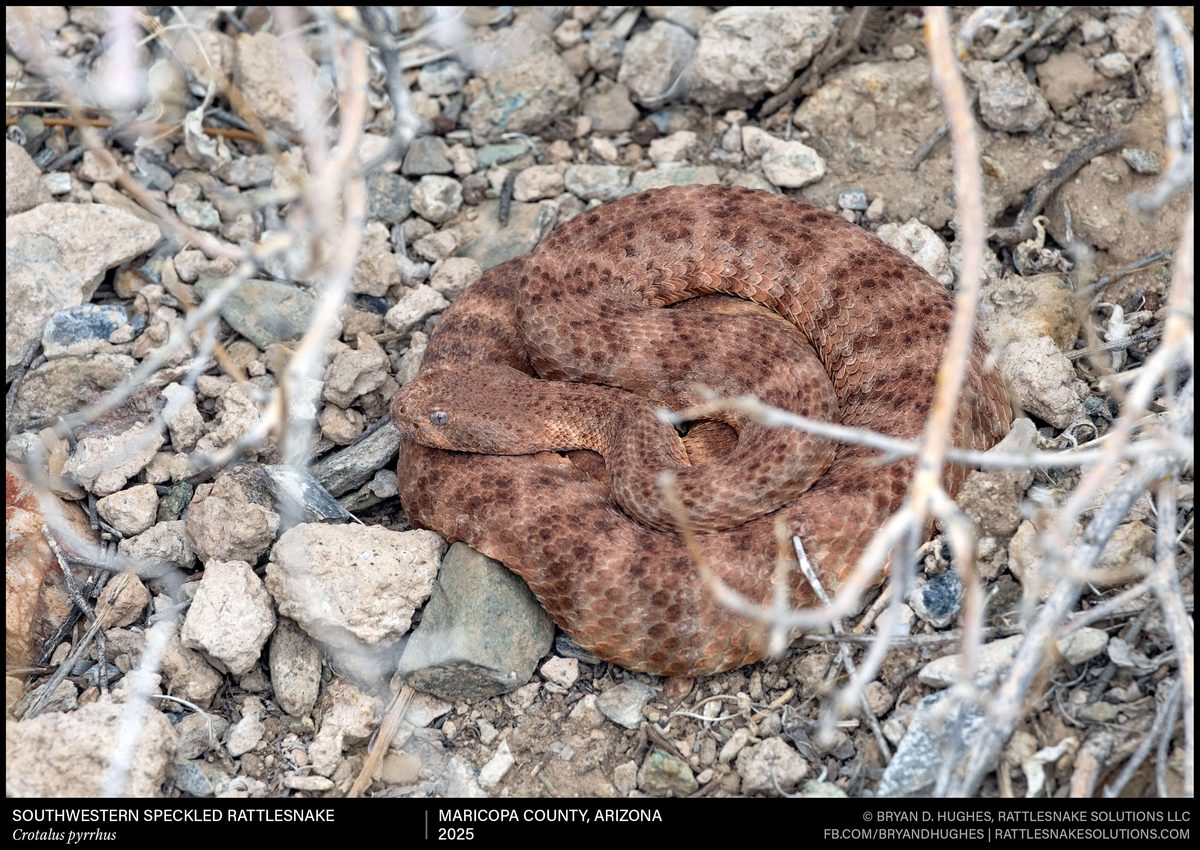
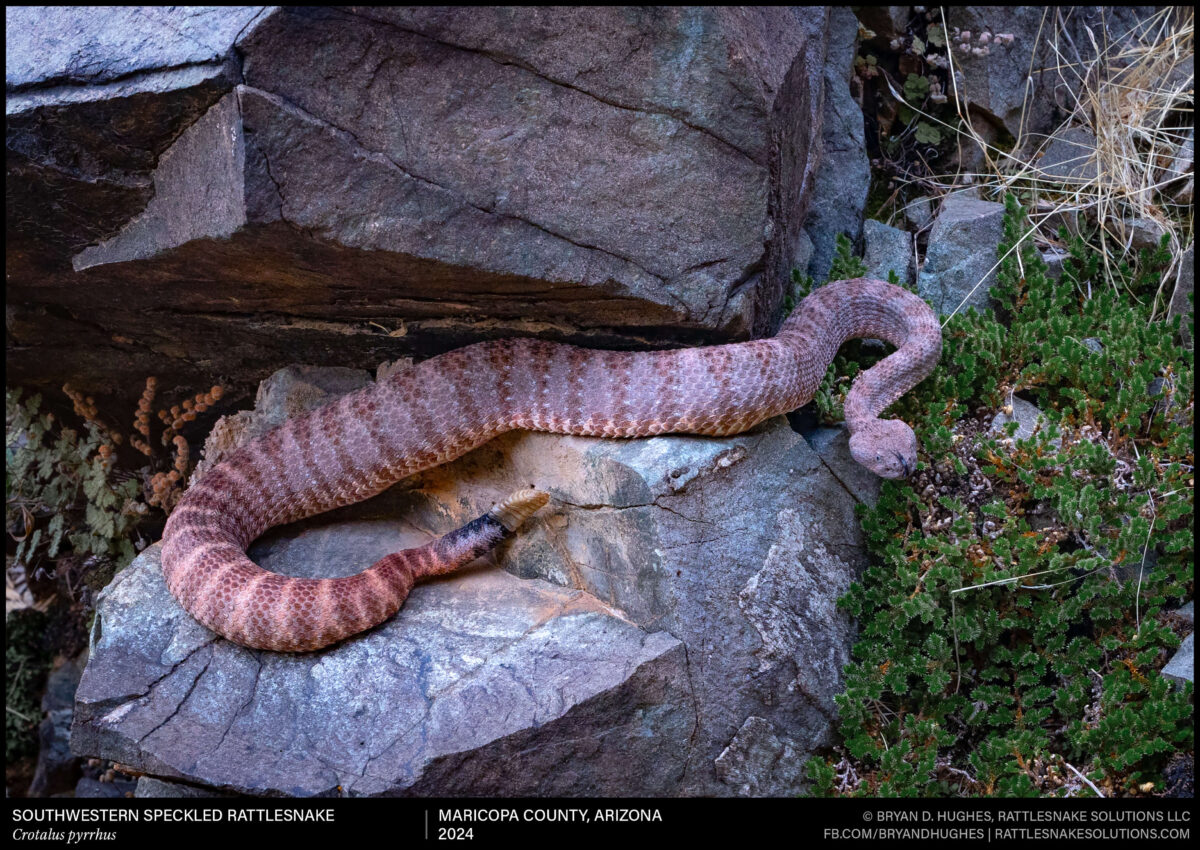
Despite being incredibly easy to observe in surrounding mountain ranges, the Southwestern Speckled Rattlesnakes in the Sierra Estrella just southwest of Phoenix are harder to spot. They’re likely just as common, but the steep terrain and majority of prime geology for the species being inaccessible reservation land make it a challenge to see one. Kris Haas spotted this pretty one way up mountain.

Coachwhip Sleeping In A Tree

Coachwhips are out and about on even the hottest days, rarely active at night. But they can still be found where they sleep, which is often up in trees high off the ground. We spotted this one doing just that just above eye level on a late night hike. These long, slender snakes are great climbers, and this is a reasonably safe spot for such an animal to evade predators and get off the hot ground.

Gila Monster Eating Baby Cottontails

A Gila Monster I followed to a nest of cottontails. It took a while, but it ate all three of them that were in there. Amazingly, they all fit, and the lizard ambled off to rest under an overhanging root in the drainage. It was a good example of how the venom of Gila Monsters is not necessary for predation, as the venom played no apparent role in the capture or consumption of its prey.

Red Speckled Rattlesnake In Ambush

A Southwestern Speckled Rattlesnake in ambush on a humid night a couple of years back. Like many other desert reptiles, the monsoon and period after are the most active times of year. Humid air and cooler, stable temperatures make for safer activity, and a lot has to be done in a relatively short amount of time.

Southwestern Speckled Rattlesnake (Crotalus pyrrhus)

https://rattlesnakesolutions.com/SpeckledRattlesnake