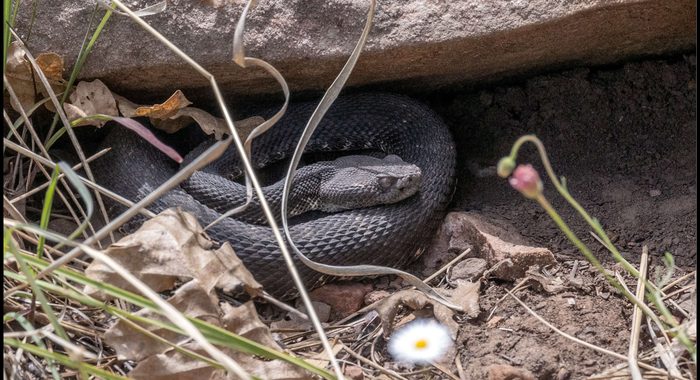
An Arizona Black Rattlesnake hanging out at the entrance of her den. She, and several other pregnant (gravid) females, remain here all summer. When it’s time for the babies to be born, they will be right where they need to be several weeks later when temperatures cool and it’s time for their first hibernation.
Continue reading..Arizona Black Rattlesnake Mother at a Den for the Summer
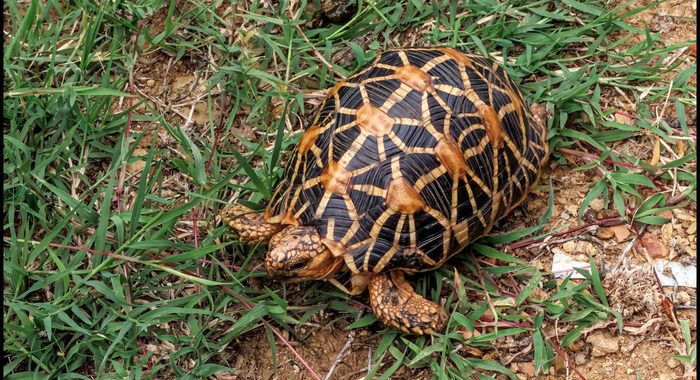
An Indian Star Tortoise cruising around the grassy scrub of Karnataka while we kept our heads on a swivel for sloth bears.
Continue reading..Indian Star Tortoise in Karnataka
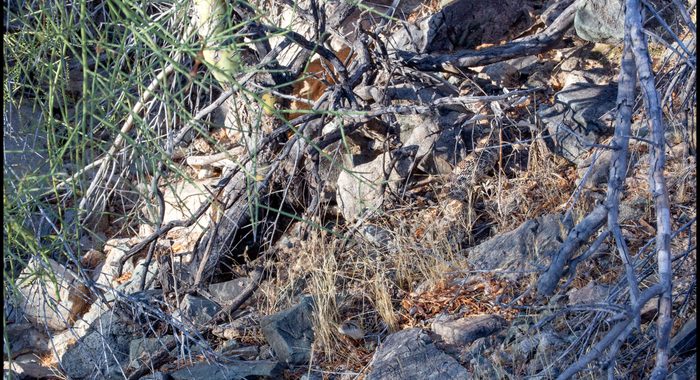
A Sonoran Gophersnake moving to cover for the day can be difficult to spot. It’s chaotic pattern can quickly disappear in the noise of high-contrast shadows and filtered light. All it needs to do is hold still for a few moments, and most will walk right by it without ever knowing there was a snake […]
Continue reading..Sonoran Gophersnake Hiding in Plain Sight
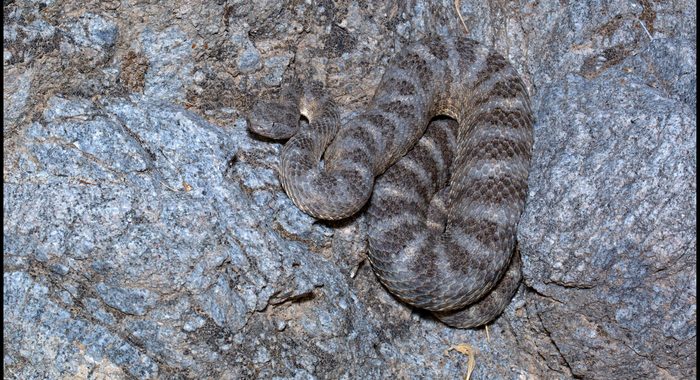
I found this Tiger Rattlesnake on a survey of a county park on a ridiculously hot night. Not many snakes were out, but I did manage to find several of these, as well as a few other odds and ends. The geology of the mountain is interesting and changes quite a bit from one tip […]
Continue reading..Tiger Rattlesnake on a Hot Night in the Sierra Estrella
A Western Diamondback Rattlesnake found in the bootheel of New Mexico many years ago. The diamondbacks in this area have some interesting traits that make them a bit different than those found in the Phoenix and Tucson areas. They’re often pink or rose colored, with a diminished pattern that can fade to a minimal look […]
Continue reading..Western Diamondback Rattlesnake from Hidalgo County New Mexico
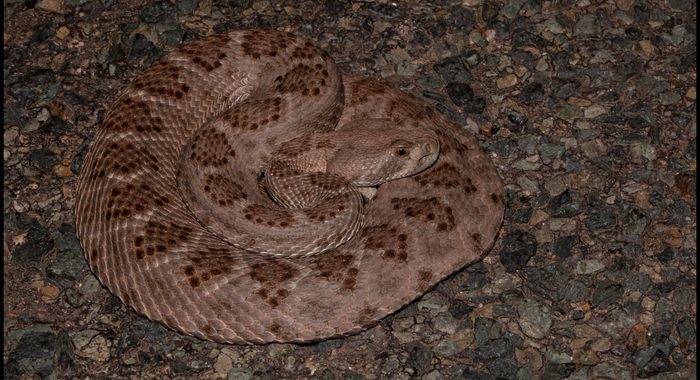
A standard Western Diamondback Rattlesnake I found hanging out in an ambush position on a nice evening.
Continue reading..Western Diamondback Rattlesnake In Ambush
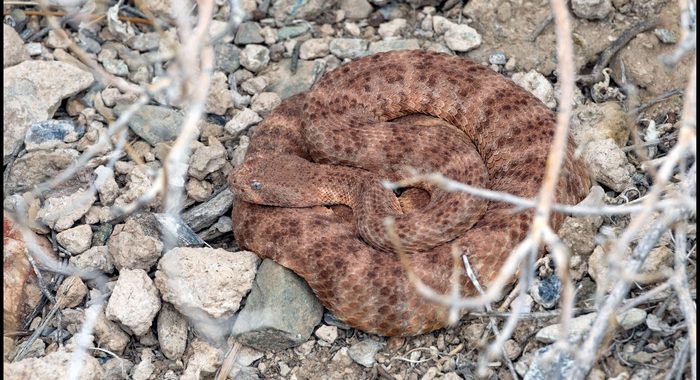
I found this Southwestern Speckled Rattlesnake out on the surface on a hot day. The camouflage of this animal doesn’t appear to be working from narrow perspective of the photo, but in greater context, this snake is very difficult to spot. Adjacent hillsides and iron-rich boulders break apart, and this is one of countless reddish […]
Continue reading..Speckled Rattlesnake in the Open … But Still Hiding
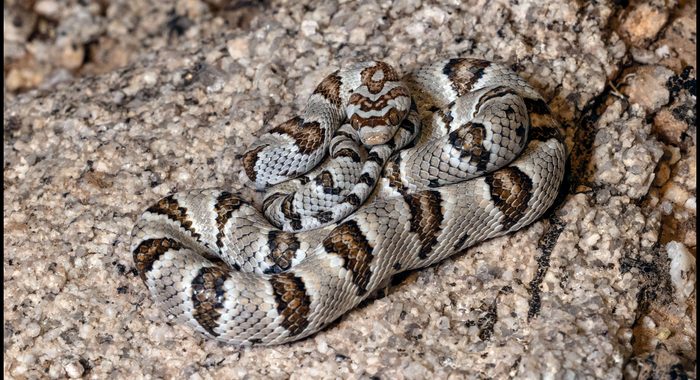
A small Sonoran Lyresnake from the extremely hot, dry desert of Yuma County, Arizona. This is one of a couple that showed up right in camp, and we got some photographs before letting it continue on its way. These cryptic snakes are almost entirely nocturnal, and rarely seen by Arizona residents.
Continue reading..Sonoran Lyresnake
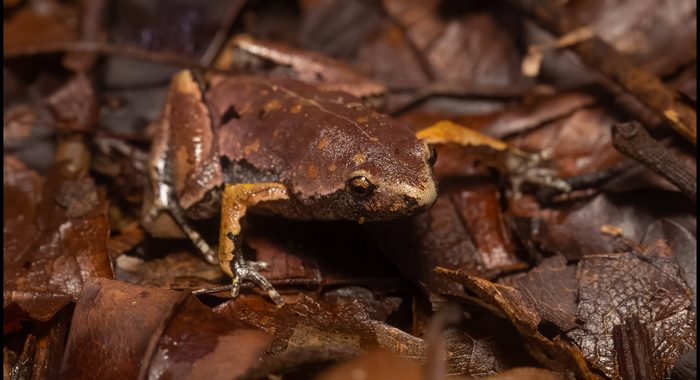
A tiny frog from the Amazon, about as big as a thumbnail. It’s a Bassler’s Humming Frog, Chiasmocleis bassleri, found by our group in Loreto, Peru, in January of 2023.
Continue reading..Bassler’s Humming Frog in Peru
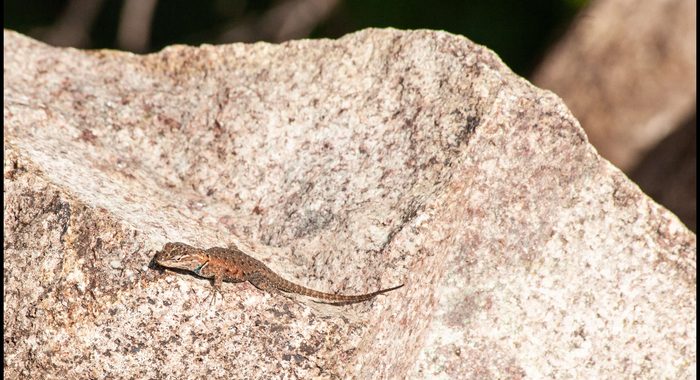
A young Yarrow’s Spiny Lizard watches an odd primate operate some metal and glass device from a short distance, waiting to get back to work on the serious business of finding bugs. These charismatic lizards are common in the higher elevations of southeastern Arizona.
Continue reading..Yarrow’s Spiny Lizard Giving the Side Eye