Black Tailed Horned Viper in Mexico

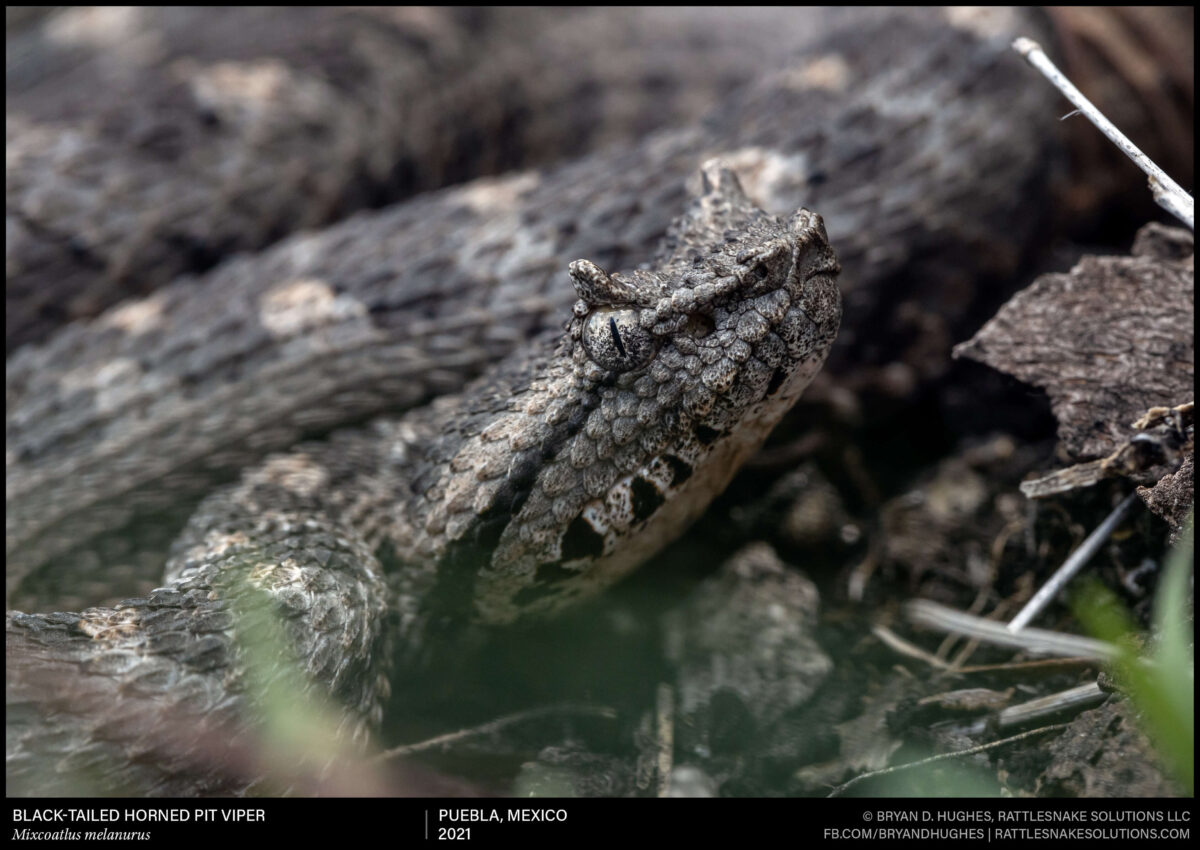
A cool little viper with horn-like scales above the eyes. That’s a common thing with arboreal vipers in Central and South America, but vipers with “horns” are relatively few in comparison. They’re closely related to other montane vipers in the area that have similar structures, but live more familiar lives in steep, heavily vegetated forests.

A few hours of careful scouring of perfect habitat turned up none of these. Then after having more or less given up, I decided to flip some rocks near the cars while we waited for the crew to reassemble … and poof: the target. It’s fun when that happens.

Sonoyta Mud Turtle

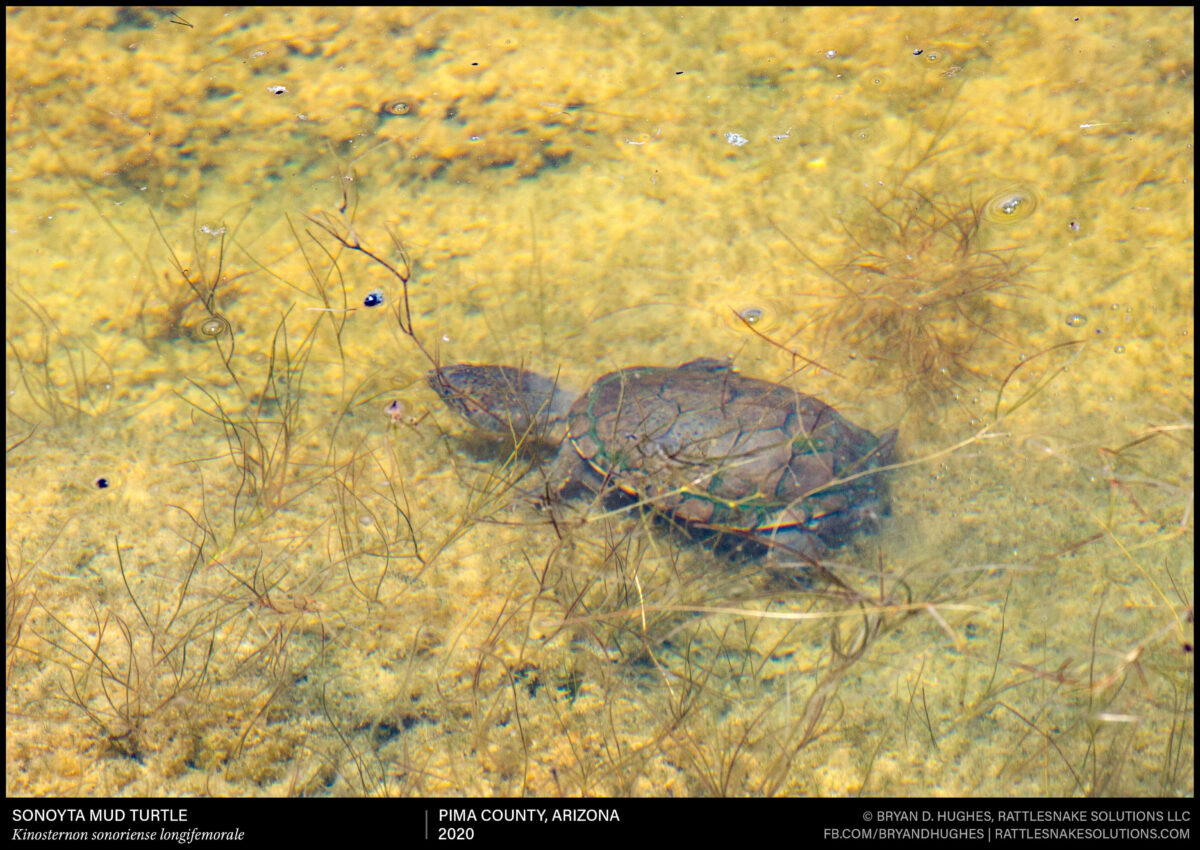
The Sonoyta Mud Turtle is only found in small parts of Sonora, Mexico, and a single small pond in extreme southern Arizona – a stone’s throw from the border. Here is one of several seen on an afternoon visit to this pool, swimming around just under the surface, going after insects and poking through clumps of algae.

Grageda-García, M., & Bogan, M. T. (2025). Conservation status of the Sonoyta mud turtle (Kinosternon sonoriense longifemorale) and comparison of estimated abundances in different historical sites along the Sonoyta River in Sonora, Mexico. Chelonian Conservation and Biology, 24(2), 155–166. https://doi.org/10.2744/CCB-1588.1

Switak’s Banded Gecko

Switak’s Banded Gecko that we found in Baja California Sur, Mexico. These are closely related to the Western Banded Geckos we’re all familiar with here in Arizona, with some notable differences. The most obvious being its larger size, this one about the size of a small mouse. When seen in this boulder field, they hop from rock to rock and disappear (or try to, anyway) or wag their tails in a defensive display.

1. Murray, S. S., Dugan, E. A., Clause, A. G., & Mills, A. M. (2024). Maximum size and mass of Switak’s Banded Gecko, Coleonyx switaki (Murphy, 1974). Herpetology Notes.

https://www.biotaxa.org/hn/article/view/85216/80780

2. Lovich, R. E., Grismer, L. L., & Danemann, G. (2009). Conservation status of the herpetofauna of Baja California, México and associated islands in the Sea of Cortez and Pacific Ocean. Herpetological Conservation and Biology, 4(3), 386–405.

https://www.herpconbio.org/Volume_4/Issue_3/Lovich_etal_2009.pdf

3. Lemm, J. (2023). Field guide to amphibians and reptiles of the San Diego region. University of California Press.

https://books.google.com/books?id=ZU3hEAAAQBAJ