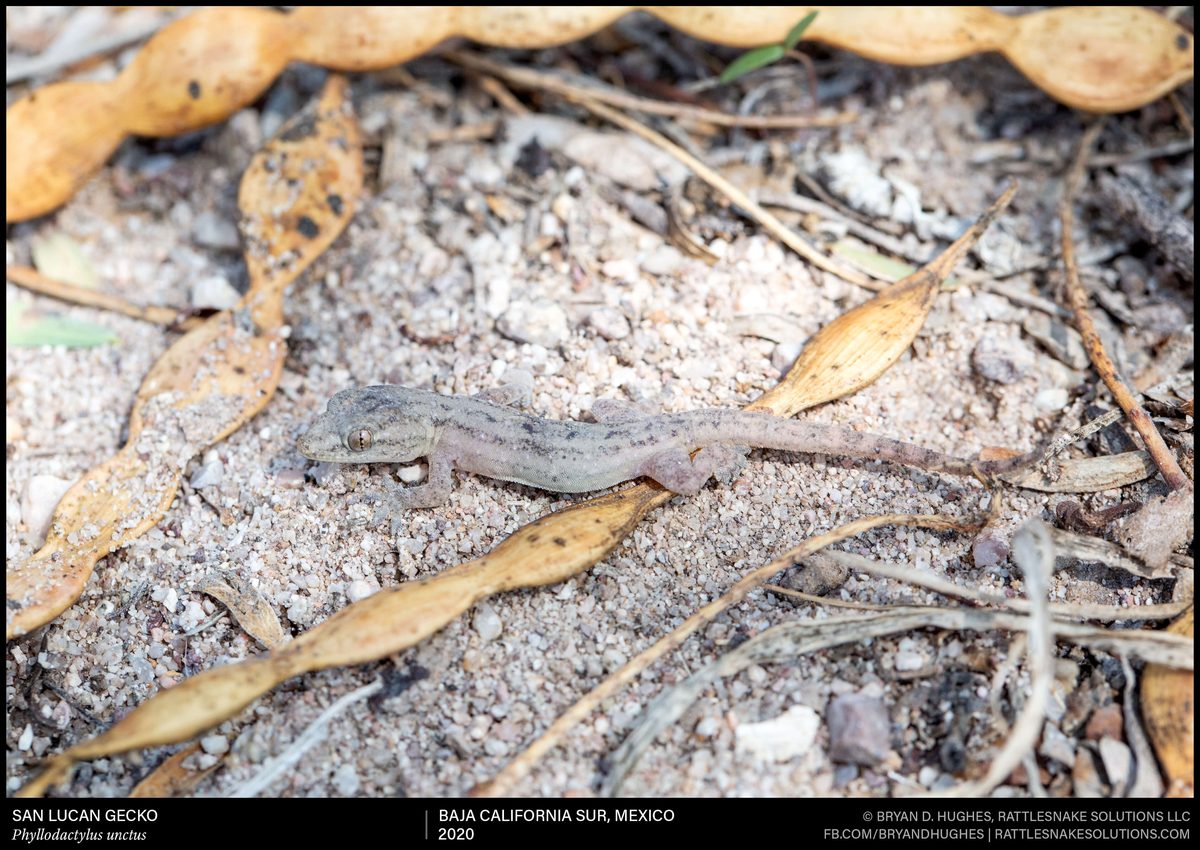
San Lucan Gecko in the Lower Baja Cliffs

A San Lucan Gecko from the southern end of Baja California Sur, Mexico. This species is endemic to the Cape region, where it does well in the rocky cliffs that you’ve probably seen as a backdrop in countless vacation photos.
Blair, C., Méndez-de la Cruz, F. R., Ngo, A., Lindell, J., Lathrop, A., & Murphy, R. W. (2009). Molecular phylogenetics and taxonomy of leaf-toed geckos (Phyllodactylidae: Phyllodactylus) inhabiting the peninsula of Baja California. Zootaxa, 2027, 28–42.

Grismer, L. L. (1999). An evolutionary classification of reptiles on islands in the Gulf of California, Mexico. Herpetologica, 55(4), 446–469.
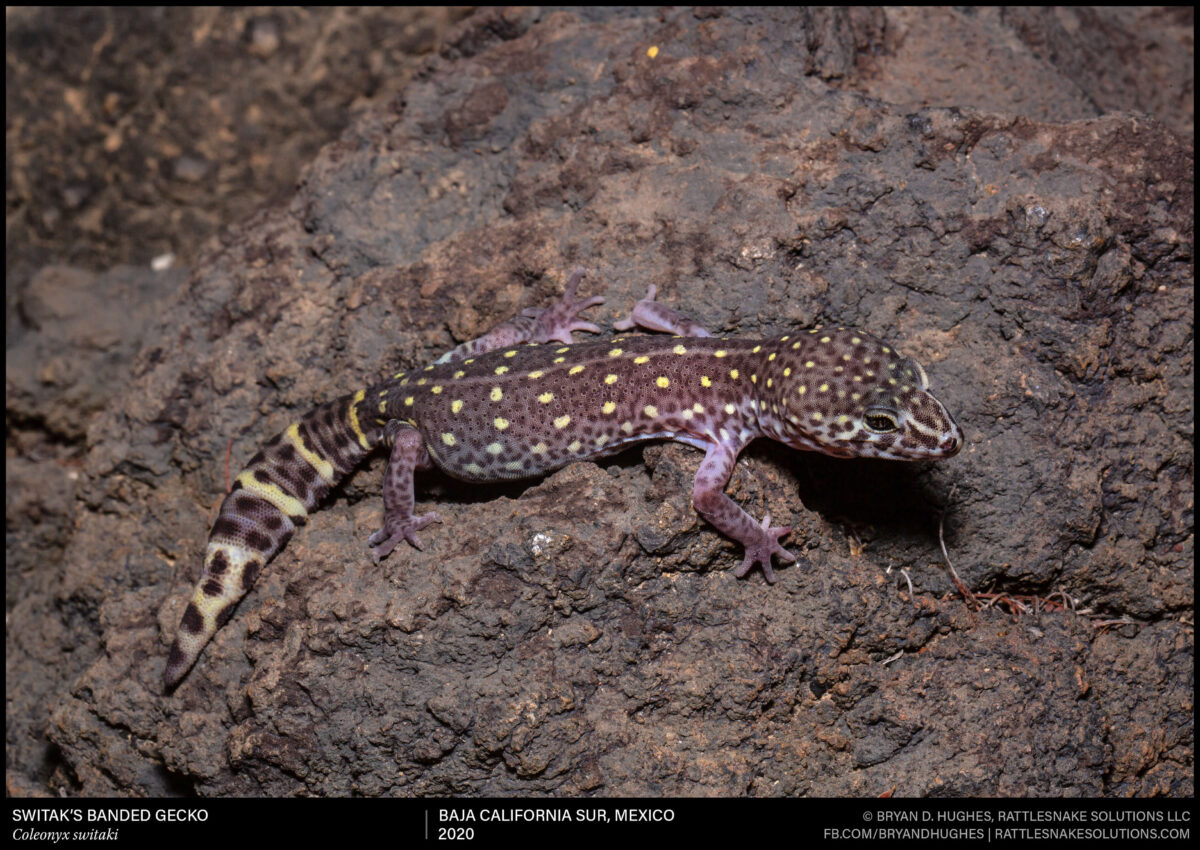
Switak’s Banded Gecko

Switak’s Banded Gecko that we found in Baja California Sur, Mexico. These are closely related to the Western Banded Geckos we’re all familiar with here in Arizona, with some notable differences. The most obvious being its larger size, this one about the size of a small mouse. When seen in this boulder field, they hop from rock to rock and disappear (or try to, anyway) or wag their tails in a defensive display.

1. Murray, S. S., Dugan, E. A., Clause, A. G., & Mills, A. M. (2024). Maximum size and mass of Switak’s Banded Gecko, Coleonyx switaki (Murphy, 1974). Herpetology Notes.

https://www.biotaxa.org/hn/article/view/85216/80780

2. Lovich, R. E., Grismer, L. L., & Danemann, G. (2009). Conservation status of the herpetofauna of Baja California, México and associated islands in the Sea of Cortez and Pacific Ocean. Herpetological Conservation and Biology, 4(3), 386–405.

https://www.herpconbio.org/Volume_4/Issue_3/Lovich_etal_2009.pdf

3. Lemm, J. (2023). Field guide to amphibians and reptiles of the San Diego region. University of California Press.

https://books.google.com/books?id=ZU3hEAAAQBAJ