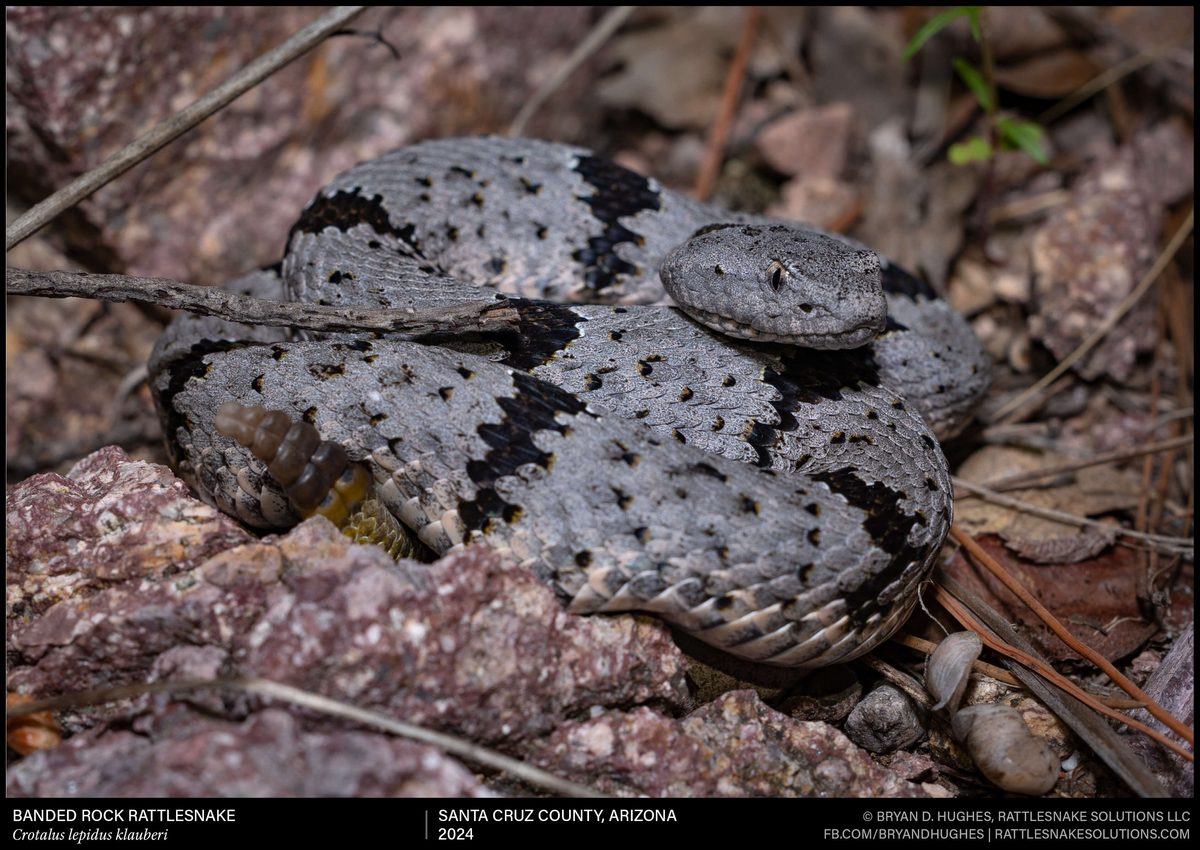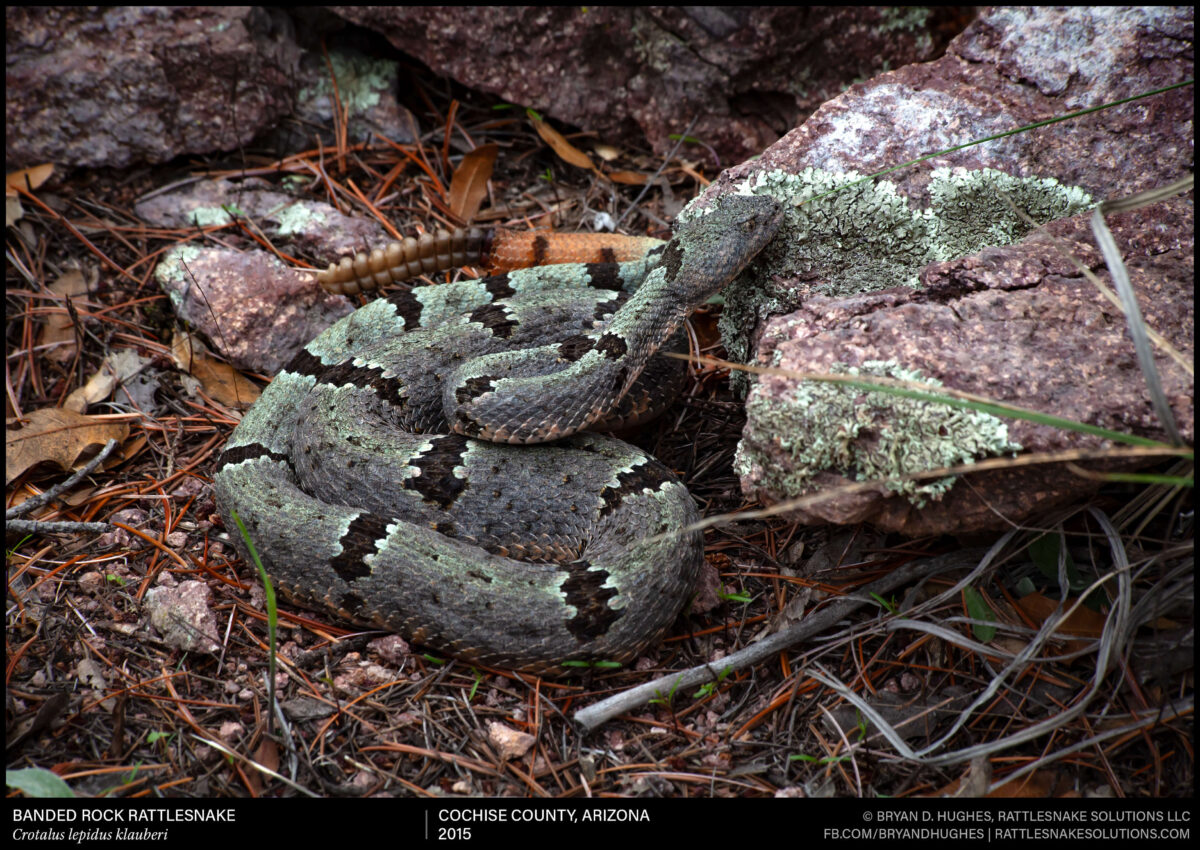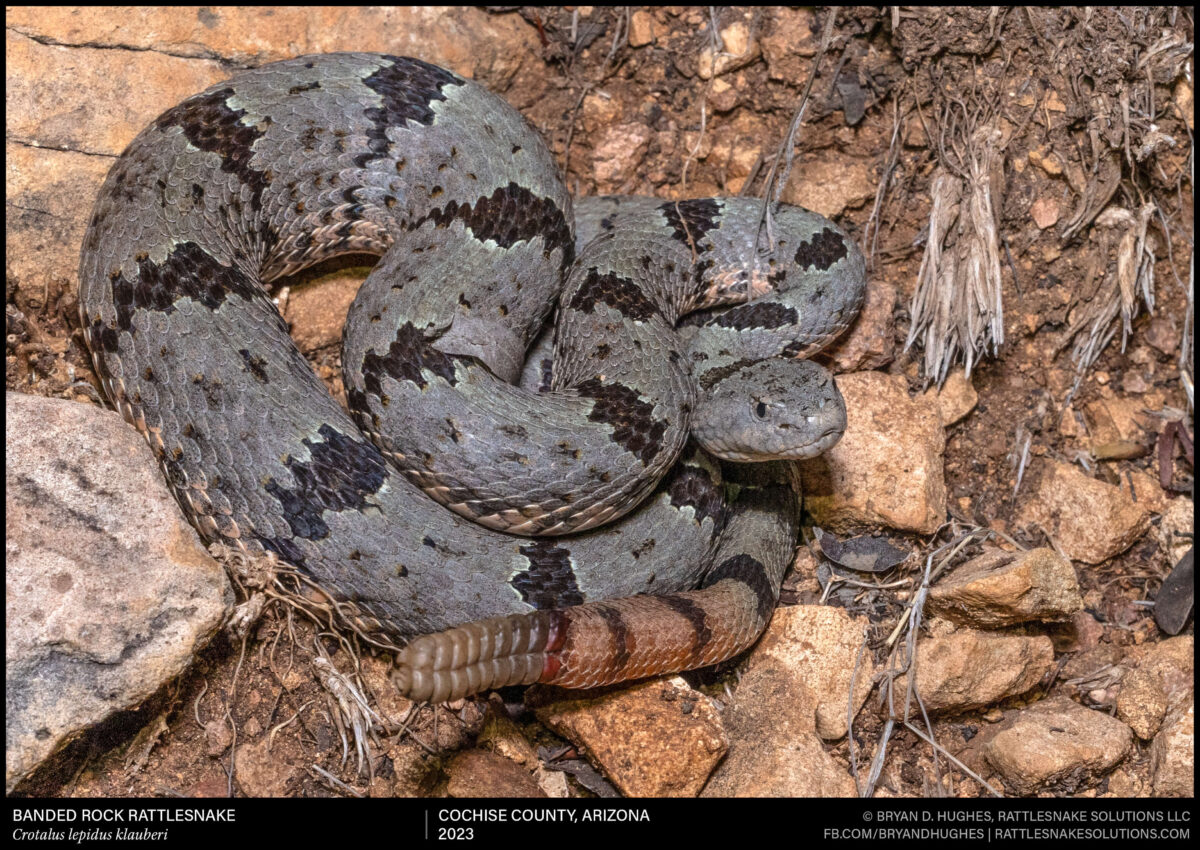
Banded Rock Rattlesnake with a Green Tint

Banded Rock Rattlesnakes are common in several of the sky islands of southeastern Arizona. They’re smaller than most expect a rattlesnake to be, with most that I’ve encountered being less than two feet long. They’re also strongly sexually dimorphic, which is not common in rattlesnakes. Males, like this one, often develop bright, metallic greens on their bodies, which matches the common lichen found on rocks where they live. This one that we found was exceptional.

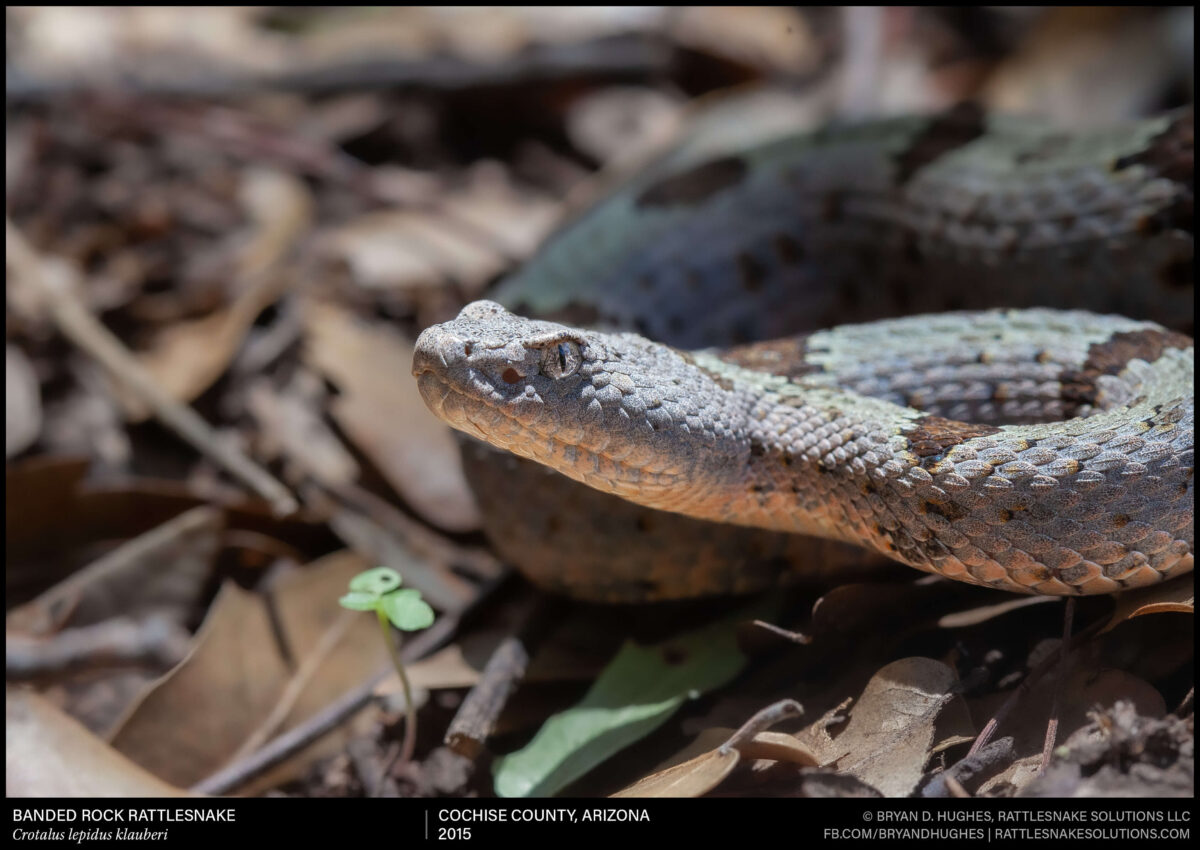
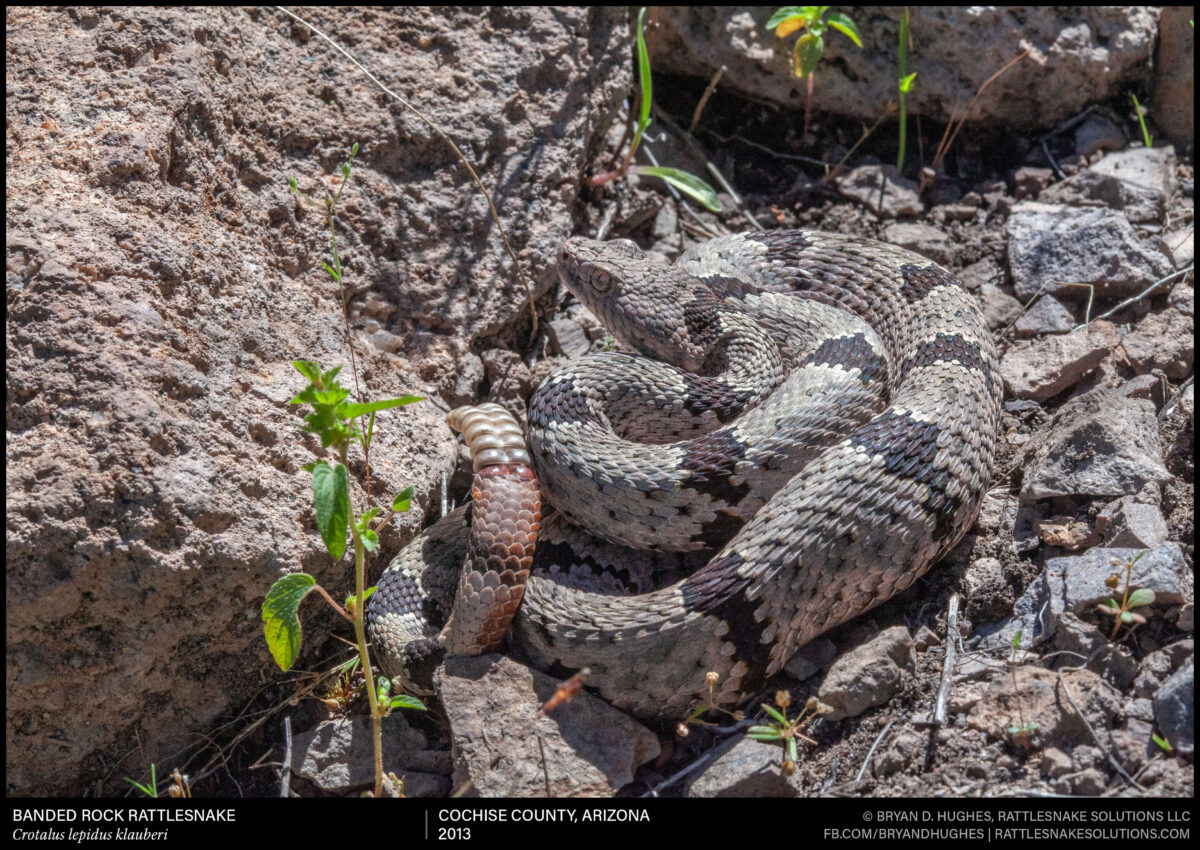
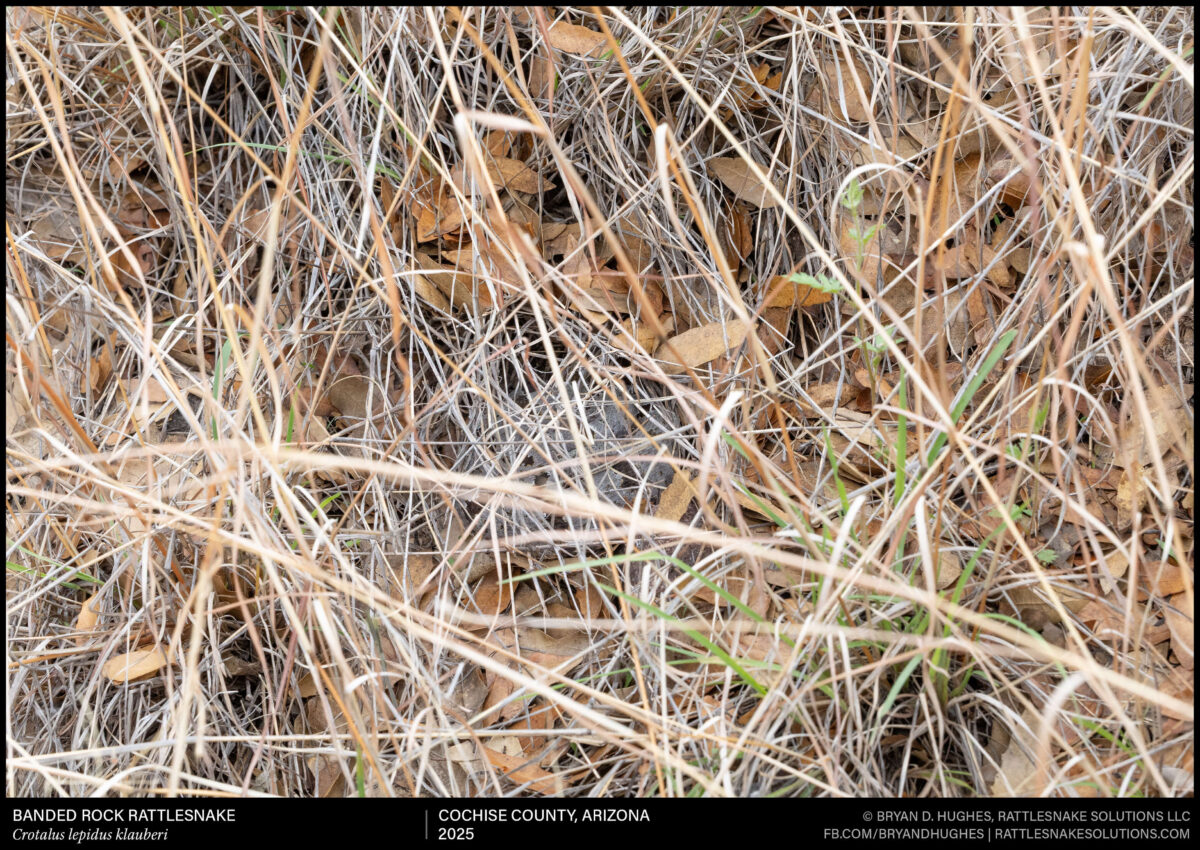
Banded Rock Rattlesnake Under Cover

A thunderstorm materialized while I was hiking in a canyon in southern Arizona, so I ducked into a grove of suitable trees to wait it out and not be the tallest thing in the area. While waiting, I saw scales … though not many. It was a Banded Rock Rattlesnake that had emerged from nearby rocks to take advantage of the first rain in several months. It was a reminder that even when intently looking for them, most rattlesnake encounters are ones we will never know about.

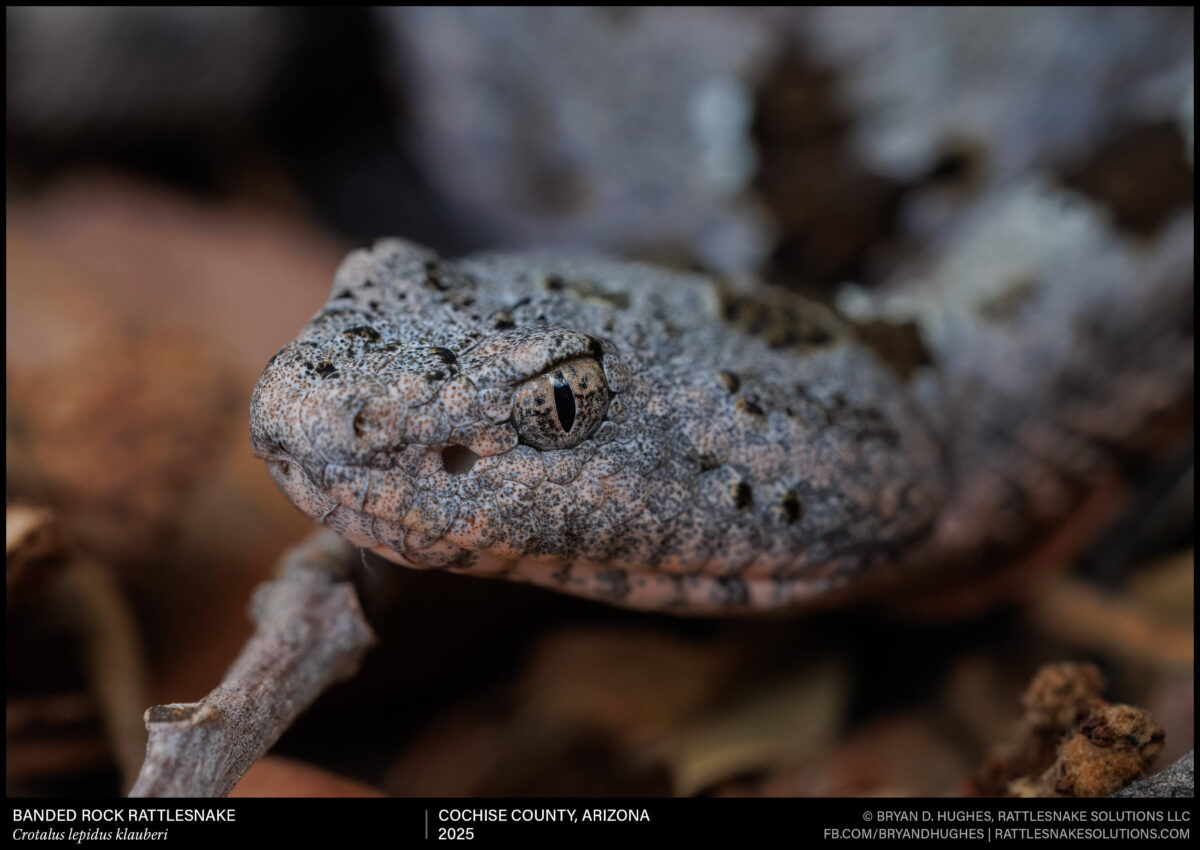
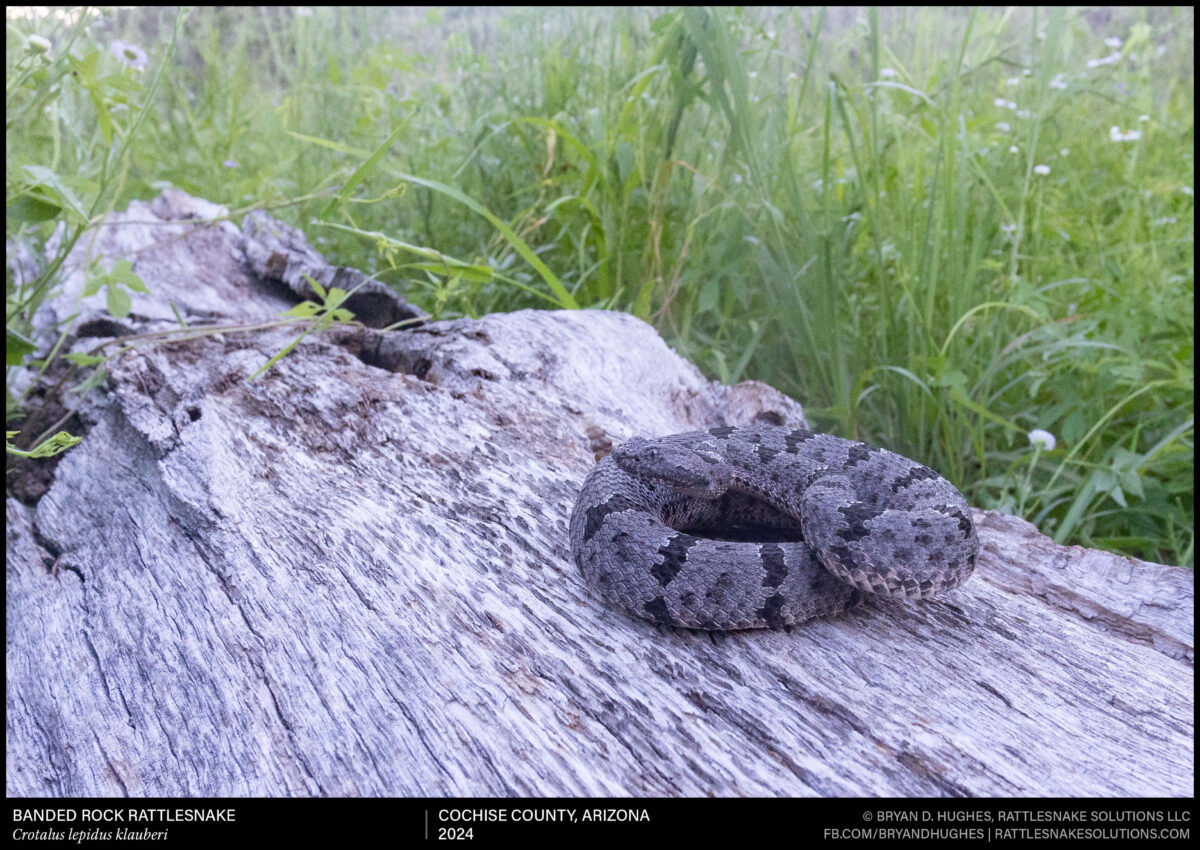
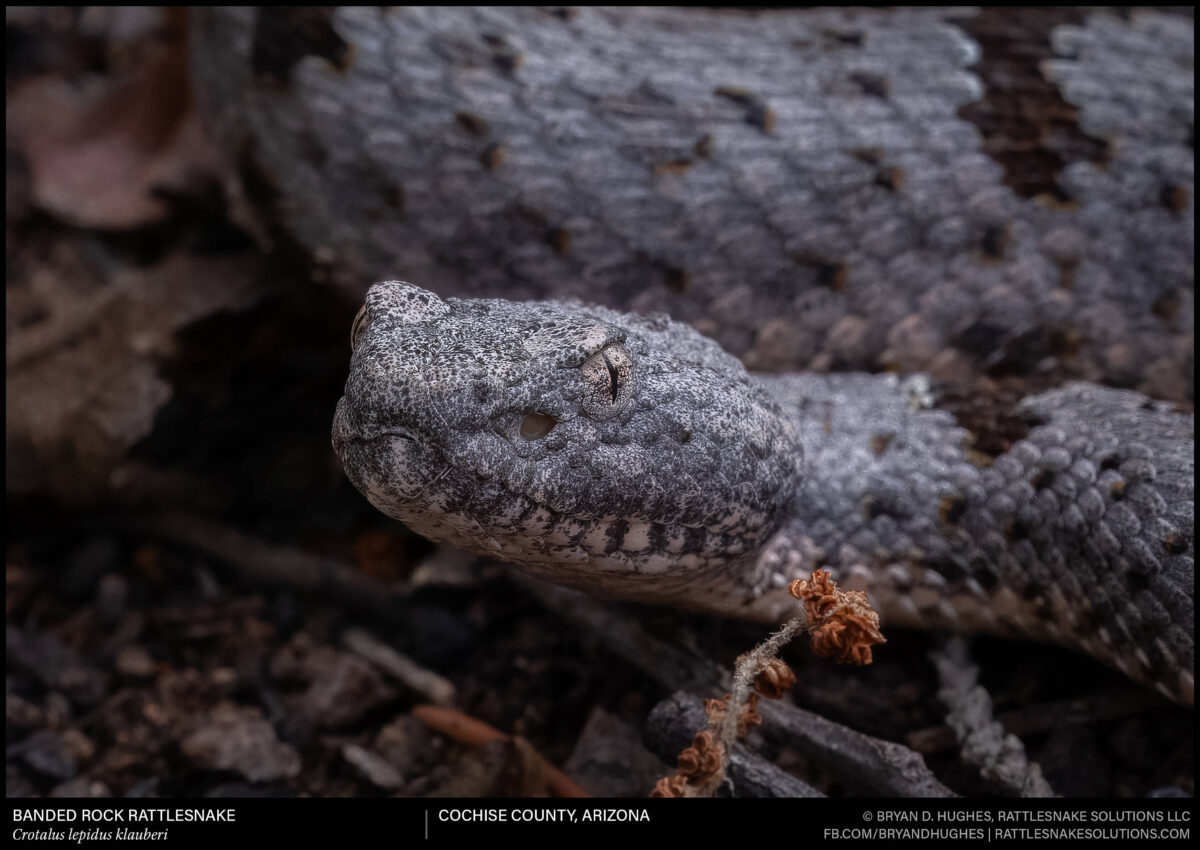
Banded Rock Rattlesnake Close Up

Close up with a Banded Rock Rattlesnake’s tiny face. These are small rattlesnakes that live in the madrean oak and grasslands of the southeastern corner of the state. This one may have been all of 14 inches long, as a small adult.

Interestingly, the noisy, speckled pattern shown here isn’t present in real life – it tends to appear on camera sensors, even when it’s not visible to the eye.

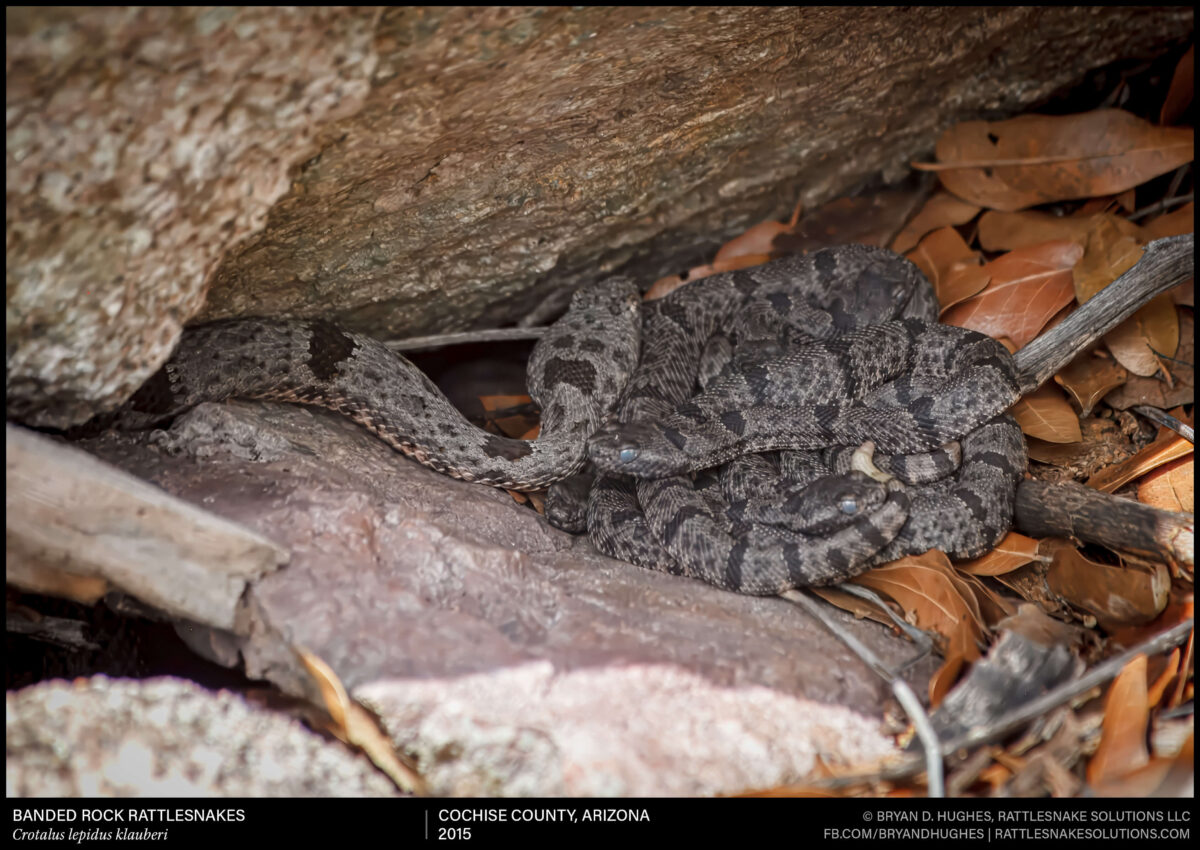
Banded Rock Rattlesnakes Courting Under A Rock

A mated pair of Banded Rock Rattlesnakes, tucked into rocks in a minor drainage in southeastern Arizona. During the late monsoon season, it’s not uncommon to find pairs or rattlesnakes like this, courting and mating in one rock pile while others are still giving birth elsewhere. The period of seasonal rain is the peak of activity for these animals, and a lot needs to be done in a relatively short period of time.

1.  Mata-Silva, V. (2011). Ecology of the Rock Rattlesnake (Crotalus lepidus) in the Northern Chihuahuan Desert. University of Texas at El Paso.
2. Mata-Silva, V., DeSantis, D.L., Wagler, A.E., et al. (2018). Spatial Ecology of Rock Rattlesnakes (Crotalus lepidus) in Far West Texas. Herpetologica, 74(3), 245–255.
https://doi.org/10.1655/Herpetologica-D-17-00091.1