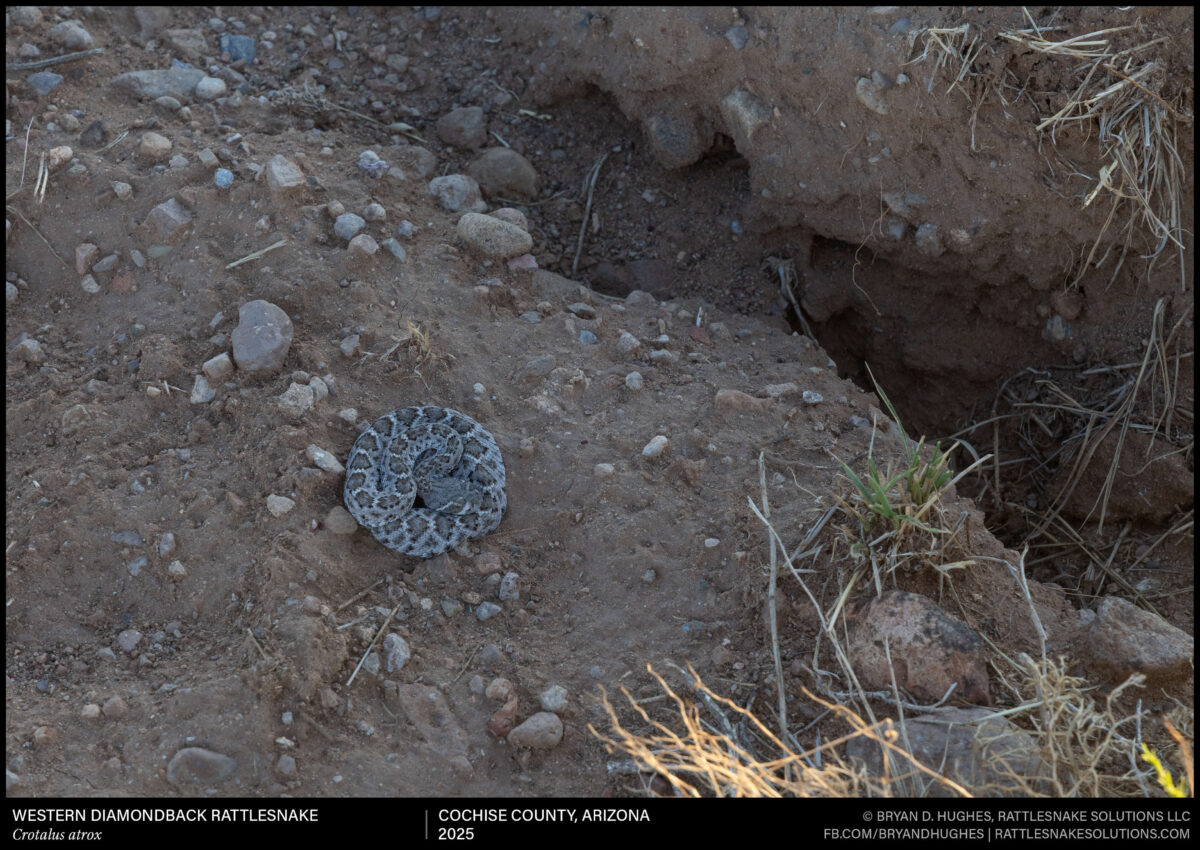
A neonate Western Diamondback Rattlesnake was spotted coiled near the rodent burrow it has been hiding out in during its first weeks of life. This was in July of last year, so it had to have been born pretty early in the season, relatively, to be by itself at that point.
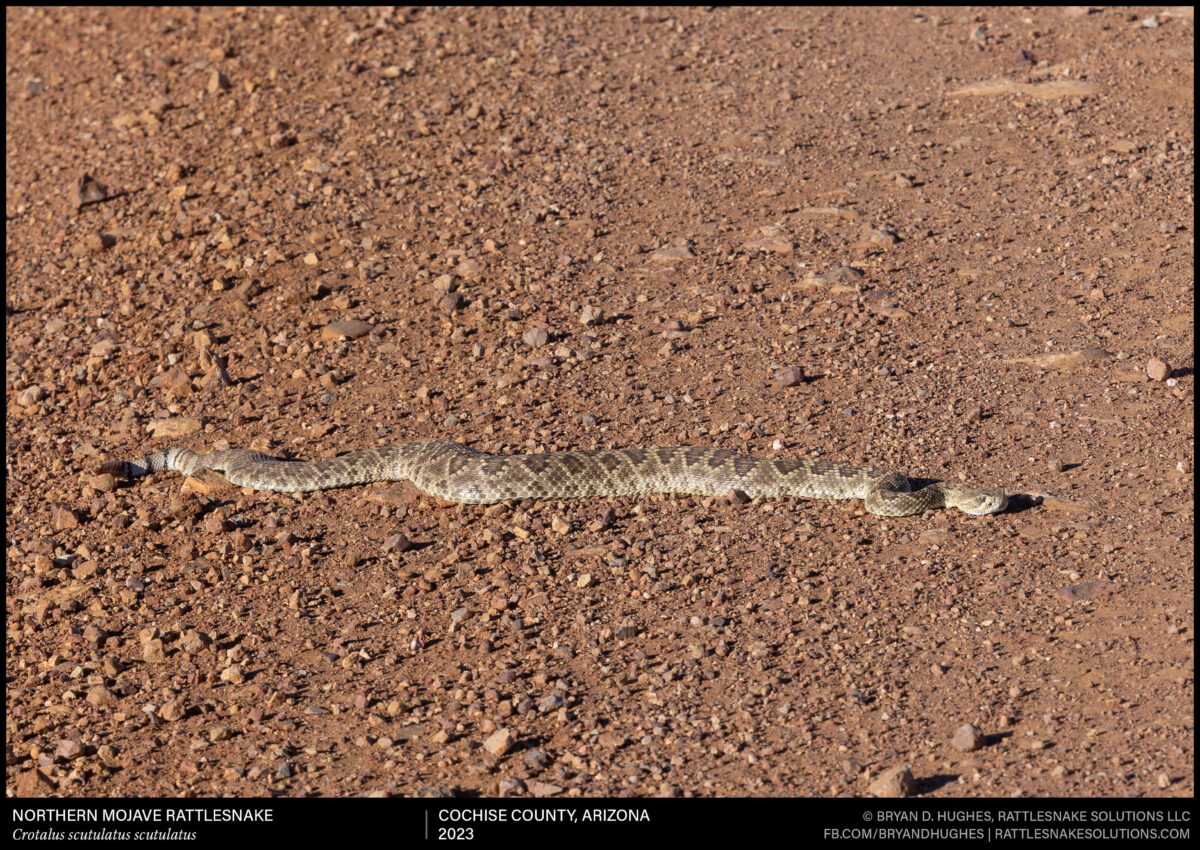
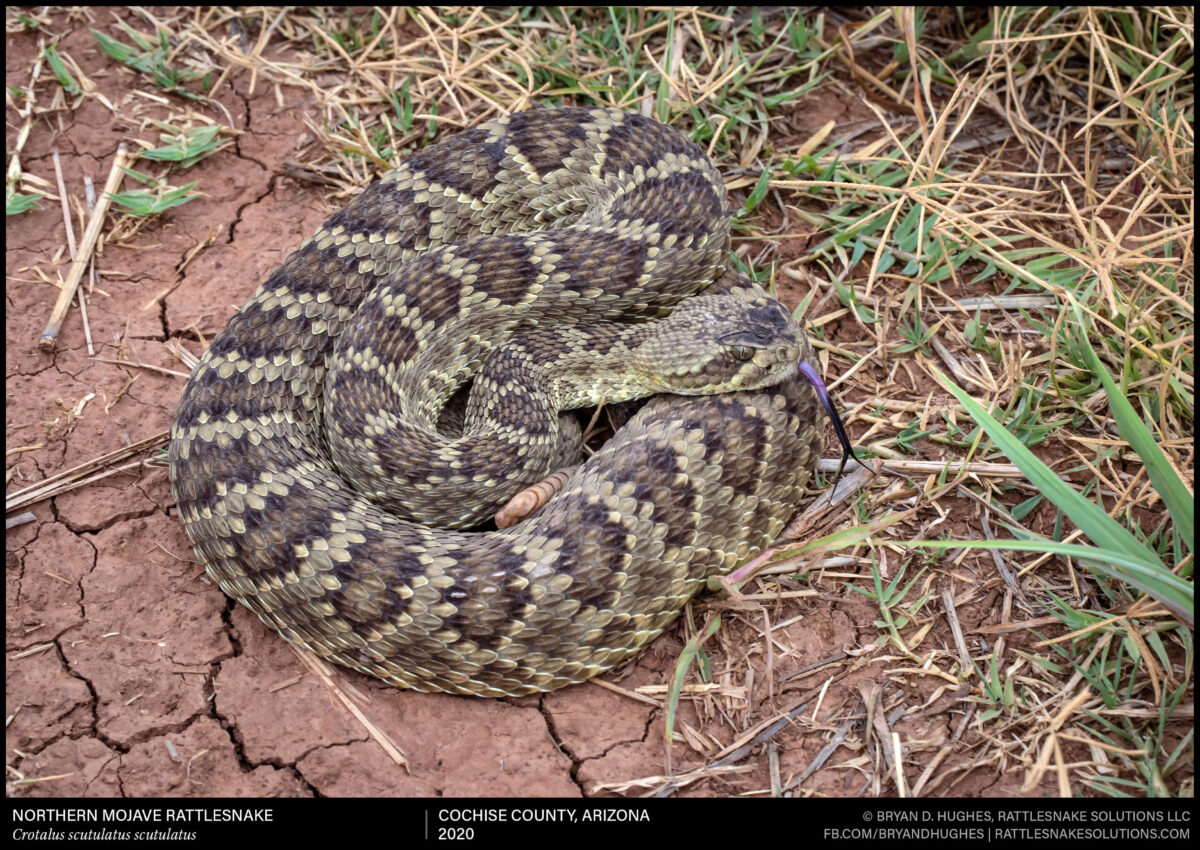
A Mojave Rattlesnake from the grasslands of southeastern Arizona. This species in the area can be highly variable in appearance, from muted green tones to deeply contrasting browns and blacks, each can look very different from the next. This one is a more classic look, with dark diamonds against an olive green base color.
sThe stripe behind the eye, too, is classic Mojave Rattlesnake, extending straight back and never intersecting with the mouth. The two-tone tongue is also perfectly normal, though not always so pronounced.
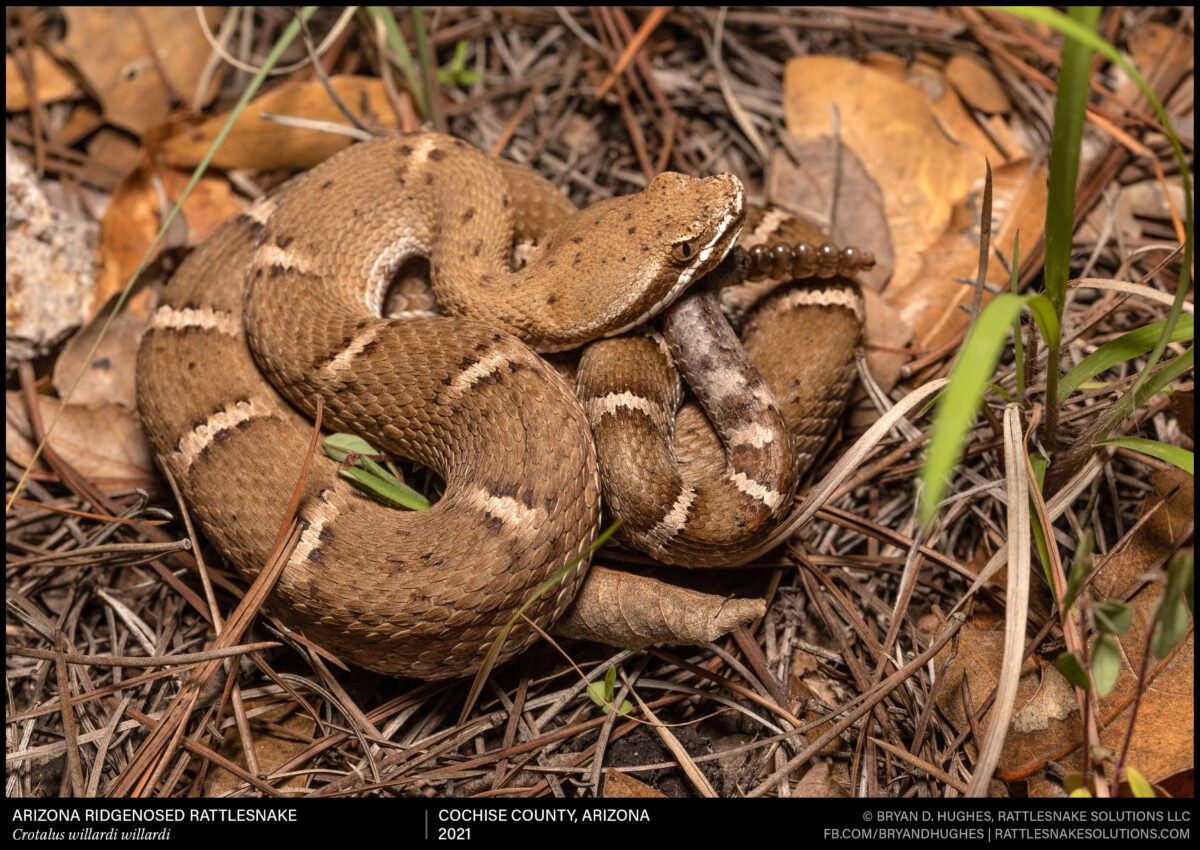
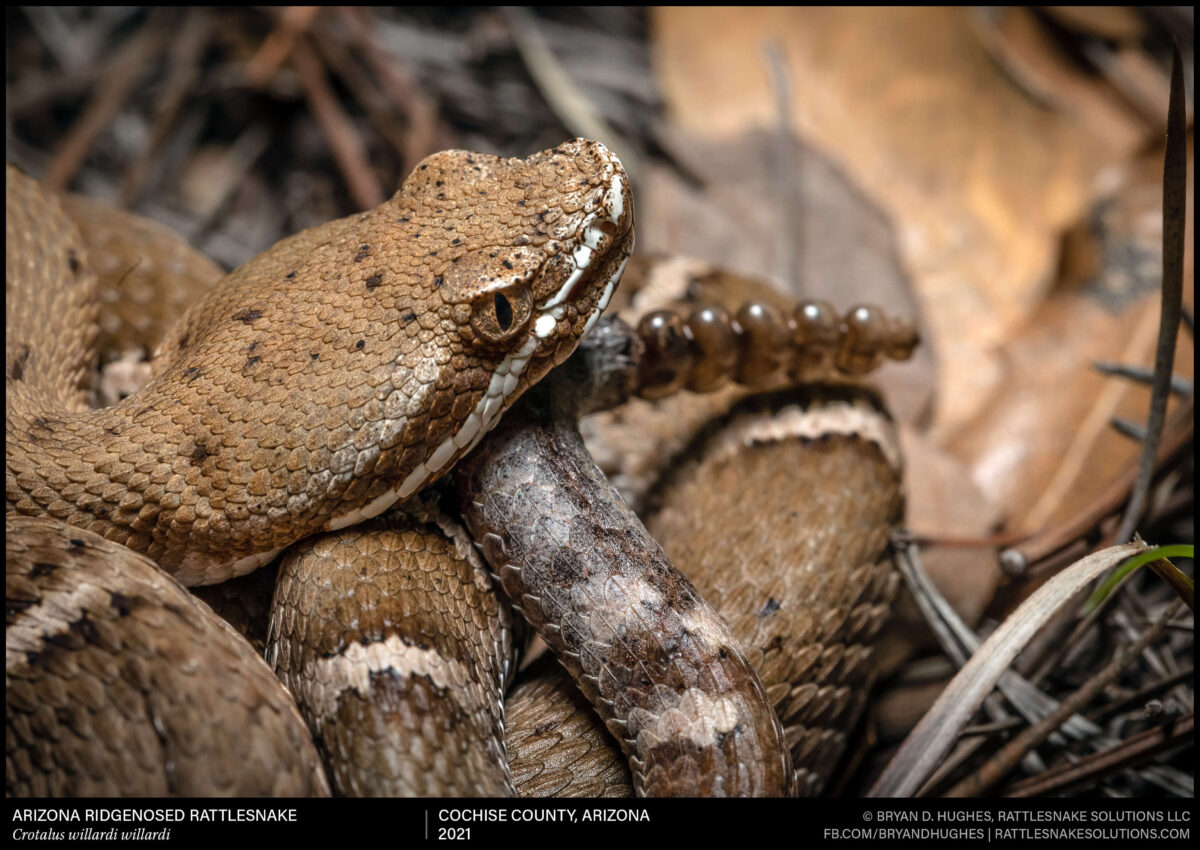
An Arizona Ridgenosed Rattlesnake we saw after dark in southeastern Arizona. These small snakes are great at hiding, and the locals rarely even know they exist.
An Arizona Ridgenosed Rattlesnake in southeastern Arizona. These small rattlesnakes are common where they are found, but even ranchers born and raised in the area usually have no idea it exists. That’s thanks, in part, to its nearly perfect camouflage, making it about invisible in oak leaf litter and bunchgrass.
A Blacktailed Rattlesnake coiled in the grass in the Madrean woodlands of southeastern Arizona. These large, greenish rattlesnakes are a common sight for hikers and naturalists in the area.
The face of a Chihuahuan Hook-nosed Snake. These are small eaters of invertebrates. The subtle scoop on the end of the nose is helpful for finding prey in the sandy, grassland soil where they live.
A Mojave Rattlesnake on the crawl after a wet night in southeastern Arizona. It’s moving laterally, hissing and watching the perceived predator with the camera, but not rattling. As this species often does, instead, it curls its tail and “wags” it slowly as a display. Prairie Rattlesnakes, notably, will often do this tail-curling behavior instead of rattling.
This guided retreat, where the snake moves laterally to cover while keeping the business end pointed forward, causes a lot of confusion with observers. For one, it’s not always a straight line away, but to cover. That cover can be a vehicle, bushes, or a cast shadow … including from the person watching it. This, and confirmation bias from decades of beloved folklore, contribute to the many tall tales about Mojave Rattlesnakes.
Greene, H. W., & May, P. G. (2002). Parental behavior by vipers. In G. W. Schuett, M. Höggren, M. E. Douglas, & H. W. Greene (Eds.), Biology of the Vipers (pp. 179–205). Eagle Mountain Publishing.
Cardwell, M. D. (2013). Behavioral changes by Mohave rattlesnakes (Crotalus scutulatus) in response to drought. California State University, Sacramento.
Maag, D. W., Francioli, Y. Z., Goetz, M. T. H., & Sanders, L. N. (2025). Variation in defensive and exploratory behaviors across a rattlesnake (Crotalus scutulatus × viridis) hybrid zone in Southwestern New Mexico. Scientific Reports, 15(1), 2345. https://doi.org/10.1038/s41598-025-96155-8
Calvete, J. J., Massey, D. J., Sánchez, E. E., Sanz, L., & Bush, S. P. (2012). Venom variability and envenoming severity outcomes of the Crotalus scutulatus scutulatus (Mojave rattlesnake) from Southern Arizona. Toxicon, 60(9), 802–810. https://doi.org/10.1016/j.toxicon.2012.06.004
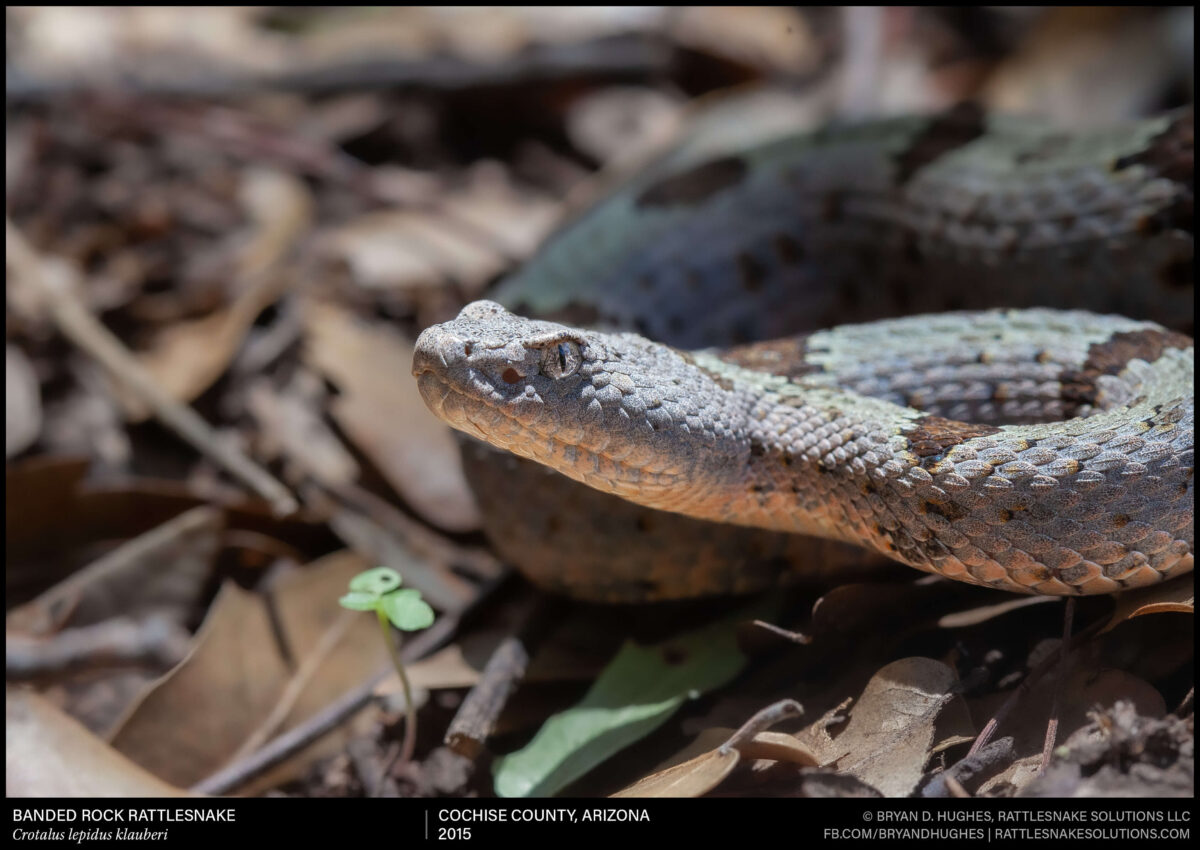
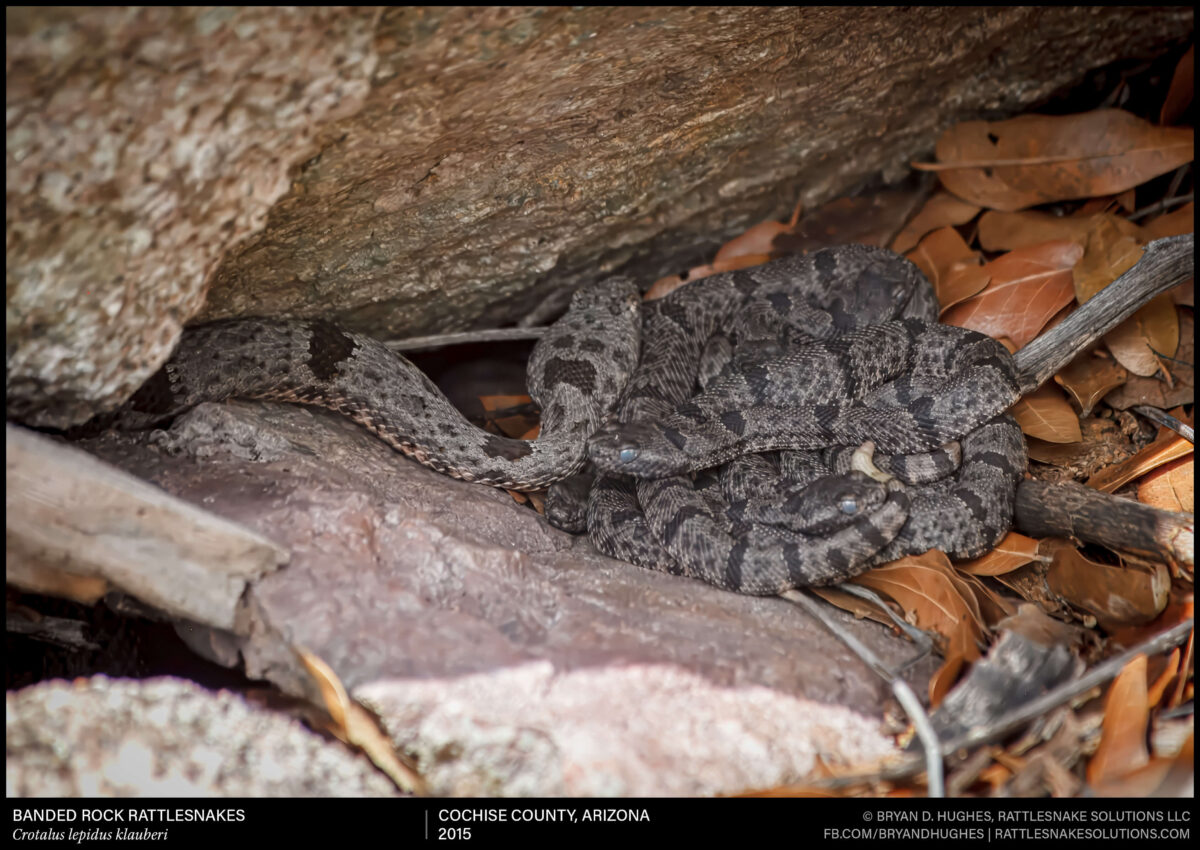
A small Banded Rock Rattlesnake in ambush along the base of a boulder in southeastern Arizona. The pattern and bands break up its shape, making it difficult to see in context. This is a good way to catch one of the many Yarrows Spiny Lizards jumping around on the same rocks each morning.