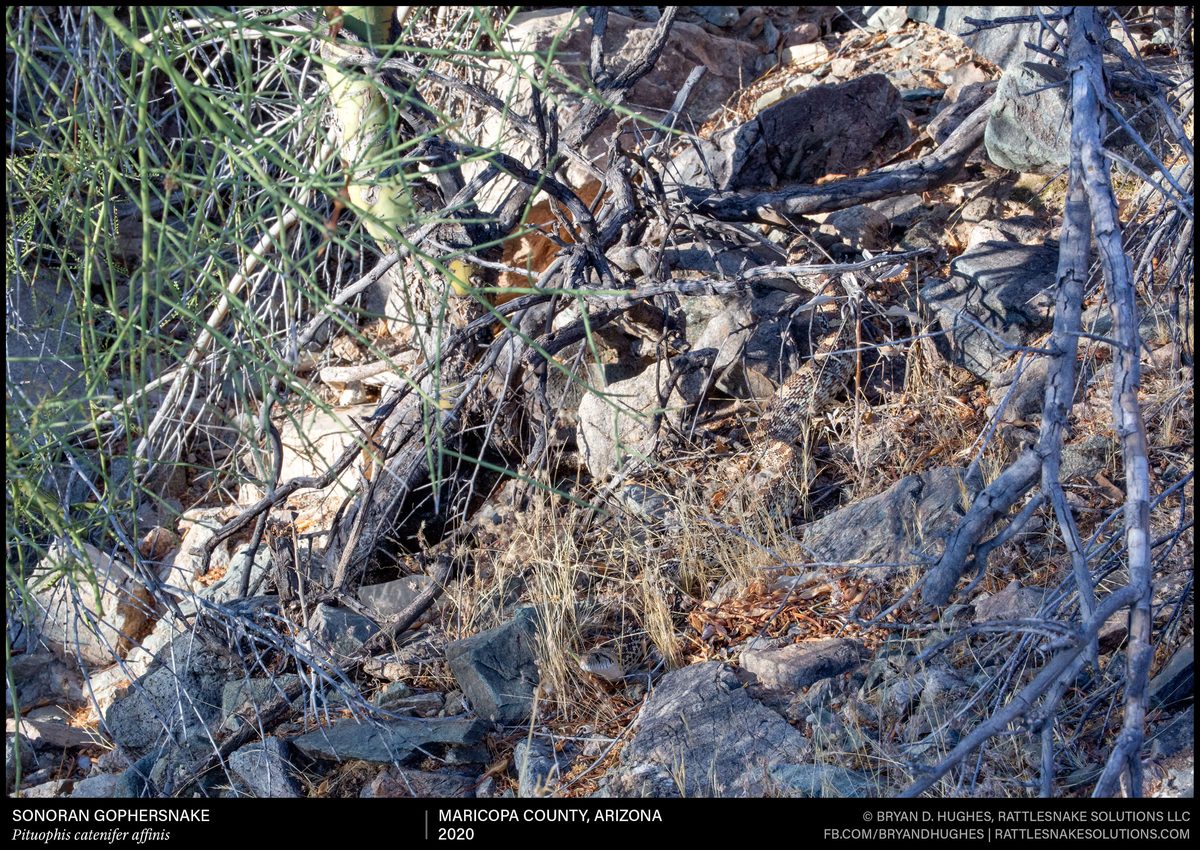
A Sonoran Gophersnake moving to cover for the day can be difficult to spot. It’s chaotic pattern can quickly disappear in the noise of high-contrast shadows and filtered light. All it needs to do is hold still for a few moments, and most will walk right by it without ever knowing there was a snake there.
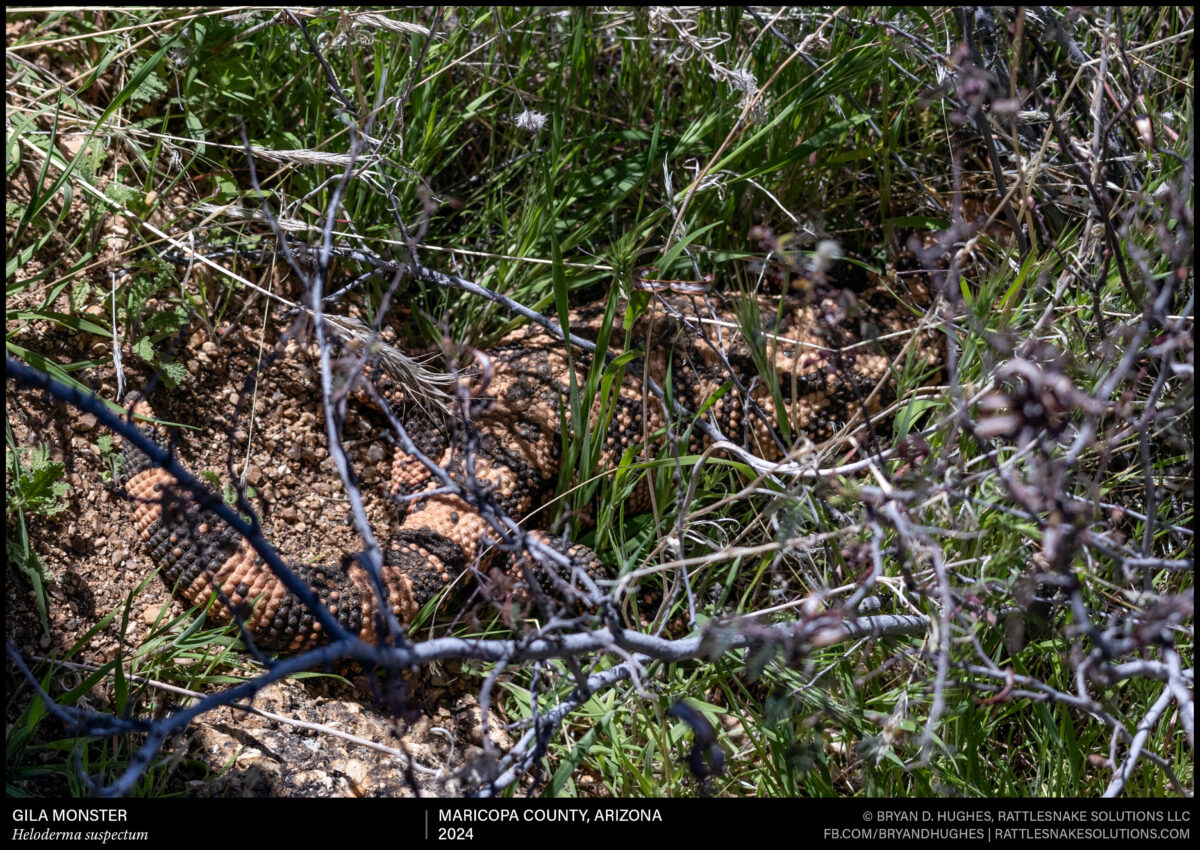
A Gila Monster (Heloderma suspectum) basking on a cool Spring day. Usually, it may seem that the bright yellow and black pattern of these animals makes them hard to see … but this shows where it works. The high-contrast, chaotic pattern makes the shape of a lizard disappear in dappled light. It’s common for even life-long residents of Arizona to see only one, or zero, Gila Monsters in their time in the outdoors, having walked right past many instances just like this.
Davis, J. R., & DeNardo, D. F. (2010). “Seasonal Patterns of Body Condition, Hydration State, and Activity of Gila Monsters (Heloderma suspectum) at a Sonoran Desert Site.” Journal of Herpetology, 44(1), 83–93. https://doi.org/10.1670/08-263.1
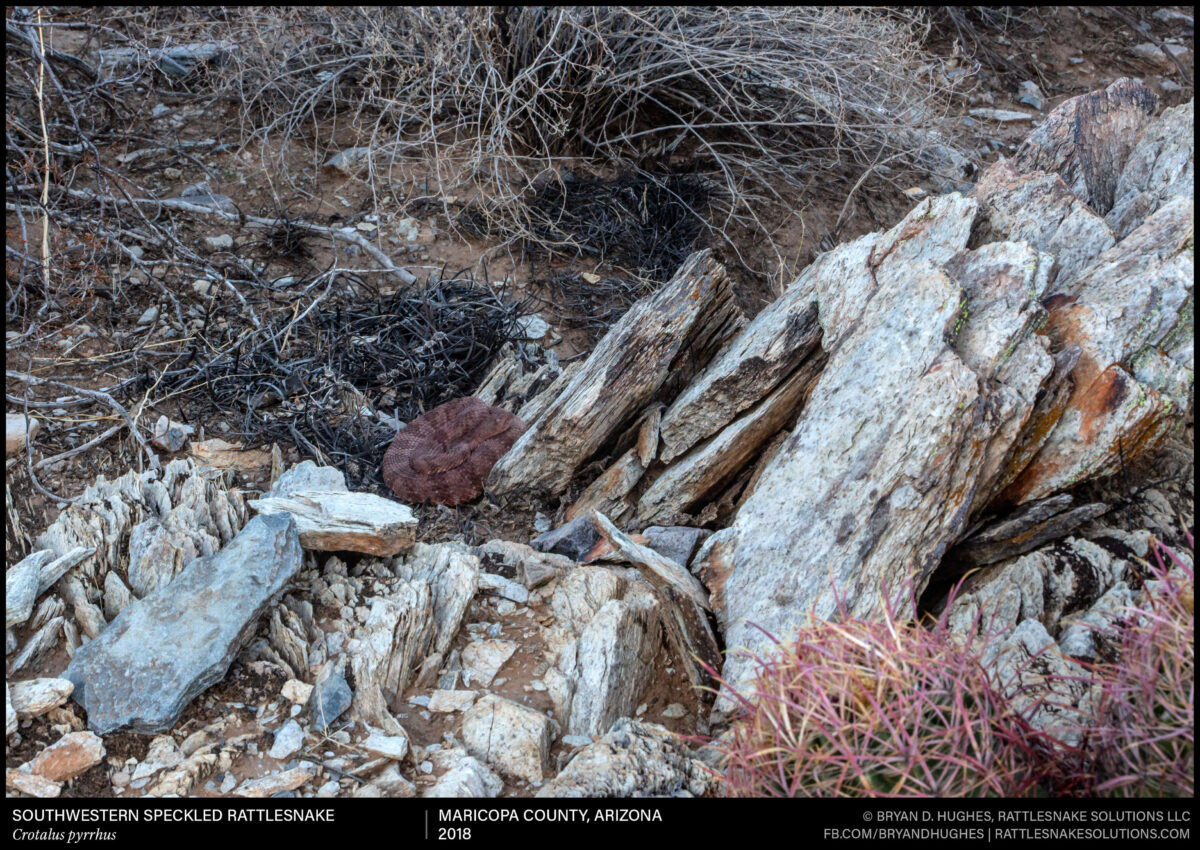
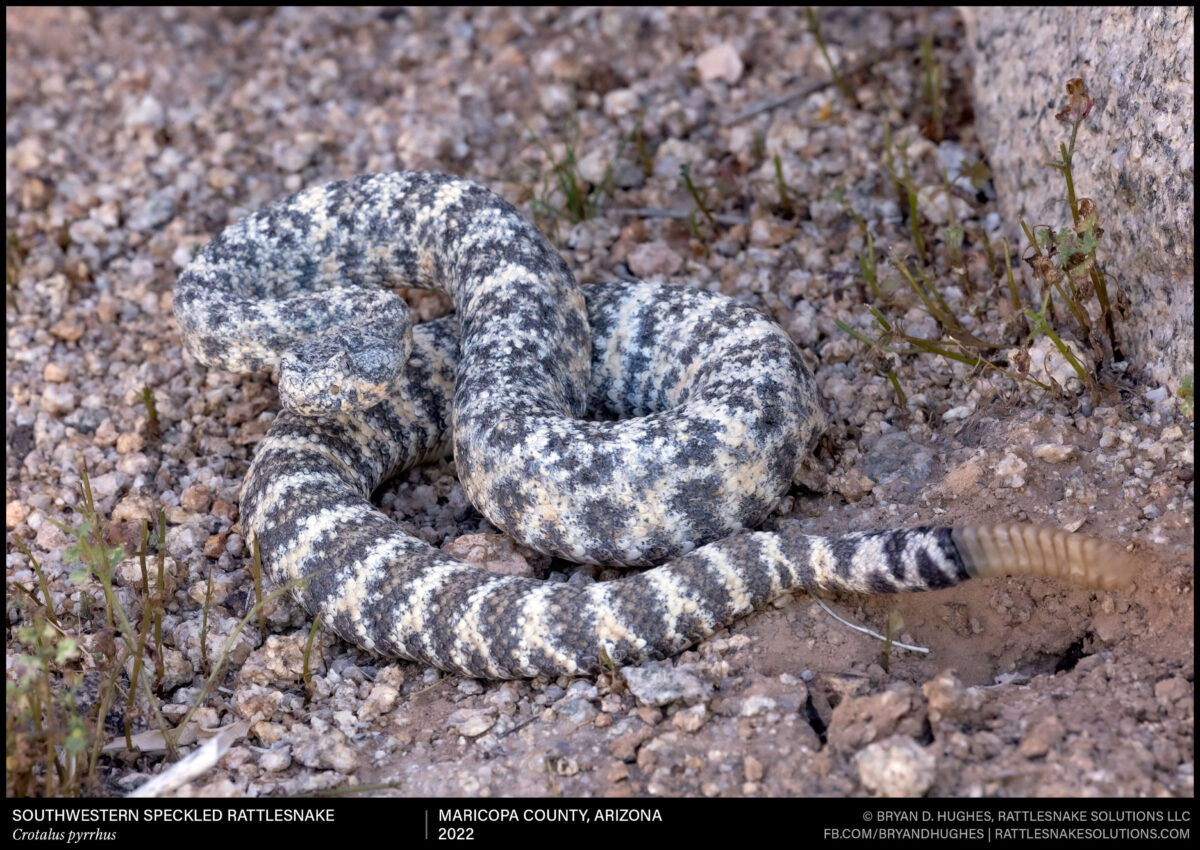
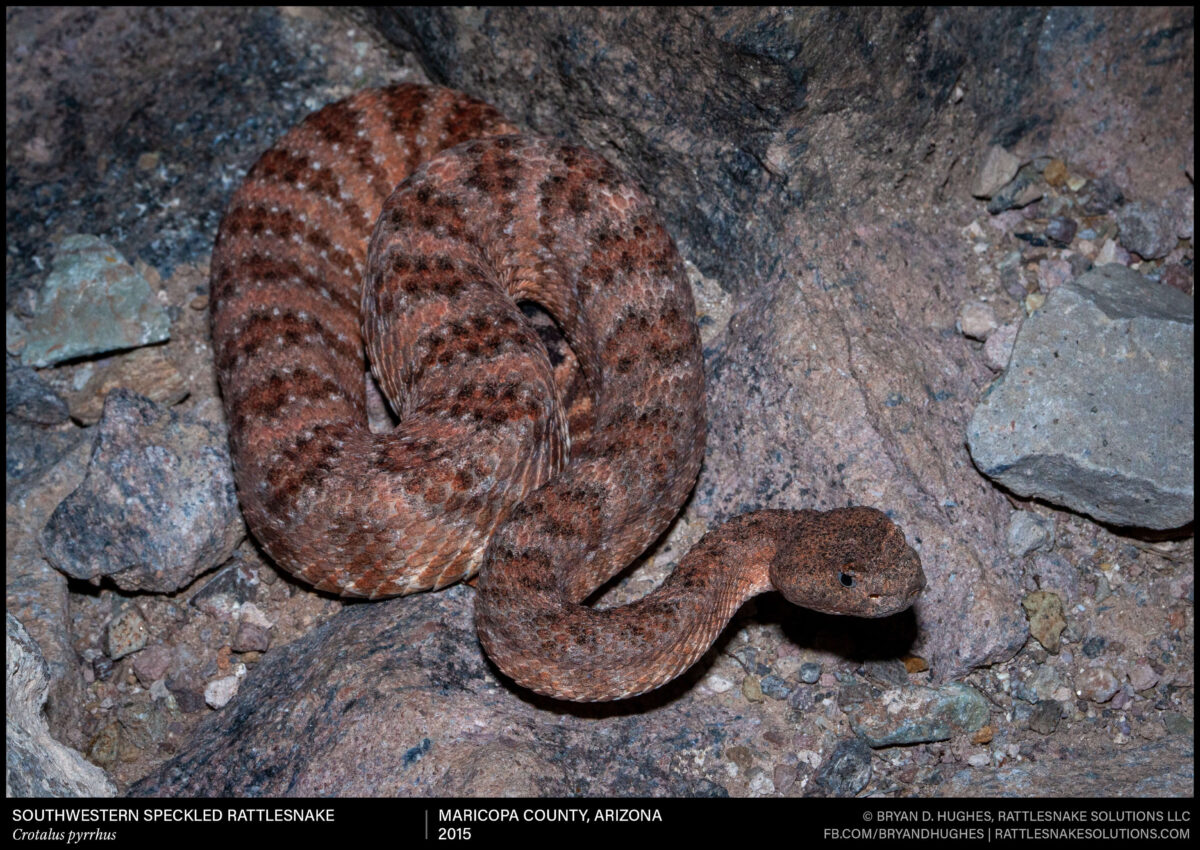
Southwestern Speckled Rattlesnakes (Crotalus pyrrhus) are commonly seen by hikers in the Phoenix area at popular parks, even those entirely within the city. They have a relatively extreme level of camouflage for a rattlesnake, and many people are surprised to learn just how many rattlesnakes they walk by even at the most heavily-hiked parks in the city. This is one of several hundred that inhabit one of these parks, found on a hillside below a trail.
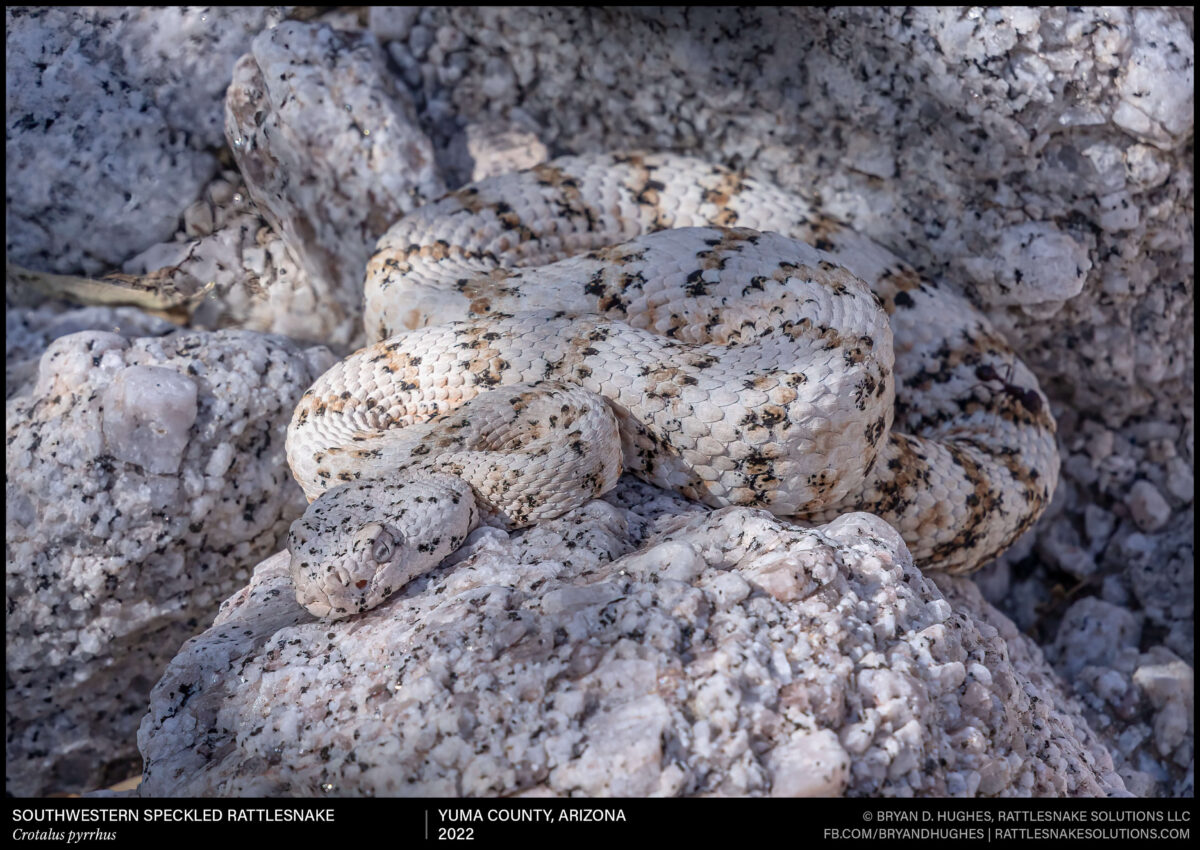
A Southwestern Speckled Rattlesnake (Crotalus pyrrhus) in ambush along a ledge in central Arizona. While most of the boulder field where it was found is made of rock similar to how this snake looks … this particular large boulder made of light colored granite helped make this one easy to spot. We got some photos from a distance and left it there to hopefully succeed in getting that chuckwalla or ground squirrel it’s looking for.
A Southwestern Speckled Rattlesnake from central Arizona. In this region, the rocks are often brightly colored with oxidized metals and tinted crystals. This makes for some really amazing snakes.
Southwestern Speckled Rattlesnakes (Crotalus pyrrhus) are some of the most cryptic snakes in the country. This white one isn’t an albino, but is showing off its natural color against the white granite in the environment where it lives.
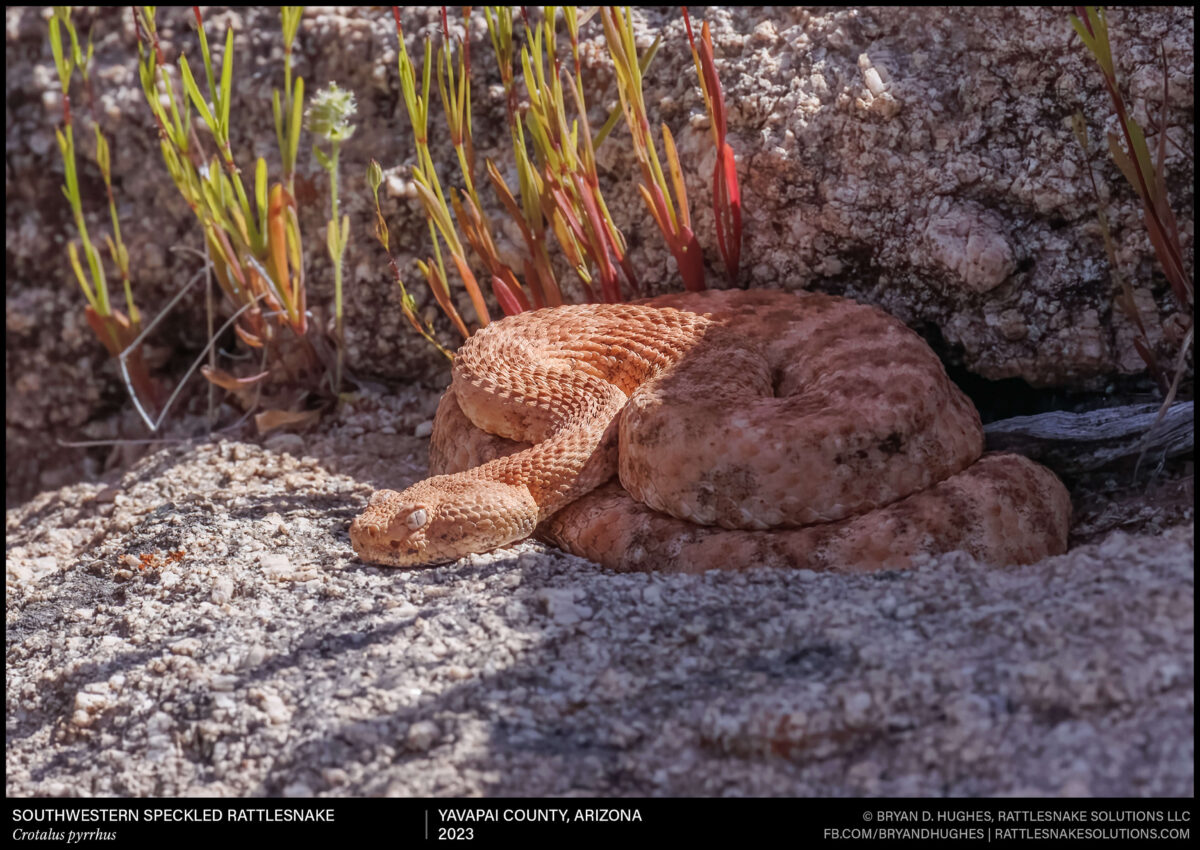
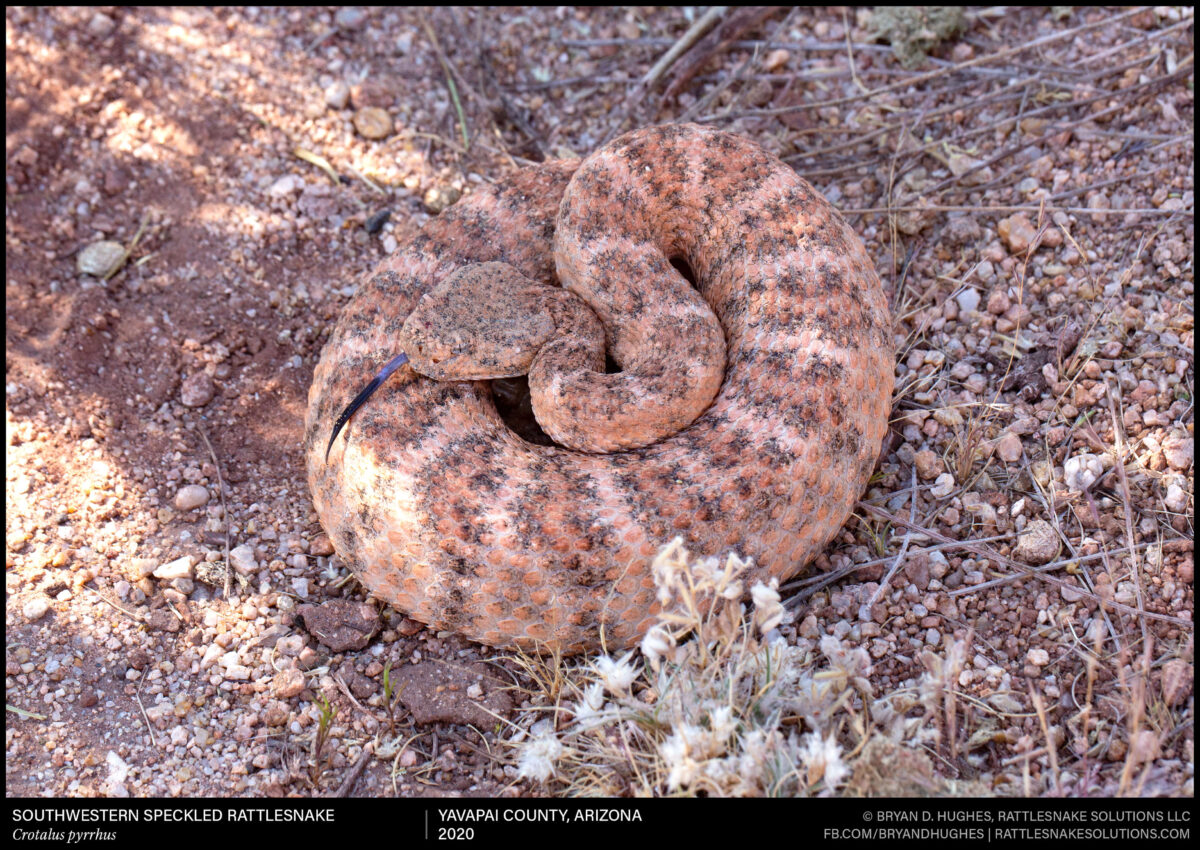
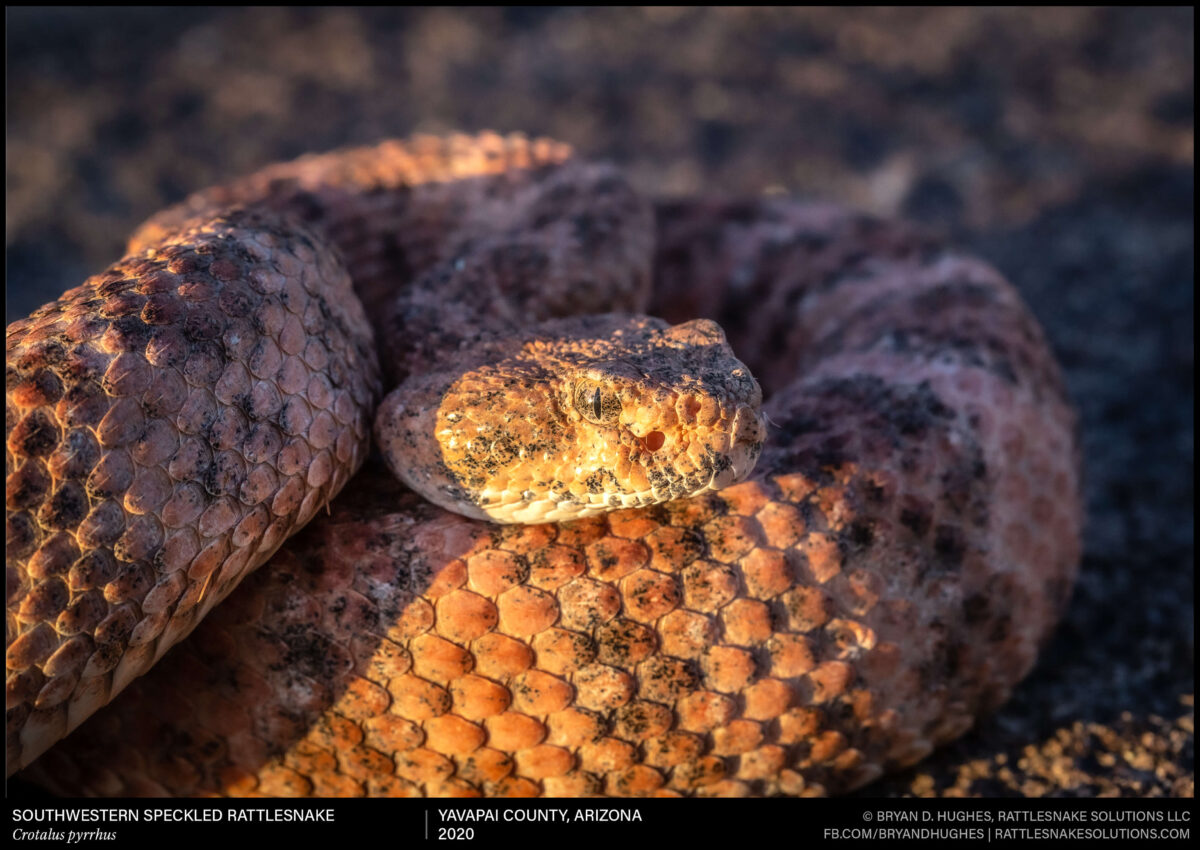
A bright orange and pink Southwestern Speckled Rattlesnake we found in Yavapai County, Arizona several years ago, photographed in the last light of the day. These snakes look just like the rock they’re found near, so the iron-rich boulders where this one is from make for a very pretty animal.
A Southwestern Speckled Rattlesnake from the Phoenix area. This species of snake has a huge gamut of colors and patterns possible throughout its range. Even within relatively nearby locales, it can be extreme. Just about ten miles from where this snake lives, they are red or orange.
A Southwestern Speckled Rattlesnake from the Phoenix area. In some locations, they can be a pretty brick red like this one. These are the second most commonly encountered rattlesnake by hikers in the central Phoenix parks.