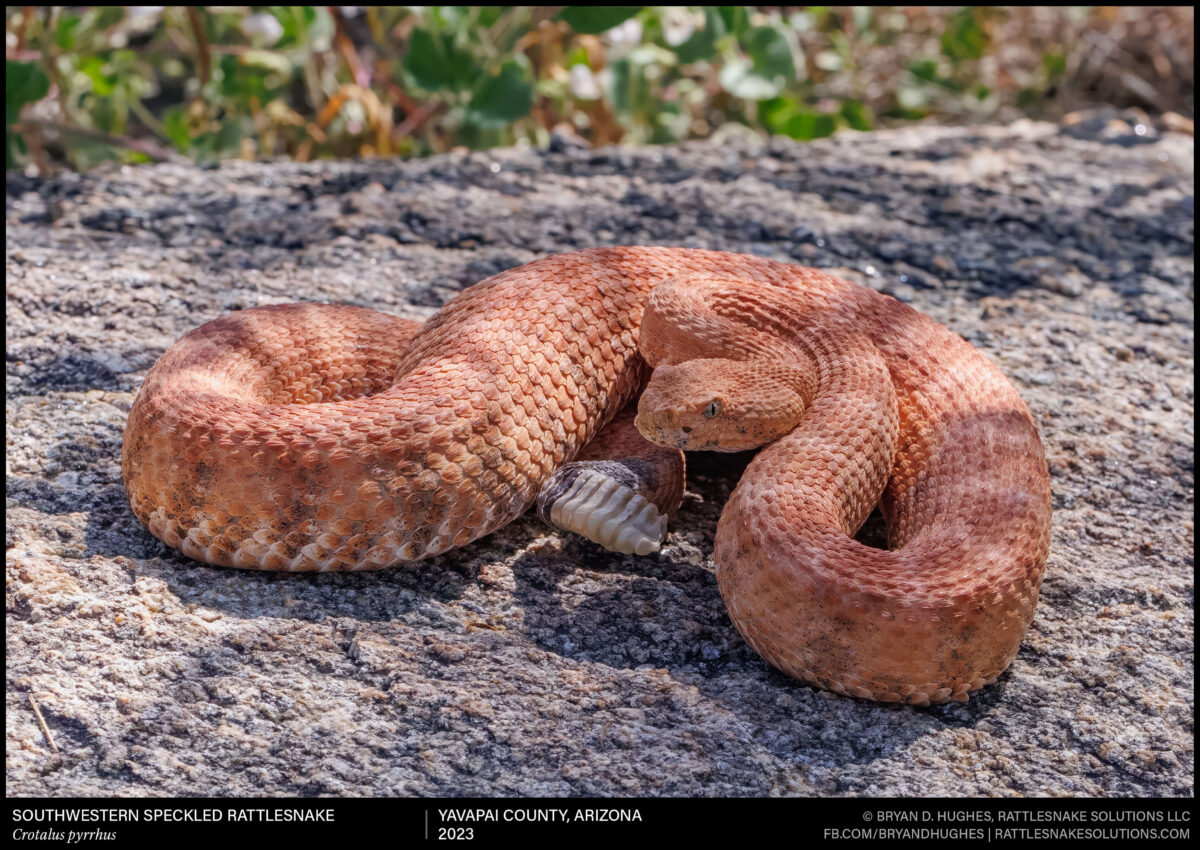
A brilliantly colored Speckled Rattlesnake from central Arizona. The rock in this particular spot doesn’t look very much like the snakes, but the occasional oxidized rock breaks off from higher and tumbles to the ground. When that orange rock sits under a bush or random location against the other grey and browns, it’s just part of the landscape. This snake, though, was hard to miss.
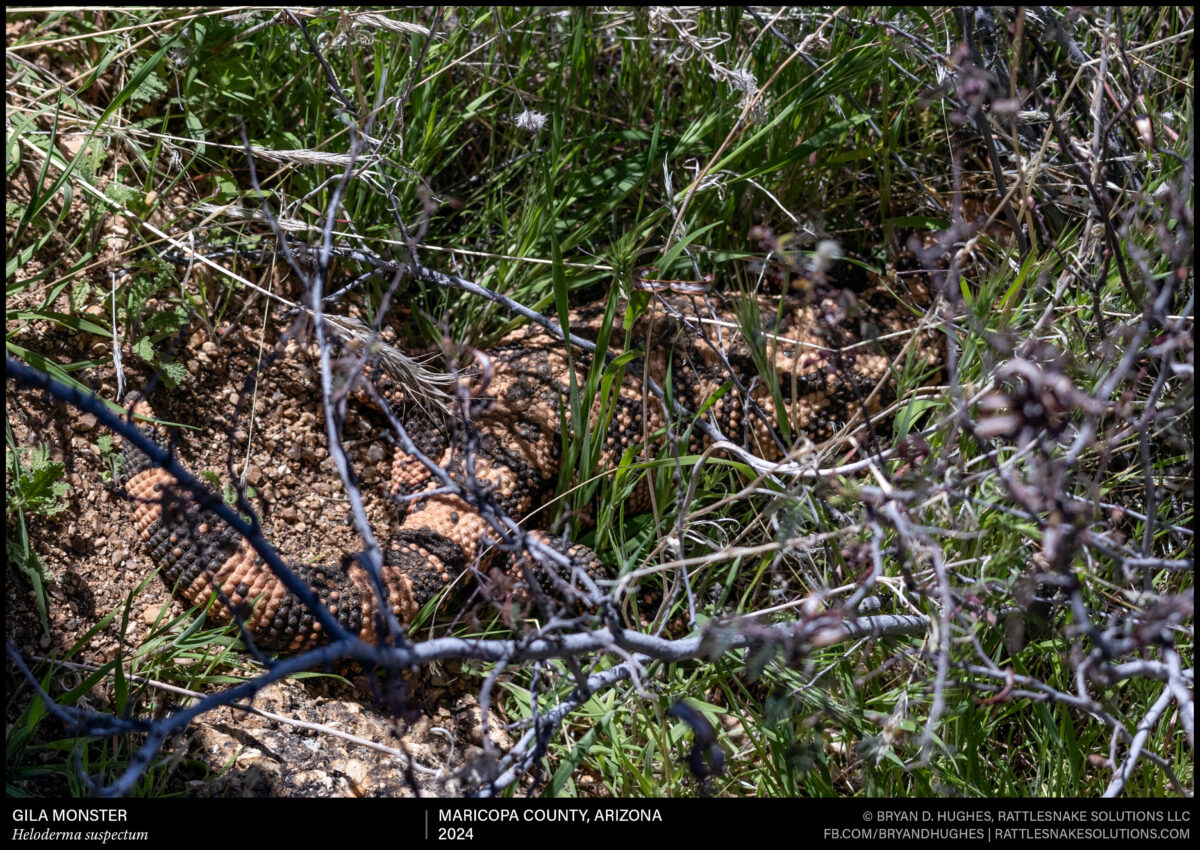
A Gila Monster (Heloderma suspectum) basking on a cool Spring day. Usually, it may seem that the bright yellow and black pattern of these animals makes them hard to see … but this shows where it works. The high-contrast, chaotic pattern makes the shape of a lizard disappear in dappled light. It’s common for even life-long residents of Arizona to see only one, or zero, Gila Monsters in their time in the outdoors, having walked right past many instances just like this.
Davis, J. R., & DeNardo, D. F. (2010). “Seasonal Patterns of Body Condition, Hydration State, and Activity of Gila Monsters (Heloderma suspectum) at a Sonoran Desert Site.” Journal of Herpetology, 44(1), 83–93. https://doi.org/10.1670/08-263.1
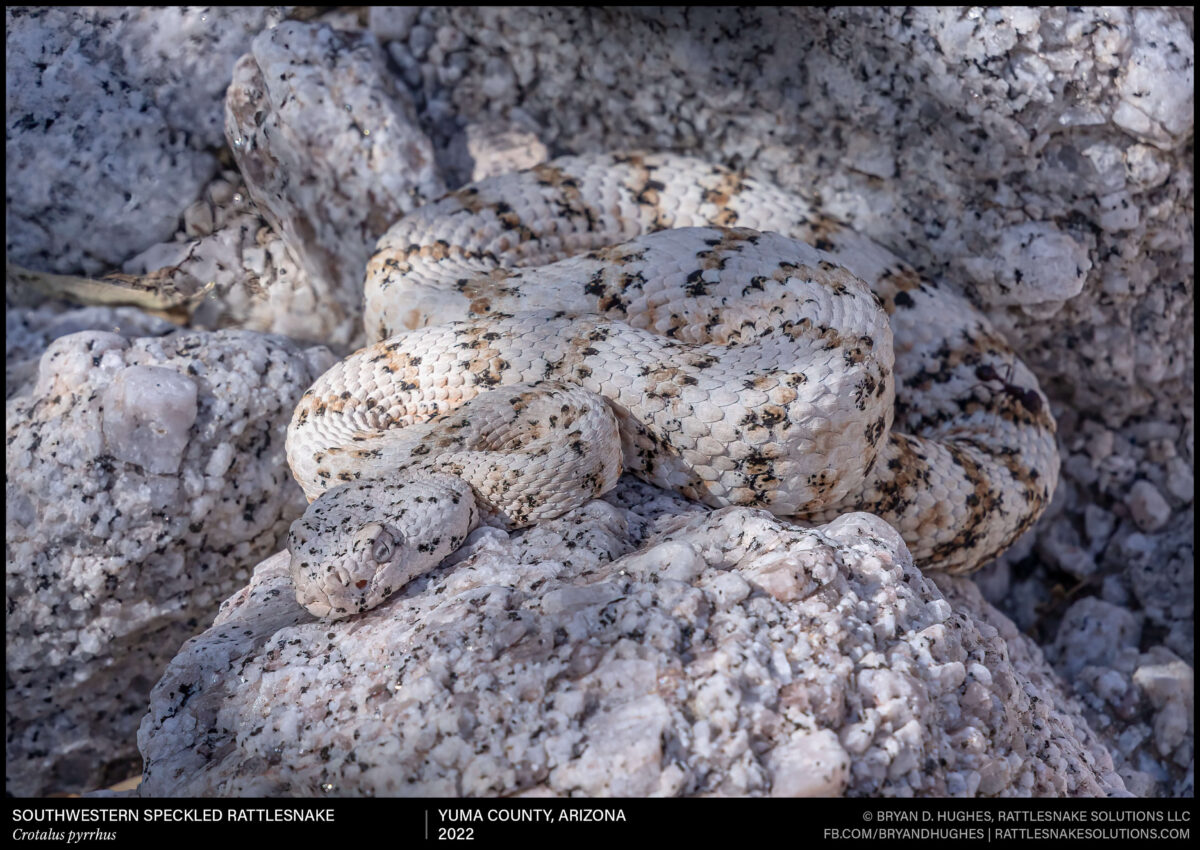
Southwestern Speckled Rattlesnakes (Crotalus pyrrhus) are some of the most cryptic snakes in the country. This white one isn’t an albino, but is showing off its natural color against the white granite in the environment where it lives.
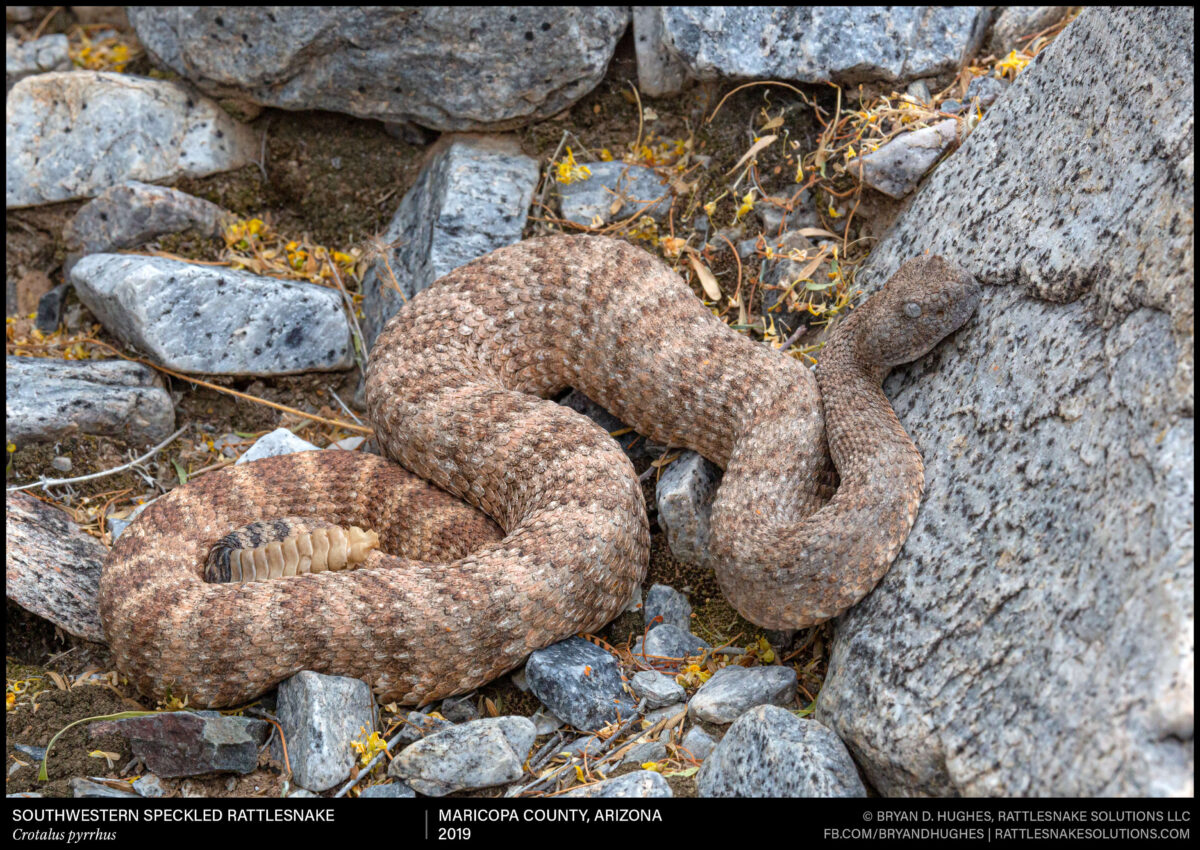
An orange Southwestern Speckled Rattlesnake making good on its name. While its bands are still visible, the chaotic distribution of colors can make this animal very difficult to see in context. This one lives near quite a few people with hundreds hiking right past it every weekend, but bites nobody.
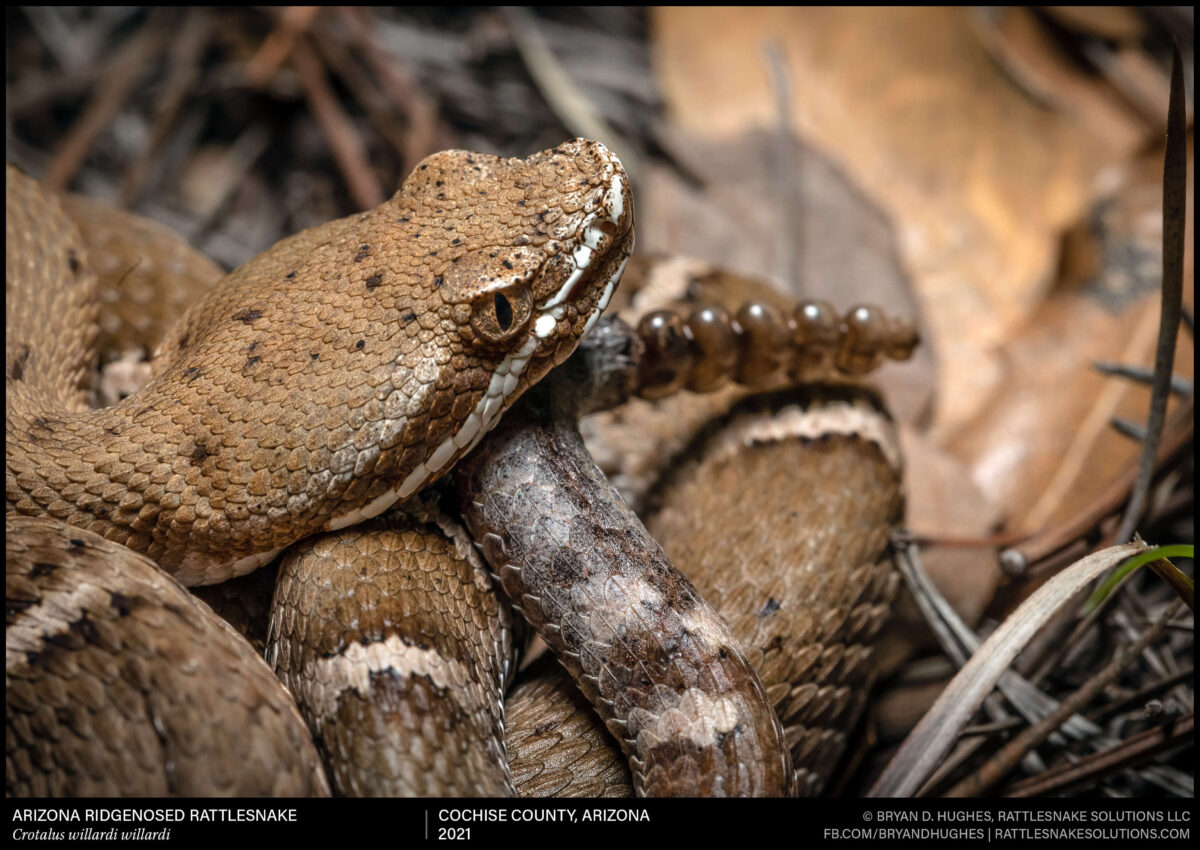
An Arizona Ridgenosed Rattlesnake in southeastern Arizona. These small rattlesnakes are common where they are found, but even ranchers born and raised in the area usually have no idea it exists. That’s thanks, in part, to its nearly perfect camouflage, making it about invisible in oak leaf litter and bunchgrass.
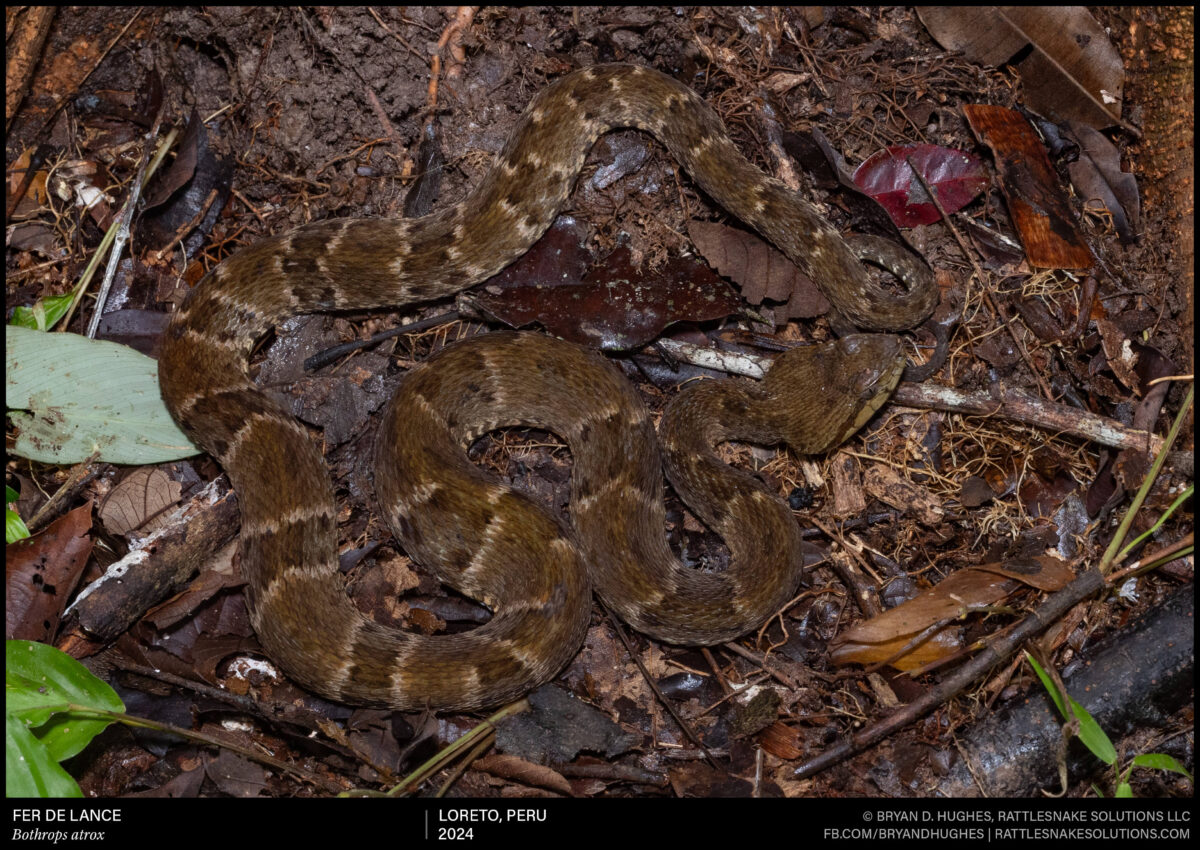
A small Lancehead (Fer De Lance) I came across on a trail as I set off on a long solo hike in the Peruvian Amazon a couple of years ago. These snakes can be anywhere and everywhere, from the ground to trees, and quite easy to miss.
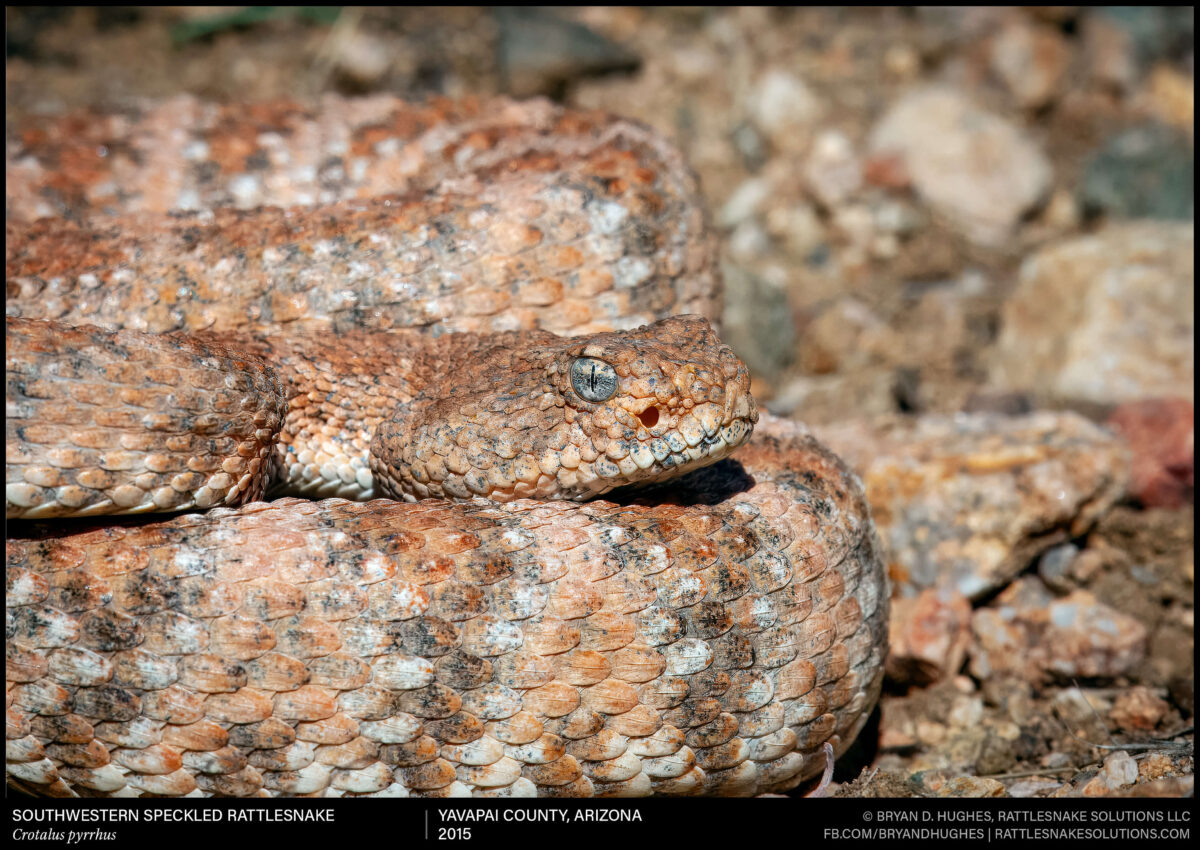
A rattlesnake that looks like a rock. This Southwestern Speckled Rattlesnake was found in central Arizona in an area of rusty granite and quartz. The resulting cryptic pattern is just as colorful, including speckled grey blue eyes. Though it is brightly colored, these snakes can be very difficult to see in context.
Crowell, H. L., Whelan, J. M., & Harmel, M. V. (2020). Rattlesnake colouration affects detection by predators. Journal of Zoology, 310(1), 1–11. https://doi.org/10.1111/jzo.12786
Hanscom, R. J. (2025). From ambush to activity: Using accelerometry to reveal cryptic behaviors of rattlesnakes and kangaroo rats [Doctoral dissertation, University of California, Riverside]. eScholarship. https://escholarship.org/content/qt4ft2985w/qt4ft2985w.pdf
A vibrant Northern Blacktailed Rattlesnake hiding away in a crevice in Pinal County, Arizona. These rattlesnakes are one of the species most often encountered by hikers, but are comparatively rarely found at homes. They’re secretive snakes, and easy to walk right by in most instances.