A tiny frog from the Amazon, about as big as a thumbnail. It’s a Bassler’s Humming Frog, Chiasmocleis bassleri, found by our group in Loreto, Peru, in January of 2023.
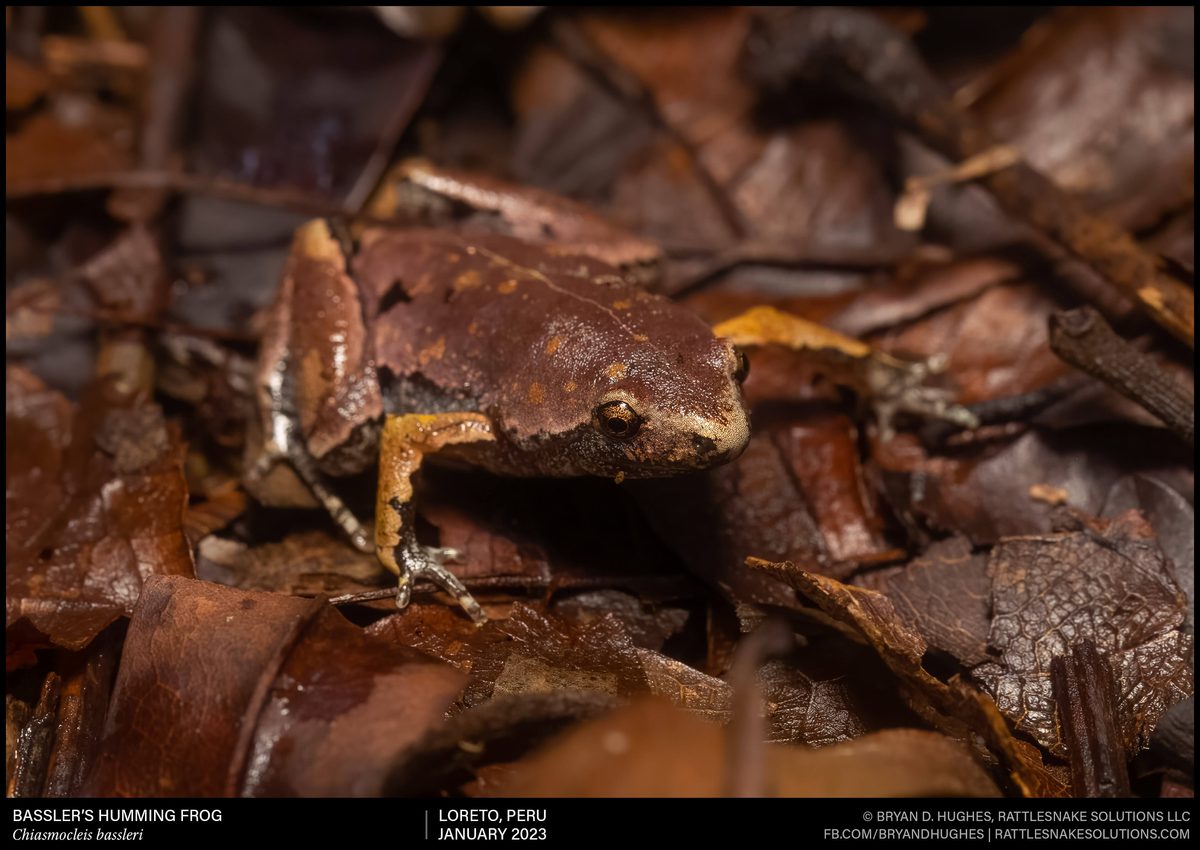

A tiny frog from the Amazon, about as big as a thumbnail. It’s a Bassler’s Humming Frog, Chiasmocleis bassleri, found by our group in Loreto, Peru, in January of 2023.
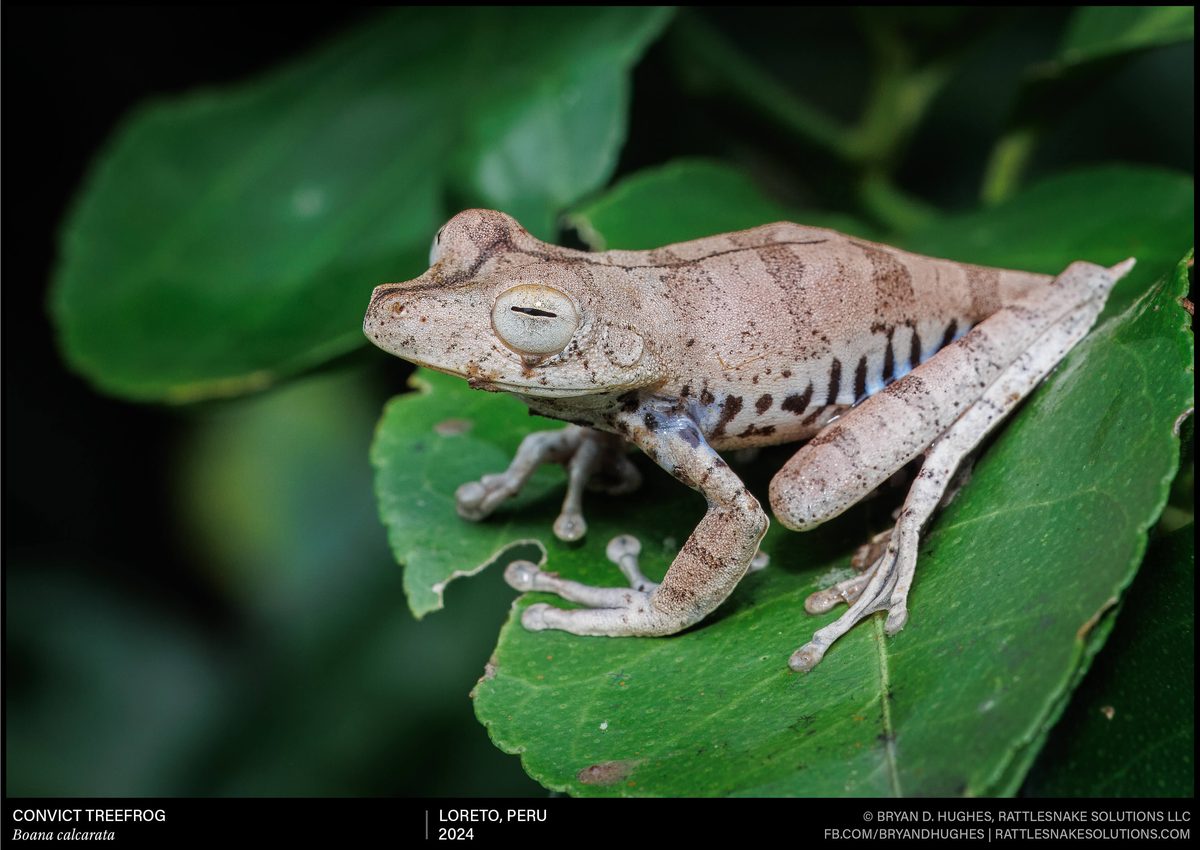
A Convict Treefrog (Boana calcarata) we found in Peru a few years back, near Iquitos. This one is showing the black and white bars on its sides that give it its name.
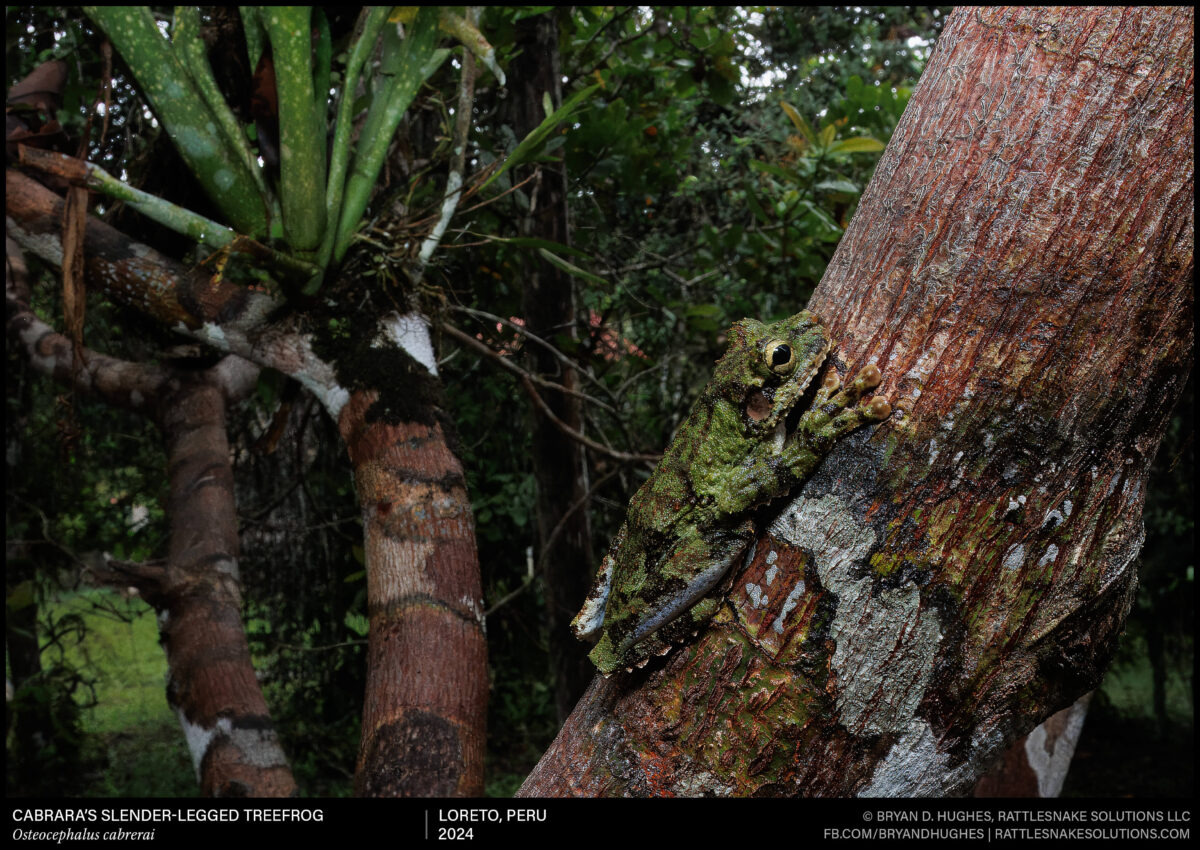
A Cabrara’s Slender-legged Treefrog (Osteocephalu cabrerai) from Peru a couple of years ago. These are large treefrogs that often have these rough areas that can make them about invisible in the chaotic backdrop of the Amazon.
One of several Western Striped Forest Pitvipers (Bothrops bilineatus smaragdinus) we found in Peru earlier in the year. This was the largest of the group, found coiled in vines just overhead.
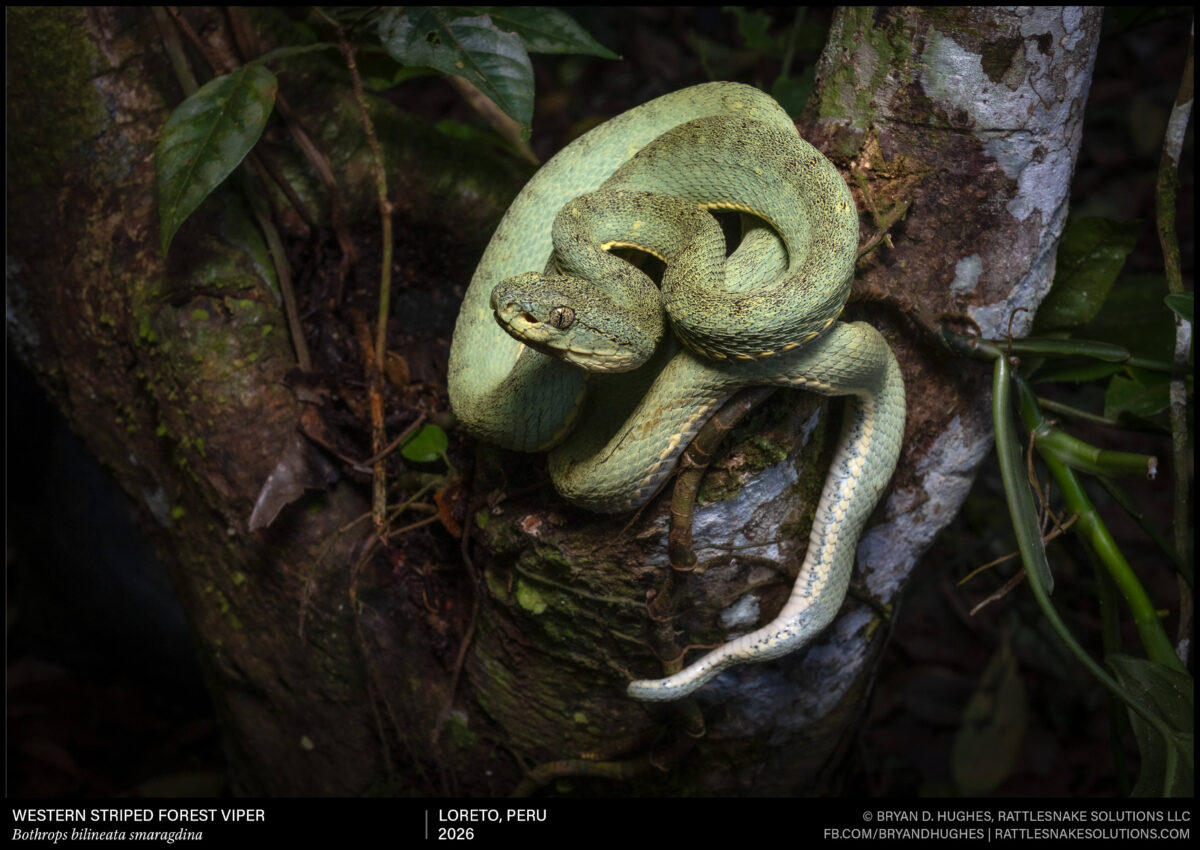
We met this gentleman in Peru a couple of years back.
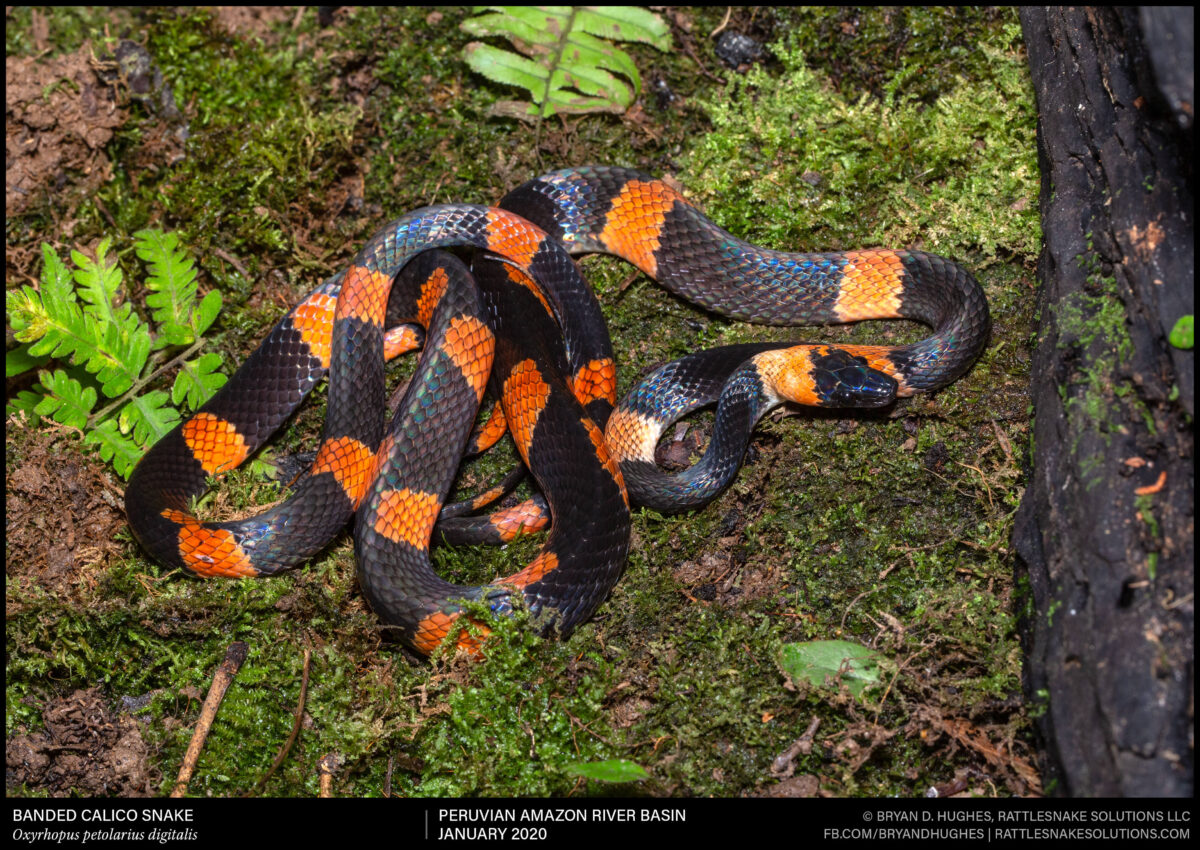
One of the colorful Banded Calico Snakes found near camp in Peru a few years back.
Out in the complete darkness of the full Amazonian canopy, a South American Bushmaster. It’s the largest and oldest of the New World Pitvipers, and a dream sighting for anyone into snakes. This photo is a flash misfire, but I like how it feels – this is a better idea of how this animal spends most of its time. Coiled in between buttresses and low vegetation, waiting for something to come through that won’t see it. Also a reminder to walk slowly, and be sure of every step.

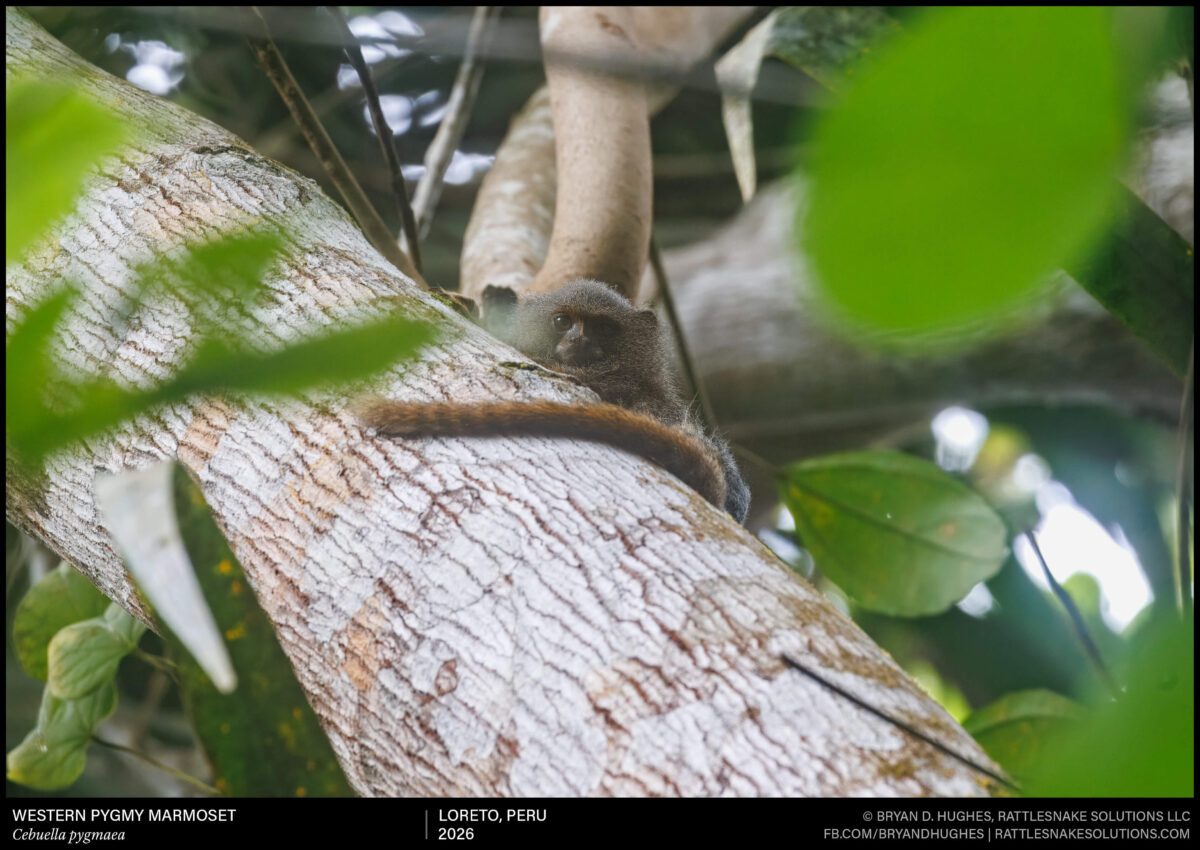
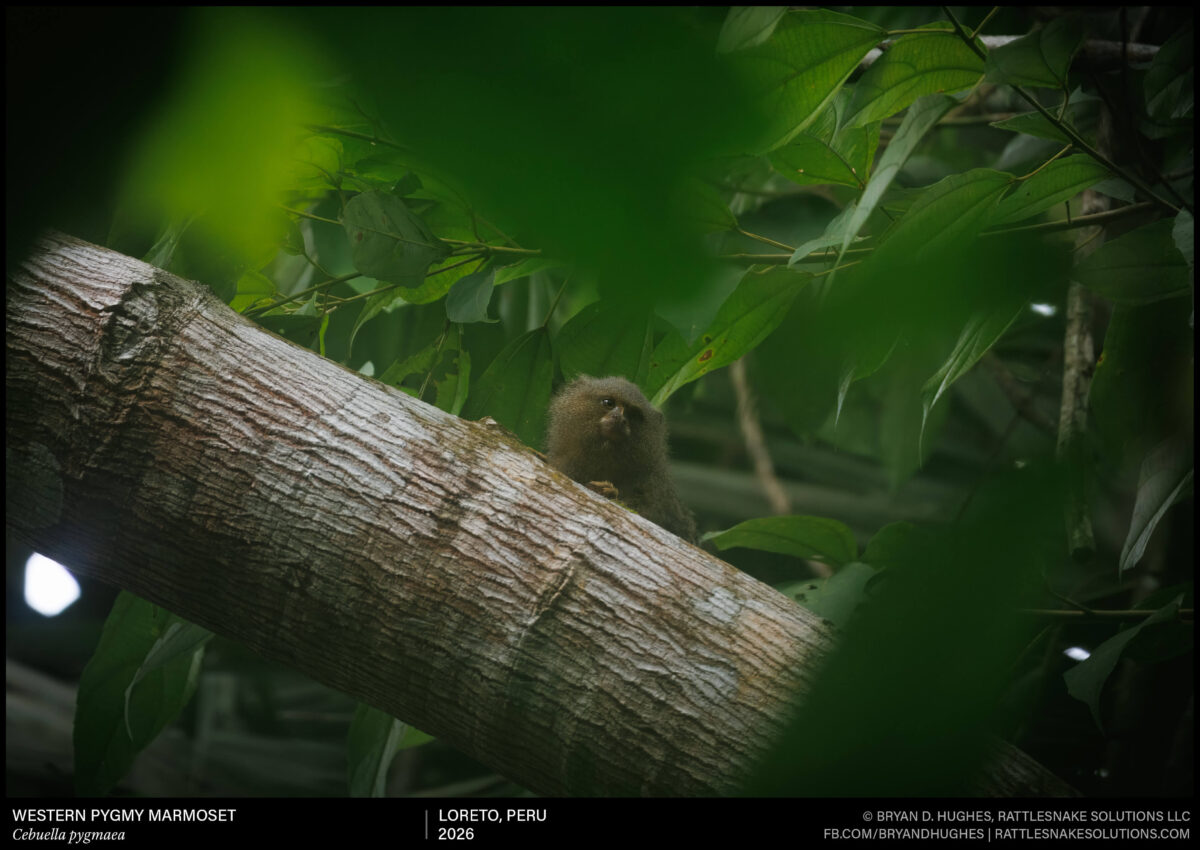
We were shown these amazing little primates, the smallest in the world; Western Pygmy Marmosets (Cebuella pygmaea). Each is only about the size of a hand, with the smallest we saw likely comfortable curling up in a donut. They stay in one tree and have a tiny home range, excavating holes in bark to get to the sap they eat. They were skittish but as they didn’t go far, relatively easier to photograph than other primates in my experience. Loreto, Peru.
Youlatos, D. (2009). Locomotion, postures, and habitat use by pygmy marmosets (Cebuella pygmaea). In P. Garber, A. Estrada, J. Bicca-Marques, E. Heymann, & K. Strier (Eds.), South American primates: Comparative perspectives in the study of behavior, ecology, and conservation (pp. 279–296). Springer. https://www.academia.edu/download/45603455/4_Youlatos_2009_Smallest_20Anthropoids.pdf
A tiny green-blue arboreal viper I saw in trees at around eye level on a night hike in Peru a couple of weeks ago. This Two-Striped Forest Pitviper was only about as long as a hand, and as big around as a ballpoint pen.