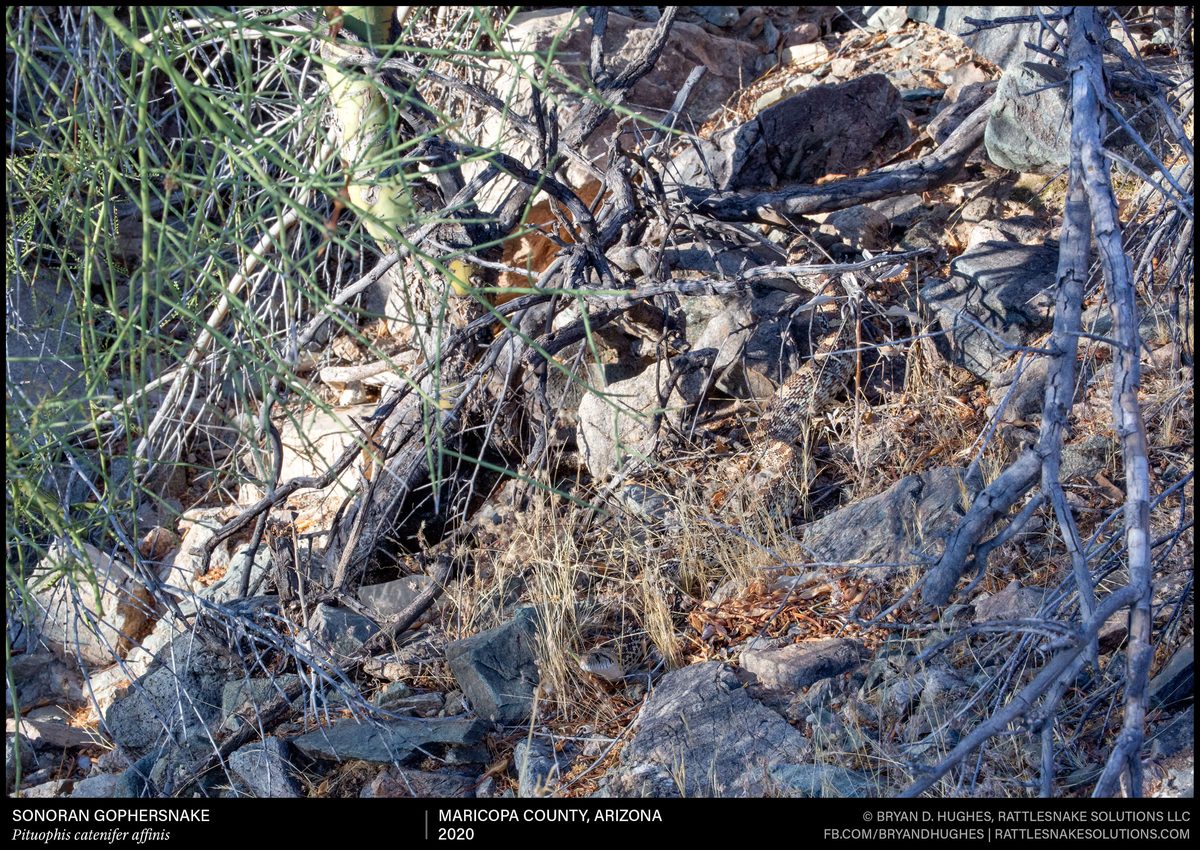
A Sonoran Gophersnake moving to cover for the day can be difficult to spot. It’s chaotic pattern can quickly disappear in the noise of high-contrast shadows and filtered light. All it needs to do is hold still for a few moments, and most will walk right by it without ever knowing there was a snake there.
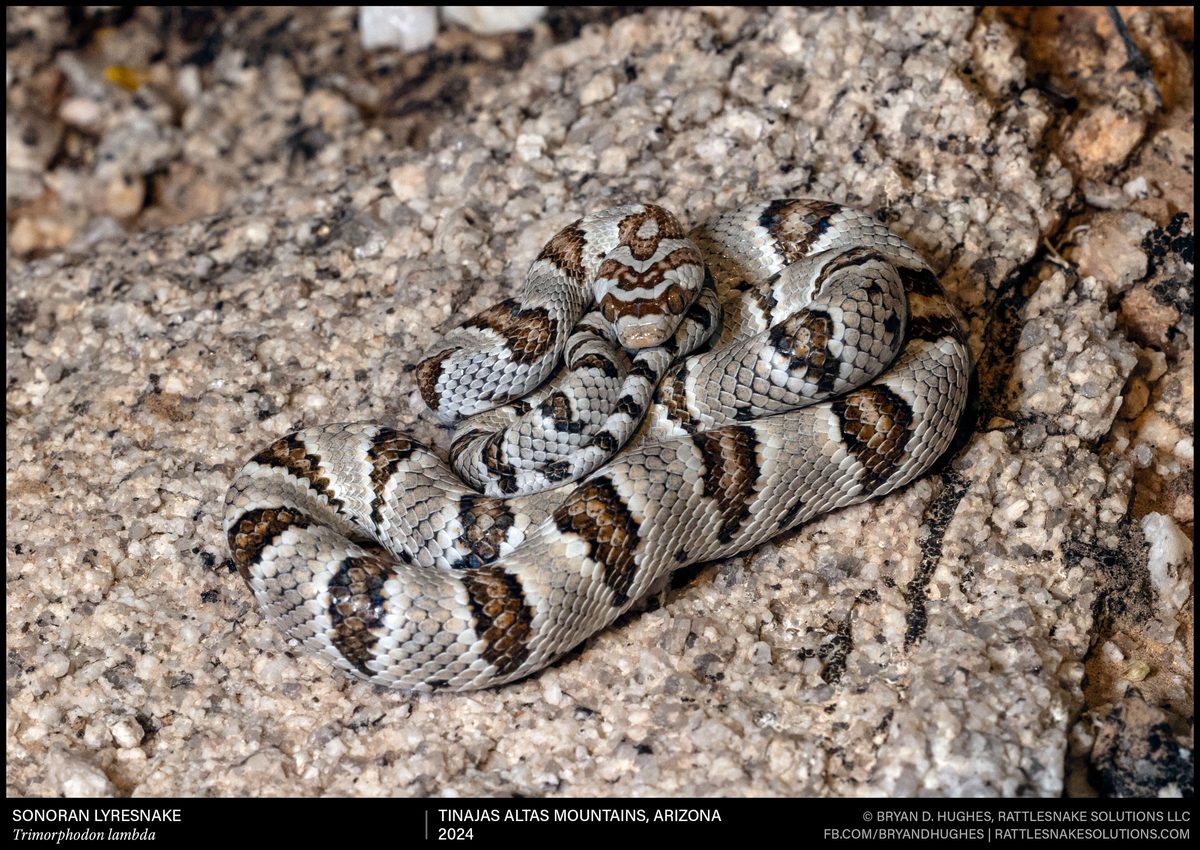
A small Sonoran Lyresnake from the extremely hot, dry desert of Yuma County, Arizona. This is one of a couple that showed up right in camp, and we got some photographs before letting it continue on its way. These cryptic snakes are almost entirely nocturnal, and rarely seen by Arizona residents.
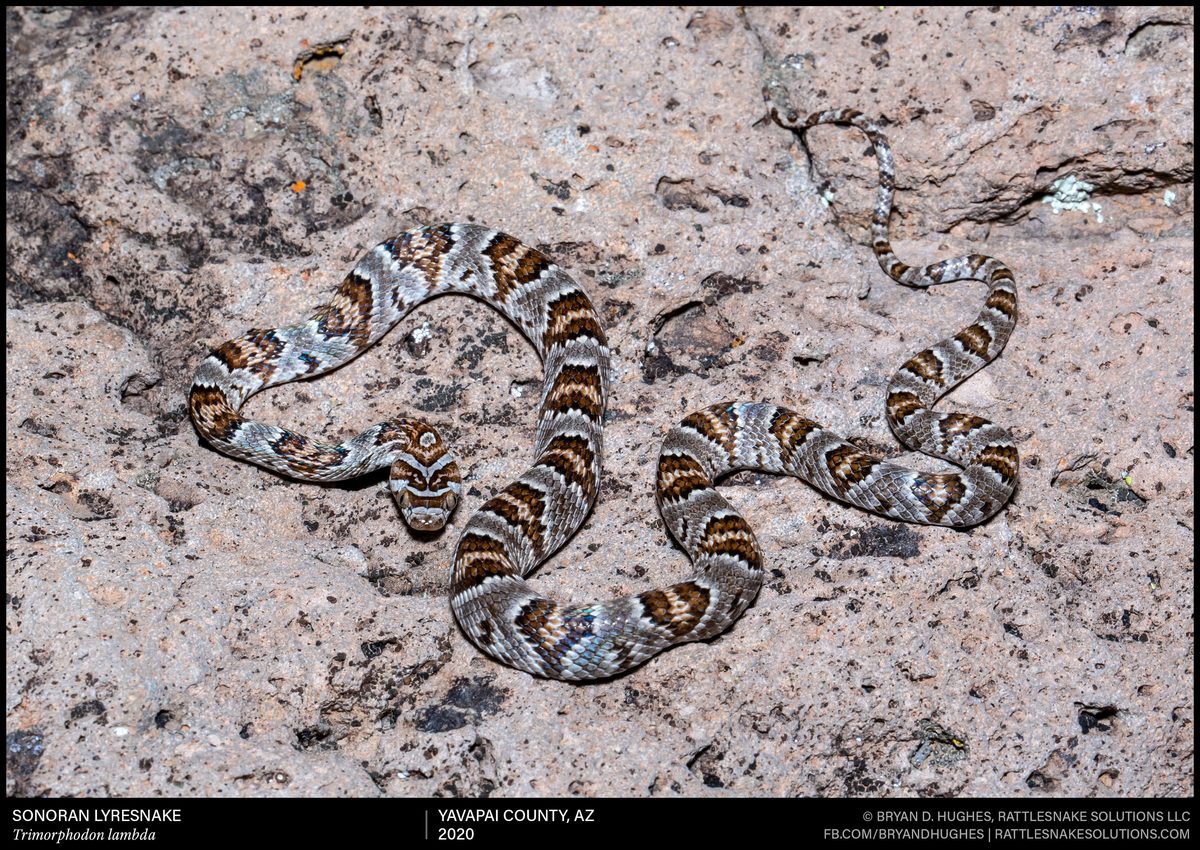
We found this Sonoran Lyresnake on the move on a night hike in Yavapai County sevearl years back. This one is typical of the species for the area, with chaotic brown and tan blotches over a beige body, with a relatively disoganized look compared to some of the more cleanly banded version found elsewhere. They’re slightly venomous, feeding on lizards, rodents, and bats. It’s not harmful to humans, but I still avoid a bite like I would from any snake.
Devitt, T. J. (2006). Phylogeography of the Western Lyresnake (Trimorphodon biscutatus): Testing aridland biogeographical hypotheses across the Nearctic–Neotropical transition. Molecular Ecology, 15, 4387–4407. https://doi.org/10.1111/j.1365-294X.2006.03015.x
Mackessy, S. P., & Saviola, A. J. (2016). Understanding biological roles of venoms among the Caenophidia: The importance of rear-fanged snakes. Integrative and Comparative Biology, 56(5), 1004–1012. https://academic.oup.com/icb/article/56/5/1004/2420638
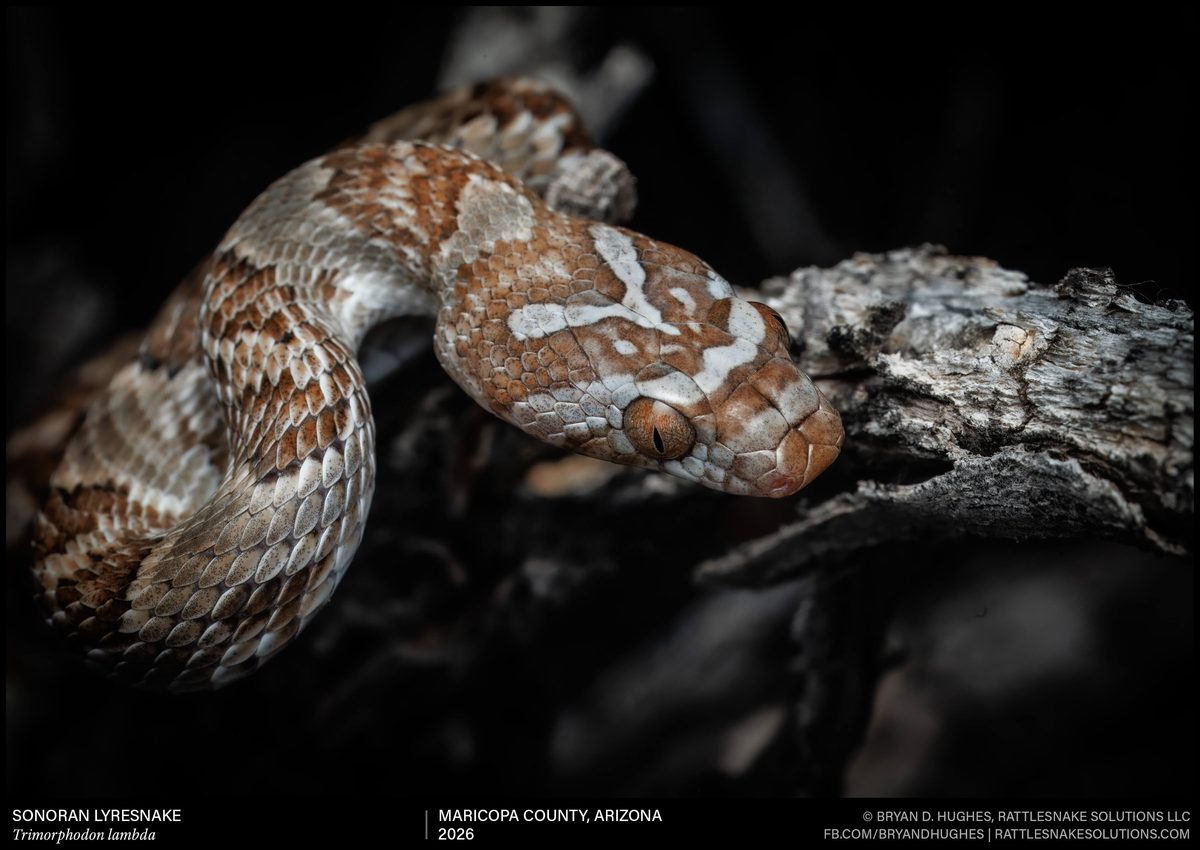
Up close with a Sonoran Lyresnake (Trimorphodon lambda) from Maricopa County, Arizona. These shy snakes are almost entirely nocturnal, which you’d likely be able to figure out from just those big bug-eyes. They’re mildly venomous, rear-fanged snakes, but generally harmless to humans and pets.
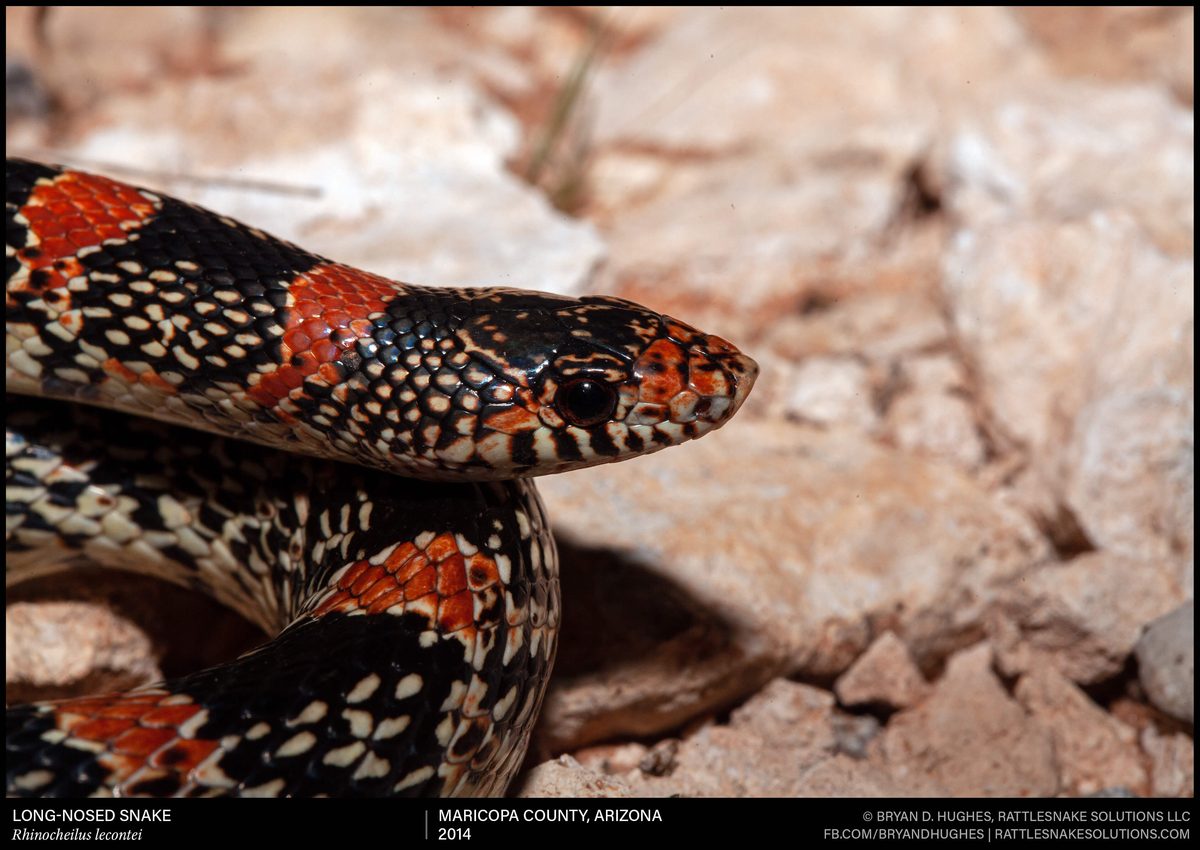
I found this Longnosed Snake (Rhinocheilus lecontei) near Phoenix many years ago. Interestingly, this species is most often mistaken for a kingsnake by locals, even (especially!) by those who identify strongly as “born and raised here.” It’s likely the case that the majority of “kingsnakes” seen by the typical Arizona resident are actually Longnosed Snakes. This one has a particularly high amount of the red-orange color that can help differentiate it from similar looking species, making it a bit easier.
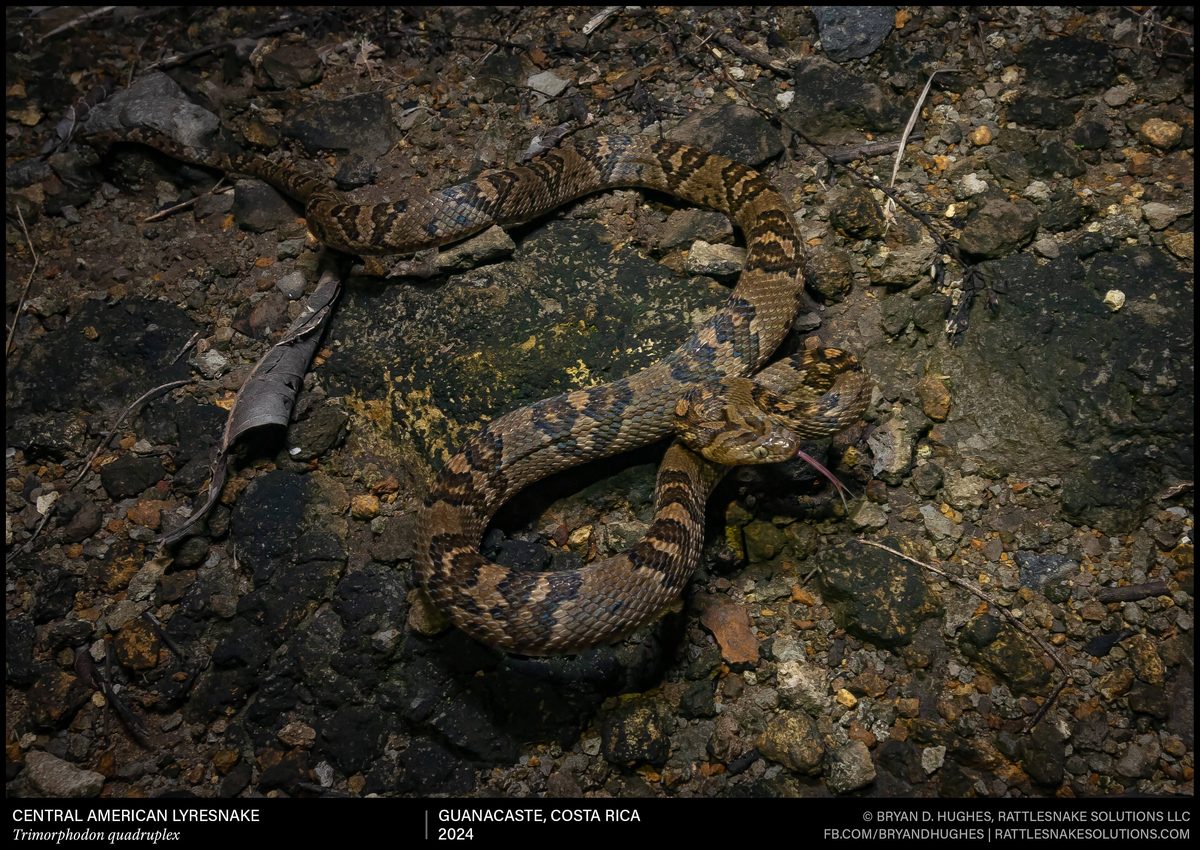
A morning flight out of Costa Rica gave me one extra evening near the airport in Liberia, Costa Rica, to end a family vacation. I went into the coastal thornscrub to see what there was to see, and found a few of these large Central American Lyresnakes. They seem thicker and less likely to bite than the thin, bug-eyed lyresnakes here in the United States. Handling them seems a bit more like it’s a gophersnake or ratsnake in comparison. Unlike those snakes, however … these do have a relatively mild venom, that I would not like to test from one of these big snakes.
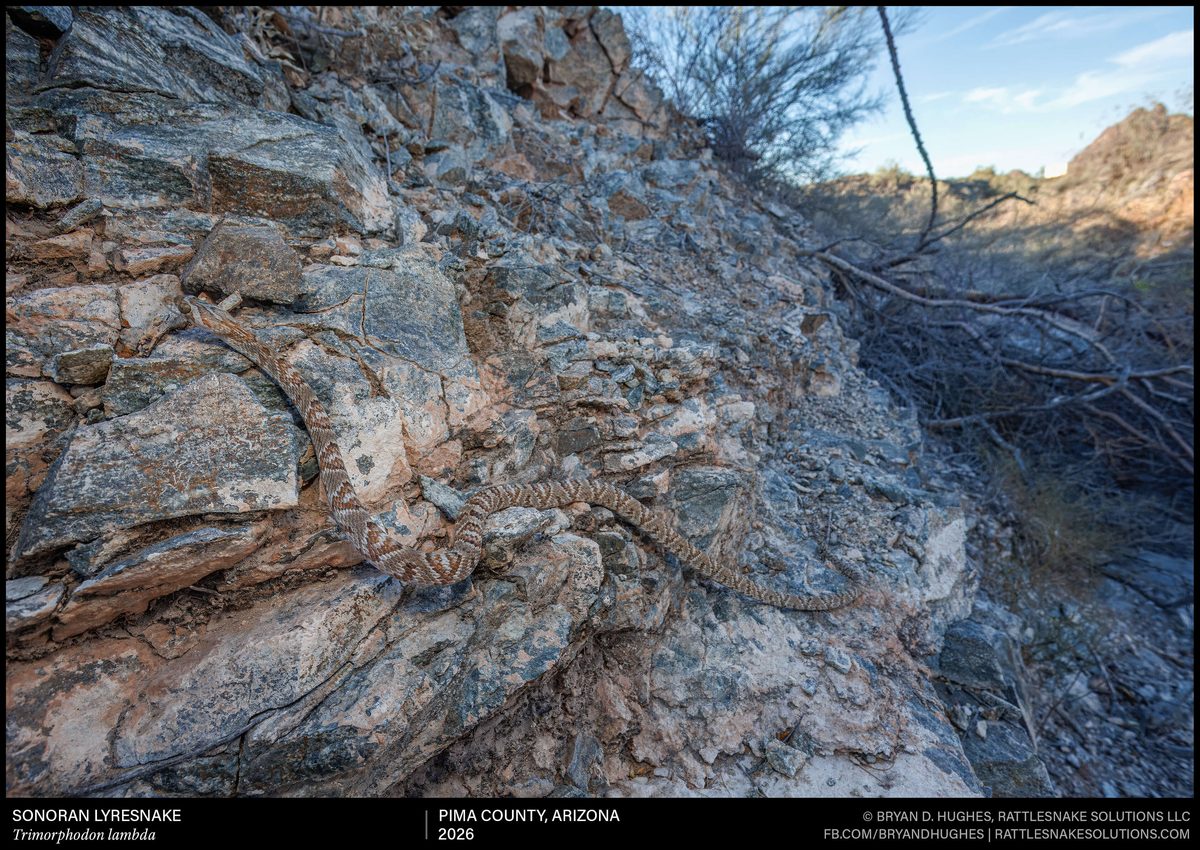
A Sonoran Lyresnake (Trimorphodon lambda) from border area of Arizona/Mexico earlier in the year. These are among the least often seen species of snakes in the Phoenix and Tucson areas, despite being quite common in the right habitat.
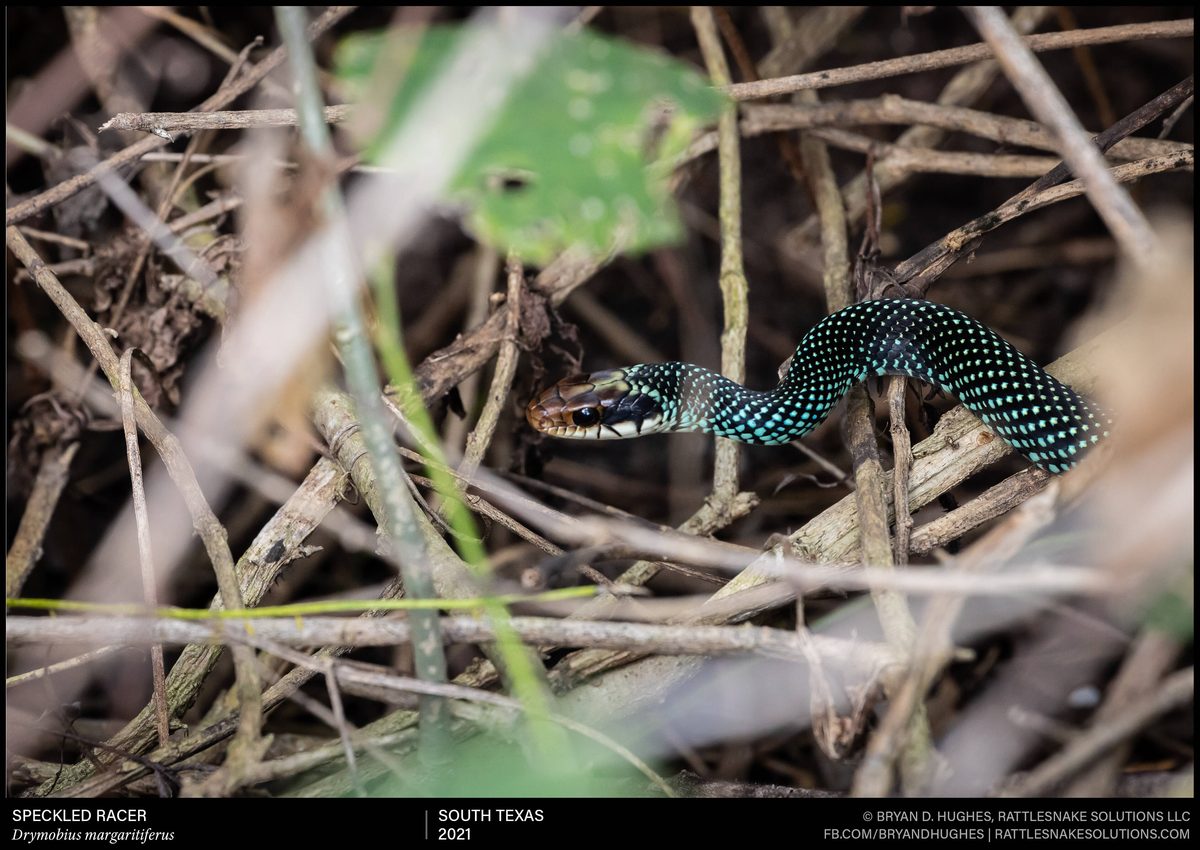
A Speckled Racer cruising through the undergrowth in extreme southern Texas. These snakes just barely enter the United States at this point, and can be found throughout tropical Central America and northern South America.
Prior-Magee, J. S., & McKerrow, A. (2018). Speckled Racer (Drymobius margaritiferus) rSPRAx_CONUS_2001v1 Habitat Map. U.S. Geological Survey.
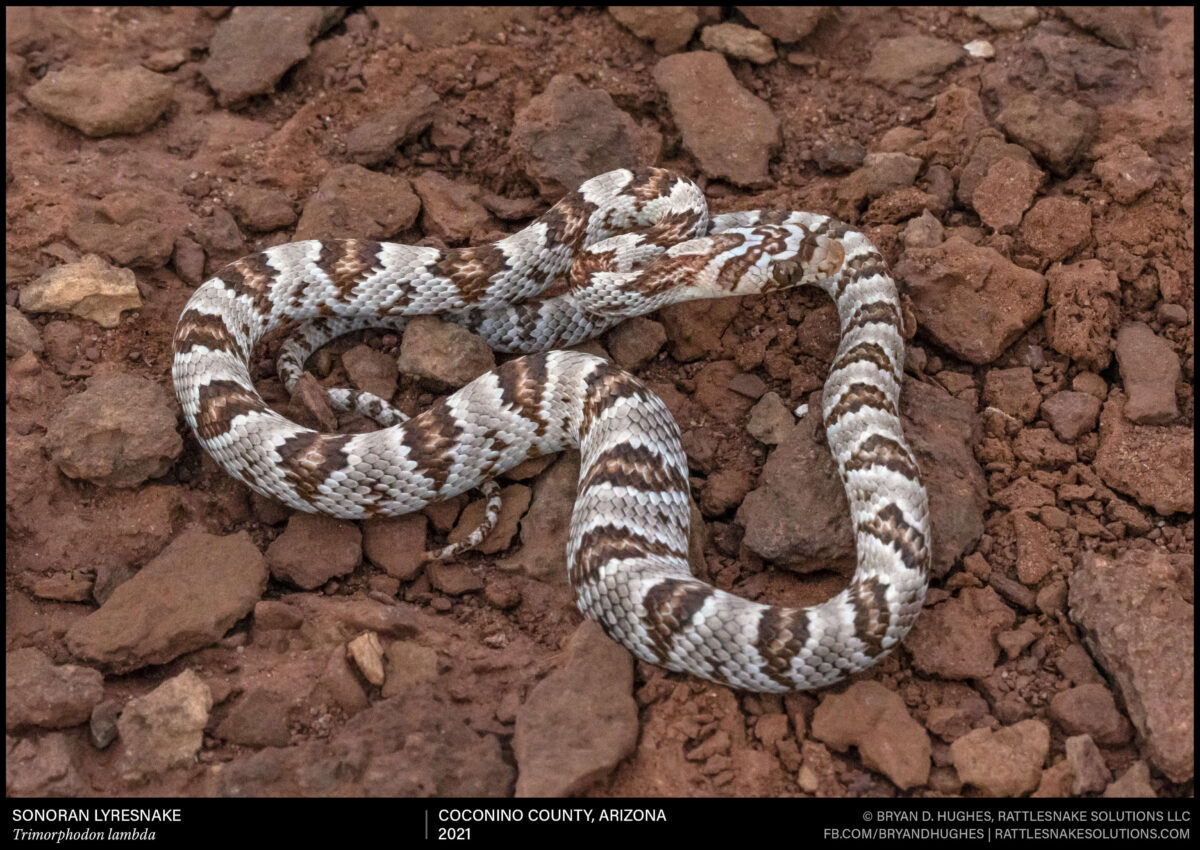
A Sonoran Lyresnake from just south of the Utah border in northern Arizona. I like their appearance in this area along the Colorado River. They’ll often have this high-contrast pattern, sometimes flecked with golds and maroon scales. This one is relatively young, and may take on some of these other colors as it matures.
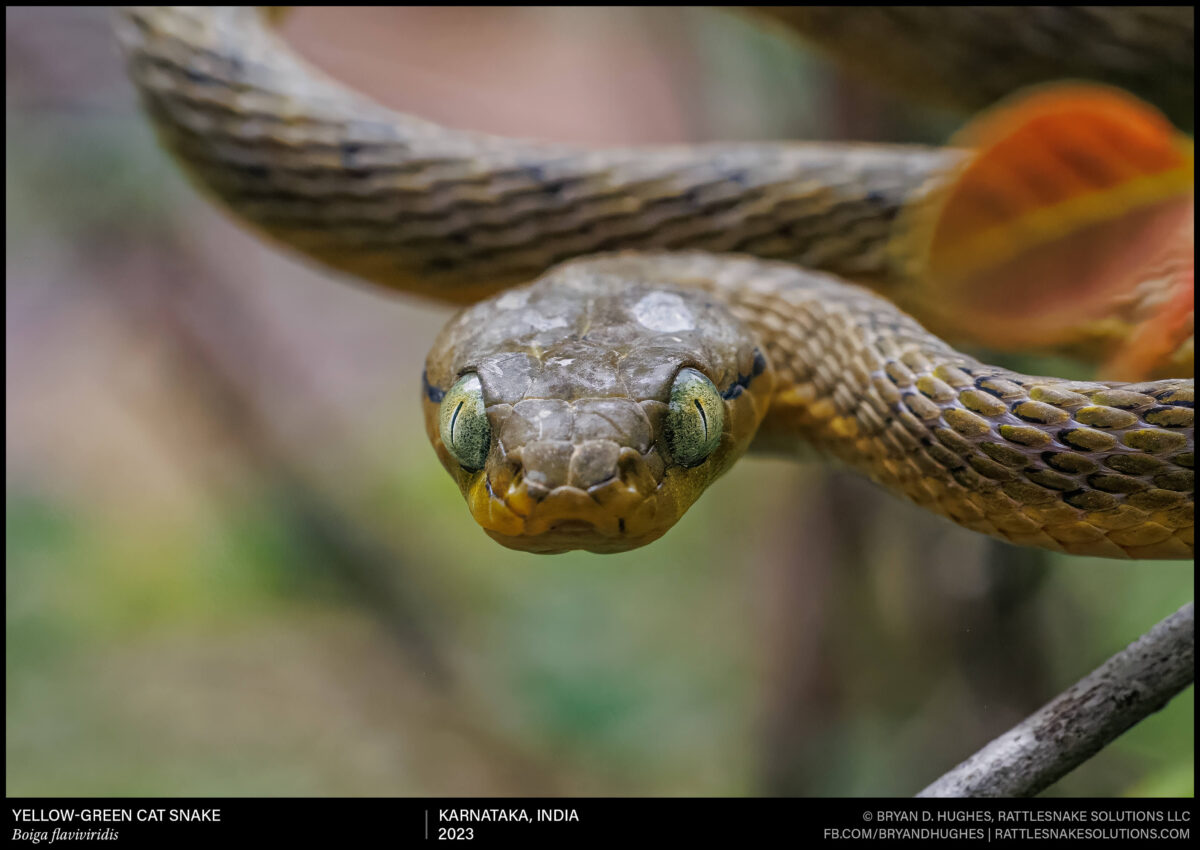
This was a really cool snake to see! A Yellow-Green Cat Snake we found near the end of our time in India a few years ago. The Boiga genus has a relatively mild toxin, which is not likely an emergency but still something to be avoided.