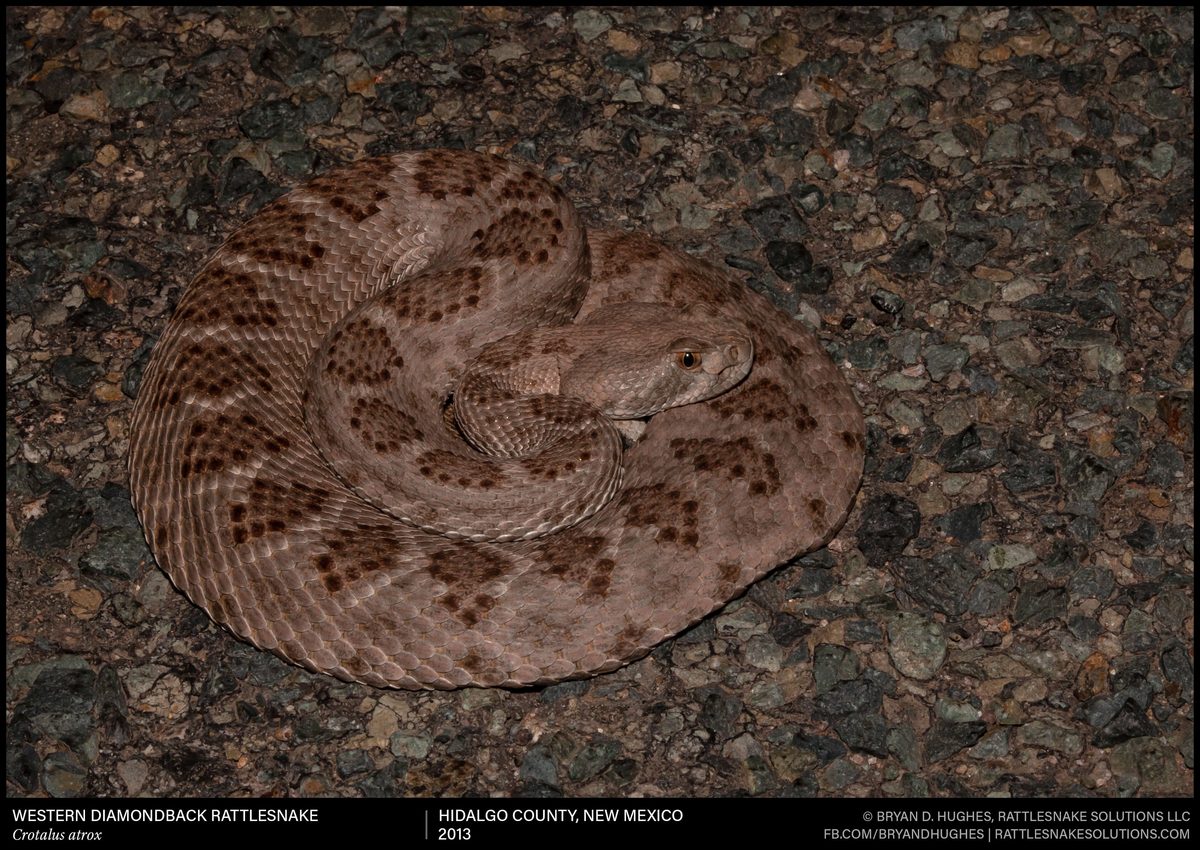
Western Diamondback Rattlesnake from Hidalgo County New Mexico

A Western Diamondback Rattlesnake found in the bootheel of New Mexico many years ago. The diamondbacks in this area have some interesting traits that make them a bit different than those found in the Phoenix and Tucson areas. They’re often pink or rose colored, with a diminished pattern that can fade to a minimal look … and they can change color between darker and lighter tones within hours.
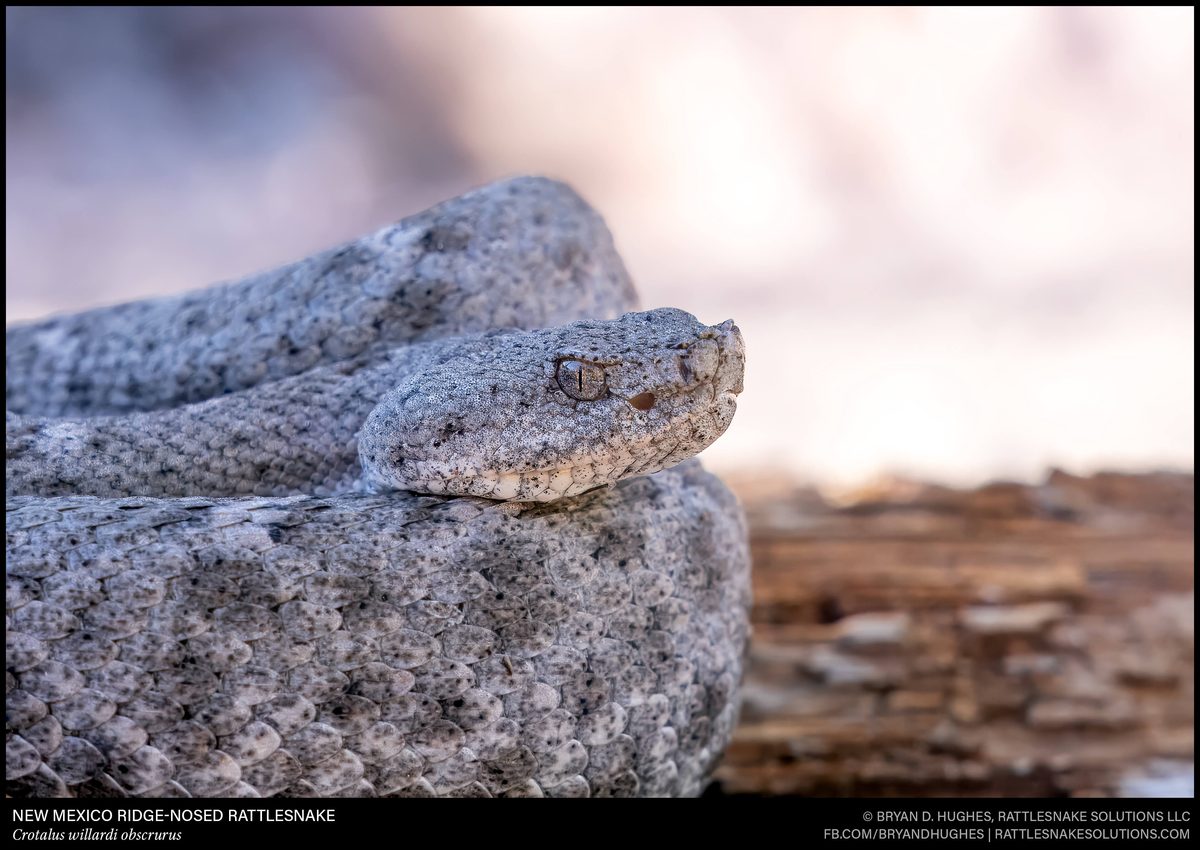
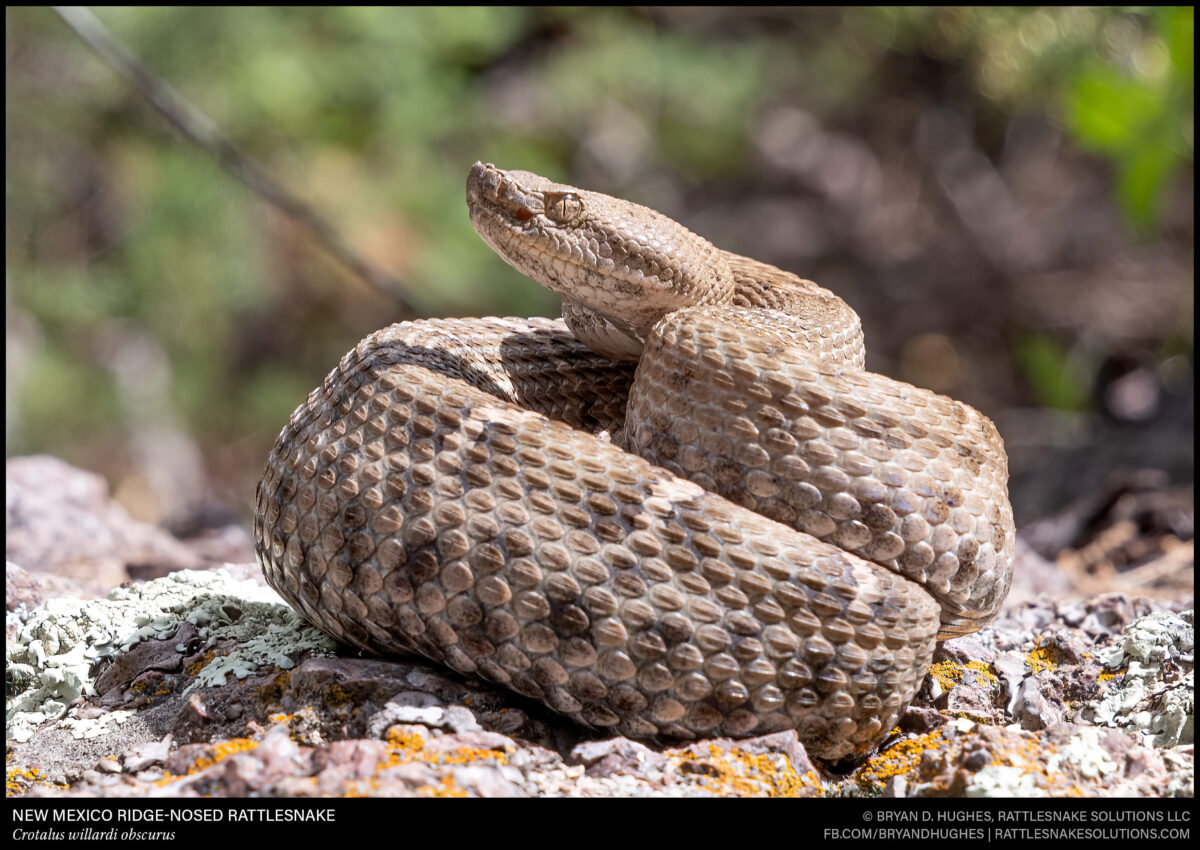
New Mexico Ridge-nosed Rattlesnake

A New Mexico Ridge-nosed Rattlesnake (Crotalus willardi obscurus) from one of the remaining populations within the United States. These are small rattlesnakes adapted for high-elevation, higher-humidity environments than are typical in the surrounding Chihuahuan Desert. This is one of only two rattlesnake species in the country that are listed as Threatened under the Endangered Species Act. Rattlesnake Solutions is fortunate to be among the organizations and agencies involved with a recovery effort to try to bolster the remaining population within Arizona.

Western Diamondback Rattlesnake Crossing The Road

A thin Western Diamondback Rattlesnake stopped for a moment while crossing a dirt road. Often, this behavior is misinterpreted as “sunning”. While snakes may stop to bask like this, in many cases, it’s just that the snake saw the observer first and stopped moving in hopes the perceived predator will not notice it. They don’t know what roads and trails are, however, so imagine it from their perspective: moving along, headed home after a long night of ambush hunting … a monster appears in the distance and comes directly to you! It’s no wonder they then become defensive. But as always, the easy way to remain safe is just not to bother it.