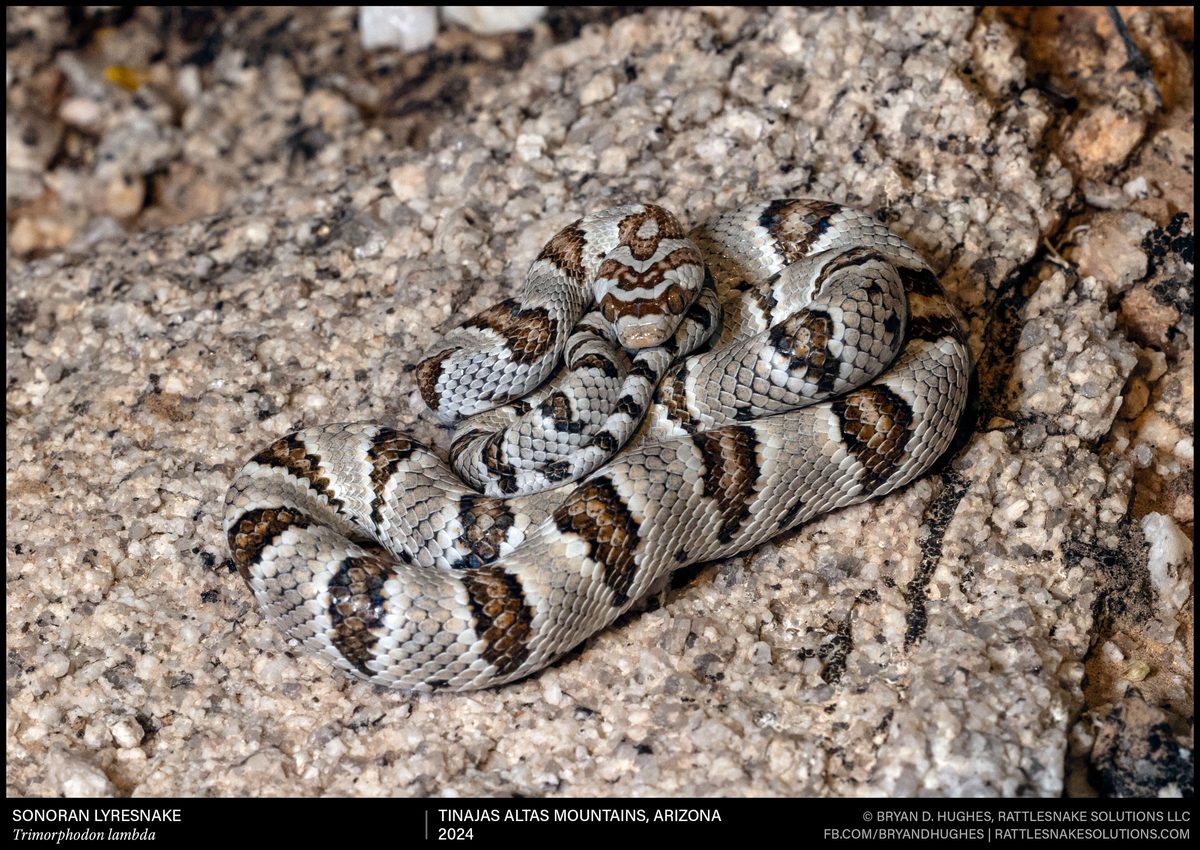
A small Sonoran Lyresnake from the extremely hot, dry desert of Yuma County, Arizona. This is one of a couple that showed up right in camp, and we got some photographs before letting it continue on its way. These cryptic snakes are almost entirely nocturnal, and rarely seen by Arizona residents.
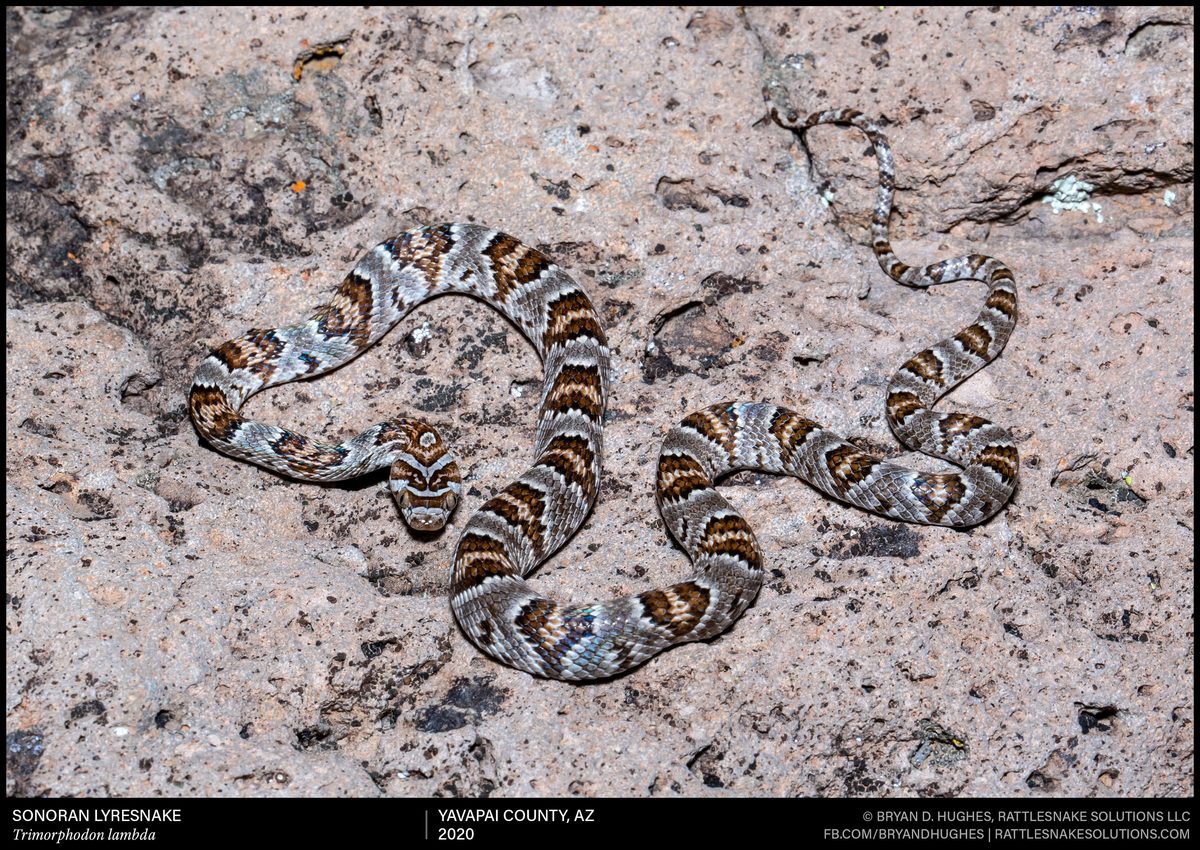
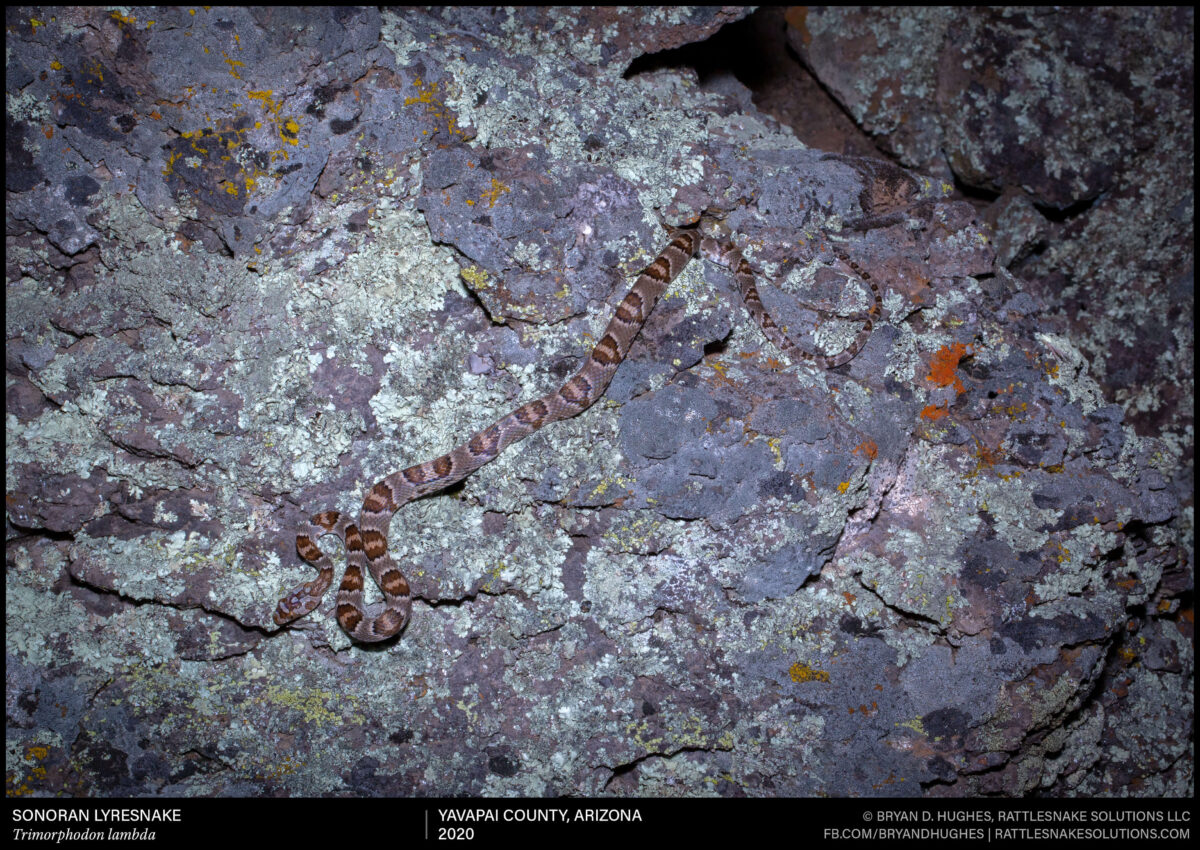
We found this Sonoran Lyresnake on the move on a night hike in Yavapai County sevearl years back. This one is typical of the species for the area, with chaotic brown and tan blotches over a beige body, with a relatively disoganized look compared to some of the more cleanly banded version found elsewhere. They’re slightly venomous, feeding on lizards, rodents, and bats. It’s not harmful to humans, but I still avoid a bite like I would from any snake.
Devitt, T. J. (2006). Phylogeography of the Western Lyresnake (Trimorphodon biscutatus): Testing aridland biogeographical hypotheses across the Nearctic–Neotropical transition. Molecular Ecology, 15, 4387–4407. https://doi.org/10.1111/j.1365-294X.2006.03015.x
Mackessy, S. P., & Saviola, A. J. (2016). Understanding biological roles of venoms among the Caenophidia: The importance of rear-fanged snakes. Integrative and Comparative Biology, 56(5), 1004–1012. https://academic.oup.com/icb/article/56/5/1004/2420638
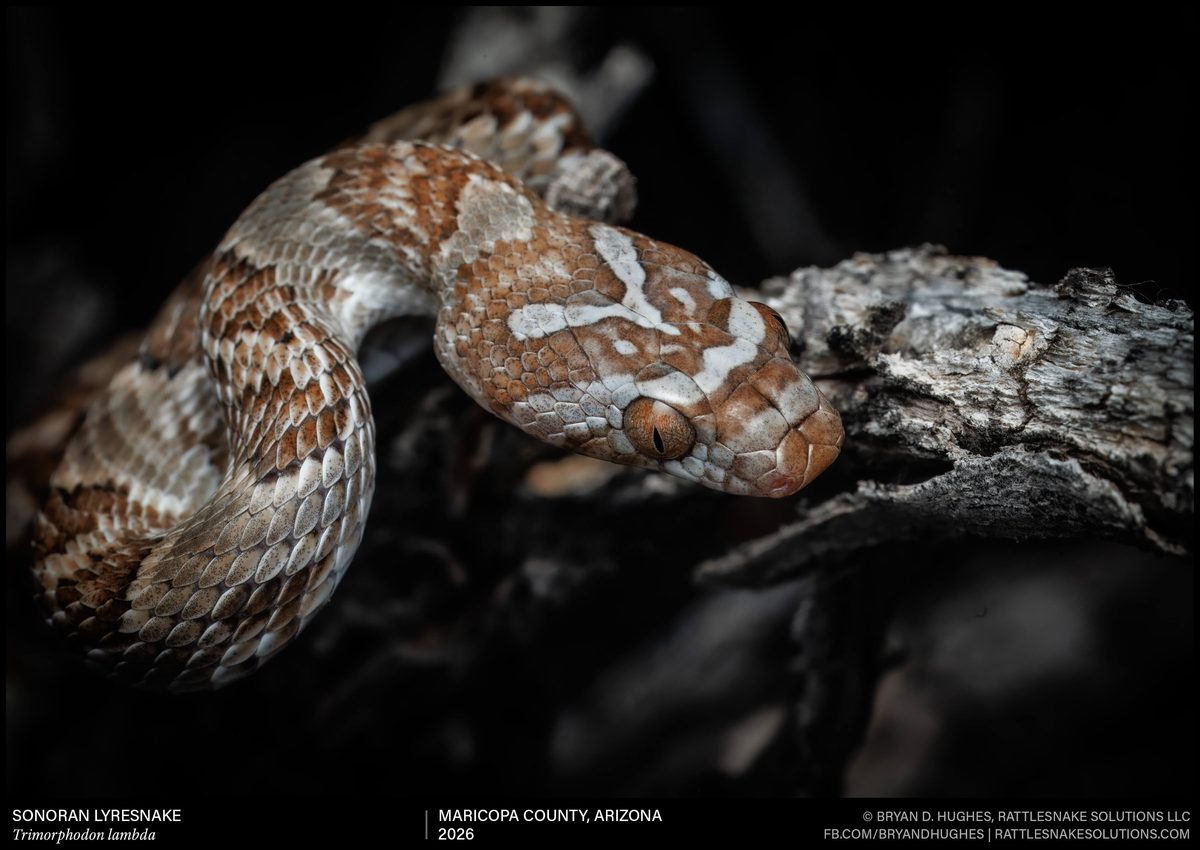
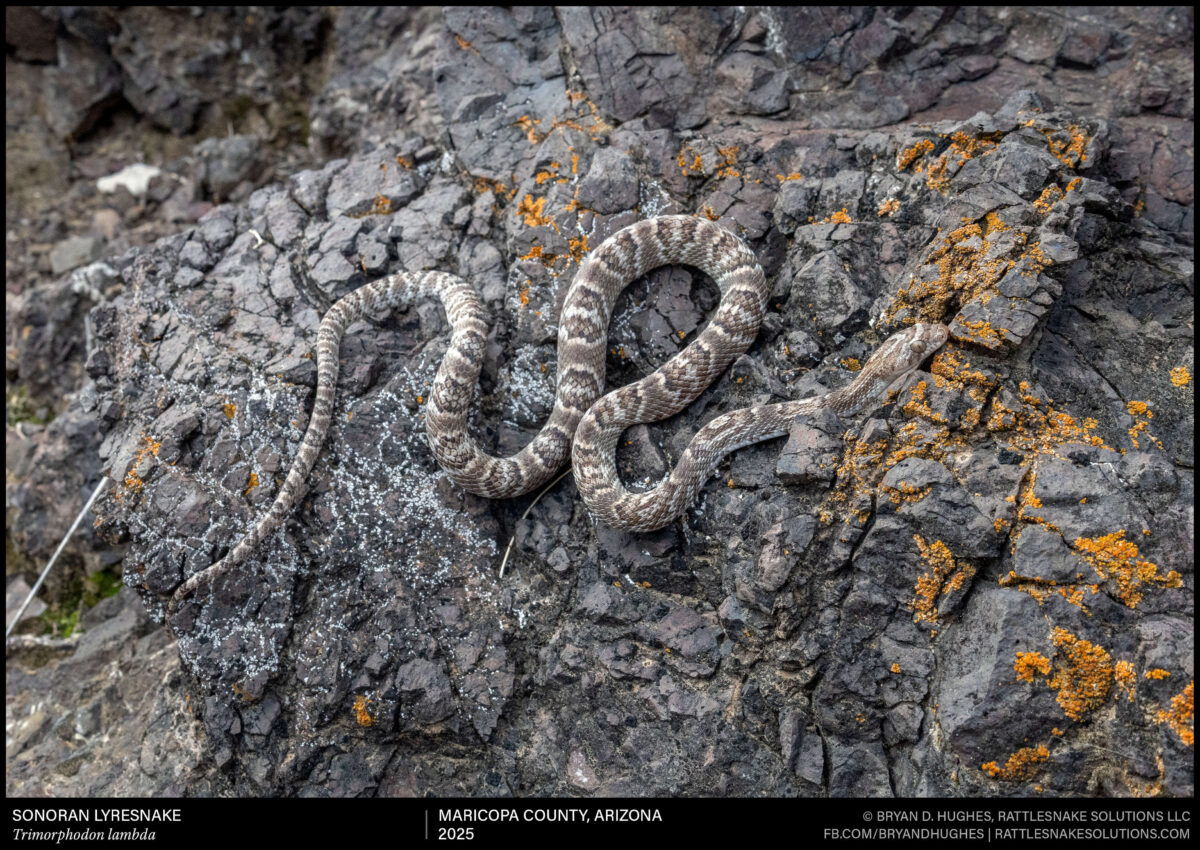
Up close with a Sonoran Lyresnake (Trimorphodon lambda) from Maricopa County, Arizona. These shy snakes are almost entirely nocturnal, which you’d likely be able to figure out from just those big bug-eyes. They’re mildly venomous, rear-fanged snakes, but generally harmless to humans and pets.
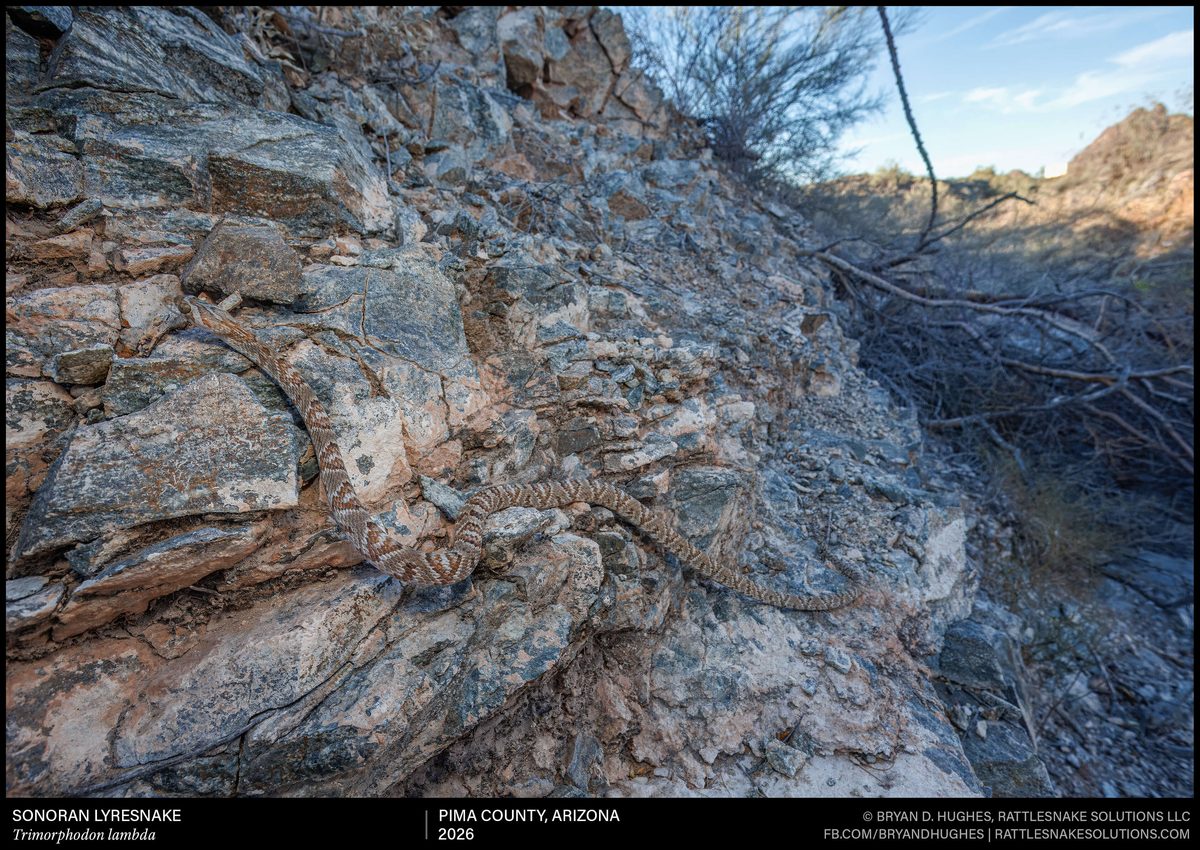
A Sonoran Lyresnake (Trimorphodon lambda) from border area of Arizona/Mexico earlier in the year. These are among the least often seen species of snakes in the Phoenix and Tucson areas, despite being quite common in the right habitat.
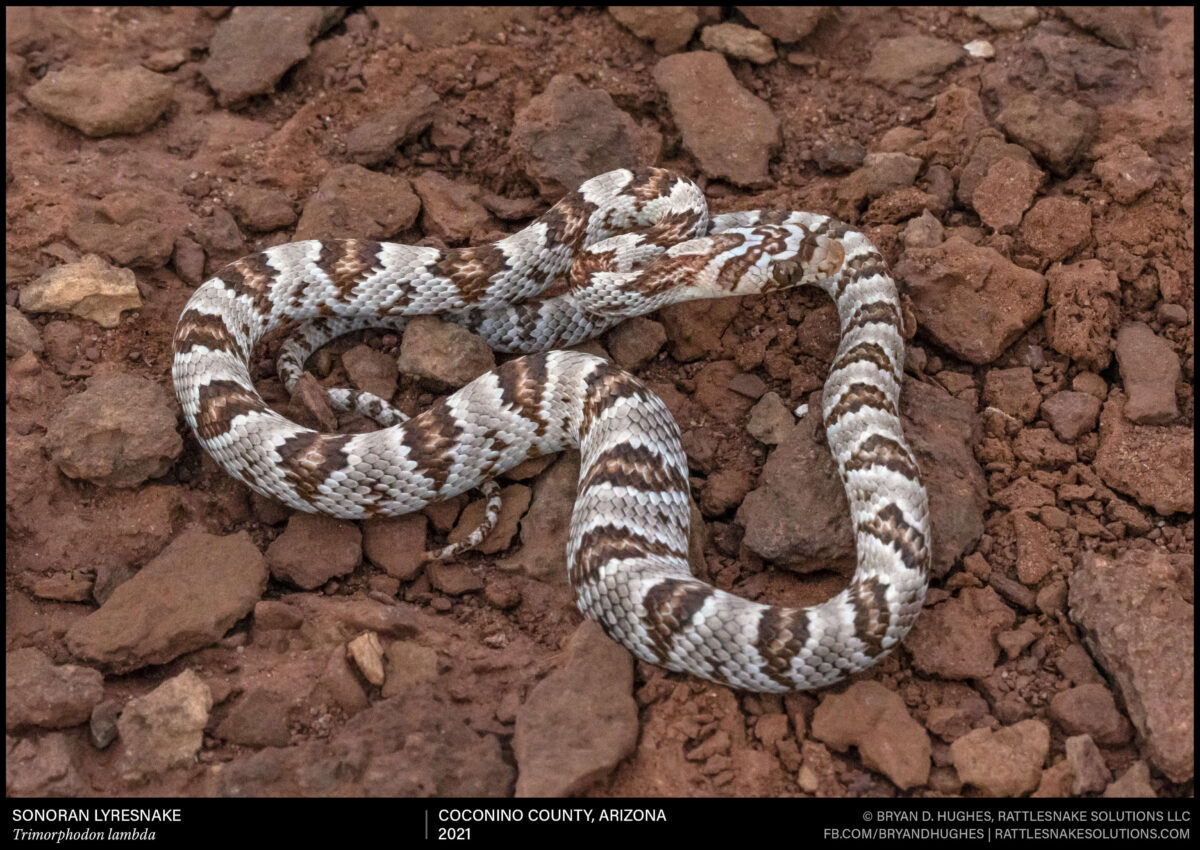
A Sonoran Lyresnake from just south of the Utah border in northern Arizona. I like their appearance in this area along the Colorado River. They’ll often have this high-contrast pattern, sometimes flecked with golds and maroon scales. This one is relatively young, and may take on some of these other colors as it matures.
A Sonoran Lyresnake seen late at night on a hike in a remote mountain range in extreme southwestern Arizona. These cryptic, nocturnal snakes live in rocky areas, where they take a variety of prey using venom. But, unless you’re a lizard, you have nothing to fear from this snake … if you ever even see one.
A beast of a Lyresnake! These are typically slender snakes, but this has been very successful. At first it looked like a gophersnake, with a chunky build and round face. These are cryptic snakes that few people that live in Arizona, even born here, will ever see.
Sonoran Lyresnake from the southwestern corner of Arizona. These snakes are common in the right habitat, but most lifelong Arizona residents will never see one. The large eyes indicate one of the reasons: they’re primarily nocturnal, often moving late at night long after temperatures have cooled enough to have stopped most other snake activity.