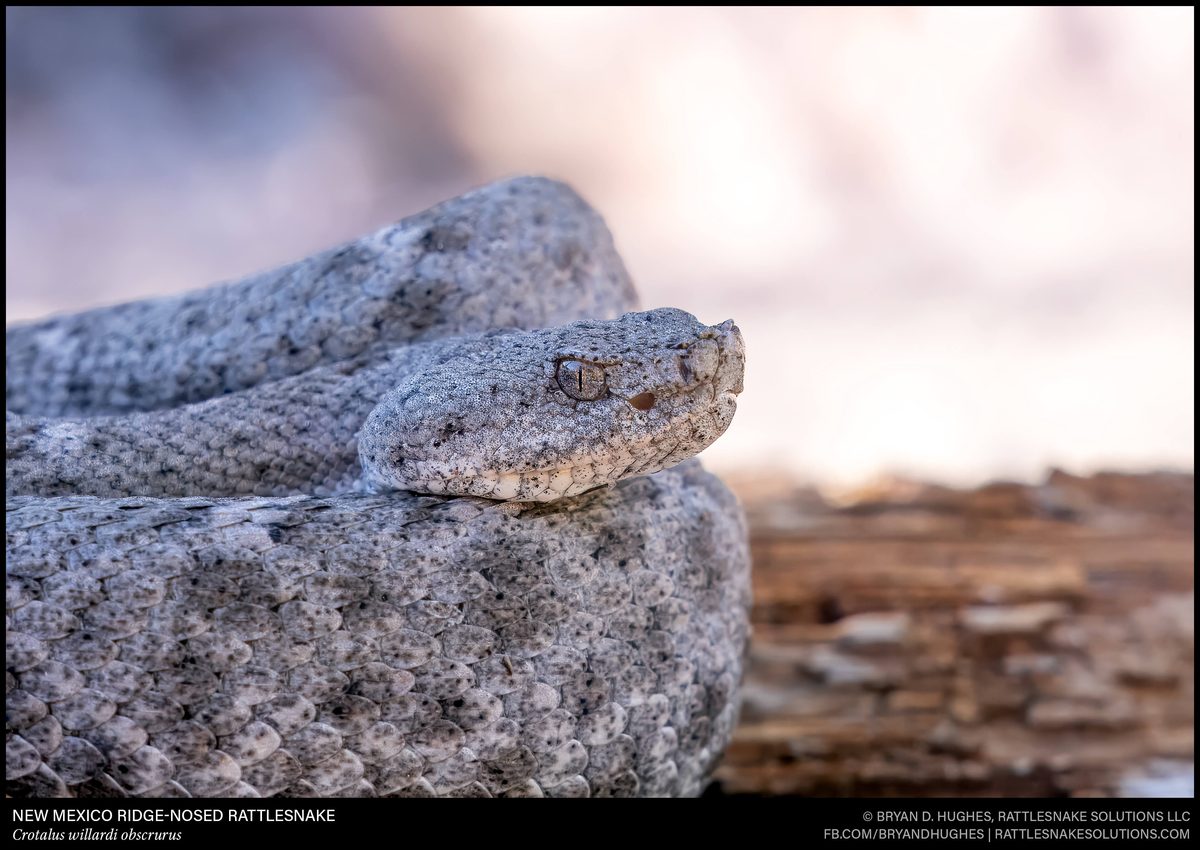
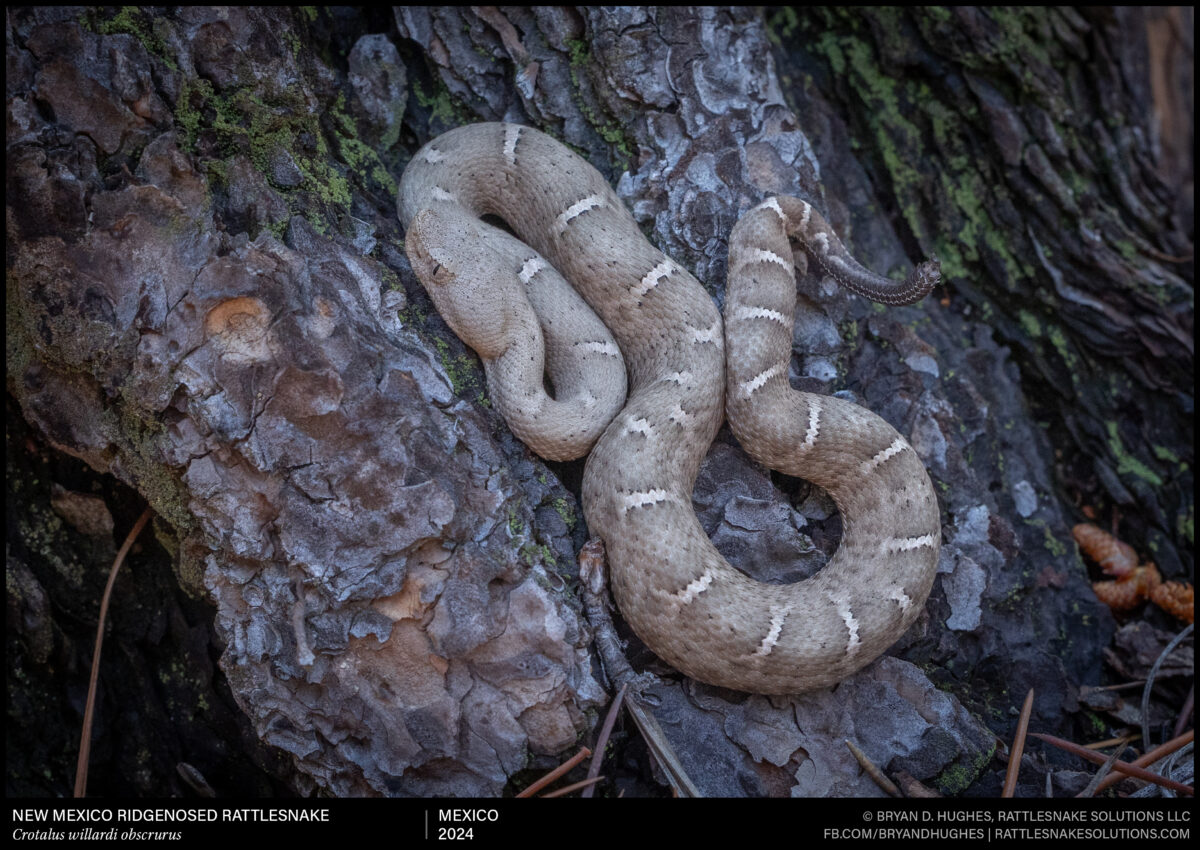
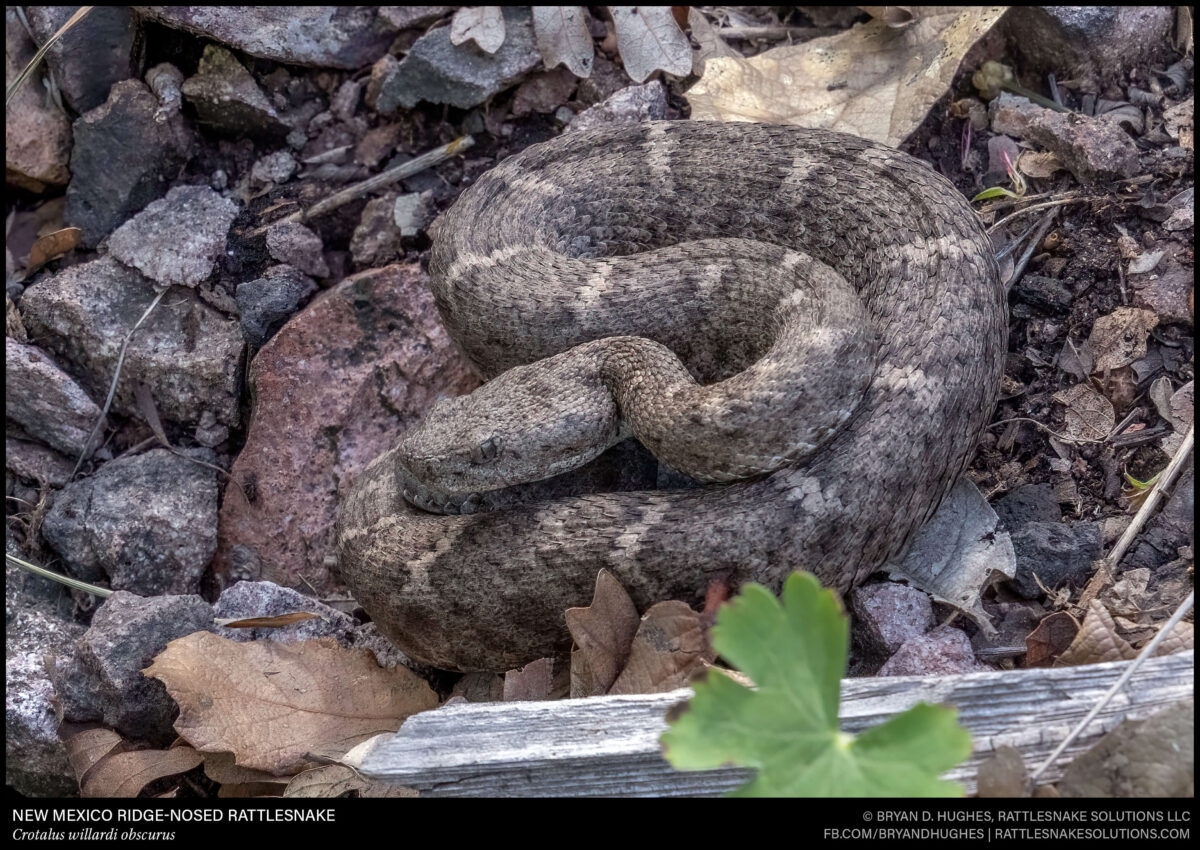
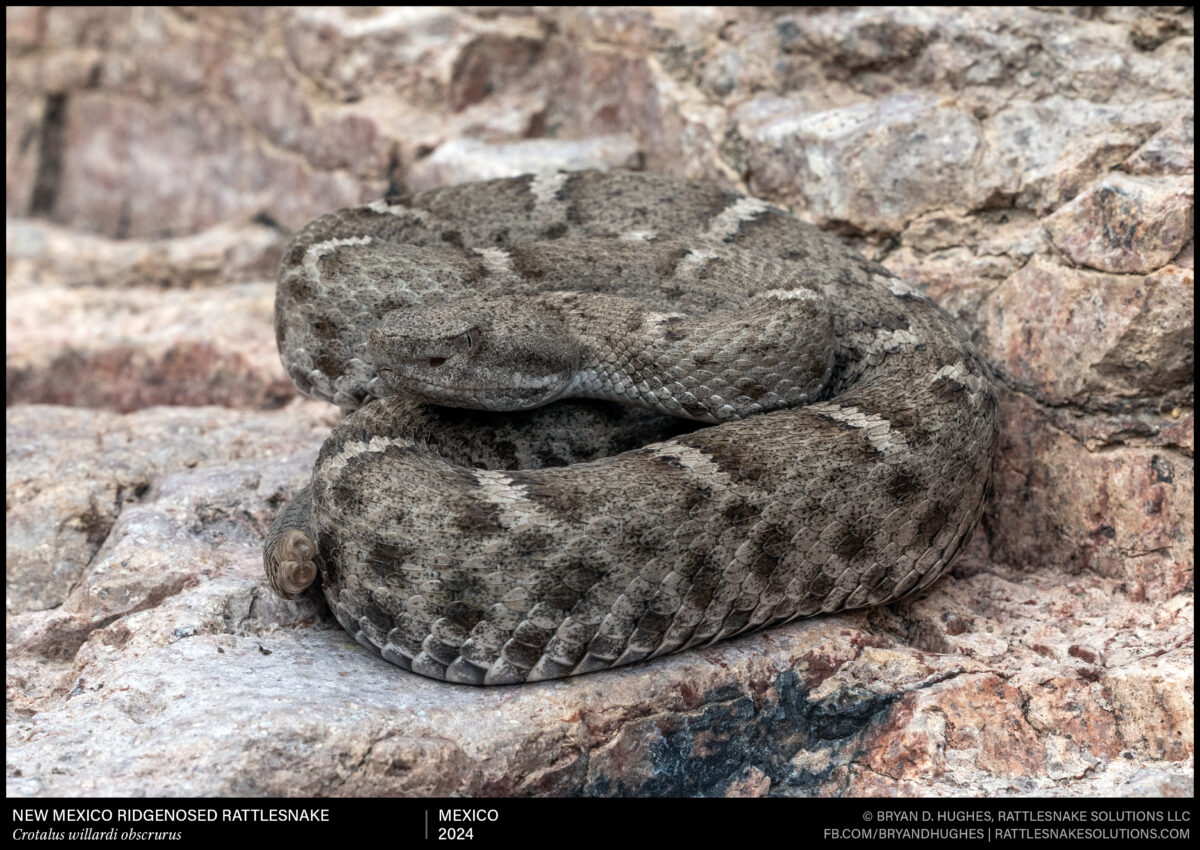
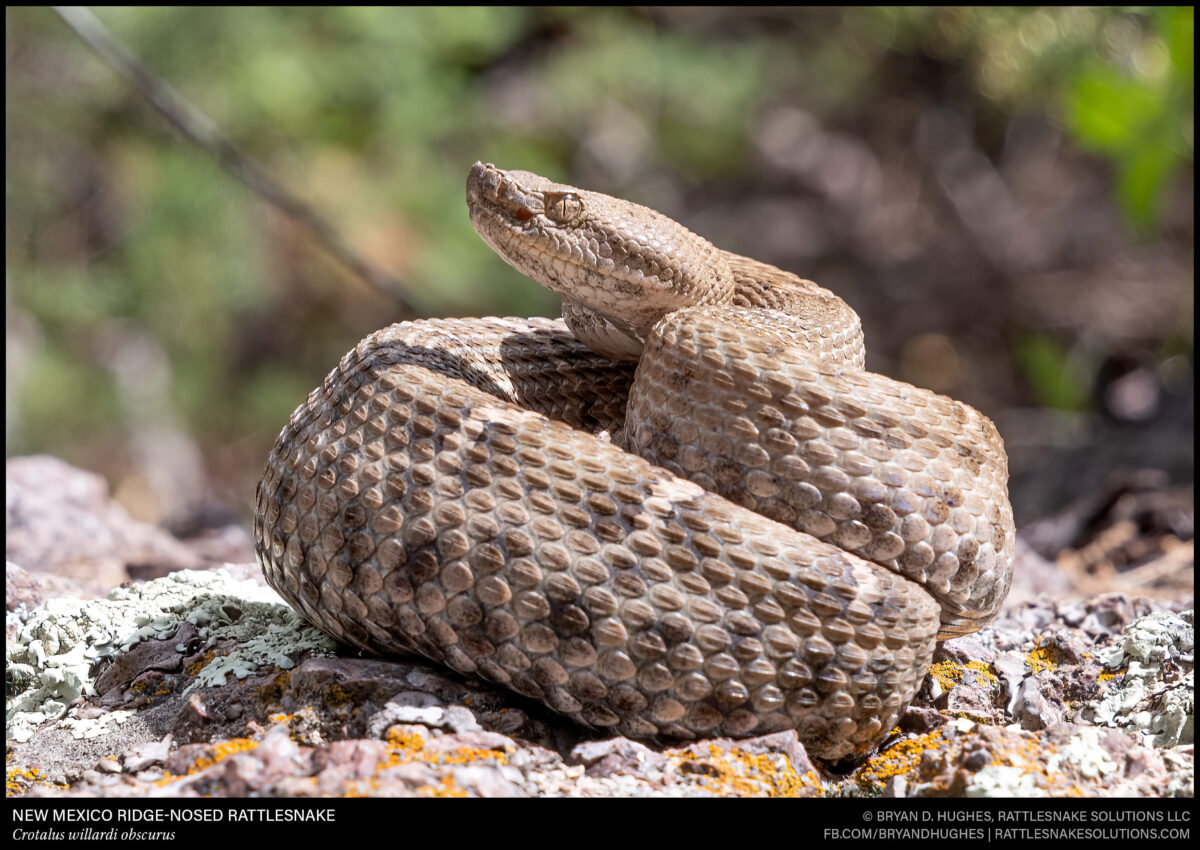
A New Mexico Ridge-nosed Rattlesnake (Crotalus willardi obscurus) from one of the remaining populations within the United States. These are small rattlesnakes adapted for high-elevation, higher-humidity environments than are typical in the surrounding Chihuahuan Desert. This is one of only two rattlesnake species in the country that are listed as Threatened under the Endangered Species Act. Rattlesnake Solutions is fortunate to be among the organizations and agencies involved with a recovery effort to try to bolster the remaining population within Arizona.
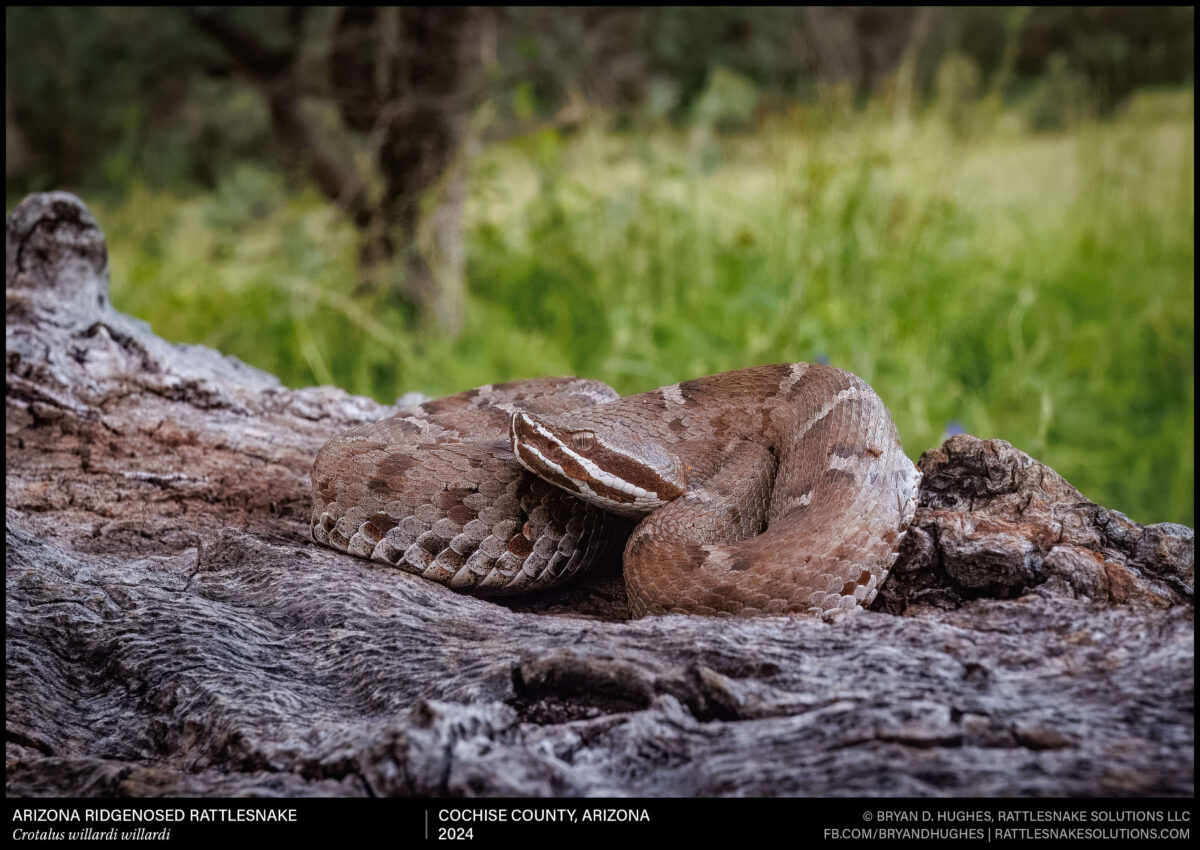
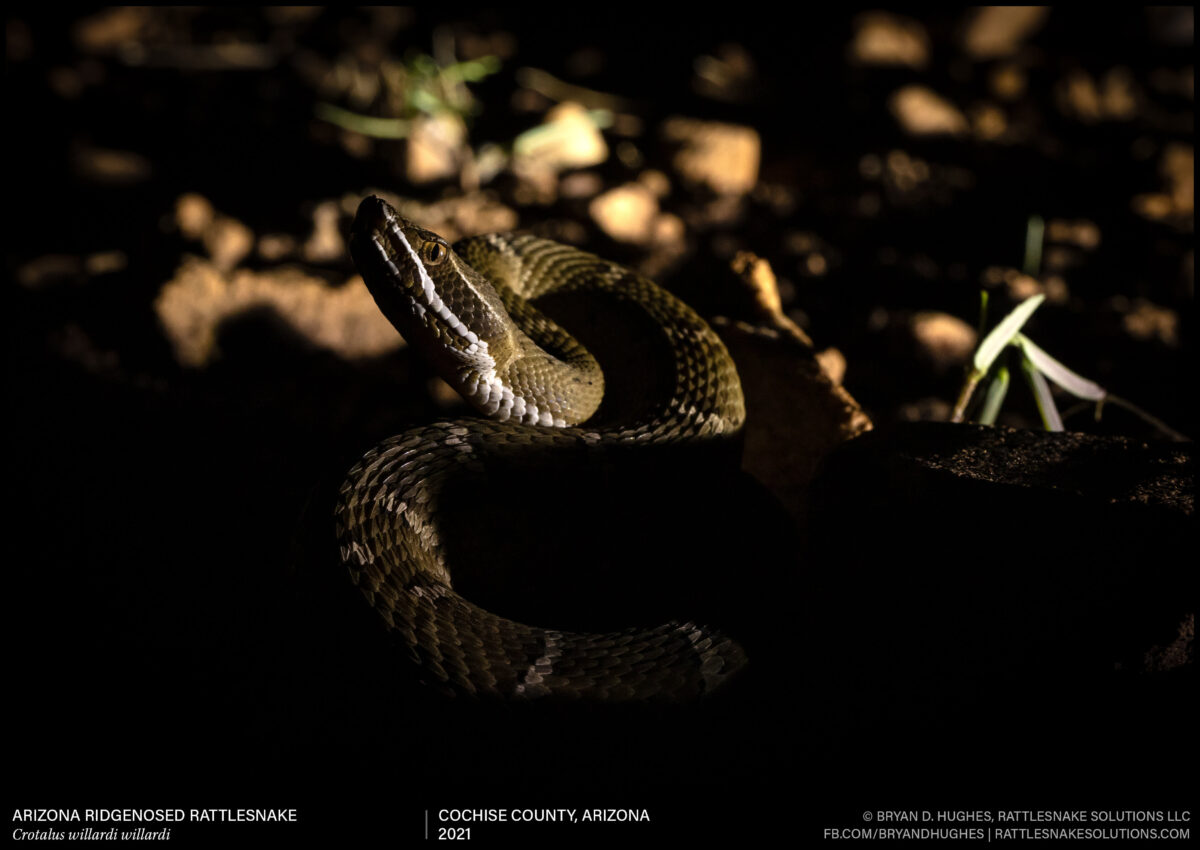
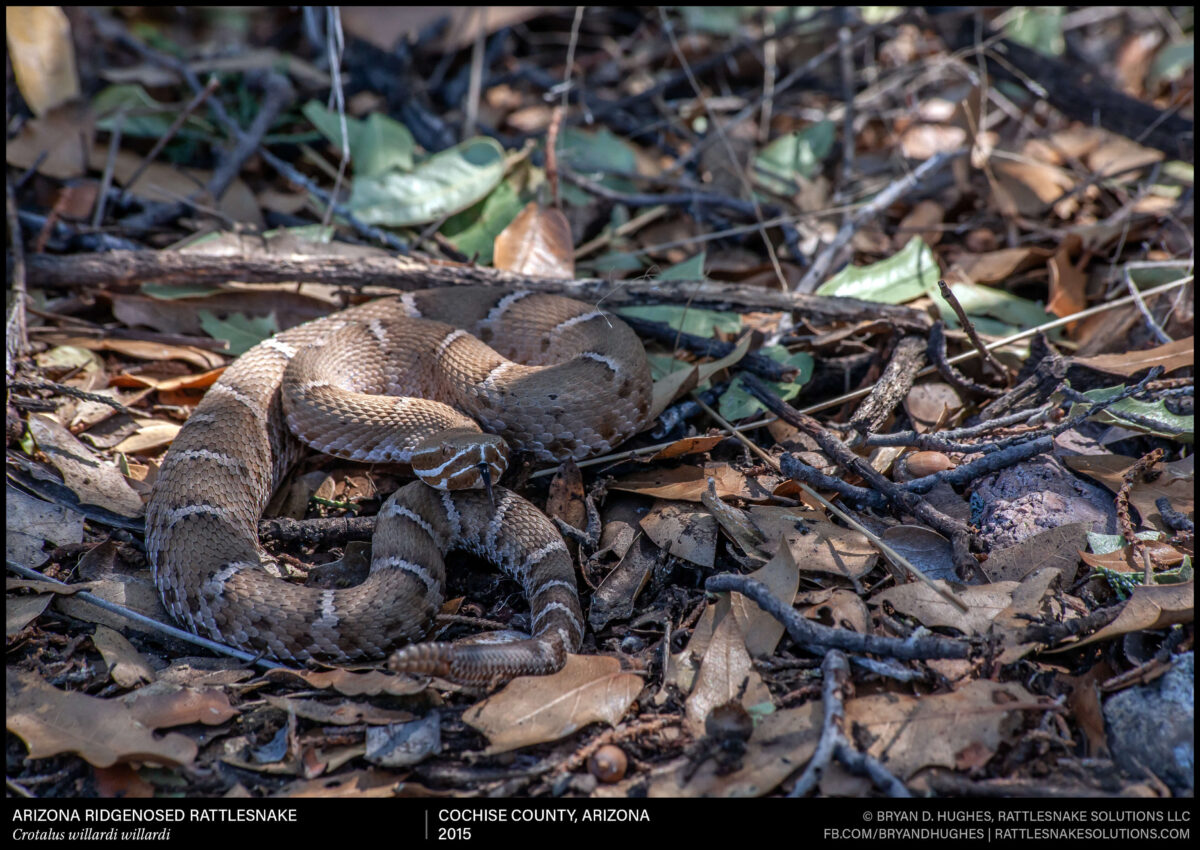
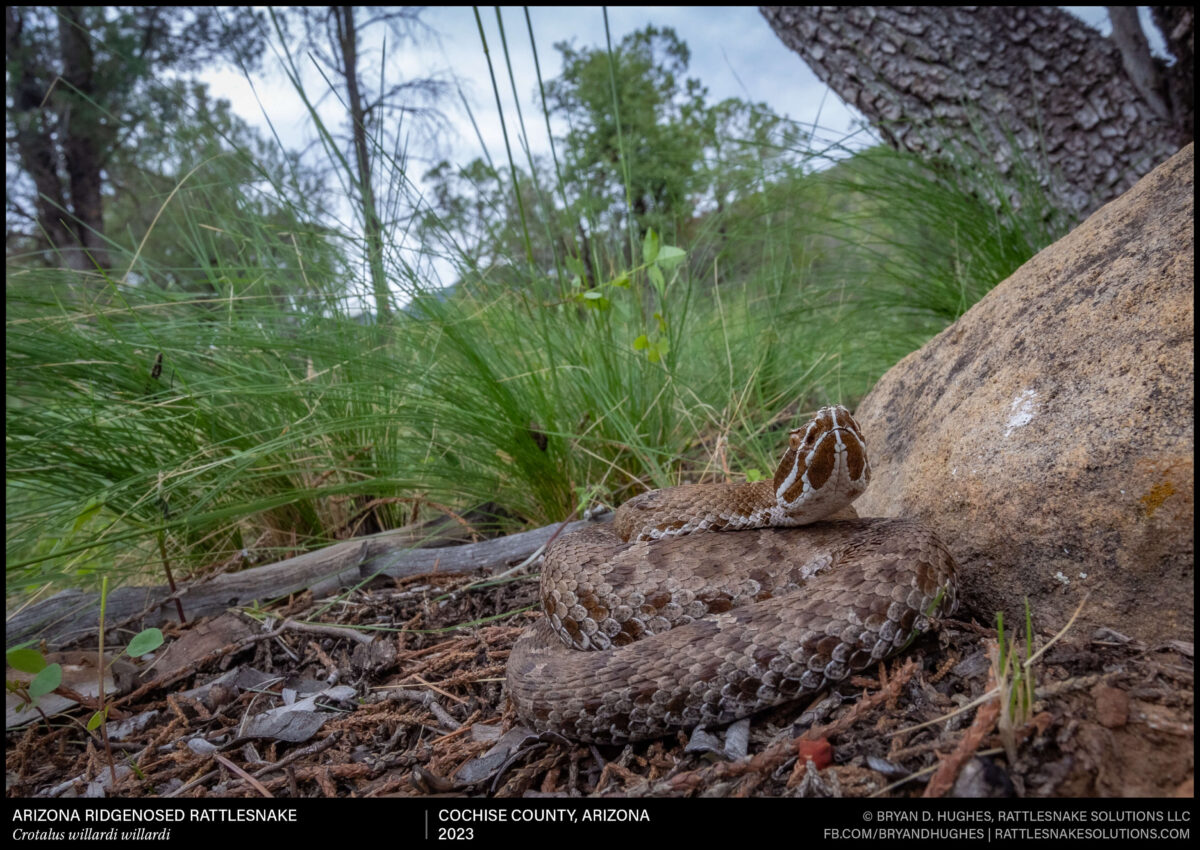
An Arizona Ridgnosed Rattlesnake from Cochise County, Arizona. This is a small rattlesnake that is found in a handful of mountainous areas in the southeastern corner of the state. A hiker may encounter one if they are in the Santa Rita, Patagonia, Huachuca, Canelo, or Whetstone ranges.
Interestingly, every rancher and long-term resident of those areas that I’ve personally spoken to about this species has no idea what I’m talking about. This mirrors many other instances that have taught me one thing: living in an area for a long time, even being born and raised there, does not grant any particular expertise of the animals that live there.
This snake has relatively weak venom for a rattlesnake, but it is still an emergency situation where antivenom should be sought after. It would be hard to find a situation where one would envenomate a person without actually picking it up.
Holzman, S. D., Massey, D. J., Clements, A., Boesen, K. J., & Shirazi, F. M. (2018). Arizona Ridge-nosed rattlesnake envenomation: Case report of a personal encounter with the official state reptile of Arizona, Crotalus willardi willardi. Toxicon, 151, 84–88. https://doi.org/10.1016/j.toxicon.2018.07.001
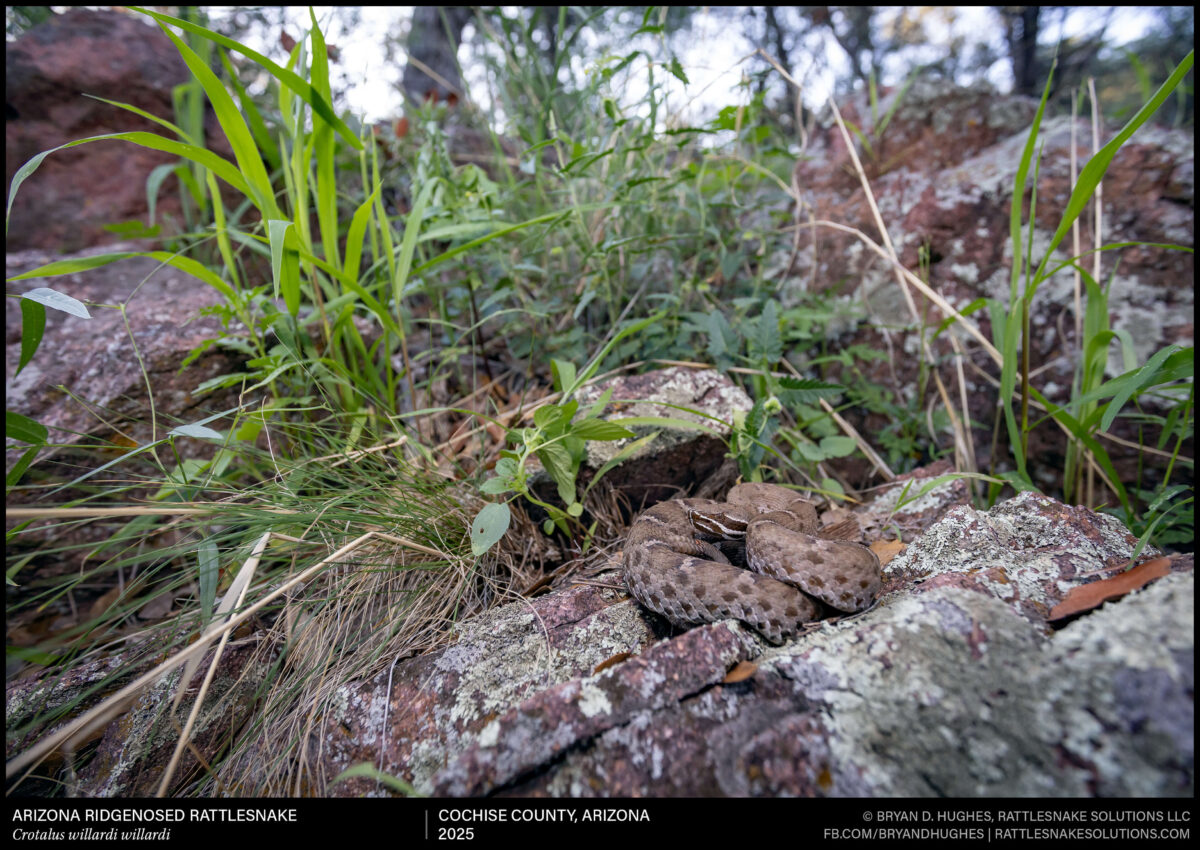
An Arizona Ridgenosed Rattlesnake in southeastern Arizona. These small rattlesnakes are found in bunchgrass and oak leaf litter at elevations above around 4,500′. Though they may be locally abundant, most of the long-term locals asked in the area about them have no idea it exists.
Buontempo, M. J. (2024). Evolutionary history of a specialized and diverse highland snake complex (Crotalus willardi) (Doctoral dissertation, University of Texas at El Paso). https://scholarworks.utep.edu/cgi/viewcontent.cgi?article=5226&context=open_etd