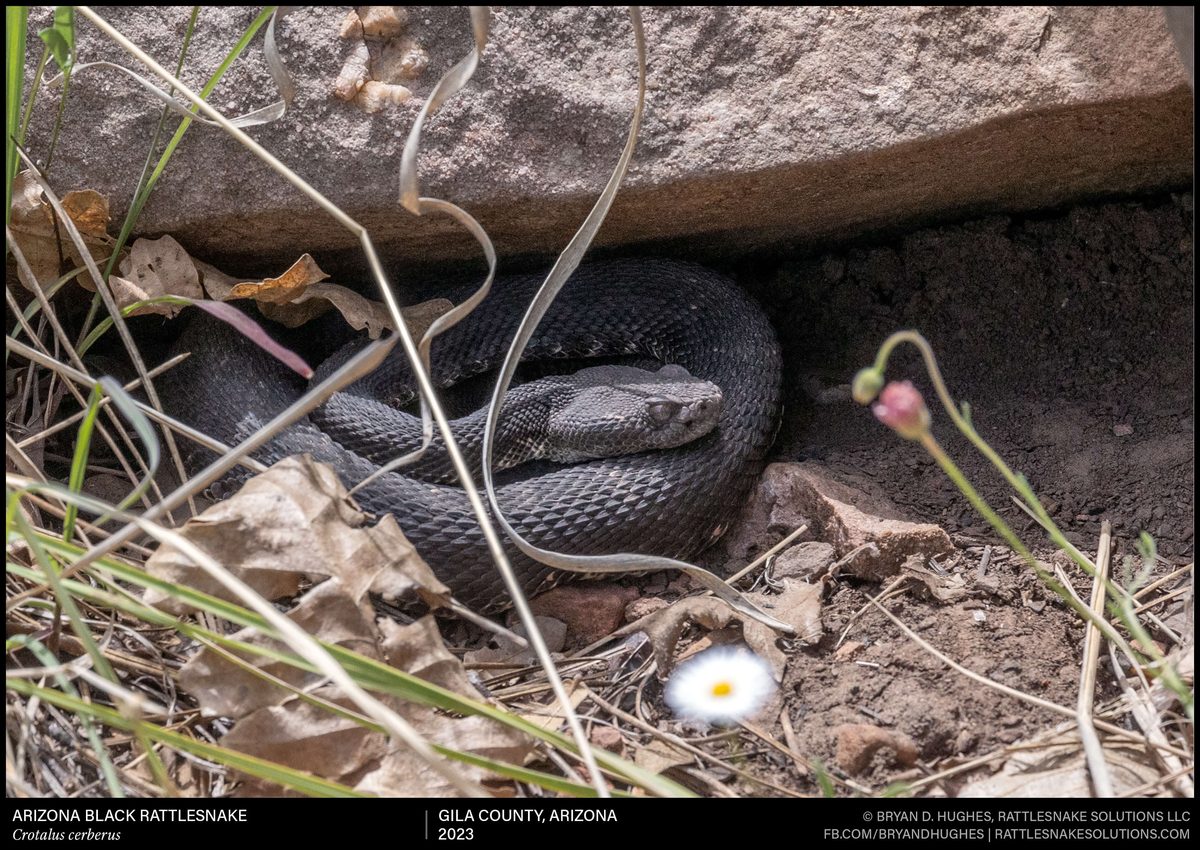
An Arizona Black Rattlesnake hanging out at the entrance of her den. She, and several other pregnant (gravid) females, remain here all summer. When it’s time for the babies to be born, they will be right where they need to be several weeks later when temperatures cool and it’s time for their first hibernation.
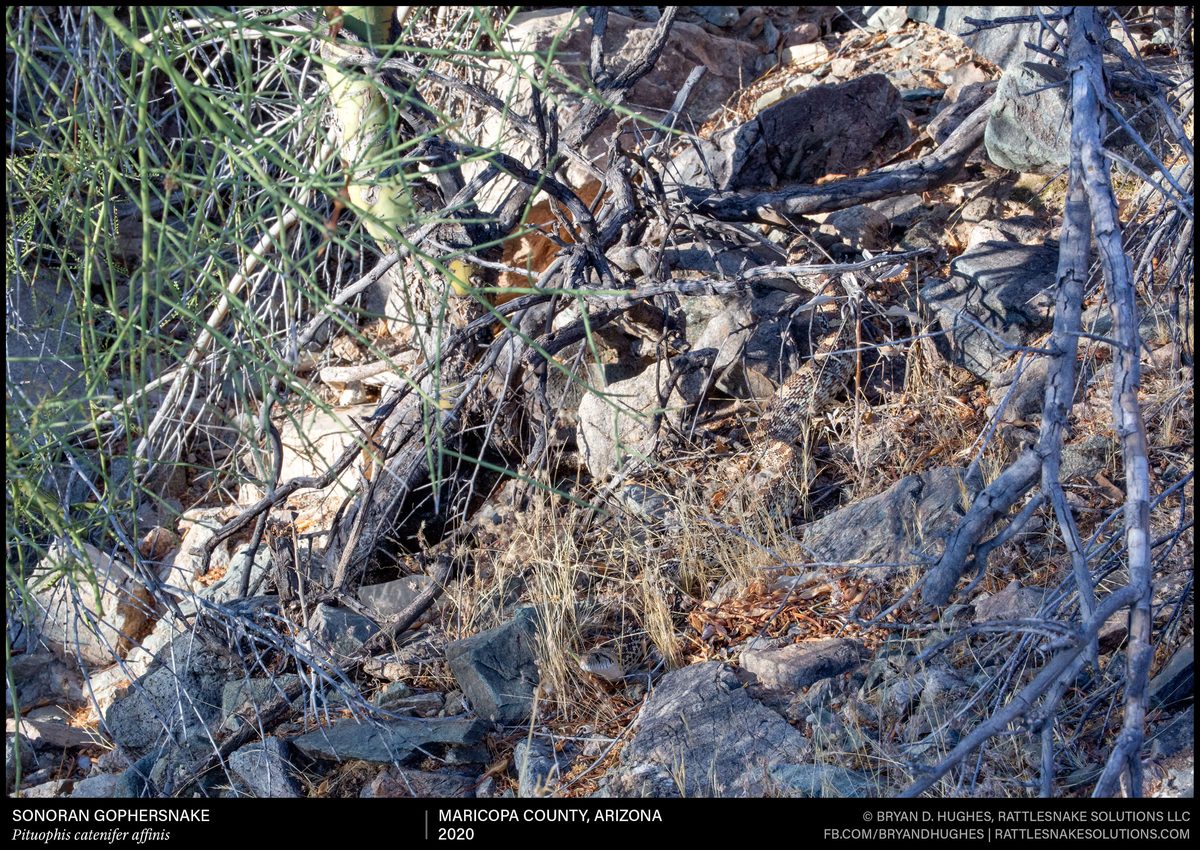
A Sonoran Gophersnake moving to cover for the day can be difficult to spot. It’s chaotic pattern can quickly disappear in the noise of high-contrast shadows and filtered light. All it needs to do is hold still for a few moments, and most will walk right by it without ever knowing there was a snake there.
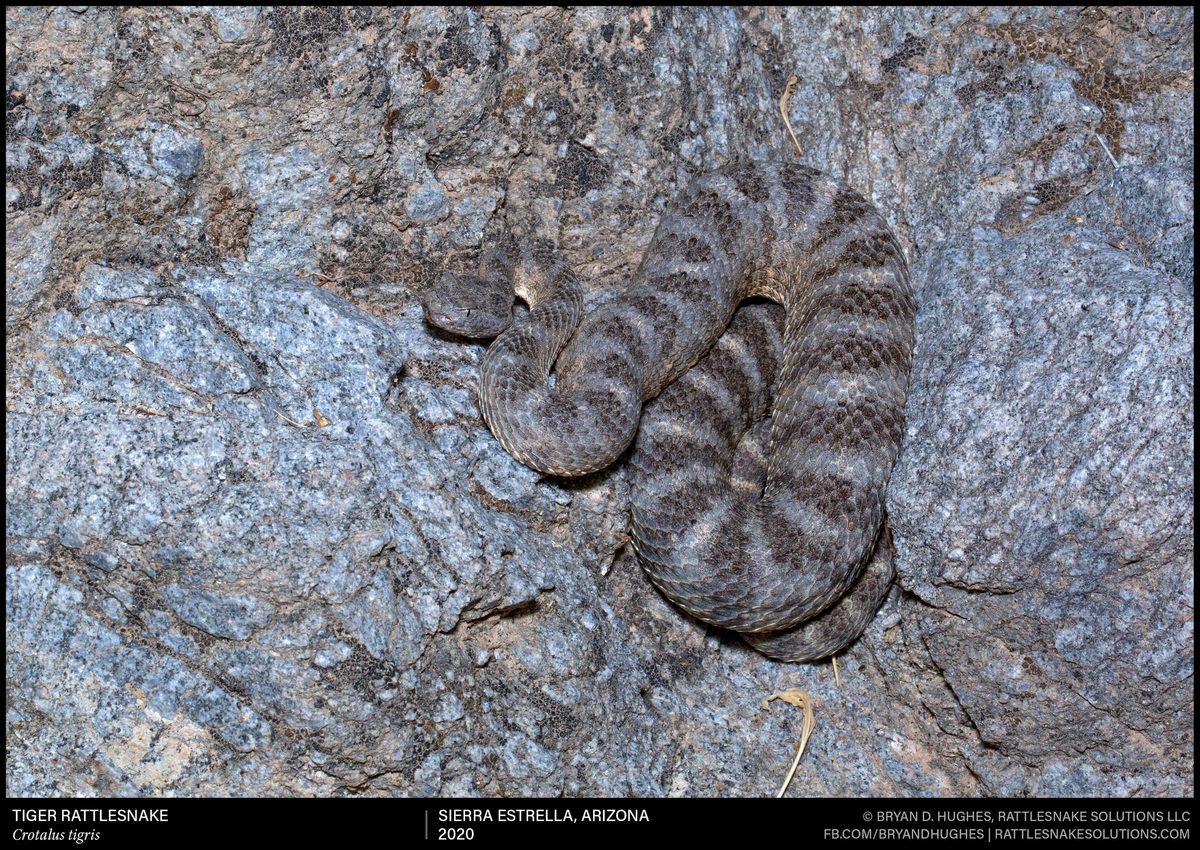
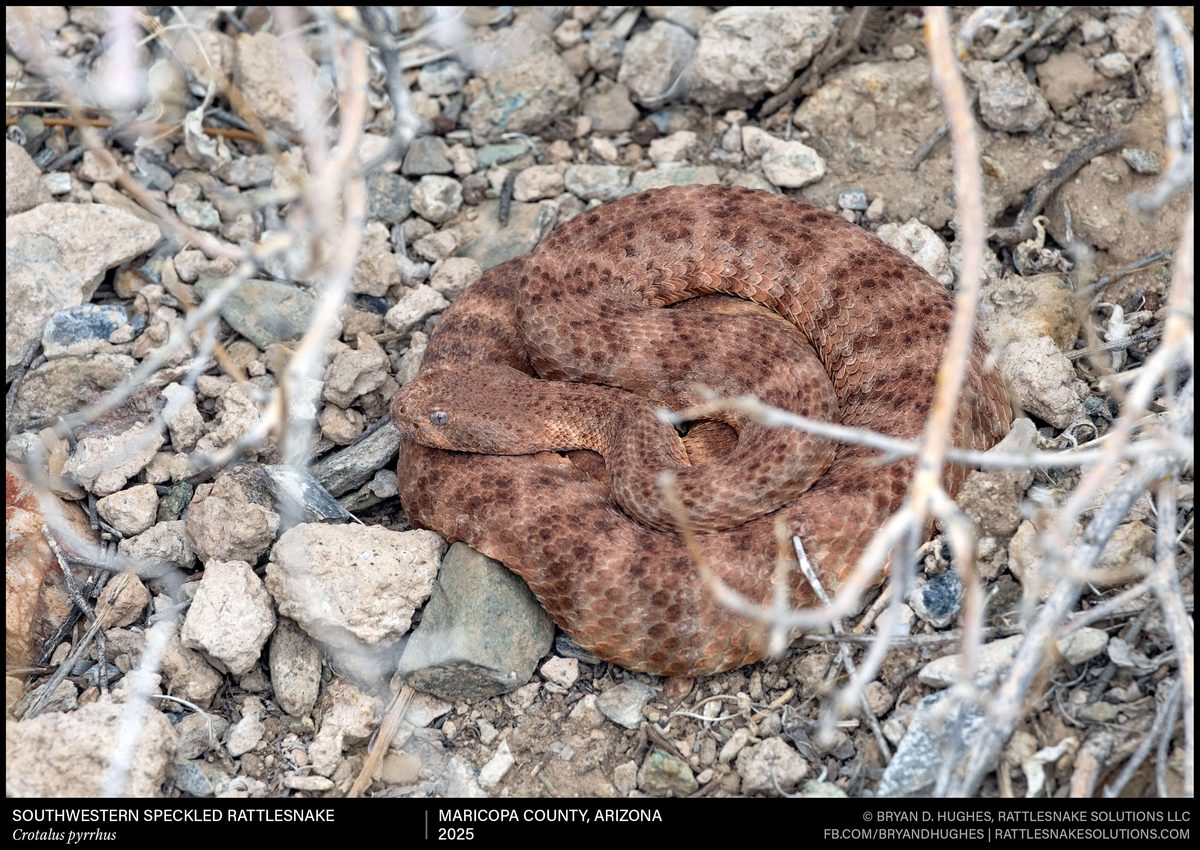
I found this Tiger Rattlesnake on a survey of a county park on a ridiculously hot night. Not many snakes were out, but I did manage to find several of these, as well as a few other odds and ends. The geology of the mountain is interesting and changes quite a bit from one tip of the range to the other. In the North end, this species is much more commonly encountered than the Speckled Rattlesnakes I was looking for.
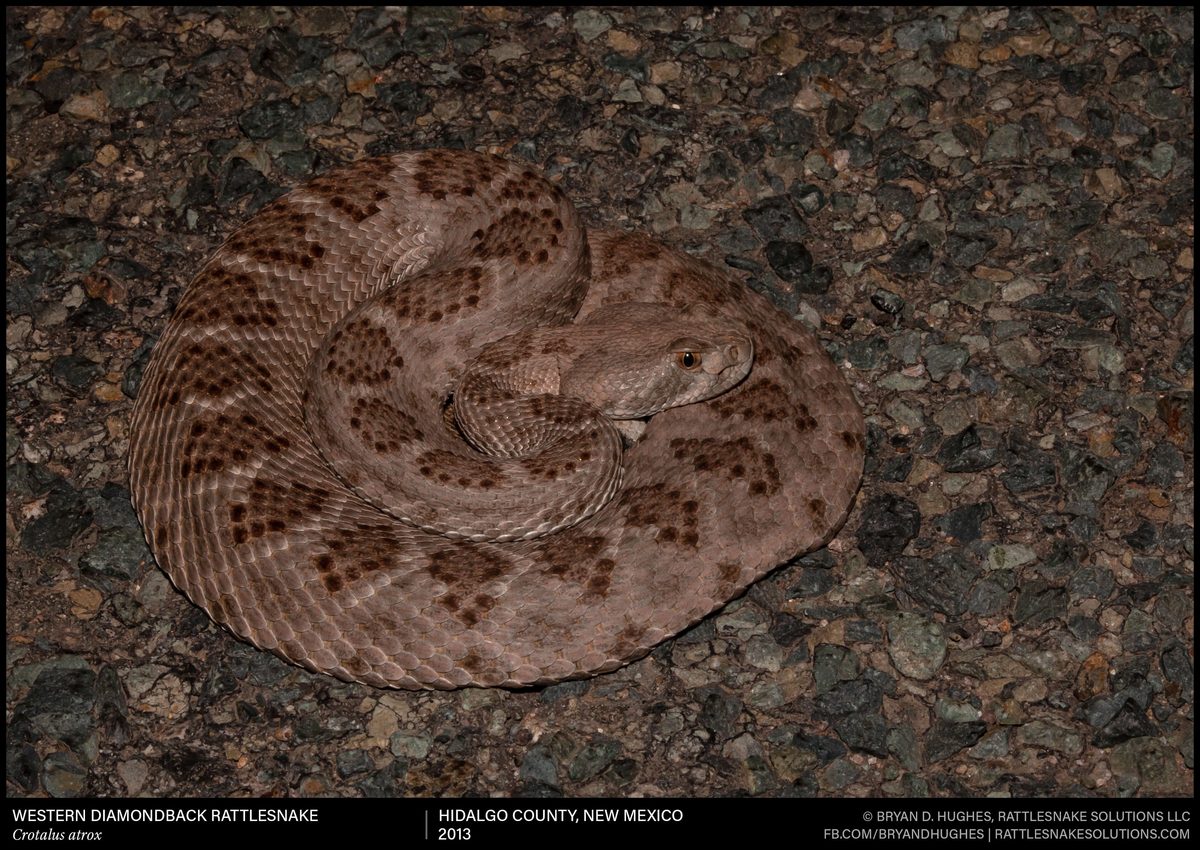
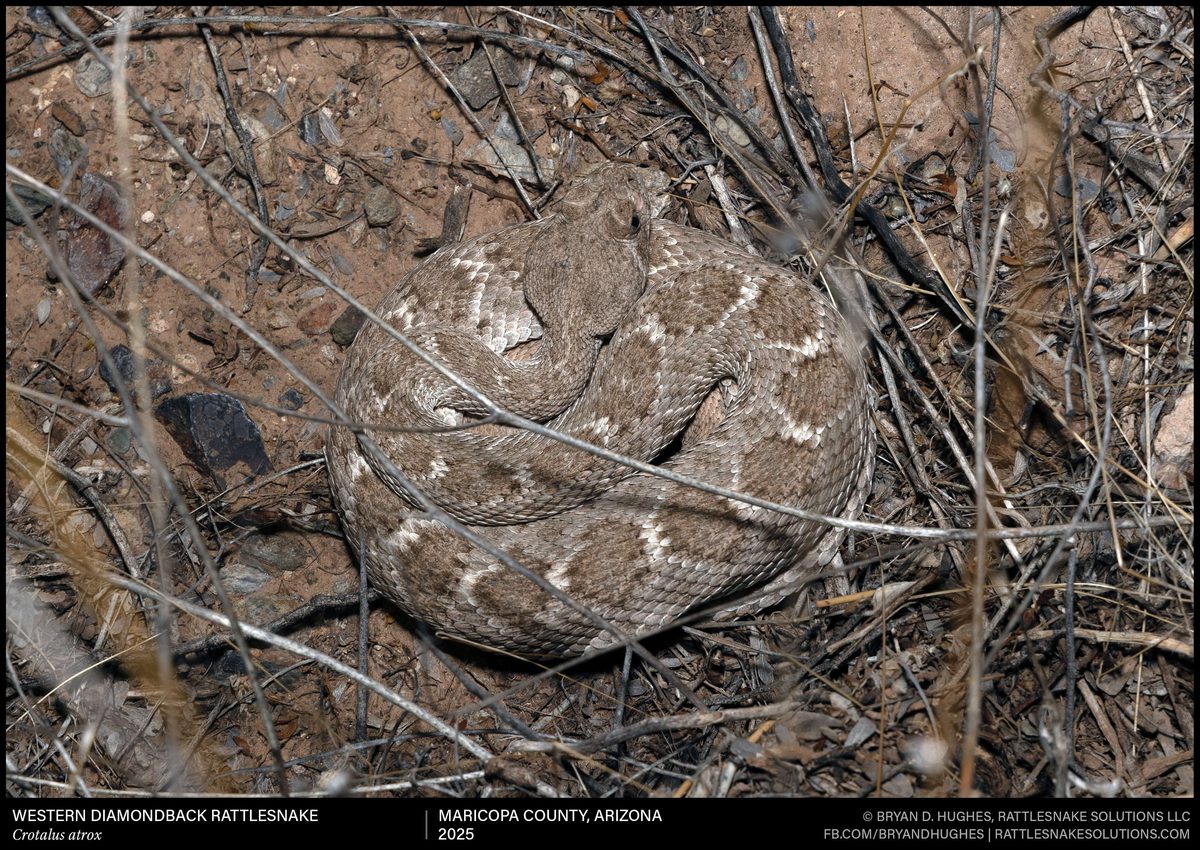
A Western Diamondback Rattlesnake found in the bootheel of New Mexico many years ago. The diamondbacks in this area have some interesting traits that make them a bit different than those found in the Phoenix and Tucson areas. They’re often pink or rose colored, with a diminished pattern that can fade to a minimal look … and they can change color between darker and lighter tones within hours.
The camouflage of this animal doesn’t appear to be working from narrow perspective of the photo, but in greater context, this snake is very difficult to spot. Adjacent hillsides and iron-rich boulders break apart, and this is one of countless reddish blotches against the lighter matrix below. While the snake itself may stand out like a sore thumb, the brain tends to throw it away as noise.
A good read about how our minds tend to do this, even with incredibly important or obvious things:
Gibson, B. S., & Jiang, Y. (1998). Surprise! An unexpected color singleton does not capture attention in visual search. Psychological Science, 9(3), 176–182. https://doi.org/10.1111/1467-9280.00034
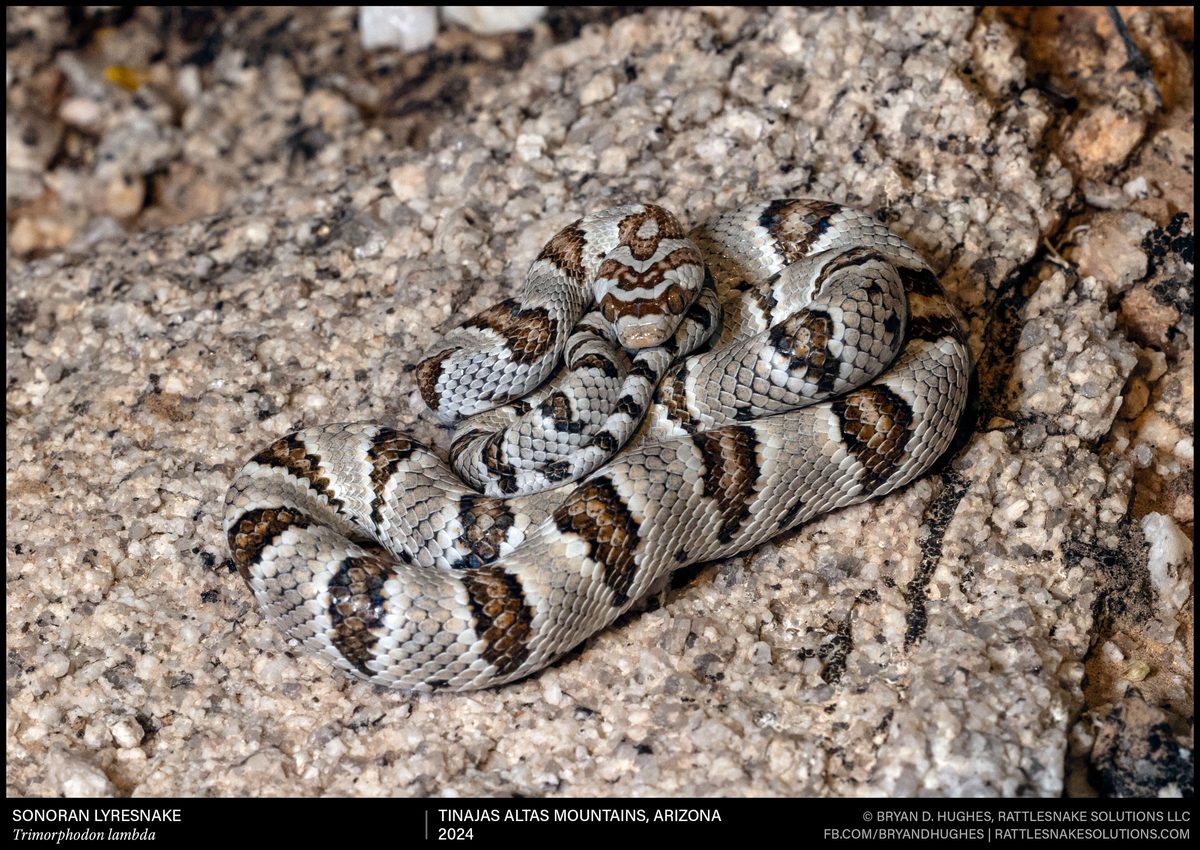
A small Sonoran Lyresnake from the extremely hot, dry desert of Yuma County, Arizona. This is one of a couple that showed up right in camp, and we got some photographs before letting it continue on its way. These cryptic snakes are almost entirely nocturnal, and rarely seen by Arizona residents.
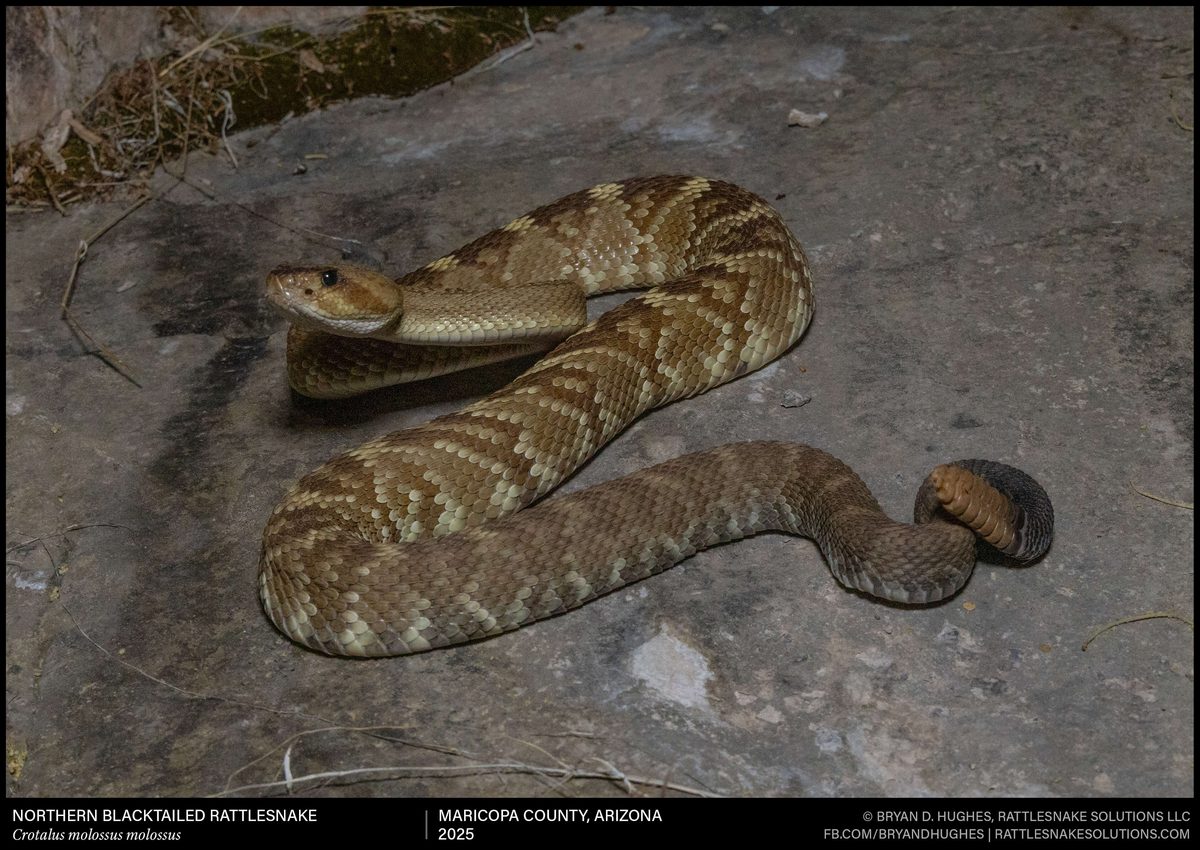
This Blacktailed Rattlesnake is typical of those you’ll see in the Phoenix area. They’re often a yellow/gold or greenish color, with quite a bit of variation in how much pattern is visible. The black tail may also show some faint grey bands, leading to some confusion as people look for a completely black tail to identify them. They are typically misidentified as a Mojave rattlesnake, due to the color and faint tail bands. This one was found on a night hike in a remote canyon, where it was one of several rattlesnakes active that particular evening.
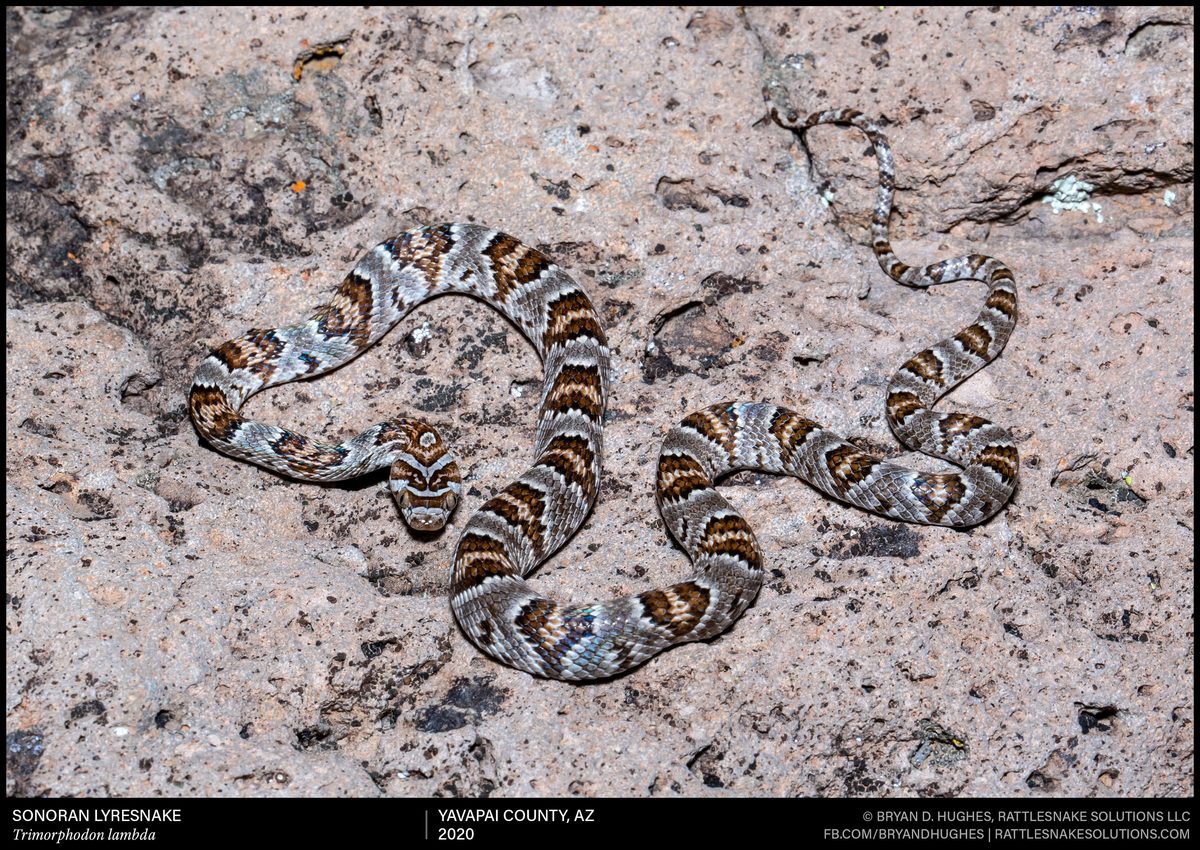
We found this Sonoran Lyresnake on the move on a night hike in Yavapai County sevearl years back. This one is typical of the species for the area, with chaotic brown and tan blotches over a beige body, with a relatively disoganized look compared to some of the more cleanly banded version found elsewhere. They’re slightly venomous, feeding on lizards, rodents, and bats. It’s not harmful to humans, but I still avoid a bite like I would from any snake.
Devitt, T. J. (2006). Phylogeography of the Western Lyresnake (Trimorphodon biscutatus): Testing aridland biogeographical hypotheses across the Nearctic–Neotropical transition. Molecular Ecology, 15, 4387–4407. https://doi.org/10.1111/j.1365-294X.2006.03015.x
Mackessy, S. P., & Saviola, A. J. (2016). Understanding biological roles of venoms among the Caenophidia: The importance of rear-fanged snakes. Integrative and Comparative Biology, 56(5), 1004–1012. https://academic.oup.com/icb/article/56/5/1004/2420638
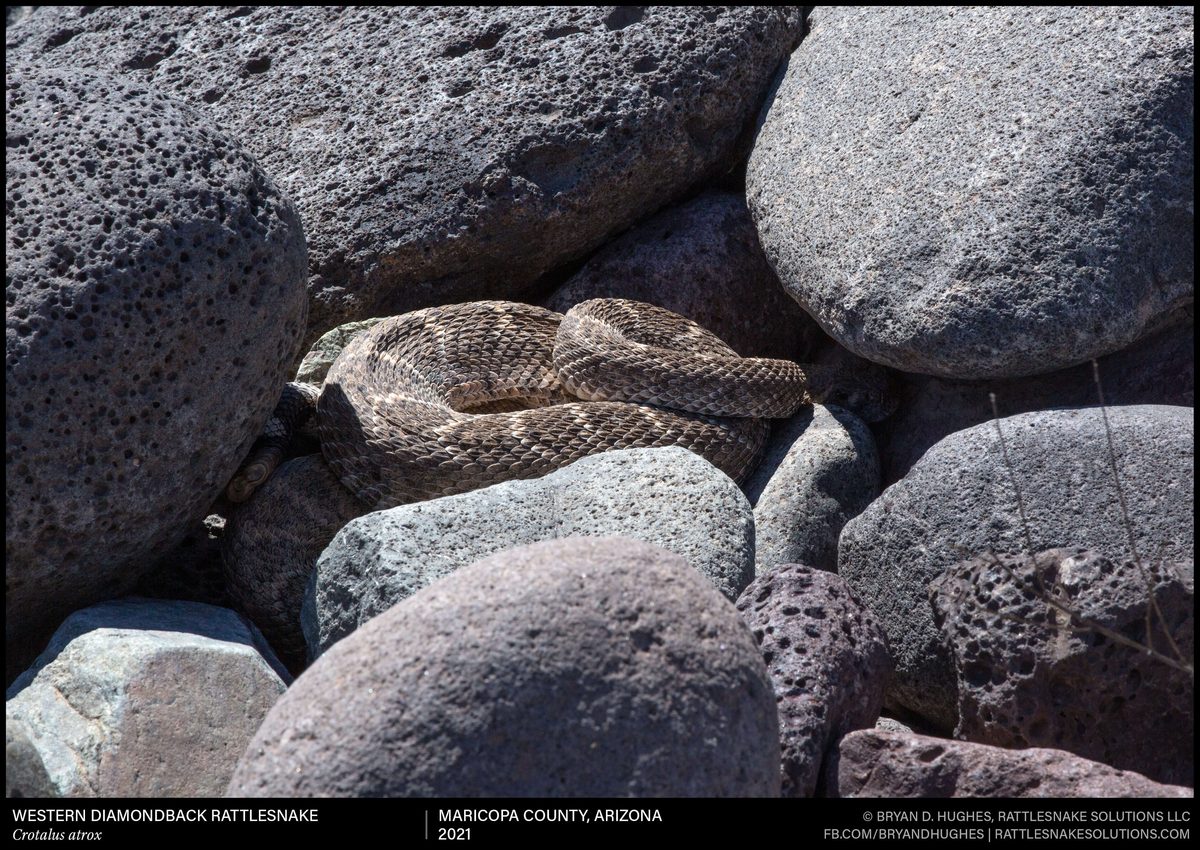
A Western Diamondback Rattlesnake resting on the surface of the rock pile that serves as its winter den. This was not a particularly warm day, but it and several others were found in close proximity to one another to get ready for another year.