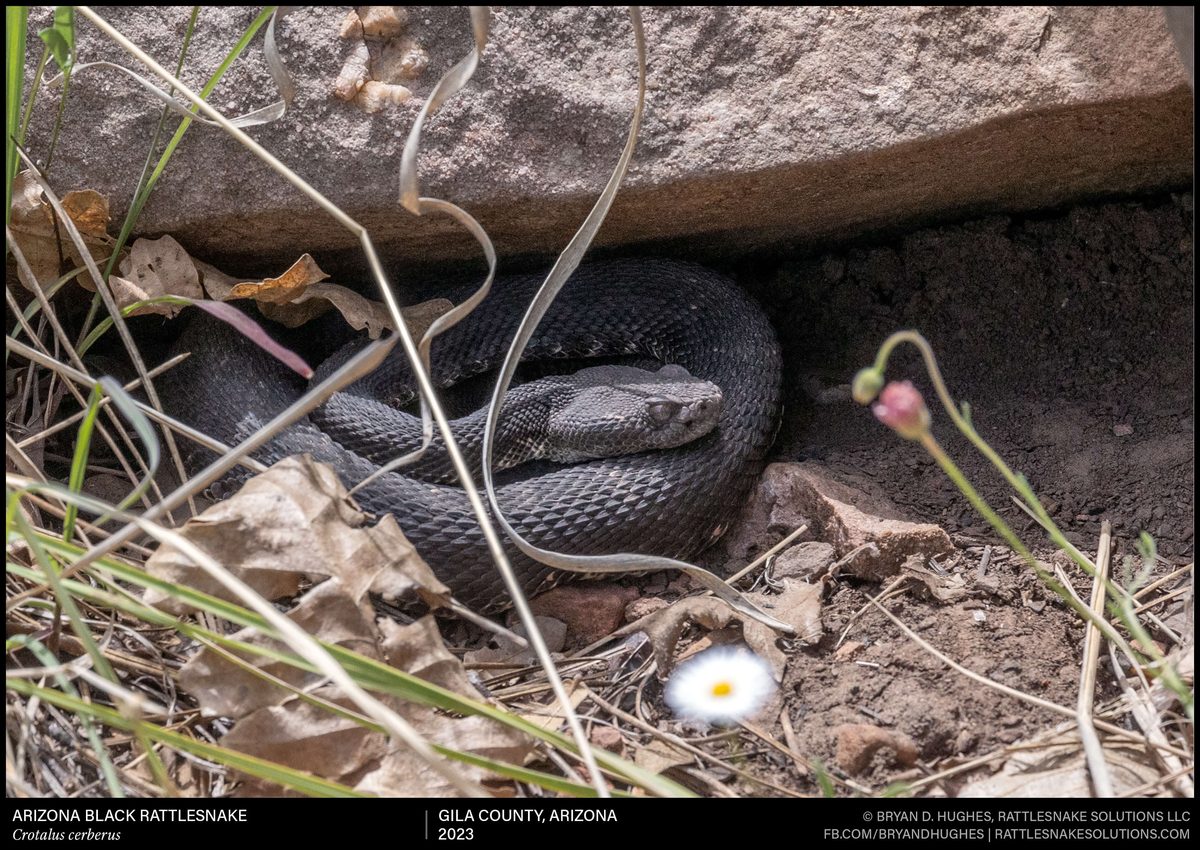
An Arizona Black Rattlesnake hanging out at the entrance of her den. She, and several other pregnant (gravid) females, remain here all summer. When it’s time for the babies to be born, they will be right where they need to be several weeks later when temperatures cool and it’s time for their first hibernation.
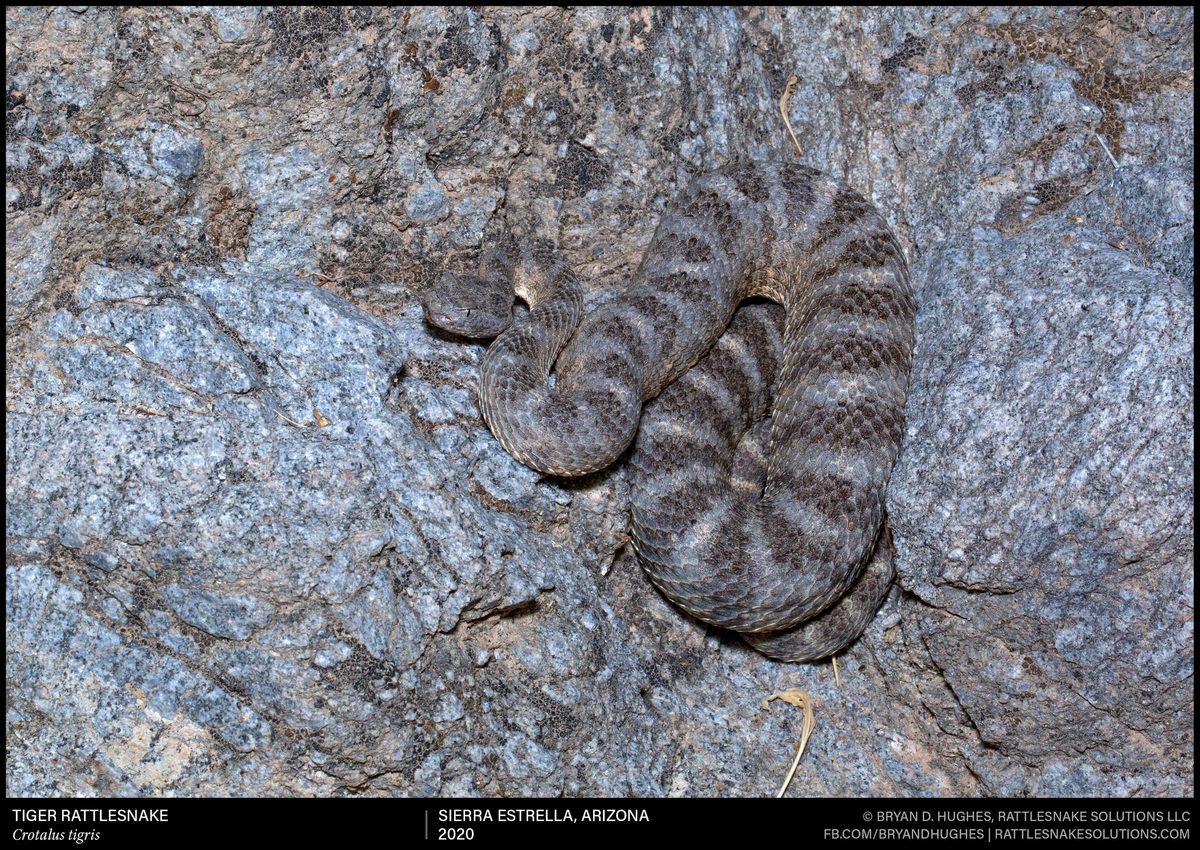
I found this Tiger Rattlesnake on a survey of a county park on a ridiculously hot night. Not many snakes were out, but I did manage to find several of these, as well as a few other odds and ends. The geology of the mountain is interesting and changes quite a bit from one tip of the range to the other. In the North end, this species is much more commonly encountered than the Speckled Rattlesnakes I was looking for.
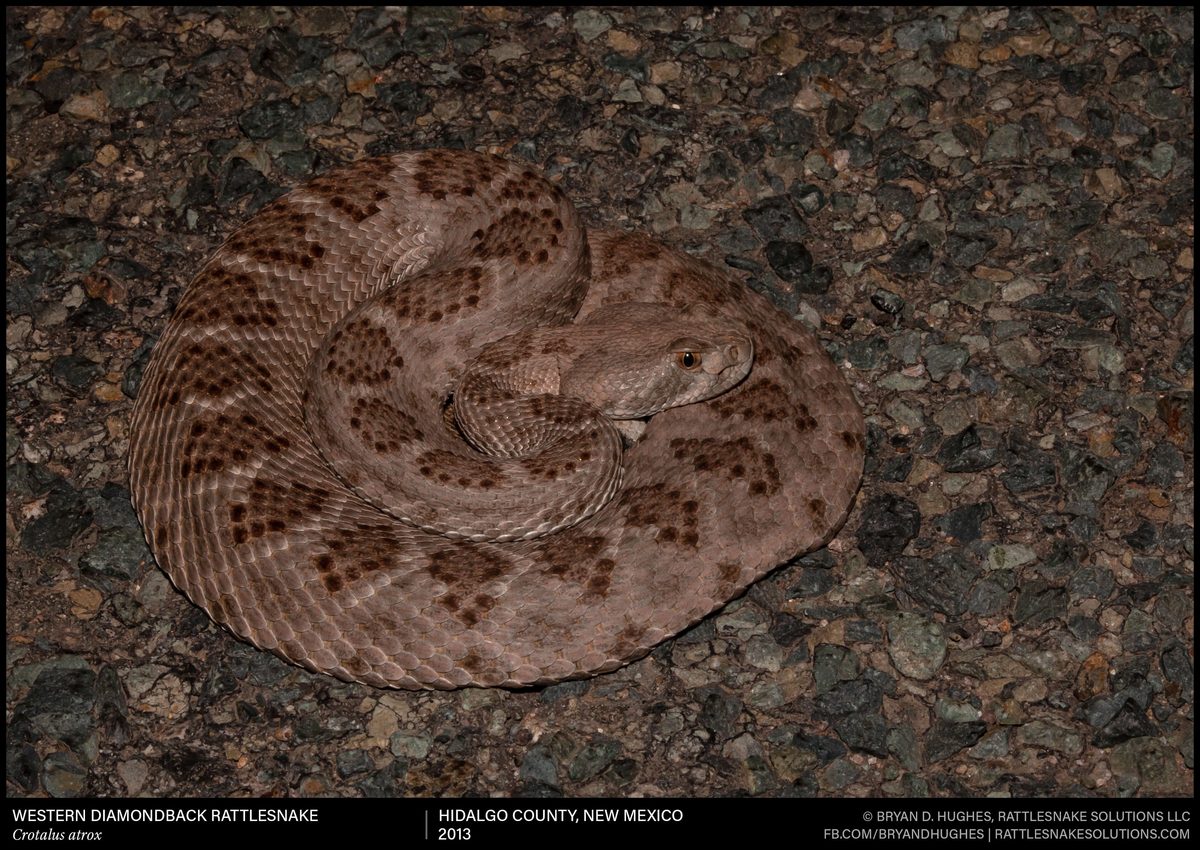
A Western Diamondback Rattlesnake found in the bootheel of New Mexico many years ago. The diamondbacks in this area have some interesting traits that make them a bit different than those found in the Phoenix and Tucson areas. They’re often pink or rose colored, with a diminished pattern that can fade to a minimal look … and they can change color between darker and lighter tones within hours.
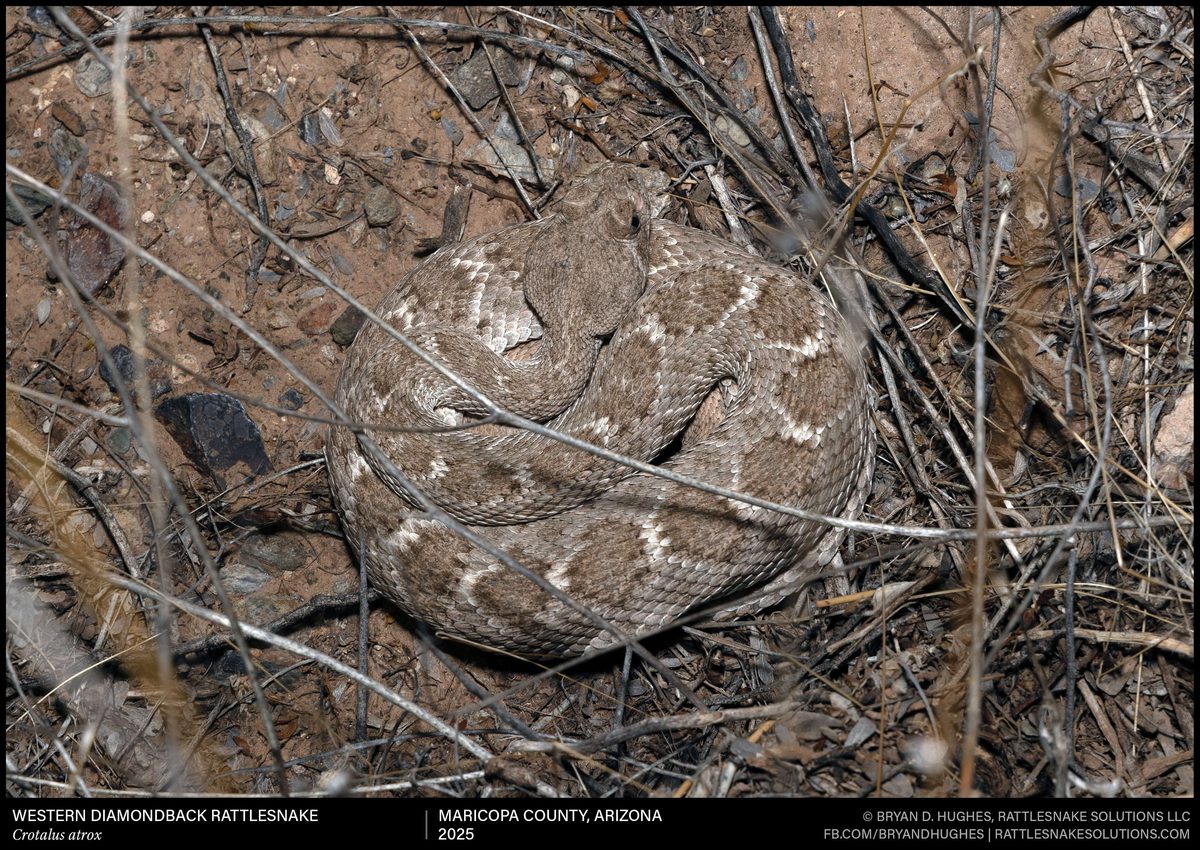
The camouflage of this animal doesn’t appear to be working from narrow perspective of the photo, but in greater context, this snake is very difficult to spot. Adjacent hillsides and iron-rich boulders break apart, and this is one of countless reddish blotches against the lighter matrix below. While the snake itself may stand out like a sore thumb, the brain tends to throw it away as noise.
A good read about how our minds tend to do this, even with incredibly important or obvious things:
Gibson, B. S., & Jiang, Y. (1998). Surprise! An unexpected color singleton does not capture attention in visual search. Psychological Science, 9(3), 176–182. https://doi.org/10.1111/1467-9280.00034
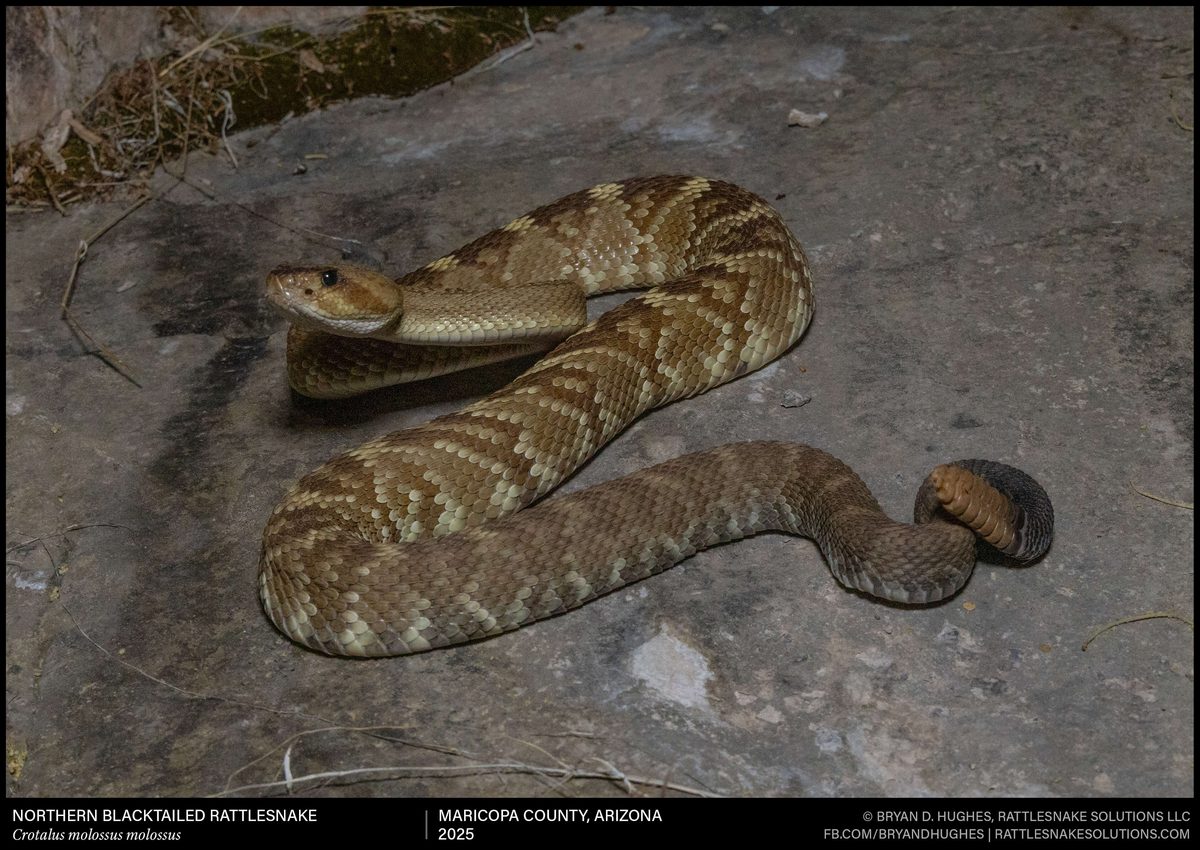
This Blacktailed Rattlesnake is typical of those you’ll see in the Phoenix area. They’re often a yellow/gold or greenish color, with quite a bit of variation in how much pattern is visible. The black tail may also show some faint grey bands, leading to some confusion as people look for a completely black tail to identify them. They are typically misidentified as a Mojave rattlesnake, due to the color and faint tail bands. This one was found on a night hike in a remote canyon, where it was one of several rattlesnakes active that particular evening.
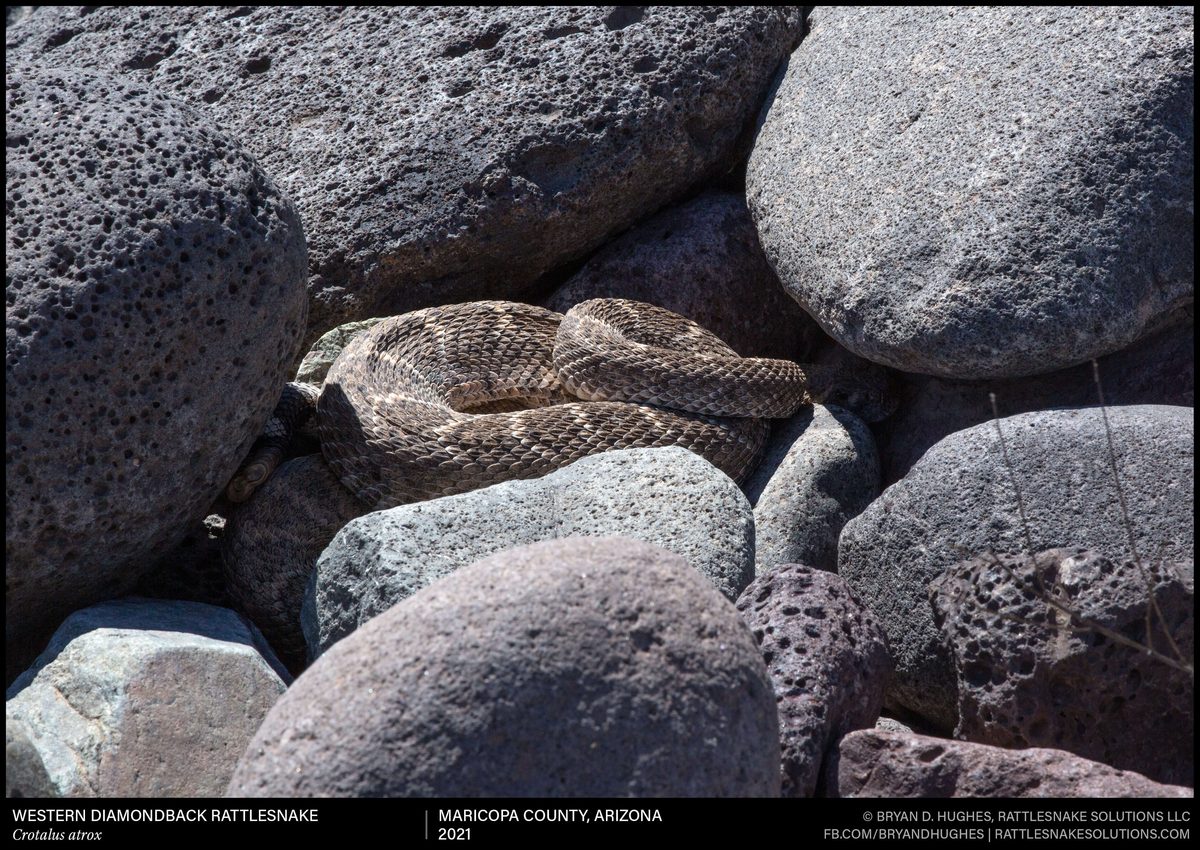
A Western Diamondback Rattlesnake resting on the surface of the rock pile that serves as its winter den. This was not a particularly warm day, but it and several others were found in close proximity to one another to get ready for another year.
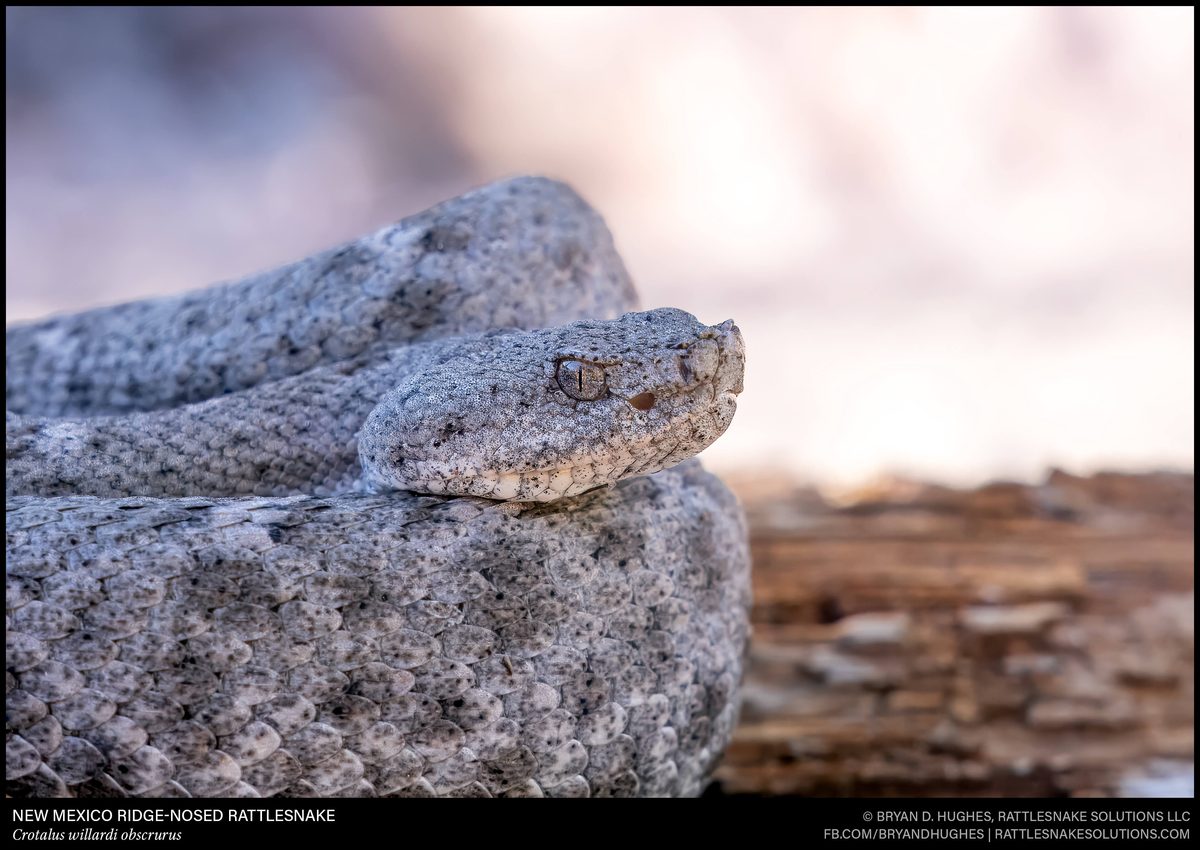
A New Mexico Ridge-nosed Rattlesnake (Crotalus willardi obscurus) from one of the remaining populations within the United States. These are small rattlesnakes adapted for high-elevation, higher-humidity environments than are typical in the surrounding Chihuahuan Desert. This is one of only two rattlesnake species in the country that are listed as Threatened under the Endangered Species Act. Rattlesnake Solutions is fortunate to be among the organizations and agencies involved with a recovery effort to try to bolster the remaining population within Arizona.
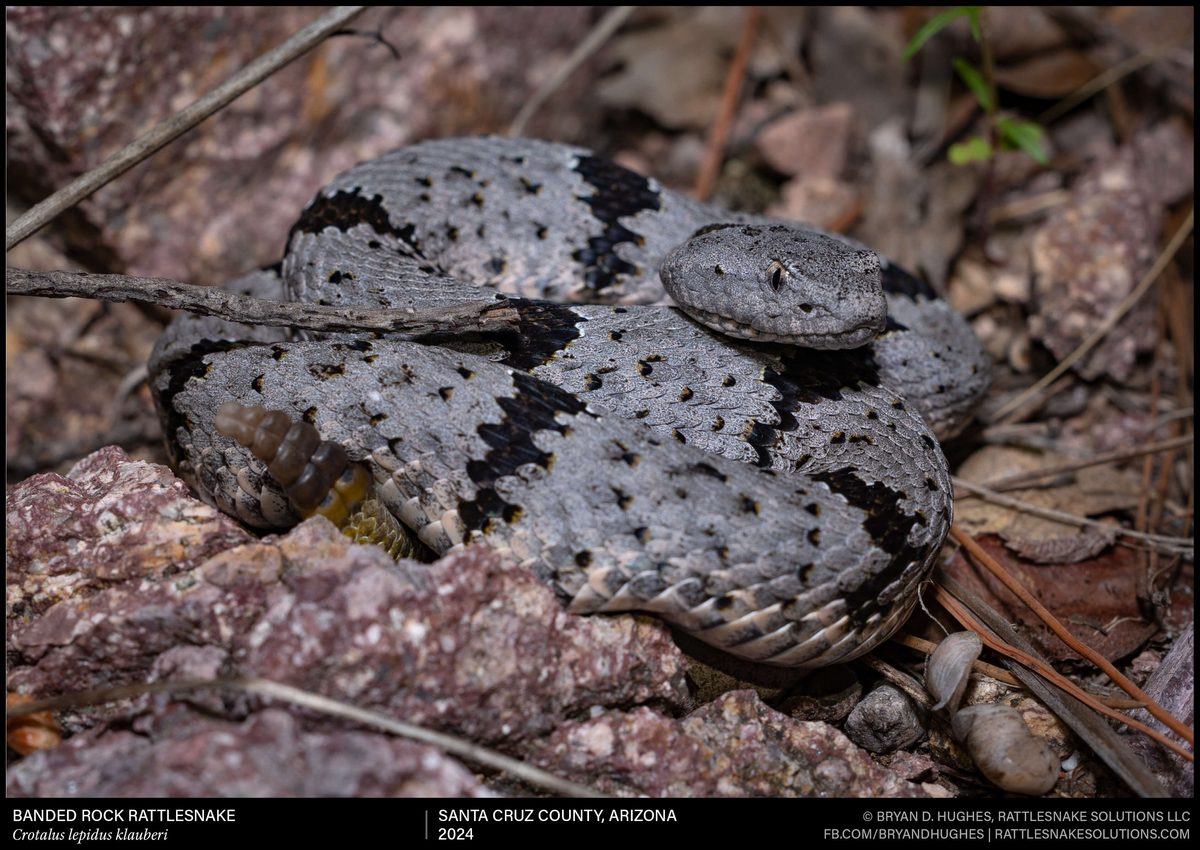
A female Banded Rock Rattlesnake from the Huachuca Mountains in Arizona. These small rattlesnakes are sexually dimorphic, with males often showing metallic green coloration along the back. Females are usually more subdued in comparison, like this typical grey and black banded look. These are one of a handful of protected rattlesnake species in the state.
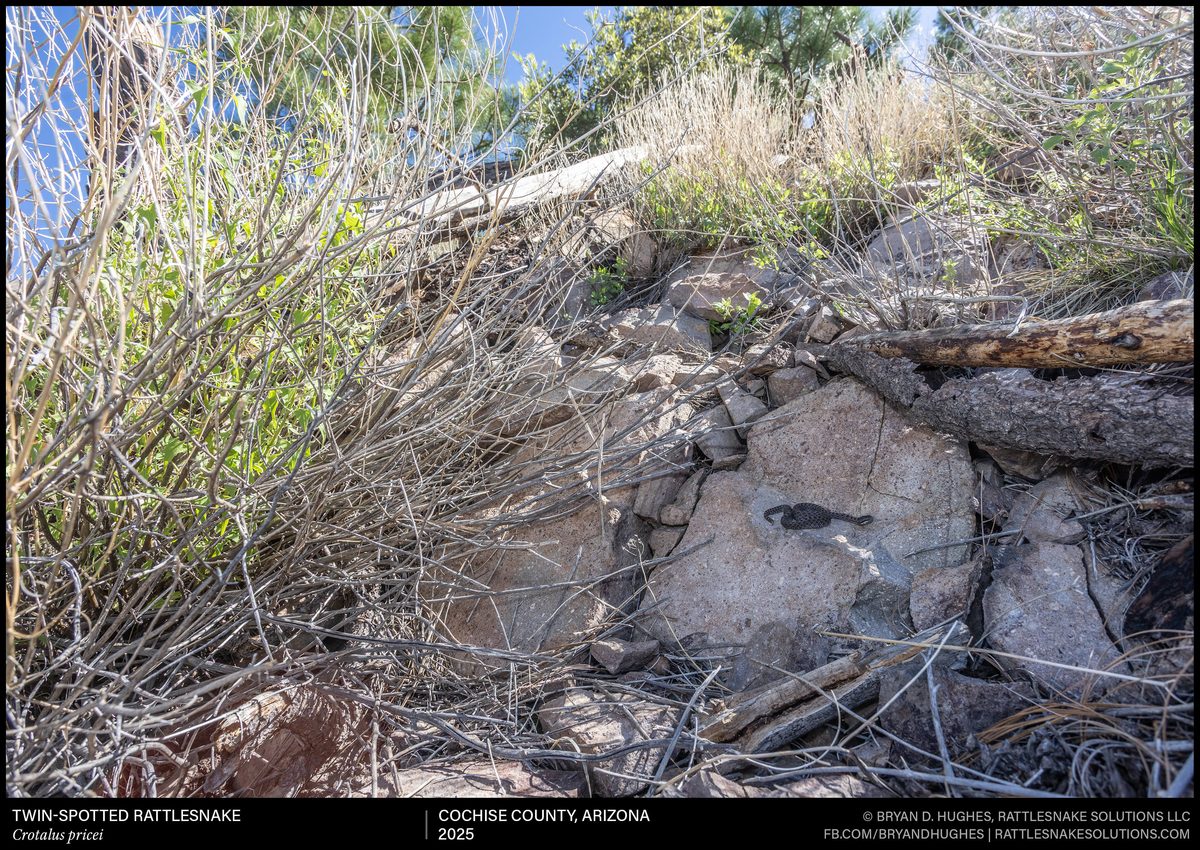
A Twin Spotted Rattlesnake in habitat at the top of a mountain in southern Arizona. These are rattlesnakes that are often mistaken as a non-venomous species due to their small size and head that is not as strongly differentiated from the neck as people expect. They are rarely seen by hikers, but a “what is this snake?” photo of one tends to pop up a few times a year from the Santa Rita mountains south of Tucson.
This is a young individual that I spotted as I climbed up to the ridgeline from a fruitless search below. It never made a sound, but slipped silently into the rocks to escape, as they do. I surely walked past a dozen more, who performed this disappearing act with better timing.