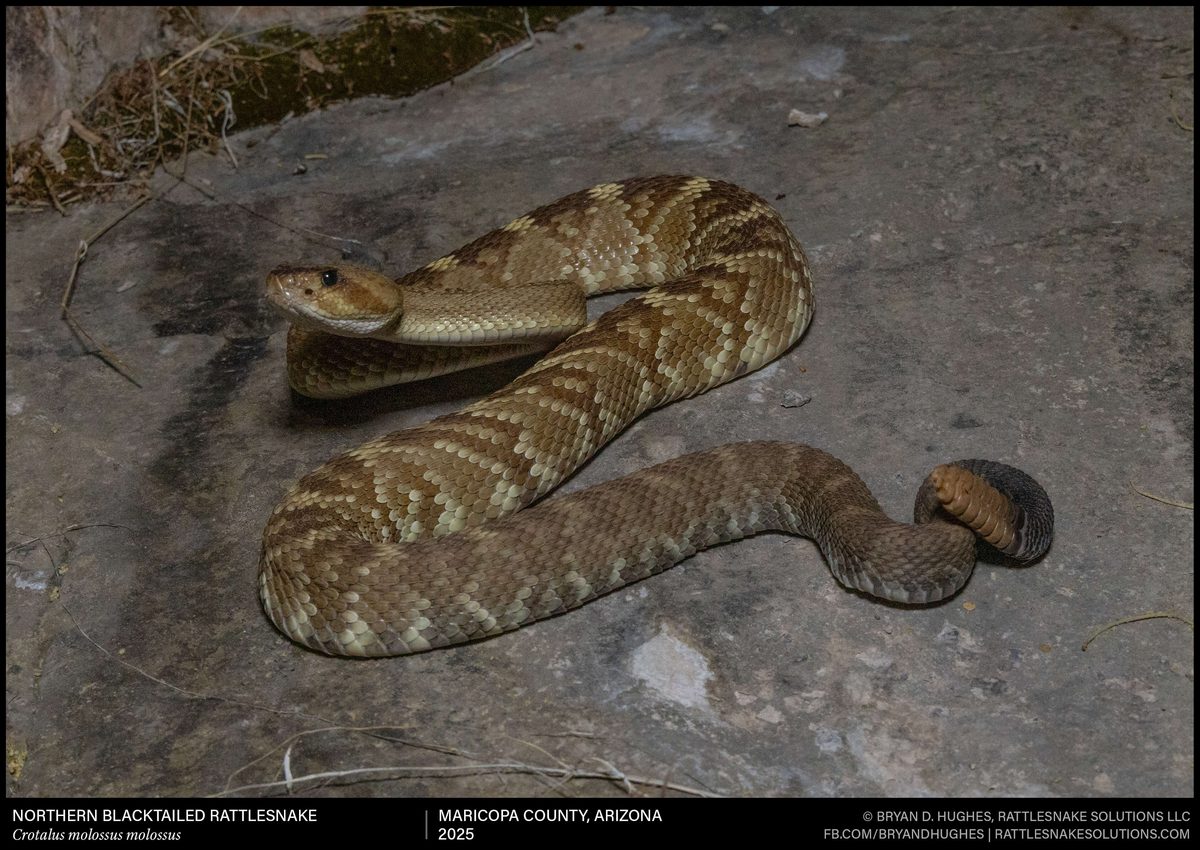
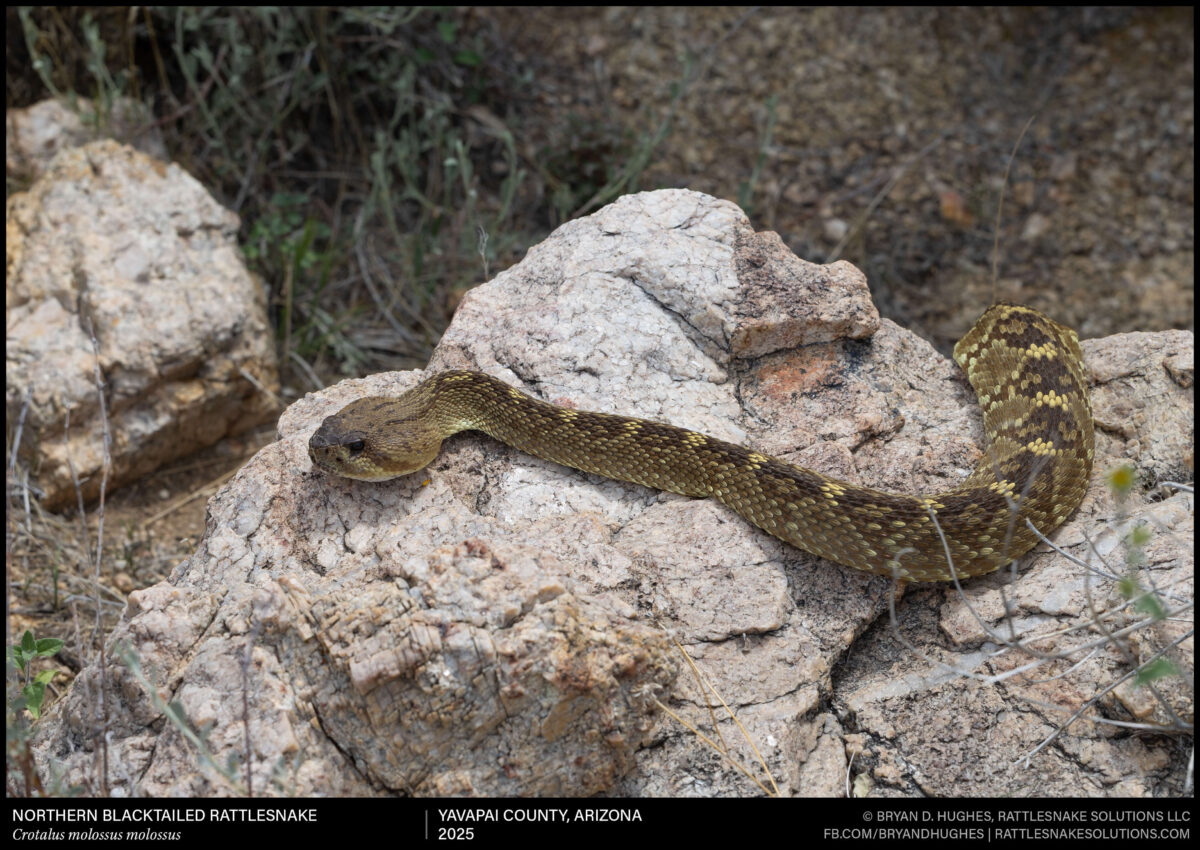
This Blacktailed Rattlesnake is typical of those you’ll see in the Phoenix area. They’re often a yellow/gold or greenish color, with quite a bit of variation in how much pattern is visible. The black tail may also show some faint grey bands, leading to some confusion as people look for a completely black tail to identify them. They are typically misidentified as a Mojave rattlesnake, due to the color and faint tail bands. This one was found on a night hike in a remote canyon, where it was one of several rattlesnakes active that particular evening.
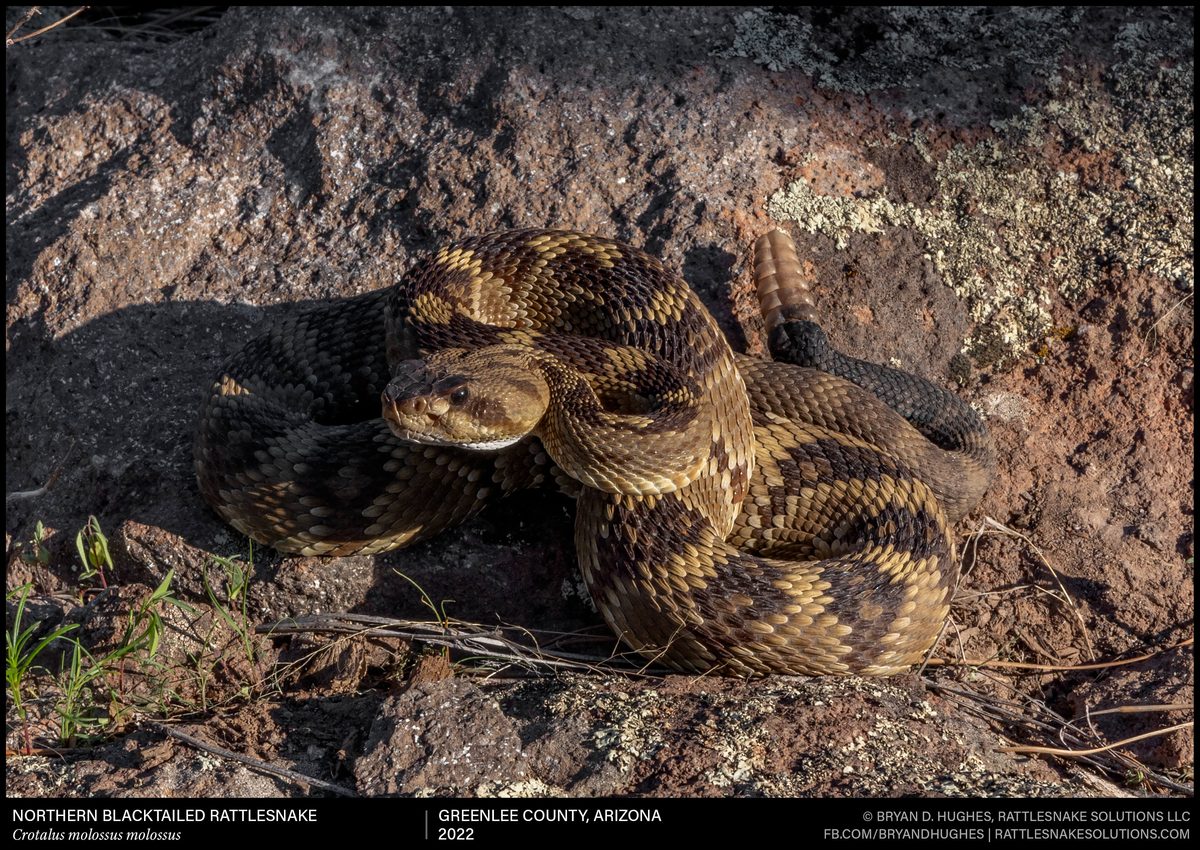
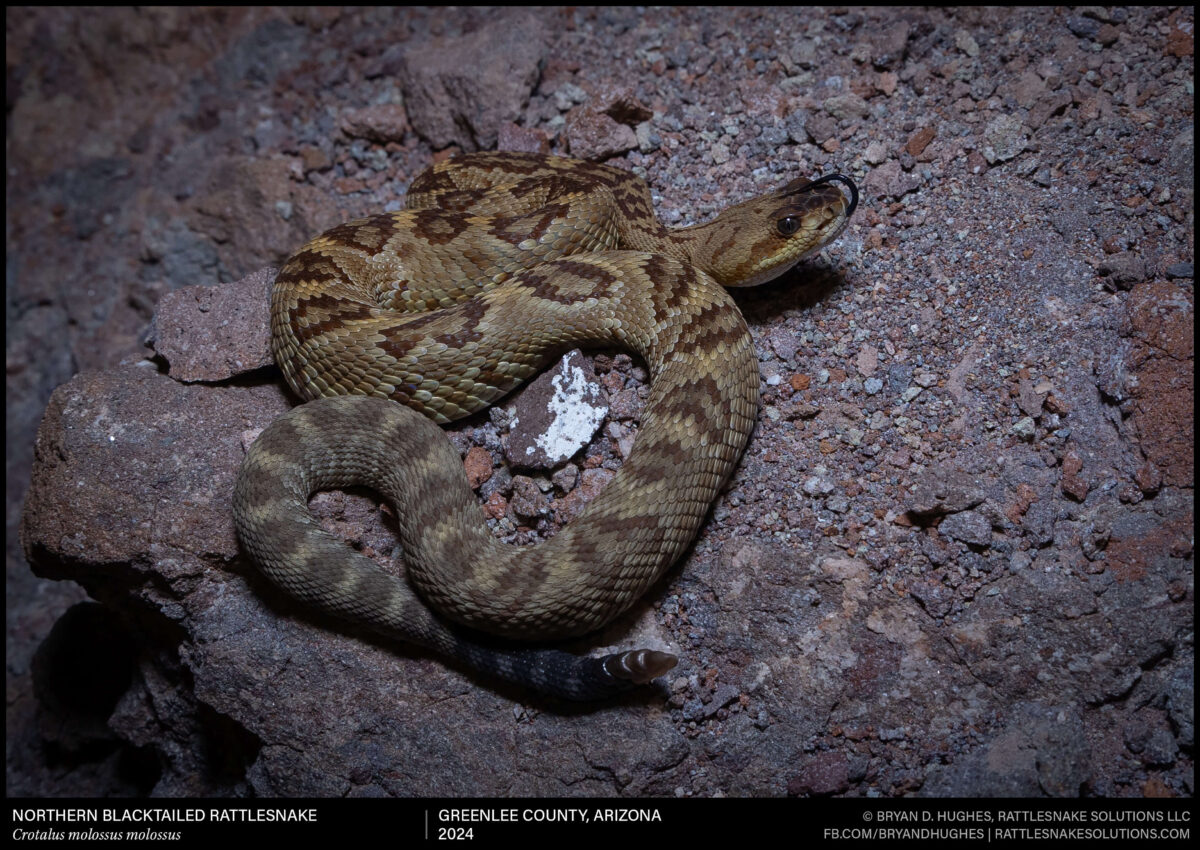
A large Blacktailed Rattlesnake that we found in the mountains of central Greenlee County. This is a huge, wild area with few roads and much of the high elevation habitat inaccessible without a lot of effort. For that reason, it’s of special interest to me, with relatively few examples of snakes compared to other regions in the state.
These are on the larger end of rattlesnakes in Arizona, reaching lengths of around four feet. Their defensive behavior is all over the board. Most of the large ones will quietly just continue to leave, making them even more difficult to photograph, as they seem to remain unbothered by the camera-holding primates.
Beck, D. D. (1995). Ecology and energetics of three sympatric rattlesnake species in the Sonoran Desert. Journal of Herpetology, 29(2), 211–223. DOI: https://doi.org/10.2307/1564558
Pough, F. H. (1966). Ecological relationships of rattlesnakes in southeastern Arizona with notes on other species. Copeia. DOI: https://doi.org/10.2307/1441401
Anderson, C. G., & Greenbaum, E. (2012). Phylogeography of northern populations of the Black-Tailed Rattlesnake (Crotalus molossus Baird and Girard, 1853), with the revalidation of C. ornatus Hallowell, 1854. Herpetological Monographs, 26(1), 19–57. DOI: https://doi.org/10.1655/HERPMONOGRAPHS-D-11-00012.1
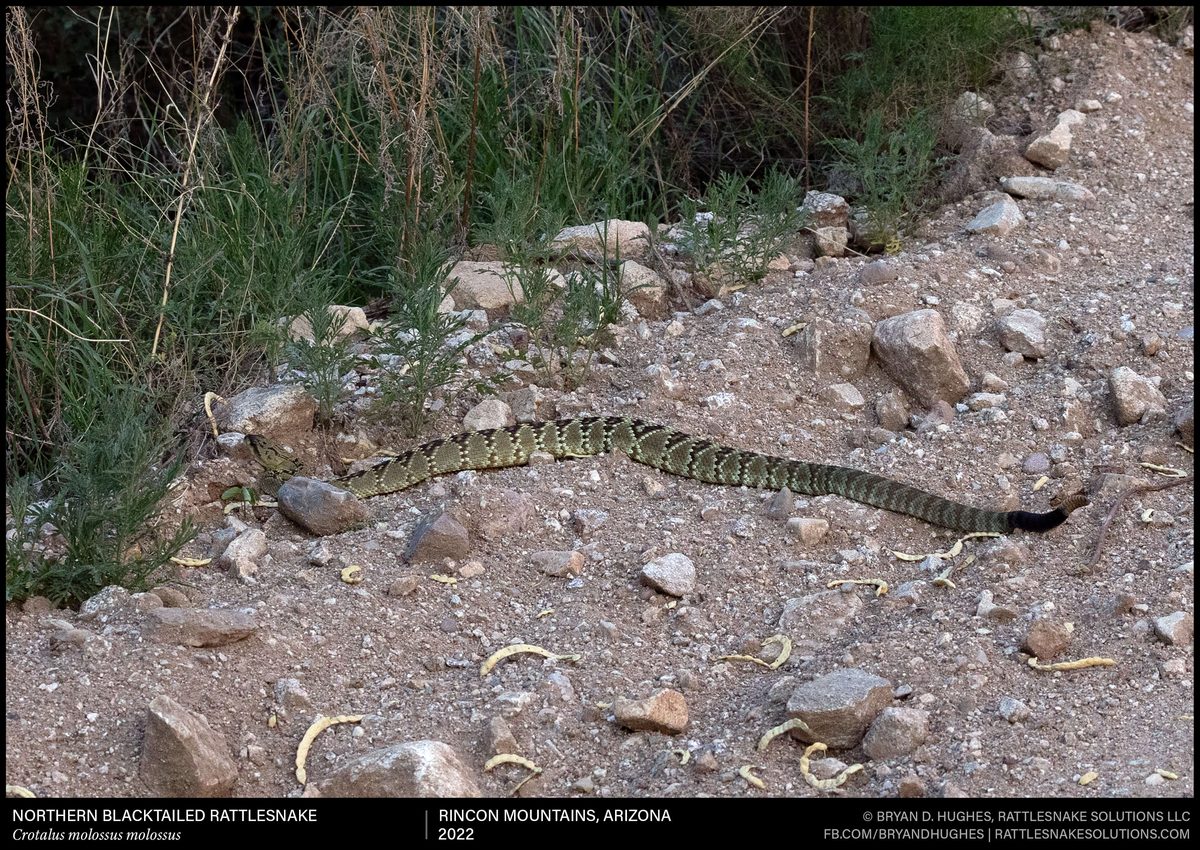
I saw this big Blacktailed Rattlesnake crossing a roadway in the mountains southeast of Tucson. It had made most of its way across, and then did what cost many snakes their lives … it froze.
These animals’ primary defense is not the famous rattle or a venomous bite, but camouflage. In most cases, that pattern and color do a great job to hide by simply stopping in place until the threat goes away. But, roads aren’t part of that plan. This can get them run over, often intentionally, or otherwise killed by people passing by.
This is the same behavior that people often misinterpret as “sunning on the trail” or “soaking up the heat from the road” on a hot summer night. It’s not that snakes may not bask in the open like this, but that’s usually not what that is.
As there were quite a few side-by-sides cruising around that weekend, I got out to help this one off the road so it wouldn’t end up as too many of them do, losing their head and rattles to some excitable dope.
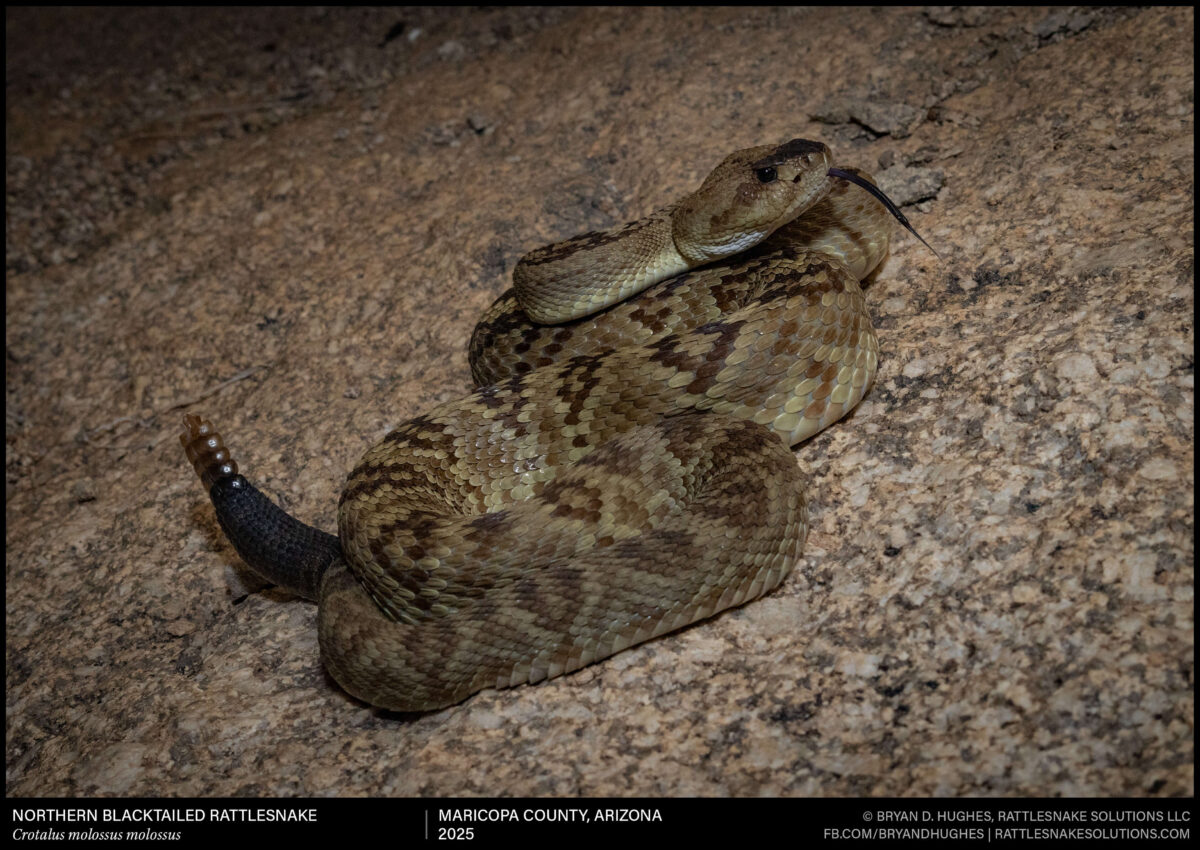
A mature Black-tailed Rattlesnake we found on a late-night hike near Phoenix. These snakes live in mountainous or hilly areas, where they are often confused with a number of other rattlesnake species.
A Blacktailed Rattlesnake from central Arizona. The species also often has black eyes, too, especially in higher elevation individuals. This animal is found in mountainous areas, and often misidentified as a Mojave Rattlesnake due to their bright color, even by (especially by!) long-term locals.
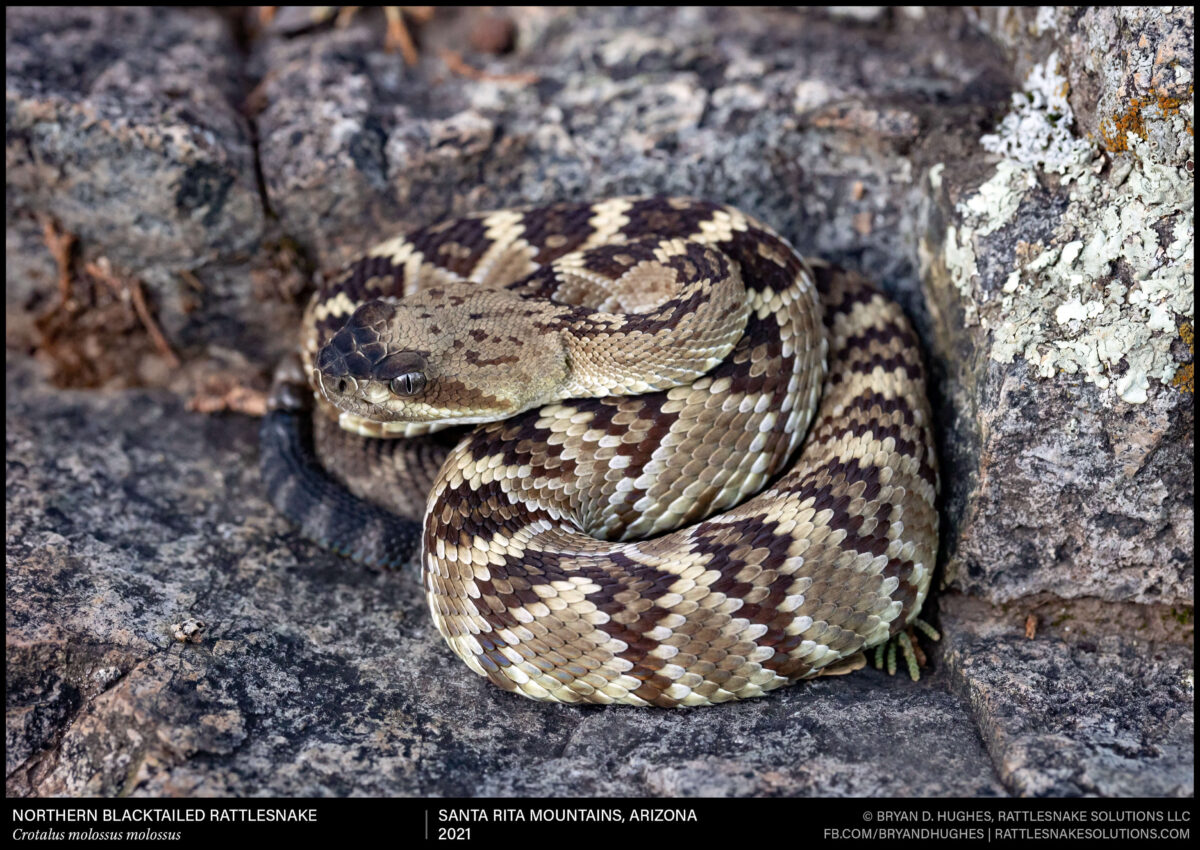
A young Blacktailed Rattlesnake from the southeastern mountains of Arizona. When they are this age, they’ll often have subtle grey and black banding in the tail. This usually darkens to a solid black with age, but not always. Of the species of rattlesnakes in the state, coming across babies of this species out and about may be the least frequent for me.
A young Blacktailed Rattlesnake from the eastern end of Arizona. While not as sharply contrasted as the population from just south in the Sky Islands, I personally like the clean, subtle tones and velvety appearance of these snakes in this area.
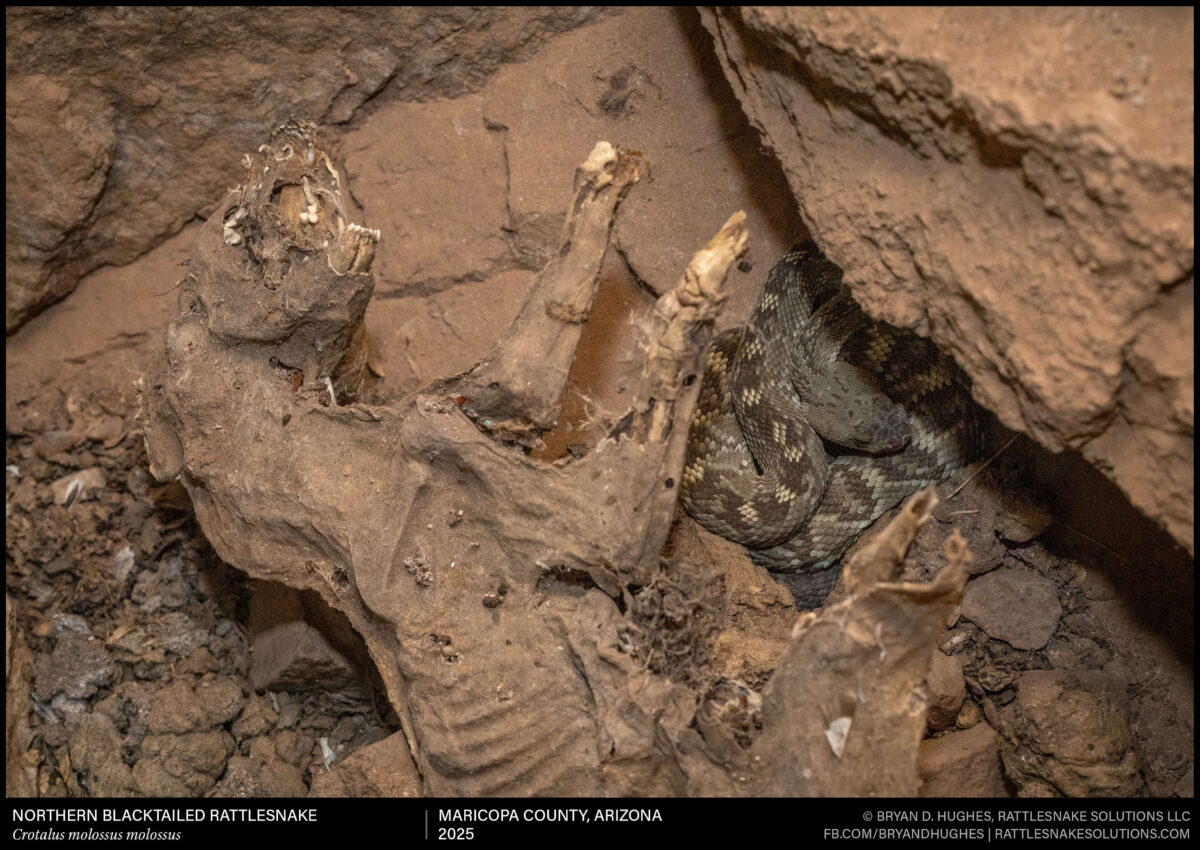
I found this young Blacktailed Rattlesnake resting under the dried-out husk of a small mammal (skunk?) in a cave near Phoenix on a survey of lands managed by Desert Foothills Land Trust.
In wet years, this small cave fills with water from a few inches to around a foot deep. It becomes putrid slop, full of javelina feces and dozens of animals hiding from the heat. This small mammal had died in that water, eventually settling against this wall. This summer, the cave was bone dry. But, the dozen or so rattlesnakes that aestivate here each year still showed up.
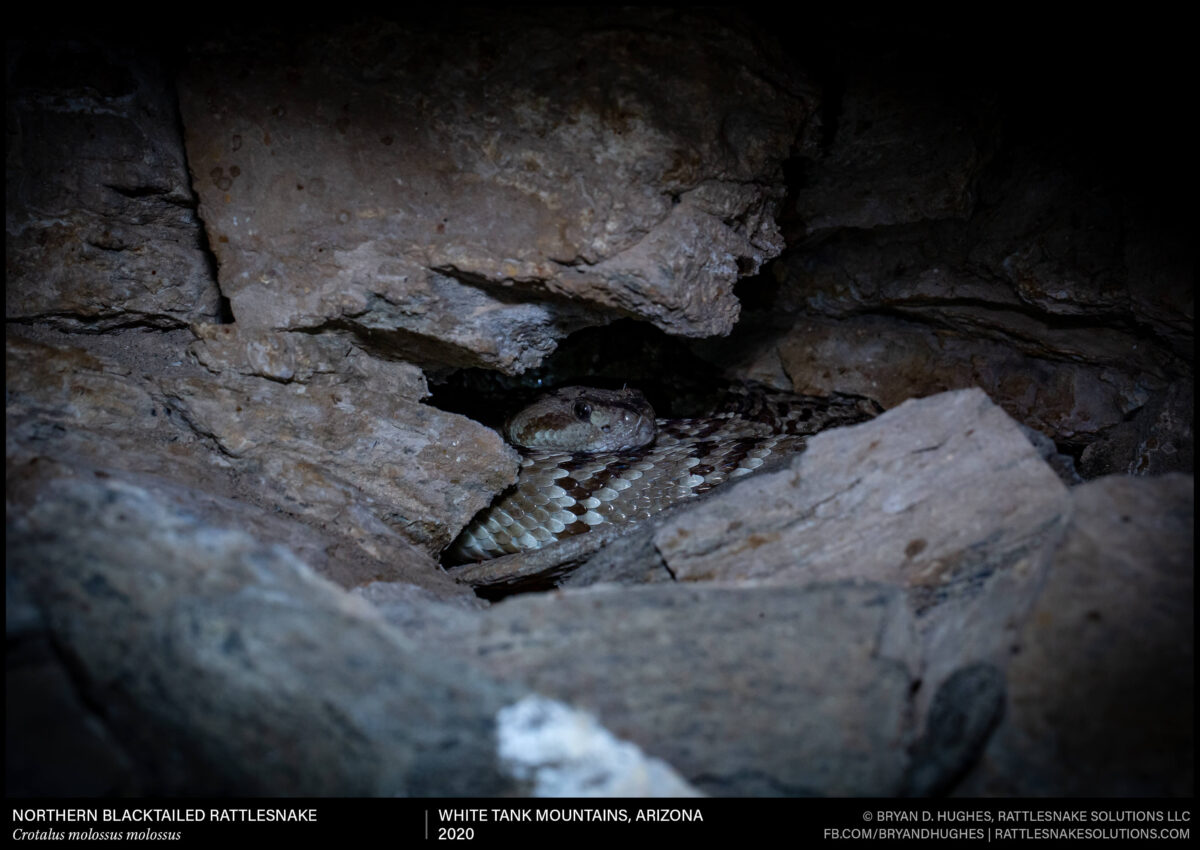
A Blacktailed Rattlesnake hiding deep in a cave on an extremely hot day. During the heat of summer, rattlesnakes like this one may stay hidden away from lethal temperatures, staying in one spot or coming just outside the entrance after dark.
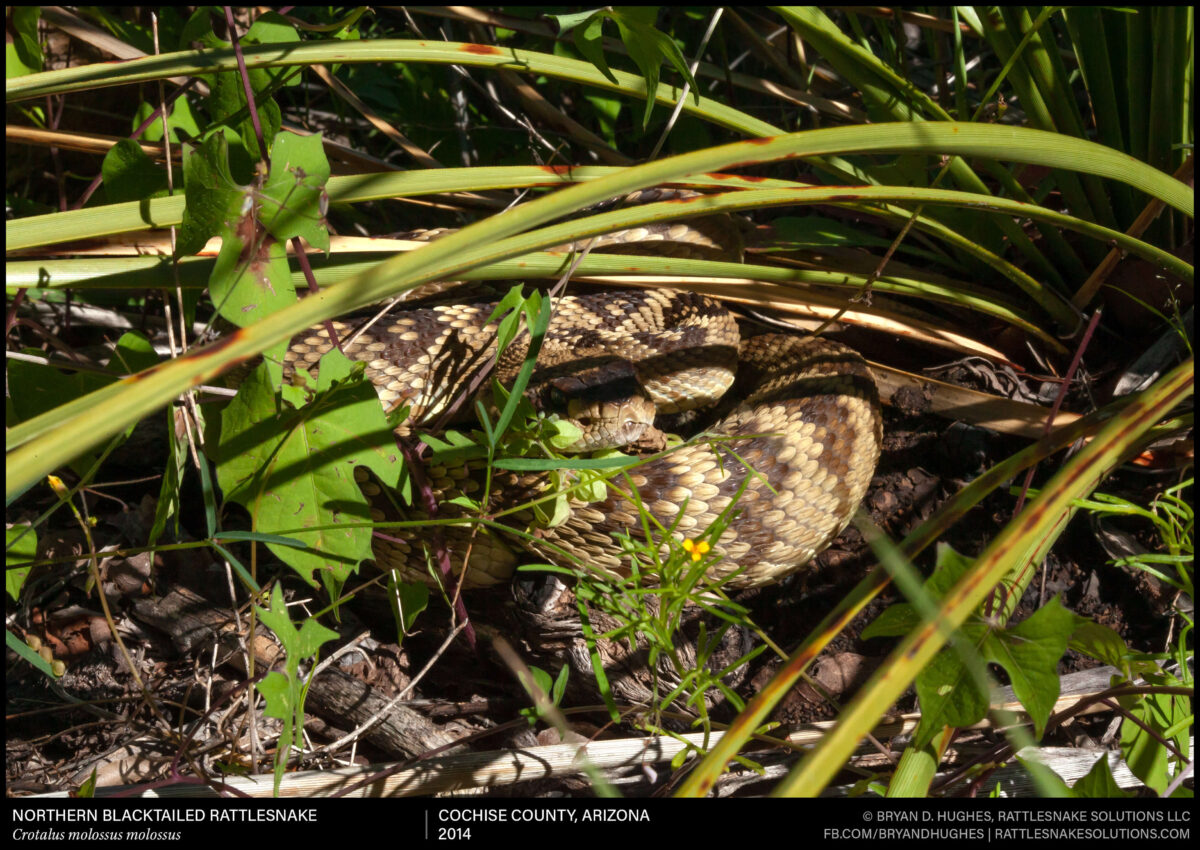
A Blacktailed Rattlesnake coiled in the grass in the Madrean woodlands of southeastern Arizona. These large, greenish rattlesnakes are a common sight for hikers and naturalists in the area.