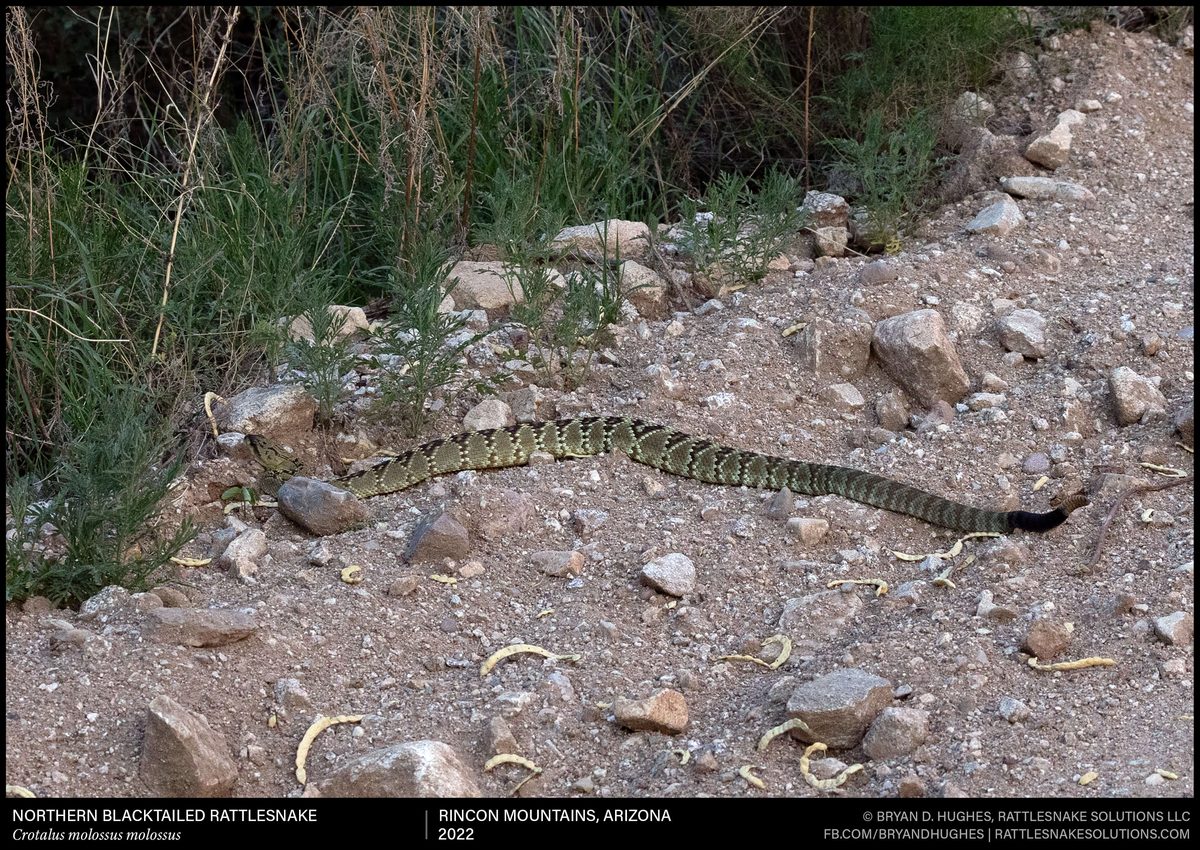
I saw this big Blacktailed Rattlesnake crossing a roadway in the mountains southeast of Tucson. It had made most of its way across, and then did what cost many snakes their lives … it froze.
These animals’ primary defense is not the famous rattle or a venomous bite, but camouflage. In most cases, that pattern and color do a great job to hide by simply stopping in place until the threat goes away. But, roads aren’t part of that plan. This can get them run over, often intentionally, or otherwise killed by people passing by.
This is the same behavior that people often misinterpret as “sunning on the trail” or “soaking up the heat from the road” on a hot summer night. It’s not that snakes may not bask in the open like this, but that’s usually not what that is.
As there were quite a few side-by-sides cruising around that weekend, I got out to help this one off the road so it wouldn’t end up as too many of them do, losing their head and rattles to some excitable dope.