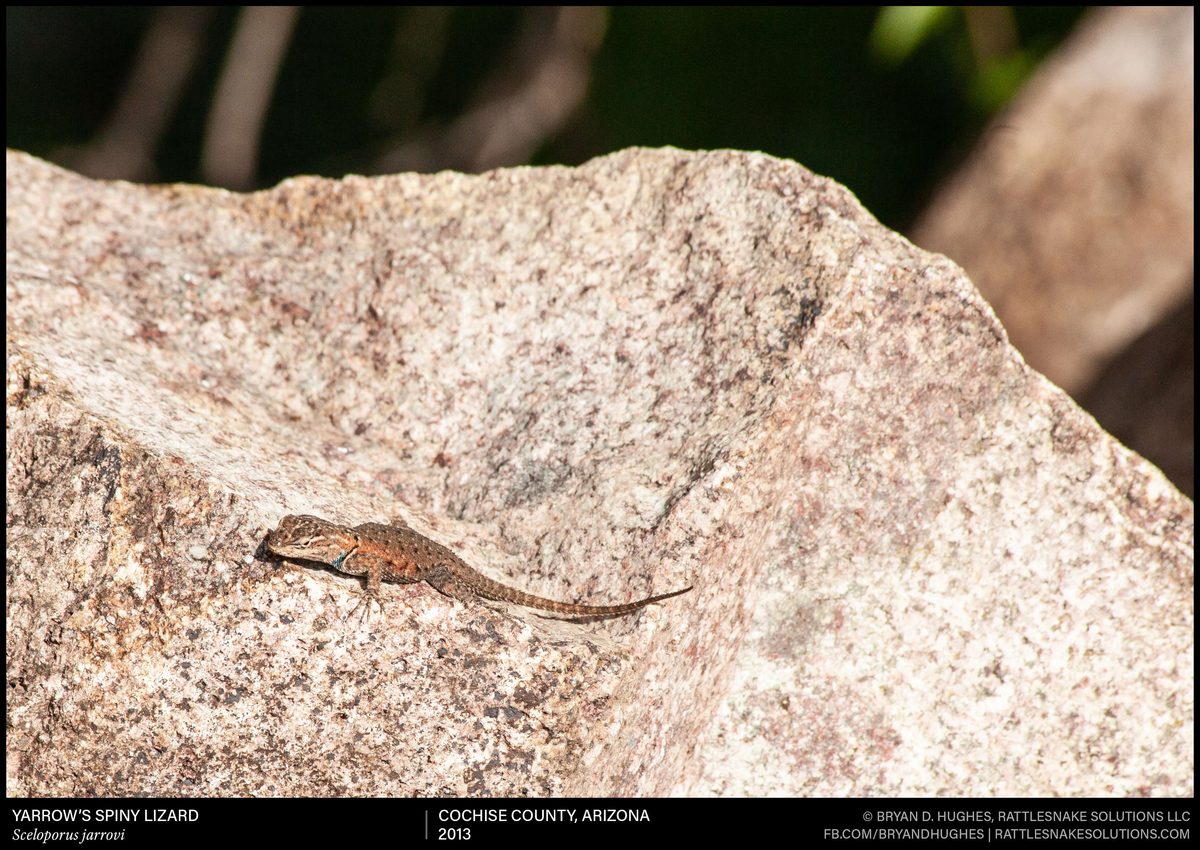
A young Yarrow’s Spiny Lizard watches an odd primate operate some metal and glass device from a short distance, waiting to get back to work on the serious business of finding bugs. These charismatic lizards are common in the higher elevations of southeastern Arizona.
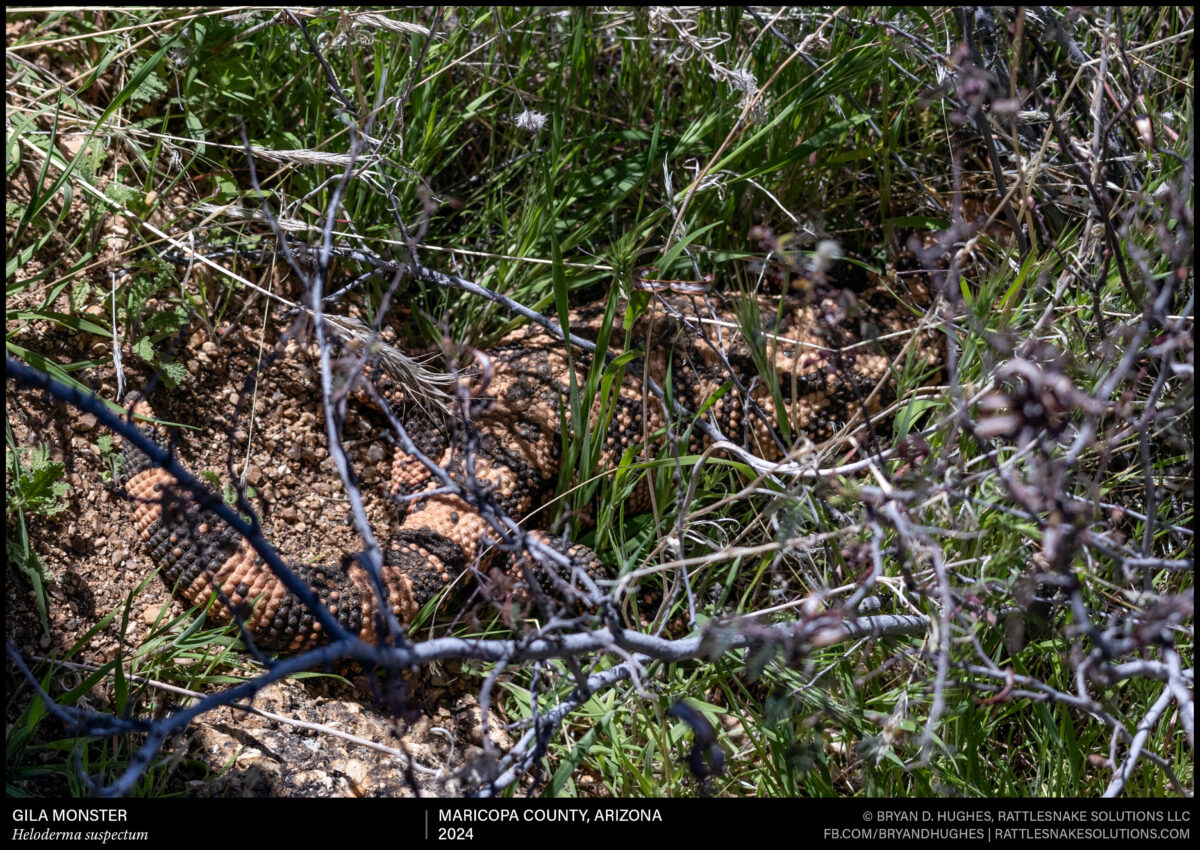
A Gila Monster (Heloderma suspectum) basking on a cool Spring day. Usually, it may seem that the bright yellow and black pattern of these animals makes them hard to see … but this shows where it works. The high-contrast, chaotic pattern makes the shape of a lizard disappear in dappled light. It’s common for even life-long residents of Arizona to see only one, or zero, Gila Monsters in their time in the outdoors, having walked right past many instances just like this.
Davis, J. R., & DeNardo, D. F. (2010). “Seasonal Patterns of Body Condition, Hydration State, and Activity of Gila Monsters (Heloderma suspectum) at a Sonoran Desert Site.” Journal of Herpetology, 44(1), 83–93. https://doi.org/10.1670/08-263.1
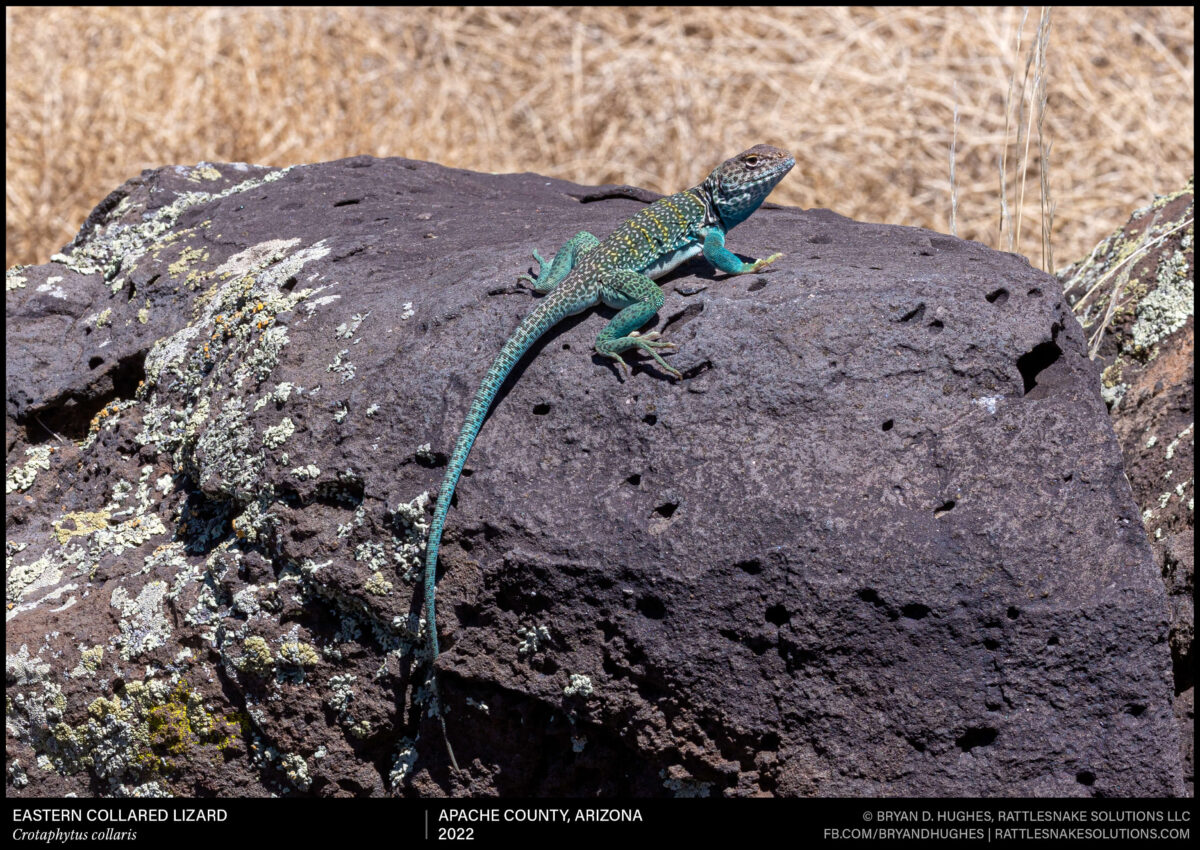
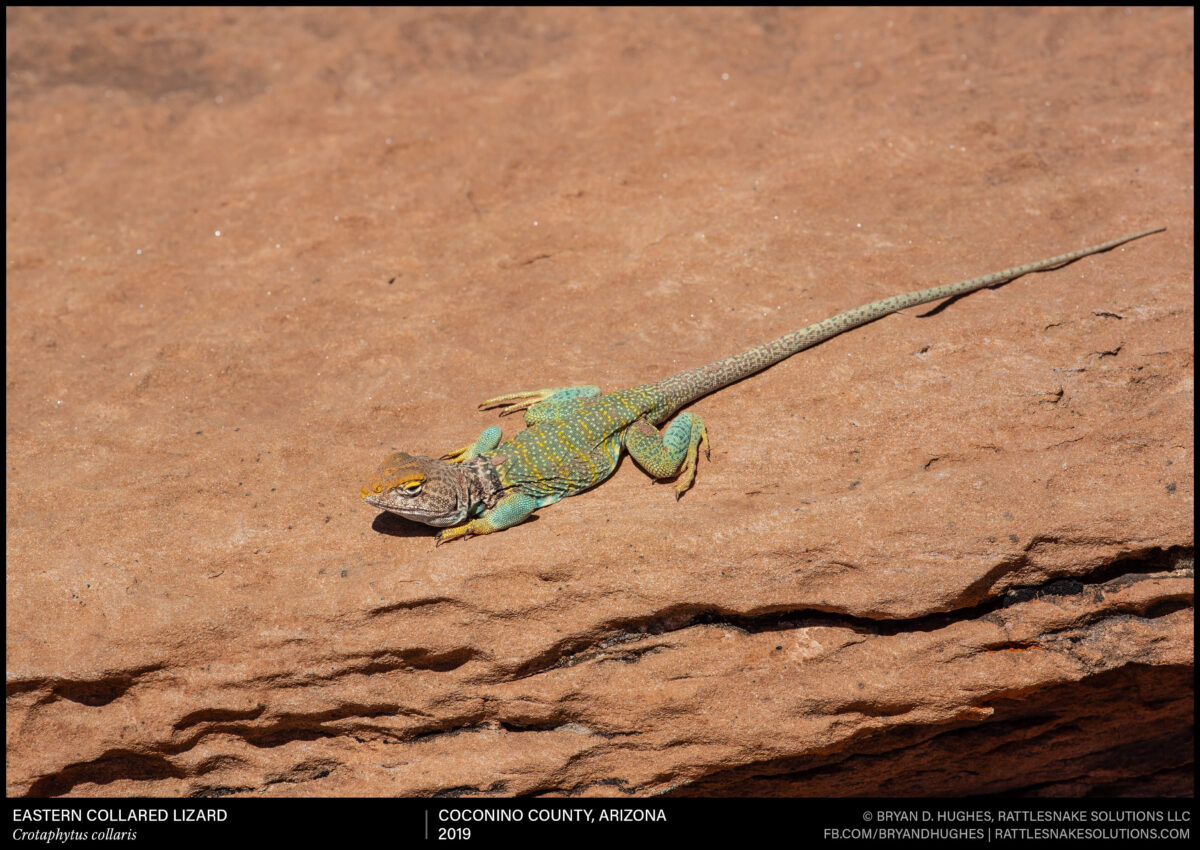
A brilliantly colored Eastern Collared Lizard from the eastern edge of Arizona. This one watched us carefully from atop low boulders along an otherwise flat field, and allowed a single photograph before it disappeared.
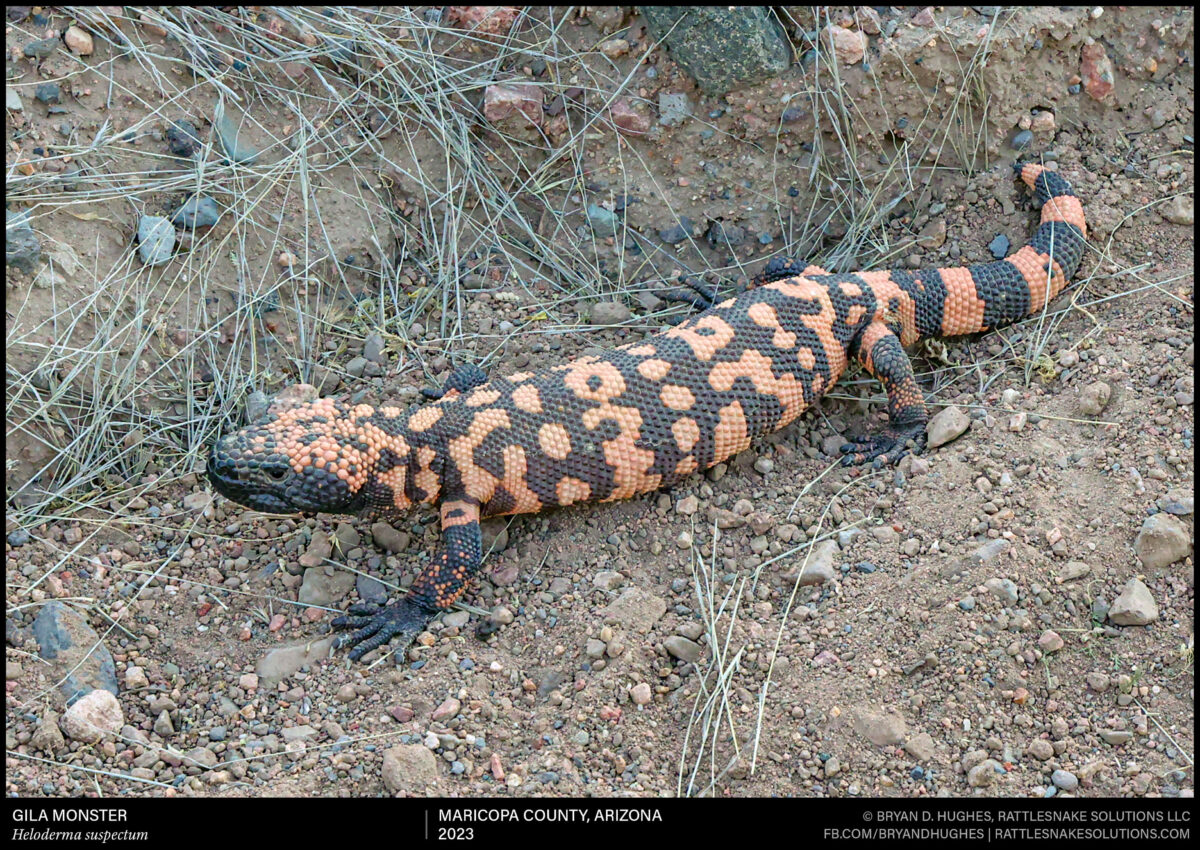
I met this Gila Monster out and about on a spring day in 2023. At the time, there were a lot of quail eggs and baby cottontails to find out there, which gets these animals active and observable.
These animals are the only venomous lizard in the United States, and one of five species of the Heloderma genus found across Central America.
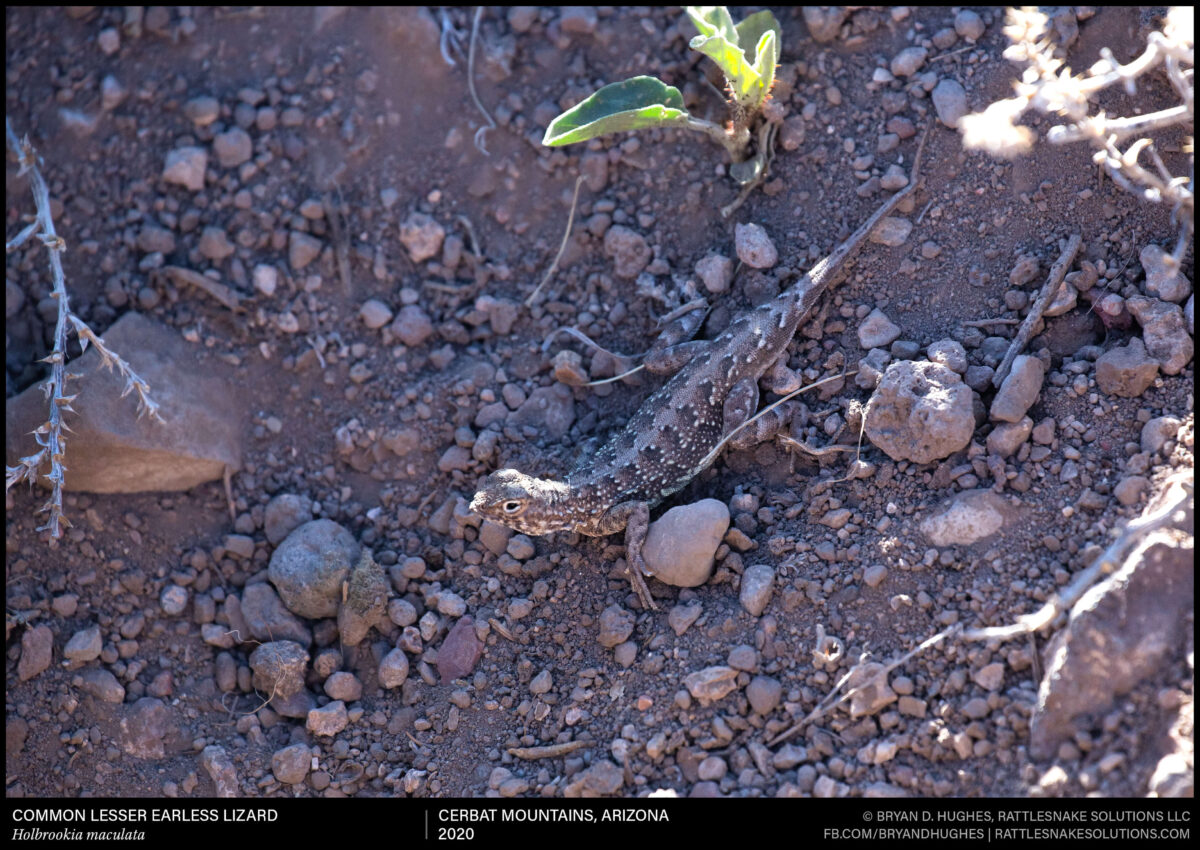
A Lesser Earless Lizard (Holbrookia maculata) from the western edge of Arizona. These lizards, as the name suggests, lack external ear openings to help live in the sandy, debris-filled environment. They still have ears, however, just hidden by skin. This one took a break from skittering away from me for a photo.
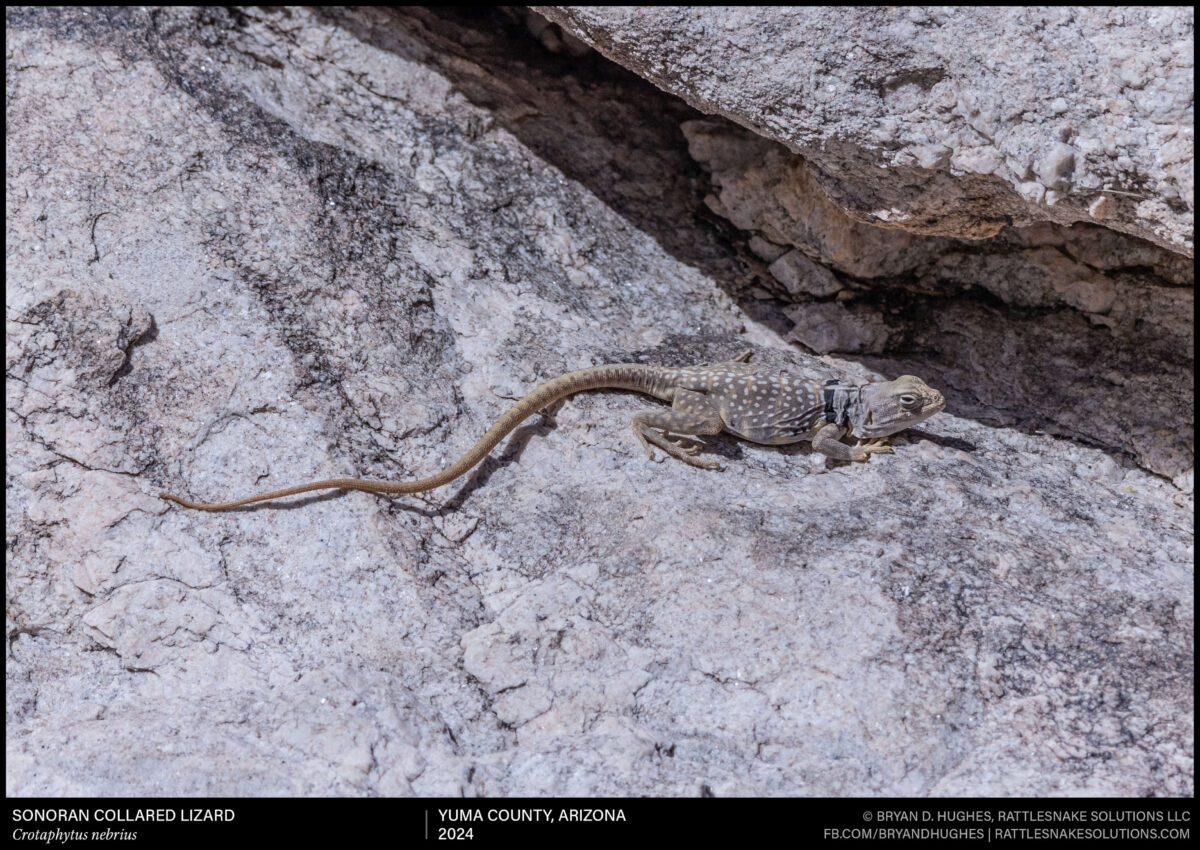
Sonoran Collared Lizards (Crotaphytus nebrius) are generally less brilliantly colored than their bright green relatives north of the Gila River. They can be standing tall on top of rocks on hillsides and outcrops, even in the heat of an Arizona summer day. When they are startled (which can happen from a disappointingly long distance) they can escape quickly by running on their hind legs. They have powerful jaws and consider about anything small enough to fit in that big head as food, which often includes other lizards. Personally, the image of large, fast, bipedal lizards that hunt other lizards fills that “I wish dinosaurs were still here” void just a little.
We found this one in a desert mountain range near Yuma a couple of years ago. It let us get some photos, then disappeared into the crevice above.
Arizona has some amazing, large lizards. This brightly colored one is an Eastern Collared Lizard. Based on a number of factors, they may be any variation of bright greens, blues, yellows, and oranges. This one was seen at a Prairie Rattlesnake den, carefully considering if we were something it needed to run away from.
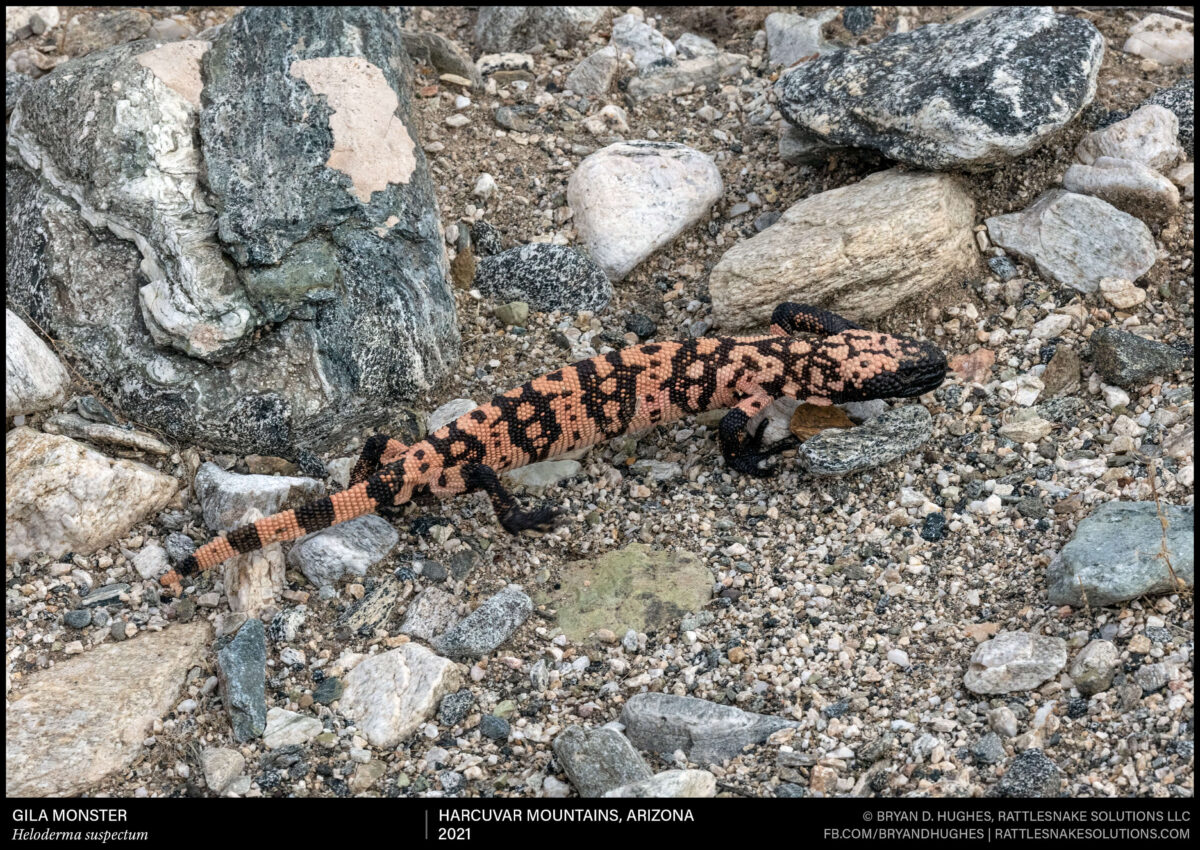
This skinny young Gila Monster wasn’t doing great when we spotted it out and about in the mountains west of Phoenix. The skinny tail and narrow head show that it’s not been successful in finding food. Hopefully, it managed to do so since this photo was taken back in 2021.
Collared Treerunners (Plica plica) are one of the larger arboreal lizards seen occasionally hiking in Peru. At night they sleep in trees, mostly high and out of sight. But sometimes they are in the understory and can be photographed.