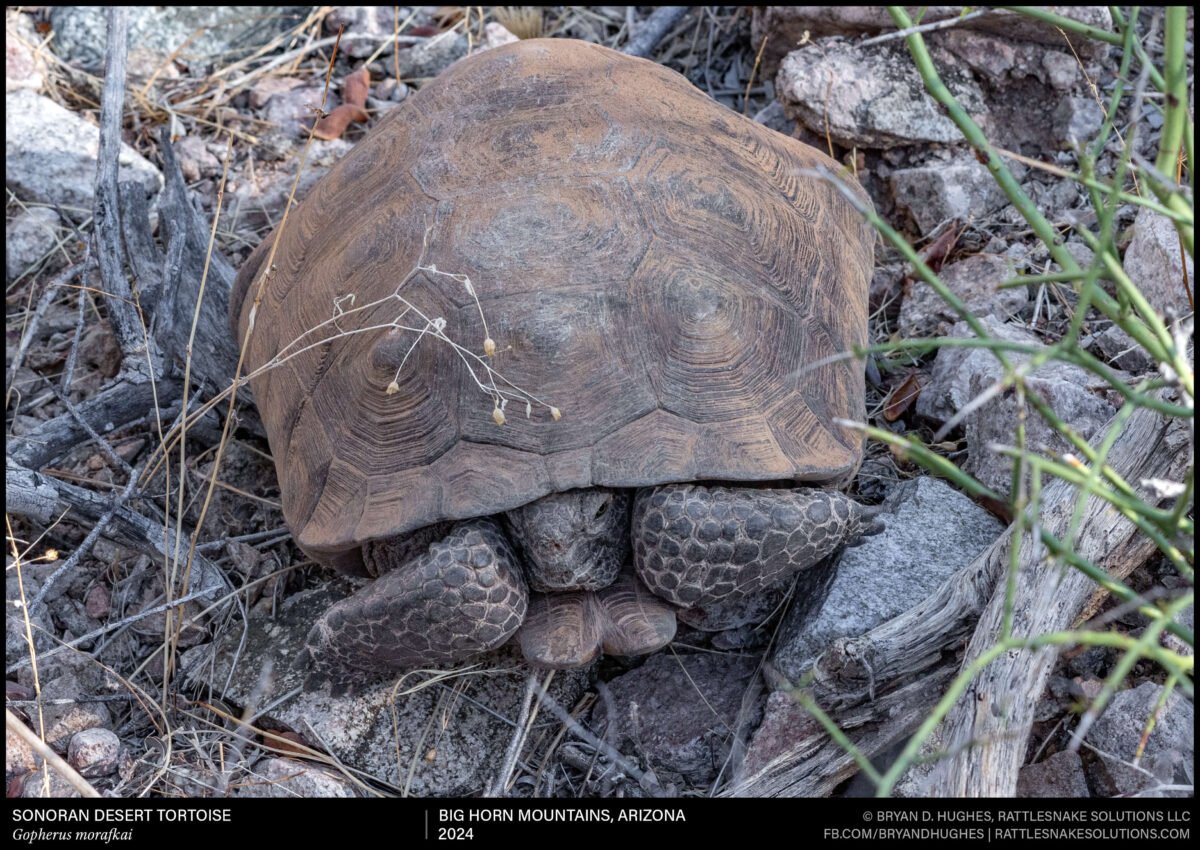
A Sonoran Desert Tortoise cruising around the rocky outcrop it calls home each Winter. It shares the space with a few Western Diamondback Rattlesnakes and at least one Gila Monster … and a beehive.

A Sonoran Desert Tortoise cruising around the rocky outcrop it calls home each Winter. It shares the space with a few Western Diamondback Rattlesnakes and at least one Gila Monster … and a beehive.

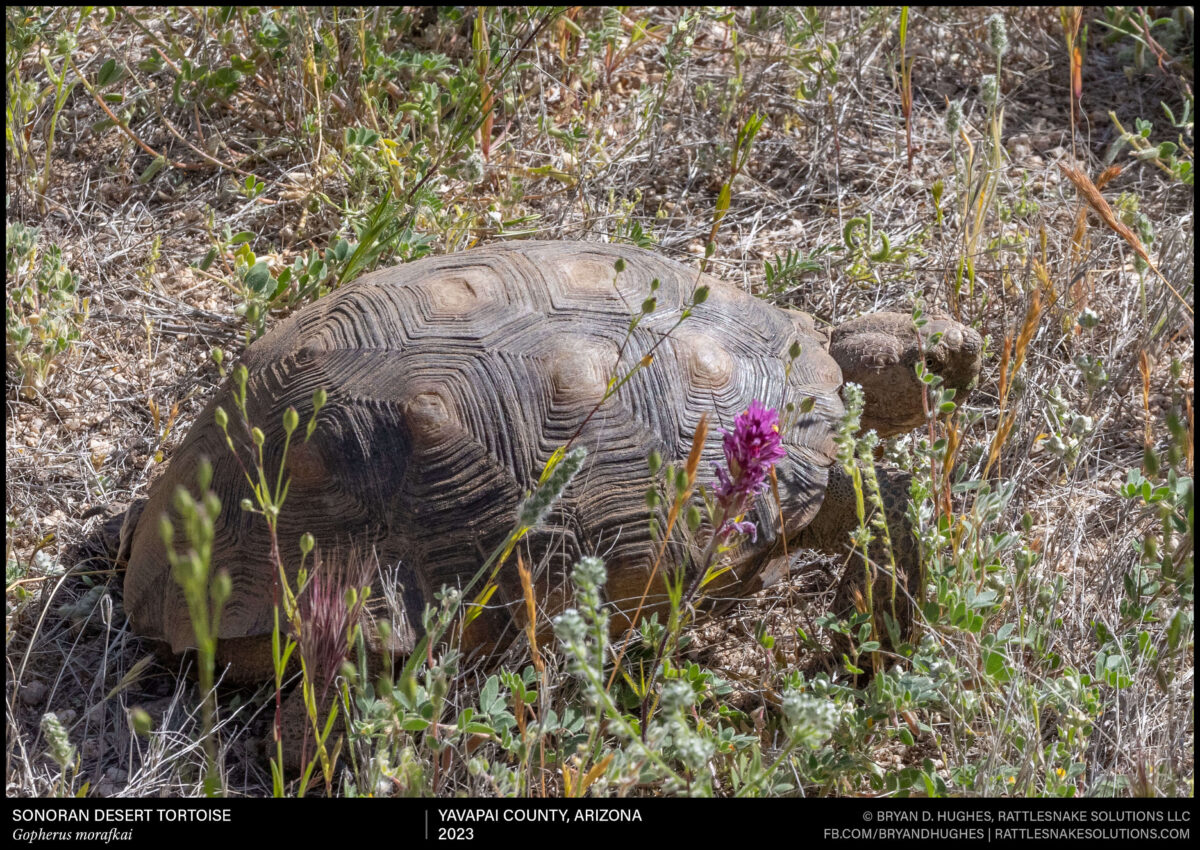
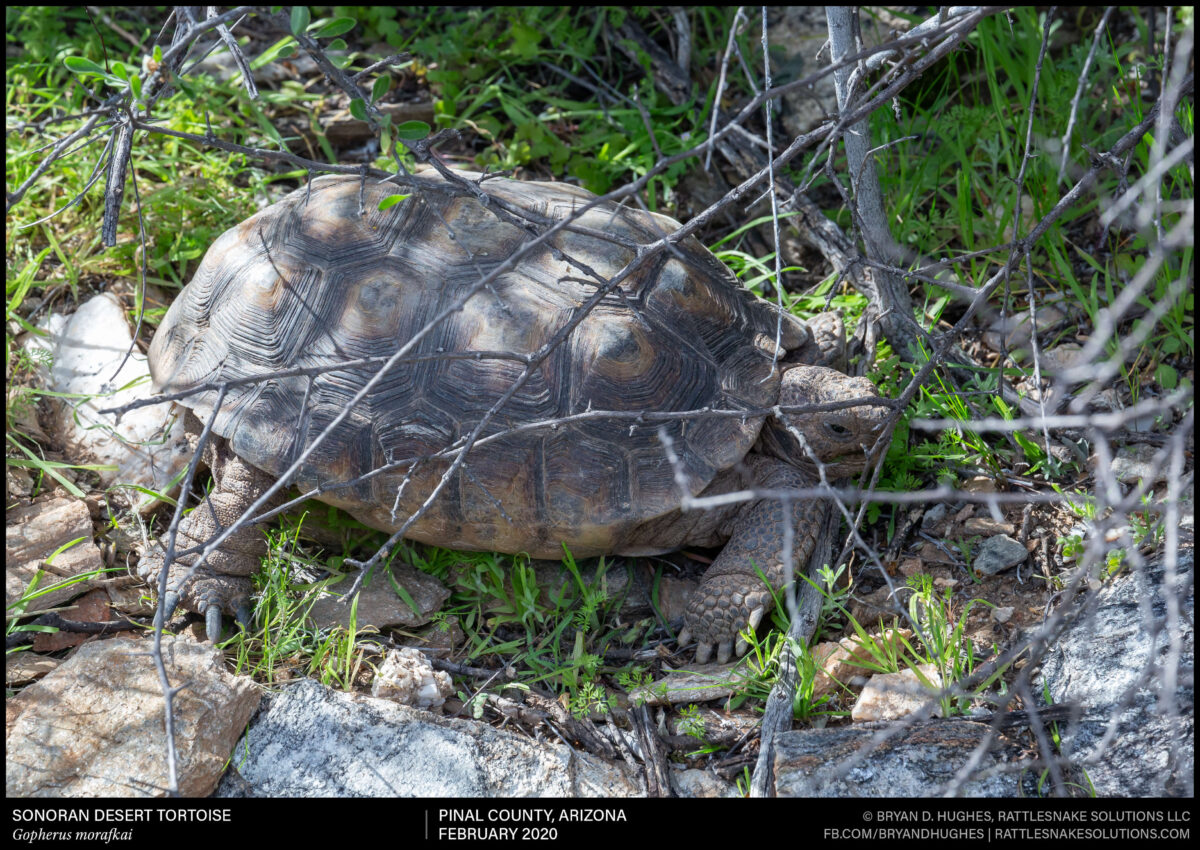
Sonoran Desert Tortoises are very active in the early Spring, getting out there to much on all the new green stuff all over.

If you live near wild spaces and see a native Desert Tortoise out there, please don’t assume it’s someone’s pet. Far too often, we see people pick up native tortoises and making “did someone lose a turtle” posts, not realizing that they are right where they belong. If you’re unsure what you’re looking at, send us a photo and location and we can help assess the situation.
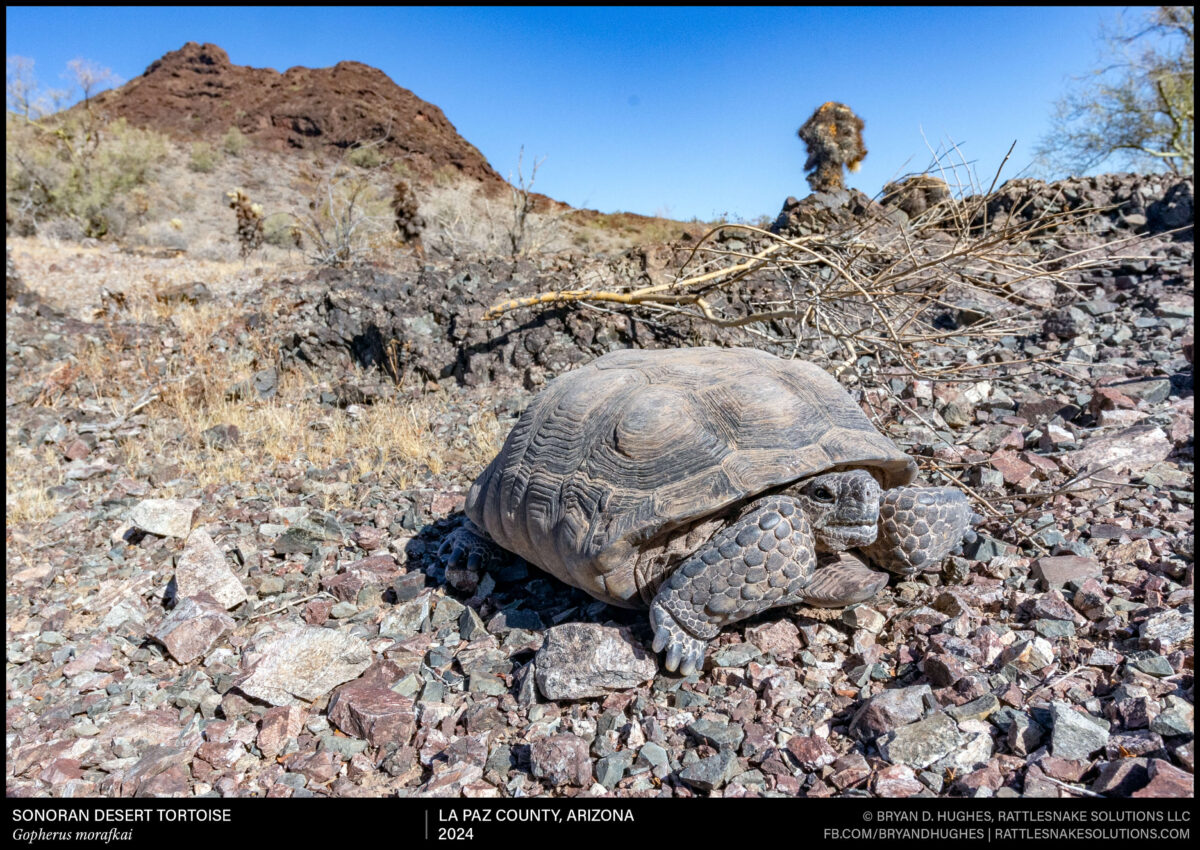
A Sonoran Desert Tortoise resting in the shade in on a hot morning in the Big Horn Mountains of western Arizona. These tortoises become nocturnal during the hottest parts of summer, moving and eating after dark and returning to their deep caves by the time the sun hits the area again.

A young Sonoran Desert Tortoise making its way down a hillside in the early spring.
About a month later, fire tore through the area. While it can’t be known if this tortoise, or the Gila Monster resting a few meters away, survived, a return visit to the area later in the season makes it doubtful. Now, a year later, the only thing alive on the hill are the invasive grasses which fuel the issue. With OHV in mass numbers and target shooting unrestricted and controls unenforced, the region has been quickly converted to a sea of dead grass and revolving burns.

We found this tiny young Sonoran Desert Tortoise cruising around the base of a basalt mountain in the harsh, remote desert of southwestern Arizona. This little one had likely just started its springtime wandering, looking to take in as many blossoms and young green leaves as possible before the heat forces it underground for a while.

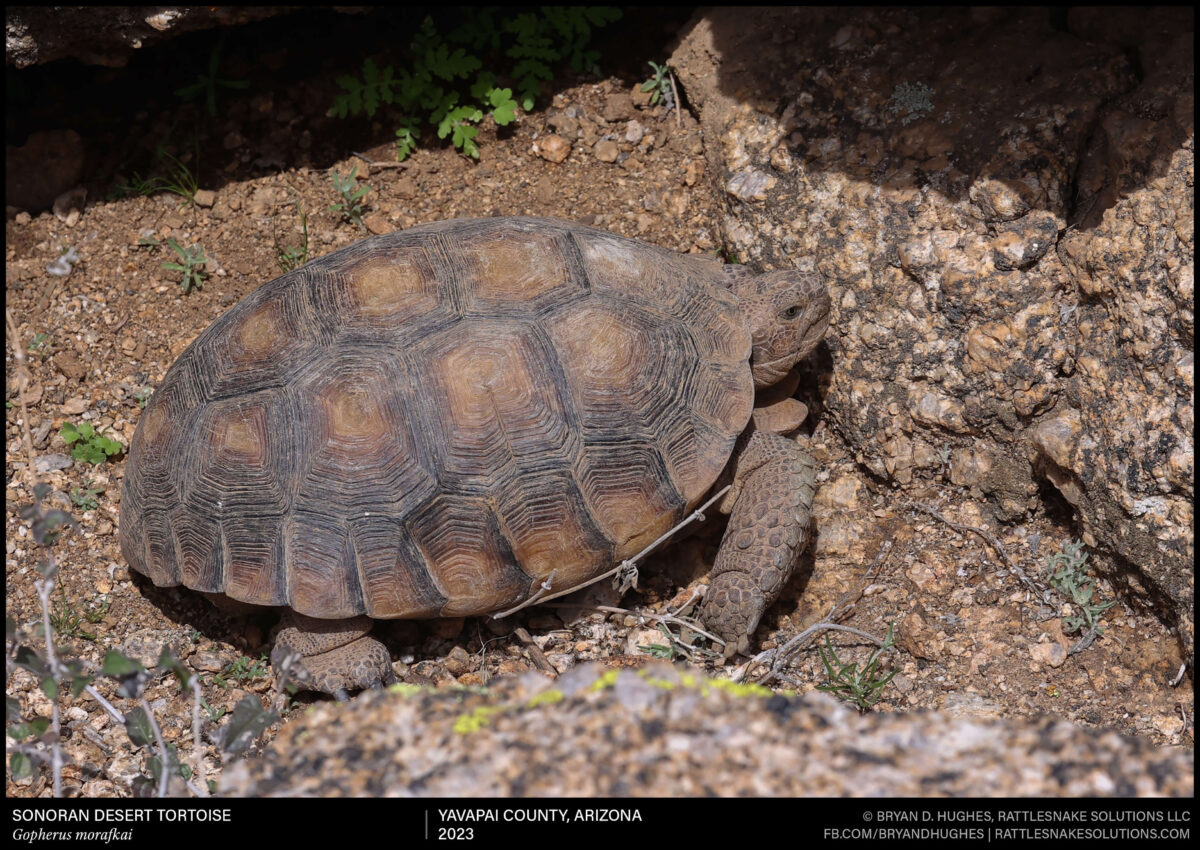
A Sonoran Desert Tortoise cruising around near one of its burrows. These animals dig out and widen natural caves in caliche or under boulders that they will use for a lifetime.
These are protected by law … but did you know you can adopt one as a family pet, for free? If you have a backyard, they are so fun. Here’s how you can adopt a Sonoran Desert Tortoise from the AZGFD: https://www.azgfd.com/wildlife-conservation/living-with-wildlife/wildlife-care-center/tortoise-adoption-information/

I found this Sonoran Desert Tortoise hanging out at the entrance of one of its burrows. Each year, it returns to the same hole that it’s excavated from a smaller natural gap caused by erosion in the upper edge of a wash. During this time, it is mostly nocturnal, never going too far from its aestivation home. Once the monsoon brought moisture to the area, it went on its way to another spot.