A Western Diamondback Rattlesnake resting on the surface of the rock pile that serves as its winter den. This was not a particularly warm day, but it and several others were found in close proximity to one another to get ready for another year.
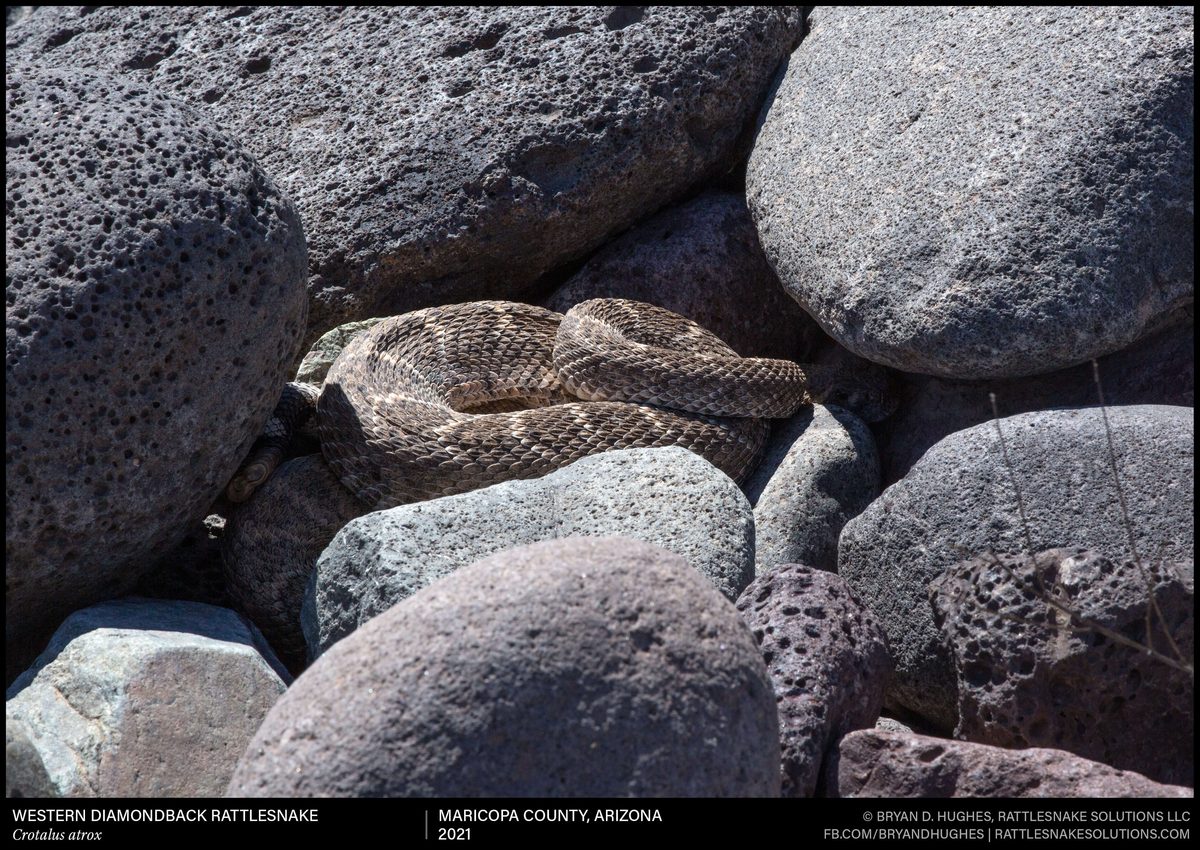

A Western Diamondback Rattlesnake resting on the surface of the rock pile that serves as its winter den. This was not a particularly warm day, but it and several others were found in close proximity to one another to get ready for another year.
Three of the half dozen or so Western Diamondback Rattlesnakes that occupy this den each winter. These snakes spend a lot of time during the early spring basking and making short movements to thermoregulate and for social reasons, where they are vulnerable to predators and other threats.
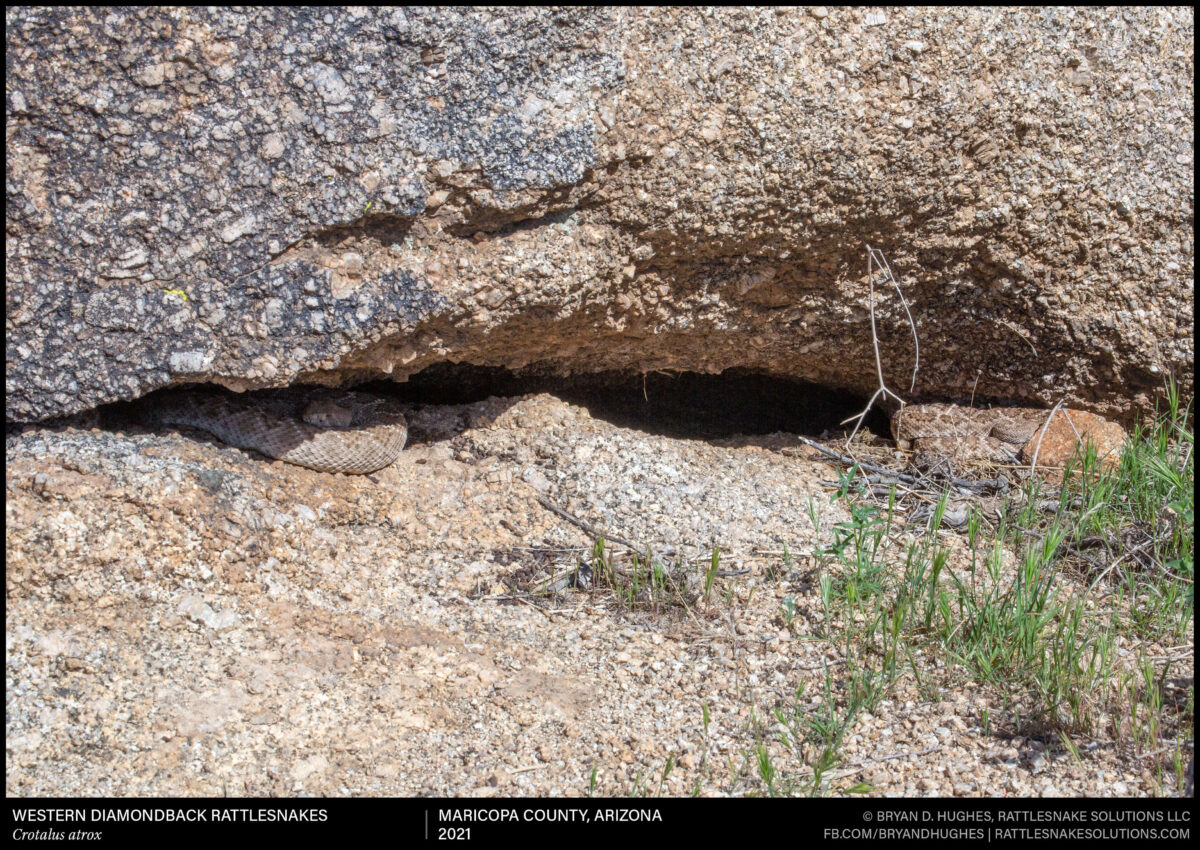
After a relatively unproductive weekend in the early Spring at higher elevation, I made a quick stop by a large rocky outcrop on the way home on a whim. I have been driving past this particular rock for more than a decade, always in a hurry somewhere or dead tired, always thinking “one nof these days, I’ll check that out; it has to be a den“. Well that day was the day, and of course, it was a winter den. This large blacktailed rattlesnake was laid out over a boulder getting some sun, with others another in the crevices behind it. I’ll check it out again next year in more prime conditions.

One of a few Arizona Black Rattlesnakes hanging out at an overwintering site, ready and waiting for the cold to come. This was photographed in the fall at high elevation, where rattlesnakes gather in sometimes large numbers to den together in deep retreats.
This species is what locals often mistakenly refer to as “Timber Rattlesnake”, which it is not. Timber Rattlesnakes are a real snake, however, but not closely related to this one, and not found in the Western US.

A pair of Arizona Black Rattlesnakes take the prime spot at the den, with a half dozen or more shuffling throughout the day behind them. For these snakes, it’s early den egress time, when they stage at and near the den for awhile before heading out for the season. This den is shared by two other species of rattlesnakes, though, all using the rocky area slightly differently. These are the last to emerge, with the Western Diamondback Rattlesnakes and Blacktailed Rattlesnakes having already dispersed for the year.
This was photographed in the late Spring several years ago in southeastern Arizona.

A Blacktailed Rattlesnake resting in the filtered light of a dense bush. This is one of many seen at a relatively densely populated den, at which we only found blacktails. Just down the hill, Western Diamondbacks also made an appearance. With some “up” left in the mountain and a change to more high elevation juniper habitat, we’re hoping for the addition of other rattlesnake species.

There are at least five Arizona Black Rattlesnakes in this photo. It’s a winter den site, where multiple generations live together through the cool part of the year.

It’s not a great photo, but this is how these snakes are often seen. It’s a Striped Whipsnake; one of several seen cruising around a multi-species rattlesnake den in the spring. Personally, I’ve been clued into a good number of rattlesnakes hidden deep within crevices because of these much more observable snakes, and their preference for similar hibernacula.

A Western Diamondback Rattlesnake out basking in early Spring at its den. An hour later, this animal was out on the crawl looking for females to court, and make sure rival males stick to their own rocks.
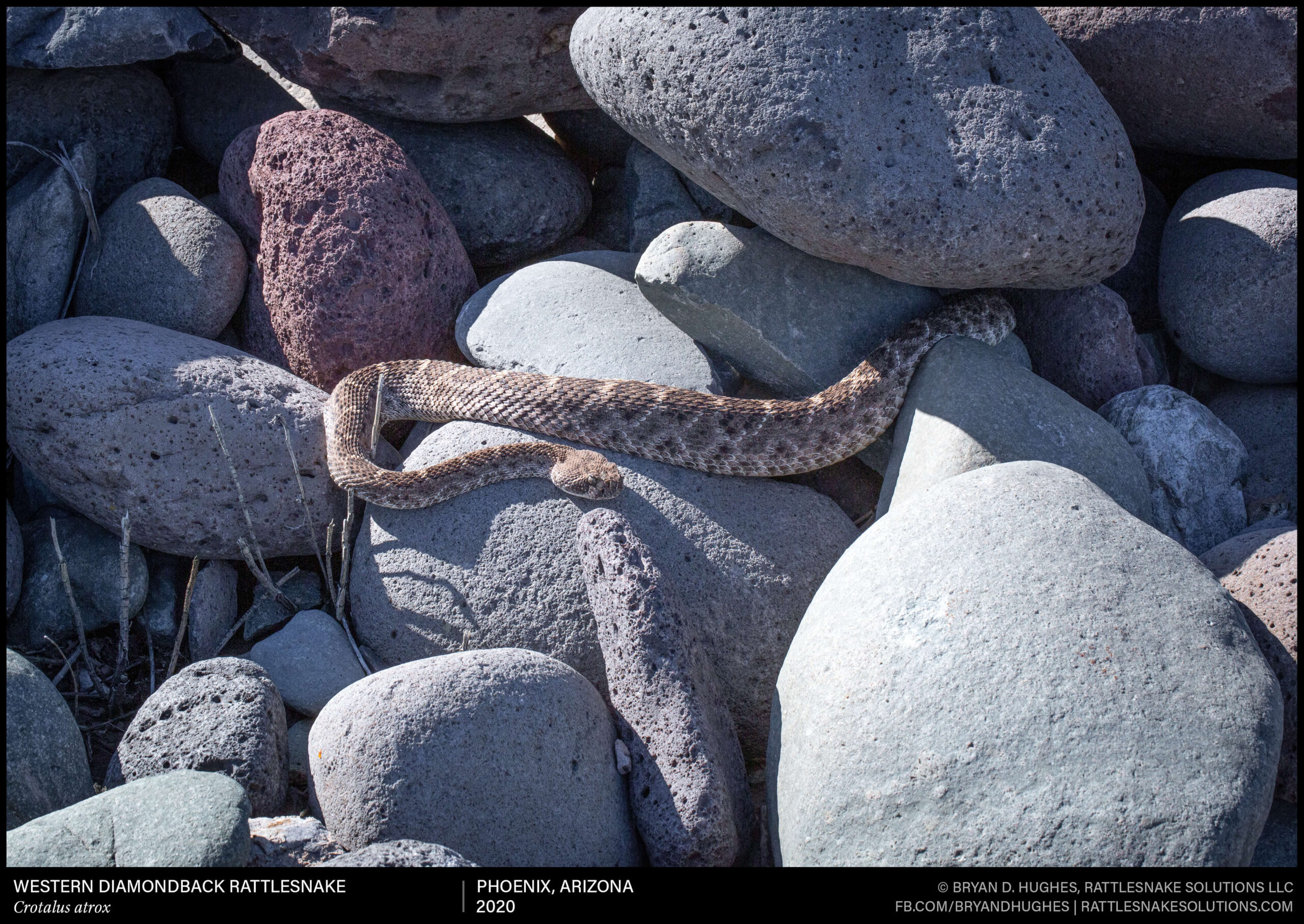
Several Western Diamondback Rattlesnakes moving around their winter den on a cloudy, warm Spring day near Tucson. These snakes move daily on the surface like this, mostly avoiding detection, for a few weeks during their transition from hibernation to spring hunting. During that time, a lot of social activity takes place.
