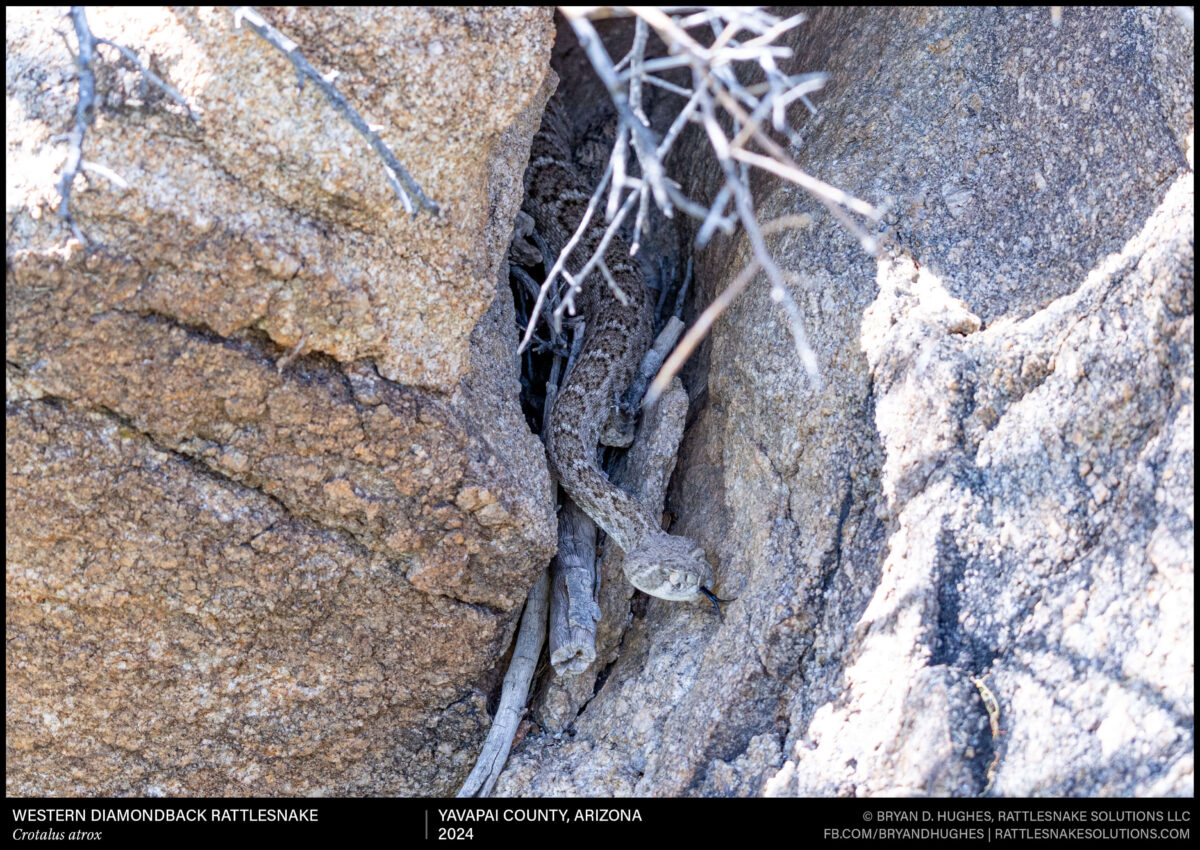
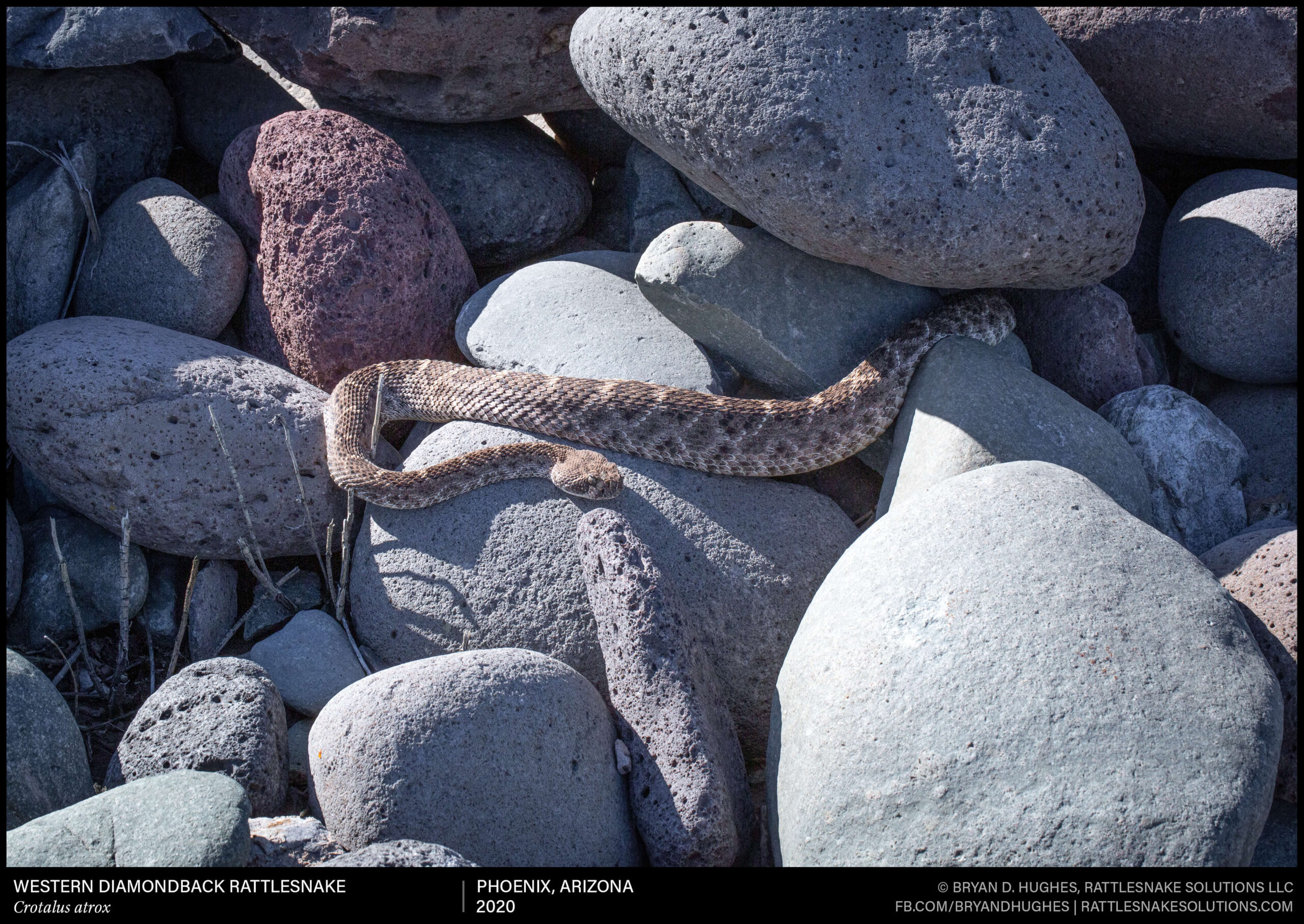
We were out checking dens on a spring day and stopped at one last spot. It was a rocky outcrop relatively isolated from the rest of the mountain, and looked great from at distance. Upon getting to it, we were immediately greeted with this large Western Diamondback Rattlesnake on the move a short distance from what we’d later recognize as the entrance.
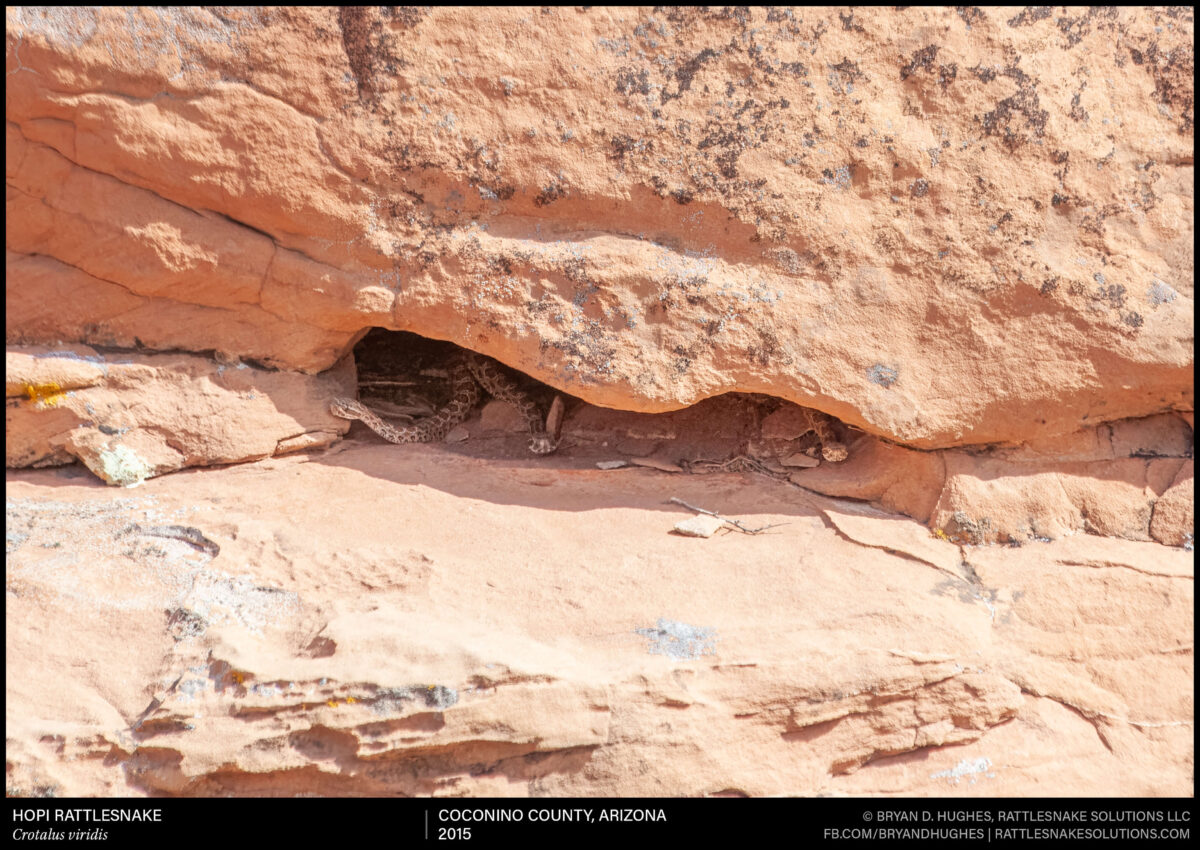
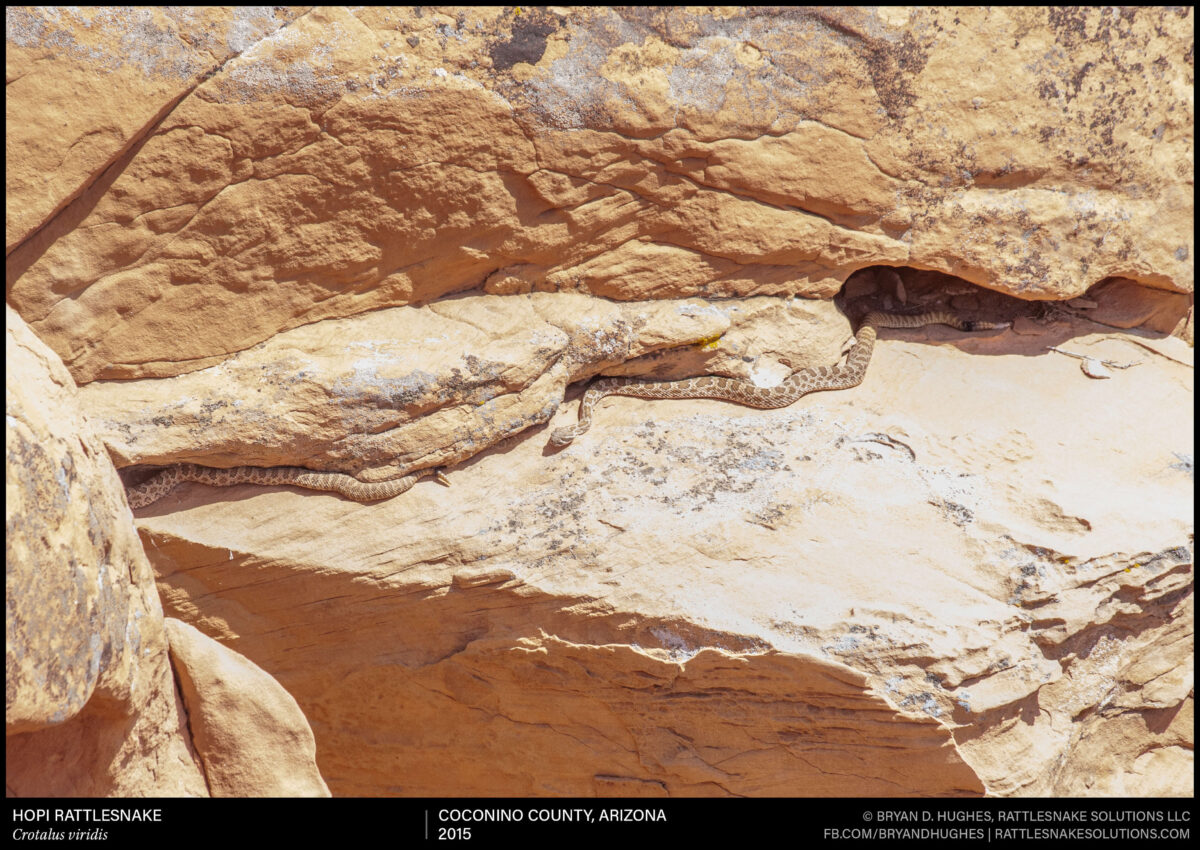
It takes a lot of patience to sneak up on this den of Prairie Rattlesnakes in northern Arizona. Unlike most rattlesnake dens I visit, these spook incredibly easily, retreating at the sight of me from well over 100′ away. Even when moving slowly, they seem to recognize the threat and disappear … for the rest of the day. It’s only by arriving before it’s warm enough to emerge and hiding behind boulders that it was possible for me to get these photos, and watch their actions for the morning.
These small variants of the species were once considered a separate subspecies (Hopi Rattlesnake), more than twenty years ago, but may be again, based on discussion of new research from reliable sources. These are all only around 1 to 1.5′ long, and will never get bigger. This is quite different than the much larger, greener (~3′) versions of the same species found in the Juniper-dominated hills, a relatively short drive away.
This topic will almost certainly mean the comments here will be dominated by snake people, similarly emerging from the crevices of the internet to shake fists in various directions. Taxonomy is a bit like music – whichever bands were popular at the time a young herpetologist is most active seem to become the prime lexicon, all future versions to be summarily dismissed as noise of youth.
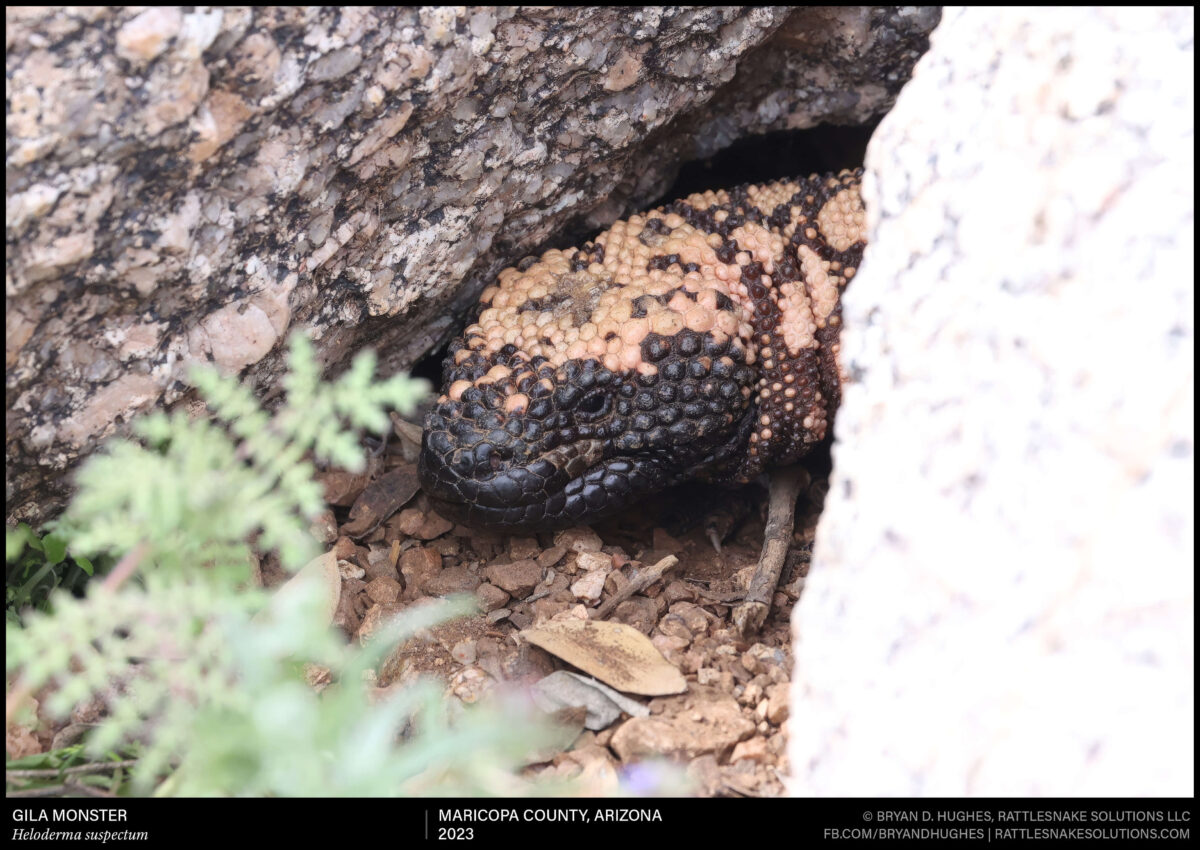
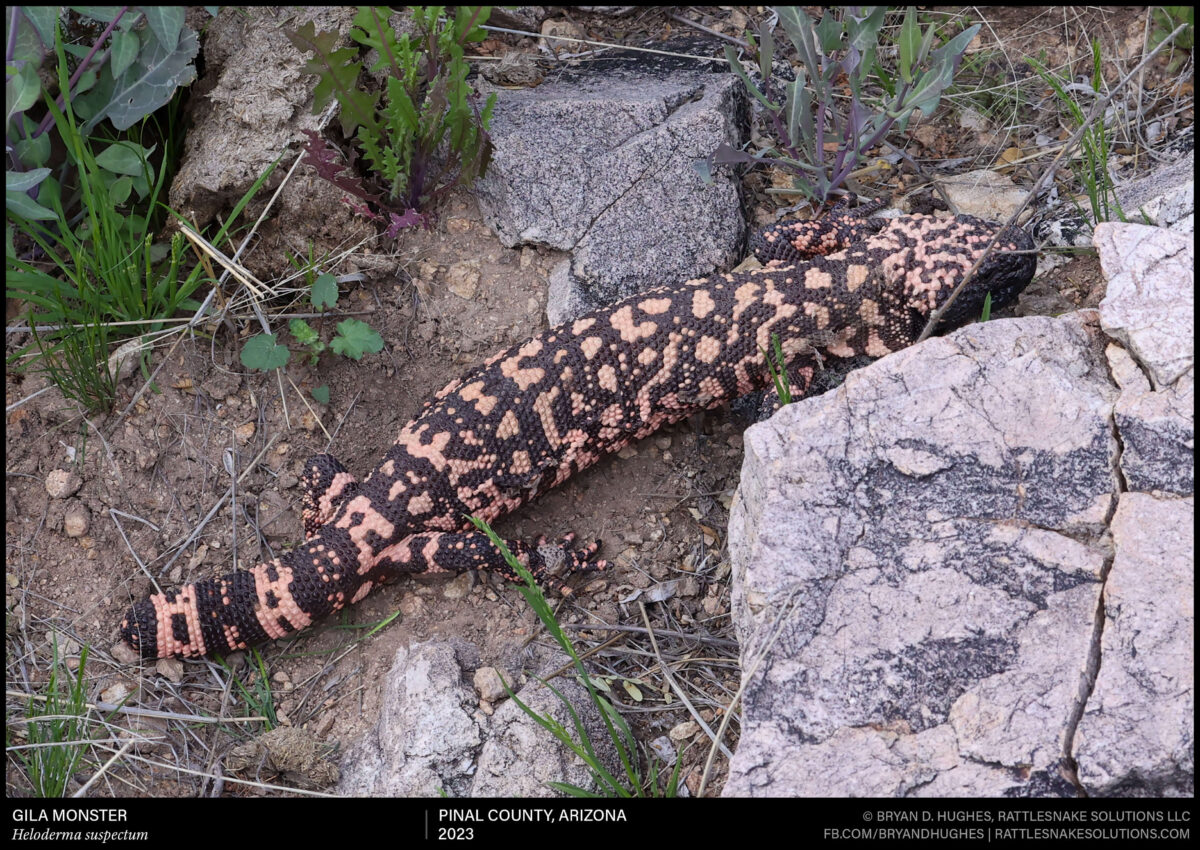
A Gila Monster peeking out of its spring staging spot, just down the hill from where it spent the winter. It shares this spot with several other Gila Monsters, a handful of Western Diamondback Rattlesnakes, and the occasional tortoise. It will spend the majority of each day during the early spring doing, basically, this. Resting in partial sun, disappearing if predators approach, and waiting to head out in nest-hunting mode as soon as the time is right.
A Gila Monster out and about on a spring day a couple of years ago. On mild days, these animals start to move away from often communal dens to springtime staging areas. They may take daily patrols, searching for nesting mammals and quail eggs. It’s common for hikers to report them on social media frequently within a few days’ time, usually in late February or early March, which is a reliable signal that the process has begun each year.
A Blacktailed Rattlesnake resting in the filtered light of a dense bush. This is one of many seen at a relatively densely populated den, at which we only found blacktails. Just down the hill, Western Diamondbacks also made an appearance. With some “up” left in the mountain and a change to more high elevation juniper habitat, we’re hoping for the addition of other rattlesnake species.
It’s not a great photo, but this is how these snakes are often seen. It’s a Striped Whipsnake; one of several seen cruising around a multi-species rattlesnake den in the spring. Personally, I’ve been clued into a good number of rattlesnakes hidden deep within crevices because of these much more observable snakes, and their preference for similar hibernacula.
I found this Blacktailed Rattlesnake with a few others hanging out around a winter den early in 2024. Unlike other rattlesnake overwintering sites in the area, this one does not seem to be shared with the other rattlesnake species that can be found there – just lots of blacktails.
Dens like this have been difficult to pinpoint in environments that are mostly open rock, but over time the specifics have become more apparent and sights like this come easier these days. I’m looking forward to a return visit this spring.
A Western Diamondback Rattlesnake out basking in early Spring at its den. An hour later, this animal was out on the crawl looking for females to court, and make sure rival males stick to their own rocks.