An Indian Star Tortoise cruising around the grassy scrub of Karnataka while we kept our heads on a swivel for sloth bears.
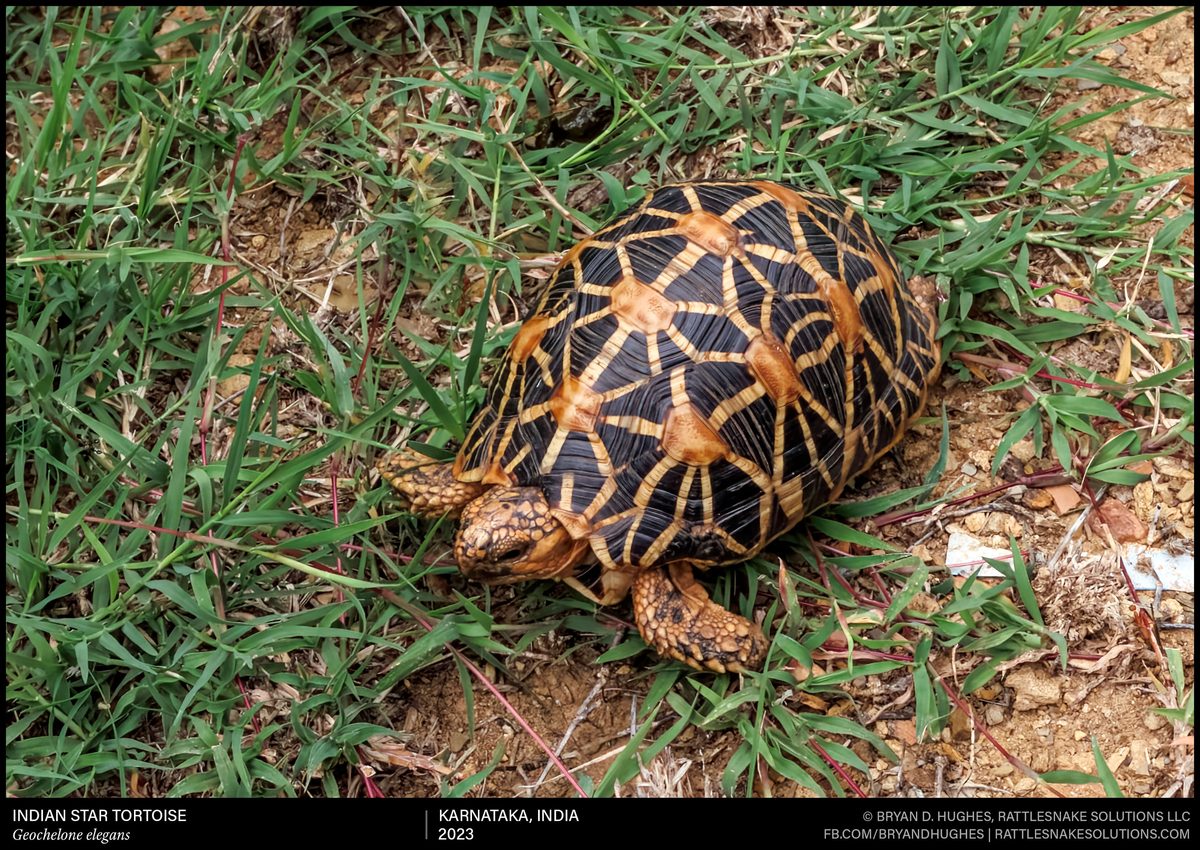

An Indian Star Tortoise cruising around the grassy scrub of Karnataka while we kept our heads on a swivel for sloth bears.
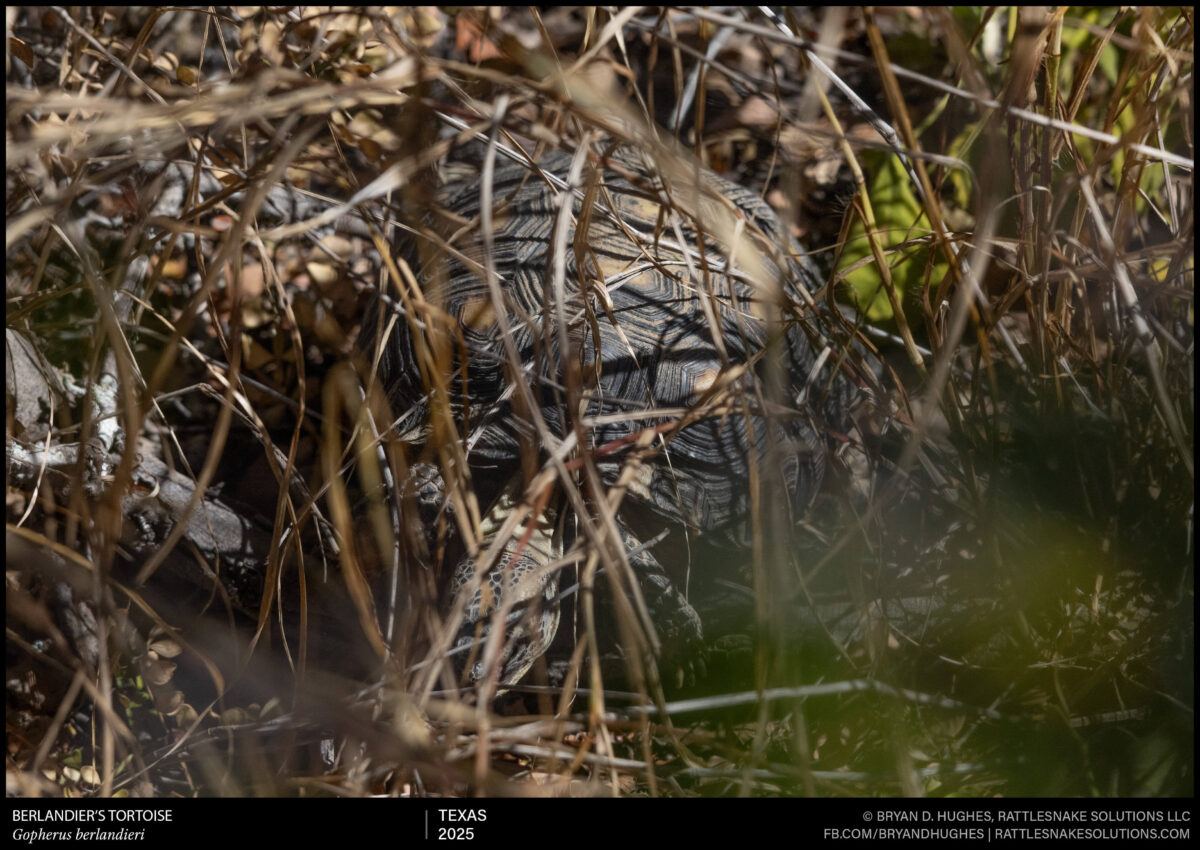
Berlandier’s Tortoise (Gopherus berlandieri) from south Texas last year.
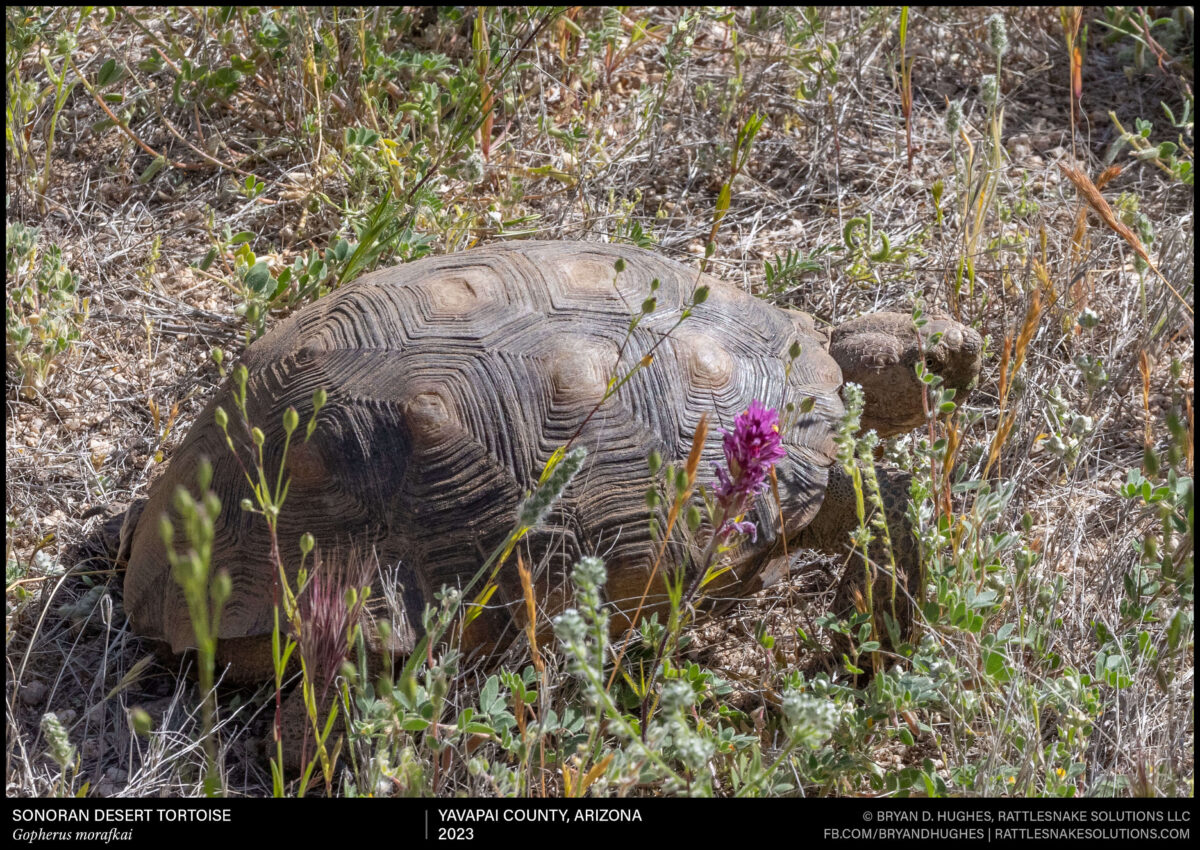
A Sonoran Desert Tortoise making its way around to munch on green grasses and spring blossoms in central Arizona. These animals can live a long time, and can be found year after year using the same locations and burrows.
They don’t do well with development, though. When those important sites disappear, they die out. In places where they were once abundant, even outside of the developed areas, they quickly become extirpated.
I scrambled to the high rocky ridge of a mountain in western Arizona, looking for rattlesnakes. The steep terrain and loose rocky ground made it difficult to get there. I was surprised to run into this big Sonoran Desert Tortoise (Gophersus morafkai) up there. These animals are great climbers, often picking hiding spots far up hillsides in places I wouldn’t even want to climb. We passed each other, and he headed down slope in what looked to be a dangerously steep area … but as I was the one slipping and sliding all over the place, I figured he knew what he was doing.
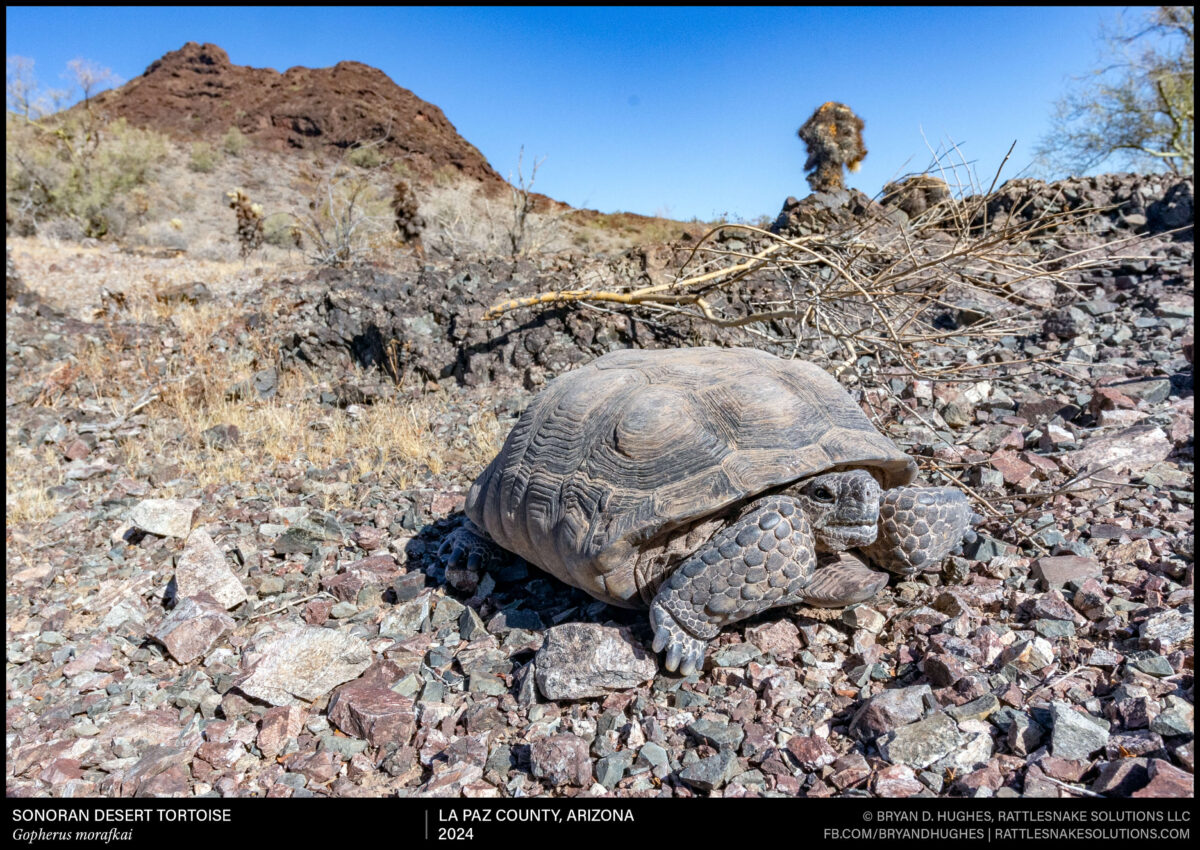
A Sonoran Desert Tortoise cruising around the rocky outcrop it calls home each Winter. It shares the space with a few Western Diamondback Rattlesnakes and at least one Gila Monster … and a beehive.
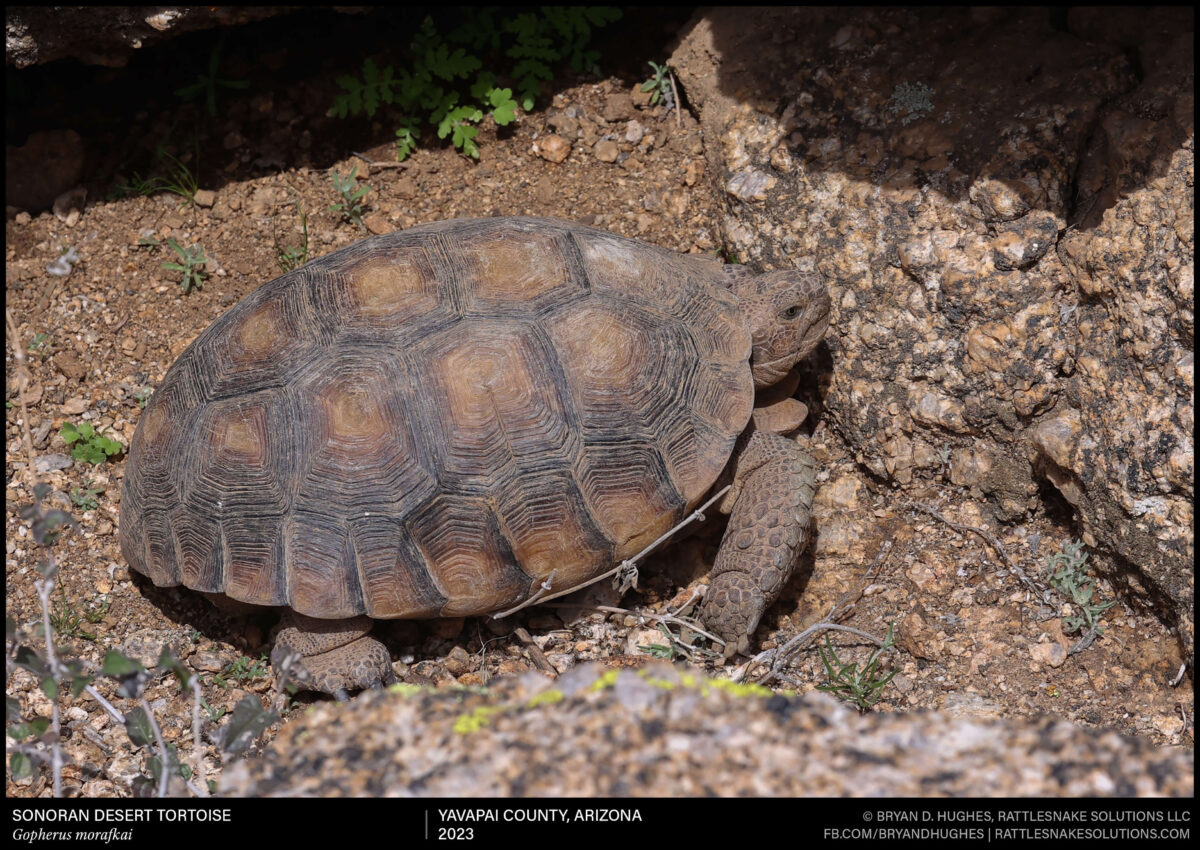
Sonoran Desert Tortoises are very active in the early Spring, getting out there to much on all the new green stuff all over.
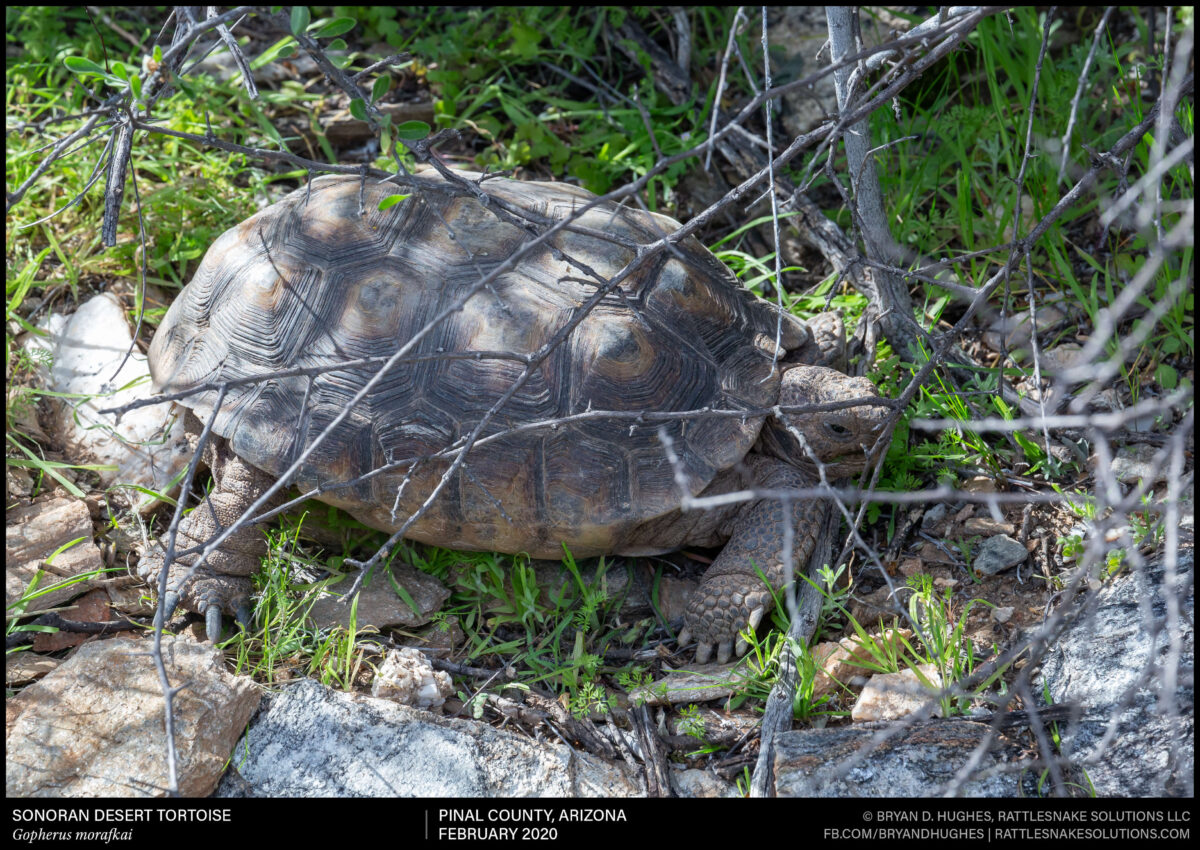
If you live near wild spaces and see a native Desert Tortoise out there, please don’t assume it’s someone’s pet. Far too often, we see people pick up native tortoises and making “did someone lose a turtle” posts, not realizing that they are right where they belong. If you’re unsure what you’re looking at, send us a photo and location and we can help assess the situation.
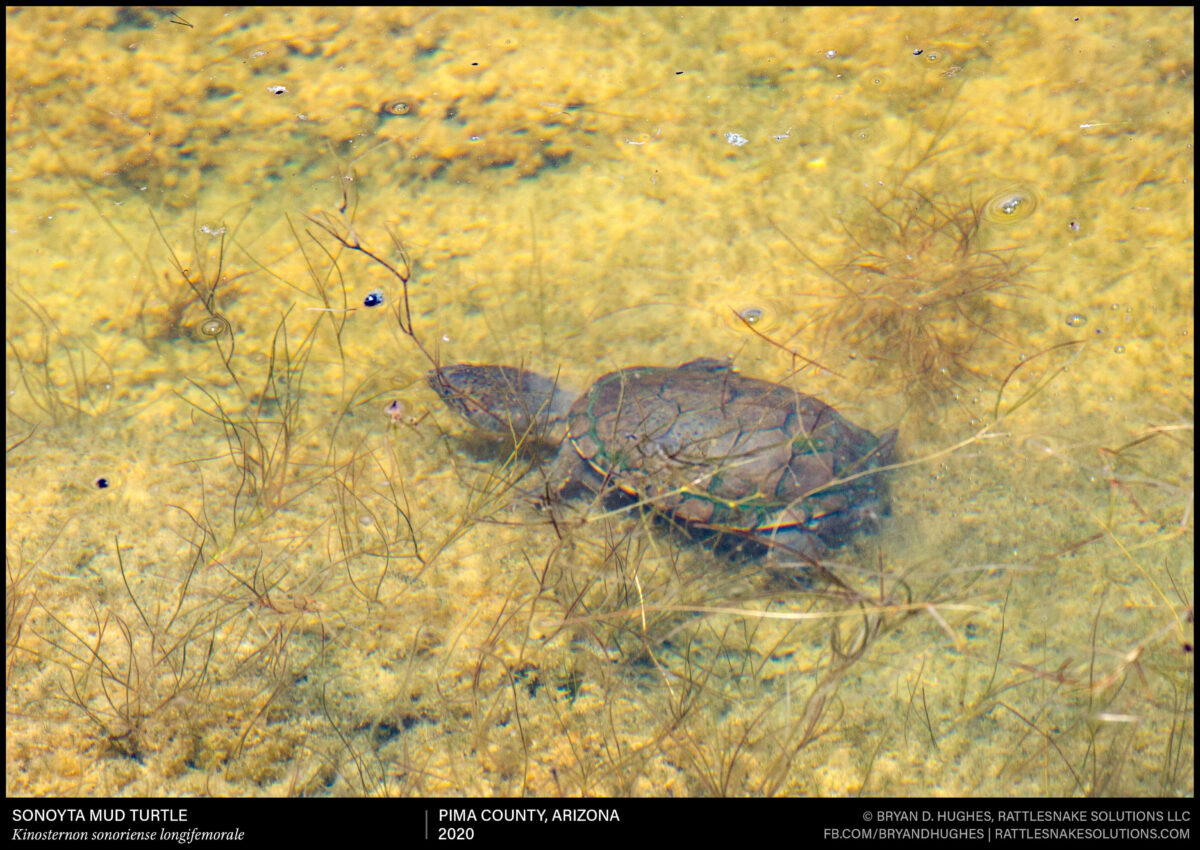
The Sonoyta Mud Turtle is only found in small parts of Sonora, Mexico, and a single small pond in extreme southern Arizona – a stone’s throw from the border. Here is one of several seen on an afternoon visit to this pool, swimming around just under the surface, going after insects and poking through clumps of algae.
Grageda-García, M., & Bogan, M. T. (2025). Conservation status of the Sonoyta mud turtle (Kinosternon sonoriense longifemorale) and comparison of estimated abundances in different historical sites along the Sonoyta River in Sonora, Mexico. Chelonian Conservation and Biology, 24(2), 155–166. https://doi.org/10.2744/CCB-1588.1
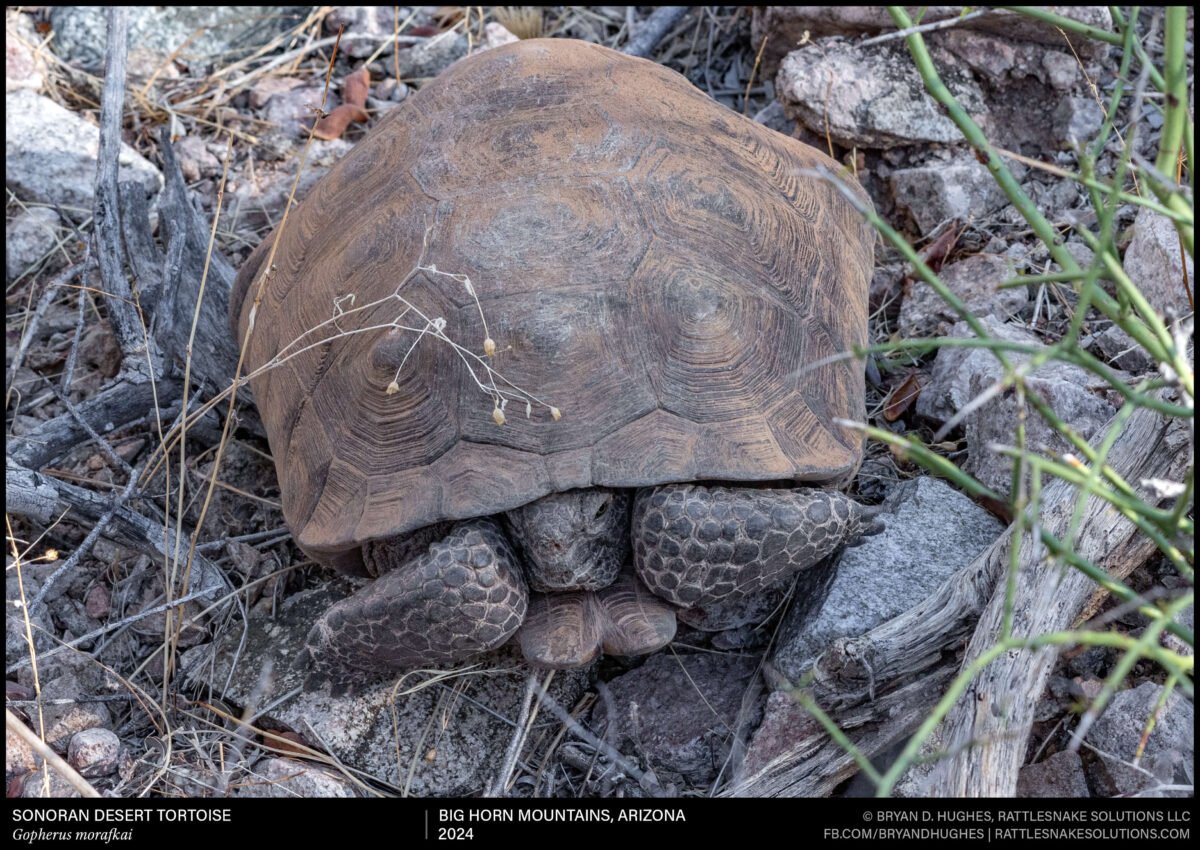
A Sonoran Desert Tortoise resting in the shade in on a hot morning in the Big Horn Mountains of western Arizona. These tortoises become nocturnal during the hottest parts of summer, moving and eating after dark and returning to their deep caves by the time the sun hits the area again.
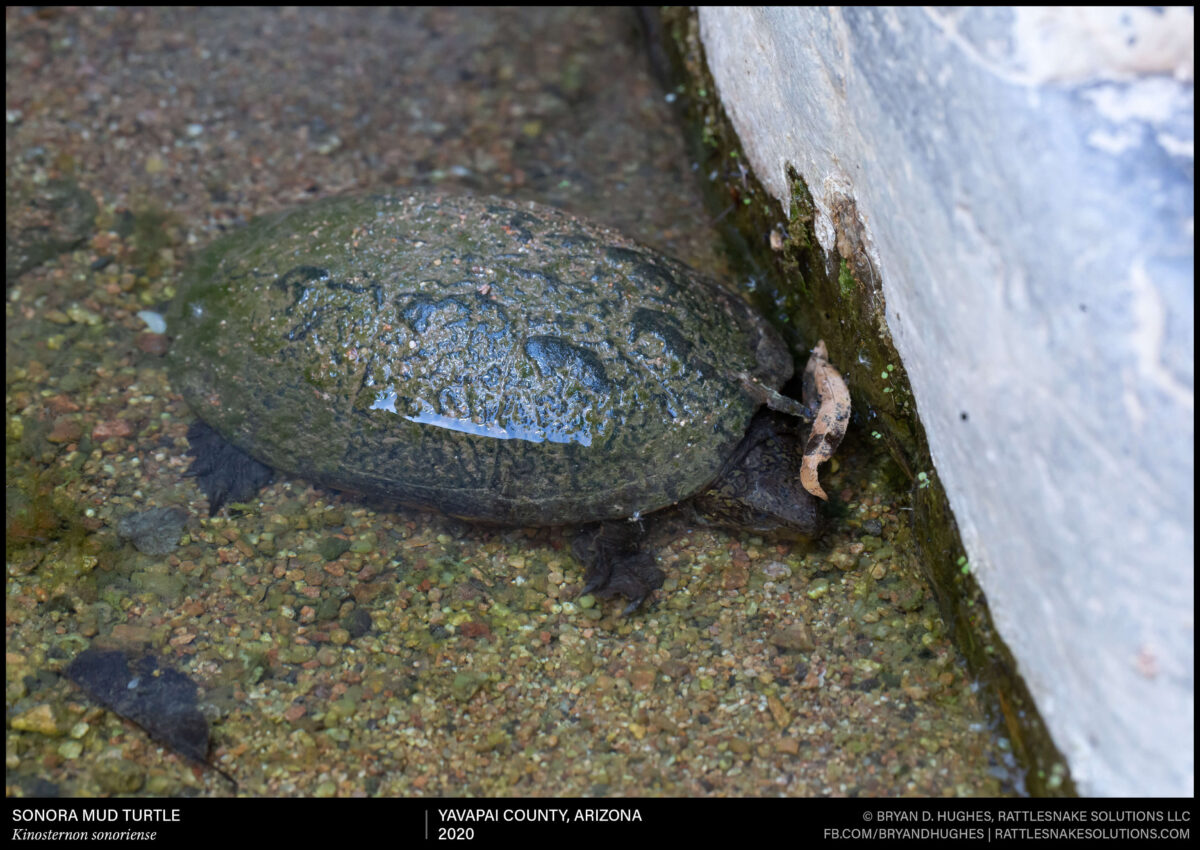
One of the native turtles of Arizona, a Sonoran Mud Turtle we saw cruising around a water hole in Yavapai County. These stinky little guys can live in many waterways below the rim, and can be seen any time of day and year in the right conditions.
A young Sonoran Desert Tortoise making its way down a hillside in the early spring.
About a month later, fire tore through the area. While it can’t be known if this tortoise, or the Gila Monster resting a few meters away, survived, a return visit to the area later in the season makes it doubtful. Now, a year later, the only thing alive on the hill are the invasive grasses which fuel the issue. With OHV in mass numbers and target shooting unrestricted and controls unenforced, the region has been quickly converted to a sea of dead grass and revolving burns.
