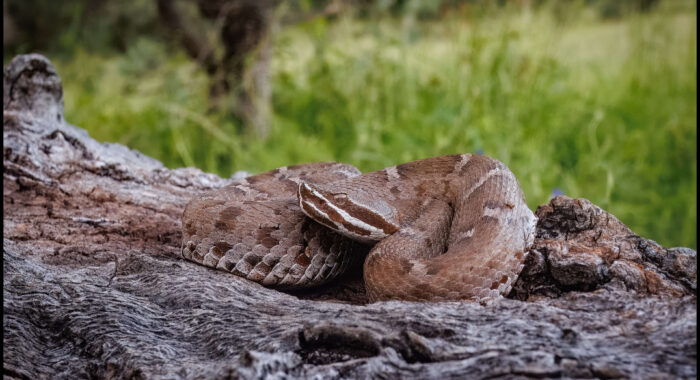
An Arizona Ridgnosed Rattlesnake from Cochise County, Arizona. This is a small rattlesnake that is found in a handful of mountainous areas in the southeastern corner of the state. A hiker may encounter one if they are in the Santa Rita, Patagonia, Huachuca, Canelo, or Whetstone ranges. Interestingly, every rancher and long-term resident of those […]
Continue reading..Arizona Ridgenosed Rattlesnake in Cochise County, Arizona
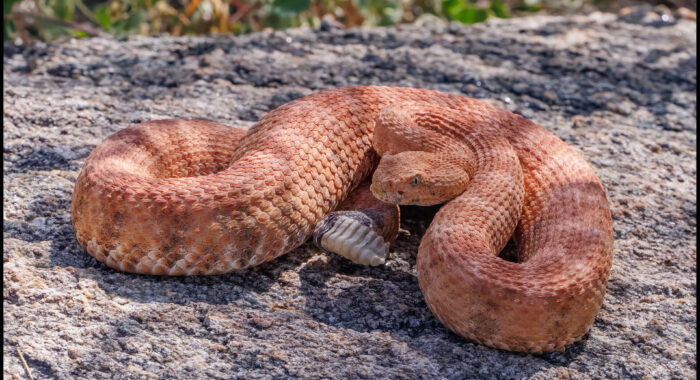
A brilliantly colored Speckled Rattlesnake from central Arizona. The rock in this particular spot doesn’t look very much like the snakes, but the occasional oxidized rock breaks off from higher and tumbles to the ground. When that orange rock sits under a bush or random location against the other grey and browns, it’s just part […]
Continue reading..Bright Orange Speckled Rattlesnake in Central Arizona
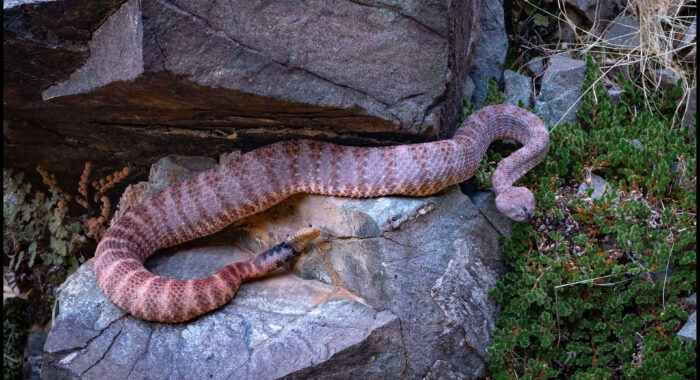
This Southwestern Speckled Rattlesnake, at the time this photo was taken, was very gravid (pregnant). She was in a cool area with higher ambient moisture, which is a special place during the heat of the summer in Arizona. She’s still there this year, though at the time I saw her, she was not notably gravid.
Continue reading..A Very Pregnant Rattlesnake in Phoenix
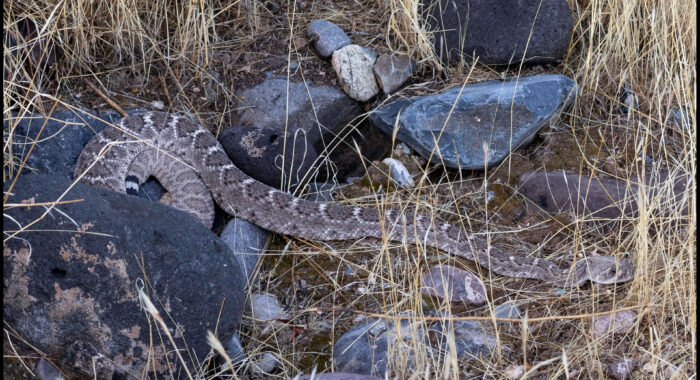
A Western Diamondback Rattlesnake caught after breaking coil in a hurry. Sometimes, a situation like this is the result of a strike at passing prey. Afterward, if they succeeded in connecting, they’ll wait a few moments and then go off in search of the prey as it succumbs to the venom elsewhere. Or, if it […]
Continue reading..Western Diamondback Rattlesnake Breaking Coil
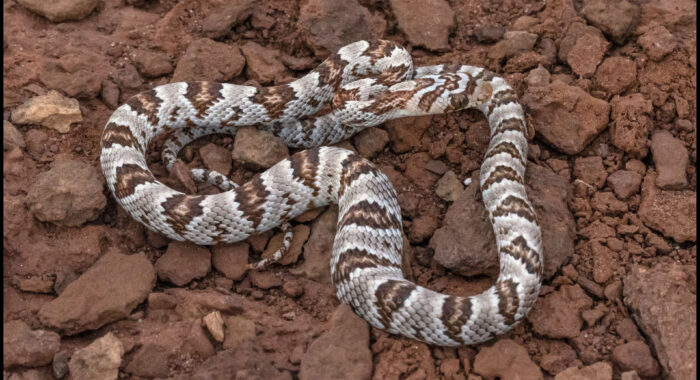
A Sonoran Lyresnake from just south of the Utah border in northern Arizona. I like their appearance in this area along the Colorado River. They’ll often have this high-contrast pattern, sometimes flecked with golds and maroon scales. This one is relatively young, and may take on some of these other colors as it matures.
Continue reading..Sonoran Lyresnake from Northern Arizona
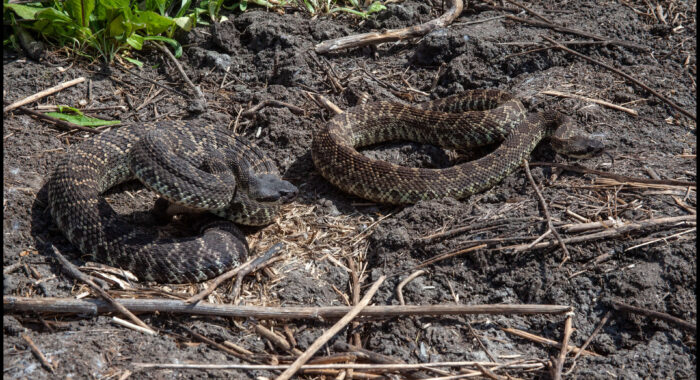
This is an old photo of how most of the Southern Pacific Rattlesnakes I’ve seen are found. They were under trash in a heavily populated area. These are what I most wanted to see while visiting friends in the area, though are considered “trash snakes” by some of the locals because of how common they […]
Continue reading..Southern Pacific Rattlesnakes in San Diego County
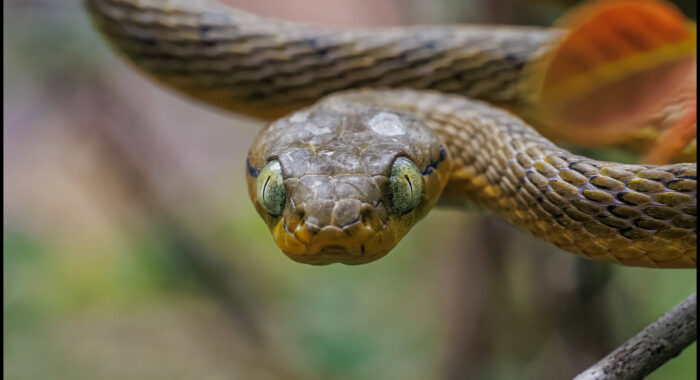
This was a really cool snake to see! A Yellow-Green Cat Snake we found near the end of our time in India a few years ago. The Boiga genus has a relatively mild toxin, which is not likely an emergency but still something to be avoided.
Continue reading..Yellow Green Cat Snake in India
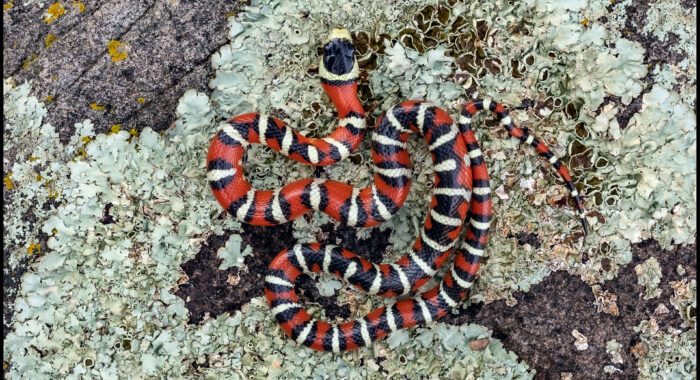
We found this baby Madrean Mountain Kingsnake (Lampropeltis knoblochi) several years ago out on the move in moderate rain. These colorful snakes are common in mid- to upper-elevation mountain woodlands and riparian zones.
Continue reading..Madrean Mountain Kingsnake from the Santa Rita Mountains of Arizona
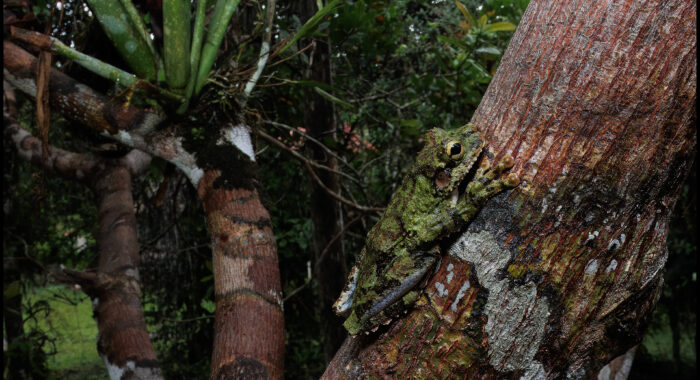
A Cabrara’s Slender-legged Treefrog (Osteocephalu cabrerai) from Peru a couple of years ago. These are large treefrogs that often have these rough areas that can make them about invisible in the chaotic backdrop of the Amazon.
Continue reading..Cabrara’s Slender Legged Treefrog
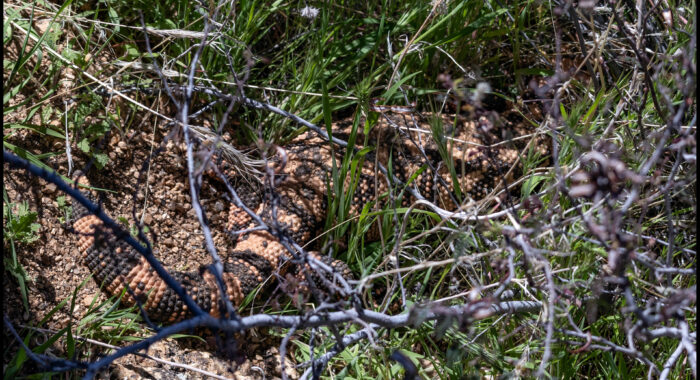
A Gila Monster (Heloderma suspectum) basking on a cool Spring day. Usually, it may seem that the bright yellow and black pattern of these animals makes them hard to see … but this shows where it works. The high-contrast, chaotic pattern makes the shape of a lizard disappear in dappled light. It’s common for even […]
Continue reading..Gila Monster Hiding In Plain Sight