A Tiger Rattlesnake in ambush late on a hot summer night several years ago. Despite being relatively seldom seen, this species is common in most of the mountains that overshadow the Phoenix metro valley.
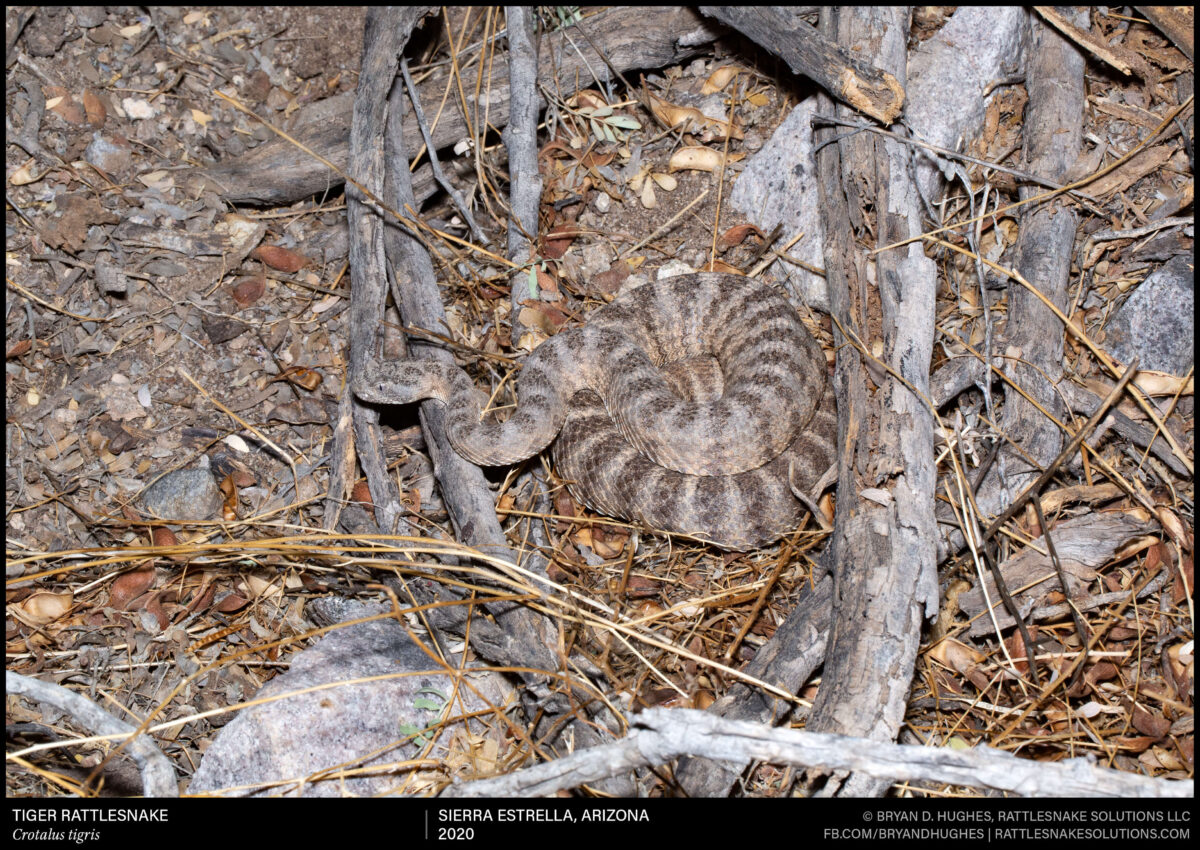

A Tiger Rattlesnake in ambush late on a hot summer night several years ago. Despite being relatively seldom seen, this species is common in most of the mountains that overshadow the Phoenix metro valley.
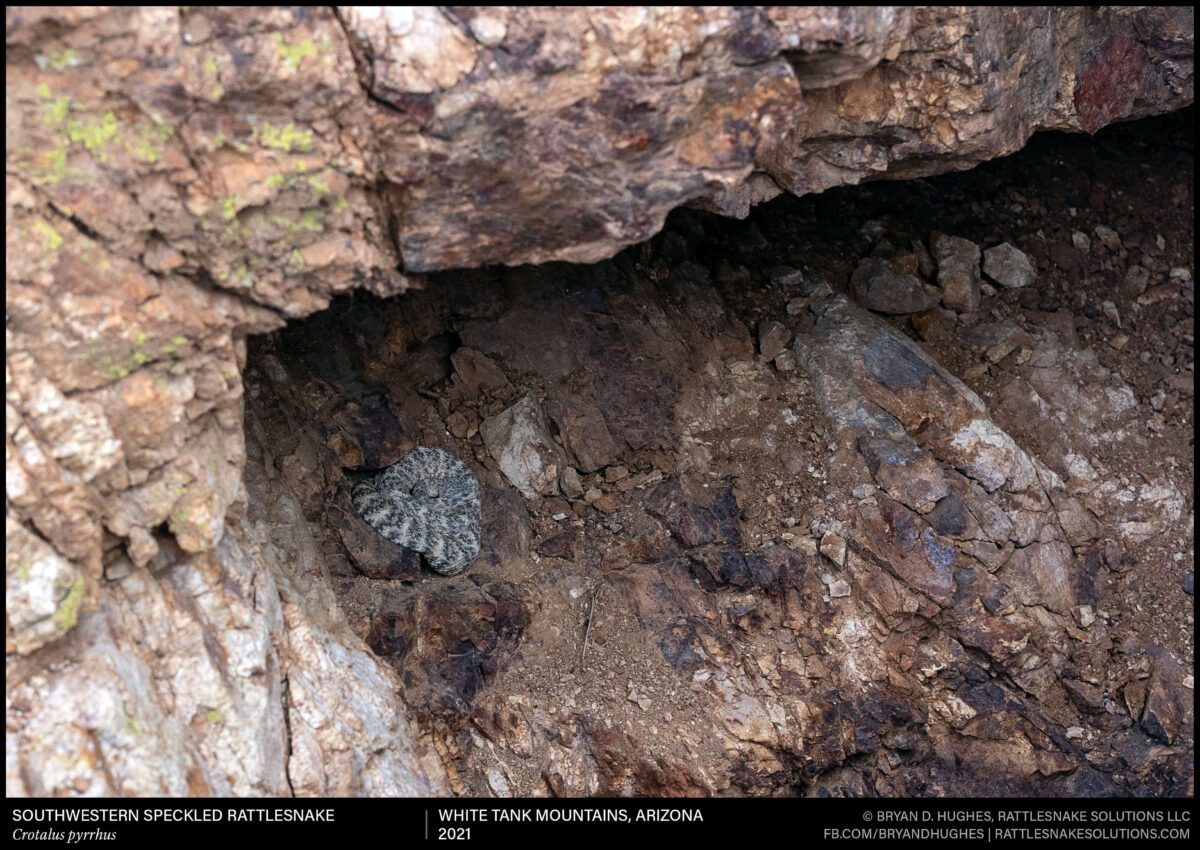
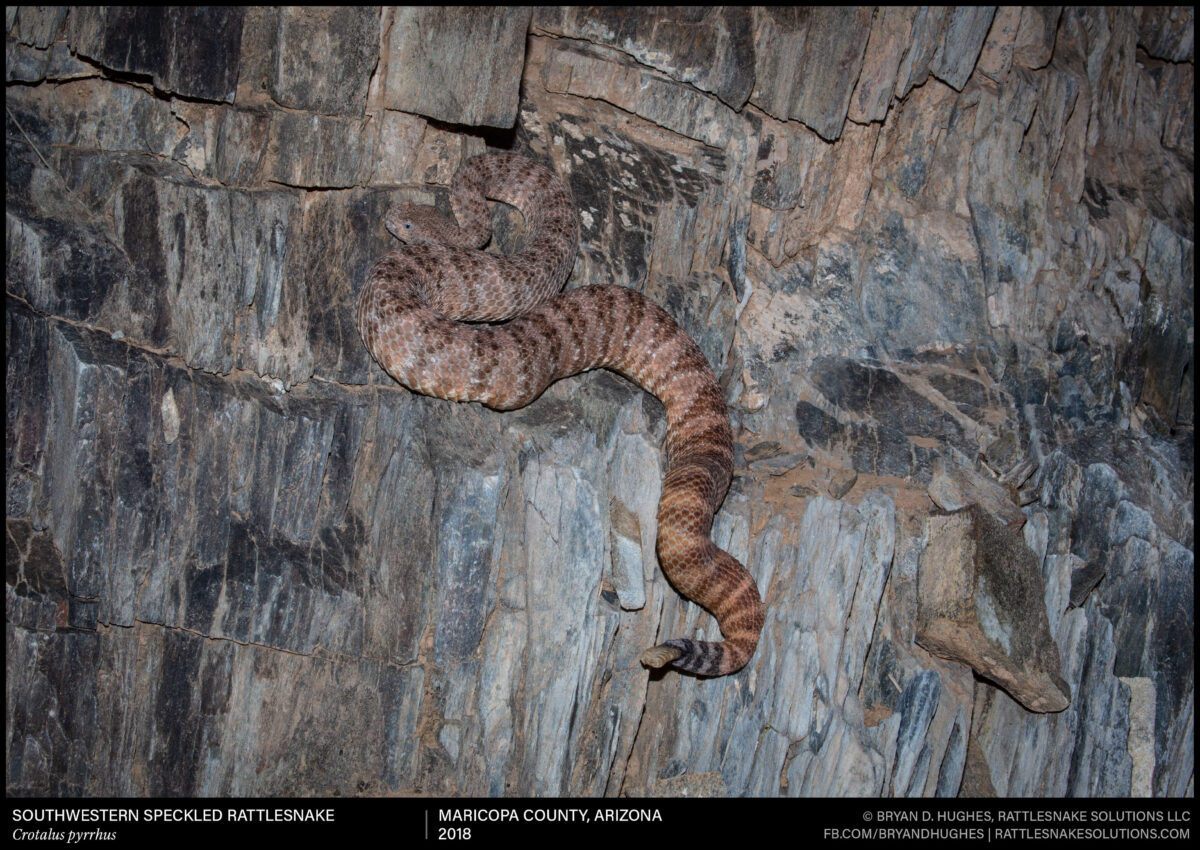
A Southwestern Speckled Rattlesnake (Crotalus pyrrhus) resting in a small cave during the hottest time of the year. This location receives almost no sun, due to its depth and aspect, which makes it an ideal aestivation site.
Snakes, as do other ectothermic (cold-blooded) animals, do regulate their body temperature by managing external forces. It’s more than just basking in the sun … they also spend a lot of time and energy trying to stay cool. For animals in Arizona, that can be a challenge. These sites, where they return each year when temperatures become lethal, are just as important as a winter hibernation den for rattlesnakes in cooler areas.
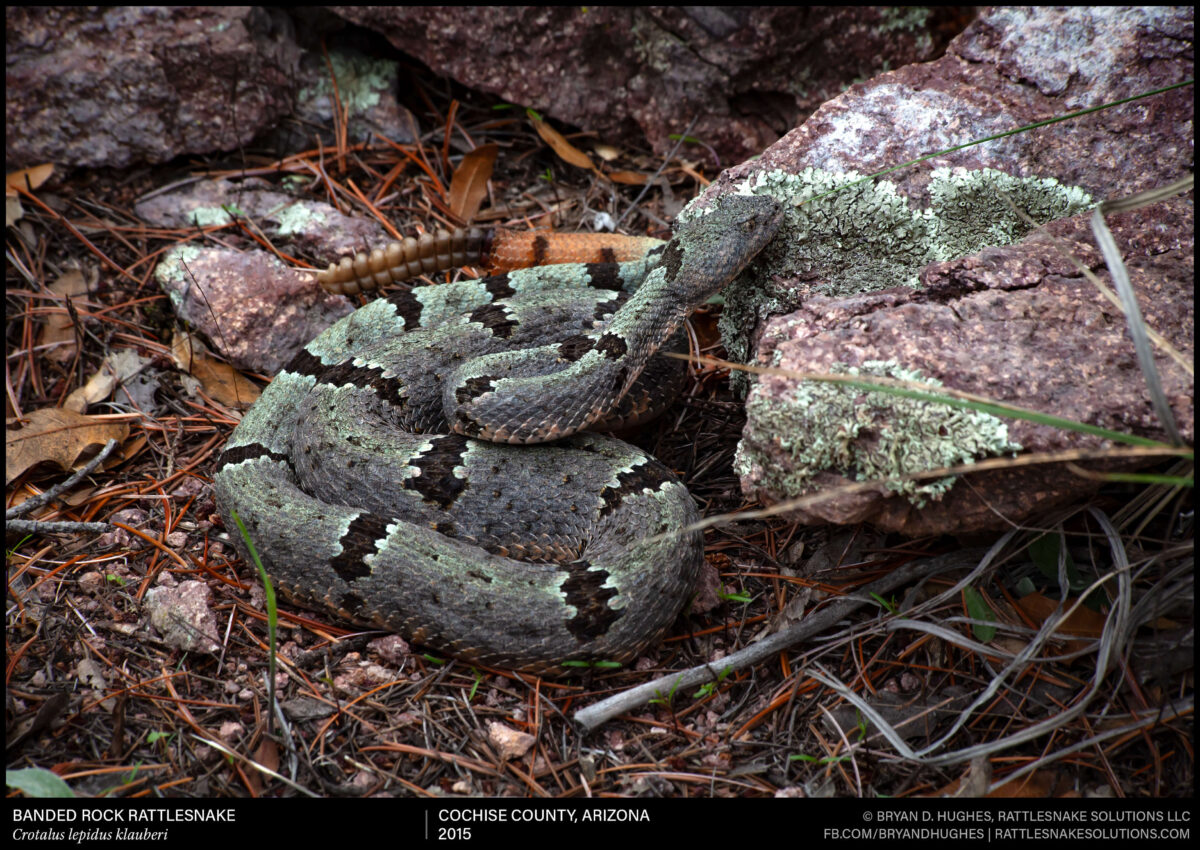
Banded Rock Rattlesnakes are common in several of the sky islands of southeastern Arizona. They’re smaller than most expect a rattlesnake to be, with most that I’ve encountered being less than two feet long. They’re also strongly sexually dimorphic, which is not common in rattlesnakes. Males, like this one, often develop bright, metallic greens on their bodies, which matches the common lichen found on rocks where they live. This one that we found was exceptional.
A Southwestern Speckled Rattlesnake making its way up a nearly vertical wall, taking advantage of numerous leverage opportunities. Rattlesnakes can climb, but not with the same skill as some non-venomous snakes, like gophersnakes or kingsnakes. Even from a moderate height, a fall can injure or even kill the animal, so caution is needed.
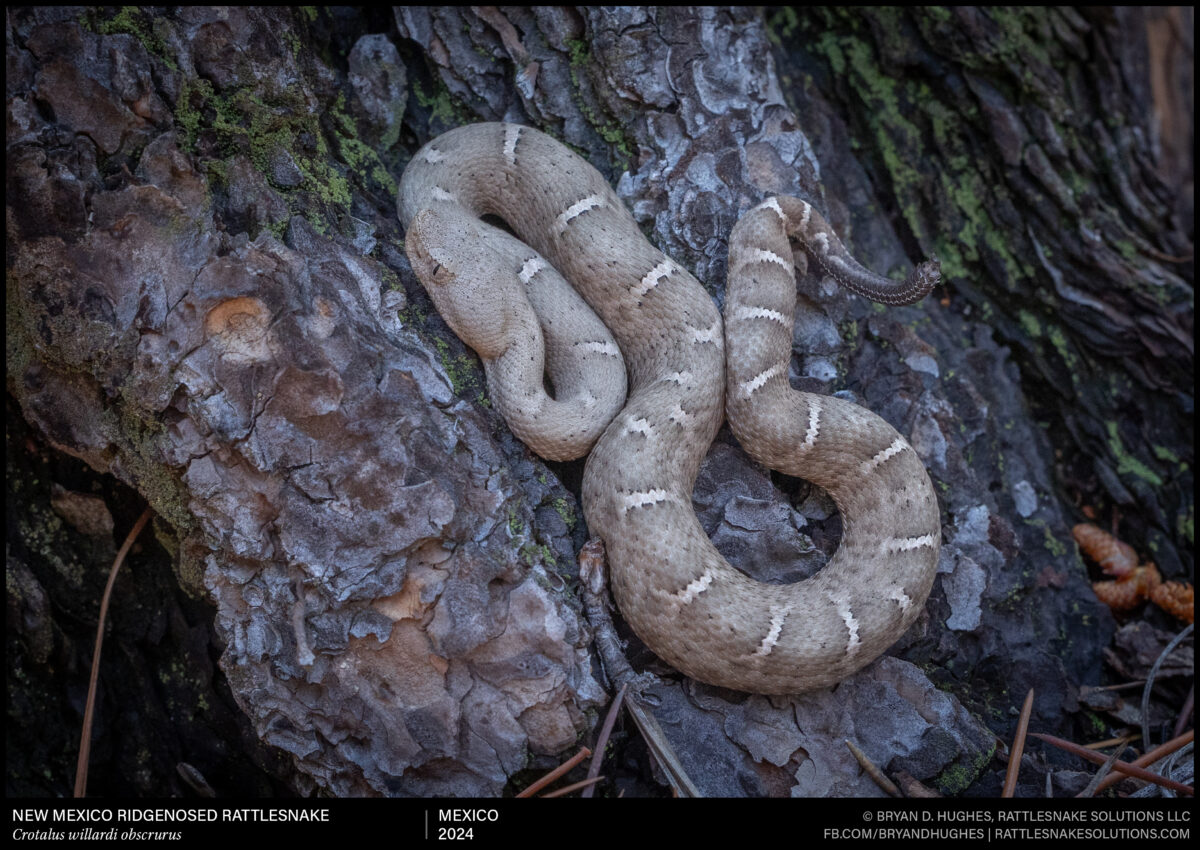
A New Mexico Ridgenosed Rattlesnake (Crotalus willardi obscurus) from Mexico.
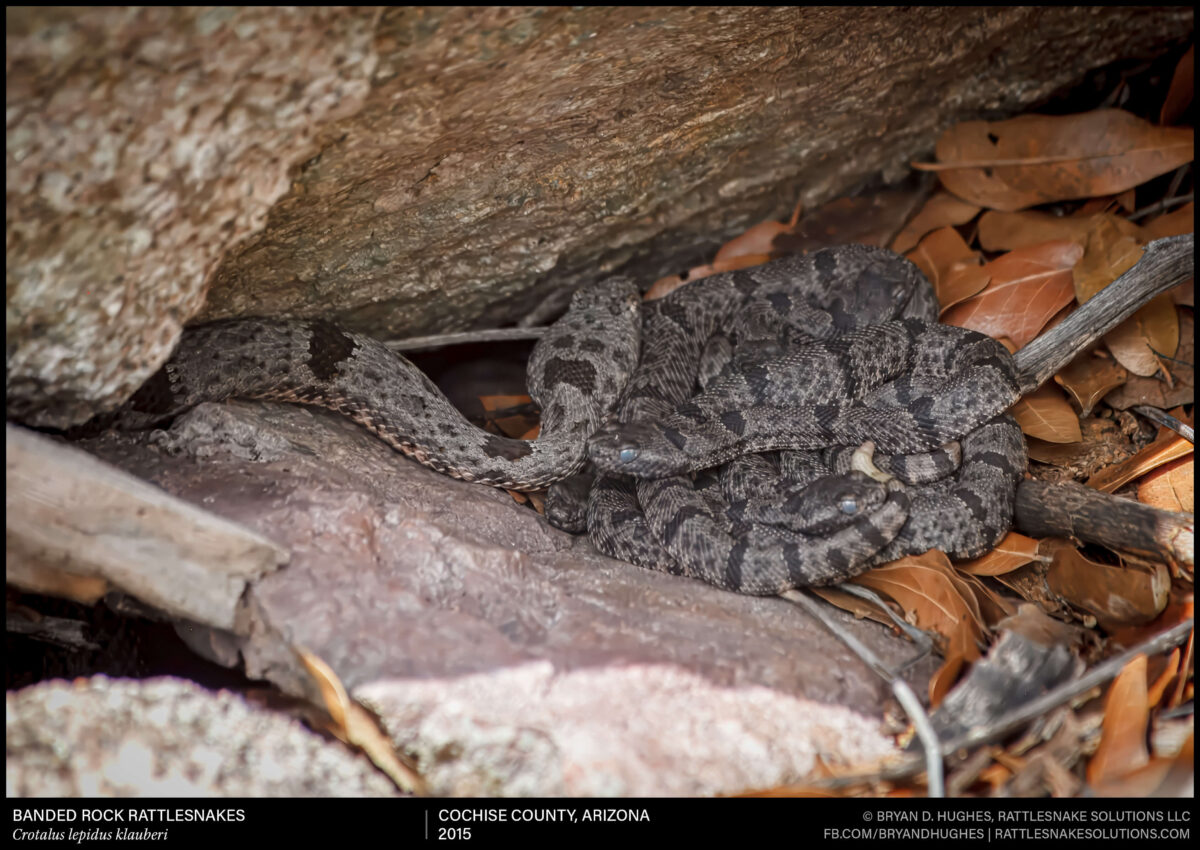
A new mother Banded Rock Rattlesnake oversees her newborn babies at a rock pile in southeastern Arizona. This was during the monsoon season, when abundant moisture triggers the live birth of rattlesnakes. This mother stayed with the newborns until just after their first shed skin, at which point they all dispersed to surrounding habitat.
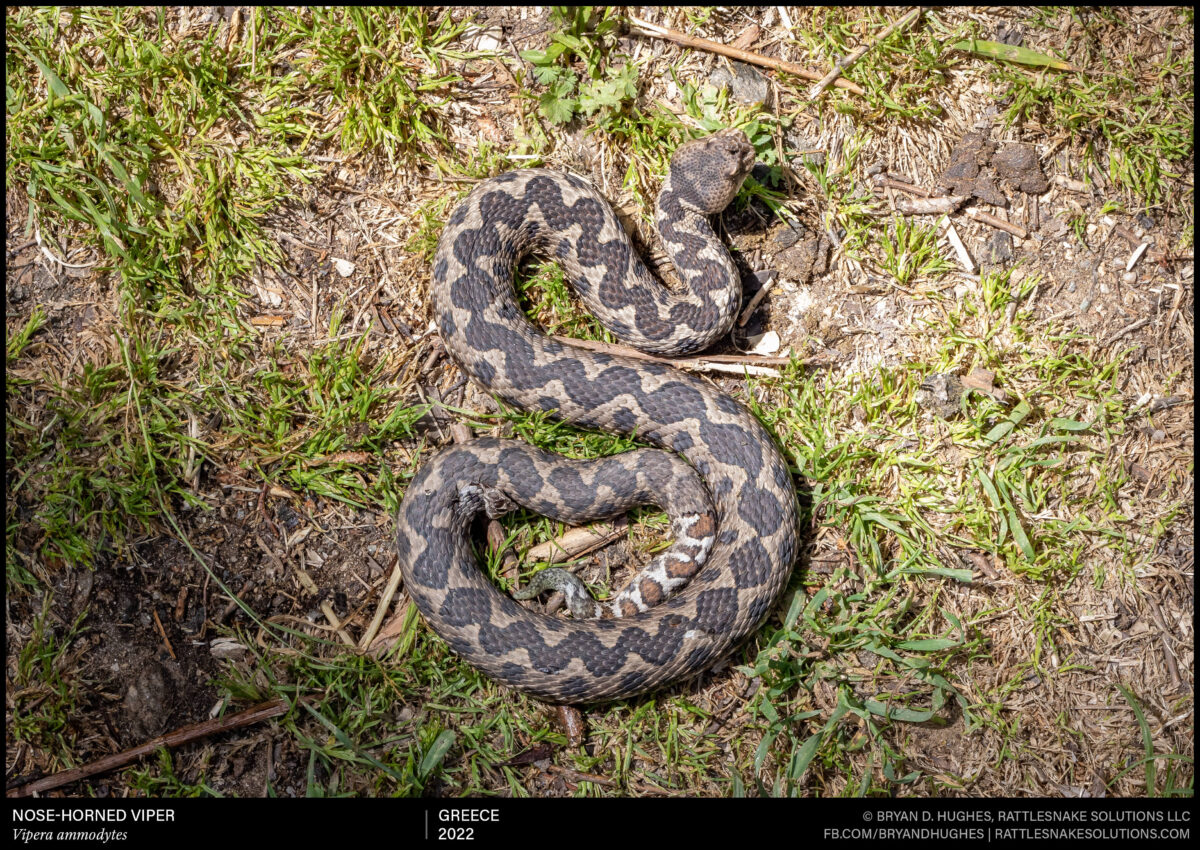
A Nose-horned Viper in bad need of a shed skin. Greece, 2022.
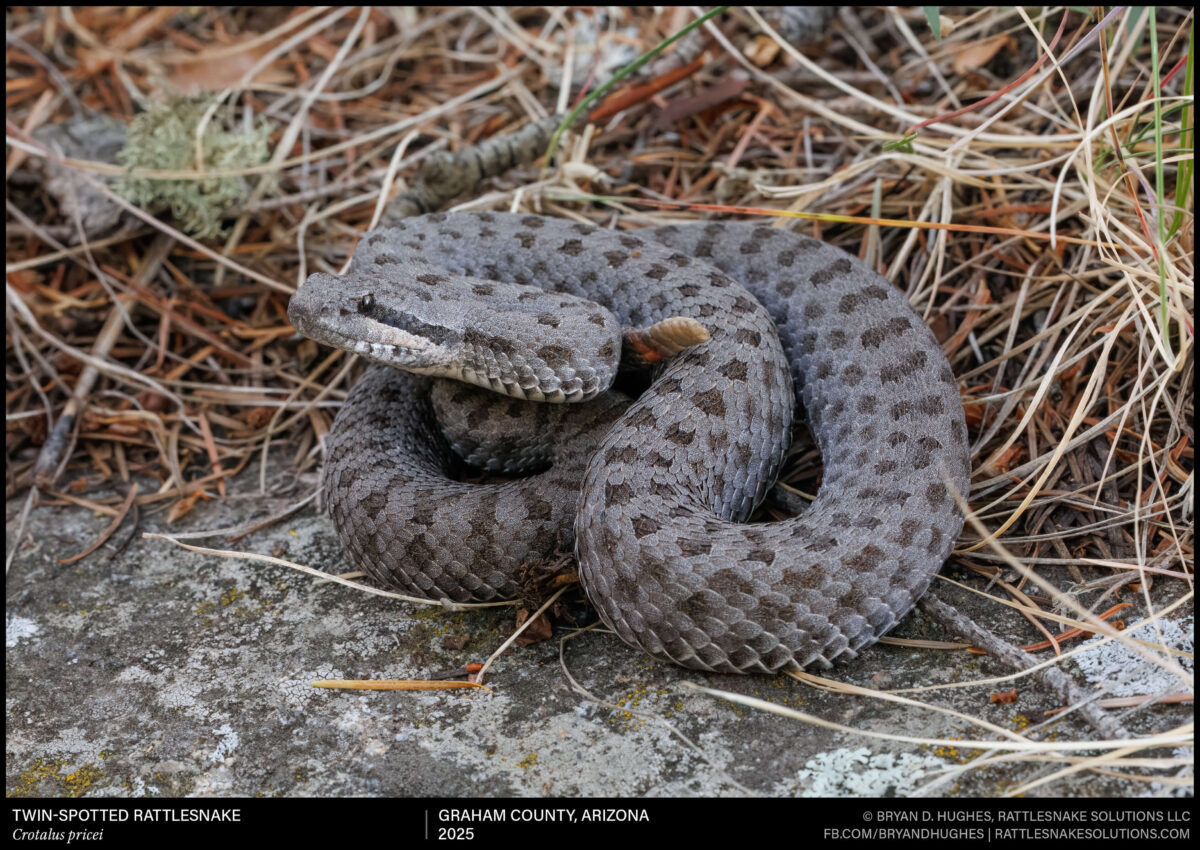
A Twin Spotted Rattlesnake that we found in eastern Arizona, showing off many more than “twin” spots. These tiny rattlesnakes can vary greatly in appearance from one location to the next, even between individuals in a single population. These are not likely to be seen unless you are spending time in the highest areas of a handful of the Chiricahua, Huachuca, Pinaleño, or Santa Rita mountain ranges.
Prival, D. B., Goode, M. J., Swann, D. E., Schwalbe, C. R. (2002), & Schroff, M. J.. Natural History of a Northern Population of Twin-Spotted Rattlesnakes, Crotalus pricei. Journal of Herpetology, 36(4), 598–607.
DOI: https://doi.org/10.1670/0022-1511(2002)036[0598:NHOANP]2.0.CO;2
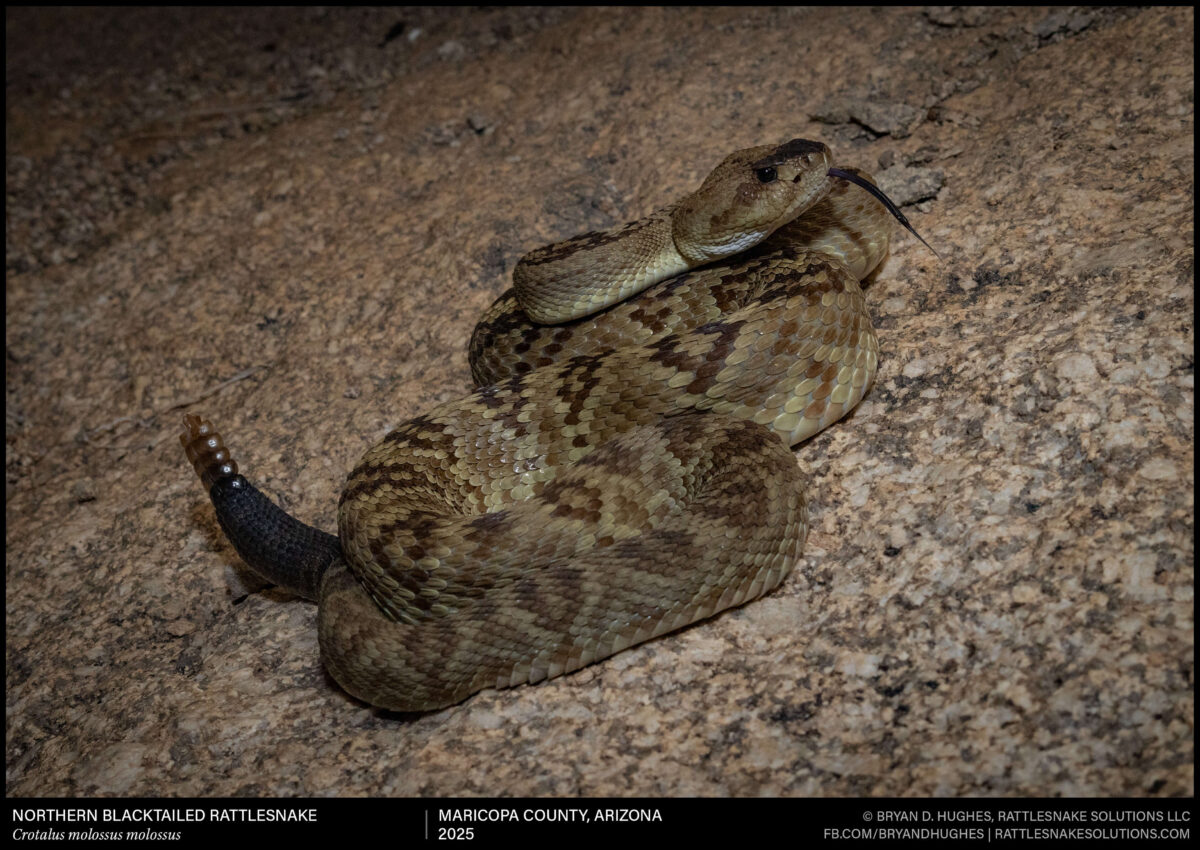
A mature Black-tailed Rattlesnake we found on a late-night hike near Phoenix. These snakes live in mountainous or hilly areas, where they are often confused with a number of other rattlesnake species.
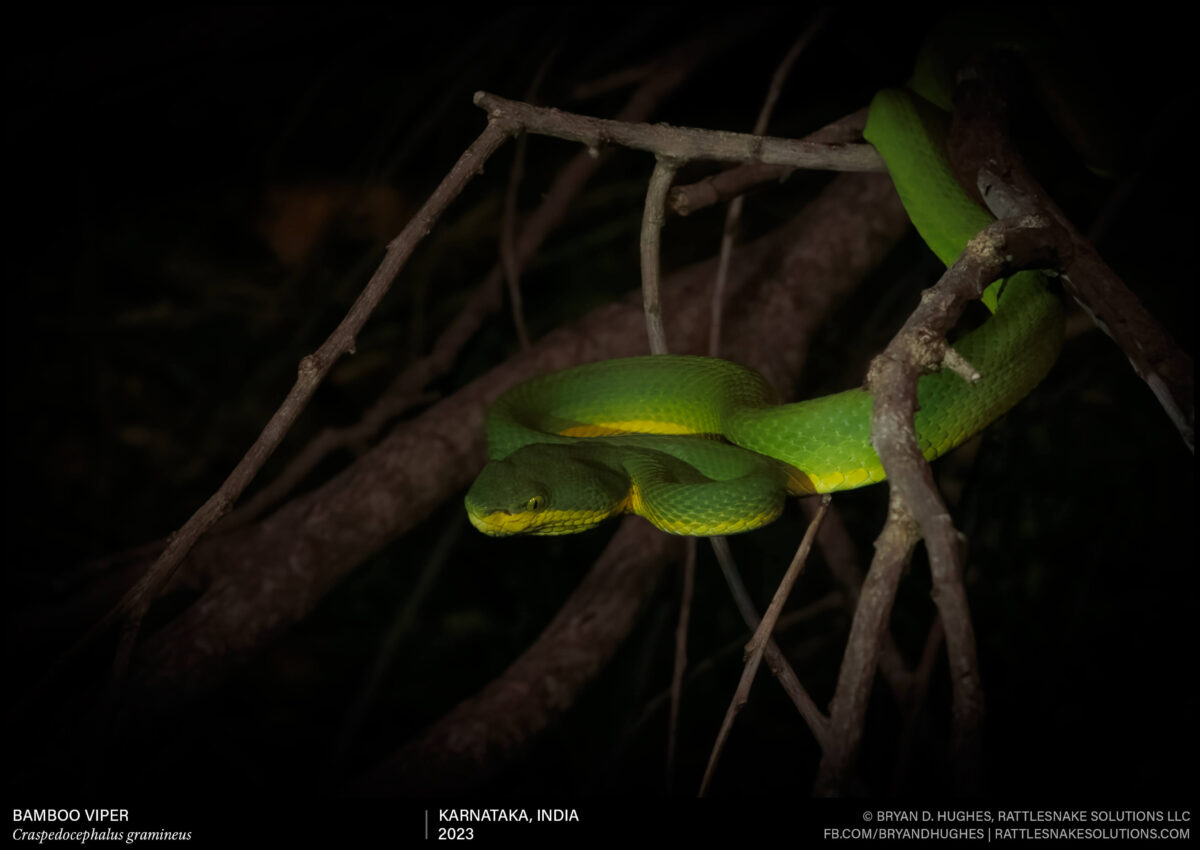
One of a handful of Bamboo Vipers (Craspedocephalus gramineus) we found on a night hike in the hills of southern India.