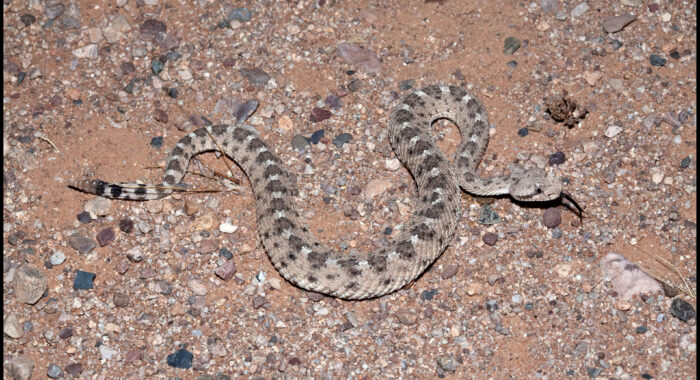
This is one of several Sonoran Sidewinders (Crotalus cerastes cercobombus) we found near Phoenix a while back on a hot night. These small rattlesnakes are abundant in the right habitat. Still, they are rarely seen by hikers, because the flat, sandy soil of the Colorado River subdivision of Sonoran Desert is rarely a scenic destination […]
Continue reading..Sonoran Sidewinder Near Phoenix
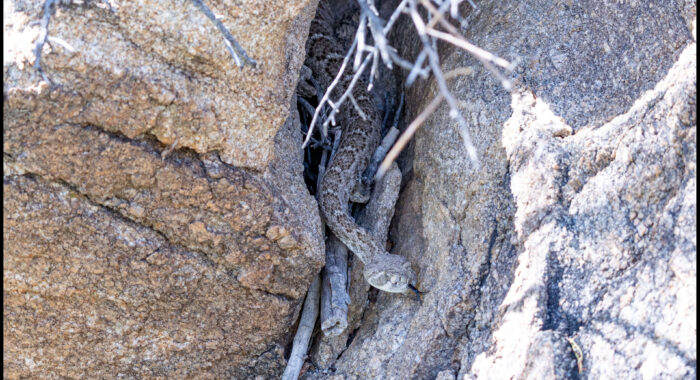
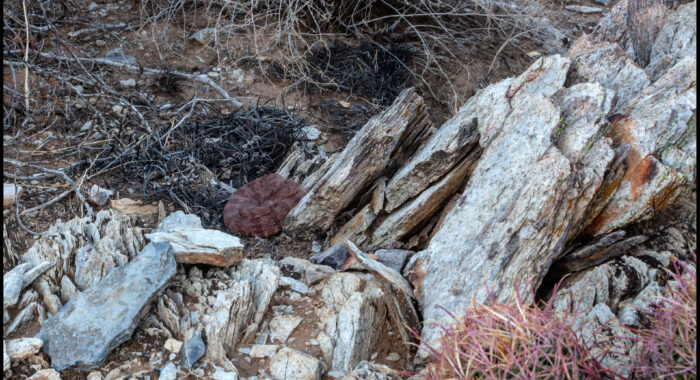
We were out checking dens on a spring day and stopped at one last spot. It was a rocky outcrop relatively isolated from the rest of the mountain, and looked great from at distance. Upon getting to it, we were immediately greeted with this large Western Diamondback Rattlesnake on the move a short distance from […]
Continue reading..Western Diamondback Rattlesnake at a Den
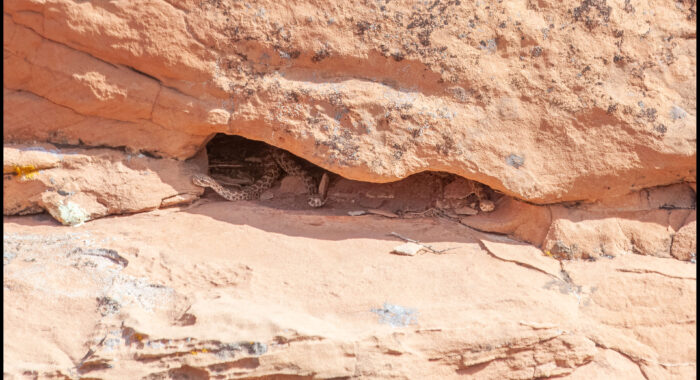
It takes a lot of patience to sneak up on this den of Prairie Rattlesnakes in northern Arizona. Unlike most rattlesnake dens I visit, these spook incredibly easily, retreating at the sight of me from well over 100′ away. Even when moving slowly, they seem to recognize the threat and disappear … for the rest […]
Continue reading..Prairie Rattlesnake Den in Arizona
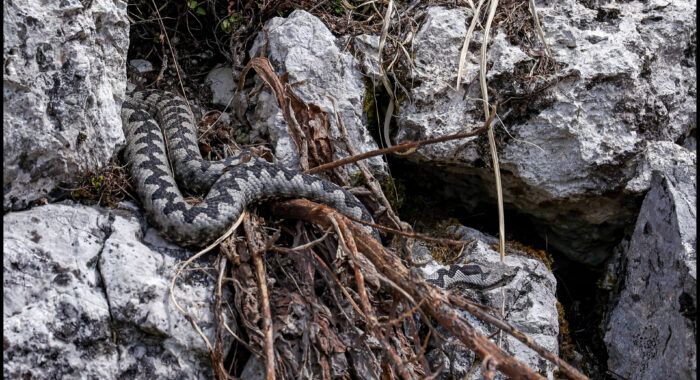
Nose-horned Viper (Vipera ammodytes) high on a mountain in Slovenia a few years back.
Continue reading..Nose-horned Viper in Slovenia
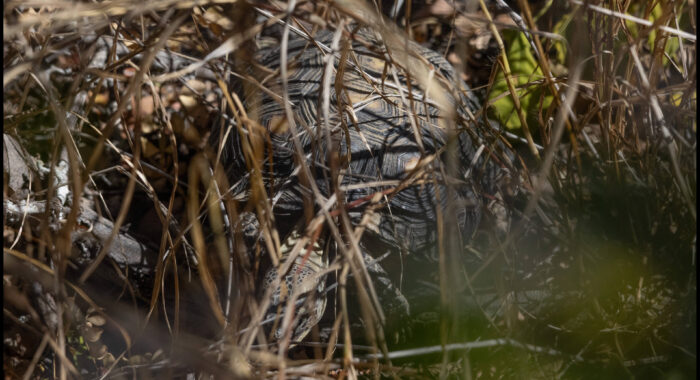
Berlandier’s Tortoise (Gopherus berlandieri) from south Texas last year.
Continue reading..Berlanier’s Tortoise in Texas
Southwestern Speckled Rattlesnakes (Crotalus pyrrhus) are commonly seen by hikers in the Phoenix area at popular parks, even those entirely within the city. They have a relatively extreme level of camouflage for a rattlesnake, and many people are surprised to learn just how many rattlesnakes they walk by even at the most heavily-hiked parks in […]
Continue reading..Southwestern Speckled Rattlesnake in Phoenix
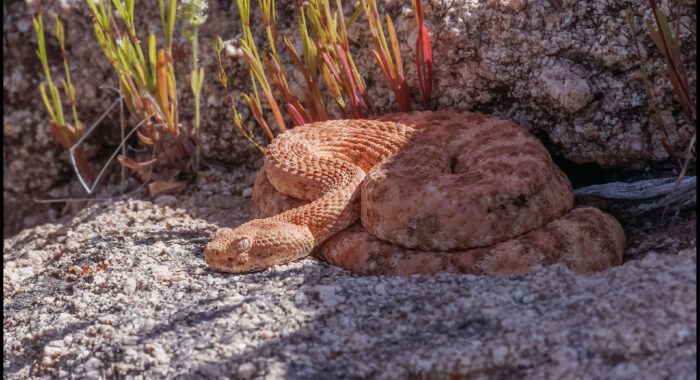
A Southwestern Speckled Rattlesnake (Crotalus pyrrhus) in ambush along a ledge in central Arizona. While most of the boulder field where it was found is made of rock similar to how this snake looks … this particular large boulder made of light colored granite helped make this one easy to spot. We got some photos […]
Continue reading..Speckled Rattlesnake in Ambush
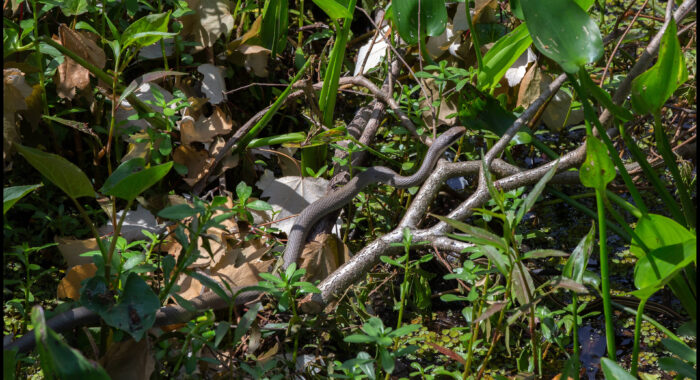
Black-masked Racer from Louisiana a few years back.
Continue reading..Black-Masked Racer
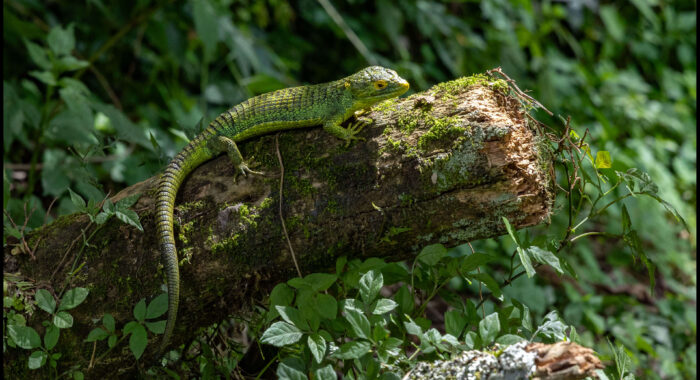
Torre de Guatel Arborial Alligator Lizard (Abronia meledona) in Guatemala, spotted by Jake Scott a few years ago.
Continue reading..Torre de Guatel Arborial Alligator Lizard
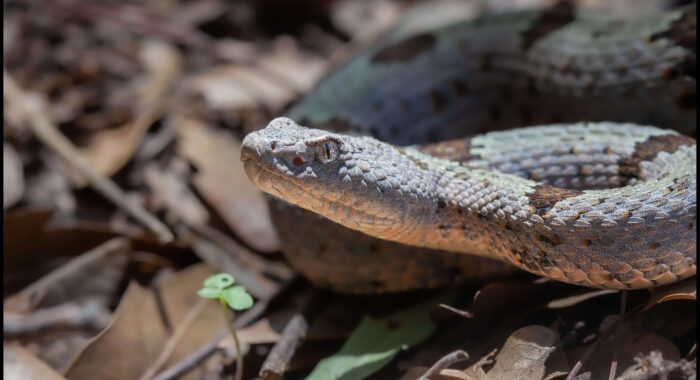
Banded Rock Rattlesnakes are common in the hills and mountains of southeastern Arizona. They come in a variety of colors, often a combination of grey, blue, green, and pink, like this one. They’re quick to flee, and it would be hard to see a situation where a hiker or the relatively few people who live […]
Continue reading..Banded Rock Rattlesnake