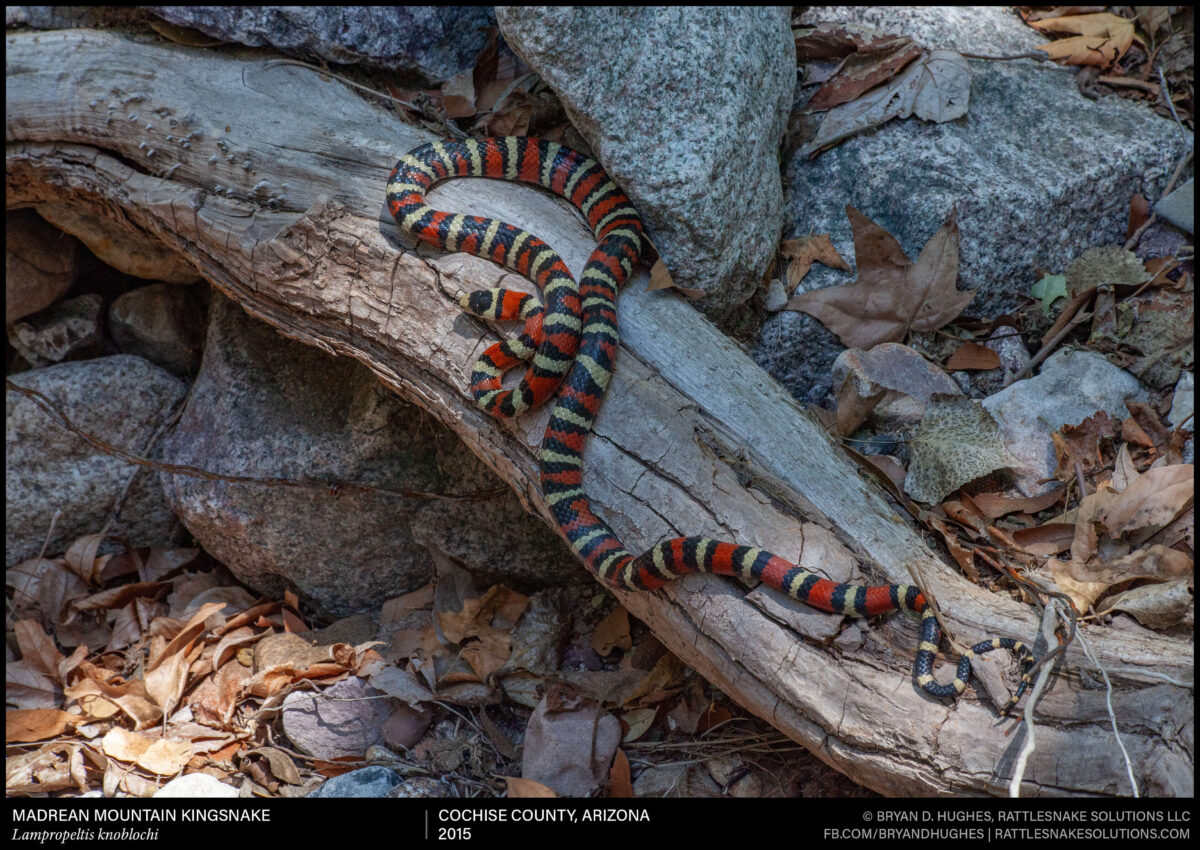
We found this baby Madrean Mountain Kingsnake (Lampropeltis knoblochi) several years ago out on the move in moderate rain. These colorful snakes are common in mid- to upper-elevation mountain woodlands and riparian zones.
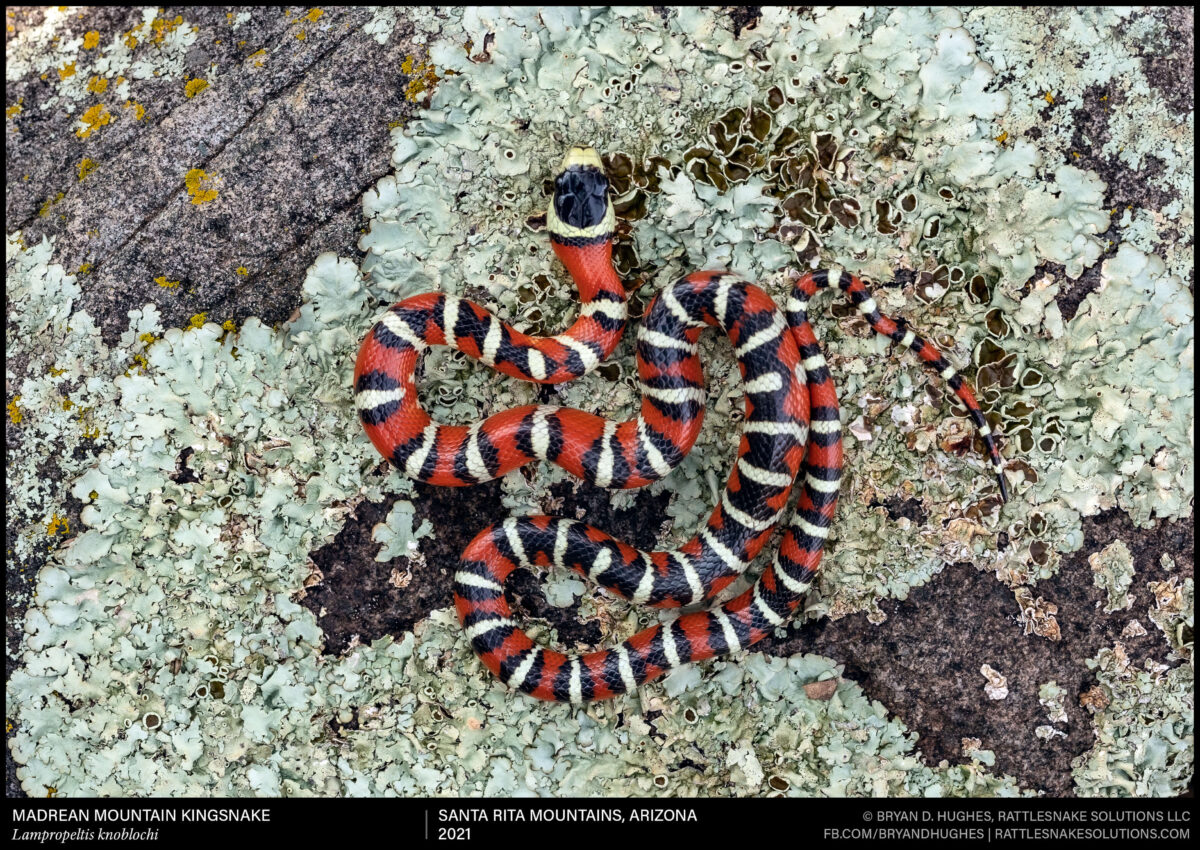

We found this baby Madrean Mountain Kingsnake (Lampropeltis knoblochi) several years ago out on the move in moderate rain. These colorful snakes are common in mid- to upper-elevation mountain woodlands and riparian zones.
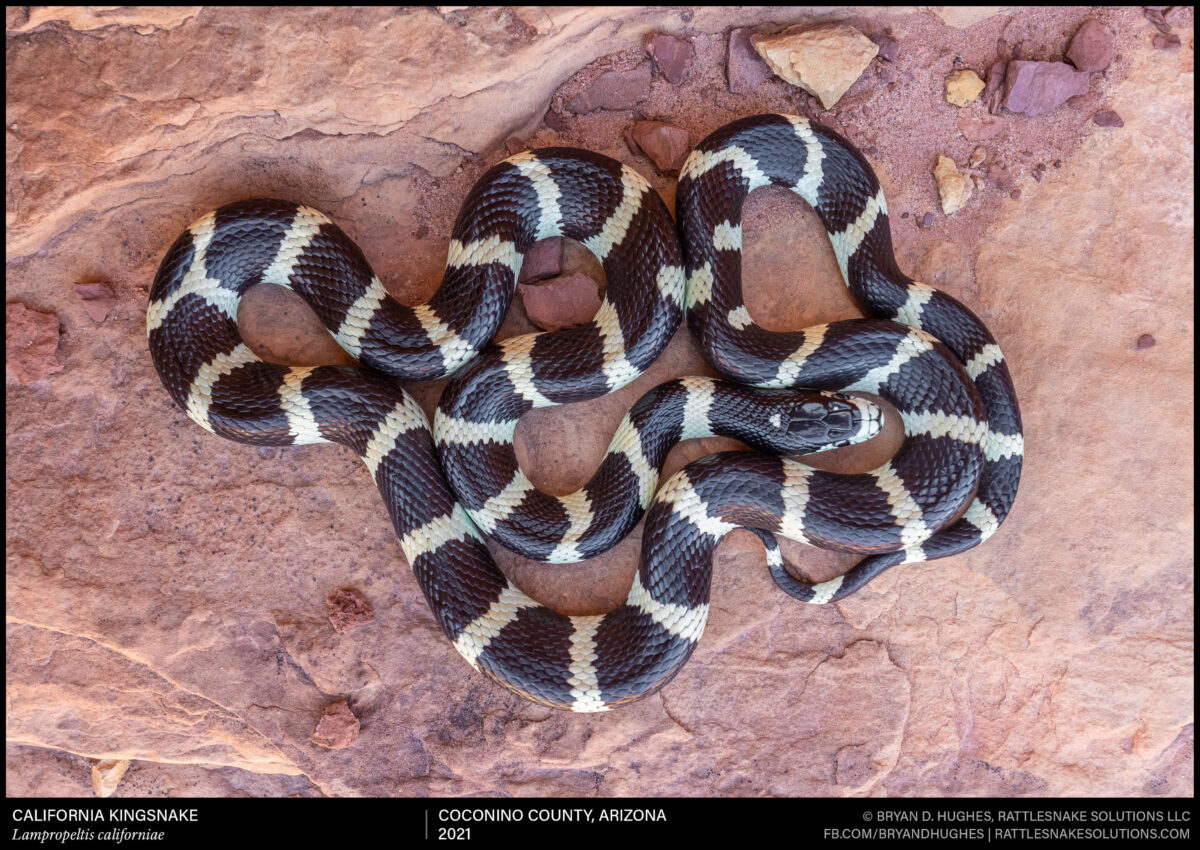
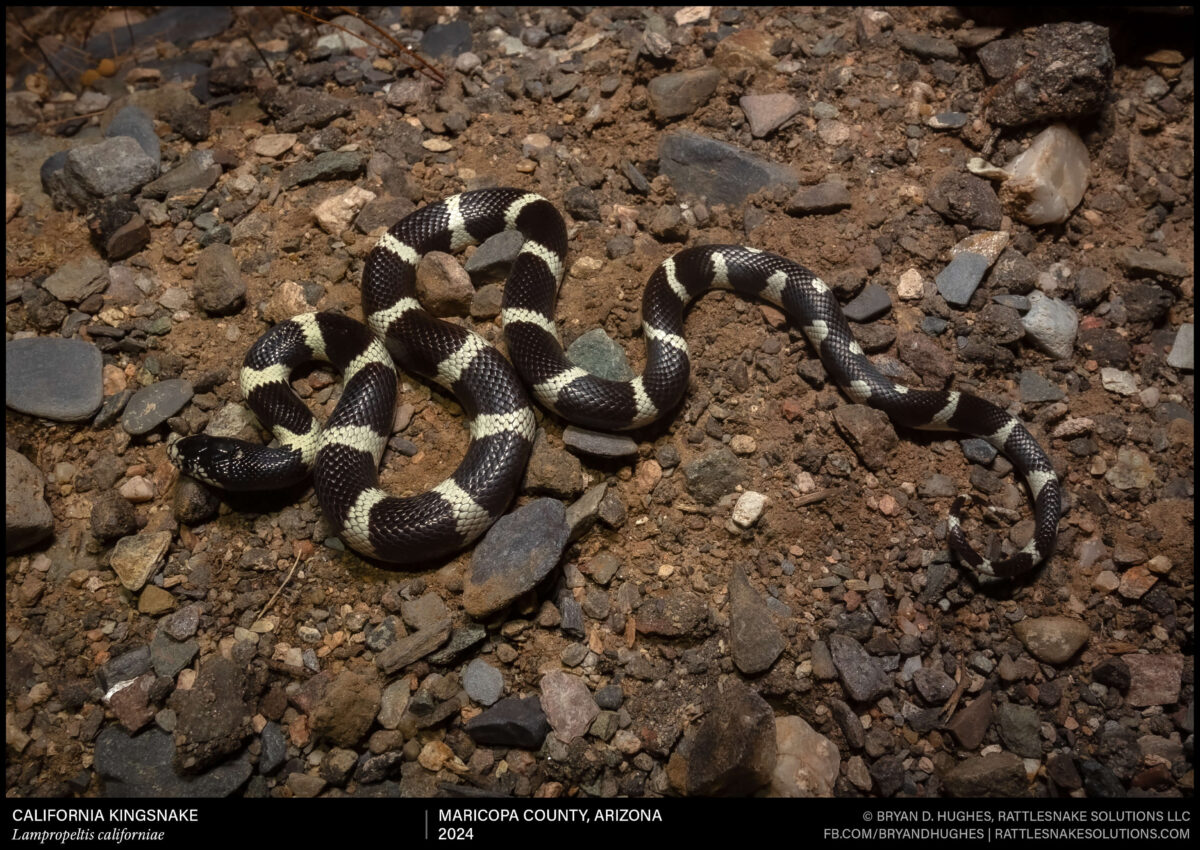
A California Kingsnake from an interesting pocket of Sonoran Desert influence near the Arizona/Utah border.
“kingsnakes keep rattlers away!!!” – a common, and incorrect, myth of the desert.
Kingsnakes do eat rattlesnakes, but that’s far from all that they eat. In a dietary study examining the stomach contents of 2,662 kingsnakes, rattlesnakes made up just 7% of prey items. While rattlesnakes are an ideal prey item for these animals, they are far from their only, or even primary, target. (Wiseman et al 2019)
In reality, the presence of a kingsnake does not indicate that there are fewer rattlesnakes in an area. If anything, a lot of kingsnakes may be an indicator of abundant prey! The places we often find kingsnakes regularly are also places with a large amount of rattlesnakes.
Why does this matter? Kingsnakes are routinely collected or purchased by homeowners to release on their property with the belief that it is going to control the rattlesnakes that may be there. But, the likely result is going to be a dead kingsnake … with no apparent effect to the local rattlesnake population.
So yes, kingsnakes do eat rattlesnakes. But no, it’s not all they eat, and moving kingsnakes around randomly will not provide the protection most people believe it will.
Wiseman, K. D., Greene, H. W., Koo, M. S., & Long, D. J. (2019). Feeding ecology of a generalist predator, the California Kingsnake (Lampropeltis californiae): Why rare prey matter. Herpetological Conservation and Biology, 14(1), 1–30.
A beautiful young Madrean Mountain Kingsnake (Lampropeltis knoblochi) from the southeastern corner of Arizona. These colorful snakes harmless, and often seen by hikers on stream-side mountain trails in the Sky Islands region of the state.
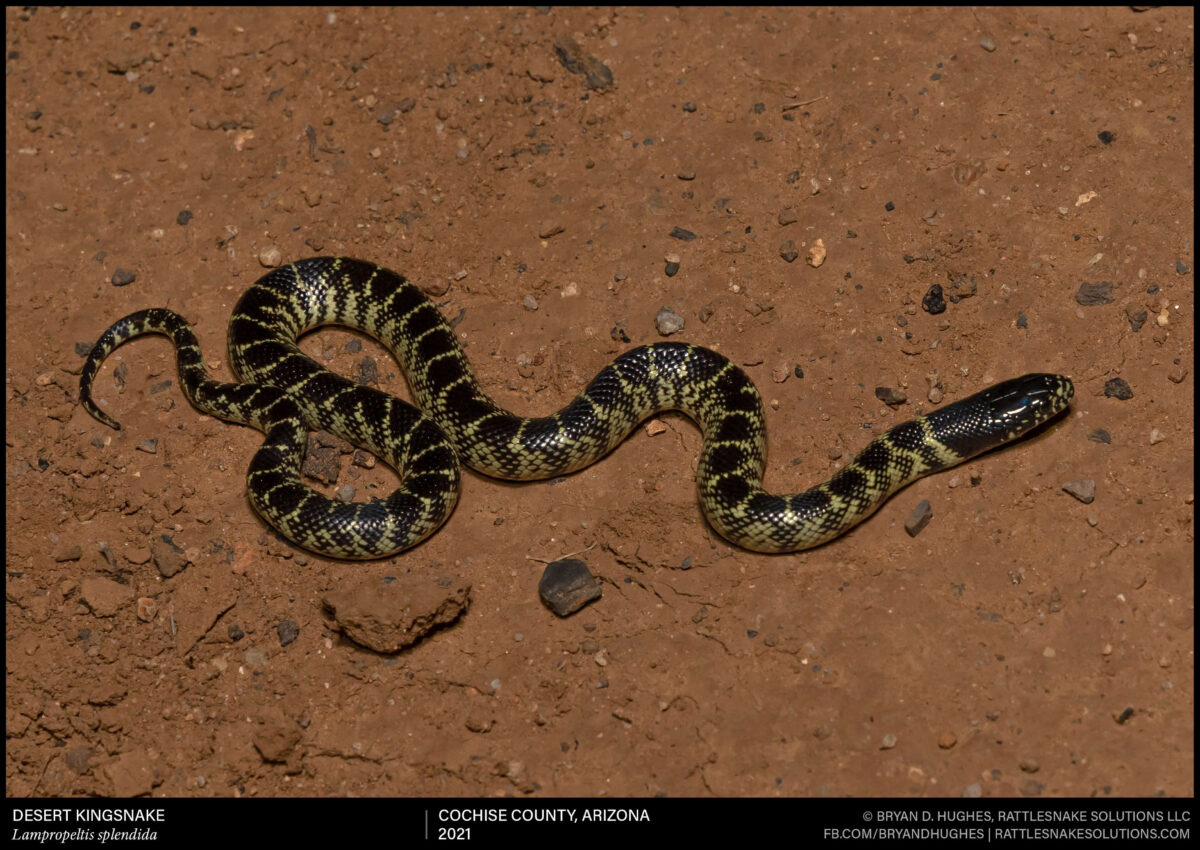
A young Desert Kingsnake (Lampropeltis spendida) from the southeastern corner of Arizona.
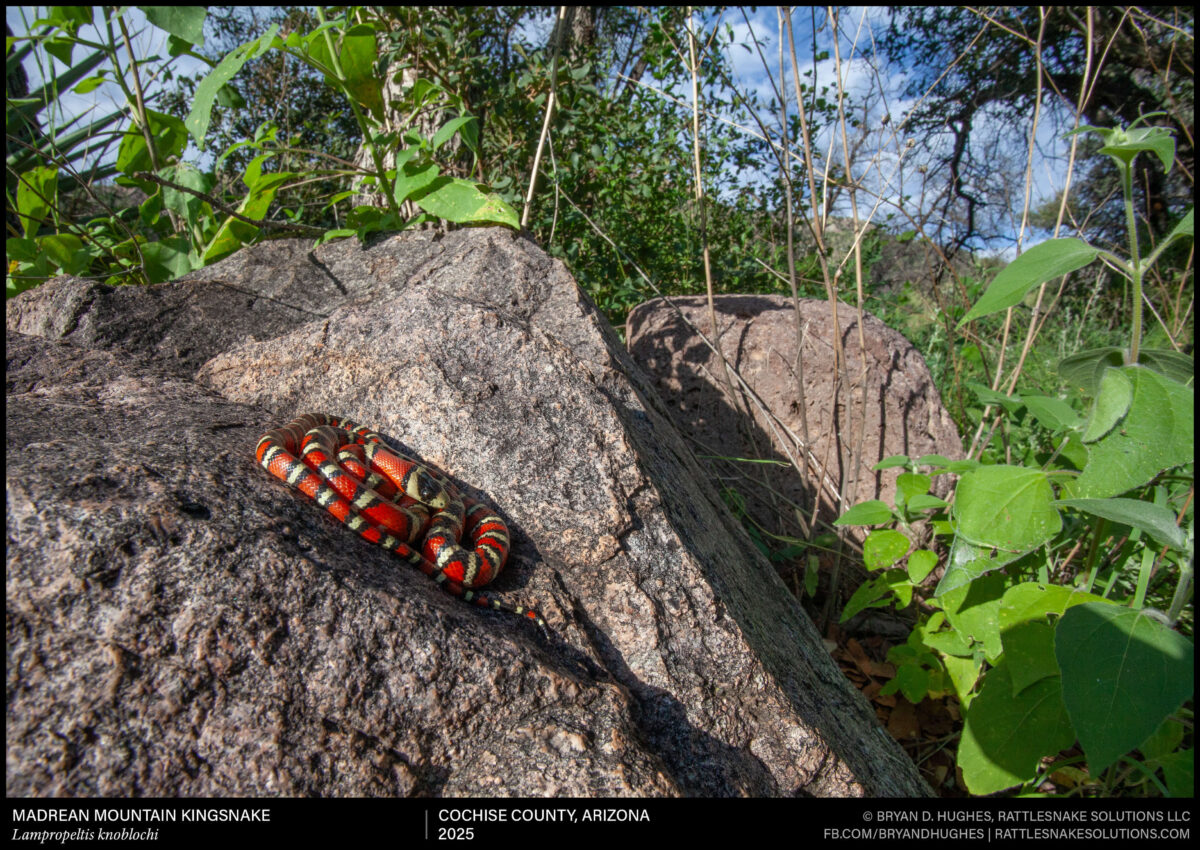
A Madrean Mountain Kingsnake from the southeastern corner of the state. These colorful snakes can be surprisingly difficult to spot, despite their bright coloration. In the low, dappled light and noisy background of their woodland environment, there’s not a “snake shape” to see, and they’re easy to walk right by.
A California Kingsnake on the crawl late at night in central Arizona.

A California Kingsnake I saw crossing a road near my house. I was out looking for baby Western Diamondback Rattlesnakes to move off the roadway, which were out in force that night. I think this kingsnake and I were doing the same thing, though hoping for different outcomes. I moved it to the side of the road and wished it luck.
In the southeastern corner of Arizona, kingsnakes look different than the black and white banded pets many people are familiar with. This Desert Kingsnake, as an example, of a more speckled, chain-link pattern and somewhat more colorful base color. This is, with much variation, similar to how they’ll look throughout the Chihuahuan desert, and much of the subtropical Sonoran.

A Madrean Mountain Kingsnake we found in New Mexico in 2022 showing a higher degree of black in the bands than is typical.
