We met this gentleman in Peru a couple of years back.
Continue reading..Spiny Devil Katydid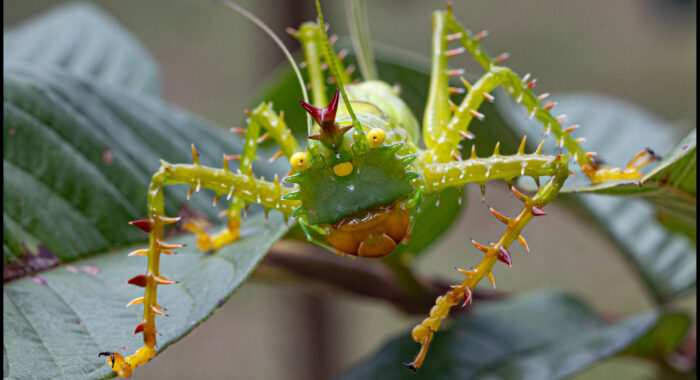

We met this gentleman in Peru a couple of years back.
Continue reading..Spiny Devil Katydid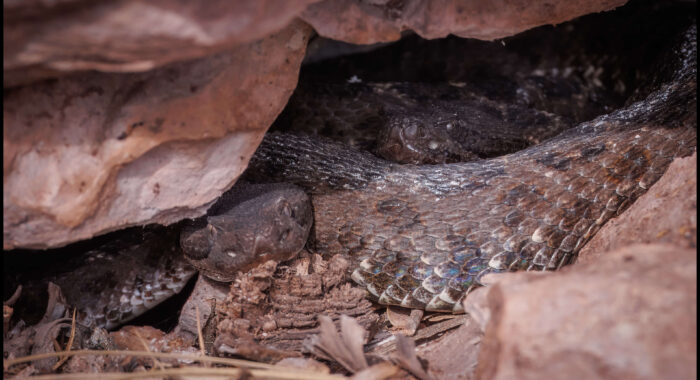
A couple of Arizona Black Rattlesnakes tucked away in a den in central Arizona.
Continue reading..Arizona Black Rattlesnakes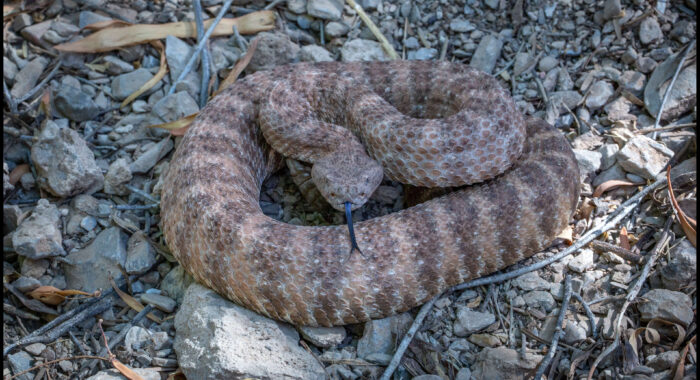
A Southwestern Speckled Rattlesnake (Crotalus pyrrhus) found in Maricopa County several years ago. This species is among the most common snakes encountered at most parks across the Phoenix metro area.
Continue reading..Speckled Rattlesnake in Central Arizona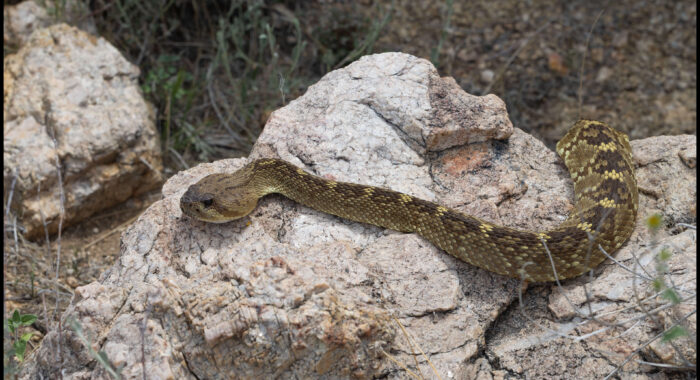
A Blacktailed Rattlesnake from central Arizona. The species also often has black eyes, too, especially in higher elevation individuals. This animal is found in mountainous areas, and often misidentified as a Mojave Rattlesnake due to their bright color, even by (especially by!) long-term locals.
Continue reading..Blacktailed Rattlesnake on a Rock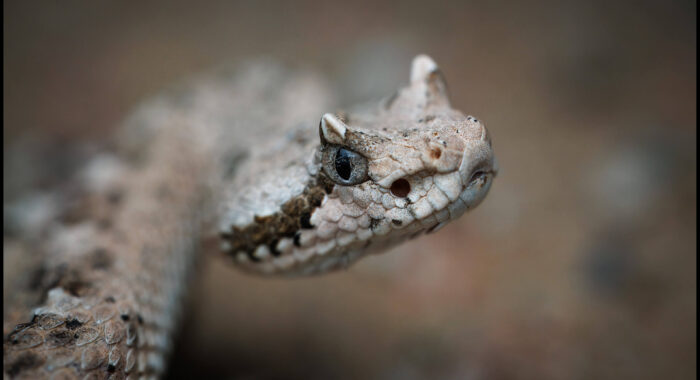
Close up with a Sonoran Sidewinder, showing off its “horns”. They are actually soft scales that rise above the eye, a feature they share convergently with unrelated vipers in deserts on the other side of the world. This is one of several seen on a warm evening last year near Phoenix.
Continue reading..Sonoran Sidewinder Close Up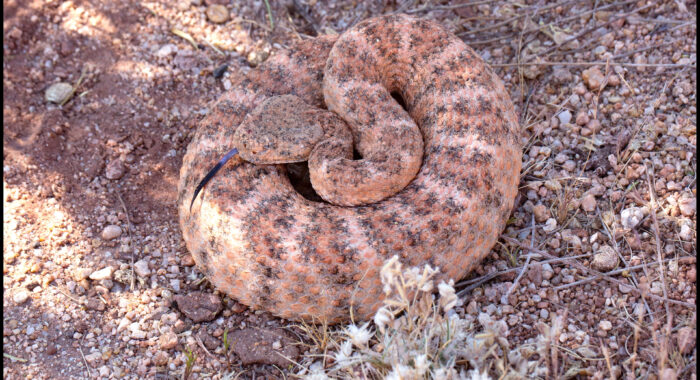
A Southwestern Speckled Rattlesnake from central Arizona. In this region, the rocks are often brightly colored with oxidized metals and tinted crystals. This makes for some really amazing snakes.
Continue reading..Speckled Rattlesnake in Pink Rocks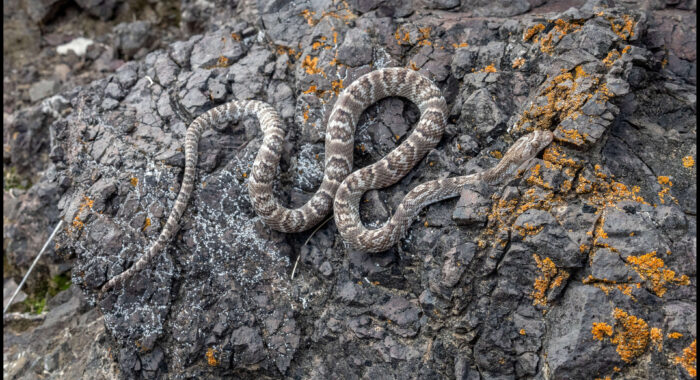
A Sonoran Lyresnake we found late at night as it was leaving a rocky hillside, heading out towards open flat desert.
Continue reading..Sonoran Lyresnake in Arizona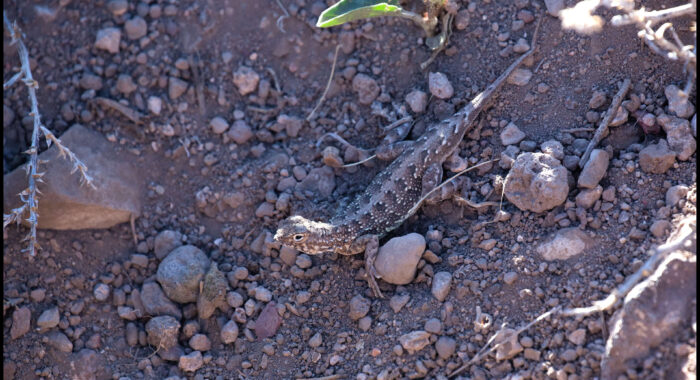
A Lesser Earless Lizard (Holbrookia maculata) from the western edge of Arizona. These lizards, as the name suggests, lack external ear openings to help live in the sandy, debris-filled environment. They still have ears, however, just hidden by skin. This one took a break from skittering away from me for a photo.
Continue reading..Lesser Earless Lizard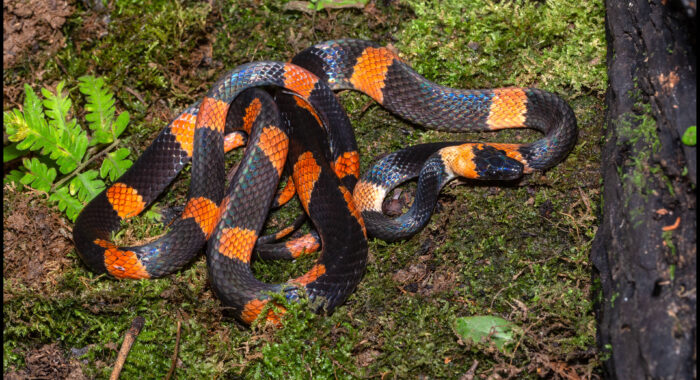
One of the colorful Banded Calico Snakes found near camp in Peru a few years back.
Continue reading..Banded Calico Snake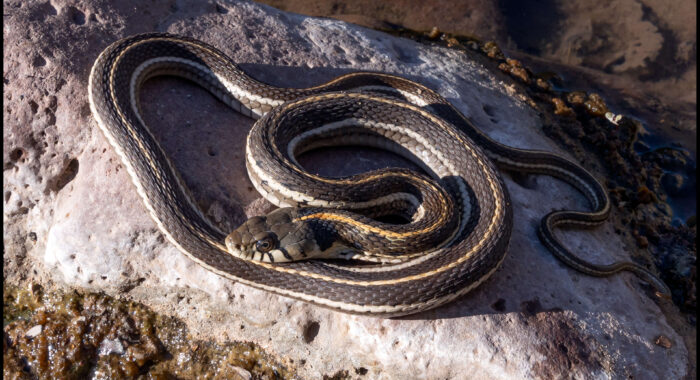
A Black-necked Gartersnake we found while hiking a high-elevation stream in Greenlee County, Arizona. This one had lost its pattern entirely, becoming solid grey animal with stripes and its characteristic black patches behind the head.
Continue reading..Black-necked Gartersnake in Greenlee County, Arizona