Black Tailed Horned Viper in Mexico

A cool little viper with horn-like scales above the eyes. That’s a common thing with arboreal vipers in Central and South America, but vipers with “horns” are relatively few in comparison. They’re closely related to other montane vipers in the area that have similar structures, but live more familiar lives in steep, heavily vegetated forests.

A few hours of careful scouring of perfect habitat turned up none of these. Then after having more or less given up, I decided to flip some rocks near the cars while we waited for the crew to reassemble … and poof: the target. It’s fun when that happens.

Mojave Rattlesnake in Classic Form

A Mojave Rattlesnake from the Phoenix area. This brown and tan color is typical of this species in the area, though some of the more famously greenish ones do pop up as well. This one follows all the rules, with a clearly visible tail with bands of a roughly 2:1 white to black ratio, half yellow proximal rattle segment, and eye stripe extending beyond the corner of the mouth.

But what people who are very experienced use to identify a snake like this is not any of those features in particular. It’s the overall appearance, or gestalt. The “cleaner”, less speckled and chaotic pattern, slighter and more angular head shape, and outward appearance as a whole just hit as “mojave” in the mind upon sight. This isn’t to say, of course, that the features listed aren’t important, but all can be variable and fail an observer from time to time. It’s worthwhile, once a person has learned to identify these animals reliably based on details, to “zoom out” and look at the whole animal. Eventually, a Mojave Rattlesnake would stand out from similar-looking species in the same way you can likely tell the difference between a yellow lab and a retriever.

Sonoran Sidewinder Close Up

Sonoran Sidewinders are common snakes found in flat, sandy areas of southern Arizona. They used to inhabit nearly the entirety of the Phoenix metro valley, with records below Camelback Mountain and throughout Scottsdale. Of the rattlesnake species in the region, however, they are the first to die out as soon as an area is closed in by roads. This one was found near Phoenix in an area where they are still common, but future development will change that dramatically, soon.

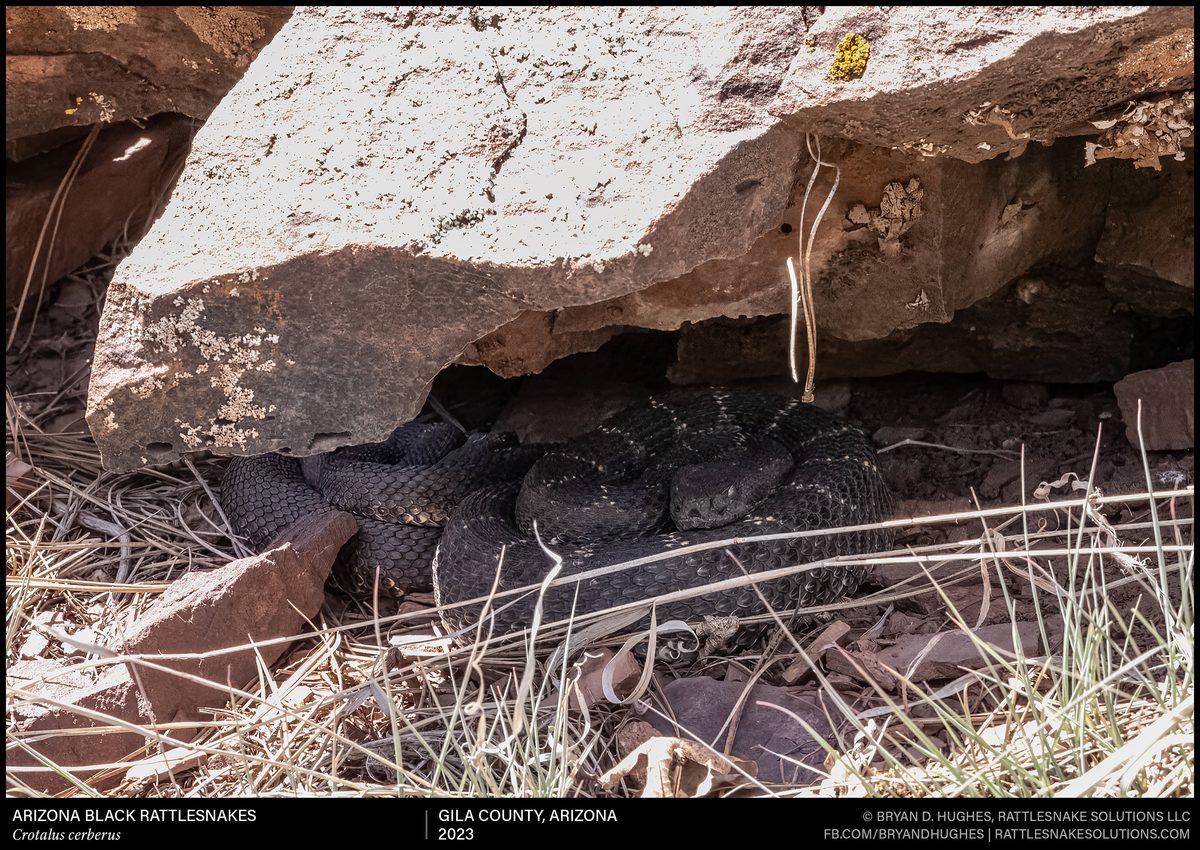
Arizona Black Rattlesnake in Southern Arizona

An Arizona Black Rattlesnake from southern Arizona. Even though I’m only in this location once or twice each year, I have seen this one several times over the last decade. There’s a small rock pile next to a log that it spends much of the summer making small movements around, and it was good to see it again as a little bit older, larger version of the last sighting a few years prior.