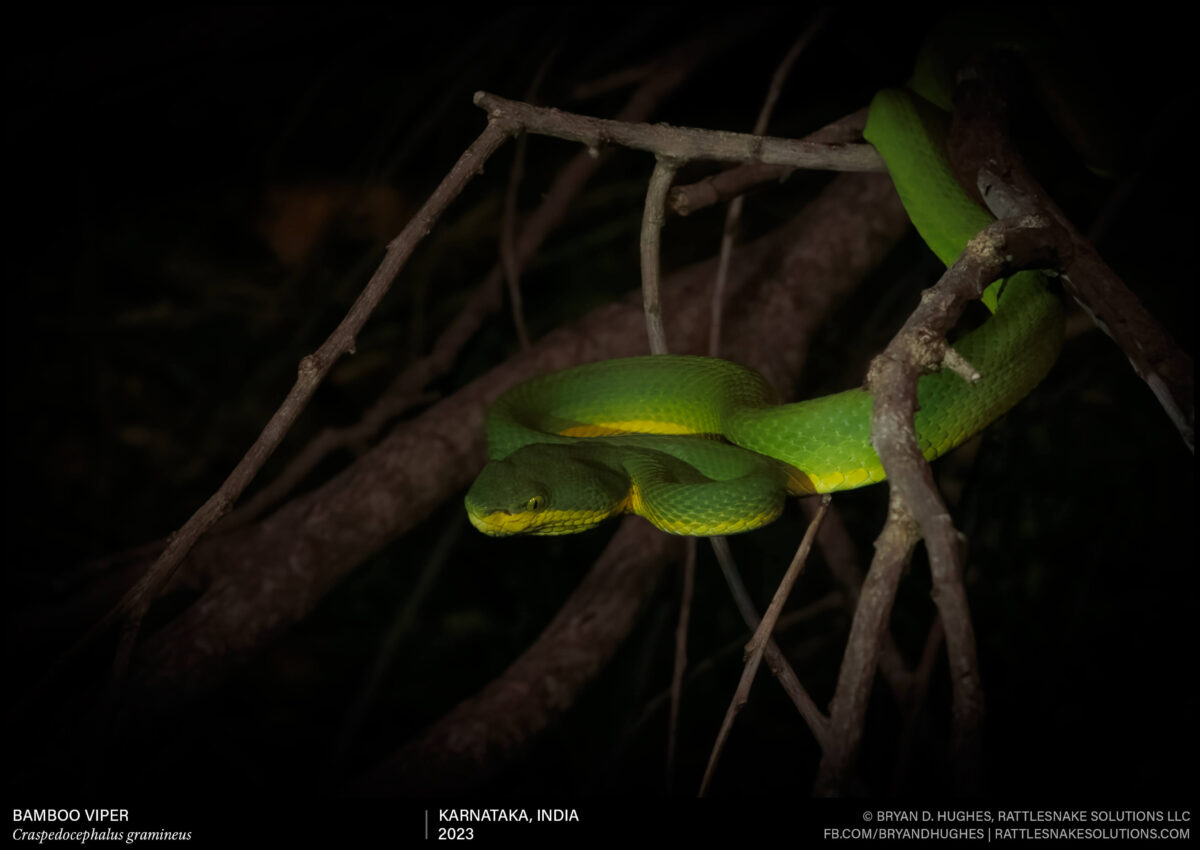
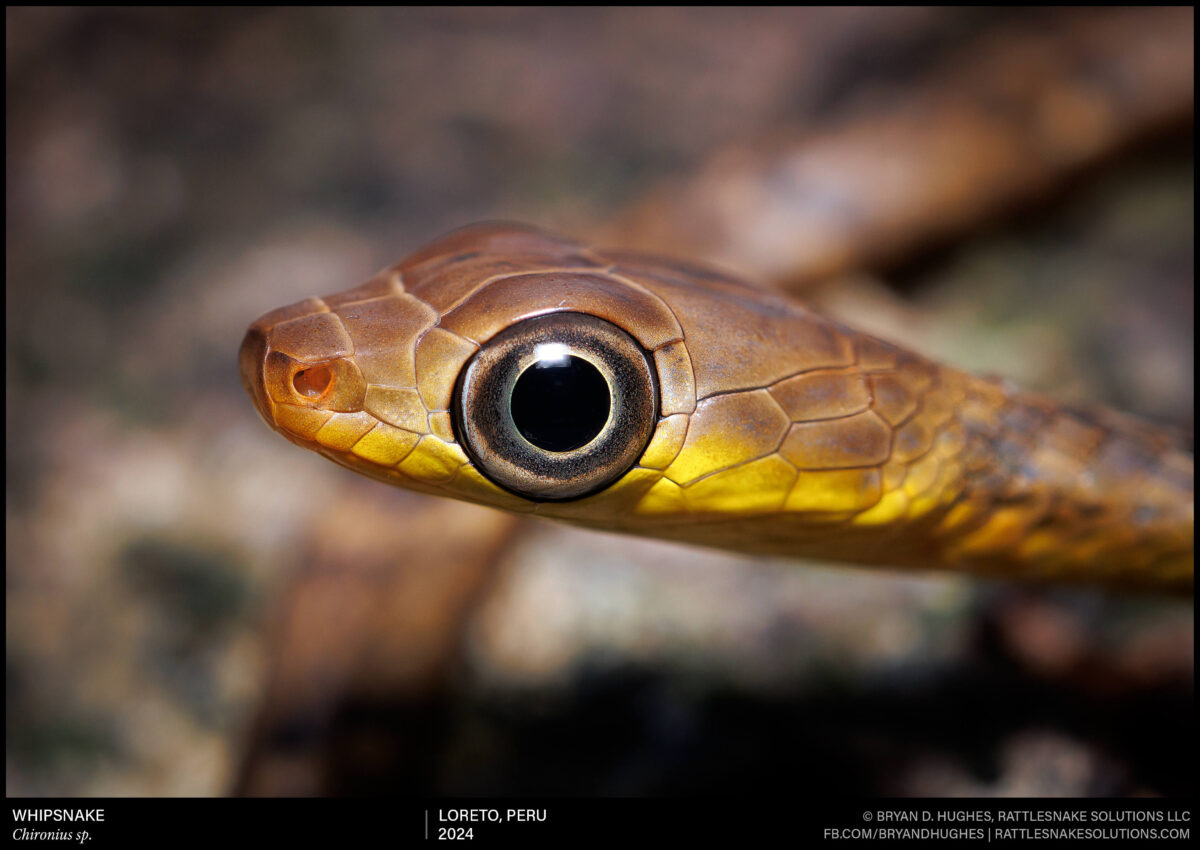
A cool little viper with horn-like scales above the eyes. That’s a common thing with arboreal vipers in Central and South America, but vipers with “horns” are relatively few in comparison. They’re closely related to other montane vipers in the area that have similar structures, but live more familiar lives in steep, heavily vegetated forests.
A few hours of careful scouring of perfect habitat turned up none of these. Then after having more or less given up, I decided to flip some rocks near the cars while we waited for the crew to reassemble … and poof: the target. It’s fun when that happens.
A Banded Sandsnake from my own backyard. These are tiny, even as adults. This one is a bit shorter than a pencil, and likely won’t get any bigger. They eat invertebrates, don’t bite, and are completely harmless to people and pets. They’re also very often mistaken for Western Groundsnakes, which look superficially similar.
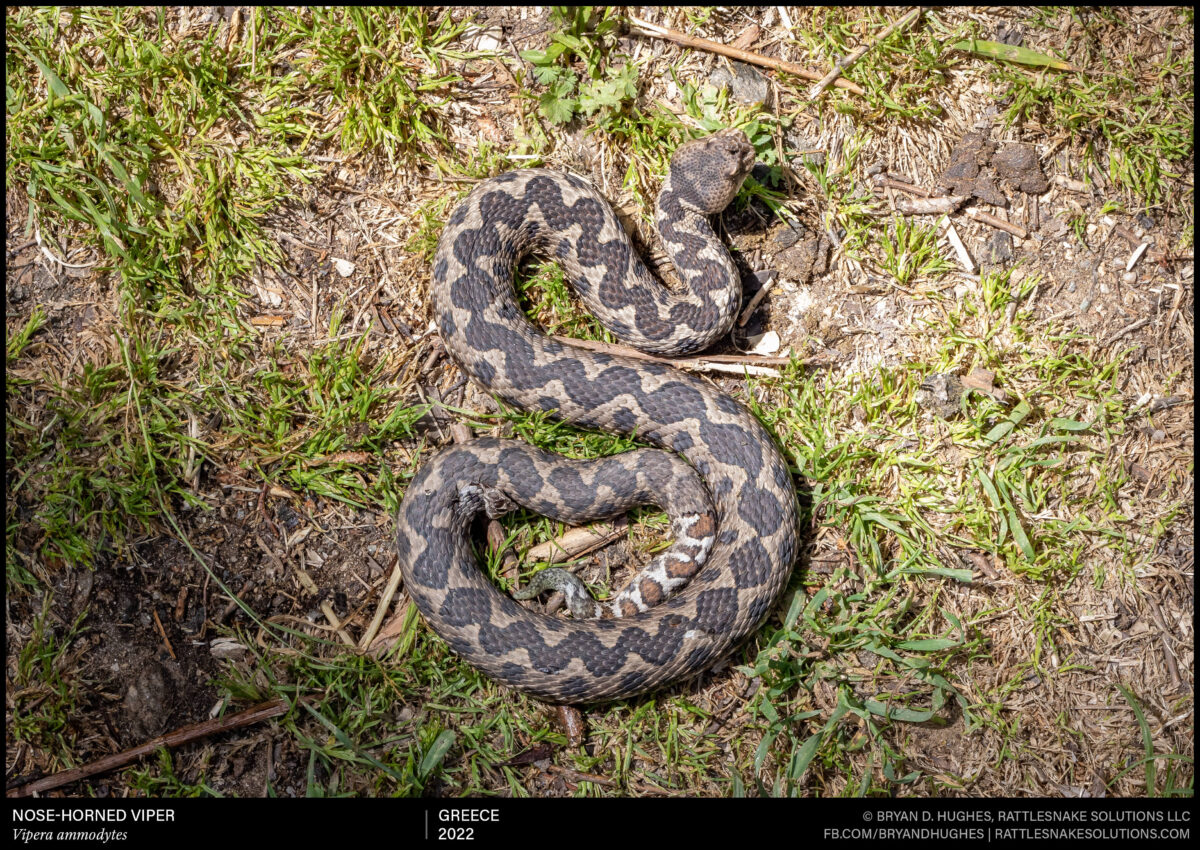
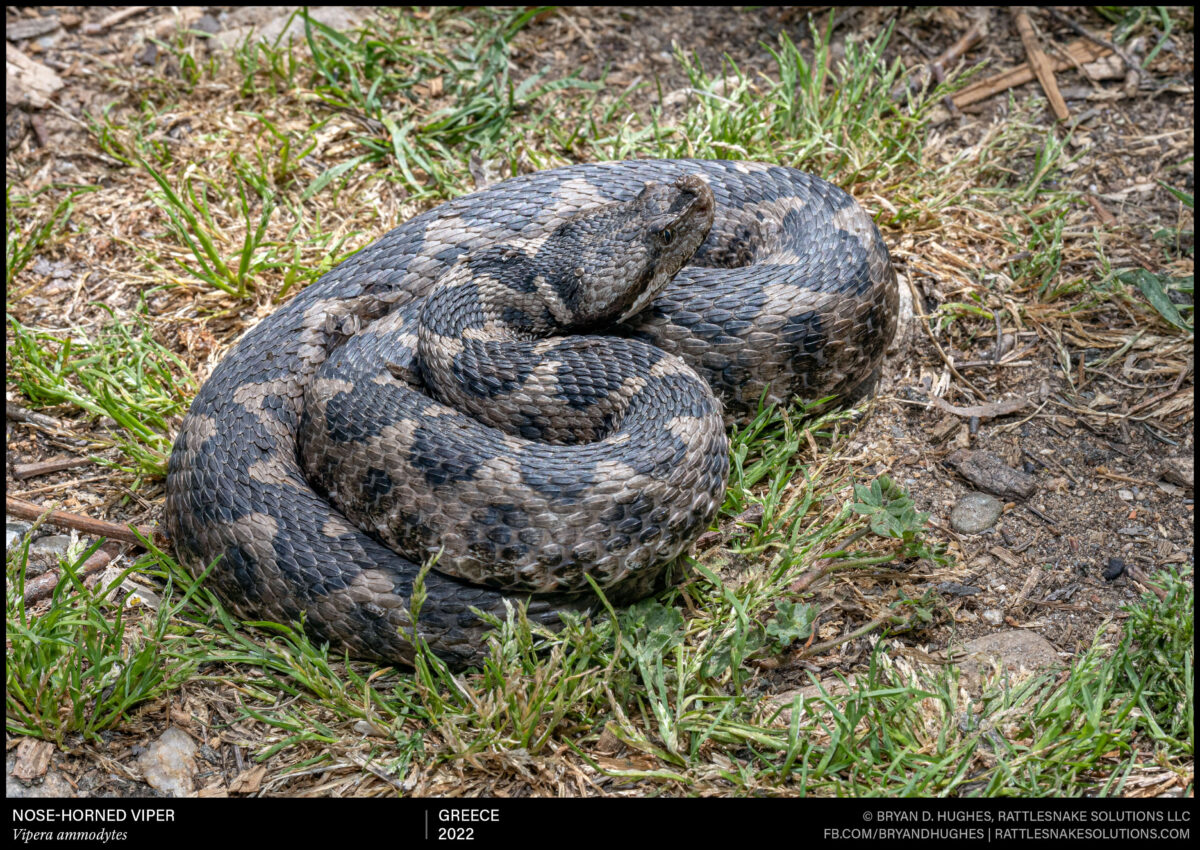
One of many Nose-horned Vipers (Vipera ammodytes) we found in Greece a few years ago. This one is about to shed its skin in coming days, indicated by the clouded eye scale.
A Longnosed Snake cruising around in the low light at the end of the day. These snakes are most often nocturnal, but may be found in the early morning or late afternoon, especially in the Spring. Against the chaotic, rocky backdrop of desert pavement between sandy plains, its shape breaks up, and spotting it can be difficult.
These snakes are commonly found in backyards, even a decent distance into the city, where they are usually misidentified as kingsnakes.
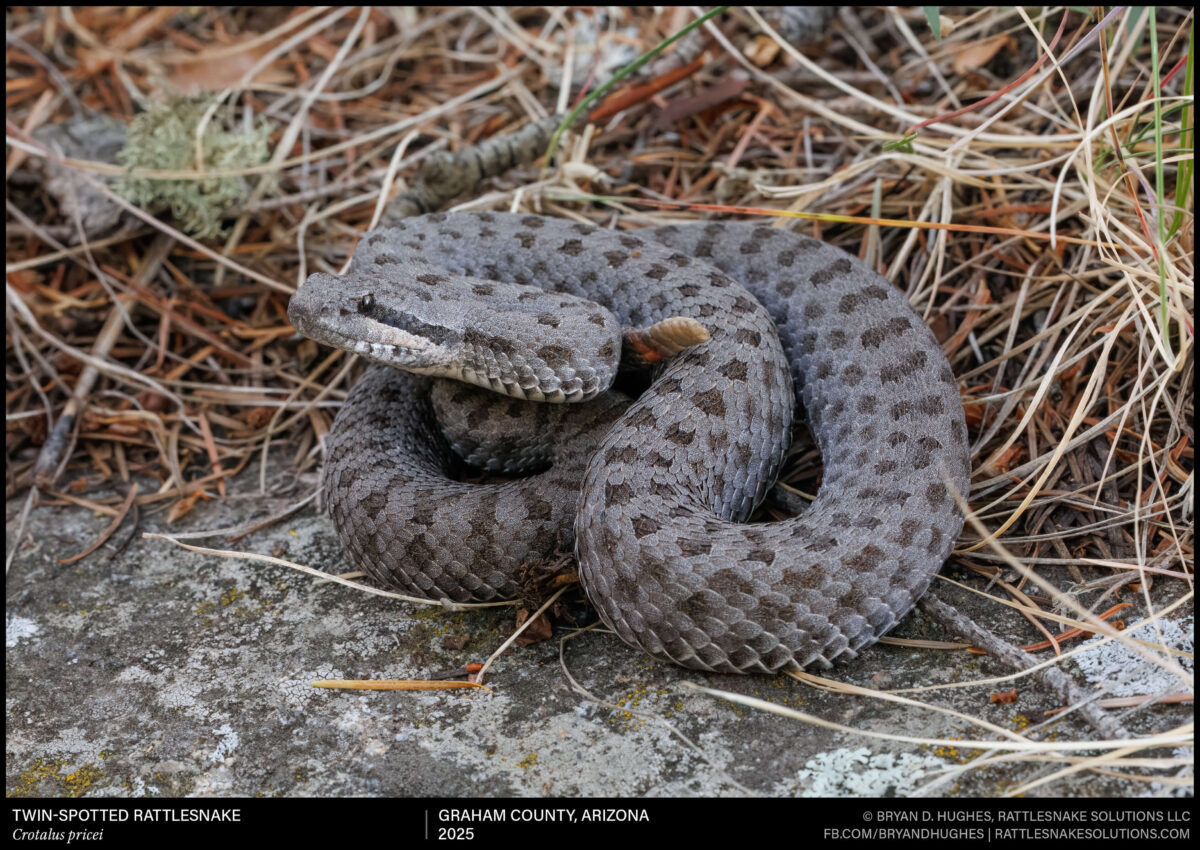
We found this Twin Spotted Rattlesnake high in the mountains of southeastern Arizona. These tiny rattlesnakes are sometimes seen by hikers visiting the sky islands, finding them scurrying off trails at high elevation. They’re usually only around a foot and a half long as adults and quick to exit if anyone shows up – a person would have to really try to be bitten by one.
A close of of a Longnosed Snake’s namesake. These snakes are commonly mistaken as kingsnakes, even by (especially by!) the born and raised locals. There is a superficial resemblance, especially when they are in the purely black and white form. However, these red eyes, pointed snout, and red/orange bands are their own thing entirely. Longnosed Snakes are, compared to many other snake species, able to tolerate urbanization to a large degree. As a result, they can be found in backyards relatively far from the nearest native desert, often being reported by homeowners as the “first snake we’ve ever seen here”. They are harmless, of course, even being reluctant to bite at all.
A Mojave Rattlesnake from the Phoenix area. This brown and tan color is typical of this species in the area, though some of the more famously greenish ones do pop up as well. This one follows all the rules, with a clearly visible tail with bands of a roughly 2:1 white to black ratio, half yellow proximal rattle segment, and eye stripe extending beyond the corner of the mouth.
But what people who are very experienced use to identify a snake like this is not any of those features in particular. It’s the overall appearance, or gestalt. The “cleaner”, less speckled and chaotic pattern, slighter and more angular head shape, and outward appearance as a whole just hit as “mojave” in the mind upon sight. This isn’t to say, of course, that the features listed aren’t important, but all can be variable and fail an observer from time to time. It’s worthwhile, once a person has learned to identify these animals reliably based on details, to “zoom out” and look at the whole animal. Eventually, a Mojave Rattlesnake would stand out from similar-looking species in the same way you can likely tell the difference between a yellow lab and a retriever.
A California Kingsnake from an interesting pocket of Sonoran Desert influence near the Arizona/Utah border.
“kingsnakes keep rattlers away!!!” – a common, and incorrect, myth of the desert.
Kingsnakes do eat rattlesnakes, but that’s far from all that they eat. In a dietary study examining the stomach contents of 2,662 kingsnakes, rattlesnakes made up just 7% of prey items. While rattlesnakes are an ideal prey item for these animals, they are far from their only, or even primary, target. (Wiseman et al 2019)
In reality, the presence of a kingsnake does not indicate that there are fewer rattlesnakes in an area. If anything, a lot of kingsnakes may be an indicator of abundant prey! The places we often find kingsnakes regularly are also places with a large amount of rattlesnakes.
Why does this matter? Kingsnakes are routinely collected or purchased by homeowners to release on their property with the belief that it is going to control the rattlesnakes that may be there. But, the likely result is going to be a dead kingsnake … with no apparent effect to the local rattlesnake population.
So yes, kingsnakes do eat rattlesnakes. But no, it’s not all they eat, and moving kingsnakes around randomly will not provide the protection most people believe it will.
Wiseman, K. D., Greene, H. W., Koo, M. S., & Long, D. J. (2019). Feeding ecology of a generalist predator, the California Kingsnake (Lampropeltis californiae): Why rare prey matter. Herpetological Conservation and Biology, 14(1), 1–30.