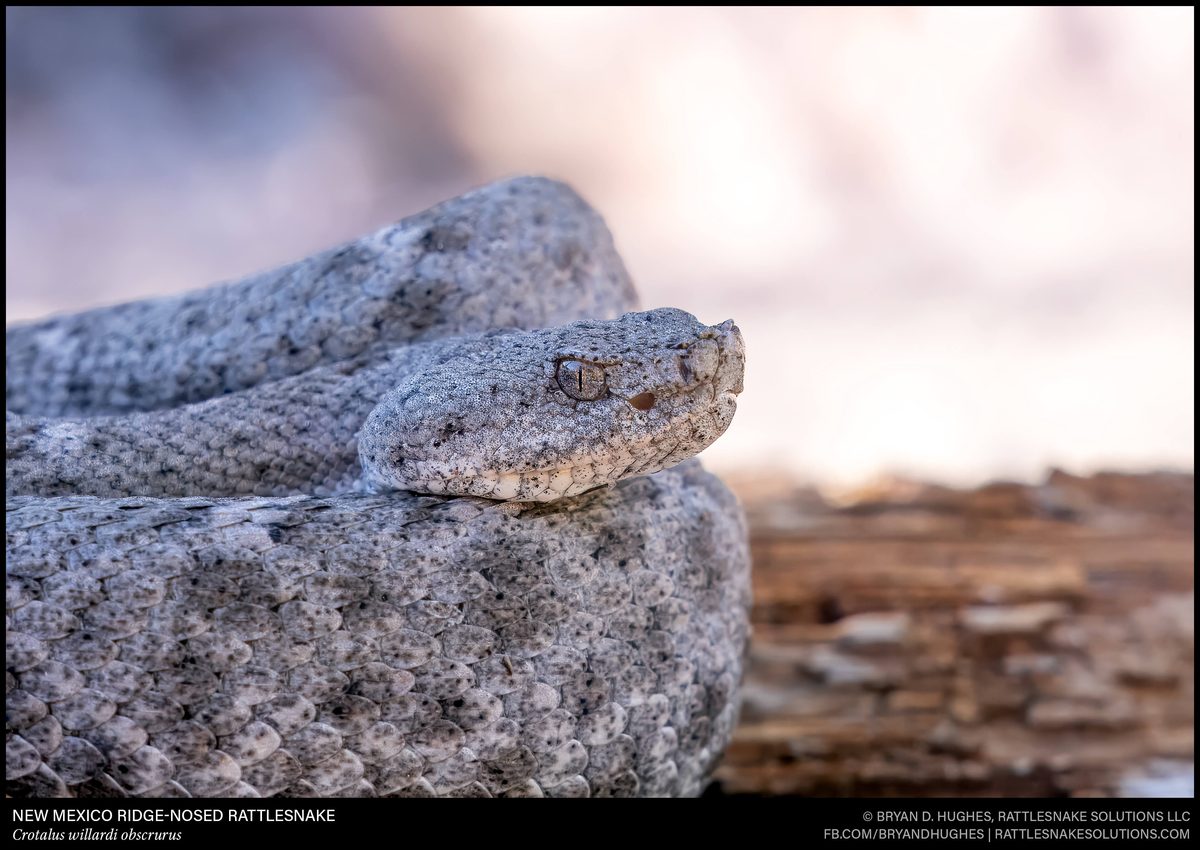
A New Mexico Ridge-nosed Rattlesnake (Crotalus willardi obscurus) from one of the remaining populations within the United States. These are small rattlesnakes adapted for high-elevation, higher-humidity environments than are typical in the surrounding Chihuahuan Desert. This is one of only two rattlesnake species in the country that are listed as Threatened under the Endangered Species Act. Rattlesnake Solutions is fortunate to be among the organizations and agencies involved with a recovery effort to try to bolster the remaining population within Arizona.
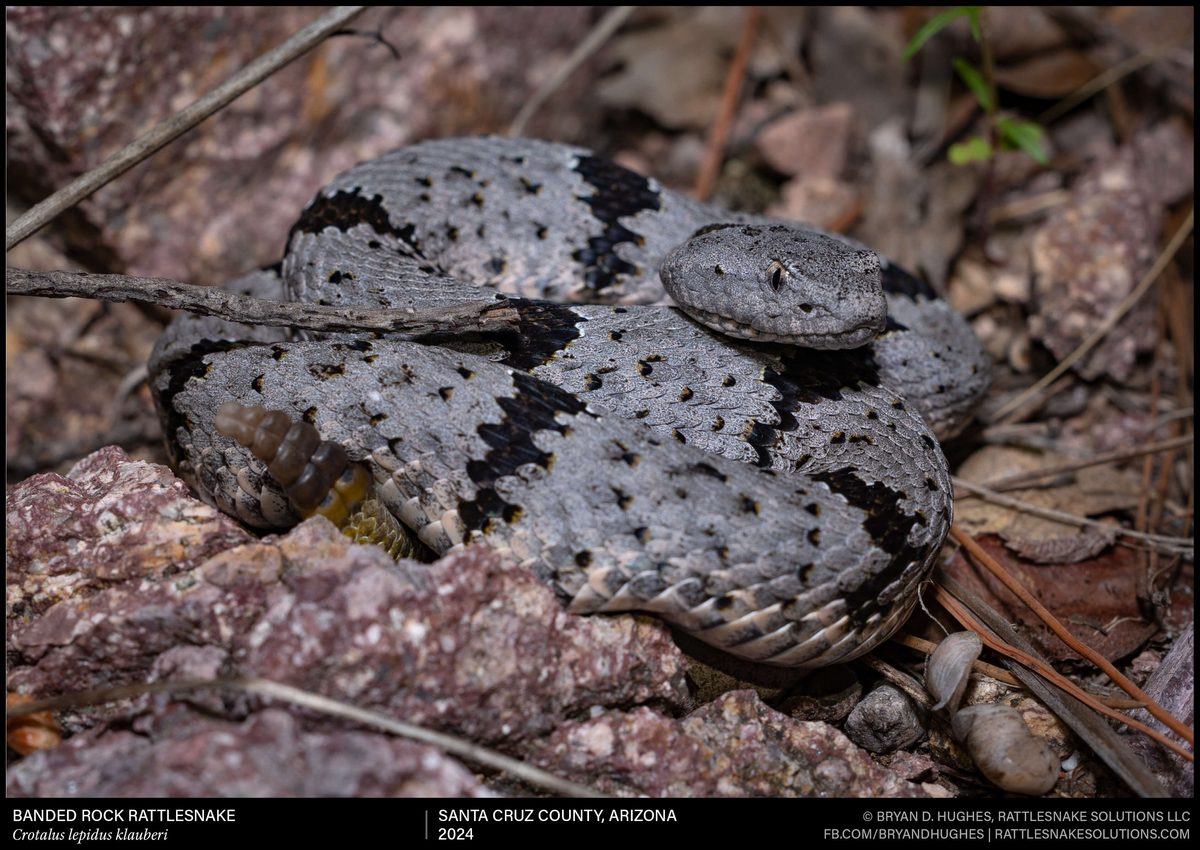
A female Banded Rock Rattlesnake from the Huachuca Mountains in Arizona. These small rattlesnakes are sexually dimorphic, with males often showing metallic green coloration along the back. Females are usually more subdued in comparison, like this typical grey and black banded look. These are one of a handful of protected rattlesnake species in the state.
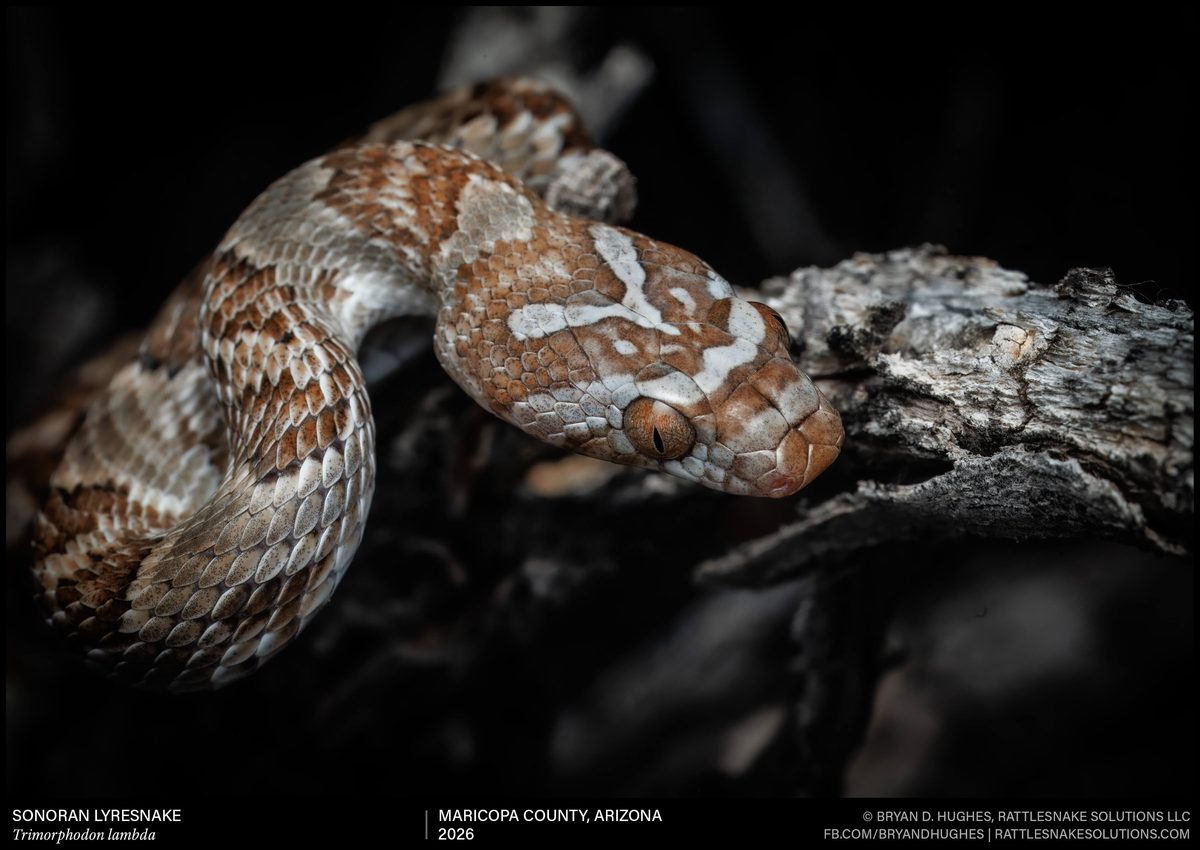
Up close with a Sonoran Lyresnake (Trimorphodon lambda) from Maricopa County, Arizona. These shy snakes are almost entirely nocturnal, which you’d likely be able to figure out from just those big bug-eyes. They’re mildly venomous, rear-fanged snakes, but generally harmless to humans and pets.
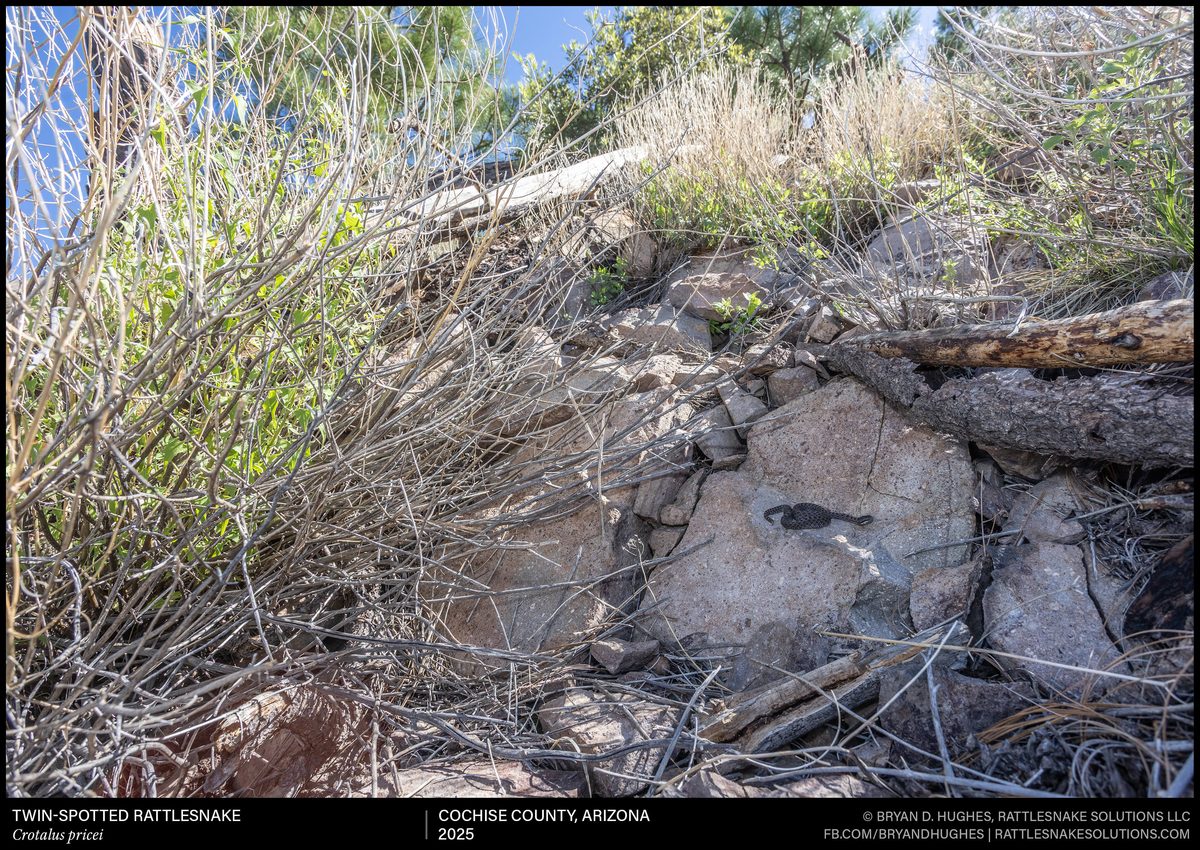
A Twin Spotted Rattlesnake in habitat at the top of a mountain in southern Arizona. These are rattlesnakes that are often mistaken as a non-venomous species due to their small size and head that is not as strongly differentiated from the neck as people expect. They are rarely seen by hikers, but a “what is this snake?” photo of one tends to pop up a few times a year from the Santa Rita mountains south of Tucson.
This is a young individual that I spotted as I climbed up to the ridgeline from a fruitless search below. It never made a sound, but slipped silently into the rocks to escape, as they do. I surely walked past a dozen more, who performed this disappearing act with better timing.
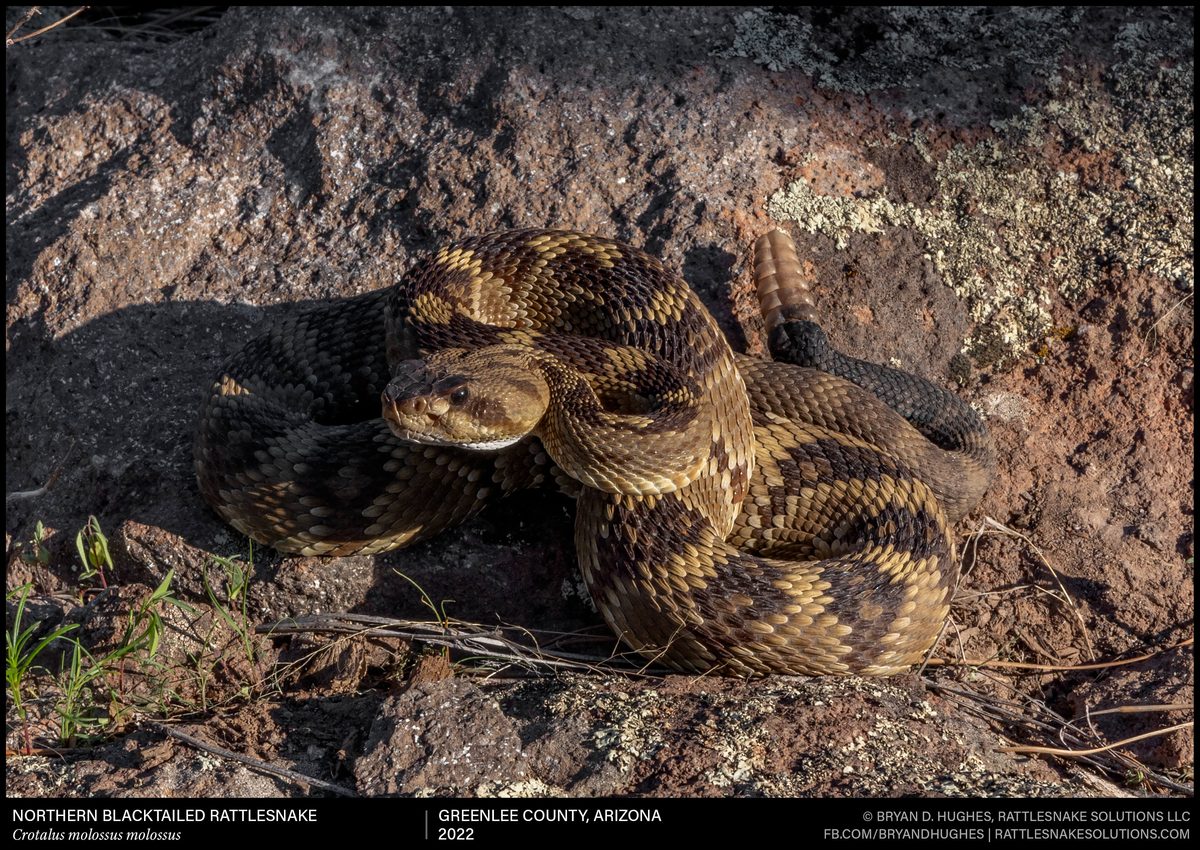
A large Blacktailed Rattlesnake that we found in the mountains of central Greenlee County. This is a huge, wild area with few roads and much of the high elevation habitat inaccessible without a lot of effort. For that reason, it’s of special interest to me, with relatively few examples of snakes compared to other regions in the state.
These are on the larger end of rattlesnakes in Arizona, reaching lengths of around four feet. Their defensive behavior is all over the board. Most of the large ones will quietly just continue to leave, making them even more difficult to photograph, as they seem to remain unbothered by the camera-holding primates.
Beck, D. D. (1995). Ecology and energetics of three sympatric rattlesnake species in the Sonoran Desert. Journal of Herpetology, 29(2), 211–223. DOI: https://doi.org/10.2307/1564558
Pough, F. H. (1966). Ecological relationships of rattlesnakes in southeastern Arizona with notes on other species. Copeia. DOI: https://doi.org/10.2307/1441401
Anderson, C. G., & Greenbaum, E. (2012). Phylogeography of northern populations of the Black-Tailed Rattlesnake (Crotalus molossus Baird and Girard, 1853), with the revalidation of C. ornatus Hallowell, 1854. Herpetological Monographs, 26(1), 19–57. DOI: https://doi.org/10.1655/HERPMONOGRAPHS-D-11-00012.1
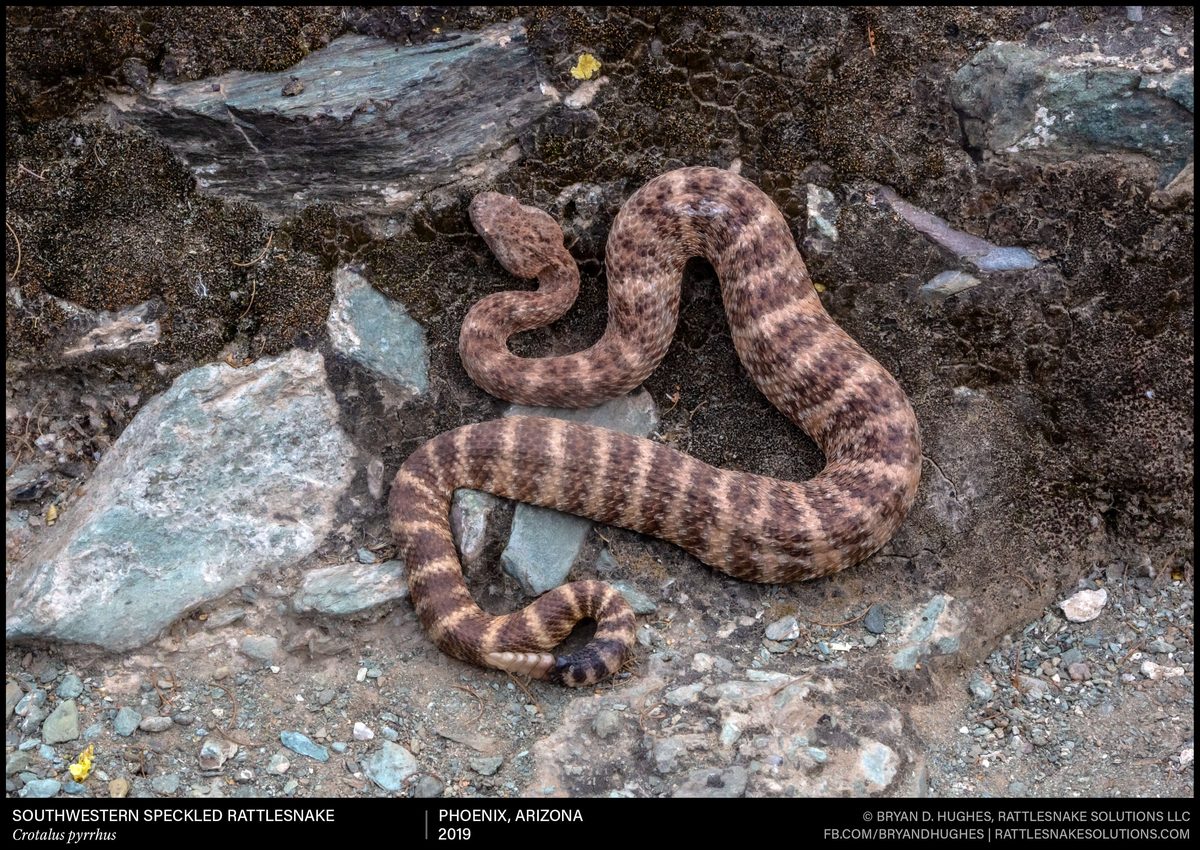
A Southwestern Speckled Rattlesnake from the Phoenix area. These snakes can be amazingly adaptable, often perfectly matching the rocky areas where they live in color, and even more difficult to see with the jagged, chaotic pattern. This one carries a PIT Tag, implanted by our team to identify it in the future as part of our ongoing research of urban rattlesnake populations.
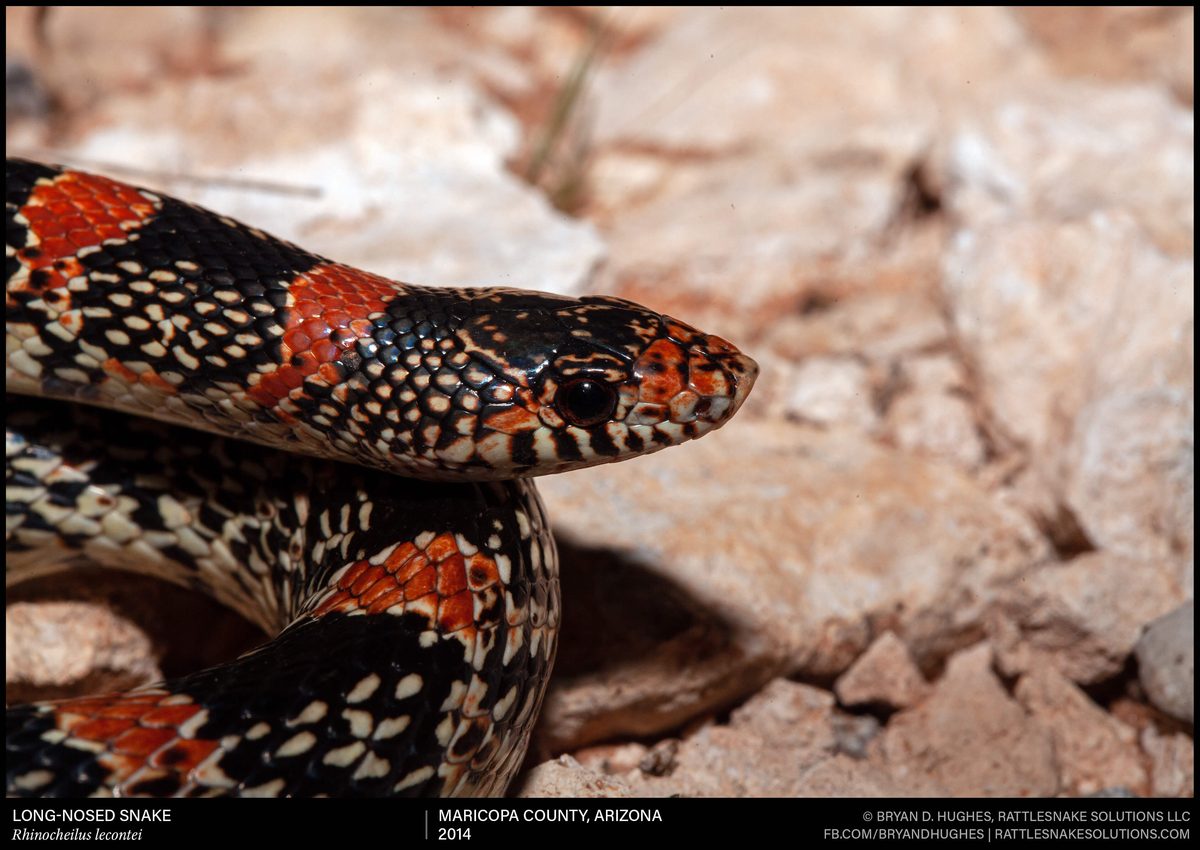
I found this Longnosed Snake (Rhinocheilus lecontei) near Phoenix many years ago. Interestingly, this species is most often mistaken for a kingsnake by locals, even (especially!) by those who identify strongly as “born and raised here.” It’s likely the case that the majority of “kingsnakes” seen by the typical Arizona resident are actually Longnosed Snakes. This one has a particularly high amount of the red-orange color that can help differentiate it from similar looking species, making it a bit easier.
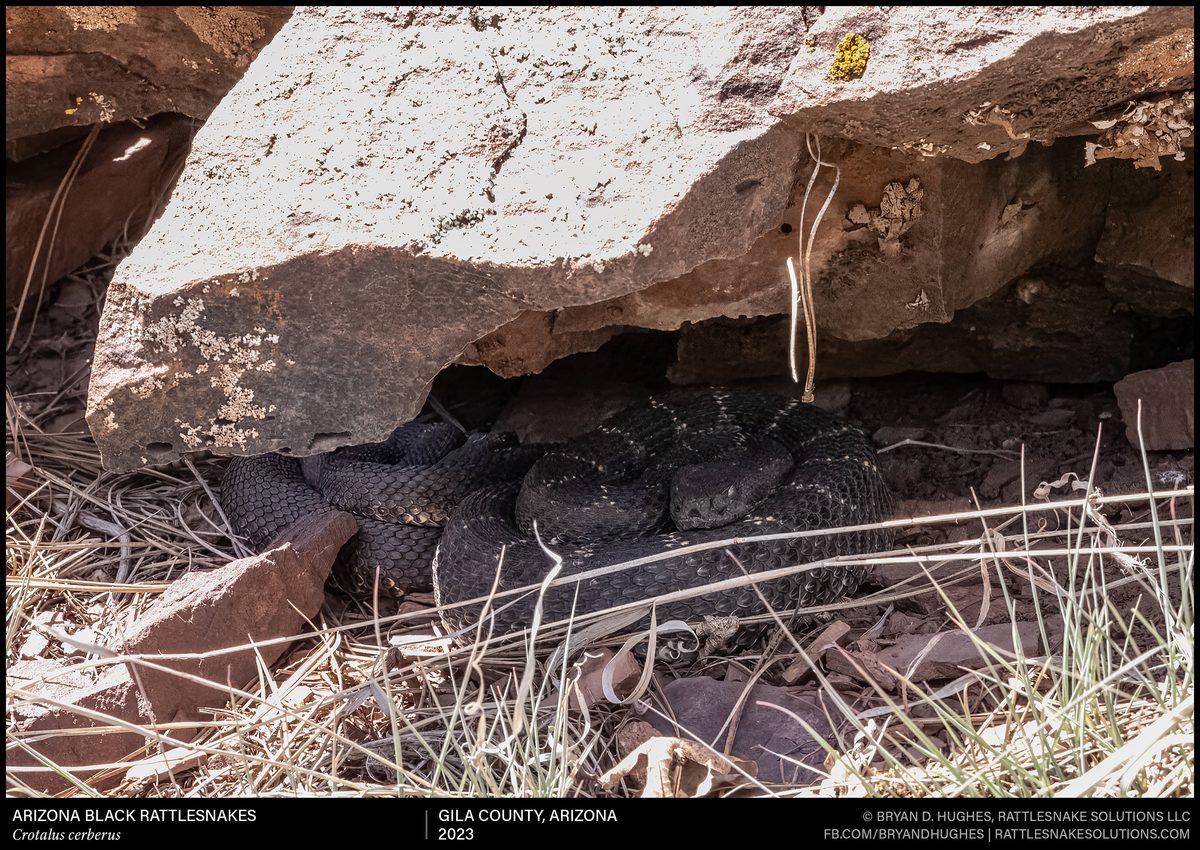
This couple of female Arizona Black Rattlesnakes was hanging out at the entrance of a den a few summers ago. While these sites are more densely populated during the winter, they’ll also be used by gravid (pregnant) females during the summer, where they can be seen basking in preparation of the little ones during the monsoon season. Elsewhere on the hillside, other females were doing the same.
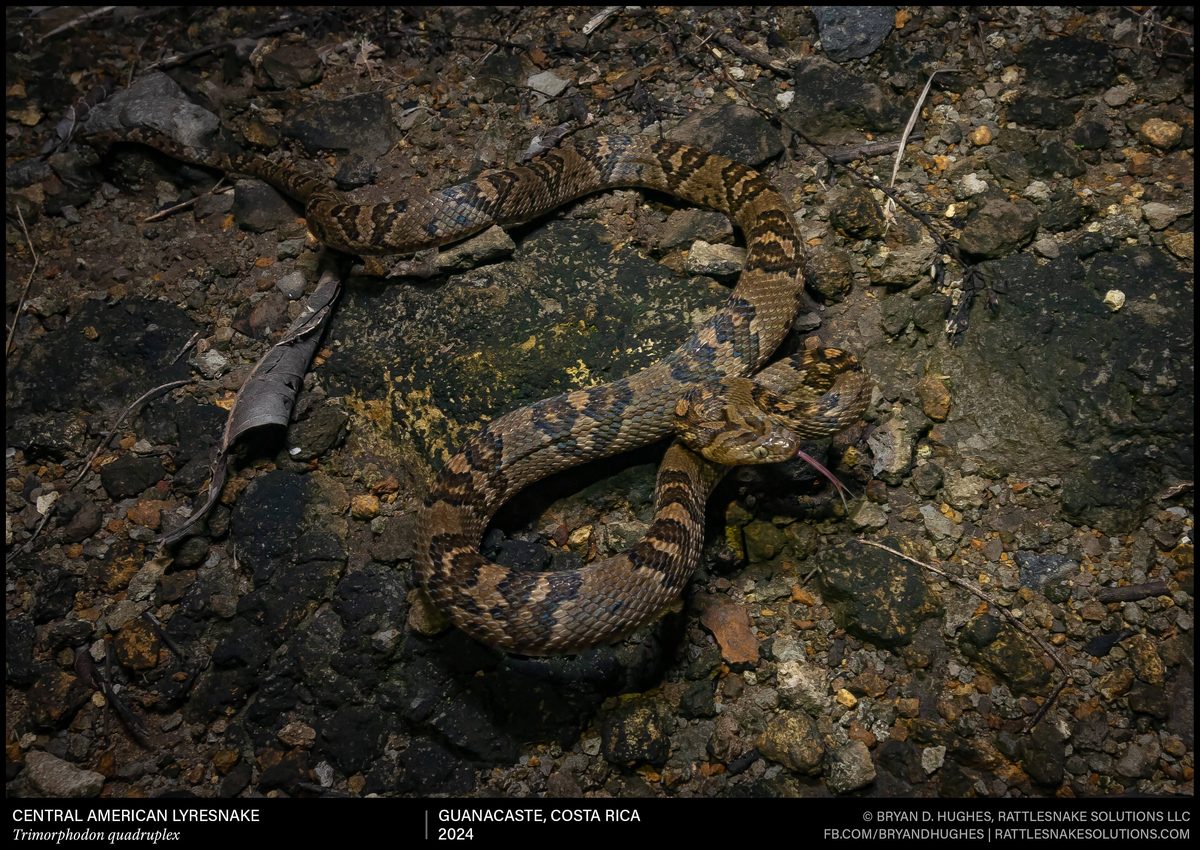
A morning flight out of Costa Rica gave me one extra evening near the airport in Liberia, Costa Rica, to end a family vacation. I went into the coastal thornscrub to see what there was to see, and found a few of these large Central American Lyresnakes. They seem thicker and less likely to bite than the thin, bug-eyed lyresnakes here in the United States. Handling them seems a bit more like it’s a gophersnake or ratsnake in comparison. Unlike those snakes, however … these do have a relatively mild venom, that I would not like to test from one of these big snakes.
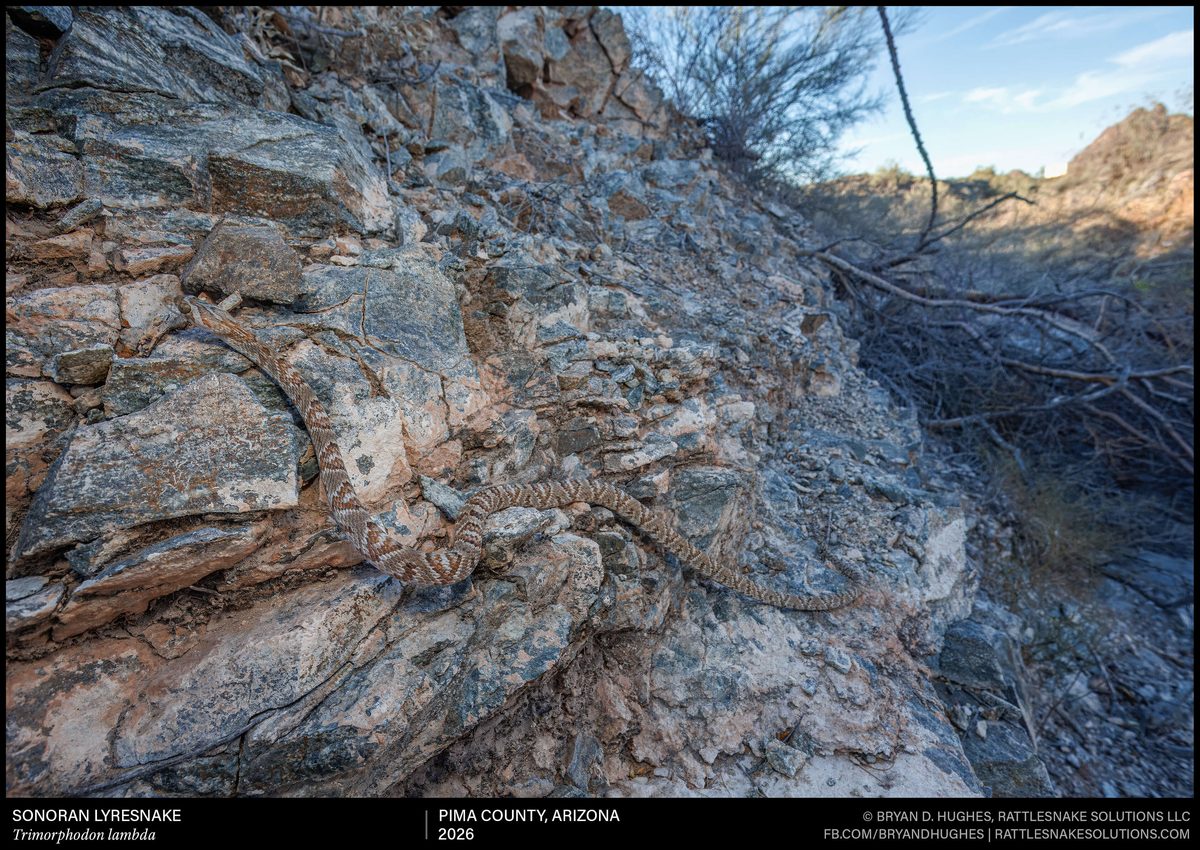
A Sonoran Lyresnake (Trimorphodon lambda) from border area of Arizona/Mexico earlier in the year. These are among the least often seen species of snakes in the Phoenix and Tucson areas, despite being quite common in the right habitat.