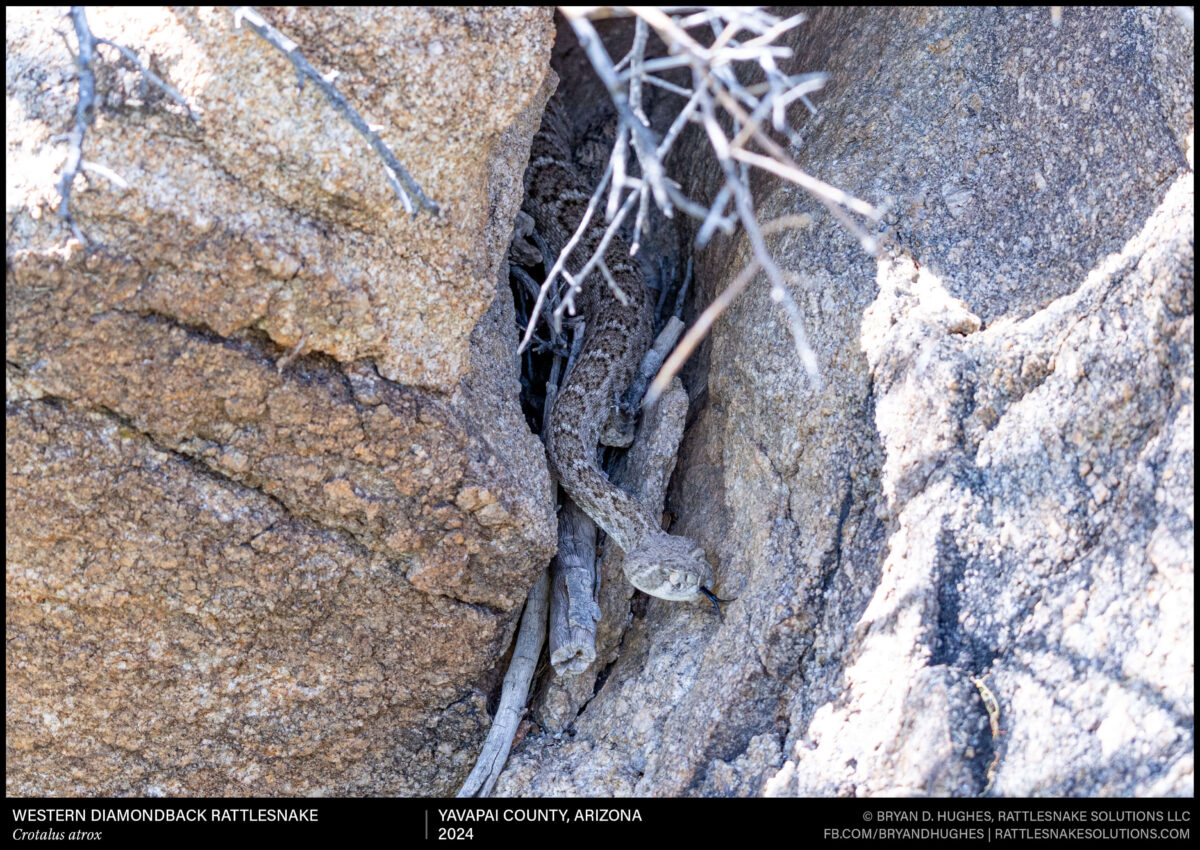
We were out checking dens on a spring day and stopped at one last spot. It was a rocky outcrop relatively isolated from the rest of the mountain, and looked great from at distance. Upon getting to it, we were immediately greeted with this large Western Diamondback Rattlesnake on the move a short distance from what we’d later recognize as the entrance.
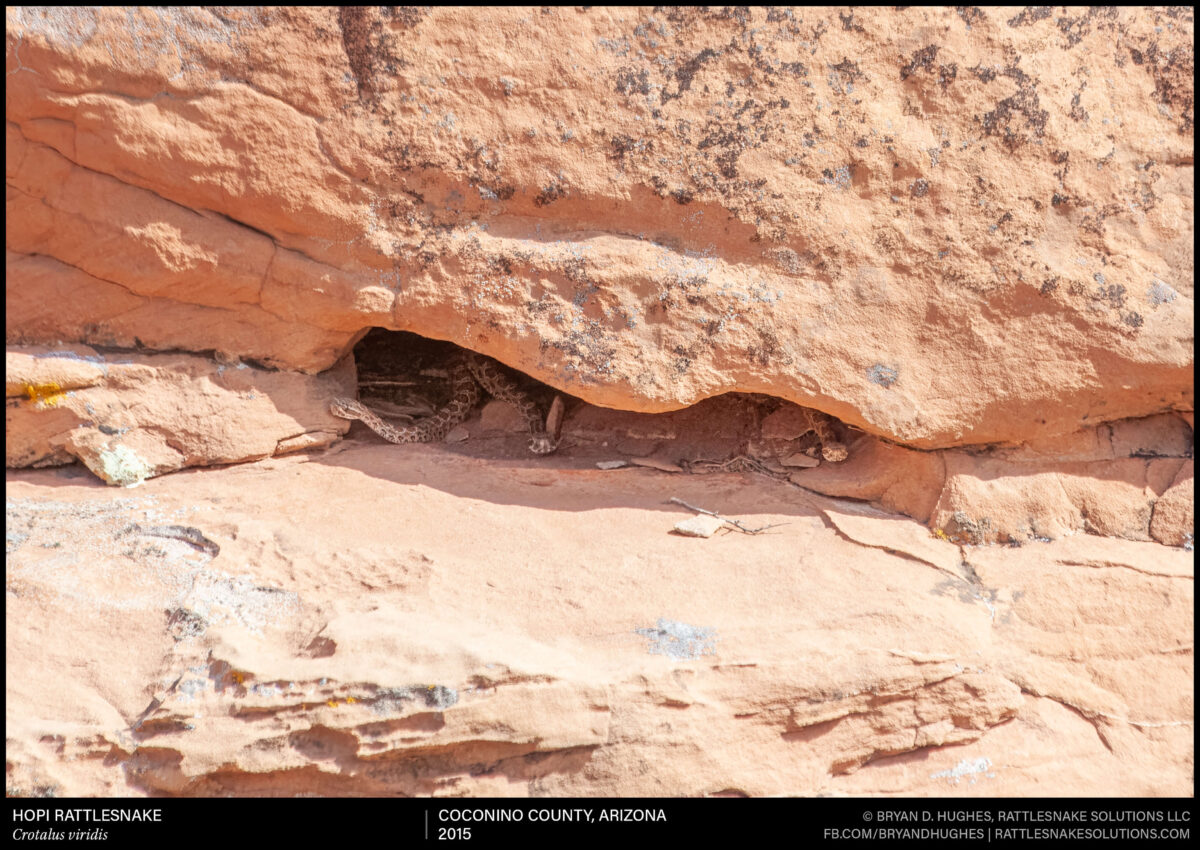
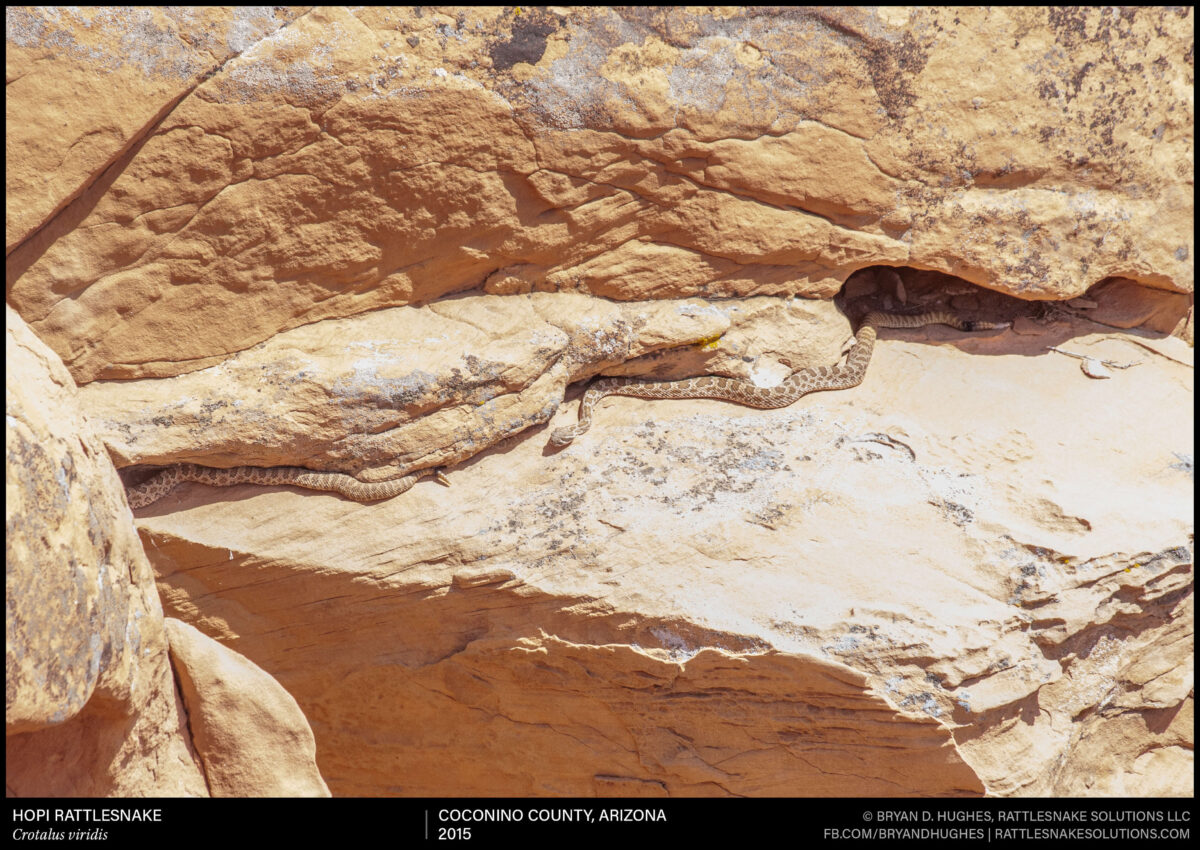
It takes a lot of patience to sneak up on this den of Prairie Rattlesnakes in northern Arizona. Unlike most rattlesnake dens I visit, these spook incredibly easily, retreating at the sight of me from well over 100′ away. Even when moving slowly, they seem to recognize the threat and disappear … for the rest of the day. It’s only by arriving before it’s warm enough to emerge and hiding behind boulders that it was possible for me to get these photos, and watch their actions for the morning.
These small variants of the species were once considered a separate subspecies (Hopi Rattlesnake), more than twenty years ago, but may be again, based on discussion of new research from reliable sources. These are all only around 1 to 1.5′ long, and will never get bigger. This is quite different than the much larger, greener (~3′) versions of the same species found in the Juniper-dominated hills, a relatively short drive away.
This topic will almost certainly mean the comments here will be dominated by snake people, similarly emerging from the crevices of the internet to shake fists in various directions. Taxonomy is a bit like music – whichever bands were popular at the time a young herpetologist is most active seem to become the prime lexicon, all future versions to be summarily dismissed as noise of youth.
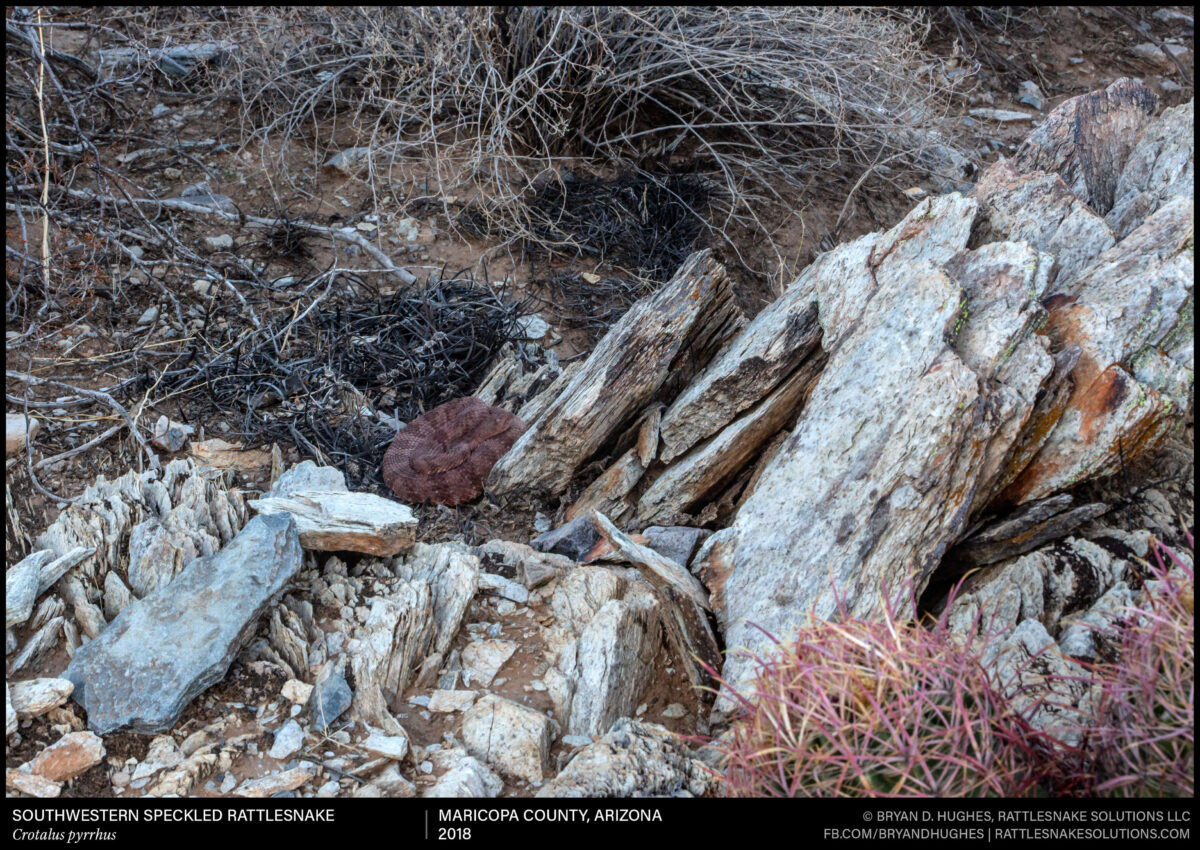
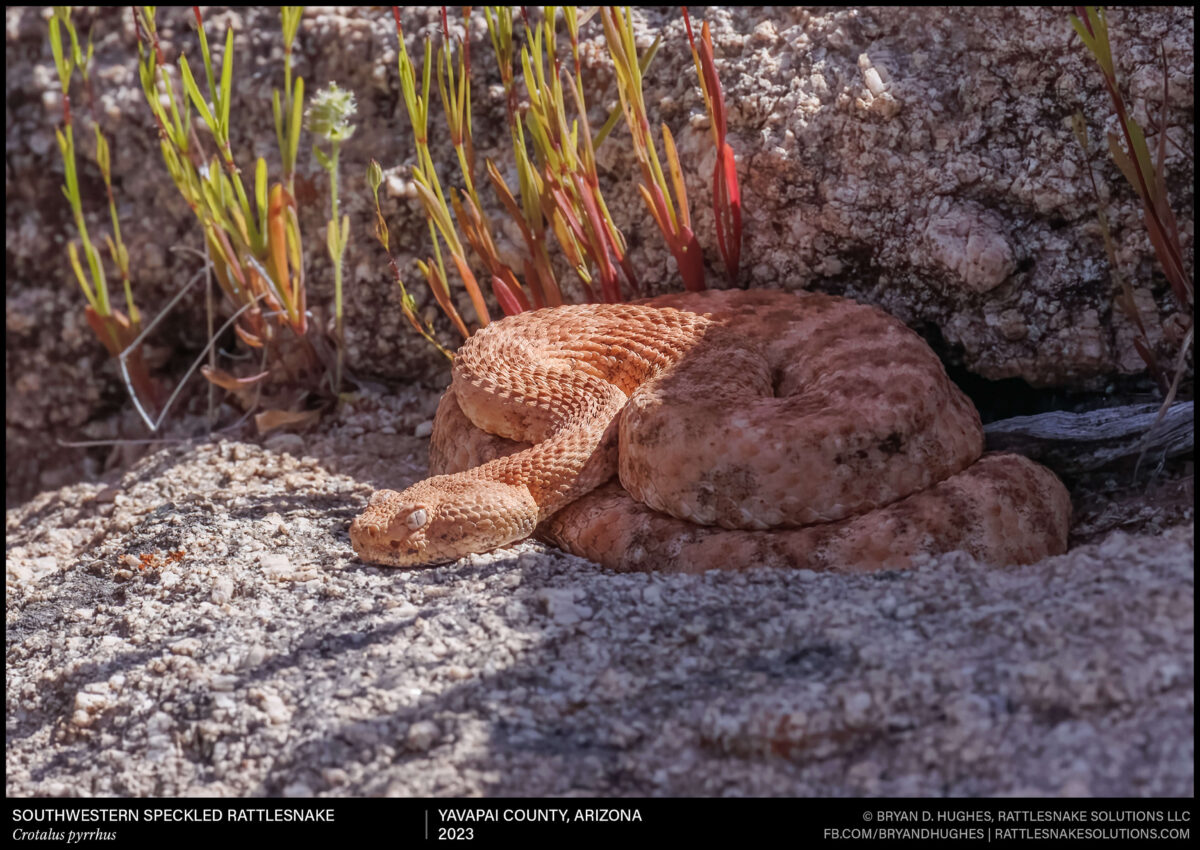
Southwestern Speckled Rattlesnakes (Crotalus pyrrhus) are commonly seen by hikers in the Phoenix area at popular parks, even those entirely within the city. They have a relatively extreme level of camouflage for a rattlesnake, and many people are surprised to learn just how many rattlesnakes they walk by even at the most heavily-hiked parks in the city. This is one of several hundred that inhabit one of these parks, found on a hillside below a trail.
A Southwestern Speckled Rattlesnake (Crotalus pyrrhus) in ambush along a ledge in central Arizona. While most of the boulder field where it was found is made of rock similar to how this snake looks … this particular large boulder made of light colored granite helped make this one easy to spot. We got some photos from a distance and left it there to hopefully succeed in getting that chuckwalla or ground squirrel it’s looking for.
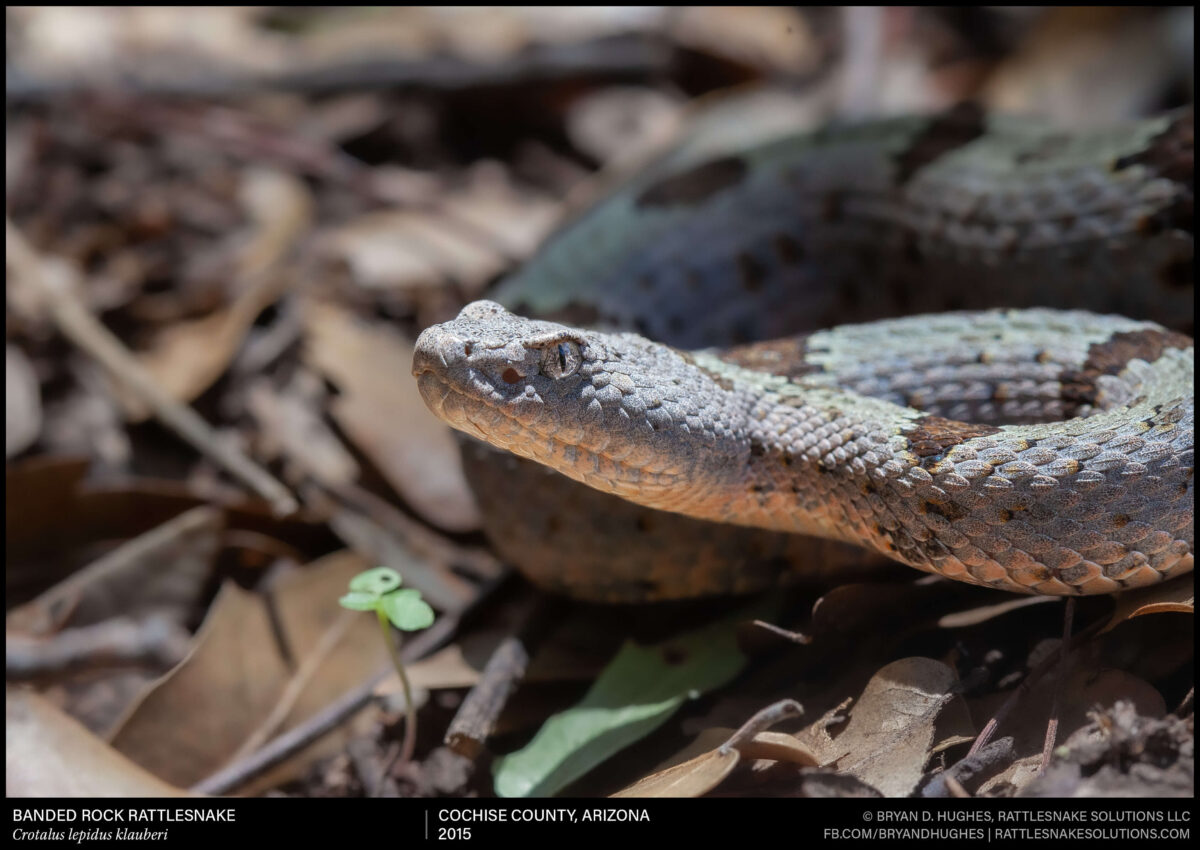
Banded Rock Rattlesnakes are common in the hills and mountains of southeastern Arizona. They come in a variety of colors, often a combination of grey, blue, green, and pink, like this one. They’re quick to flee, and it would be hard to see a situation where a hiker or the relatively few people who live where they do could consider them something to fear. We found this one more than a decade ago, and it very well may be still cruising around in that same spot each year.
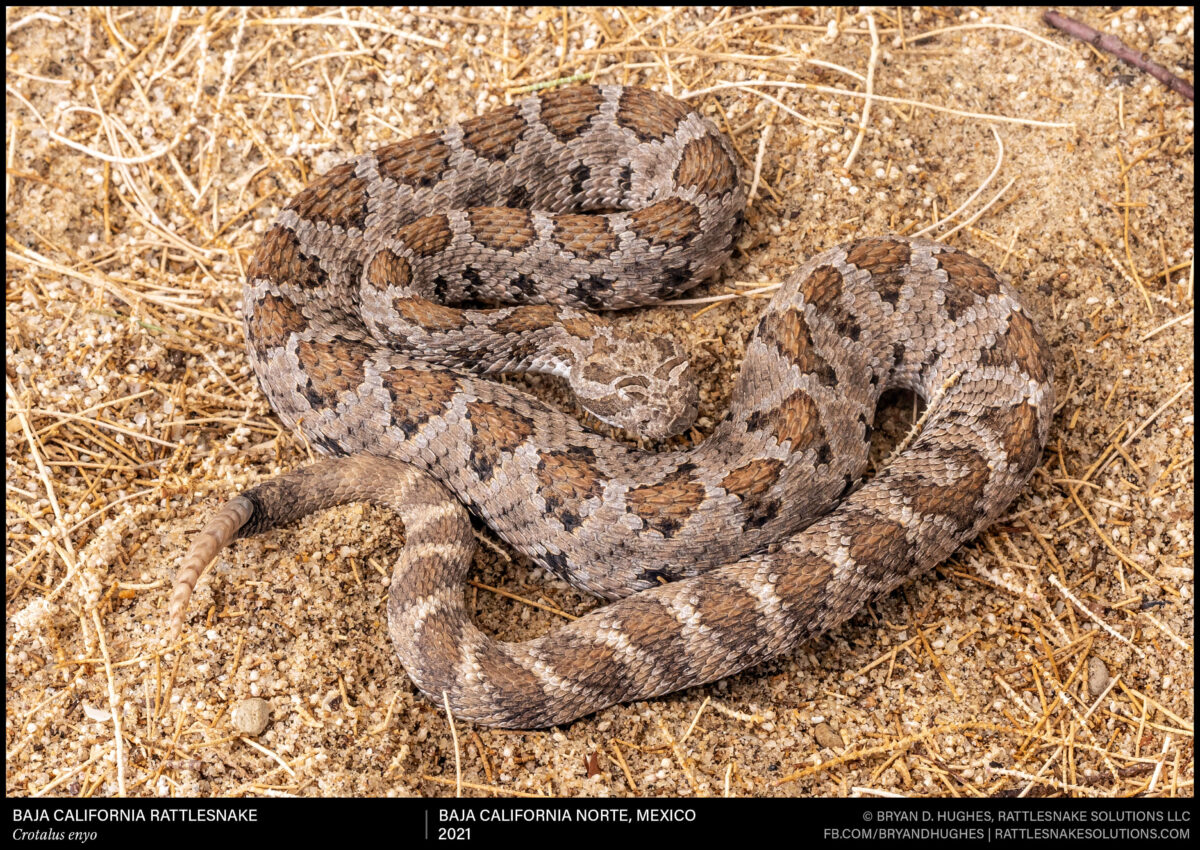
A Baja California Rattlesnake we found a few years ago in Mexico. These interesting rattlesnakes can be found all over the peninsula, from sandy beaches to slides along nearly vertical cliffs, and everywhere in between. Just from impressions, they seem like someone mushed a sidewinder and tiger rattlesnake together to make a versatile desert rattlesnake.
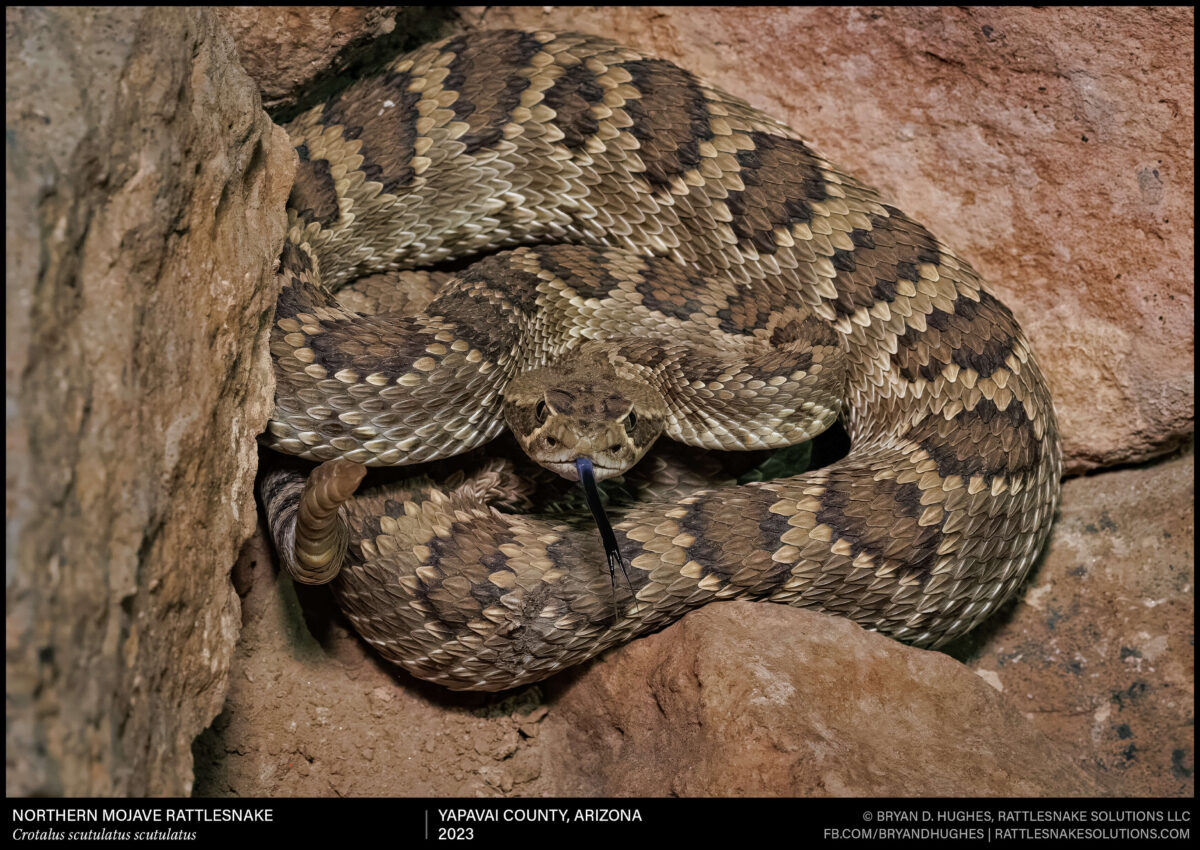
A Mojave Rattlesnake from one of the higher-elevation populations in central Arizona. These snakes are common in grasslands, where they live in relatively flat, sandy areas. This one is from a canyon bottom it shares with several other species of rattlesnakes, including Western Diamondback Rattlesnakes, Arizona Black Rattlesnakes, Blacktailed Rattlesnakes, and Speckled Rattlesnakes.
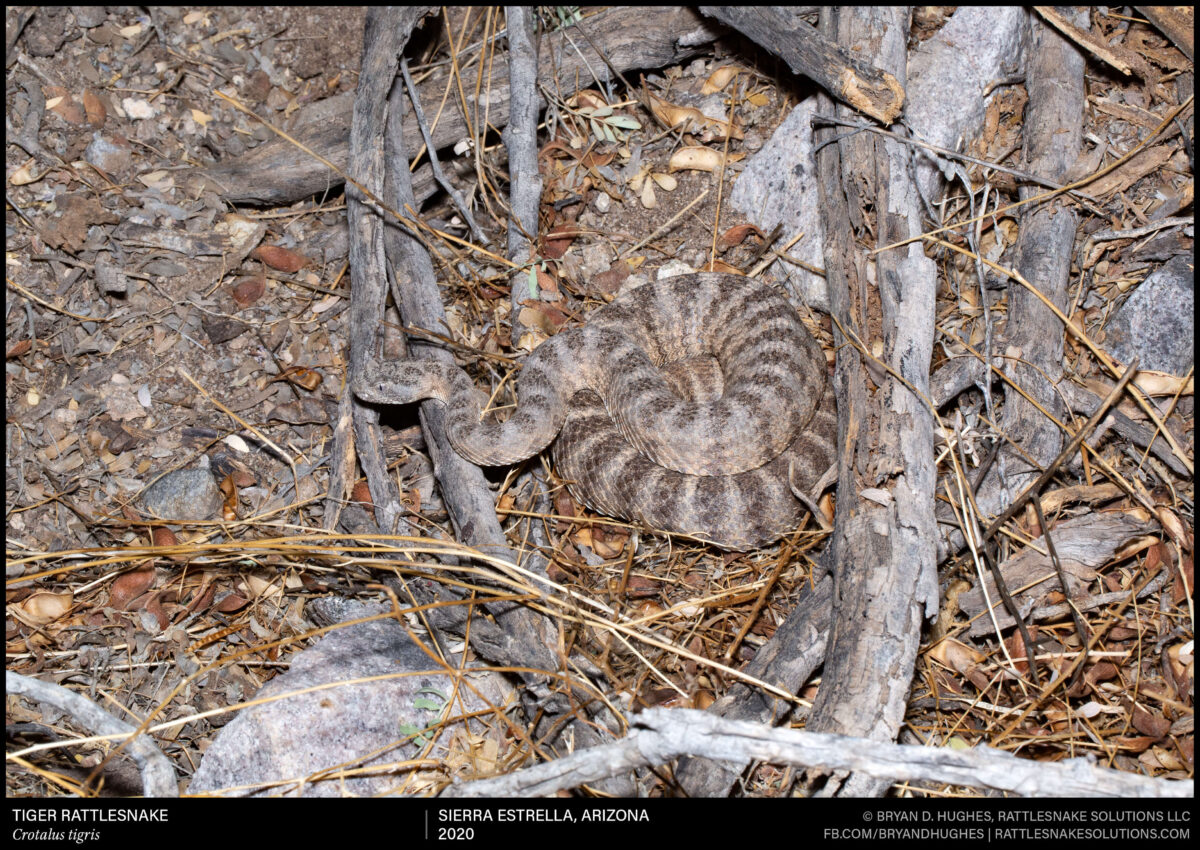
A Tiger Rattlesnake in ambush late on a hot summer night several years ago. Despite being relatively seldom seen, this species is common in most of the mountains that overshadow the Phoenix metro valley.
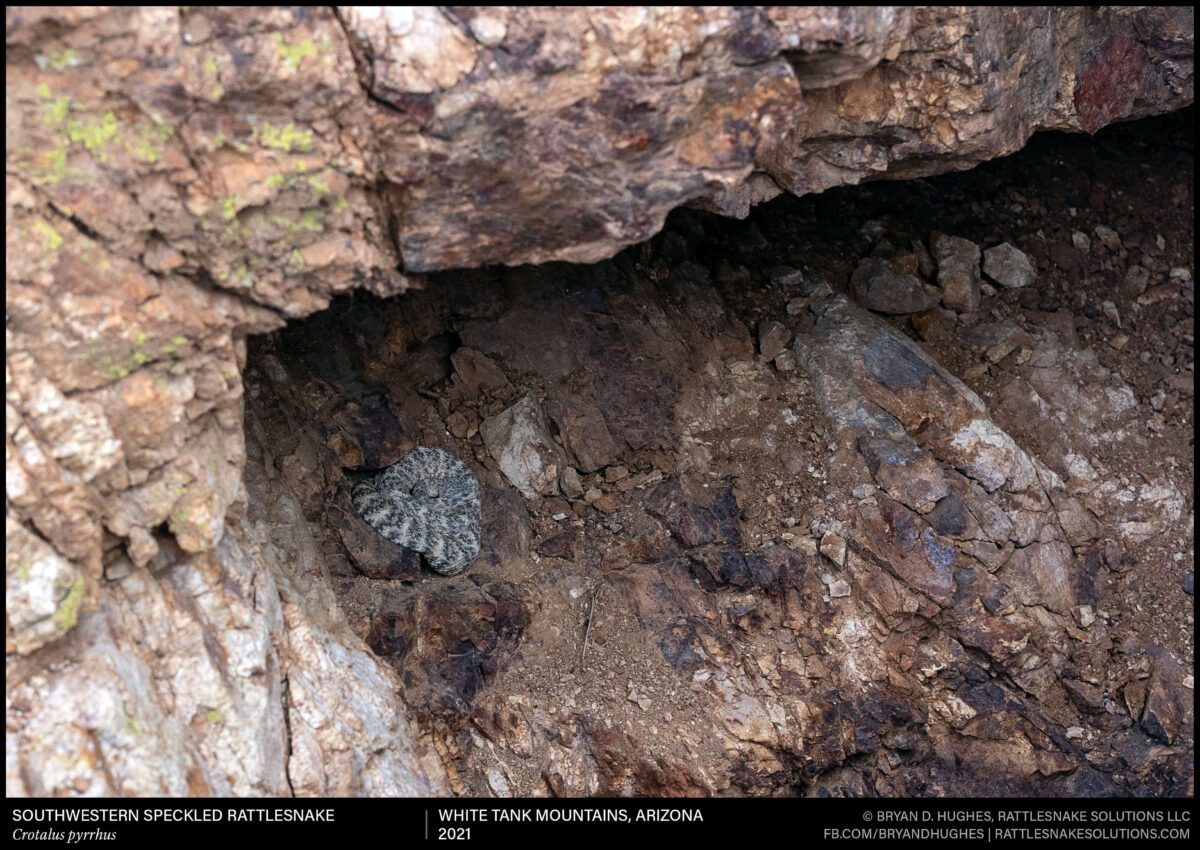
A Southwestern Speckled Rattlesnake (Crotalus pyrrhus) resting in a small cave during the hottest time of the year. This location receives almost no sun, due to its depth and aspect, which makes it an ideal aestivation site.
Snakes, as do other ectothermic (cold-blooded) animals, do regulate their body temperature by managing external forces. It’s more than just basking in the sun … they also spend a lot of time and energy trying to stay cool. For animals in Arizona, that can be a challenge. These sites, where they return each year when temperatures become lethal, are just as important as a winter hibernation den for rattlesnakes in cooler areas.