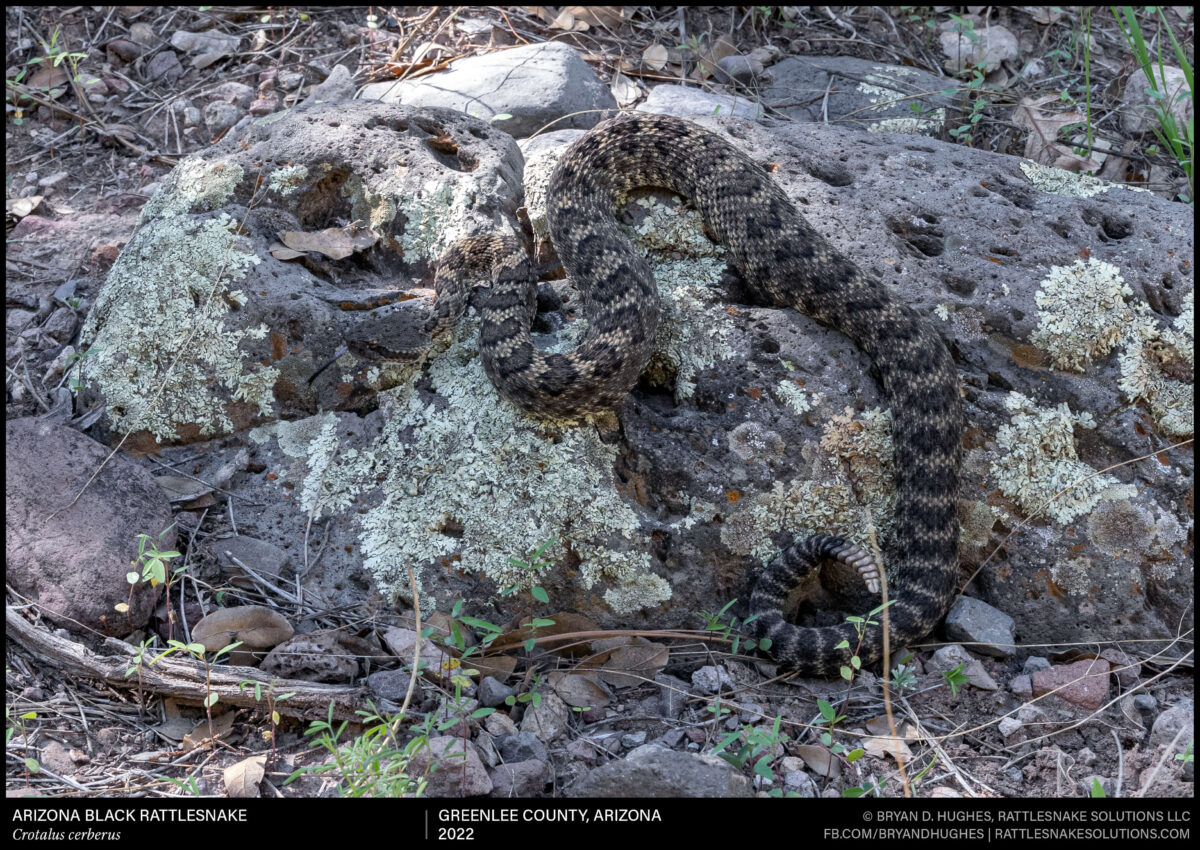
Arizona Black Rattlesnakes are amazingly variable in appearance across their range. Most that are seen and photographed are in the relatively well-populated areas of the Mogollon Rim between Flagstaff, Prescott, and Payson. In other parts of their range, however, they look a bit less familiar. This one from the far eastern end of their range in largely inaccessible ranges of Greenlee County has a much messier, mottled look than is typically expected of the species, but common in the area.
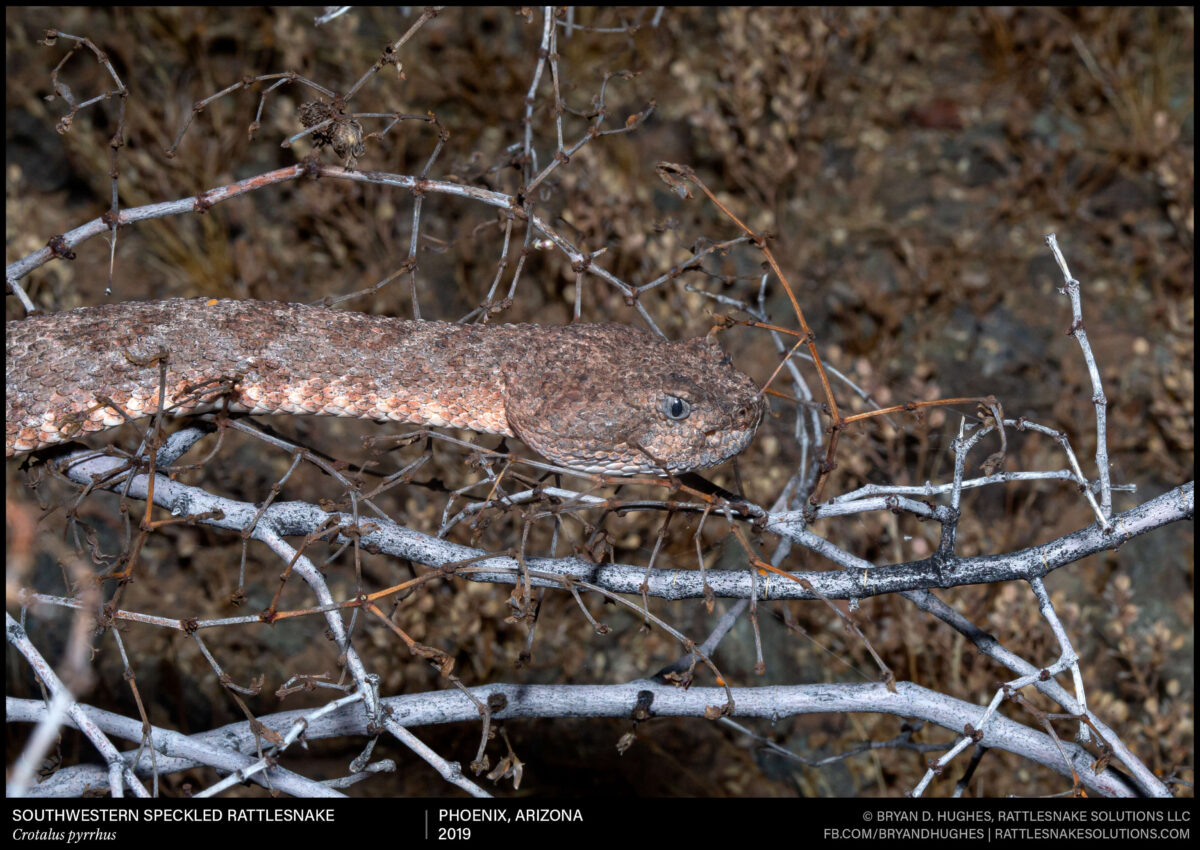
The blue-grey eyes of a Southwestern Speckled Rattlesnake stand out against its red and grey body. This is a typical look for the species as they are found in rocky areas of central Phoenix. This snake carries a small passive radio transmitter that helps us learn about its life in an urban park.
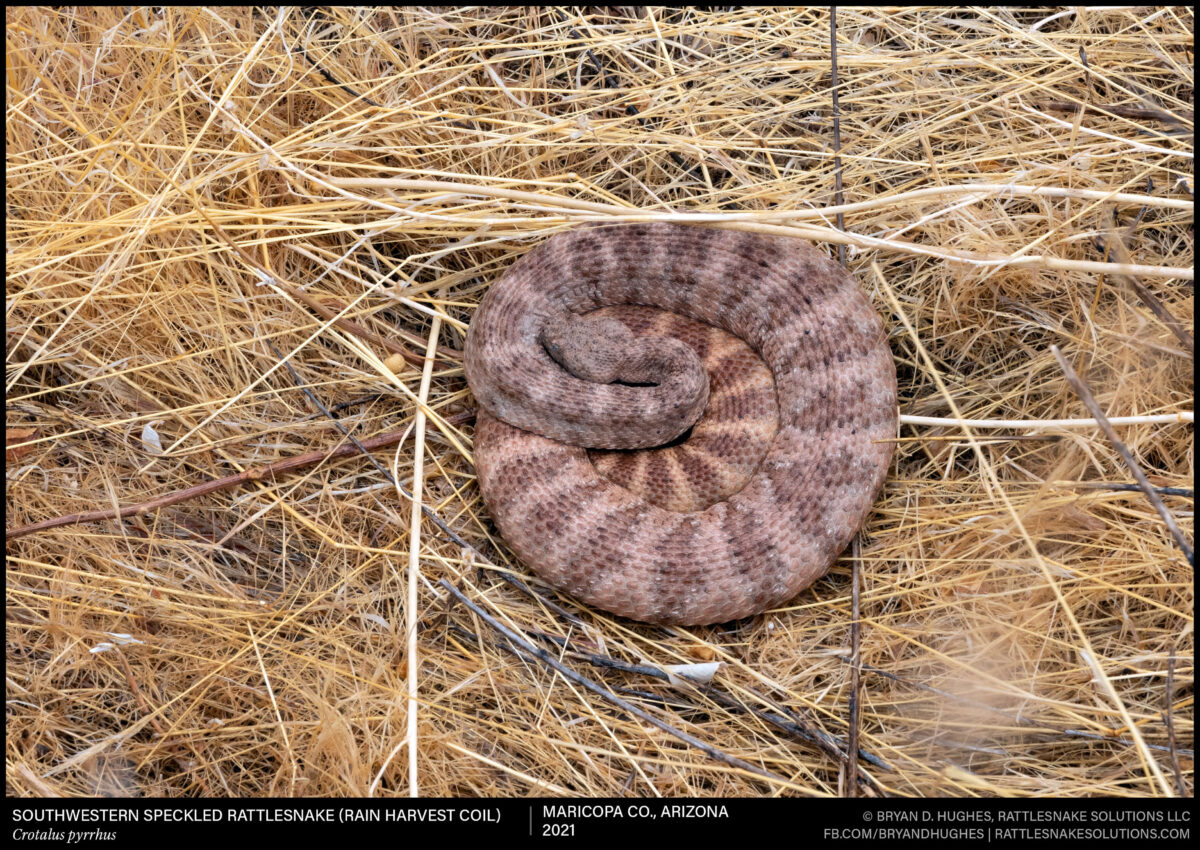
A pregnant Southwestern Speckled Rattlesnake out on a wet morning, coiled to maximize rain capture. A surprise rain got about every rattlesnake in the area on the surface for the day, in various forms of this pose. Hydrophobic scales help collect drops of rain, which the snake can then drink directly from its skin, as she is doing here.
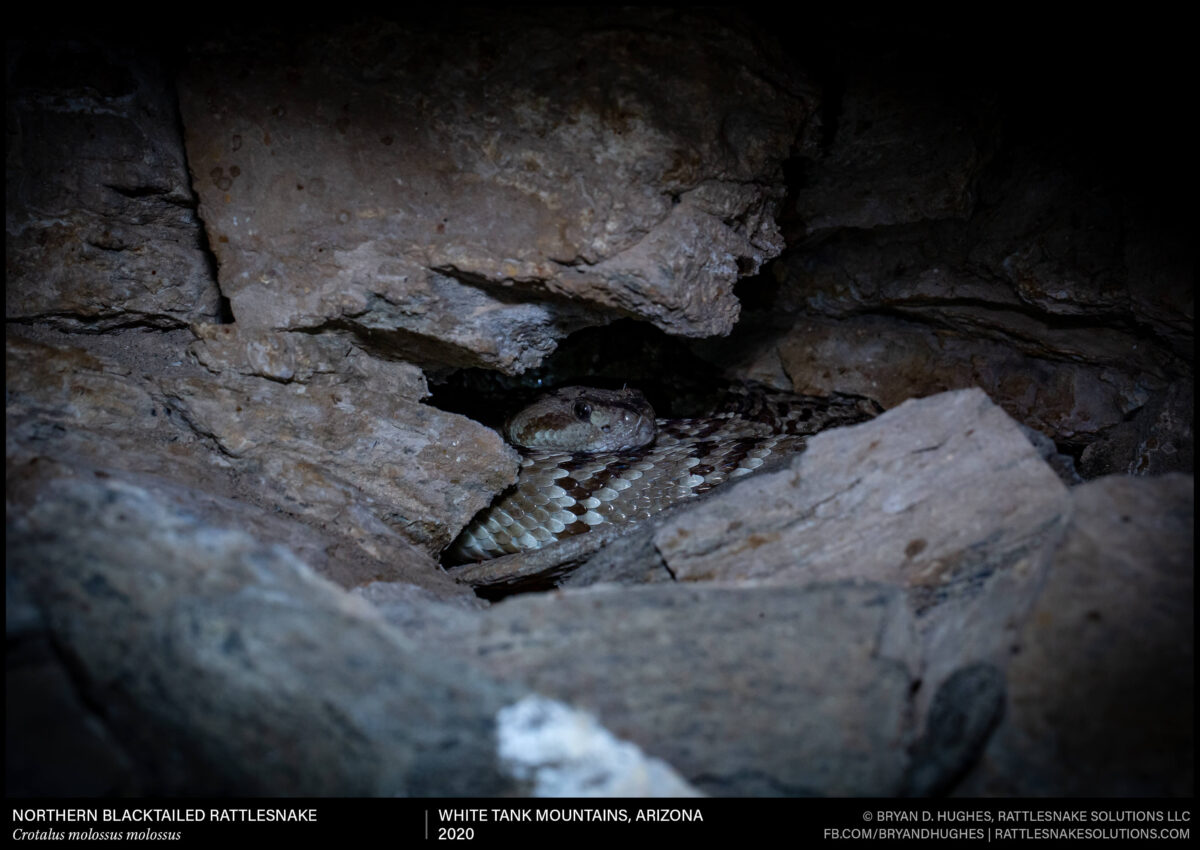
A Blacktailed Rattlesnake hiding deep in a cave on an extremely hot day. During the heat of summer, rattlesnakes like this one may stay hidden away from lethal temperatures, staying in one spot or coming just outside the entrance after dark.
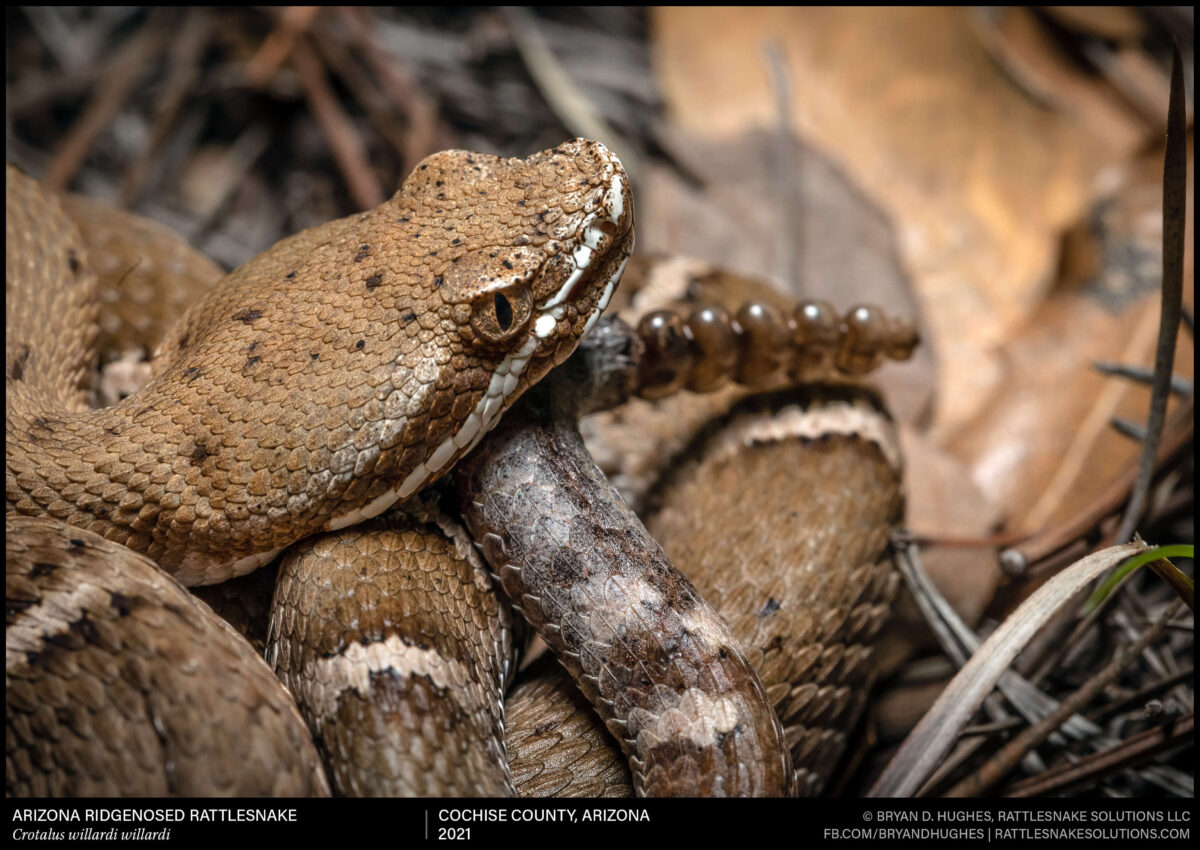
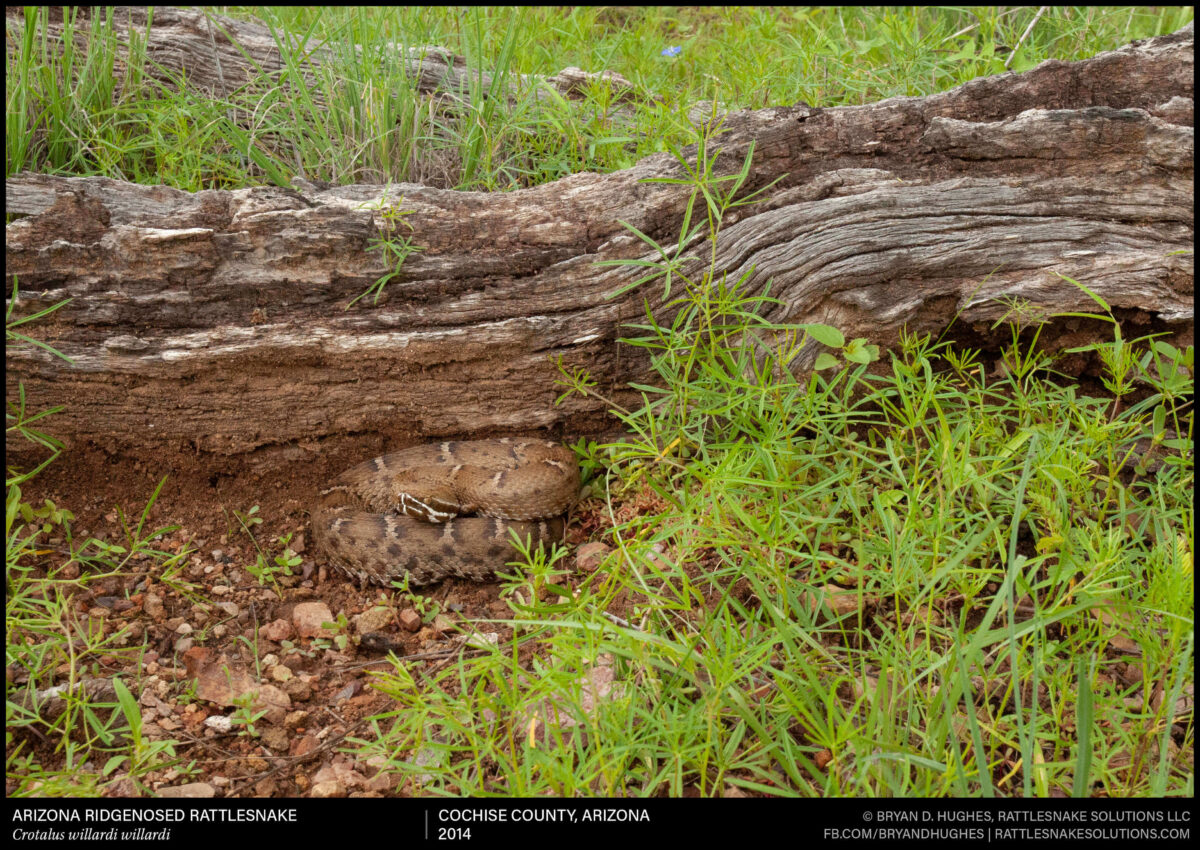
An Arizona Ridgenosed Rattlesnake in southeastern Arizona. These small rattlesnakes are common where they are found, but even ranchers born and raised in the area usually have no idea it exists. That’s thanks, in part, to its nearly perfect camouflage, making it about invisible in oak leaf litter and bunchgrass.
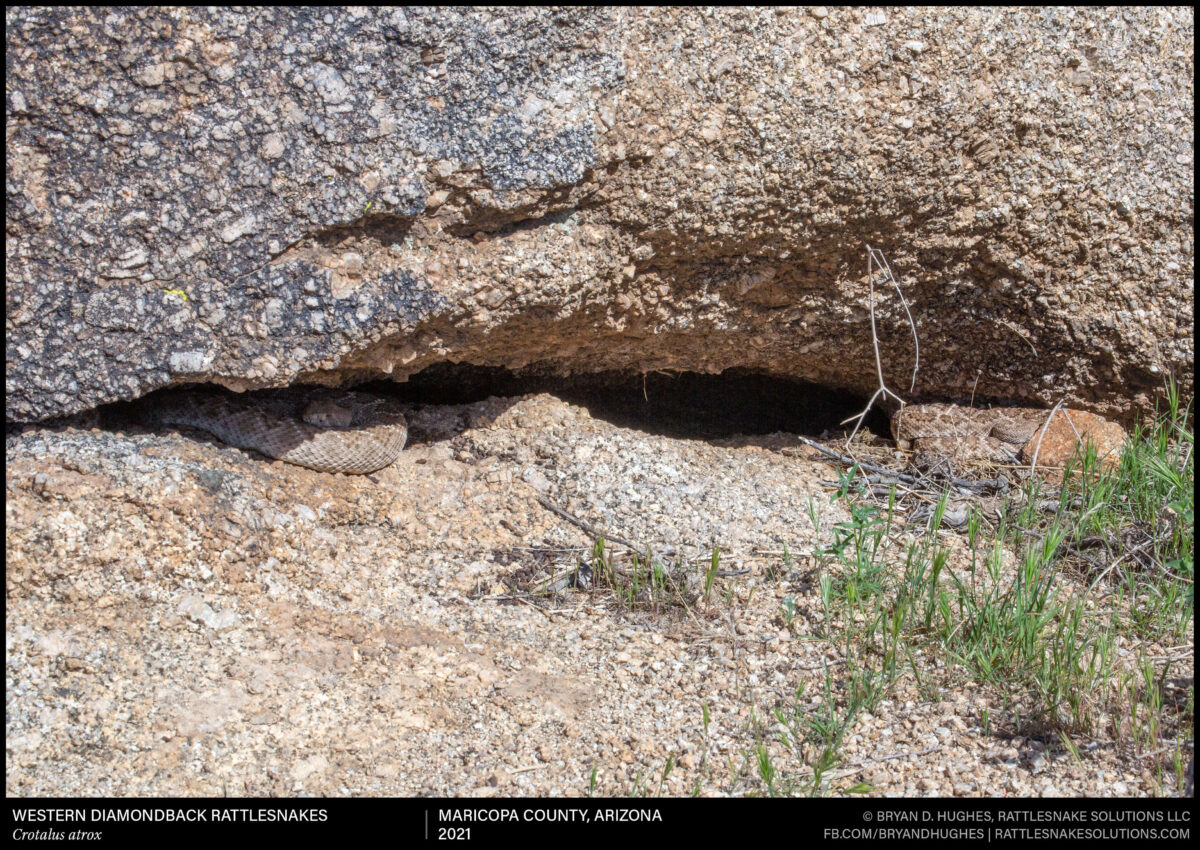
Three of the half dozen or so Western Diamondback Rattlesnakes that occupy this den each winter. These snakes spend a lot of time during the early spring basking and making short movements to thermoregulate and for social reasons, where they are vulnerable to predators and other threats.
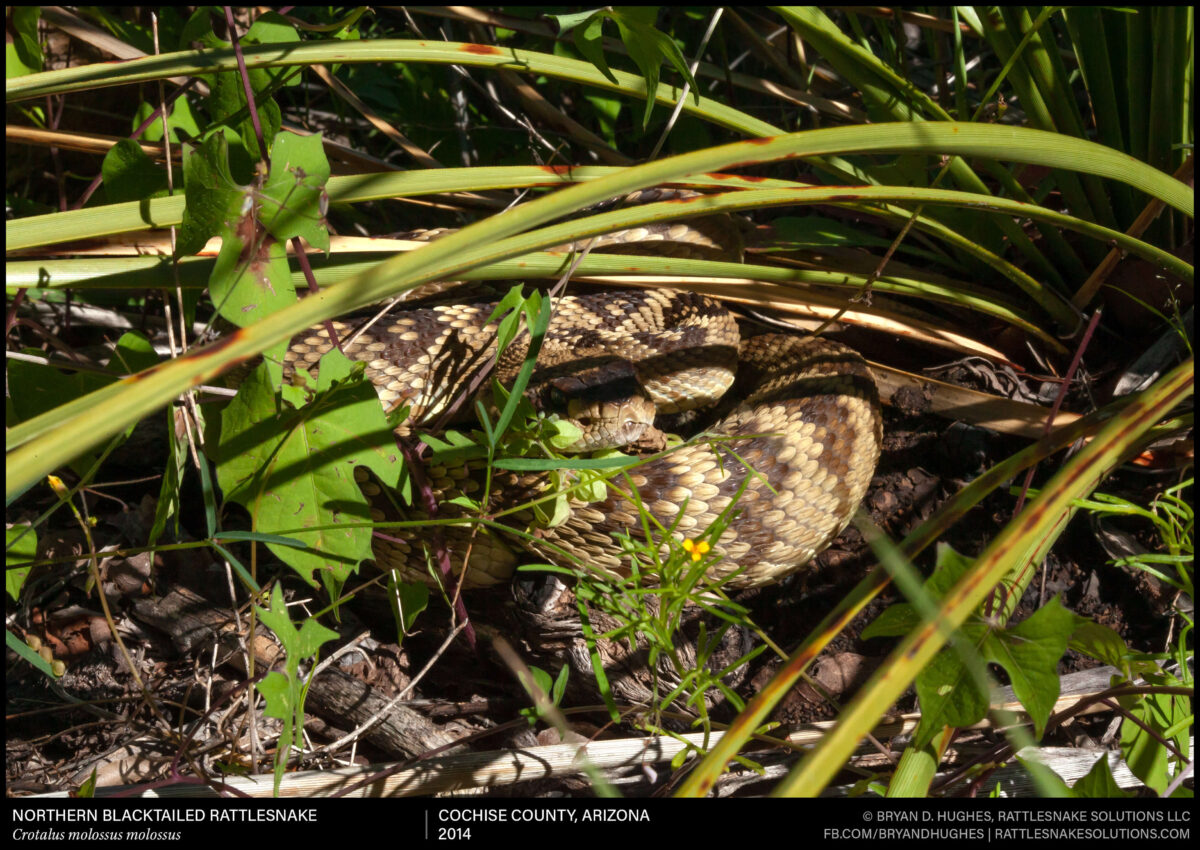
A Blacktailed Rattlesnake coiled in the grass in the Madrean woodlands of southeastern Arizona. These large, greenish rattlesnakes are a common sight for hikers and naturalists in the area.
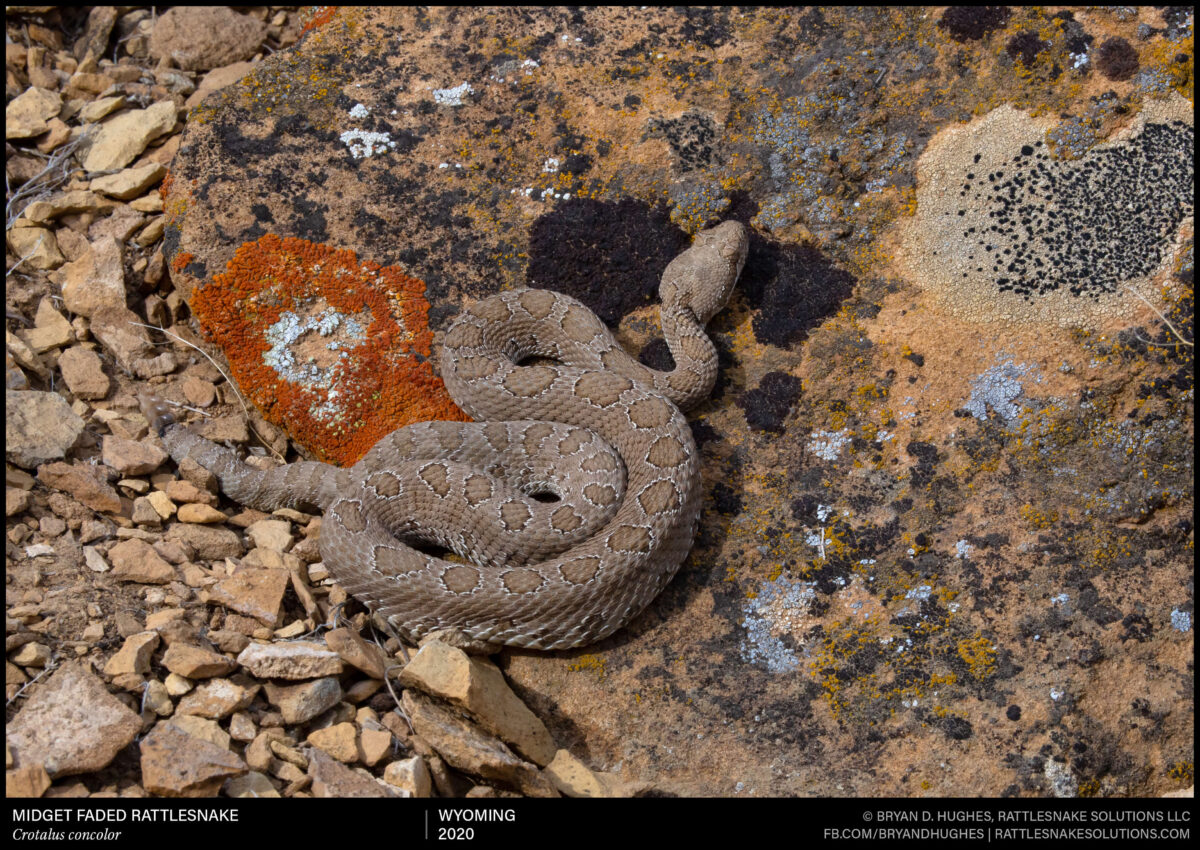
Of the Midget Faded Rattlesnakes (Crotalus concolor) I’ve seen, which is a smaller number than I’d prefer, I think this is the best looking. Found in Wyoming on a snow-flurried June day.
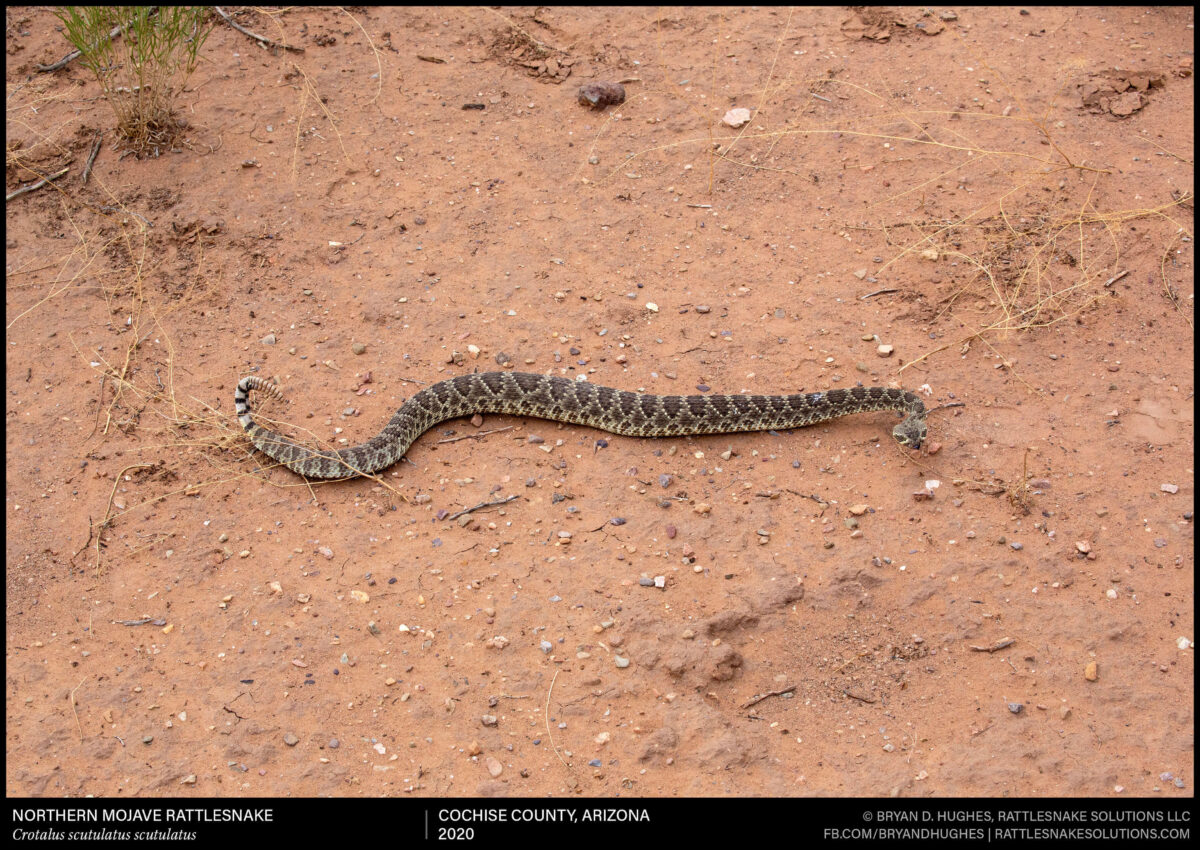
A Mojave Rattlesnake on the crawl after a wet night in southeastern Arizona. It’s moving laterally, hissing and watching the perceived predator with the camera, but not rattling. As this species often does, instead, it curls its tail and “wags” it slowly as a display. Prairie Rattlesnakes, notably, will often do this tail-curling behavior instead of rattling.
This guided retreat, where the snake moves laterally to cover while keeping the business end pointed forward, causes a lot of confusion with observers. For one, it’s not always a straight line away, but to cover. That cover can be a vehicle, bushes, or a cast shadow … including from the person watching it. This, and confirmation bias from decades of beloved folklore, contribute to the many tall tales about Mojave Rattlesnakes.
Greene, H. W., & May, P. G. (2002). Parental behavior by vipers. In G. W. Schuett, M. Höggren, M. E. Douglas, & H. W. Greene (Eds.), Biology of the Vipers (pp. 179–205). Eagle Mountain Publishing.
Cardwell, M. D. (2013). Behavioral changes by Mohave rattlesnakes (Crotalus scutulatus) in response to drought. California State University, Sacramento.
Maag, D. W., Francioli, Y. Z., Goetz, M. T. H., & Sanders, L. N. (2025). Variation in defensive and exploratory behaviors across a rattlesnake (Crotalus scutulatus × viridis) hybrid zone in Southwestern New Mexico. Scientific Reports, 15(1), 2345. https://doi.org/10.1038/s41598-025-96155-8
Calvete, J. J., Massey, D. J., Sánchez, E. E., Sanz, L., & Bush, S. P. (2012). Venom variability and envenoming severity outcomes of the Crotalus scutulatus scutulatus (Mojave rattlesnake) from Southern Arizona. Toxicon, 60(9), 802–810. https://doi.org/10.1016/j.toxicon.2012.06.004