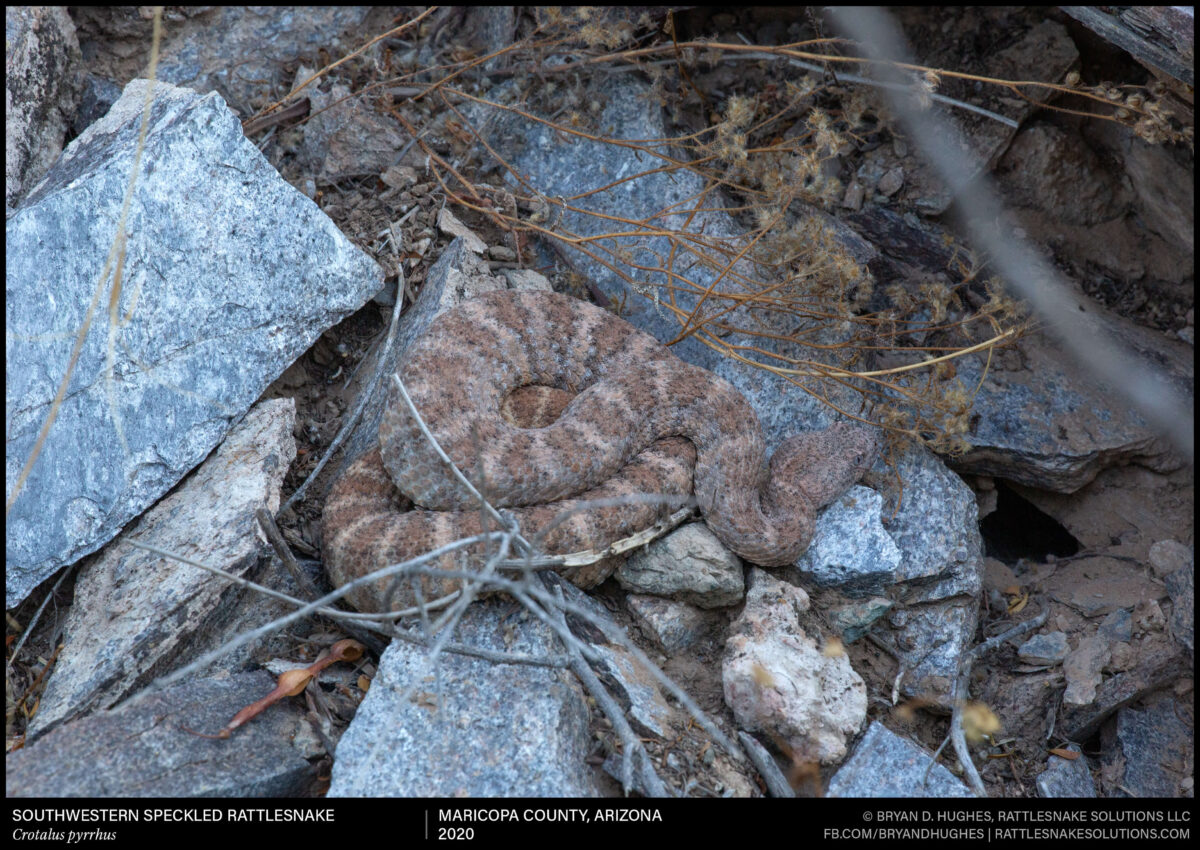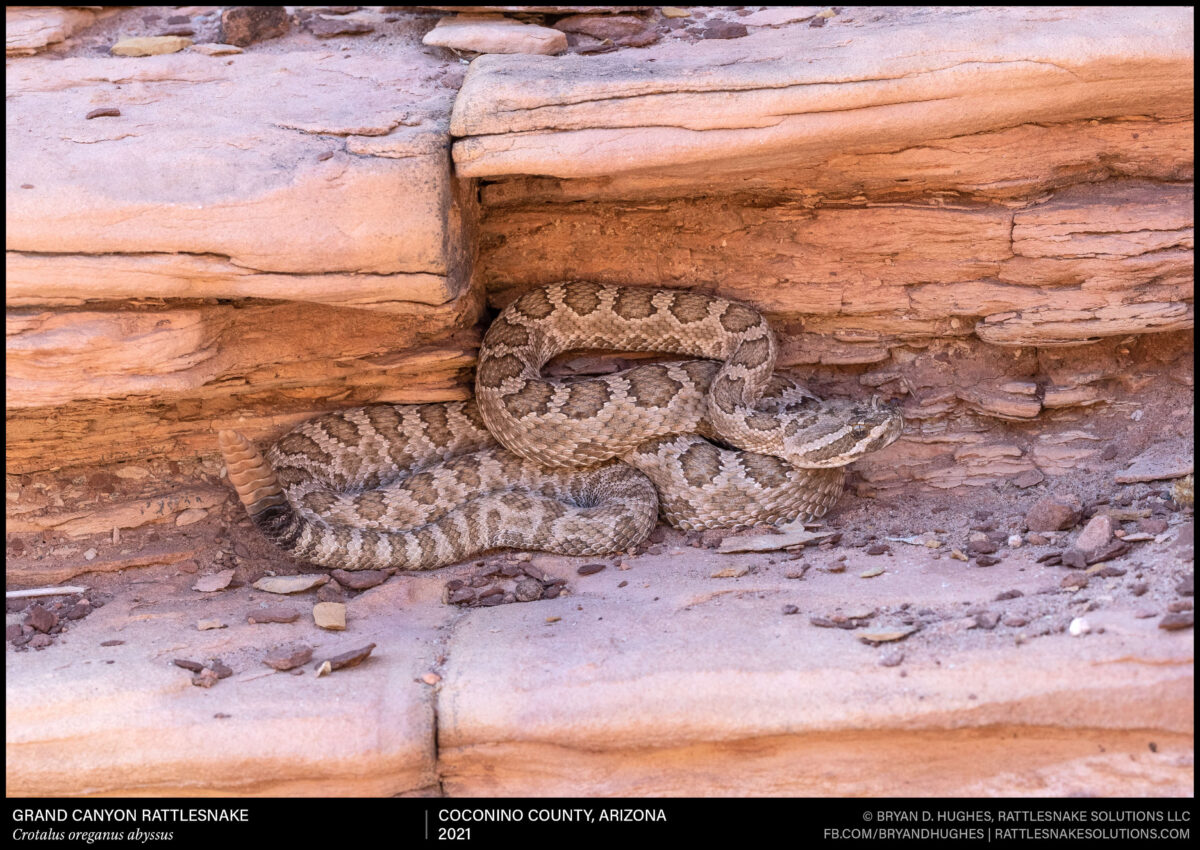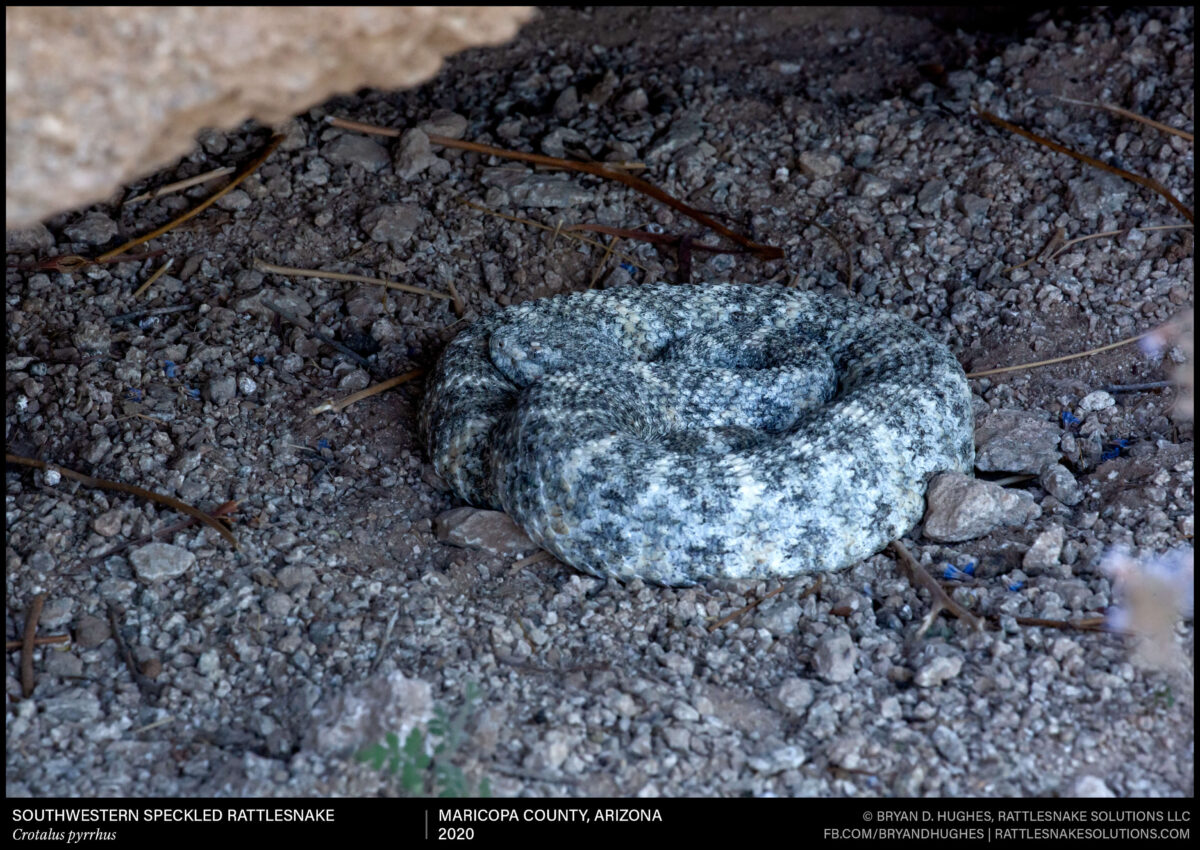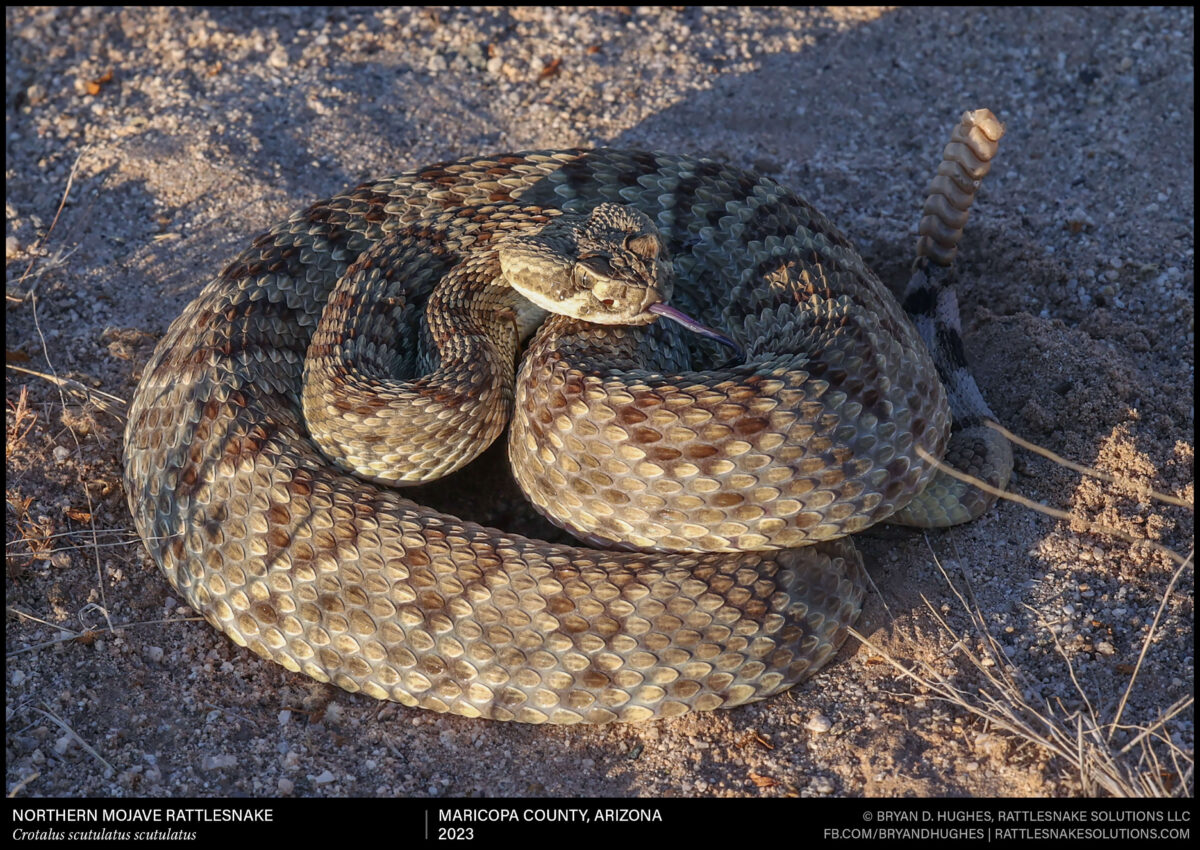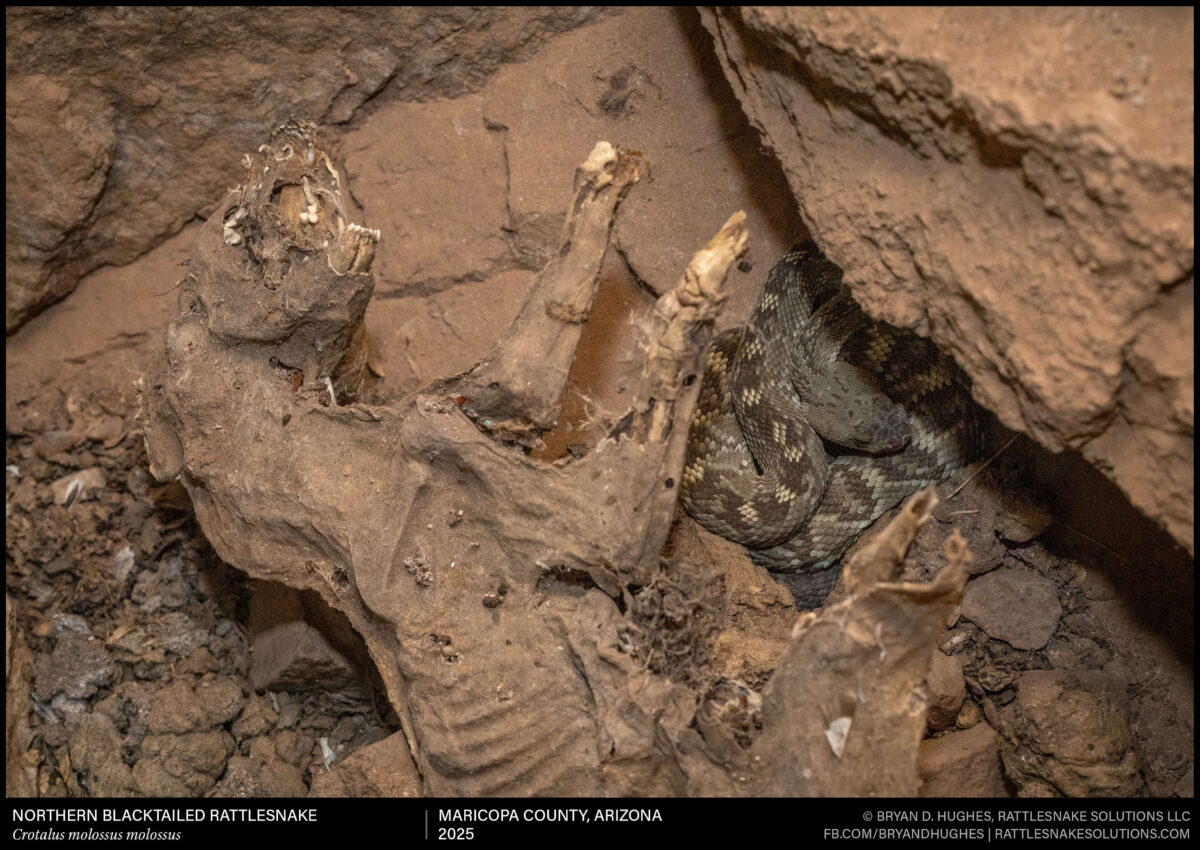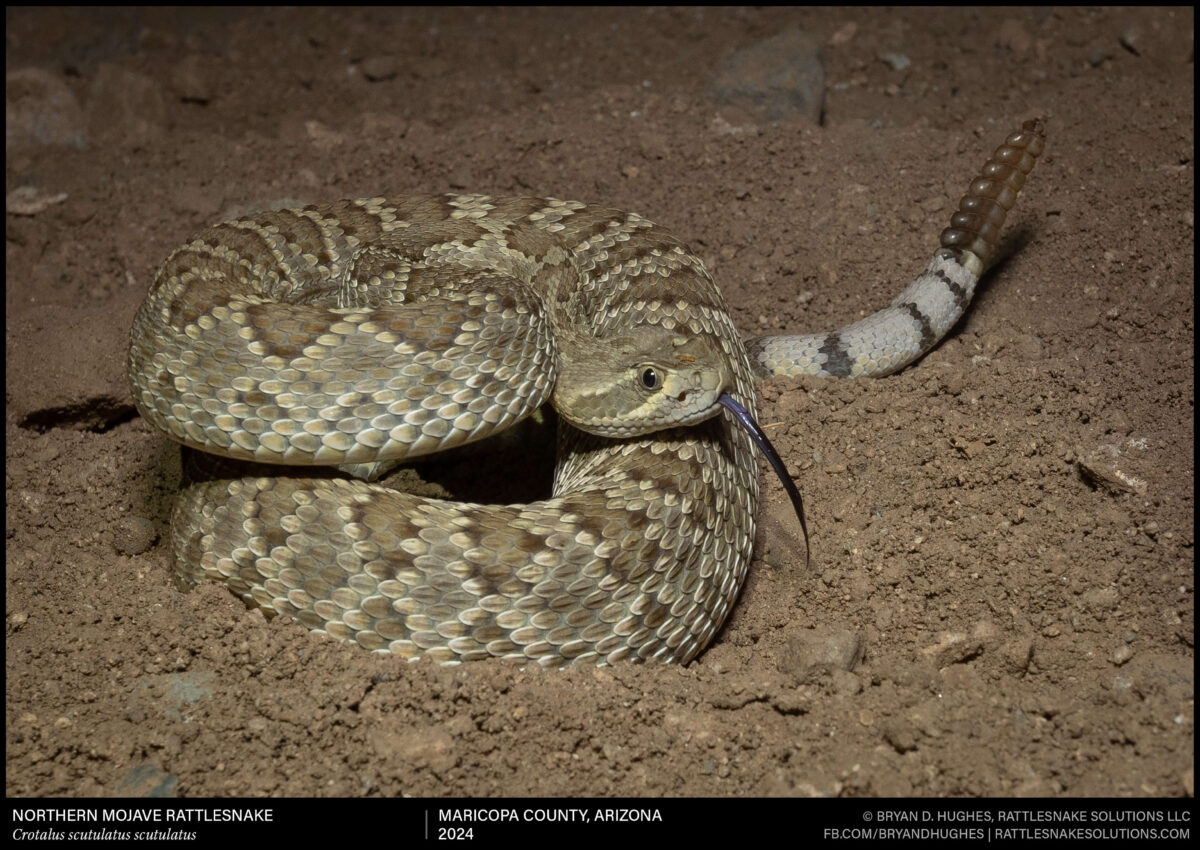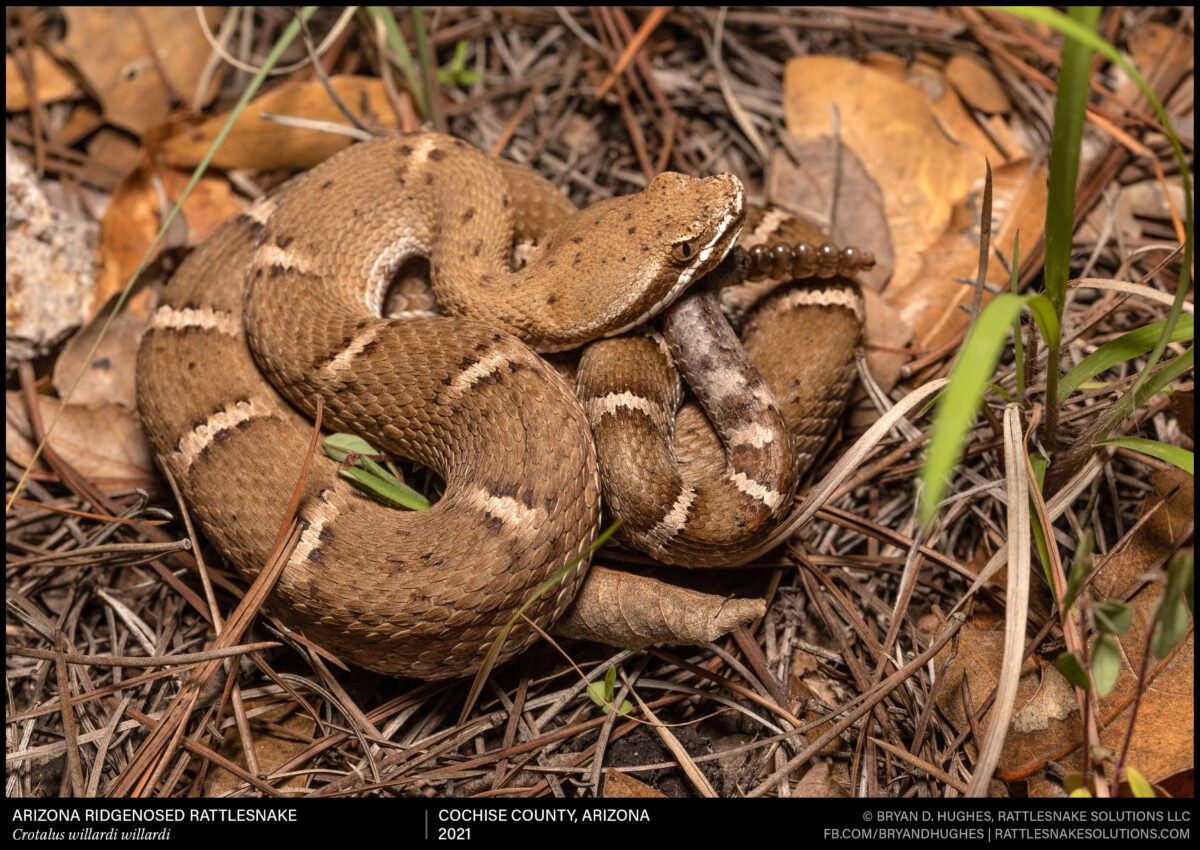
A Southwestern Speckled Rattlesnake in ambush on a humid night a couple of years back. Like many other desert reptiles, the monsoon and period after are the most active times of year. Humid air and cooler, stable temperatures make for safer activity, and a lot has to be done in a relatively short amount of time.
A Twin-Spotted Rattlesnake with a relatively drab pattern, but not atypical for an older adult. These are small snakes, rarely seen by hikers, as their range within the U.S. consists of only a handful of mountains in southeastern Arizona. In addition to rodents, these rattlesnakes also specialize in lizards, often taking the colorful Yarrows Spiny Lizards also common to rocky outcrops in high pine forests. These are among the protected species within Arizona, but a good number of them still end up being taken from the mountains each year to enter the European black market.
Prival, D. B., Goode, M. J., Swann, D. E., & Schwalbe, C. R. (2002). Natural history of a northern population of twin-spotted rattlesnakes, Crotalus pricei. Journal of Herpetology, 36(4), 598–607. https://doi.org/10.1670/0022-1511(2002)036[0598:NHOANP]2.0.CO;2
Prival, D. B., & Schroff, M. J. (2012). A 13-year study of a northern population of twin-spotted rattlesnakes (Crotalus pricei): Growth, reproduction, survival, and conservation. Herpetological Monographs, 26(1), 1–18. https://doi.org/10.1655/HERPMONOGRAPHS-D-11-00002.1
Prival, D. B., Goode, M. J., Swann, D. E., & Schwalbe, C. R. (1999). A comparative study of hunted vs. unhunted populations of the twin-spotted rattlesnake. Unpublished report, University of Arizona. PDF link
Grabowsky, E. R., & Mackessy, S. P. (2019). Predator-prey interactions and venom composition in a high elevation lizard specialist, Crotalus pricei (Twin-spotted Rattlesnake). Toxicon, 170, 88–97. https://doi.org/10.1016/j.toxicon.2019.09.003
Grabowsky, E. (2018). Venom composition of little known mountain rattlesnakes and predator-prey interactions of Crotalus pricei pricei and its natural prey, Sceloporus jarrovii (Master’s thesis). University of Northern Colorado. https://digscholarship.unco.edu/theses/251/
Bezy, R. L. (2021). Biogeographic outliers in the Arizona herpetofauna. Sonoran Herpetologist, 34(2), 45–58. PDF
Pough, F. H. (1966). Ecological relationships of rattlesnakes in southeastern Arizona with notes on other species. Copeia, 1966(4), 649–658. https://doi.org/10.2307/1441401
Bezy, R. L., & Cole, C. J. (2014). Amphibians and reptiles of the Madrean Archipelago of Arizona and New Mexico. American Museum Novitates, 2014(3810), 1–24. https://doi.org/10.1206/3810.1
Kauffeld, C. F. (1943). Field notes on some Arizona reptiles and amphibians. The American Midland Naturalist, 29(2), 342–359. https://doi.org/10.2307/2420795
Gloyd, H. K. (1937). A herpetological consideration of faunal areas in southern Arizona. Bulletin of the Chicago Academy of Sciences, 5(6), 79–136.
A Southwestern Speckled Rattlesnake hanging out in the shade on a blistering hot morning several years ago. This snake is still using this spot in the summer, staying cooler during the day and emerging at night, staying very near.
This is why, when we are called to capture a snake at a home during peak summer, we search for others. Especially without rain, they’re tethered to aestivation sites, never going far. If a rattlesnake is found on the back patio right now, there are only a few possibilities. It was either displaced by construction, tossed over the fence by the fire department, or it has been there for several weeks, successfully hiding as it always has before being discovered.
After a relatively unproductive weekend in the early Spring at higher elevation, I made a quick stop by a large rocky outcrop on the way home on a whim. I have been driving past this particular rock for more than a decade, always in a hurry somewhere or dead tired, always thinking “one nof these days, I’ll check that out; it has to be a den“. Well that day was the day, and of course, it was a winter den. This large blacktailed rattlesnake was laid out over a boulder getting some sun, with others another in the crevices behind it. I’ll check it out again next year in more prime conditions.
A male Western Diamondback Rattlesnake raises up to challenge another to a fight. The only problem: rocks getting in the way. Both males discovered one another in a narrow gap, which caused a lot of awkward shuffling before they managed to get some room to wrestle. Eventually, the other came out as well, and after a brief wrestling match, both went tumbling down the hill with no clear victor.
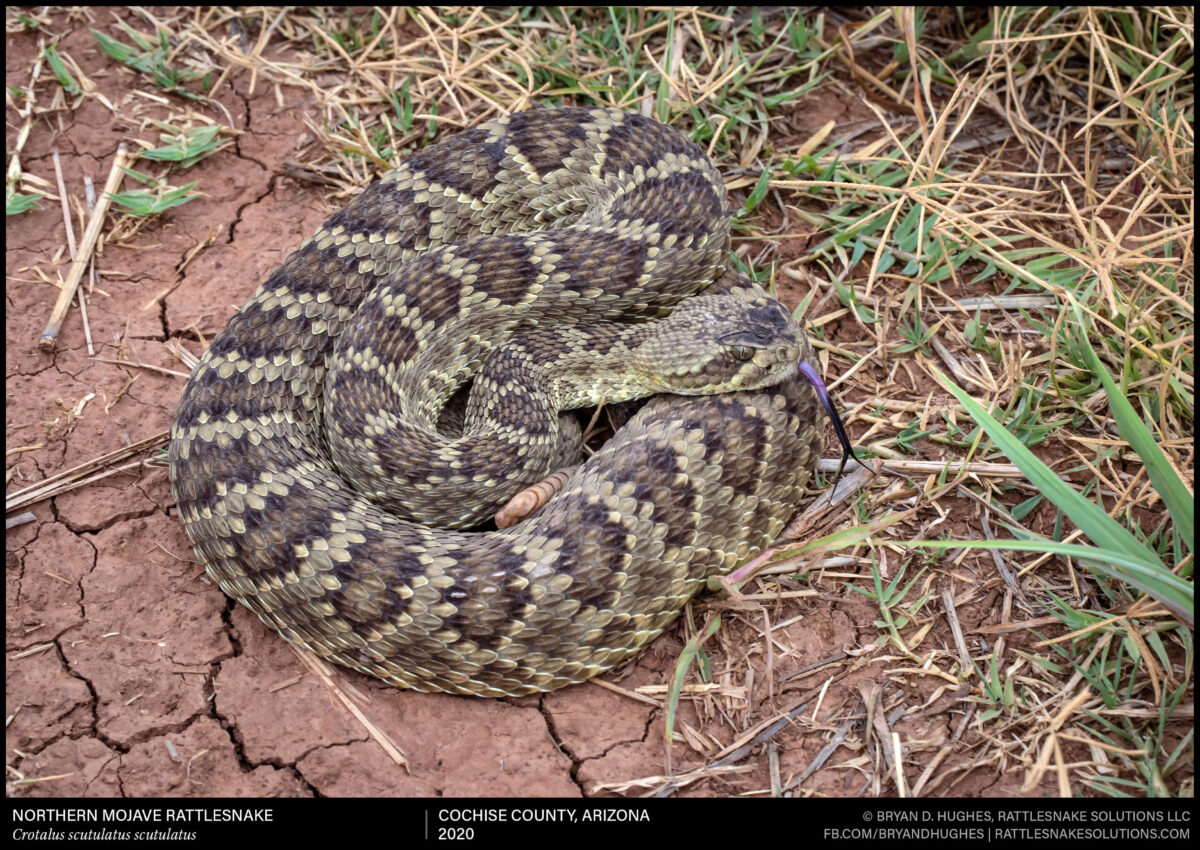
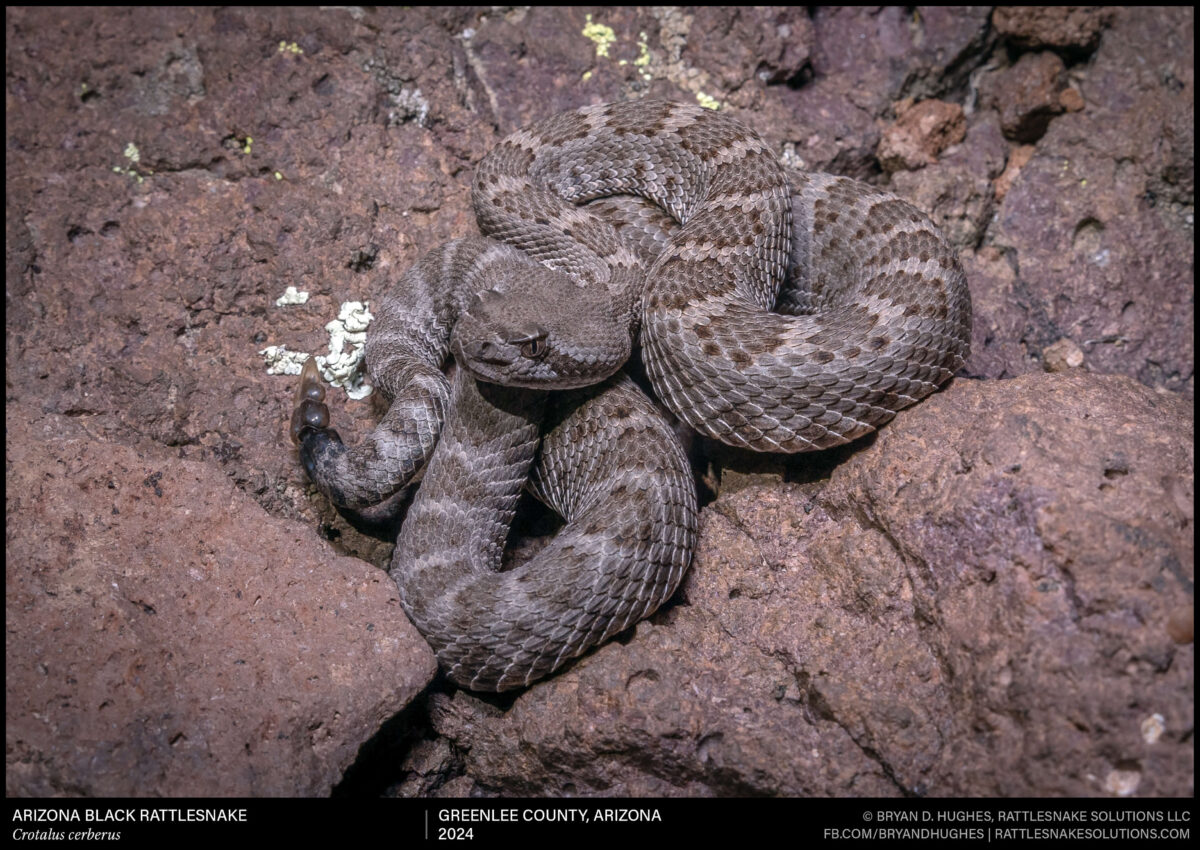
Blacktailed Rattlesnakes can live in a wide variety of habitats, from high pine forests to low desert around sea level. This one was found in Greenlee County, Arizona several years ago.
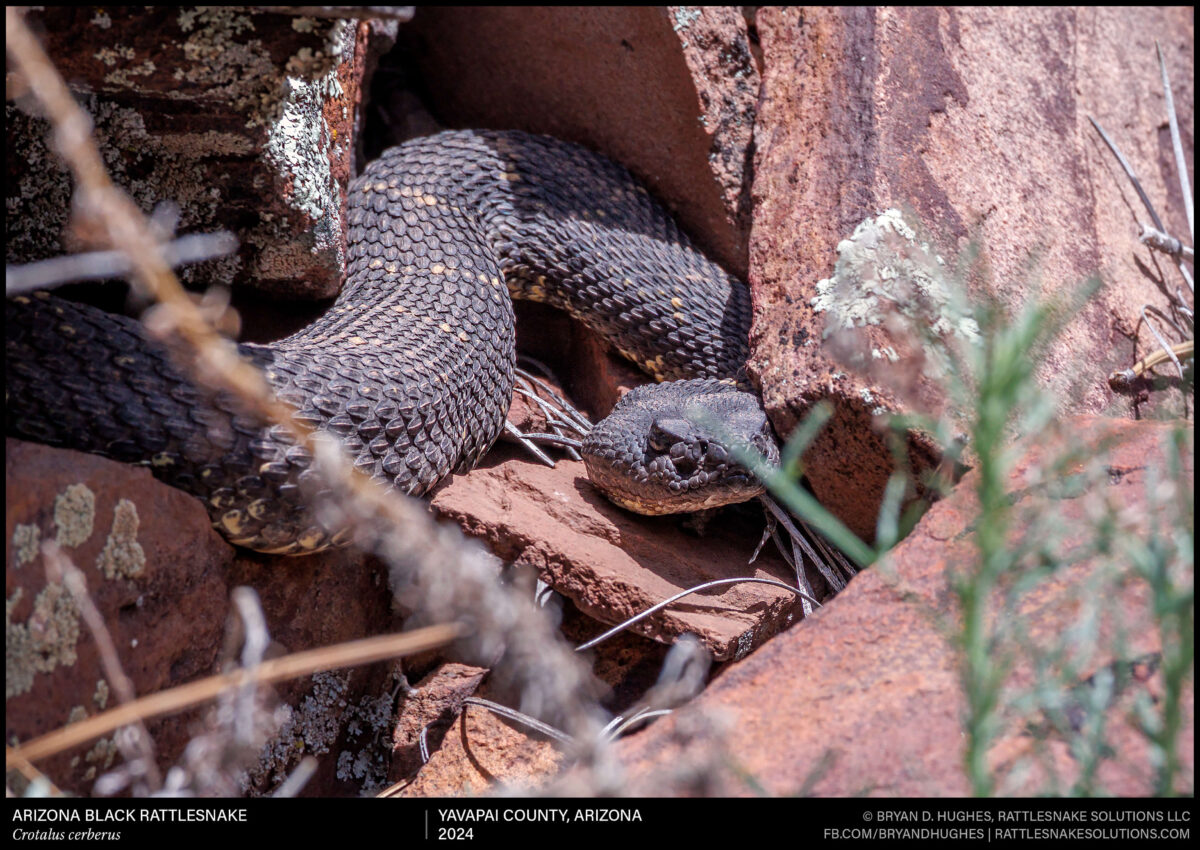
An Arizona Black Rattlesnake comes out of its den for the day on a warm Spring day. This site is shared by three species of rattlesnakes, and at least a few species of other snakes. As spring egress progresses, each will use the area slightly differently, emerging, staging, and eventually distributing on their own schedules.
Cerralvo Island Rattlesnake, endemic to Isla Cerralvo in the Sea of Cortez in Mexico. This is one of a couple of rattlesnakes found on this island. This one was found near the beach where we camped.
A Western Diamondback Rattlesnake communicating with me in the same way it does with any of the many predators that it fears. He stands up as tall as he can, hissing, rattling, and making the idea of coming any closer a decidedly bad idea.
What it isn’t doing: showing aggression. This behavior, even though it may seem scary (as it is intended to), is not a sign of “attack”, but a small animal’s best attempt at preserving its own life. For some reason, humans have a very hard time understanding this, and the incredibly simple way for everyone to leave safely: walk away. After a few photos, that’s what I did. Thanks for the heads up, snake.