A Speckled Racer (Drymobius margaritiferus) from a visit to South Texas last year. This species is found throughout Central America and just a bit into South America, ranging north to just barely enter the United States.
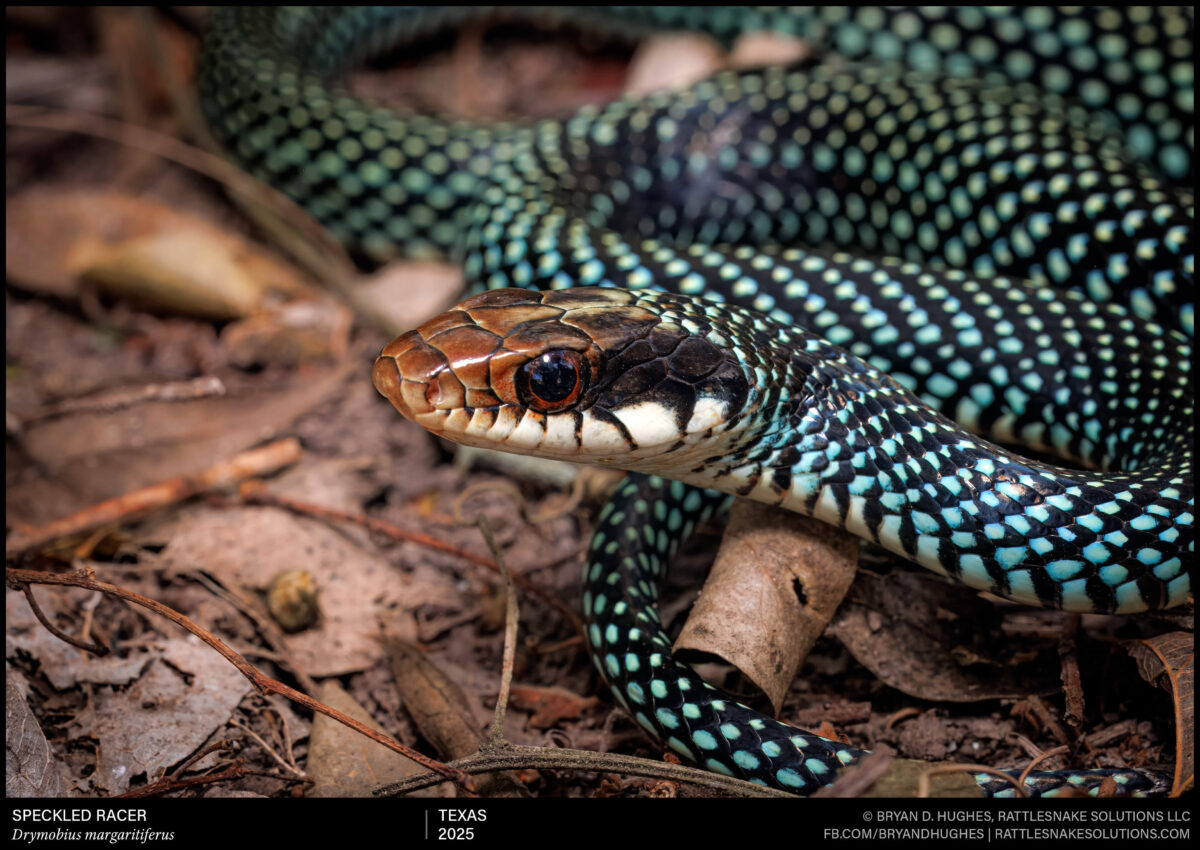

A Speckled Racer (Drymobius margaritiferus) from a visit to South Texas last year. This species is found throughout Central America and just a bit into South America, ranging north to just barely enter the United States.
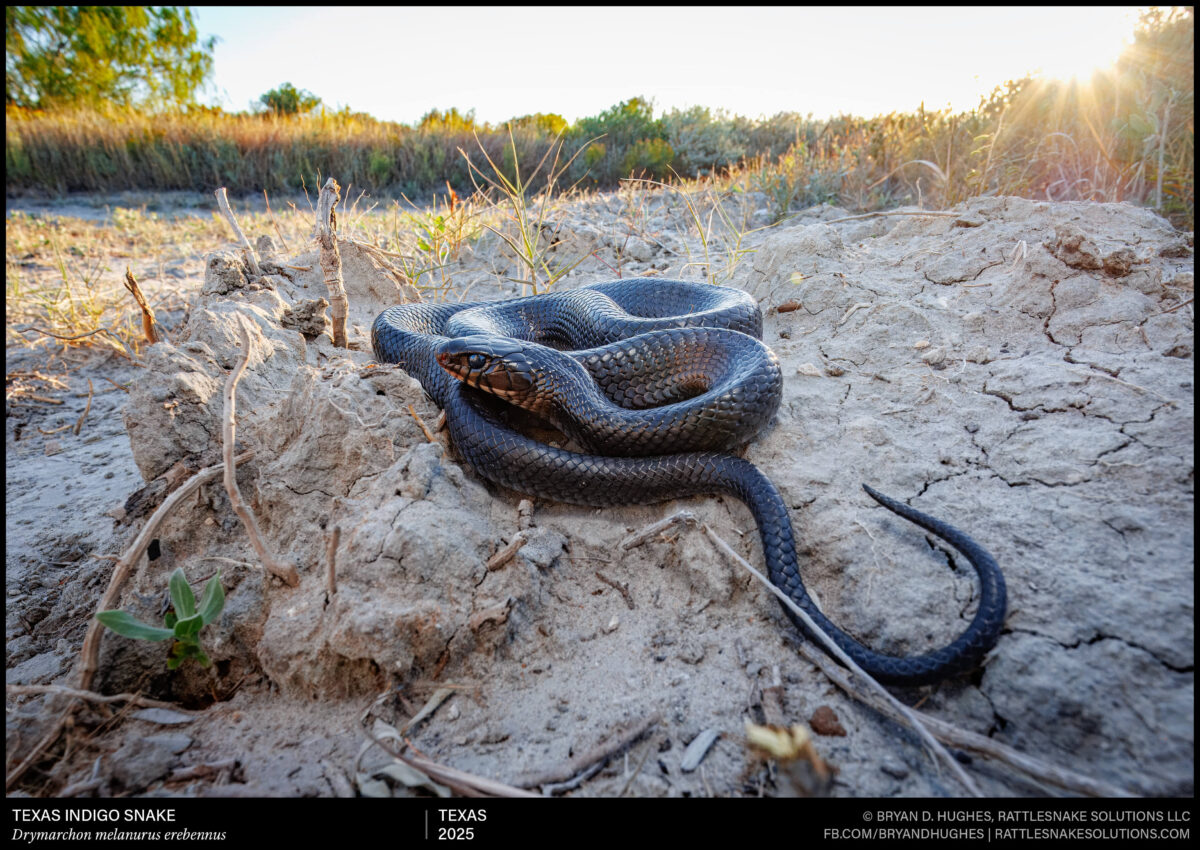
A pretty young Texas Indigo Snake we found on a visit to friends in South Texas last year.
Out in the complete darkness of the full Amazonian canopy, a South American Bushmaster. It’s the largest and oldest of the New World Pitvipers, and a dream sighting for anyone into snakes. This photo is a flash misfire, but I like how it feels – this is a better idea of how this animal spends most of its time. Coiled in between buttresses and low vegetation, waiting for something to come through that won’t see it. Also a reminder to walk slowly, and be sure of every step.

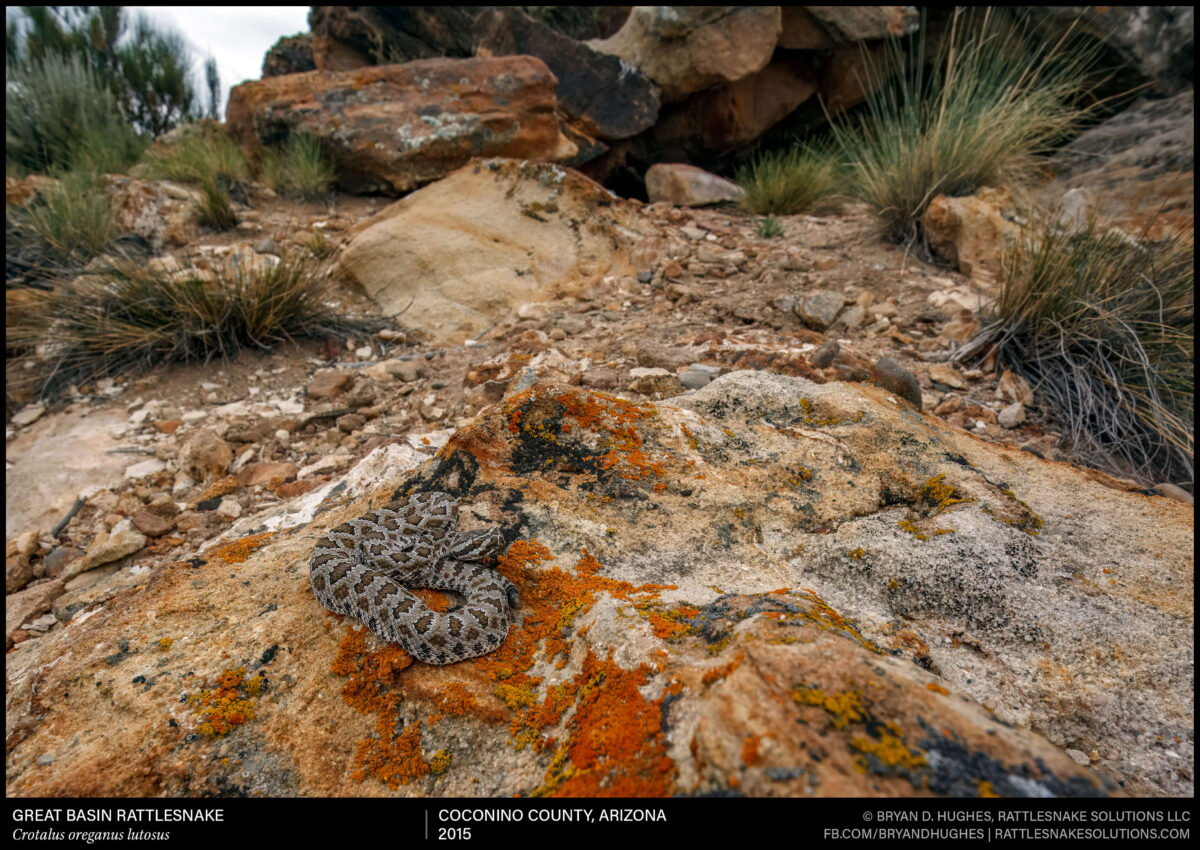
We found this little Great Basin Rattlesnake in extreme northern Arizona. The Great Basin Desert is one of FOUR desert regions that converge in Arizona, each bringing diversity of rattlesnakes and other wildlife to the state. If you’re ever wondering why Arizona has more rattlesnakes than anywhere else, that single fact is a major factor.
A bright white and silver Speckled Rattlesnake from a desert boulder field in Baja California Norte, Mexico. This is among my personal favorite phenotypes of a very diverse species.

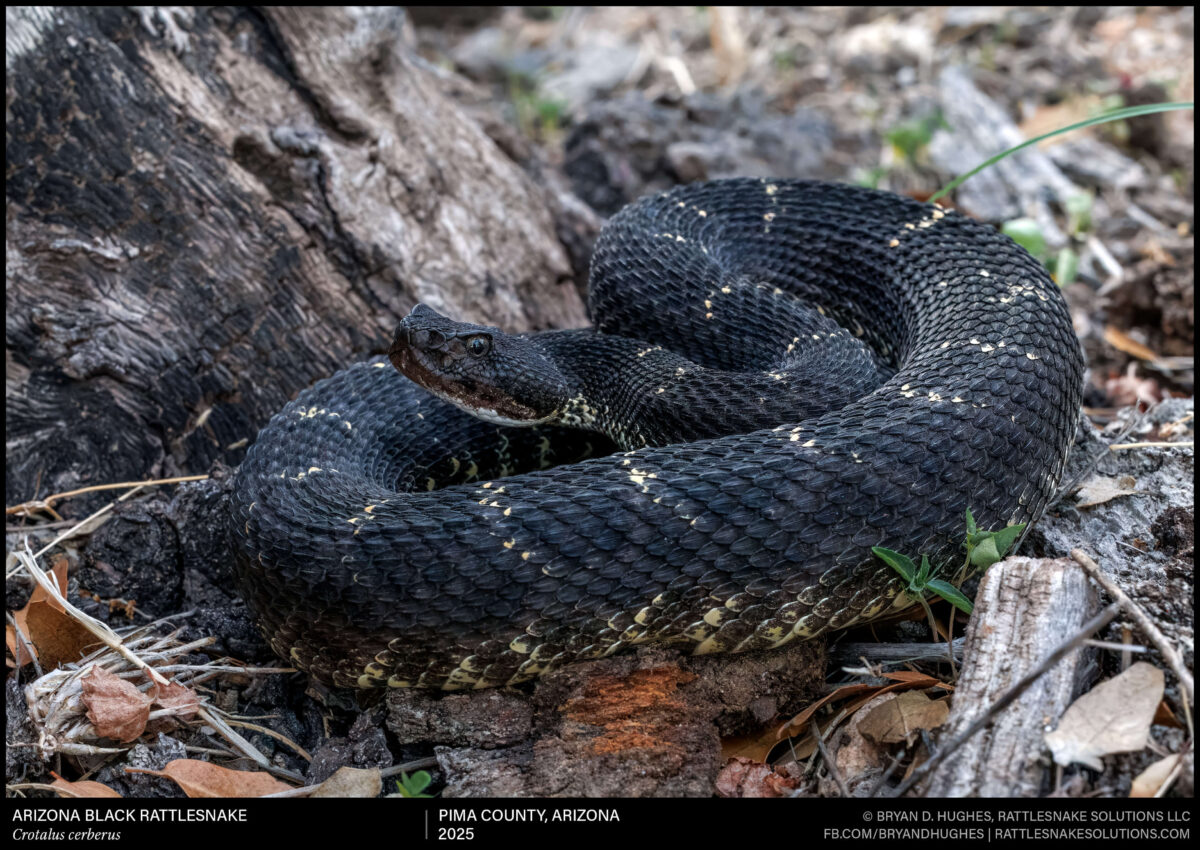
An Arizona Black Rattlesnake found in mid-elevation oak woodland near Tucson. This species of rattlesnake can change color in a relatively short amount of time, often appearing much lighter and heavily patterned at night, and transitioning to this inky black in the light. Other factors, such as social interactions and mood may also affect this shift.
These snakes are highly prized by collectors and quite a few leave this particular area in bags each year, often headed for illegal breeding and sale elsewhere in the US.
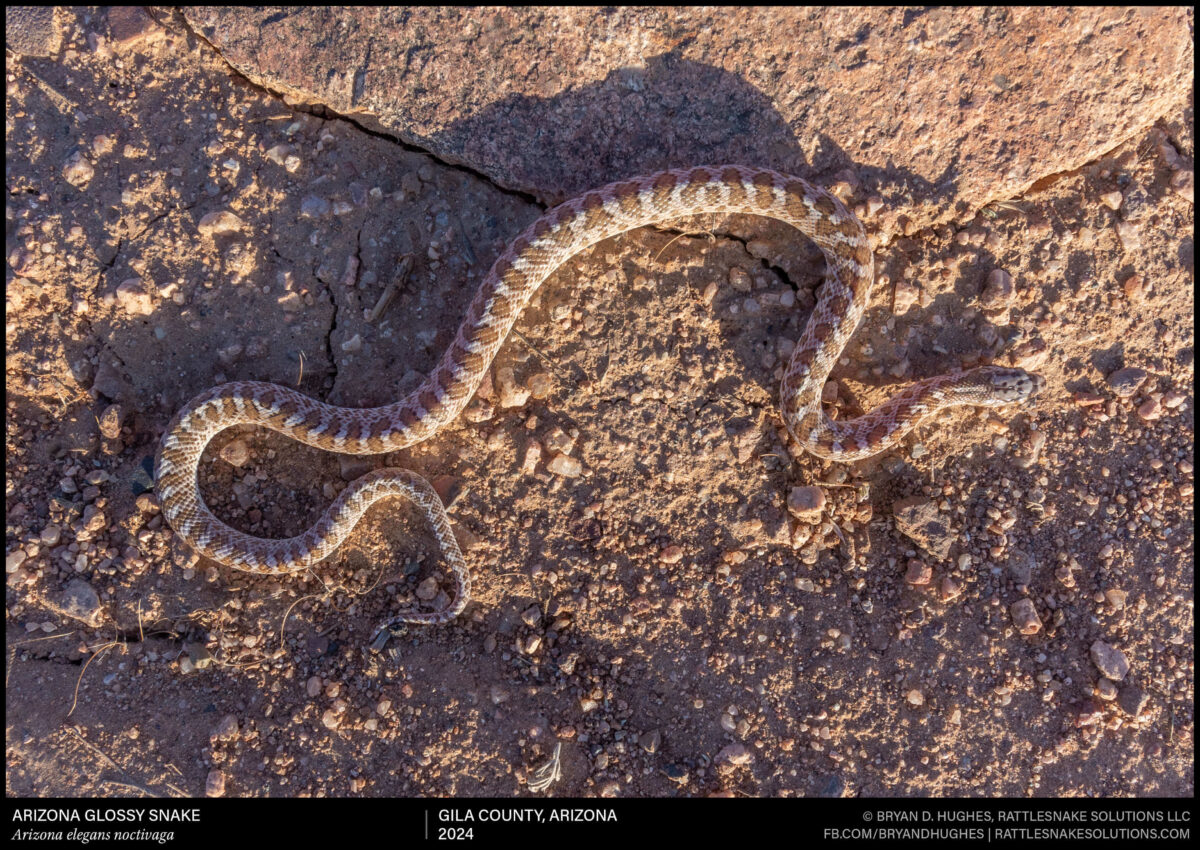
We found this young glossysnake in Gila County on a warm evening. Often, Sonoran Gophersnakes are misidentified as this species. One notable trait to differentiate if up close is in its name. Sonoran Gophersnakes have a ridge (keel) in each scale that gives them a rough texture and appearance, and the Glossysnakes have no such keel, and look smooth and shiny in comparison.
They’re not uncommon, but most people who spend time outdoors are still unlikely to ever see one. Of the snake species we are called to capture at homes, too, this is among the least likely to be there. On that list, it falls behind non-native animals like the Ball Python and Green Iguana in total instances over the years.
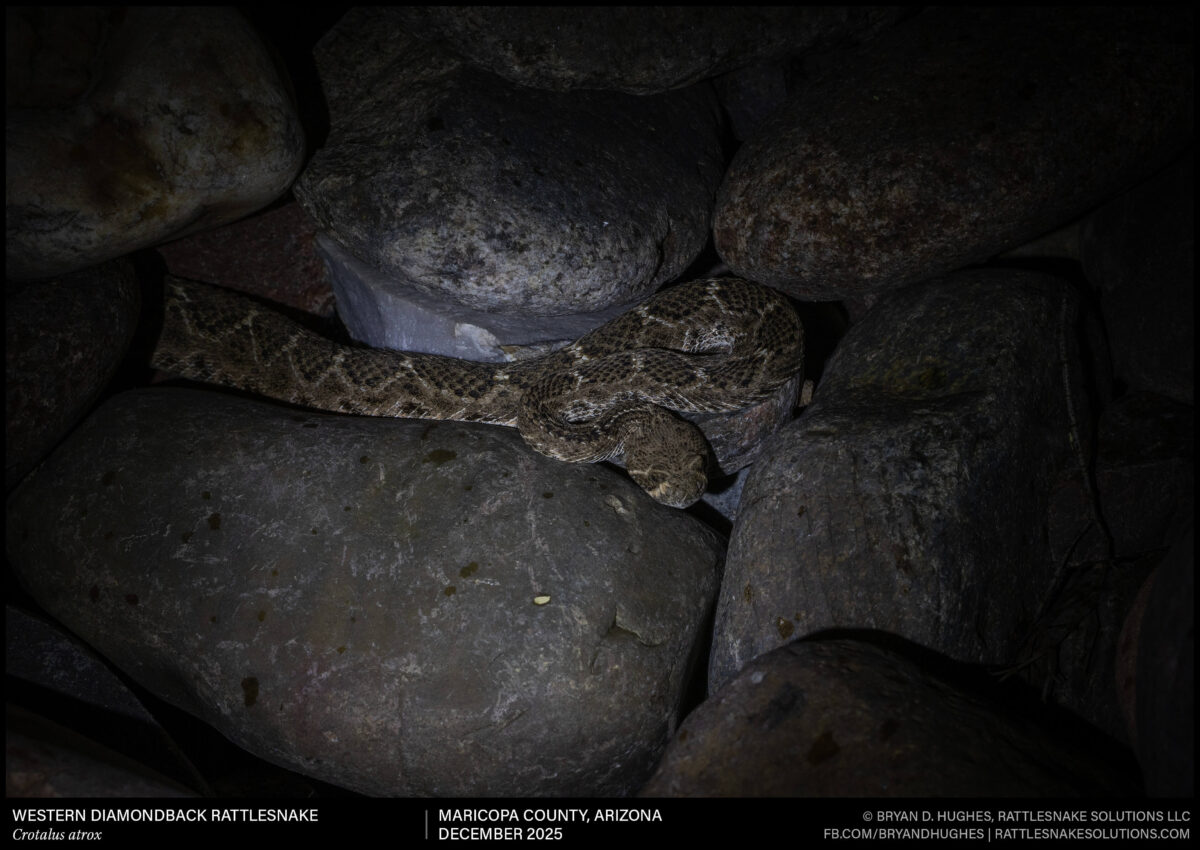
One of many Western Diamondback Rattlesnake out in the rain on a cold December night. Being warm is great and all, but water drives activity in the desert.
You may see us issue a statement from time to time to give a heads up before going to firewood piles, etc. These events are largely predictable, where rattlesnakes behave in ways that are surprising to most people, and we may assume it’s not possible to see a rattlesnake. When you see something like that from us, know that it’s from a lot of data and getting out of bed in the middle of the night in December to stand around in the rain waiting to see if snakes come out 🙂
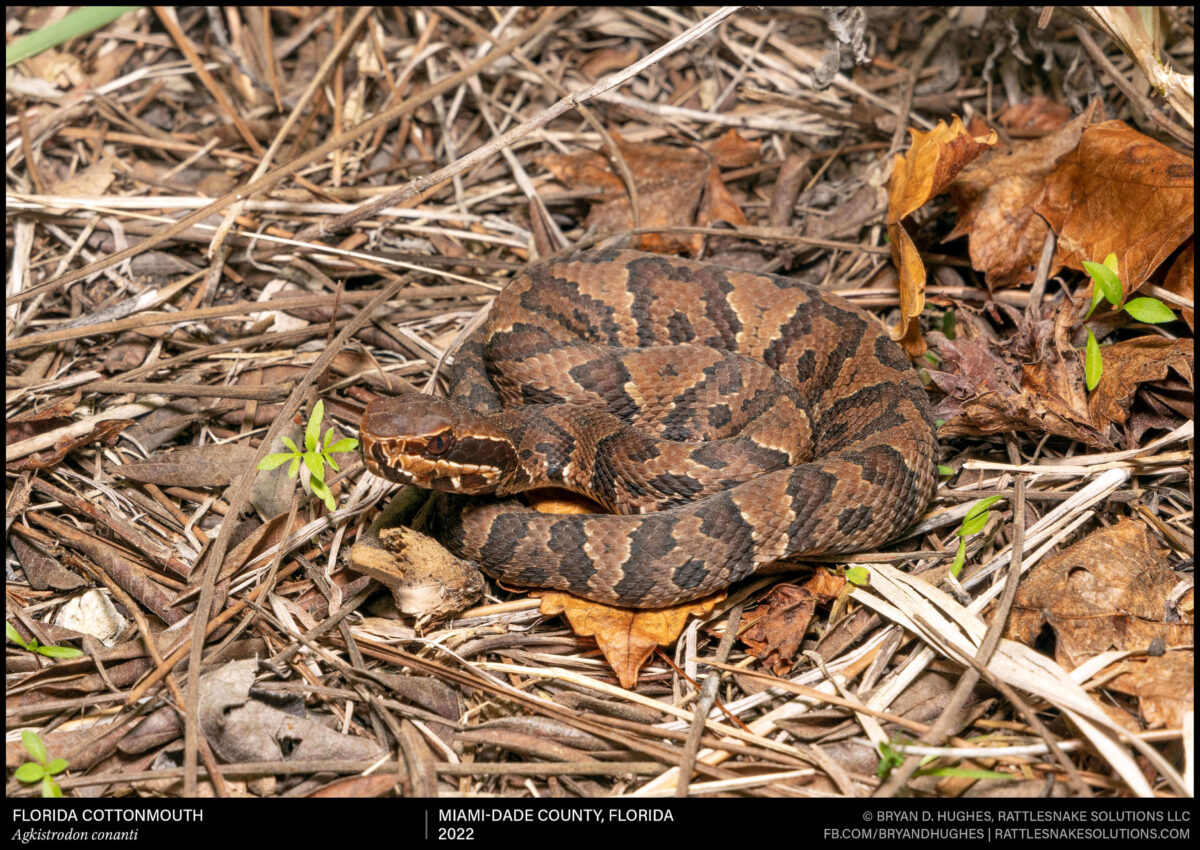
A boldly patterned, small Florida Cottonmouth spotted in suitably swampy habitat in Florida a couple of years ago. This pattern will likely fade quite a bit as it ages, but not to the same nearly uniform appearance of their northern relatives.
And no, they don’t chase anyone. Let’s all grow up.
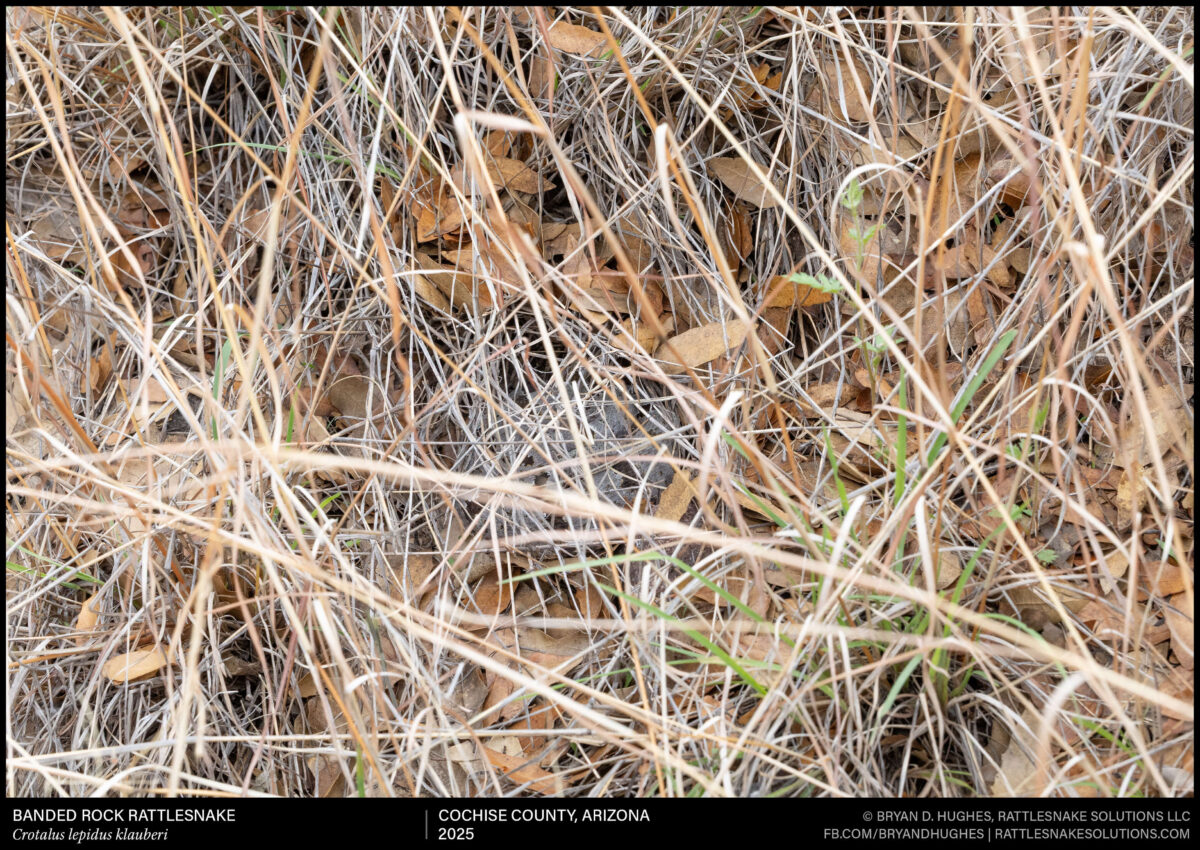
A thunderstorm materialized while I was hiking in a canyon in southern Arizona, so I ducked into a grove of suitable trees to wait it out and not be the tallest thing in the area. While waiting, I saw scales … though not many. It was a Banded Rock Rattlesnake that had emerged from nearby rocks to take advantage of the first rain in several months. It was a reminder that even when intently looking for them, most rattlesnake encounters are ones we will never know about.