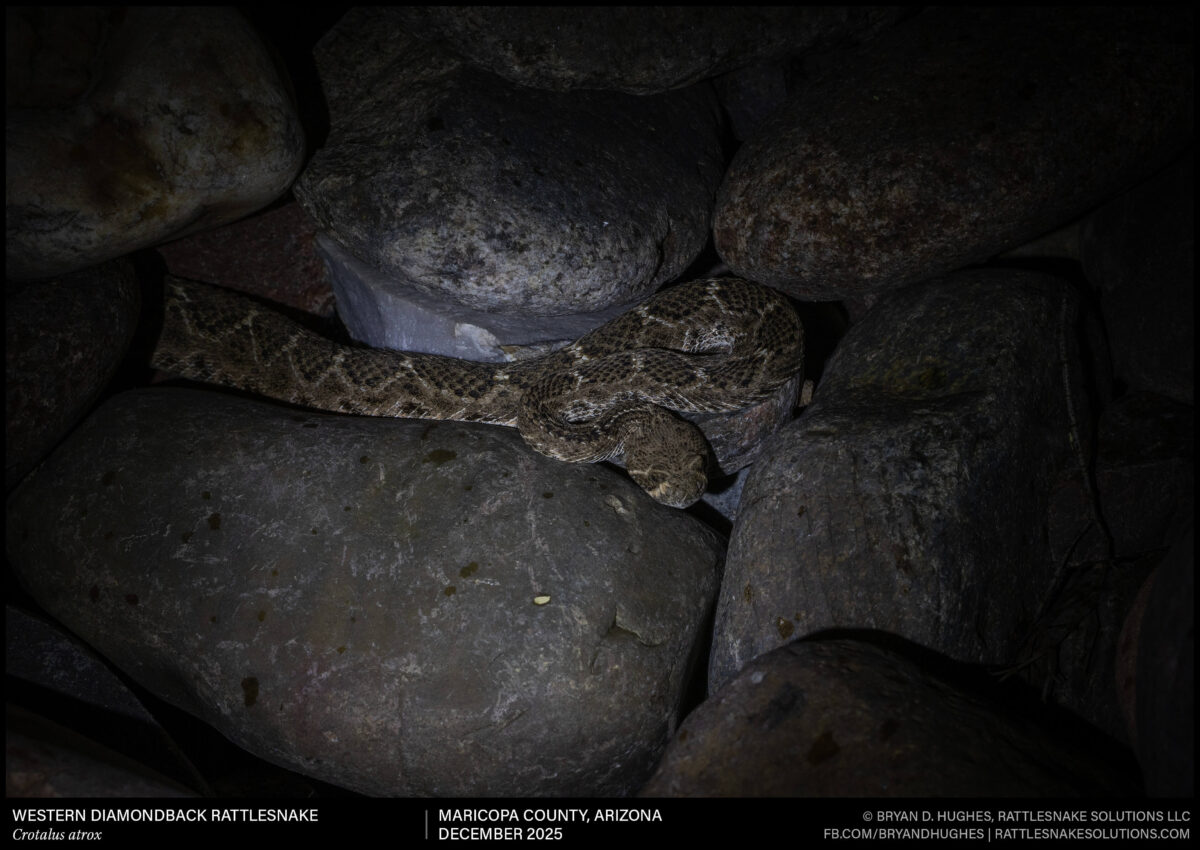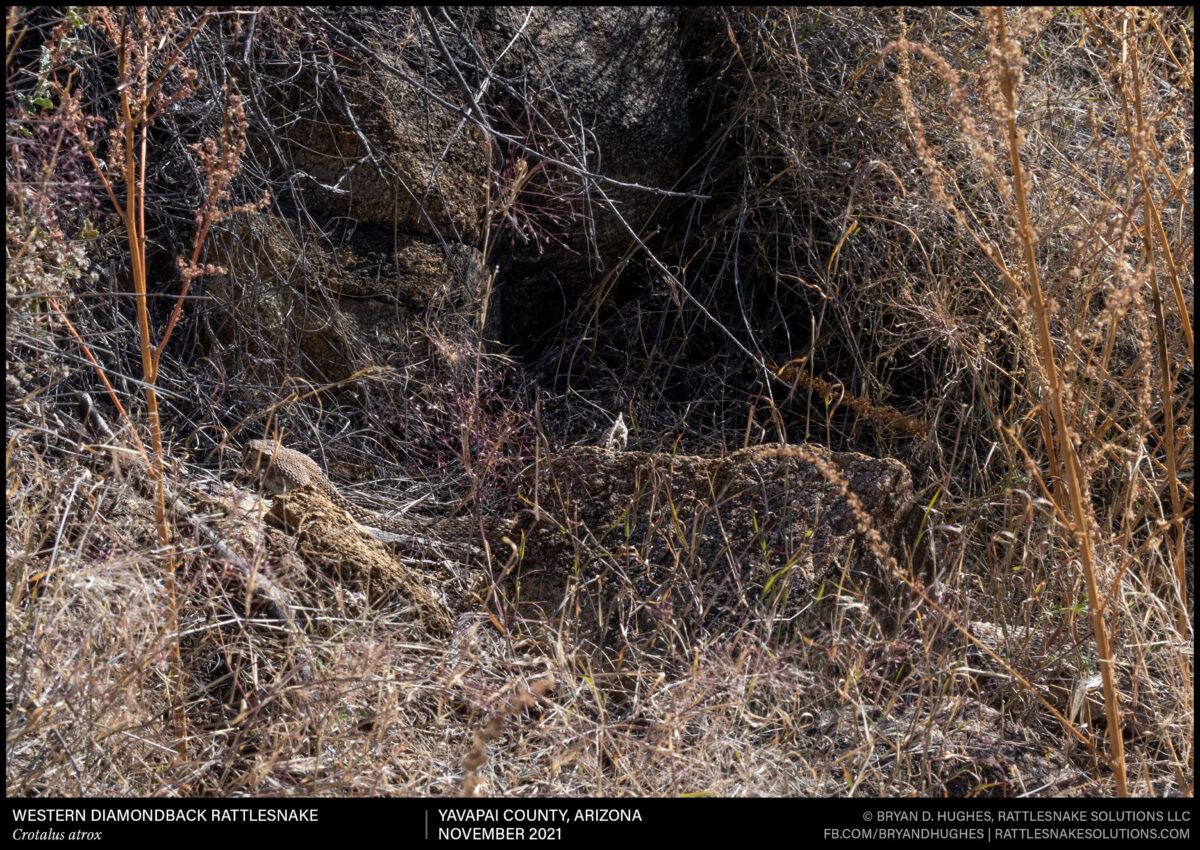
A Western Diamondback Rattlesnake resting in partial shade. By making small adjustments to position throughout the day, a snake can precisely regulate its temperature. While they may be encountered out in full sun, this is how the majority of basking is done.
Western Diamondback Rattlesnakes in the Phoenix area aren’t all grey. Some can be reddish or have hints of orange, and some rich brown tones like this one.
A Western Diamondback Rattlesnake basking in partial cover. This is how rattlesnakes and other reptiles typically thermoregulate. Filtered light and conduction from nearby surfaces and substrate can help them tune in on the right temperatures to a fine degree, all while avoiding detection by predators and prey. This is also a reminder of why it’s best to stay on established trails and keep dogs on leash when hiking in the spring.
Can you tell the age of a rattlesnake from counting the segments of its rattle? For the most part: no. But sometimes, it’s easy. This young Western Diamondback Rattlesnake was found late in the monsoon season. From its rattle, it can be seen it’s shed its skin exactly two times – once to reveal the full button (the notched last segment) from the prebutton it was born with, which is now fully articulated against the proximal segment, which is attached to the tail. That means that this snake was either a successful early-monsoon baby, or a terribly unsuccessful one-year-old. Based on its size and very healthy weight, the former is certainly true. That means that this snake, at the time that it was photographed, was around 2 months old.
It was found crossing a roadway, and escorted to the side to be on its way.
A thin Western Diamondback Rattlesnake stopped for a moment while crossing a dirt road. Often, this behavior is misinterpreted as “sunning”. While snakes may stop to bask like this, in many cases, it’s just that the snake saw the observer first and stopped moving in hopes the perceived predator will not notice it. They don’t know what roads and trails are, however, so imagine it from their perspective: moving along, headed home after a long night of ambush hunting … a monster appears in the distance and comes directly to you! It’s no wonder they then become defensive. But as always, the easy way to remain safe is just not to bother it.
A Western Diamondback Rattlesnake letting me know that it’s not a smart idea to come closer. This defensive behavior is often mischaracterized as aggression. While there are some cognitive gymnastics that could be done to force word choice, the misinterpretation of what these snakes are doing when in a pose like this often leads to the injury of both the animal and the person. Once a rattlesnake is seen, the danger is over unless the person chooses go approach it, ignoring these very clear signs.
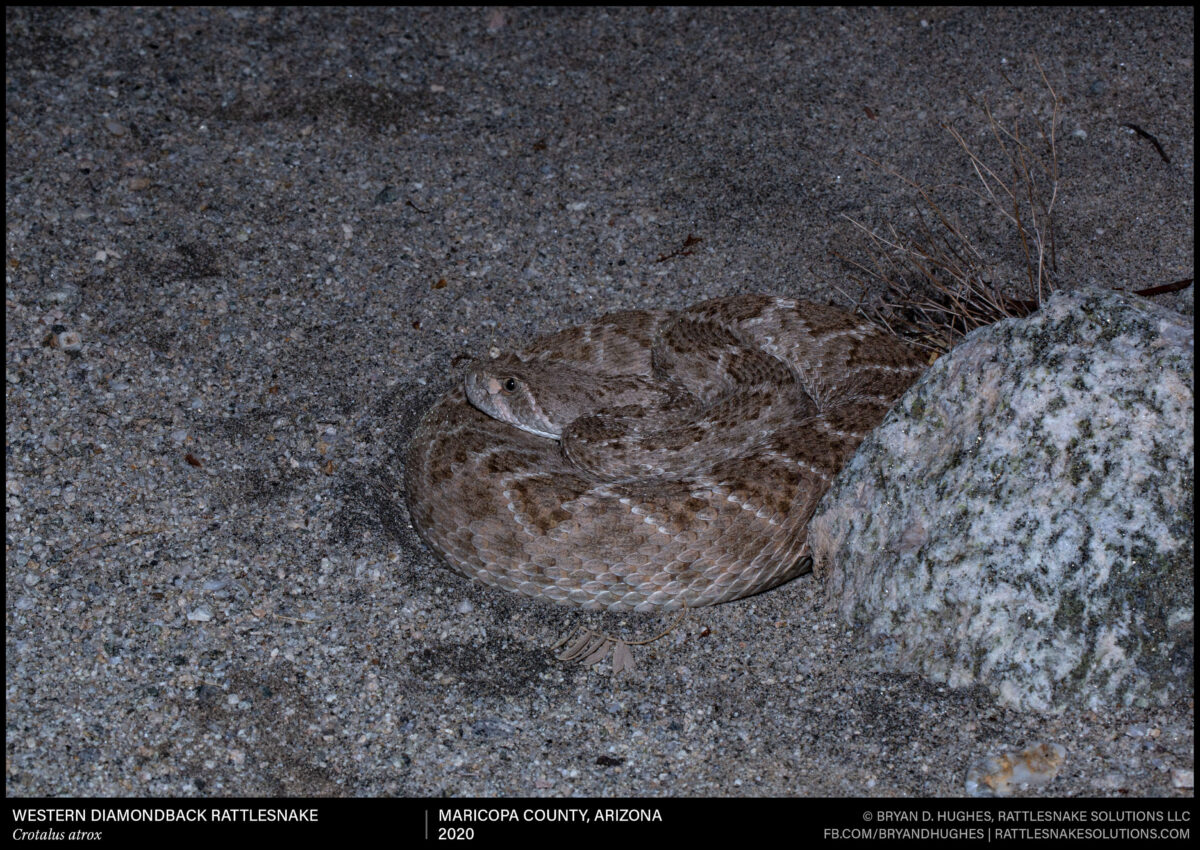
Western Diamondback Rattlesnakes are the most common rattlesnake in the Phoenix and Tucson areas, and likely the most encountered snake overall. This isn’t necessarily due to abundance alone – they’re large, noticeable, and can be noisy. This one, however, thought it wasn’t seen, and remained in this coil in wash sand until after I left.
A female Western Diamondback Rattlesnake pausing on a bit near a large bush where she likely lives. These are the most common rattlesnake, if not snake, seen by hikers and homeowners in the Phoenix area.
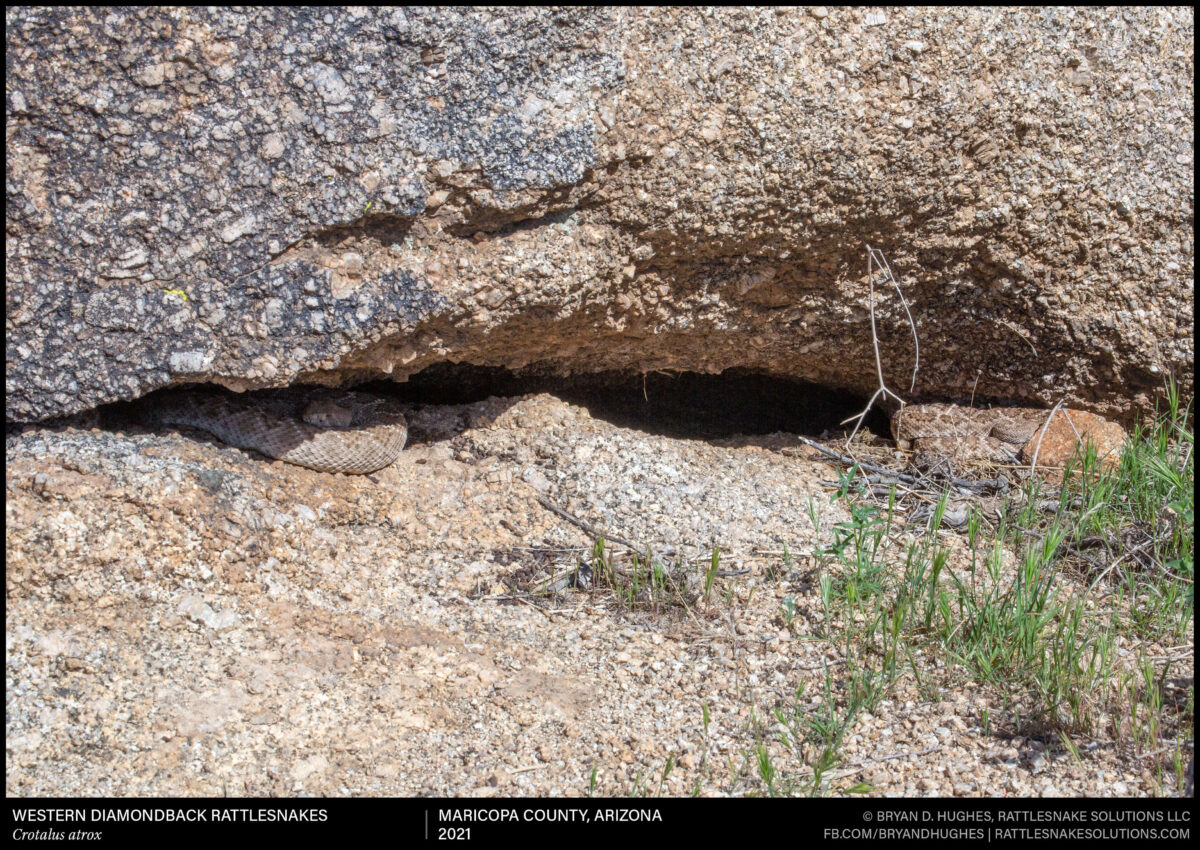
A group of Western Diamondback Rattlesnakes aestivating during the lethal Arizona summer heat in the summer of 2016. In this cave, they can stay consistently cooler than the 115˚F+ daily temperatures outside and survive until monsoon rain brings relief.
This Western Diamondback Rattlesnake was aestivating on a cool, extremely dry May morning. This drainage used to be rich with life, but recent fires fueled by invasive grasses have changed it into a charred, open oven. A few animals remain – the most abundant life to spring up after the event: globe chamomile. Hopefully this snake found a way to survive.