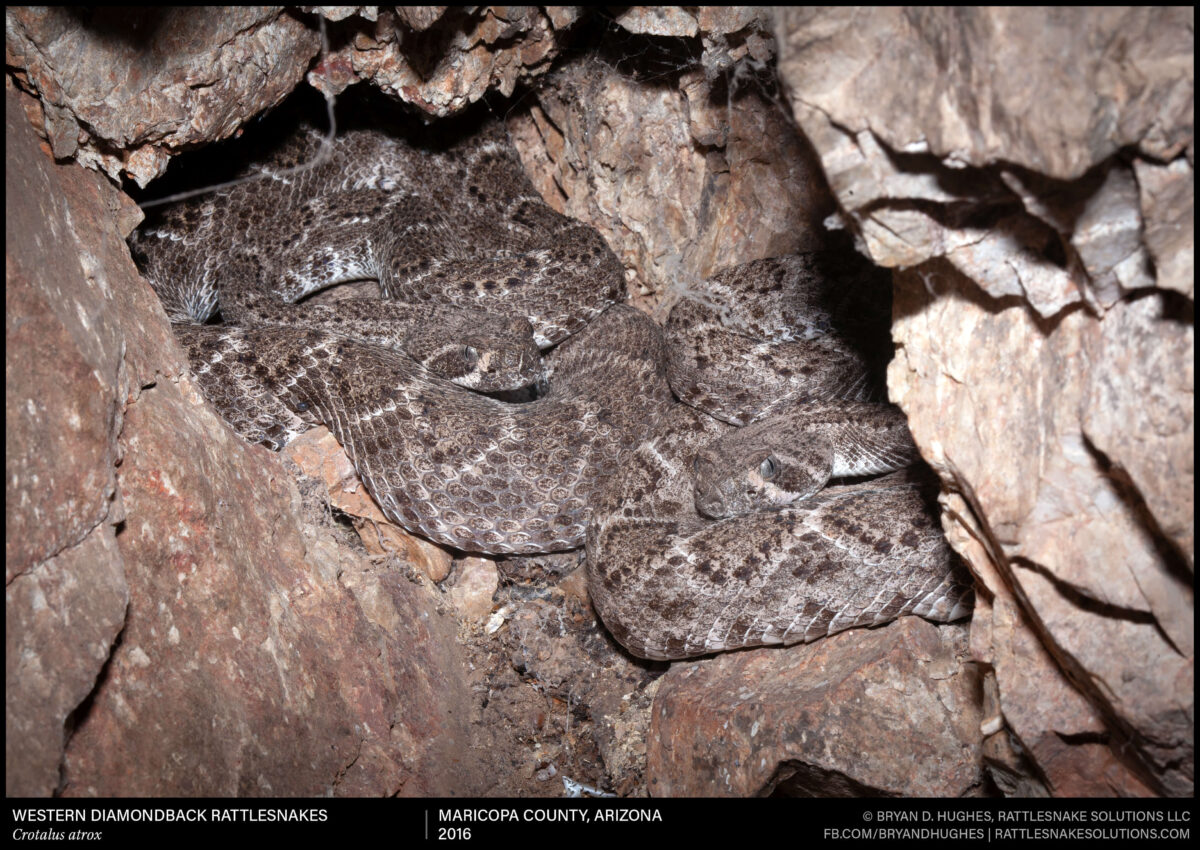
A Western Diamondback Rattlesnake on a hot night time survey of a county park. Thermal cameras show snakes selecting the coolest surfaces in the area to rest in and against – there is possibly more to this, which we are looking into.

A Western Diamondback Rattlesnake on a hot night time survey of a county park. Thermal cameras show snakes selecting the coolest surfaces in the area to rest in and against – there is possibly more to this, which we are looking into.

A Southwestern Speckled Rattlesnake found in the lower foothills of the Cerbat Mountains of Mohave County, Arizona.

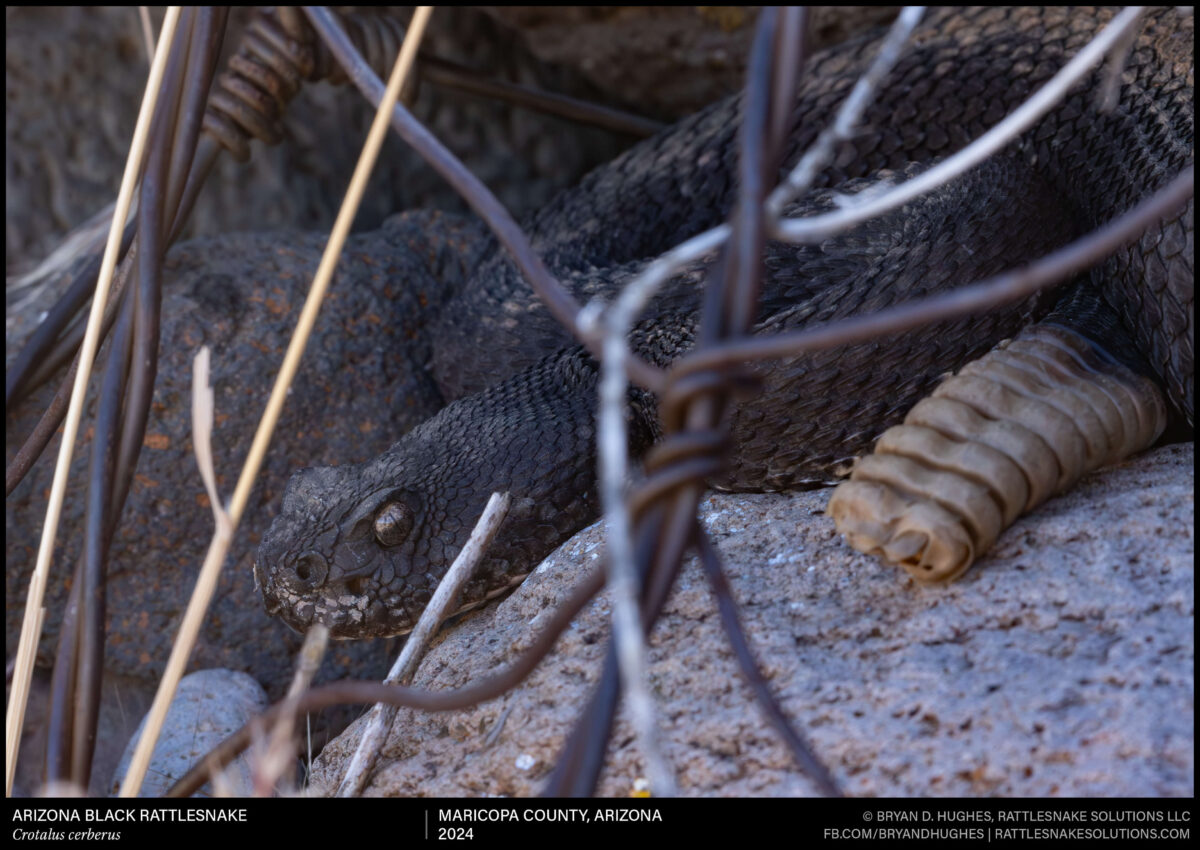
Arizona Black Rattlesnake lying in ambush nearly vertically against a boulder near an isolated water hole on a hot summer night.

I spotted this Horned Viper basking in the grass at the edge of thick vegetation. Greece, 2022.

A Sonoran Sidewinder from a sandy area in the far western end of the range for this subspecies. This is an older adult, measuring around 18″ long.

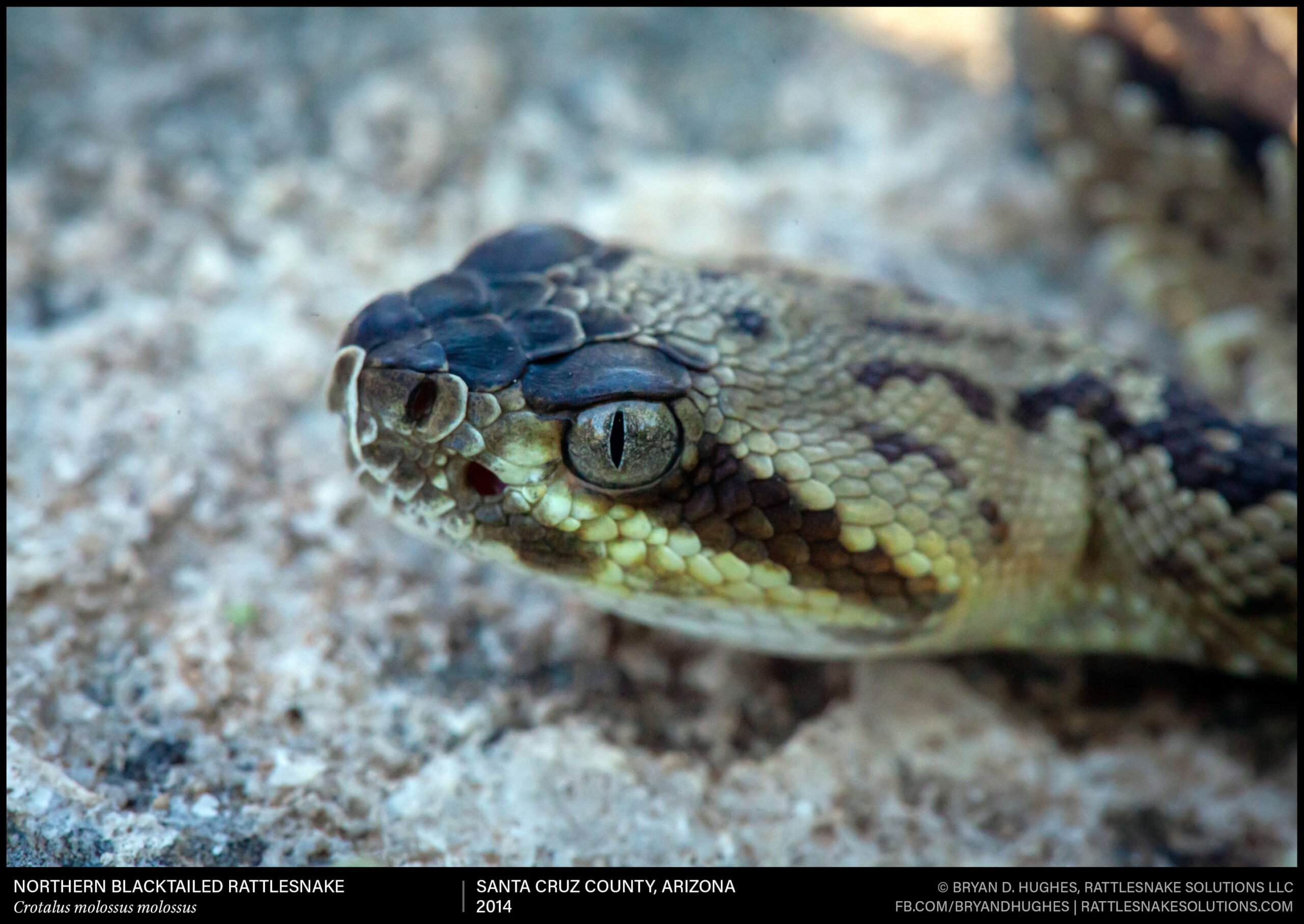
A Blacktailed Rattlesnake disturbed by my car as I made my way up a mountain road. These are large rattlesnakes found throughout the Sonoran Desert, including the high elevation Sky Islands of the southeastern part of Arizona. After a few photos, this snake was left to crawl down to cover.

Tiger Rattlesnake resting outside its aestivation den on a hot Phoenix summer night. These snakes are quite common in much of the area, though most hikers will never see one due to their secretive nature and effective camouflage. Even of those reported, a large number of them … if not most of them, end up being misidentified Speckled Rattlesnakes.

Rattlesnakes live in the highest areas of Arizona, often taking forms that defy what most residents would think possible. This one, an adult Twin-Spotted Rattlesnake (Crotalus pricei), is only about 20″ long as a mature adult, with a narrow head, tiny rattle, and body pattern that convergently looks just like a harmless nightsnake.
These are one of the four species of rattlesnakes in Arizona that are protected by law from any kind of disturbance, thankfully.

A tiny Two-Striped Forest Pitviper (Bothrops bilineatus) from Loreto, Peru. This was the first I’d ever seen and it didn’t disappoint. Just a beautiful little green snake with a hint of blue.

An Arizona Black Rattlesnake in ambush in the first sun of the day. The flat rock is on the only, narrow path to a natural water hole – the only water in the region. Any small mammal wanting to visit it would have to jump across this rock. This is likely something this snake knows very well by now, an example of how much can go into the selection of a hunting position. If I may anthropomorphize a bit, I’d call it strategic.